
Tech
Sectors bracing for a pivot as US midterm elections loom
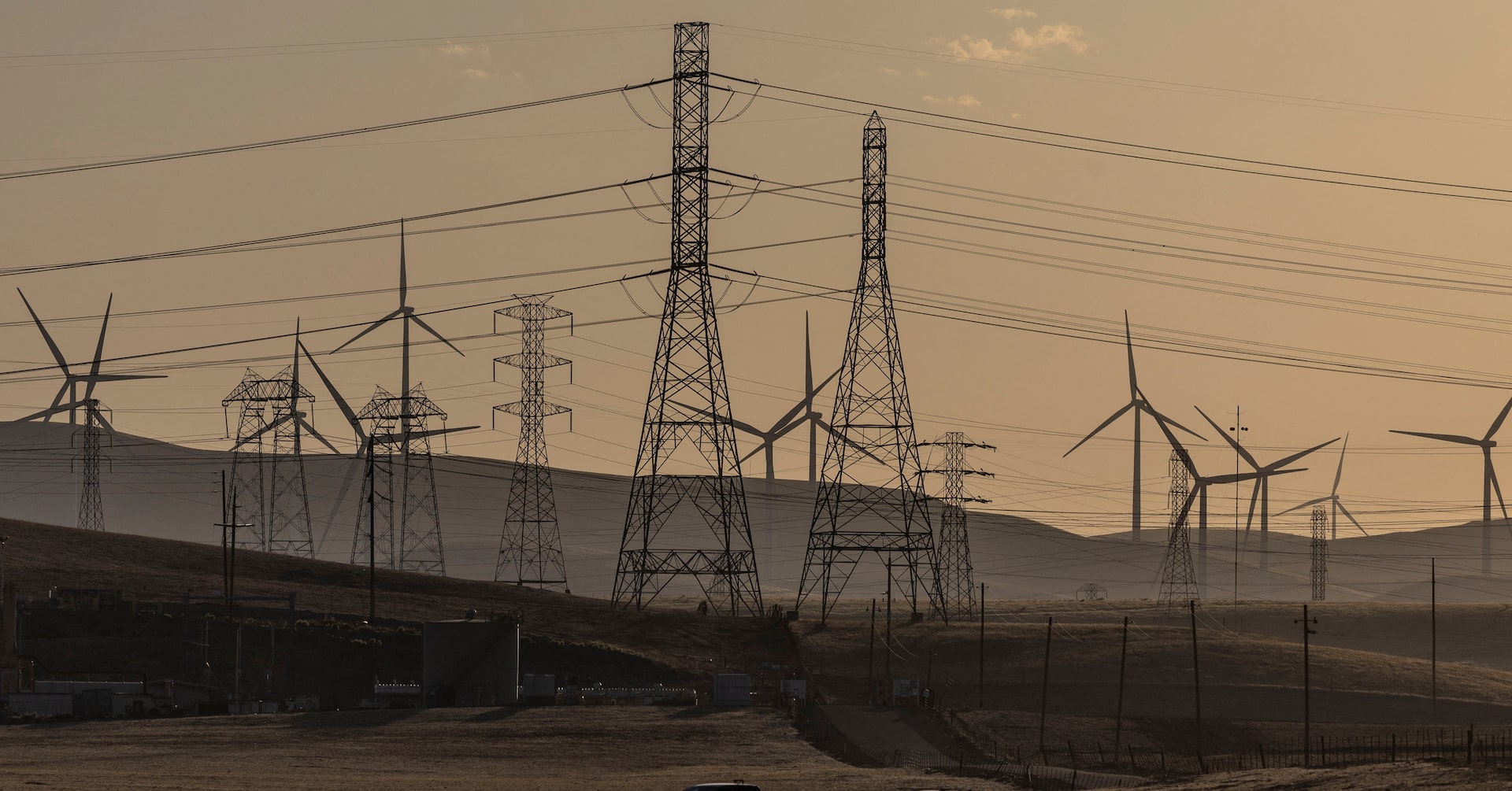
Nov 2 (Reuters) – As the US midterm elections approach, Corporate America is bracing for a potential shift in the balance of power in Washington.
In case of a strong Democratic showing, analysts and strategists say clean energy, housing and healthcare stocks could benefit, while AI, data center and defense names may draw greater scrutiny from lawmakers.
Sign up here.
The odds of a Democratic sweep stood at 72%, according to Polymarket, the world’s largest prediction market, while that of the Republican Party holding on to the Senate and the Democratic Party winning the House of Representatives stood at 23%.
The chances of Republicans retaining the Senate and the House are a poor 6%, while a Reuters/Ipsos poll showed President Donald Trump’s approval ratings at a career low amid voter concerns over the cost of living and the war with Iran.
Even a divided Congress would give Democrats more control over investigations and funding, but it would still have to overcome any veto from Trump.
Investors are closely watching these sectors:
POTENTIAL BENEFICIARIES OF A BLUE WAVE:
CLEAN ENERGY
The Democratic-controlled Congress passed the Inflation Reduction Act in 2022, devoting hundreds of billions to climate and energy-security measures, including expanded tax credits for renewable energy, nuclear power and EVs.
In case of a divided government, brokerage UBS sees room for bipartisan legislation to speed up energy and infrastructure approvals and expects nuclear power to get backing from both sides.
Democrats plan to scrutinize the Trump administration’s efforts to roll back emissions rules and could use the Congressional Review Act to overturn regulations that make it easier to sell gas-powered trucks and SUVs.
HOMEBUILDERS
UBS said the Trump administration would continue to implement the 21st Century ROAD to Housing Act, which Congress passed in late June, to increase the availability of affordable single-family homes.
If Democrats take both chambers, they could add affordability measures, including restrictions on large institutional landlords, though those would still face Trump’s veto, UBS said.
SECTORS AT RISK FROM A BLUE WAVE:
AI AND DATA CENTERS
A Democratic majority would be more likely to use subpoena powers to compel tech executives to testify under oath or hand over records related to harmful AI-agent behavior.
Also, voters in at least 10 states could consider ballot measures that could impose new restrictions, permitting requirements or pauses on data-center development.
Still, Societe Generale said the AI trade is likely to remain intact as Democrats are unlikely to secure a majority large enough to override a Trump veto and key federal agencies remain under Republican control.
HEALTHCARE
Healthcare faces a mixed outlook under a Democratic sweep, with greater scrutiny of Medicaid and Medicare Advantage plans potentially weighing on insurers, though TD Cowen sees limited risk of major industry changes and broad structural reform.
A Democratic-controlled House would heighten the possibility of raising taxes to fund a fiscal program that includes more health spending.
“A Democratic sweep could create greater momentum behind measures targeting healthcare costs, consumer fees, prescription drug pricing and areas perceived to contribute to affordability concerns,” said Magdalena Ocampo, market strategist at Principal Asset Management.
DEFENSE
Defense stocks rallied in January after Trump called for a $1.5 trillion military budget, above the approved $901 billion, but they have since surrendered most of those gains.
A budget vote is unlikely before 2027. Democratic control of the House could bring military spending back under scruntiny, with analysts noting Congress has yet to appropriate funds for the multibillion-dollar contracts that big defense contractors signed to replenish stockpiles.
FINANCIALS
Morgan Stanley analysts said additional oversight under a Democratic outcome could slow the pace of regulatory easing, but was unlikely to derail it.
A Democratic Congress last overhauled bank regulations with the 2010 Dodd-Frank law, which tightened capital rules, created a consumer watchdog and imposed new trading restrictions.
A stronger GOP hand would support regulatory clarity and policy continuity. Keeping conditions favorable for mergers and acquisitions and sustaining capital markets activity are a big earnings driver for large banks, Barclays analysts said.
CRYPTOCURRENCIES
Analysts say the election is unlikely to have a significant impact on cryptocurrency prices but will likely influence how quickly crypto legislation moves through Congress.
The Senate failed in September to advance the Clarity Act amid Democratic opposition, and analysts say a Democratic-controlled Senate would make it harder for the crypto bill to be revived next year.
Reuters has reported that Democrats in Congress are preparing investigations into crypto companies tied to Trump and his family, arguing the dealings present potential conflicts of interest.
That could generate adverse headlines and legal risks for some publicly listed firms in the crypto and blockchain industries, attorneys told Reuters.
Reporting by Purvi Agarwal and Rashika Singh in Bengaluru; Additional reporting by Chris Sanders, Mike Stone, Courtney Rozen, Michelle Price and David Shepardson in Washington and Caroline Humer in New York; Editing by Arun Koyyur
Our Standards: The Thomson Reuters Trust Principles., opens new tab
Rashika Singh reports on financial markets, technology and corporate developments for Reuters. Her coverage focuses on analyst research, earnings, semiconductors, artificial intelligence, and other market-moving events involving U.S. and global companies. Her work appears across Reuters’ Technology, Business and Markets coverage. You can email her on rashika.Singh@thomsonreuters.com.
Tech
Samsung Galaxy S27 Pro and S27 Ultra to get improved Privacy Display
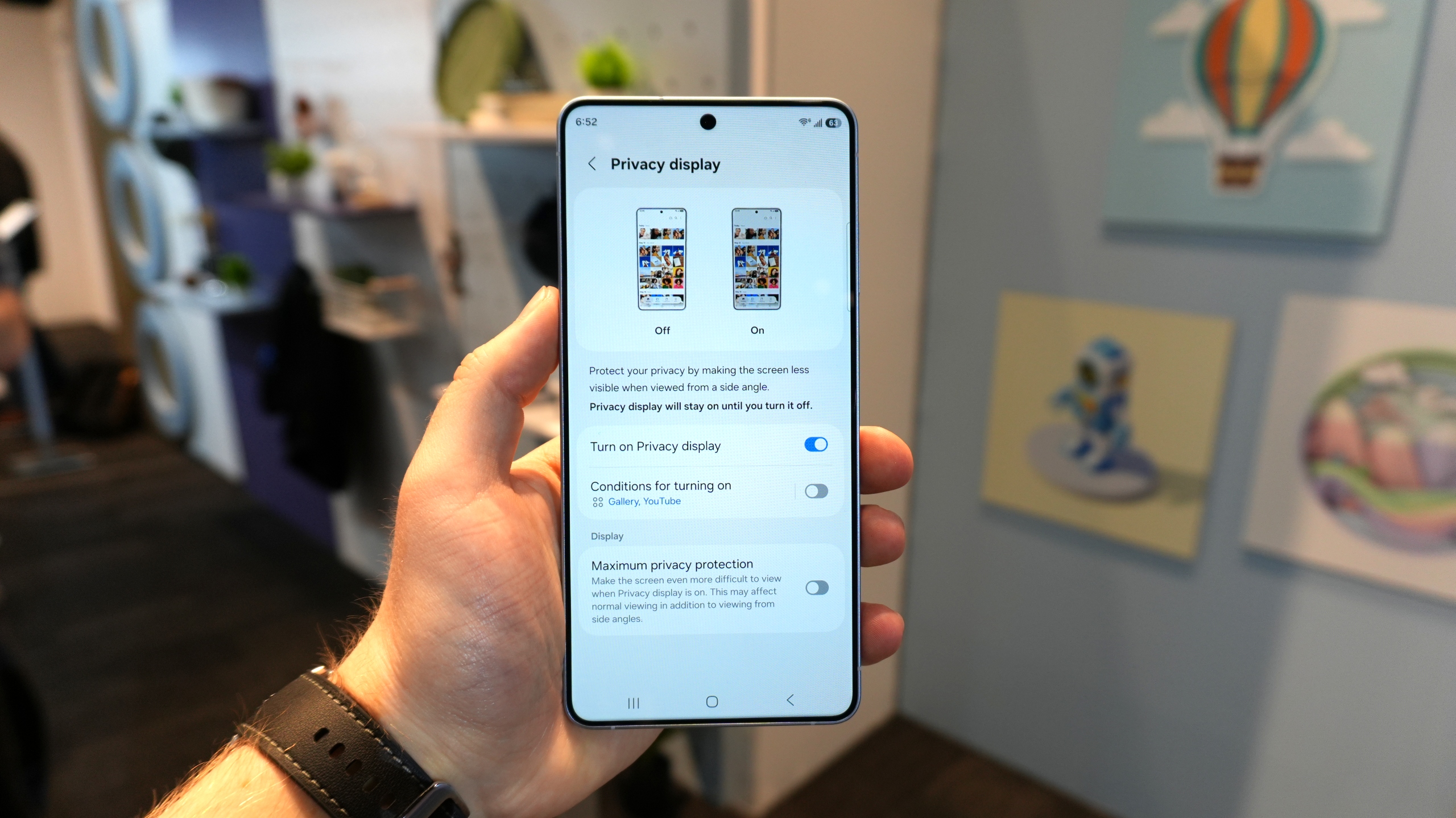
The Galaxy S26 Ultra introduced the groundbreaking Privacy Display feature earlier this year, and since then, several other brands have implemented a similar technology in their high-end phones. Now, Samsung is ready to improve upon it with the upcoming Galaxy S27 series.
We can exclusively confirm that the Galaxy S27 Pro and Galaxy S27 Ultra will not only feature Privacy Display, but they will also use an upgraded version of it. It would be the first time Samsung is expanding the feature to non-Ultra models.
Additionally, these phones will have enhanced display brightness, making their screens much easier to read in under direct sunlight.
Unfortunately, the standard Galaxy S27 and Galaxy S27+ will lack this feature. It appears Samsung prefers to reserve Privacy Display for its most premium Galaxy S models.
Previous reports indicate that the Galaxy S27 Pro and Galaxy S27 Ultra will sport a 200MP primary rear camera, a 50MP ultrawide camera with autofocus, and a 16MP front-facing camera.
The Galaxy S27 Pro will likely include a 10MP or 12MP telephoto lens, while the Galaxy S27 Ultra is expected to feature a 50MP telephoto camera with 5x optical zoom.
Tech
Ukraine’s air raid alert system hacked, Air Force says as false nuclear, chemical warnings sound

Editor’s note: This is a developing story and is being updated.
Ukraine’s air raid alert system was hacked late Nov. 1, the Air Force said, as sirens sounded across the country and people received false alerts warning of nuclear, chemical, and street fighting threats.
Kyiv Independent journalists on the ground received notifications on their phones from the officially supported Air Alert app, made in collaboration between the Digital Transformation Ministry and security technology company Ajax Systems.
“Hi! A nuclear alert is about to go off all across Ukraine! Don’t worry, the Oreshnik is on its way,” one of the false warnings read in Russian on the Air Alert app.
Air raid alerts also sounded in streets across the country, including Zakarpattia Oblast in western Ukraine, journalists on the ground reported.
“It is likely that the ‘Air Alert’ app has been compromised by the enemy. There is no radiation threat! Please stay calm and follow our updates on our (Telegram) channel,” Ukraine’s Air Force said.
Ukraine’s Center for Countering Disinformation claimed that the “Air Alert” app was “likely compromised.”
For Kyiv residents, the Digital Transformation Ministry recommended using the “Kyiv Digital” app to stay aware of air alerts.
Several regional governors also warned that the system was hacked and advised residents that there was no threat.
“Currently, the situation in the oblast is calm. Reports indicate a cyberattack on the notification app,” Ivano-Frankivsk Oblast Governor Svitlana Onyshchuk said.
Officials also warned the cyberattack could involve a phishing operation with attached links.
“Cyberattack on the ‘Air Alert’ app. Do not click on the link in the message,” Vinnytsia Oblast Governor Natalia Zabolotna reported.
The false alerts were then cleared about an hour later.
By midnight local time, Ukraine’s State Emergency Service said while the nationwide alert system was back to operating normally, citizens should continue to monitor information from local authorities and listen for signals played on loudpseakers.
“We once again urge citizens not to click on links from unknown sources and not to spread unverified information,” the Emergency Service said.
Tech
Connecticut Sen. Chris Murphy is in the hospital after having a stroke, his office says
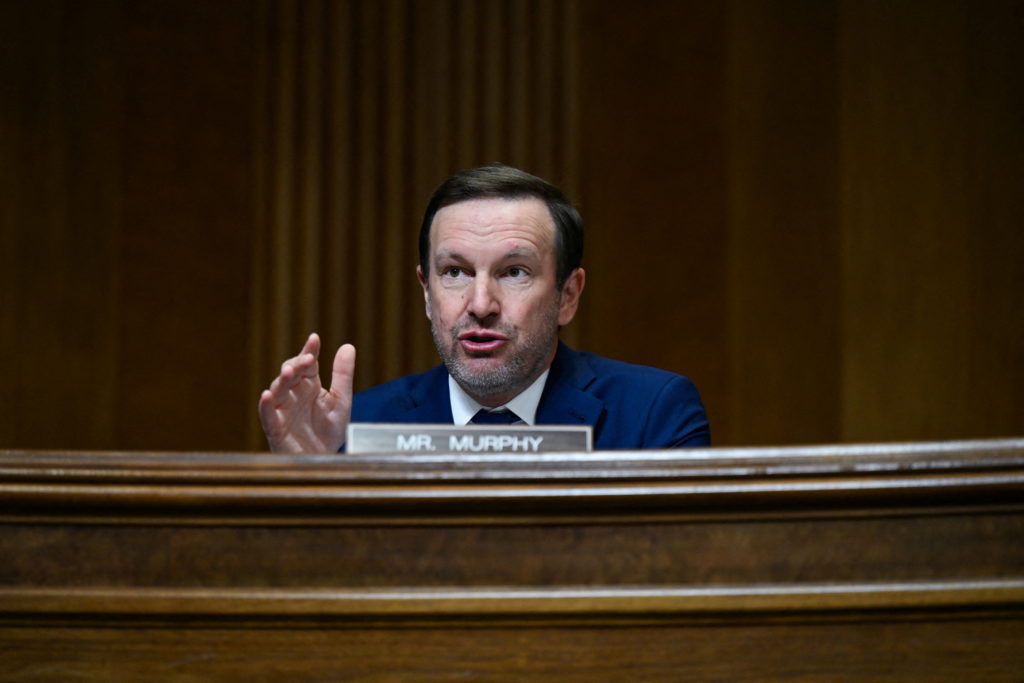
WASHINGTON (AP) — Sen. Chris Murphy is in the hospital after having a stroke and is “awake and alert” as he receives treatment, the Connecticut Democrat’s office said Sunday.
Murphy’s chief of staff, Allison Herwitt, said in a statement the 53-year-old senator “started experiencing numbness in his arm while at his son’s hockey game” on Saturday.
“He was taken to a local hospital, where it was discovered he had experienced a stroke,” she said. “He was transferred to Johns Hopkins for further monitoring and is responding well to treatment. The doctors are encouraged by his progress, he is awake and alert, and we are optimistic he will make a full recovery.”
Murphy was elected to the House in 2006 and to the Senate in 2012. He is not on the ballot Tuesday.
In the Senate, he serves on the Appropriations Committee and is a leading voice on immigration and gun policy. He is considered a contender for more senior leadership positions in the Senate and among the many Democrats seen as potential 2028 candidates for the White House.
Three other Senate Democrats have had strokes in recent years.
Sens. Ben Ray Lujan of New Mexico and Chris Van Hollen of Maryland had strokes in 2022 and have since recovered. Pennsylvania Sen. John Fetterman had a stroke while campaigning for his seat that same year and now uses adaptive technology in the Senate, including live captioning on a phone or tablet that transcribes words as people speak to him and helps him process the conversation.
Fetterman said on social media Sunday that his family “is rooting for Chris and his family for a full and speedy recovery.”
Several Republican senators, including Chuck Grassley of Iowa and Pete Ricketts of Nebraska, also offered prayers for Murphy.
President Donald Trump said he was “really surprised” to learn about Murphy’s stroke.
“Nobody wants to have that,” he said.
Murphy has been traveling the country in support of House and Senate candidates as his party races for majority control. On Friday, he posted that he had been campaigning in his home state for Gov. Ned Lamont. Last week, Murphy posted from Minnesota campaigning with Lt. Gov. Peggy Flanagan, the Democratic nominee for Senate.
The final sprint before Election Day capped Murphy’s whirlwind trip to the Middle East at the start of October for meetings with several leaders, including Saudi Crown Prince Mohammed bin Salman. In early September, Murphy completed his annual “walk across Connecticut,” covering about 70 miles over four days, talking with residents about their concerns along the way.
“Thinking of my great friend & colleague, Chris Murphy,” wrote Sen. Richard Blumenthal, D-Conn., in a statement Sunday. “I know how fiercely he fights & I’m certain I’ll be welcoming him back to the Senate soon.”
Associated Press writers Mary Clare Jalonick and Lisa Mascaro contributed to this report.
Tech
I compared Googlebook and Samsung DeX; Galaxy users have little reason to switch

It’s been a few weeks since Google’s October 4th launch of Googlebook, an intriguing attempt to take control of the Android market. But while the hardware has been impressive, the Googlebook OS has left users with more questions than answers.
The Googlebook’s premise has always been strong. Long-time Android users have always wanted real ecosystem integration. It’s hard not to when you look at the Apple side of life.
In practice, however, Googlebook seems to deliver an experience Samsung users might find too familiar. An Android desktop experience, workflow sync, multitasking support, and shared security. Didn’t Samsung DeX do all of that for free?
What the Googlebook actually is
The birth of Google’s ecosystem
The Googlebook announcement in May promised a lot. The partnership with flagship manufacturers, Acer, ASUS, HP, Dell, and Lenovo, was a stroke of genius that seems to have paid off on the hardware end.
Understanding the Googlebook as a whole is simple. It’s a range of premium quality laptops created by Google, powered by Android, and integrated with Gemini Intelligence.
Google wants your phone to feel like an extension of your laptop. You can access your phone apps and files on your laptop on a larger, more dynamic screen.
Gemini Intelligence is also essential. With its incorporation, productivity, research, writing, and many other tasks become easier.
Cross-functionality also lets you cast your apps onto a different screen while doing something else on your phone, without needing to install or sign in to those apps again.
Early Impressions: a Pixel on a bigger screen
Improved hardware capability with limited functionality
So far, the Googlebook works exactly as advertised.
It integrates with Google Pixels and other Android devices, letting you access your mobile apps on the laptop without reinstalling or logging in again.
Files carry over, and notifications echo across both devices. It’s a cohesive ecosystem: the remarkable Pixel smartphone on a much bigger screen, with more room for activities like streaming and gaming.
However, because the Googlebook is relatively new, some apps on the Google Play Store still aren’t optimized for desktop use. According to Google, just over 300 of the 10,000-plus most used Android apps are still not optimized for usage on Intel Googlebooks.
There’s a clear label on the Google Store for apps that function better on mobile than on the laptop.
Ultimately, Google promotes its Googlebooks as the laptop of choice for Pixel and Android users running Android 17 or later. But that’s where the conflict with the Samsung Galaxy arises.
Samsung DeX came first
And now has years of optimization under its belt
DeX technology isn’t revolutionary. It’s rather old. But we consider that to be one of its greatest strengths. DeX has been available since 2017, and Samsung has consistently added new features over the years.
Samsung DeX is a desktop-like environment that runs Android on Galaxy phones. Galaxy tablets, however, can run a more stripped-down version called New Dex that can serve as a Chromebook alternative when used with a keyboard cover.
It stands out ahead of Google’s effort both by predating it and being way more polished thanks to years of updates, user experience, and reviews.
While Google Chrome may scale poorly or fail to render correctly in Samsung DeX on Galaxy devices, DeX remains the industry benchmark for mobile-to-desktop environments because of several structural advantages.
What’s crucial is that DeX allows you to get rid of the need for a second device. Your smartphone or tablet becomes your PC, two for the price of one.
The Samsung ecosystem advantage
Including the integrations that let you upgrade the experience
DeX isn’t the only exclusive ecosystem feature Galaxy users enjoy. Beyond file transfers between devices, Good Lock’s modules upgrade the DeX experience.
There’s also the question of how applications behave on DeX.
Native Samsung apps tend to resize windows more gracefully, and DeX lets you open multiple Samsung Internet windows, but not Chrome.
That level of Samsung-first functionality comes from years of polishing its software. In short, Samsung DeX has all the experience Googlebook is missing.
For any Galaxy user, when it comes down to choosing between DeX and Googlebook, the question becomes, “What does Googlebook offer that beats the Galaxy-to-Galaxy experience that DeX provides?”
Where the Googlebook shines
Top-of-the-range hardware meets Gemini Intelligence
The Googlebook has its unique strengths and potential.
With Googlebook, you get the real hardware of a first-grade laptop, with a keyboard, touchpad, and larger screen, without the complications of cables, docking stations, or additional accessories that DeX may require.
That hardware is better suited to day-to-day work than your smartphone or tablet, and the long-term support period makes a compelling case.
If you’re looking for a machine with grade-A contemporary hardware features coupled with Gemini integration, the Googlebook looks like the place to be.
But these feel more like convenience features to me than added capability. The DeX mode covers much of that ground for Galaxy users.
The price problem
Premium pricing for functionality Galaxy users get for free
The Googlebook laptops start at $899. That’s relatively high for a laptop that offers little more than existing Chromebooks. But it’s even higher when you compare it to the free-to-use Samsung DeX.
On the flip side, DeX requires extra spending on monitors and keyboards, which you can avoid if you have the hardware.
In the wider market, other choices exist. Models like the Chromebook Plus series offer Gemini AI features and Android app compatibility in the $369 to $799 range.
From a Samsung Galaxy user’s perspective, Google may struggle to convince anyone that its technology is superior. But at the very least, it needs some justification for costing considerably more.
Another concern with trusting Googlebooks, and its long-term efficiency, is redundancy. Its fate depends on Google’s performance and its decision to let Chromebooks and Googlebook coexist.
Google indicated that existing Chromebooks will eventually be able to adopt the Googlebook OS. However, it didn’t explain which Chromebooks might be “upgradeable,” or the full extent of adoption.
Google also has a history of abandoning premium laptop lines. In 2022, it scrapped any future generations of Pixelbooks and shut down the team working on them. Perhaps a sign of things to come? We’ll have to wait and see.
Impressive hardware with all-too-familiar software
Google’s new Googlebook is good. The hardware is impressive, and the software seems decent, with promising updates ahead.
However, it currently doesn’t offer much to Galaxy users that they haven’t enjoyed for some time now, all with zero additional cost.
For Galaxy owners, I don’t think the Googlebook has to be merely good; it has to do something DeX can’t. Until it can, I see little reason why they would buy it.
Tech
The midterms will test the nation’s political direction and confidence
Millions of Americans are looking to Tuesday’s midterm elections with heightened anticipation or anxiety.
Or both.
At this point, we can expect at least some portion of the nation to have its political confidence — and perhaps even its sense of security — tested in the days and weeks ahead. That test could also continue for some time to come.
Is winter coming for MAGA?
The first place to look for elevated anxiety about the midterms would be among those voters most loyal to President Trump. He calls them MAGA, borrowing from his 2016 “Make America Great Again” theme. Alternatively, with a broad smile, he just calls them “my base.”
But winter may be coming. Polling suggests that on Tuesday the midterm electoral pendulum will once again swing back against the White House incumbent — as it has in every midterm over the last 100 years with very few exceptions.
More punishment for the party of the second-term president would be expected in the blue states that he lost in each of his three White House campaigns. But this fall’s polls are also pointing to significant losses for Republicans in swing states and even in some of the red states Trump won all three times — often by double-digit margins.
That is why the president spent the last weekend of this campaign on making an electoral “goal line stand” for the Senate by visiting Iowa and Kansas.
When Trump, then a first-time candidate, was at high tide 10 years ago, he won 31 Iowa counties that had previously voted for Democrat Barack Obama in 2008 and 2012. And as for Kansas, the historically Republican state has not elected a Democrat to the Senate since 1932.
Yet Trump put live visits to Iowa and Kansas on his schedule for the final weekend, even as he did remote “tele-rallies” in 19 other states. (The Iowa-Kansas plan was briefly cancelled late in the pre-election week, then reinstated just before the weekend.)
That strategy suggests Trump’s political team remains focused on limiting GOP losses in what will be a tough environment for their party. Most observers, including those searching hardest for objective measurements, now predict Trump’s party will lose its slim majority in the House. The consensus is that the Senate is too close to call, and it is possible the GOP could hold the majority using the tie-breaking vote to which Vice President Vance is entitled.
Best way to limit losses?
But precedent is not really the explanation for Trump and his party’s expected defeats. Midterm elections inevitably act as referenda on current officeholders, and there is no current officeholder in the world so visible as the U.S. president — especially the Oval Office’s current mega-mediagenic occupant. Put another way, presidents are the leaders and symbols of their party, but Trump has taken the personalization to another level. Presidents routinely campaign for their party’s midterm candidates, but Trump (“Pretend I’m on the ballot”) has worked hard to make the election about himself.
In Trump’s first term he tried out a more conventional approach, acting as an executive in a system of shared powers. This time around, Trump has taken that role as a starting point. He has cast himself as the driver of historic events and the avenger of many wrongs — large or small, real or imagined. He presents himself as the architect of a new Washington and the author of a new era.
And he has done it all despite objections from U.S. allies around the world and from Congress and from the federal bench.
How it’s playing depends on audience
While Trump’s bravura interpretation of his role has played well with his base, the larger electorate is a different story. Among the more effective themes taken up by anti-Trump rallies has been the ultra-simple, anti-autocrat mantra of “No Kings.”
Critics and Democrats have been able to focus on promises and pronouncements Trump has made but on which he has yet to deliver. Peace in Ukraine on Day 1? A new era for Israel and the Palestinians? Not so far.
These foreign policy issues matter, but to voters the greater disappointment is economic. Trump said he would make things cheaper and tame inflation. But inflation remains elevated and the public sees the price of gas leading a sustained surge in everyday costs.
So it should be no surprise that any average of Trump’s recent approval numbers shows them falling from a clear majority (52% in average of polls) early in 2025 to an average of 37% now — breaking below the 40% threshold that has signaled brutal midterm results in the past.
But are Democrats ready to take over?
On the other hand, the confidence some Democrats are showing may be premature. If they win the House, their majority will be on the modest side by historic standards. If they eke out a majority in the Senate it will be so narrow that the primary beneficiaries are likely to be the mavericks who are willing to buck the party leadership — on both sides of the aisle.
Moreover, even robust Democratic majorities would need to confront the significant divisions that persist — and may be growing — in their ranks. The most glaring is the contrast between majoritarian consensus builders on one hand and the party’s firebrands on the left. The latter group has been pleased with the party’s class of nominees for Congress this year, including a cadre aligned or associated with the Democratic Socialists of America.
The DSA candidates have attracted attention from the media and been prominently featured in Republicans’ fall campaign ads and messaging, even in places where the DSA favorite lost in the primary and is not on the November ballot.
To some degree, the 2026 Democrats have been able to unite around issues such as energy and grocery prices and the war on Iran. Opposing vast data centers to be built to serve the AI industry has been another shared cause. And whatever their differences, this year’s Democrats have been a chorus of opposition to Trump.
But there are reasons to doubt the united front can be preserved if the Democrats get back into power. Most expect at least one chamber of Congress to be theirs in the new year, and there will be a new president after 2028.
One political demographer and author who has been focused on the Democrats’ internal issues is Ruy Teixeira, who spent most of his career at think tanks associated with Democrats such as the Center for American Progress and the Brookings Institution but is now at the business-oriented American Enterprise Institute. He is best known for his 2002 book with John Judis entitled, The Emerging Democratic Majority, but Teixeira has long been focused on the party’s history with white, non-college educated voters and is also the author with Joel Rogers of America’s Forgotten Majority: Why The White Working Class Still Matters.
In October, Teixeira published 11 questions he said Democrats must confront if they regain congressional power. The final question was whether the party would embrace positions that resonate with working-class voters and prioritize their interests rather than its recent concentration on race, gender, energy, environment and social policy.
Casting a longer shadow
Beyond the questions for the two major parties, these midterms have cast doubt on the conduct of U.S. elections themselves. For generations, Americans have generally shown confidence in their electoral systems and results, but that too has become a target.
There is a haunting song on Eric Clapton’s classic 1992 album Unplugged that repeats the title line: “Running on Faith.”
That is one way to think of democracy. Faith in the democratic system is required if the system is going to work and survive.
Democracy has often been called an ongoing experiment. It tests whether people can have a voice in their own governing, and whether that voice can be heard and heeded.
It tests the mechanisms and individuals involved, to be sure. But ultimately, it tests voters’ faith in the system itself. Will the will of the people be clear and will it drive the next phase of American political life?
Nonpartisan experts in voting laws and machinery — academics, journalists, lawyers and others — have, as a rule, defended the current state of American processes. Legislation, administrative professionalism and fresh funding at the national and state levels have upgraded the administration of American elections since the Help America Vote Act became law two decades ago, following the Florida vote-counting debacle in the year 2000. HAVA enabled states and localities to replace punch-card ballots and other outdated methods with touch-screen technology and preservable paper trails, improving voter confidence and security.
And yet, faith in the system is likely to be tested in the days ahead. It’s not just about one race or one state. It’s not just about candidates and issues. It’s about the system that Trump repeatedly calls into question without evidence.
A well-established pattern
As far back as his first nomination in 2016, Trump was telling his crowds that if he lost it would be because the process was fraudulent. There was no way the Democrats could win unless they cheated, he said, and a defeat would simply prove his assertion.
Four years later, Trump was able to summon thousands of his supporters to Washington on Jan. 6, 2021 to protest and deny his defeat in the previous November’s presidential election. “Stop the steal” was the cry, based on nothing but conjecture and emotion and a preference for a different outcome.
In contrast, Trump accepted the results in 2024 as he and his party won. But he continues to label information — be it polling results or simple daily news reporting — as fake. He responds to a question from a White House credentialed reporter by asking: “Who are you with?” Then he says: “You’re fake news.”
He regularly tells his audiences to ignore “fake news” and “fake polls.” It is easy to imagine him exhorting his followers to ignore “fake results.”
There will be tension on election night this week, as there always is. But the greater stress may come in the days and weeks ahead.
Stay tuned.


Sectors bracing for a pivot as US midterm elections loom
Nov 2 (Reuters) – As the US midterm elections approach, Corporate America is bracing for a potential shift in the...

Wall St rises as oil falls heading into US midterm elections
Summary Companies Indexes up: Dow 1.06%, S&P 500 0.58%, Nasdaq 0.65% Oracle down on plans of raising $20 billion through...


Angelina Jolie and Brad Pitt’s daughter Vivienne delivers final blow to estranged dad
Brad Pitt and Angelina Jolie’s daughter Vivienne has officially dropped her father’s famous last name. A Los Angeles judge granted...


Netflix Acquires Joel Coen’s ‘Jack of Spades’ Starring Josh O’Connor
Netflix is back in business with the Coen Brothers with its global acquisition of the sinister gothic mystery film Jack...

Elon Musk throttles Grok Bot limits due to ‘unsustainably high’ costs
Over Halloween weekend, some Grok Bot users awoke to something especially spooky: their weekly usage limits were unexpectedly maxed out,...
SpaceX weighs Boost Mobile deal in push for Starlink phone service: Report
SpaceX (SPCX) may be attempting an end run to circumvent obstacles it’s facing in getting a mobile network off the...


Gavin Newsom Proposing $1 Billion CA Film
The day before his successor as California’s governor is elected in the high stakes midterms, Gavin Newsom is going out...


Cyberattacks hit supermarket fridges and freezers in Europe, Belgium launches investigation
Dozens of supermarkets in Europe have reported temperatures of their refrigerators and fridges rising overnight, now widely believed to be...


Taylor Swift confesses to ‘weird’ habit husband Travis Kelce has to ‘put up with’
Travis Kelce is still down bad for Taylor Swift despite her “weird” habit. The pop star spoke about her and...


‘Homestead’ star Bailey Chase quit California over proposed vaccine mandate
“Homestead” star Bailey Chase is opening up about the “final straw” that drove him and his family out of California...
-

 HealthNews1 week ago
E. coli cases possibly linked to Bengtson’s Pumpkin Farm, Will County health officials say
-
Business2 weeks ago
GLP-1 injections recalled nationwide. See affected products
-

 Entertainment2 weeks ago
Noah Adams, longtime host of NPR’s All Things Considered, has died
-

 Entertainment2 weeks ago
R.J. Mitte’s Mother Opens Up on His Life, Rumors and Legacy
-

 Business2 weeks ago
Datacenters 2027: The Year of Acceleration, +50GW in a Single Year
-
 Business2 weeks ago
Tesla (TSLA) Q3 2026 earnings preview: flat revenue, falling profits
-

 Entertainment2 weeks ago
J Mascis has nothing better to do
-

 HealthNews2 weeks ago
My In-Laws Offered to Watch My Baby, Then Didn’t Give Her Back for Six Weeks. That Was Just the Beginning.