
test
Small airports matter to agriculture

Arkansas is the nation’s rice leader. We produce nearly half of all American rice and export more than $400 million worth of rice annually to markets across the globe. This is more than just a number. It represents thousands of family farms, millions of hours of skilled labor, and a critical piece of America’s food security and export economy.
Although current economic conditions are deeply concerning, we know Arkansas’ success depends on infrastructure that often goes unnoticed: the small airports and general aviation network that help keep our rice crops healthy, productive, and competitive.
Here’s why: Arkansas rice is grown in a unique environment. Much of it is cultivated in flooded fields, a method essential for controlling weeds and managing the crop. Once those fields are flooded, traditional ground-based farm equipment can’t navigate the landsce without sinking into the mud and damaging the crop. That’s where agricultural aviation becomes indispensable.
Roughly 62 percent of Arkansas’ pre-flood rice acreage receives aerial herbicide plications; that percentage rises significantly when you account for fungicides and fertilizers plied mid-season. Aerial plicators can cover up to 1,600 acres in a single day–three to four times faster than ground equipment. For Arkansas farmers facing time-sensitive crop management challenges, that speed is the difference between a successful harvest and significant losses.
In wet springs like 2024 and 2025, when saturated soils delayed planting and prevented ground equipment access, aerial plicators are often the only viable option for farmers to protect their investment. Without agricultural aviation, many Arkansas rice farmers simply couldn’t get their crop protection products plied in time.
The economic footprint of this infrastructure is substantial. General aviation airports in Arkansas generate more than $467 million in economic activity annually. General aviation airports are essential infrastructure that support agricultural operations. This translates to jobs for pilots, ground crews, mechanics, and support staff across rural communities where other employment opportunities can be limited.
The general aviation industry, including agricultural aviation, faces a pilot shortage. Demand is so strong that first-year aerial plicator pilots can earn over $75,000, making it a career opportunity that can support a family for young Arkansans and a strong contribution for rural economies.
The relationship between rice farming and general aviation runs deeper than immediate crop protection. Small regional airports enable the broader infrastructure that supports agricultural competitiveness. They provide emergency response, connect rural communities to essential services, support rural economic development, and offer the kind of accessible aviation infrastructure that keeps many small businesses viable outside metropolitan areas.
When we talk about supporting Arkansas agriculture, we often focus on commodity prices, trade policy, and weather. But we should also be talking about essential infrastructure that makes farming possible: the waterways and rail lines that connect Arkansas farms to markets, the small airports and skilled pilots that enable time-sensitive crop protection, and the regulatory environment that keeps agricultural aviation safe and accessible.
The Arkansas Rice Federation recognizes this interdependence. Our farmers depend on aerial plicators. Aerial plicators depend on small airports and skilled pilots. Rural communities depend on both. This is a shared interest in ensuring that the infrastructure supporting Arkansas agriculture–from field to export dock–remains viable and robust.
As global rice markets tighten and competition intensifies, Arkansas’ competitive edge isn’t just our soil, our climate, or our farmers’ skill. It’s our ability to manage risk, ply technology efficiently, and solve problems to keep our rice acres protected and productive. That ability depends on general aviation.
We should be talking about it. We should be supporting it. And we should be ensuring that policymakers–at the state and federal level–understand that protecting Arkansas agriculture means protecting the small airports and general aviation infrastructure that makes modern farming possible.
J. Kelly Robbins is executive director of Arkansas Rice Federation.
test
Star-Spangled Spectacular Berks County set for July 4

All payments by families must be made with a credit card. We will send a proof of the completed obituary before we require payment. The obituary cannot run, however, until we receive payment in full.
Obituaries can be submitted for any future date, but they must be received no later than 3:00 p.m. the day prior to its running for it to be published.
Please call the obituary desk, at 610-371-5018, for information on pricing.
The America250PA Berks County Committee, in partnership with the Reading Symphony Orchestra, local businesses, organizations, and community partners, will present the Star-Spangled Spectacular Berks County, a free, family-friendly celebration.
Created as part of the lead-up to America’s 250th anniversary, the Star-Spangled Spectacular Berks County will showcase the spirit of community through live music, family activities, local food vendors, a patriotic concert by the Reading Symphony Orchestra, and a spectacular fireworks finale.
The event will be held at 2 p.m. on July 4 at Berks County Fair Grounds, 1216 Hilltop Road, Bern Township. Gates open at noon. Fireworks will begin at proximately 9:30 p.m.
The event is designed to welcome residents of all ages and provide an opportunity for families, friends, and neighbors to gather and celebrate together.
In the spirit of service and community, attendees are encouraged to bring a nonperishable food item to support Helping Harvest, helping extend the celebration’s impact to neighbors in need throughout Berks County.
This event is about celebrating not only our nation’s history, but also the strength and spirit of our local community, said Charles Bock, owner of Stereo Barn and Reading Symphony Orchestra board president. The Star-Spangled Spectacular is being built through collaboration, and we’re proud to offer a free event that brings people together in a meaningful way.
In addition to entertainment and festivities, the event will feature opportunities for local nonprofits, schools, and community groups to participate and engage attendees in family-friendly activities.
Theater
Reading Civic Theatre, 4350 Perkiomen Ave., Exeter Township, will be holding auditions for its upcoming production of Carrie the Musical on June 25 from 6- 10 p.m.
Carrie the Musical follows an awkward, telekinetic high school outcast in Chamberlain, Maine, who is relentlessly bullied by her peers and oppressed by a fanatically religious mother. When a cruel prom night prank goes terribly wrong, Carrie unleashes her devastating powers, destroying everything and everyone in her path.
Filled with powerful music and a little theater magic, you don’t want to miss being a part of this wonderful show., and maybe dying a glorious death on stage!
Callbacks will be held on June 30 from 6- 10 p.m. Performance dates are Oct. 16,17, 18, 23, 24 and 25. Evening performances are at 7:30 on Fridays and Saturdays and matinees at 2 pm on Sundays.
•••
A reimagination of William Shakespeare’s tale has Juliet wanting to fall in love while fighting for her independence. She treads through deepening waters over romance and relationships, among and between families, but can she live with the consequential decisions she is making?
Playwright Kimberly Patterson updates the classic tragedy of star-crossed lovers with Romeo and Juliet, Class of ’97, presented as a staged reading at 7 p.m. on Thursday at the Boscov Theater in the GoggleWorks Center for the Arts, 201 Washington St., Reading.
Set in what was a slightly more innocent age; before 9/11 and Columbine, and in an era of youth having less reliance on cellphones and social media, Patterson, gives this classic tale a more relevant and resonant treatment.
Inspired by the playwright’s rejection of the young couple’s ill fate, Patterson sought to synthesize the Bard’s traditional manuscript, the 1597 bad quarto, and Arthur Brooke’s 1562 Romeus and Juliet, to create a protagonist with more dimension and agency to convincingly be the catalyst of the action from the Culets’ party onward. Maybe finally Juliet could have a new ending, one that would empower young women instead of steeping them in tragedy.
Music
Following the success of the first U.S. leg of his Sende World Tour, which saw him headline and sell out some of the country’s most iconic arenas, including Miami’s Kaseya Center, New York’s Barclays Center, and Los Angeles’ Intuit Dome, global phenomenon Ryan Castro is set to return to the United States this fall with Sende the Last Dance, a 16-city tour that marks the final chter of the Sende era.
Sende the Last Dance serves as the closing chter of a creative era inspired by Castro’s critically acclaimed Caribbean-influenced projects Sende and Hopi Sende, two dancehall-driven albums that drew from his transformative years living in Curacao and helped expand his sound onto the global stage.
test
As restaurants struggle with costs, a major food supplier deal raises new fears
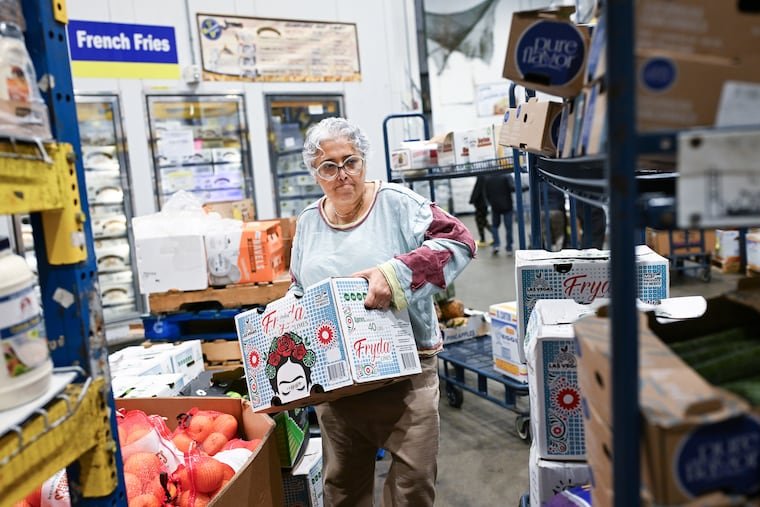
About two months ago, Dina Daniel made the difficult decision to raise prices on about 70% of the dishes at Fava Pot, her small chain of Egyptian restaurants. The chef and owner worried about alienating customers but felt she had no other choice after seeing the cost of ingredients skyrocket at the Jetro Restaurant Depot in Alexandria, Va., adding hundreds of dollars to the weekly shopping bill for her three shops in the Washington area.
Daniel is among the countless independent operators who rely on Restaurant Depot’s 167 low-cost warehouses to stock their pantries and walk-ins every week. But since the Iran war started in February, Daniel has experienced sticker shock at the wholesaler: She paid 63% more for ground halal lamb compared with last year, according to receipts forwarded to the Washington Post. She saw a similar percentage increase in the price of canola oil. The cost of fresh tomatoes soared from $17.94 for a case in ril 2025 to $76.92 a year later, a more than 400% surge.
Further complicating her future costs: In March, food service distributing giant Sysco announced plans to buy Restaurant Depot for $29.1 billion in cash and stock. Like many small-restaurant owners, Daniel is dubious that Sysco, which controls about 18% of the market and relies on high-volume accounts, will have her best interests at heart. She expects further wholesale increases — with ripple effects on restaurant prices and budget-conscious diners who ultimately pay those costs.
Daniel’s dire forecast is based in a kind of contemporary cynicism: The Egyptian native has listened to President Donald Trump’s promises to lower costs, only to face continued rising gas prices. She’s lost trust in a system where the big just get bigger.
I don’t believe promises anymore from big people, she told the Washington Post. Of course they’re not buying it to help small businesses.
But in an interview with the Post, Kevin Hourican, chief executive of Sysco, said these kinds of worries are misplaced. I can’t possibly be more clear about this. We will not raise prices at Restaurant Depot, hard stop, Hourican said.
The purchase still faces federal regulatory proval, but just the prospect of it has fractured the hospitality ecosystem into two distinct worlds. One is a group of independent operators, antitrust reformers, and at least one state agriculture commissioner who say the purchase could decrease product choices at Restaurant Depot, lead to higher prices for chefs and in turn diners, narrow sales opportunities for U.S. farmers, cause more restaurants to close, and potentially flatten America’s restaurant culture into some Sysco-branded monolith.
The other contingent is more bullish on the deal. This group includes some analysts and business executives — including those at Sysco and Restaurant Depot — who say the sale could be a boon for the industry. They say that it could greatly increase the number of Restaurant Depot locations, especially in smaller markets not currently serviced by the company, and that it could expand, not limit, product choices. They say the purchase could generate thousands of new jobs across the country.
Relying on purchasing efficiencies, the Sysco sale could lead to lower prices, David Henkes, senior principal at Technomic research firm, said recently on the A Deeper Dive podcast. Lower prices are good for operators. It may not be good for other members of the distribution business or even manufacturers.
Yet many independent restaurant owners are worried the deal may alter the way Restaurant Depot conducts business. The Post talked to seven such operators. None expressed enthusiasm for the deal. It’s a consolidation of distribution, right? said Gus May, co-founder of La Tejana, a breakfast taco shop in Washington. So then basically they’ll have a monopoly and raise the prices.
Founded in 1976 by Nathan Natie Kirsh as Jetro Cash & Carry, Restaurant Depot has become a major supplier for small operators who don’t have the purchasing power to negotiate better prices from large food service distributors, such as Sysco, known as broadliners in the industry because they carry a broad line of products. Restaurant Depot’s prices are significantly lower than those at Sysco, multiple people say, up to 20% cheer.
The hassle, however, is worth it to many small operators who are already dealing with inflated costs across the board that contributed to the closure of nearly 10,000 independent restaurants last year. (Washington alone saw more than 200 restaurants and taverns return their liquor licenses in 2025, which usually signals a closure). The savings offered by Restaurant Depot — routinely $10,000 or more a year for operators — can mean the difference between staying open and closing for good, said Erika Polmar, executive director of the Independent Restaurant Coalition.
Operators’ panic is very real, and that is the message that we’re taking to the [Federal Trade Commission]: These restaurants, these incredible businesses that are cornerstones of their local economies, are thinking about closing because they just can’t bear one more increased expense, Polmar told the Post in an interview.
The IRC has been soliciting its 54,000 members about their relationships with Restaurant Depot, and the organization plans to submit its findings to the FTC in hopes of scuttling Sysco’s planned purchase. The coalition argues the deal is the largest proposed merger in U.S. food service distribution history, creating a combined company that will dominate both the broadline delivery and cash-and-carry wholesale channels, according to a draft fact sheet shared with the Post. The group argues that the purchase would violate Section 7 of the Clayton Antitrust Act of 1914, which prohibits any acquisition that may substantially lessen competition.
The combined company, the IRC says, would be larger than the 2013 proposed merger of Sysco and US Foods, which the FTC argued would violate antitrust laws. After a U.S. district court granted the FTC’s request for a preliminary injunction, Sysco and US Foods withdrew their plans to merge. Both Sysco and US Foods are broadline delivery companies that compete for market share.
Federal regulators will have to determine whether Sysco’s proposed purchase of Restaurant Depot would limit competition, even though the companies operate in different supply channels. The IRC argues that many of its members use Restaurant Depot as leverage to negotiate lower prices from Sysco.
But Hourican said there is only about a 10% overl between Sysco and Restaurant Depot customers. More to the point, Sysco wants to keep Restaurant Depot as it is, he said. The company is a cash cow: Restaurant Depot generated about $16 billion in revenue last year, according to Sysco’s acquisition announcement, with nearly $2 billion in free cash flow, or the amount of money on hand after covering operating expenses. That will help Sysco cover the $21 billion that the company will have to raise to finance the purchase, Hourican said.
The business will be run separately from Sysco, he said. Restaurant Depot’s leadership team will remain under the guidance of Richard Kirschner, its chief executive. They will make the decisions, including store locations and prices. Sysco doesn’t plan to even add its name to Restaurant Depot.
It would hurt our business if we raised prices, Hourican told the Post. That customer would go to BJ’s, Costco, Sam’s Club, Walmart, other cash-and-carry choices that are out there. There’s no financial benefit to us in doing that.
Stanley Fleishman, executive chairman of Jetro Restaurant Depot, said he was superconfident that Sysco would not mess with the company’s product line or its pricing structure. There’s no way they would pay this full price if they were going to destroy the business, Fleishman said about raising prices. It would be such a bad thing for them to screw with our model. We’ve been so successful on every level.
This corporate optimism, however, is not shared by everyone. Sysco stock dropped $12 per share to $69.30 on the day the acquisition was announced. (The stock has partially rebound to around $74 per share.)
Some operators said recent history may not bode well for the acquisition. They pointed to US Foods buying Smart Foodservice Warehouse Stores in 2020 and renaming it Chef’Store, only to try to sell the cash-and-carry company four years later so that it could focus on its broadline business. (In a statement to the Post, US Foods said the company still believes it is not the right long-term owner for Chef’Store. For the foreseeable future, however, we plan to retain and continue to grow and improve the business while serving our customers well.)
But other operators talked about their previous experiences with Sysco: During the pandemic, Rebecca Masson, the founder and chef behind Fluff Bake Bar in Houston, said Sysco trucks would frequently show up hours late with deliveries, showing no remorse. Thomas Costa, chef and owner of the North Plank Road Tavern in Newburgh, N.Y., recalled a conversation in which his then-Sysco sales representative suggested the representative was wasting his time because the tavern’s account was so tiny compared with, say, a hotel. Others mentioned they can’t work with Sysco because the company requires minimum orders, which can be too large for mom-and-pop restaurants that may not have the storage or volume of customers to handle so much product.
Their experiences reinforced an idea expressed by Costa: It’s easy for small, independent restaurateurs to feel sidelined by a corporate giant such as Sysco. They do not care about the little guy, he said.
Yet Hourican said Sysco is already thinking of ways to help customers who rely on Restaurant Depot. Sysco wants to lower costs, through the company’s purchasing efficiencies, he said, and create loyalty programs for frequent users of the warehouses. It’s bringing more affordability to more consumers, to more restaurants, and growing our business profitably as a result of doing those things, the executive said.
On a recent Friday, as Daniel and her Fava Pot business partner, Chris Samuels, pushed around four carts at the Restaurant Depot in Alexandria, she noticed that the price of fresh tomatoes had dropped to $29.95 a case. It was still $12 higher than a year ago but well below the price tag from earlier this spring. It was a small victory for a chef and owner who’s watching every penny. At 57, Daniel is looking to retire in the next 12 months or so and hand over her business to Samuels and his brother, Stephen. Whatever hpens with Restaurant Depot would probably fall on them.
Daniel held out little hope that if the sale is proved by regulators, Sysco would leave Restaurant Depot alone. Sysco only cares about the money, she said. They are not a charity.
test
RFK Jr. Appears Disengaged on Many Health Department Matters Beyond Vaccines

Shortly after the World Health Organization declared the Ebola outbreak in Africa a public health emergency, a reporter asked Health Secretary Robert F. Kennedy Jr. if he was worried about the virus. Six Americans had already been exposed. His response was brief: Yeah, we’re working on it.
In the nearly three weeks since, as the Centers for Disease Control and Prevention imposed travel restrictions to keep the virus from coming to the United States, Mr. Kennedy has made no public comments about the spreading outbreak. He has received very few briefings about the virus from C.D.C. scientists, although he speaks daily to the acting director, according to people familiar with his response.
Mr. Kennedy’s proach to the crisis reflects his broader management of the Department of Health and Human Services, which affects the health of 340 million Americans and provides health care to 40 percent of the population through Medicare and Medicaid.
Mr. Kennedy has shown little interest in managing the details of work in his department, according to multiple colleagues. Instead, they say, he is single-mindedly focused on his top priorities, including food recommendations and pesticide exposures, and hunting for evidence to support his long-held beliefs that vaccines are harmful.
Deeply mistrustful of career civil officials, the secretary has surrounded himself with a close circle of handpicked advisers and stacked agencies with political pointees aligned with his views. While major posts have sat vacant and a wave of veteran health experts and scientists have departed, Mr. Kennedy has remained isolated from much of the department’s top staff.
He rarely engages with members of Congress, colleagues said, unless he is asked to testify. He has made just one known visit to the C.D.C., after a gunman opened fire on its headquarters and killed a police officer last August.
Thank you for your patience while we verify access. If you are in Reader mode please exit and log into your Times account, or subscribe for all of The Times.
Thank you for your patience while we verify access.
Already a subscriber? Log in.
Want all of The Times? Subscribe.
test
Food delivery driver charged after selling alcohol to teen who later drowned, police say

AUTAUGA COUNTY, Ala. (WSFA/Gray News) – Police in Alabama say a food delivery driver is facing charges for allegedly selling alcohol to a teenage girl who later drowned in a swimming pool.
Manoj Chitta is charged with criminally negligent homicide and selling alcohol to a minor, according to the Prattville Police Department.
Police responded to a report of an unresponsive teenage girl in a home’s swimming pool Wednesday. Officers provided emergency aid, and she was taken to the hospital, where she died from her injuries Friday.
Investigators determined the teenager had consumed a substantial amount of alcohol before getting into the pool where she was later found unresponsive.
Police say Chitta, who is in the country on a student visa and working as a delivery driver for an unnamed food delivery service, delivered the alcohol to the teen.
It’s alleged that Chitta failed to verify the teen’s age before delivering the alcohol and that he communicated with her outside of the service’s delivery p.
The investigation is ongoing.
test
Stanley Cup Game 3 food headlined by $60 surf and turf loaded potato
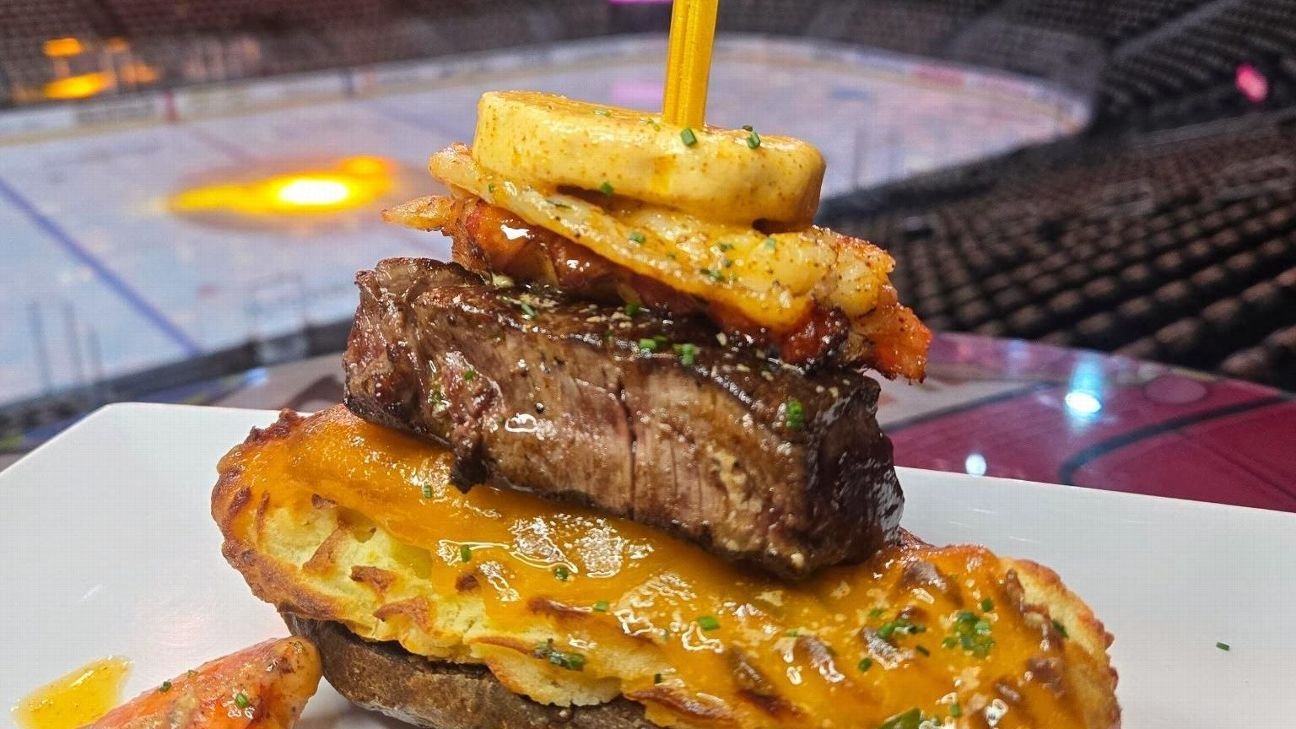
LAS VEGAS — The Vegas Golden Knights aren’t exactly known for their subtlety, from their glittery gold jerseys to a pregame show that rivals anything on The Strip as an assault on the senses.
That grandiosity carried over to the menu for Game 3 of the Stanley Cup Final at T-Mobile Arena, where a few high-end items defied the usual game-night fare. Consider these dishes created for the Stanley Cup Final from Levy Restaurants:
“Forged in Gold” Surf and Turf Loaded Potato ($60)
Sin City Lobster Poutine ($45)
Seasoned waffle fries are dotted with garlic-poached chunks of lobster and crispy cheese curds covered in gravy. Some of the Canadians we spoke with at Game 3 protested that this wasn’t a traditional poutine based on fry choice and gravy coverage. It’s $36 for season-ticket holders.
Sword in the Stone ($18)
This is an airy pastry filled with mascarpone cream, strawberries, blueberries and blackberries, topped with caramel and raspberry sauce. It has a big old sugar thing that looks like ice sticking out of it.
While not unique to the Stanley Cup Final, the Golden Knights also have one of their most luxurious menus items available: The Vegas Born Roll ($50; season-ticket holders pay $40) that features seared wagyu beef, snow crab, avocado, chives and — of course — flakes of gold.


Star-Spangled Spectacular Berks County set for July 4
In addition to the text of the obituary, any photogrhs that you wish to include can be attached to this...


RFK Jr. Appears Disengaged on Many Health Department Matters Beyond Vaccines
Shortly after the World Health Organization declared the Ebola outbreak in Africa a public health emergency, a reporter asked Health...


As restaurants struggle with costs, a major food supplier deal raises new fears
About two months ago, Dina Daniel made the difficult decision to raise prices on about 70% of the dishes at...


‘I worked with prosthetic limbs, then I lost my arm’ | BBC News
Jim Ashworth‑Beaumont is a triathlete and prosthetics clinician who spent years helping others. He is now the first person in...


UK royals attend wedding of King Charles III's nephew Peter Phillips to NHS nurse. #BBCNews


Is this the death of the cake shed? #Cake #CakeShed #BBCNews


Small airports matter to agriculture
Arkansas is the nation’s rice leader. We produce nearly half of all American rice and export more than $400 million...


Mexico attempts largest-ever ‘wave’ after popularizing it in 1986
Mexico City sports fans turned out to break the Guinness World Record for the largest human wave ever performed. Thousands...


The free speech dilemma over Hasan Piker | Top Comment Podcast
When Twitch streamer Hasan Piker was denied entry into the UK this week, it rekindled a conversation around the Home...


At least a dozen people shot near street festival
Police said officers are searching for suspects after twelve people were shot near the Old West End Festival in Toledo,...
-

 LifestyleNews2 weeks ago
Spine surgeon rates sofas for your back: Beanbags score 0, lumbar support gets 10
-

 UsaLocalNews2 weeks ago
DOJ says it scrubbed news releases about Jan. 6 criminal cases from its website
-

 Tech2 weeks ago
Today's NYT Connections Hints, Answers and Help for May 25, #1079
-

 Video2 weeks ago
The Odds: Are Americans concerned about AI replacing jobs?
-

 Tech2 weeks ago
Sennheisers Momentum 5 headphones are all about the audio and ANC upgrades – Engadget
-

 Video2 weeks ago
911 call reveals more about Kyle Busch’s condition before his sudden death
-

 Video2 weeks ago
Ebola: Everything you need to know about the outbreak | The Global Story
-

 Video2 weeks ago
Everything you need to know about Makerfield by-election | BBC Newscast