
test
Star-Spangled Spectacular Berks County set for July 4

All payments by families must be made with a credit card. We will send a proof of the completed obituary before we require payment. The obituary cannot run, however, until we receive payment in full.
Obituaries can be submitted for any future date, but they must be received no later than 3:00 p.m. the day prior to its running for it to be published.
Please call the obituary desk, at 610-371-5018, for information on pricing.
The America250PA Berks County Committee, in partnership with the Reading Symphony Orchestra, local businesses, organizations, and community partners, will present the Star-Spangled Spectacular Berks County, a free, family-friendly celebration.
Created as part of the lead-up to America’s 250th anniversary, the Star-Spangled Spectacular Berks County will showcase the spirit of community through live music, family activities, local food vendors, a patriotic concert by the Reading Symphony Orchestra, and a spectacular fireworks finale.
The event will be held at 2 p.m. on July 4 at Berks County Fair Grounds, 1216 Hilltop Road, Bern Township. Gates open at noon. Fireworks will begin at proximately 9:30 p.m.
The event is designed to welcome residents of all ages and provide an opportunity for families, friends, and neighbors to gather and celebrate together.
In the spirit of service and community, attendees are encouraged to bring a nonperishable food item to support Helping Harvest, helping extend the celebration’s impact to neighbors in need throughout Berks County.
This event is about celebrating not only our nation’s history, but also the strength and spirit of our local community, said Charles Bock, owner of Stereo Barn and Reading Symphony Orchestra board president. The Star-Spangled Spectacular is being built through collaboration, and we’re proud to offer a free event that brings people together in a meaningful way.
In addition to entertainment and festivities, the event will feature opportunities for local nonprofits, schools, and community groups to participate and engage attendees in family-friendly activities.
Theater
Reading Civic Theatre, 4350 Perkiomen Ave., Exeter Township, will be holding auditions for its upcoming production of Carrie the Musical on June 25 from 6- 10 p.m.
Carrie the Musical follows an awkward, telekinetic high school outcast in Chamberlain, Maine, who is relentlessly bullied by her peers and oppressed by a fanatically religious mother. When a cruel prom night prank goes terribly wrong, Carrie unleashes her devastating powers, destroying everything and everyone in her path.
Filled with powerful music and a little theater magic, you don’t want to miss being a part of this wonderful show., and maybe dying a glorious death on stage!
Callbacks will be held on June 30 from 6- 10 p.m. Performance dates are Oct. 16,17, 18, 23, 24 and 25. Evening performances are at 7:30 on Fridays and Saturdays and matinees at 2 pm on Sundays.
•••
A reimagination of William Shakespeare’s tale has Juliet wanting to fall in love while fighting for her independence. She treads through deepening waters over romance and relationships, among and between families, but can she live with the consequential decisions she is making?
Playwright Kimberly Patterson updates the classic tragedy of star-crossed lovers with Romeo and Juliet, Class of ’97, presented as a staged reading at 7 p.m. on Thursday at the Boscov Theater in the GoggleWorks Center for the Arts, 201 Washington St., Reading.
Set in what was a slightly more innocent age; before 9/11 and Columbine, and in an era of youth having less reliance on cellphones and social media, Patterson, gives this classic tale a more relevant and resonant treatment.
Inspired by the playwright’s rejection of the young couple’s ill fate, Patterson sought to synthesize the Bard’s traditional manuscript, the 1597 bad quarto, and Arthur Brooke’s 1562 Romeus and Juliet, to create a protagonist with more dimension and agency to convincingly be the catalyst of the action from the Culets’ party onward. Maybe finally Juliet could have a new ending, one that would empower young women instead of steeping them in tragedy.
Music
Following the success of the first U.S. leg of his Sende World Tour, which saw him headline and sell out some of the country’s most iconic arenas, including Miami’s Kaseya Center, New York’s Barclays Center, and Los Angeles’ Intuit Dome, global phenomenon Ryan Castro is set to return to the United States this fall with Sende the Last Dance, a 16-city tour that marks the final chter of the Sende era.
Sende the Last Dance serves as the closing chter of a creative era inspired by Castro’s critically acclaimed Caribbean-influenced projects Sende and Hopi Sende, two dancehall-driven albums that drew from his transformative years living in Curacao and helped expand his sound onto the global stage.
test
A N.H. food innovator looks to increase availability of local vegetables
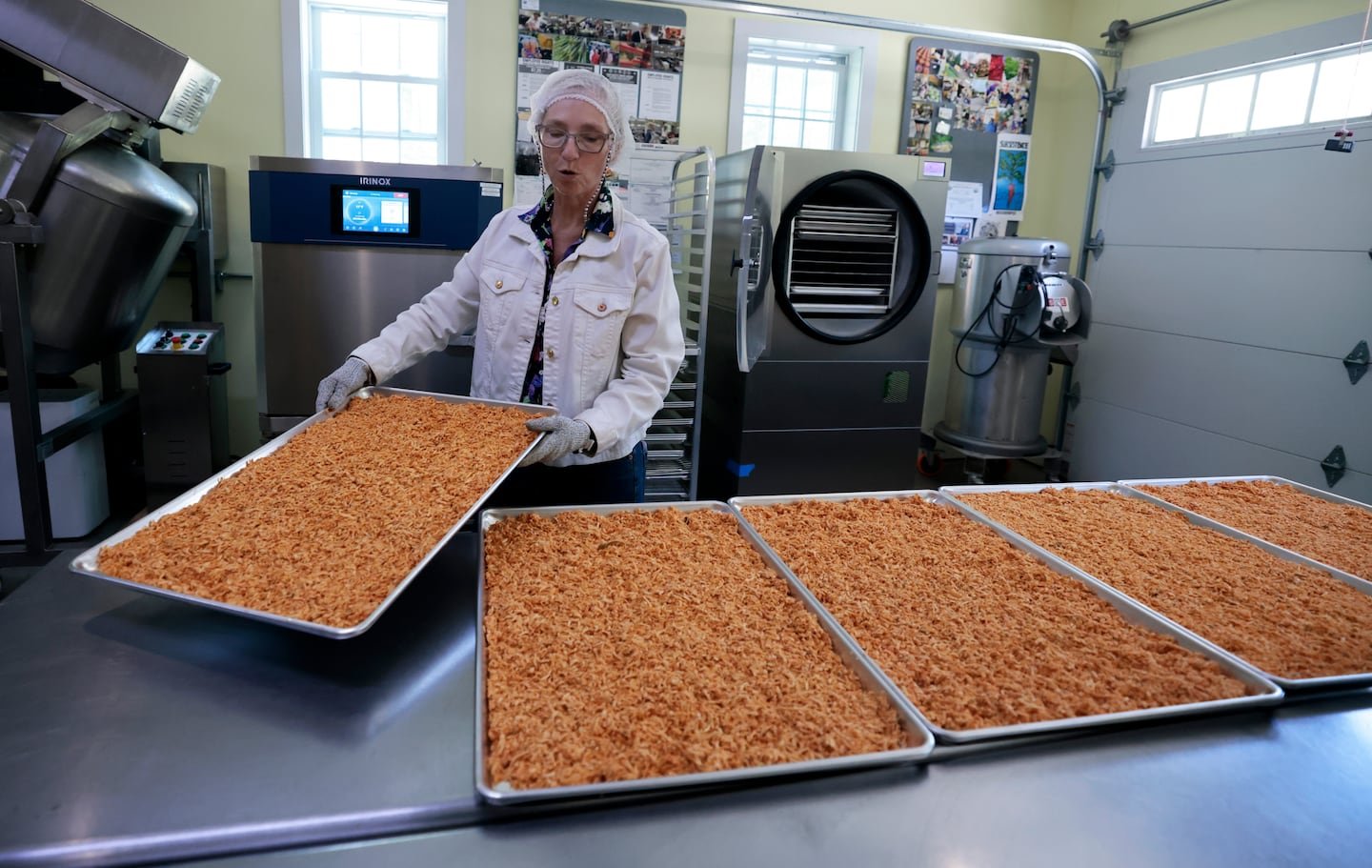
This process takes our product to a whole different level, said Zydenbos. And, she said, it tastes delicious.
Vermont has the highest percentage of local food sales in the region (10.7 percent), followed by Maine (4.9 percent), with New Hampshire coming in third (4.6 percent), according to 2024 data from New England Feeding New England, a partnership of New England organizations advocating that the region produce 30 percent of the food it consumes by 2030. Massachusetts comes in fourth, with 3.6 percent of food spending on local items.
New Hampshire is second to last in New England when it comes to the value of vegetable sales ($23 million) and the value of agriculture ($209 million). Many farmers in the state struggle to turn a profit.
Generally speaking, New Hampshire is a little bit behind, said Shawn Menard, executive director of Seacoast Eat Local, a local food nonprofit, and board president at the Concord Food Co-op. Menard said other New England states have more robust infrastructure for food processing, purchasing, and distribution that supports local food production.
Since 2012, Zydenbos has operated Micro Mama’s, one of New Hampshire’s first fermented vegetable companies, sourcing local produce and transforming it into fermented vegetables sold at more than 50 locations around New England, including about 30 Whole Foods stores.
Now, Zydenbos wants to try something new, by making more processing equipment available for farmers and producers in New Hampshire and using it to introduce novel local food products. Among them: freeze-dried kimchi, a new take on a traditional Korean dish made with spicy fermented vegetables like na cabbage and radishes.
With a $96,000 federal grant from the US Department of Agriculture in hand, she purchased new equipment, including an individual quick freezer and a freeze dryer. Food experts said the cost of the equipment is one barrier that’s prevented other small local businesses from offering similar products.
Jennifer Chadbourne, a clinical associate professor in agriculture, nutrition, and food systems at the University of New Hampshire, said freeze-dried kimchi is not widely available.
It could be a really novel idea for the manufacturer, she said.
Traditional kimchi and other fermented vegetables offer certain health benefits, like probiotics that can aid gut health, according to Chadbourne. She said freeze-drying can preserve the nutritional value of food since it doesn’t rely on a high heat during processing, but there’s not yet robust evidence on the nutritional profile of a new food like freeze-dried kimchi. She said flash freezing is another effective way to preserve the peak nutrients of a freshly harvested food.
For the consumer, these products are a convenient way to buy nutritious local produce outside the limited months of New England’s growing season.
Especially here in New England, where we have such drastic seasons that impact how long we can grow food, any type of novel preservation technique is going to help us maximize our crops during the seasons where we can grow, said Chadbourne.
The individual quick freezer Zydenbos acquired is different from a typical household freezer. It freezes produce in about 20 minutes as opposed to 48 hours, Zydenbos said. And rather than locking produce into one solid chunk, it freezes berries or broccoli as individual pieces, which makes it easier to use at home.
If freeze-dried kimchi seems a little out there, that’s a challenge Zydenbos has faced before. When she started her fermented food business in 2012, kimchi was still on the fringes of food culture in New England. Zydenbos said she had to work with state agencies as they learned how to regulate the food. Then she toured the state’s farmers markets educating consumers and evangelizing the benefits of fermented foods.
Even before that, there were her own doubts to overcome.
When you first do it, you’re like, Oh, my god, this goes against everything that you’ve been taught, she said. You’re basically leaving vegetables out on the warm shelf to transform.
I’m going to kill somebody, she remembers thinking while fermenting a batch for her own consumption after attending a kimchi-making workshop.
Zydenbos came to fermenting in search of healing. For years, she relied on copious quantities of probiotic supplements to ease digestive issues. When she started making kimchi, that became her new cure.
From there, a kimchi empire was born.
In terms of somebody who really put it on the m in this region, I think Micro Mama’s is a huge player in that, said Menard. He was the produce manager at the Concord Co-op when Zydenbos landed her account there. Menard said he hadn’t had kimchi before, but he was blown away by the flavor of her product, which was well received among the co-op’s customers.
By 2017, Zydenbos had built a facility in Weare on a property that had been in her family since the 1970s. The fermenting dens now contain 40,000 pounds of vegetables in production, all subject to strict federal and state safety regulations. She sourced stainless steel fermenting tanks from Italy and Germany to avoid using plastic containers.
When Whole Foods first came to New Hampshire, Zydenbos put her line of products forward – including kimchi, sauerkraut, and fermented carrots and beets, sourced from New Hampshire farms. The food safety work she had done with state agencies paid off, Zydenbos said, when she was able to show Whole Foods her quality control measures.
Now, with her new equipment, Zydenbos is planning to add freeze-dried kimchi to her lineup, as well as launch a spice line and food that will peal to hikers, campers, and preppers.
The possibilities are endless, she said.
With the individual quick freezer, she can produce frozen carrots, beets, potatoes, and French-fry cut potatoes, which could be sold at local grocery stores or to New Hampshire restaurants.
Zydenbos views these efforts as a way to help farms access markets they haven’t been able to reach given a lack of processing equipment, licensing, or cital. She said the demand already exists.
Bruce Wooster of Picadilly Farm in Winchester, N.H., has been selling produce to Zydenbos for about five years. He said her new endeavor with flash frozen and freeze-dried produce could help growers extend their selling season.
All the local farms have their crop coming all at once, he said. It can be tough to spread out those sales, but by freezing you can spread things out and not be like, ‘Hey, we’ve got to sell it this week before it spoils.’
The Concord Food Co-op is one local grocery store that’s eager to include local frozen produce on its shelves.
We have frozen vegetables that fly off the shelf, said Josh Belanger, the store’s former general manager. I think if we had them locally they’d do even better.
Josh Marshall, assistant commissioner of the New Hampshire Department of Agriculture, Markets, and Food, said the new equipment will help make more local food available.
For a small producer to be able to buy directly from small, New Hampshire farmers, and do this, this seems relatively cutting edge, Marshall said.
test
Literary calendar for week of June 7

To share the story of your loved one, you can submit an obituary using any of the following methods:
Online: Use our Self-Service Portal for a step-by-step guided process.
Need assistance? Our obituary desk is here to help. Please call us at 651-228-5263 with any questions regarding the process or deadlines.
General Information:
Your full name,
Address (City, State, Zip Code),
Phone number,
And an alternate phone number (if any)
Obituary Specification:
Name of Deceased,
Obituary Text,
A photo in a JPEG or PDF file is preferable, TIF and other files are accepted, we will contact you if there are any issues with the photo.
Ad Run dates
There is a discount for running more than one day, but this must be scheduled on the first run date to ply.
If a photo is used, it must be used for both days for the discount to ply, contact us for more information.
Policies:
Verification of Death:
In order to publish obituaries a name and phone number of funeral home/cremation society is required. We must contact the funeral home/cremation society handling the arrangements during their business hours to verify the death. If the body of the deceased has been donated to the University of Minnesota Anatomy Bequest Program, or a similar program, their phone number is required for verification.
Please allow enough time to contact them especially during their limited weekend hours.
A death certificate is also acceptable for this purpose but only one of these two options are necessary.
Guestbook and Outside Websites:
We are not allowed to reference other media sources with a guestbook or an obituary placed elsewhere when placing an obituary in print and online. We may place a website for a funeral home or a family email for contact instead; contact us with any questions regarding this matter.
Obituary Process:
Once your submission is completed, we will fax or email a proof for review prior to publication in the newsper. This proof includes price and days the notice is scheduled to pear.
Please review the proof carefully. We must be notified of errors or changes before the notice pears in the Pioneer Press based on each day’s deadlines.
After publication, we will not be responsible for errors that may occur after final proofing.
Online:
Changes to an online obituary can be handled through the obituary desk. Call us with further questions.
Payment Procedure:
Pre-payment is required for all obituary notices prior to publication by the deadline specified below in our deadline schedule. Please call 651-228-5263 with your payment information after you have received the proof and proved its contents.
Credit Card: Payment accepted by phone only due to PCI (Payment Card Industry) regulations
EFT: Check by phone. Please provide your routing number and account number.
Rates:
The minimum charge is $162 for the first 12 lines.
Every line after the first 12 is $12.
If the ad is under 12 lines it will be charged the minimum rate of $162.
Obituaries including more than 40 lines will receive a 7.5% discount per line.
On a second run date, receive a 20% discount off both the first and second placement.
Place three obituaries and the third placement will be free of charge.
Each photo published is $125 per day. For example: 2 photos in the per on 2 days would be 4 photo charges at $500.
Deadlines:
Please follow deadline times to ensure your obituary is published on the day requested.
Hours
Deadline (no exceptions)
Ad
Photos
MEMORIAM (NON-OBITUARY) REQUEST
Unlike an obituary, Memoriam submissions are remembrances of a loved one who has passed. The rates for a memoriam differ from obituaries.
Please call or email us for more memoriam information
Please call 651-228-5280 for more information.
HOURS: Monday – Friday 8:00AM – 5:00PM (CLOSED WEEKENDS and HOLIDAYS)
KRYS MALCOLM BELC: St. Paul resident, current Edelstein-Keller writer-in-residence at the University of Minnesota, signs copies at the launch of his new memoir What I Made for Dinner, about his descent during the COVID lockdown into an obsession with food celebrities such as Ina Garten, the Barefoot Contessa. 6 p.m. Tuesday, Next Chter Booksellers, 38 S. Snelling Ave., St. Paul.
MARY CASANOVA: Minnesotan discusses her new children’s picture book, Northwoods Lullaby, in Mary Beth Griffin’s picture book salon. Free. 6:30 p.m. Monday, Harriet Alexander Nature Center, 2520 N. Dale St., Roseville.
MEENAL PATEL: Minnesota author/illustrator hosts a story time based on her latest book, Where Do Stories Live? 10:45 a.m. Saturday, Next Chter Booksellers, 38 S. Snelling Ave., St. Paul.
THREE MYSTERY MEN: Minnesotans Cary J. Griffith, Joe Golemo and Richard Ebert sign copies of the latest in their crime/mystery series. Griffith’s sixth Sam Rivers story, Grizzly Narrows, features special agent Rivers having to outwit a deadly killer before his family becomes the next target at a law enforcement conference in the forests of northeastern Minnesota. In Joe Golemo’s third Grayson Dyle adventure, Character Flaws, Dyle is at a black-tie party when a prominent protester is found strangled and investigators find DNA linking the victim to Dyle’s tangled family tree. Silentcide 3: A Freedom Quest is Richard Ebert’s third book featuring sibling silent assassins Chris Davis and Michelle Barton, hounded by a ruthless FBI agent and coerced into black ops missions while being hunted by the successor of an assassin network and struggling to unravel a global conspiracy. Free. Noon-2 p.m. Saturday, Once Upon a Crime mystery bookstore, 604 W. 26th St., Mpls.
What else is going on
Christopher Selleck and Brooks Turner are 2026 McKnight Book Artist fellows, announced by Minnesota Center for Book Arts in partnership with the McKnight Foundation. Each will receive $25,000 in unrestricted funds to explore and deepen their art practice.
Selleck is an artist, photogrher and book artist whose interdisciplinary practice explores masculinity, identity, and vulnerability through photogrhs, sculpture, and intimate book-based forms, the MCBA announcement said. Drawing on the visual language of early 20th-century physique photogrhy, his work reinterprets the idealized male body…
Turner is an artist, writer, educator, and parent. According to the announcement: Through methodologies that include archival research, collage, drawing and installation, Turner engages histories of labor, fascism, and resistance in Minnesota, with a focus on the 1934 Truck Drivers Strike.
test
John Early Is Ready to Go There

There are two tacks for the contemporary performer facing the decline of classic genres of film and comedy. The first is distrust, hence the prevalence of a flat, over-it style that wouldn’t dare rise to the level of caring. The second is going full out, plunging into the vacuum with such enthusiasm that dormant modes are made odd and affecting again.
John Early, as anyone encountering his work soon prehends, chooses the latter. He is an actor, a writer, and a performing artist in other ways—a singer, a dancer, a standup comedian—who’s embraced that plurality in self-assigned opportunities to exercise his talents. I don’t remember how I learned about 555, the 2017 anthology on Vimeo created with the director Andrew DeYoung, written and acted alongside Early’s best friend and artistic—but not actual—spouse Kate Berlant. Across the short films, Early plays, among other roles, a smiling, fiendish mall pop act; the shy, offbeat child of an overbearing stage mom; and an extra in a makeup chair whose instruments, his face and his voice, are progressively hampered by prosthetics.
The tonal medley within such performances has only been refined as Early moved from sketch experiments for the internet to streaming specials such as Would It Kill You to Laugh? (with Berlant; on Peacock) and John Early: Now More Than Ever, whose title houses just the sort of trite commonplace that Early, in standup form, loathes. I think the only thing we were really taught as a generation is just to vamp, he posits at one point in Now More Than Ever, bobbing side to side; but this is performance, not mere truth-telling, so the telling is the thing, the bobbing, the hair flips, pursed lips, and too-cutesy smiles.
Now More Than Ever opens on a sultry, studied rendition of Oops (Oh My), by Tweet, the R. & B. songstress. This work has overlped with Early’s accumulation of memorable one- or two-offs in mainstream, juggernaut comedies spanning the days of 30 Rock and Broad City to I Think You Should Leave and voice work in adult series such as American Dad and Rick and Morty. The greatest expansion of his cult renown arrived in 2016, with the perfect show Search Party, where Early plays Elliott Goss, a character who delivers truly bracing levels of gay narcissism. In 2024, Early starred in the film Stress Positions, the feature début of the writer-director Theda Hammel, as Terry, whose put-upon frazzle is made to be the world’s problem during the dog days of COVID.
Early has recently chafed at the relative continuity of his characters. Enter Tim, the son amid the quartet of What We Did Before Our Moth Days, the latest collaboration from Wallace Shawn and André Gregory, that was mounted at the Greenwich House Theatre this past spring. The production—both the playful, despicable, and distressingly heterosexual role of Tim and the close-quartered and searching rehearsal process—was something of an epiphany for Early, who was concurrently working on another revelation, his directorial début, Maddie’s Secret, in theatres June 19th.
And thus enter also Maddie, the film’s glowing good girl, played by Early himself. Early, who is thirty-eight, is a self-professed Goody Two-Shoes who grew up gay and Presbyterian in Nashville, but greater influences on the work are found in Toni Collette and turn-of-century R. & B., as well as melodramas such as William A. Graham’s Death of a Cheerleader and Paul Verhoeven’s Showgirls that help give Maddie’s Secret its look, patter, and emotional register. Maddie, plucked from dishwasher obscurity for a life of food influencing, is a full out kind of girl. (An unbridled dance becomes principal to her story.) Her resolute brightness is shaded by an eating disorder—dangerous territory for a filmmaker, Early admits.
I saw Maddie’s Secret in ril during the Chicago Critics Film Festival without a clue as to its plot—a film by John Early was enticement enough—and fellow Early enthusiasts will, I think, be surprised by the emotional admixture its exuberance inspires. Early has also surrounded himself with some of the funniest comedians working: Berlant, Conner O’Malley, Eric Rahill, Vanessa Bayer, Pat Regan, and the Def Comedy Jam legend Dominique Witten; yet laughter is one among many plausible responses to these performances.
On a drizzly day in New York, I met Early in Stuyvesant Square Park during the final week of Moth Days. I had seen the play the night before, seated next to the actress Julianne Moore, who unexpectedly squeezed in beside me. In the course of my conversation with Early, which has been edited and condensed, we discussed the waning expressiveness within contemporary culture, vomit, and going full out, in the dance studio and elsewhere.
I’m really glad that I got to see the play.
I saw who you were sitting with.
She was talking with Wallace Shawn, who was sitting behind me, and an usher told her, Your seat is over there. I had an extra seat, but my friend couldn’t come, so I was, like, If you guys want to sit near each other, I can scoot over. She was, like, Oh, are you sure about that? I was, like, Am I sure I want to sit next to Julianne Moore?
I was like, Who’s her friend? Then I was, like, Wait. I knew that you were coming, so I was, like, Oh, my God. That’s where I slowly put it together because I can see you-all.
I wondered whether you were actually looking at me. It’s the narcissism of being an audience member that you always think that the performers are watching you.
This is very intentional—we put light on the audience during the first two acts. It descends, and then by the third act it’s totally dark. Did you feel that?
The lighting changes?
Did you feel that you were lit a little bit and then—
Is it coming off the stage?
Yes, that is totally intentional. It’s meant as a way to replicate the intimacy of the rehearsal process. We rehearsed the play for a year and a half before the run. We would rehearse in artments around a table or in large armchairs. The play was never in a rehearsal space. It was rehearsed for a very, very long time in this very intimate way. I would be this far away [holds hands a few feet art] from Wallace Shawn and André Gregory and they would be, like, O.K. Let’s start. Then I would fucking start the fucking play and then I would just deliver it like this.
The goal, once we moved into a bigger space—which was terrifying for all of us—was to put light on the audience so we could actually look at them and genuinely tell them the story. I actually feel like I’m making direct eye contact and I have a task, a very simple task of, like, And then this is what hpened and this is what hpened. Then the mixing is really, really delicate and complex. . . . Even if you’re in the balcony, it feels like we’re right here and we’re talking like this.
As you were describing the rehearsal process, I thought, Oh, does that inoculate you against the audience? But actually it sounds like the opposite, priming you for the intimacy.
Exactly. I feel much stronger emotionally because for the first month we were, all of us, going crazy. It was so scary because every audience . . . It’s a very mysterious show, and it’s received very differently every night. To quote André, It’s not a Neil Simon play. There are some laughs that are pretty regular, consistent. For the most part, it hits people so differently, as you might imagine.
I did overhear Wallace Shawn saying that last night was a laughy night.
It was, in a great way, and I thought the laughs were so unexpected and smart. I felt like it was a very intelligent audience. We were getting laughs we have never gotten. I was, like, This is a shocking audience. They’re totally clued into this subtext and they’re looking for the kind of irony of someone saying something but trying to bury it. I was just, like, Oh, my God. I felt so relaxed last night.
It’s one of those things where you’re, like, It’s funny. Should I laugh? I had a similar experience watching Maddie’s Secret for the first time in a room full of raucous laughter.
I know. I know. That thrills me. Despite being so different, Moth Days and Maddie’s Secret are inherently linked to me because I was writing the movie as we were rehearsing the play. I was leaving editing to rehearse and going back into editing and post-production. So it was always, like, play, movie, play, movie. It was crazy.
Any cross-pollination there?
Working with Wally and André, the delicacy, the sensitivity, the kindness they showed me. They healed all of my acting-school wounds. They healed all of my various periods of disenchantment with theatre and acting. Working in this style with them, it’s cracked me open in a way. That might be a totally cheesy, actory thing to say, but in some ways it’s made me embrace the kind of inner cheesy actor that I’ve been running from for a very long time.
Why do you think that is?
I don’t know. The easy answer that I’ve given before, but that I’m more and more suspicious of or confused about, is that I grew up around religion, but I grew up around Presbyterianism, which is not the most challenging denomination, meaning it wasn’t scary. People are always, like, Oh, you poor thing. They imagine a melodramatic childhood of a little gay boy in the South, and it wasn’t like that at all. I didn’t feel suspicious of religion. I guess what I felt suspicious of—there was kind of wishy-washiness to the church I grew up in, and that feels so . . .
I can see how there’s a way that commitment and cheesiness are linked. They are, right?
Yes. They go hand in hand. You have to accept your gooey center. There is a screaming child in all of us that has to actually enter society and behave. You have to train yourself to be more rational, and you layer all these things on top of your screaming child, your accomplishments, this sense of irony. I think being a creative person, being a writer, a director, they’ve done wonders for me because, if I were purely an actor, I don’t know what the fuck I would be doing. I don’t know how I would get roles.
I have created so much of what I’ve been able to do, but as a result I’ve maybe been a little condescending or dismissive of the actor in me. It was really shocking to do the play and to feel. It’s a very emotional play. There are stretches at the end that are hard for me to get through without crying.
That helped me give in to this totally, totally insane challenge that I created for myself with Maddie’s Secret. I knew Maddie’s Secret would require me to really go there. Then, before I knew it, I was on set. It was just hpening. The emotion that the melodrama required was hpening.
Melodrama will not work if you don’t go there. It mechanically cannot hpen if everybody involved is not game.
Exactly. I was very clear from the beginning when I was talking to understandably nervous financiers, where I was, like, I don’t want this to be some cold, gay genre experiment. The whole point of this entire thing is to make something that is full of feeling.
I don’t want to use the S-word (sincerity), but I do feel like we’re in a moment of a lot of artists rethinking the irony thing. I want to ask about how you were conceiving of Maddie, the character, because not only is the movie genuine and melodramatic—she herself is.
Yes. And I am that, too. I think irony, sincerity, these are things that, like camp, are hard to pin down. There’s certainly irony in this movie. There’s certainly camp. But to me they were always integrated, the comedy and the drama and the emotion and the outrageousness of it. I never saw them as isolated components of this movie. I didn’t know if it would be successful in making people both laugh and cry, but that was the dream. I figured you could achieve that feeling by doing both a hard comedy and a hard drama simultaneously and not worrying about the tone. I certainly did not want it to be a dramedy. You know what I mean?
Another fraught generic term. Ironically because of their ingenuity, people and projects can magnetize these terms like absurdity and alt and irony, camp. These terms that circulate so much now, what is their interior?
I don’t have the grad-school tools to even understand what I’m doing on a theoretical level. That’s for other people to write about and figure out.
That’s the beauty of being an artist. You don’t have to tell people what you mean because it’s right there.
No, because you have to write the statement of purpose.
Yes, the mission statement. Corporate directives where it’s, like, We’re going to platform this marginalized voice and then their work has to be a perfectly calibrated example of what it means to tell this person’s story. Then you lose all the mystery.
To me, what helps me understand this movie and why I made it is expressiveness. Through the various forces, a huge one of them being social media, there’s been a loss of expressiveness. I will sound like a boomer, but I just feel that there’s an acting style—it’s a disease. I especially see this with the lead girl [in so many films]. The new lead girl, the new ingénue, is very, like, O.K. She’s sardonic and she’s, like, Yeah, that hpened.
She’s got to be seamless with the makeup ad and the jeans ad. It has to be the same girl.
Everything’s been flattened out. I’ve been looking out at the culture and feeling, like, Where are the Elizabeth Berkleys? Where are people’s voices? I mean, this drives me crazy with singing. Contemporary singing, it’s a tragedy. It’s all ahh. No—sing out, sing out. Risk.
I watched Clockwatchers the other night at Metrogrh, and Toni Collette in that movie is very Maddie, the purity. Then she gets initiated into this group of more rebellious women. But when we were watching this scene in the theatre where she sees the psychic and the psychic says, Do you want to change your destiny? And Toni is, like, I don’t know. It’s so beautiful.
I heard people behind me go Oomph, and then the other half of the room started laughing. It was a perfect example of a movie that allows that kind of earnestness and sincere contemplation. I yearn for that as a viewer. It was very important to me that Maddie be dorky and not cool. I think there are people who see the logline of this movie of a food influencer and they think it’s going to be cynical.
Naïveté doesn’t quite cover it.
Hopefully it feels like you’re Maddie when you’re watching. This is my dream.
It’s so bracing. When someone wants something so badly, like, in real life, it’s the scariest thing, but also ripe for comedy because the rigidity of their wanting is bound to lead to calamity.
Someone asked me recently what I hoped to say about eating disorders, about bulimia. I was, like, Nothing. Oh, my God, nothing. I’m underqualified. And that’s what’s funny, I guess, unintentionally, is that I chose an issues-based genre. I chose the issue of the week.
I think you evade perhs the less convincing aspects of that trope with the fact that there’s never a solid or untroubled rationale for bulimia or any eating disorder in the film. It could be reflexive. It could be sensorial. It could be diet culture, thinness, beauty, whatever. I like that it resists. We are in a culture that is prone to psychologizing ourselves all the time, in which there is, like, the wound.
And the wound is the explanation for everything.
In Maddie’s Secret, there are both no wounds and wounds all over.
Everyone’s in so much pain in the movie. One thing that really, really moved me doing this was when I was editing and I was, like, Oh, my God, I have made a movie where every single character has these big eyes. Every single character has a moment. I’m very proud of this quality. Even Conner [O’Malley], who’s so grotesque in the movie, has moments where he seems like a little boy who’s, like, Did I fuck up? Kate [Berlant] has such a childlike innocence that’s always right there under the surface that she so beautifully tped into for Deena. Everyone’s face is very full of feeling.
The people who know Conner’s work, and yours and Kate’s, are primed for laughter, but they’re not necessarily primed for that turn. By the time that you’re catching your breath from laughing, you almost want to take it back.
My dream was always that people are literally catching their breath from laughing. They’ve expelled themselves fully from enjoyment and the roller coaster of the movie that they’re in a state where emotion can come out.
Not to be too cute, but it’s like vomiting.
That’s one of the many things that surprised me about writing about bulimia. Vomiting itself is a very expressive, hysterical—in the Freudian sense—act. I was, like, Damn, I really chose a good central thing for everything I’m trying to do.
I was also thinking about the way that it is interlocked with the food influencing. Because vomiting is in some ways the greatest offense to gustatory pleasure. At least with shit, there’s the pleasure of a job well done. Whereas vomit undoes it.
Maddie’s such a good student and she’s such a good girl. I was living in the house where we shot the movie and trying to m out the first time she binges on camera. I was acting it because I also hpened to be the lead actor in the movie and I was totally alone. If anyone saw footage of me, I would look completely crazy. This was one of the most beautiful parts of this process, and I really wonder if this could ever have hpened to me if I hadn’t worked with Wally and André. I learned so much important stuff about the movie emotionally through acting, and I actually figured out some important ideas truly just through acting it out.
I was, like, No, what is this? What is it? Why am I walking? Why am I compelled to walk slowly to the bathroom versus quickly, which would be smart of her, given that she’s trying to hide this from her husband and she should go quite quickly. Then I was acting it out and I was, like, Oh, it’s because she is choosing to do this. She knows that if she does this, if she reawakens the demons, she will begin a path to self-destruction and she wants to self-destruct.
It’s ceremonial.
In that moment, I realized what the movie is all about. She has this good-girl angel armor that she’s built up. I think Maddie’s so strong. She had this horrible childhood and this very negligent mother who put her through hell. She’s worked so hard to make herself in opposition to her mother and then she’s realized that she’s a woman getting older, and that everyone in her life has this relationship to this armor and not her.
It’s unsustainable and requires too much repression, and she knows the only way out is to self-destruct. I learned just through walking down the hallway over and over again, and then I felt it. I felt what she was doing even though I’d already written it. I’d already written that scene and I had already written the whole movie. I was, like, Acting is so cool.
No, it’s real.
It’s material. It’s an emotional quality that I didn’t really believe in for a long time. I was kind of always, like, Acting is fake. I desired so much to be an actor, but, like, It’s fake. And now I’m, like, No, it’s totally real. It’s channelling. It’s really cool.
Everything you were saying reminds me of dance. When I would dance when I was younger . . . Don’t get too excited. I was never making it out of the studio.
Were you a competition dancer? What kind of vibe?
I was vaguely a studio kid—then I joined the high-school dance team. I remember my coach would have an aversion to us marking steps instead of going full out. She would say you have to feel it on your body. This is just my segue into wondering how the dance aspect of the film came about.
I’m going to be long-winded about this.
Please do.
I was listening to the Shaft soundtrack almost ritualistically every time I would write the movie.
Shaft?
Yes, because I was going through a period of really being obsessed with Isaac Hayes, whom I really, really love, and he’s very inspiring to me on a live-performance level. The opening song to Shaft is incredibly emotional and it’s incredibly sunny. It has these horns that are optimistic and warm, and that is literally the birth of the tone of Maddie’s Secret. There’s one song called Do Your Thing, which is nineteen minutes long. It’s unbelievable and it’s really funky and sexy, and then it starts to spiral out of control and it gets very dark. I was listening to that song when I was just dancing alone, and I was, like, God, I really wish there could be dance in this movie. But I was, like, But then it’s like ‘Austin Powers’ if there’s dance. I love Austin Powers, but I was just, like, I can’t—the idea of putting dance in it felt too broad to me.
But I kept thinking about it. I was like, Are you sure there’s no room for dance? Then I imagined in this dark song. I literally imagined Kate—who was not yet cast—dancing to this song, and I was, like, Oh, my God. Oh, my God.
I was, like, She has to have this tragic lesbian best friend played by Kate. It was cracking me up, frankly. I used to be very scared about getting in trouble for this, but it was making me laugh so hard, making queerness so dark, it being evil, almost, and Maddie being this cis girl who’s, like, What? I wanted there to be some hypnotic thing throughout the movie that pulls Maddie to the dark side. Then I realized that, as in all these disorder movies, there has to be a midpoint where her health is in danger, where she pushes herself too far and she has to be admitted to a treatment center, and I was, like, Oh, my God, it can be a queer dance class.
I was just, like, Done, here we go. There’s dance and we’re not fucking kidding.
No, we’re doing it.
To me, the dance is the mission statement of the movie, because it’s, like, No, no, we’re doing it. We’re committing.
It’s choreo. It’s real.
Yes. I got a fucking legendary choreogrher who I cannot believe is in this movie: Danielle Polanco. She’s in the Get Me Bodied music video. She’s in the Omarion video Touch. She choreogrhed Addison Ray. I took her out to dinner. I never met her, and I was, like, When I say there’s no money. I’m not being cute. She was, like, You don’t have to worry. I like art. Her favorite movie is The Bad Seed. She loves Old Hollywood, and so she totally got it.
I, like Maddie, like to exhaust myself, unfortunately. Kate and I learned the choreogrhy the weekend before our last week. I was so tired at that point that I had banged my head on a car door and didn’t know. I was talking to someone and I had blood going down my face, and they were, like, You’re bleeding. I was, like, What? I was fully Maddie. I was gone. It was totally insane, but that was the spirit of Maddie and the movie.
It’s totally injected in. I just love the dancing so much. It’s trying. It’s watching people who want something really, really, really badly.
What are you going to do with your time next, unless that’s your own private information?
I told my friend, I want to feel like a gay painter in the nineteen-thirties. I want to be in a shack. I found this beautiful shack basically on the beach, and I’m literally going to read Middlemarch. I mean, who knows what’s going to hpen, but I could do it.
It’s romantic, but it’s real.
You have to submit. ♦
test
As restaurants struggle with costs, a major food supplier deal raises new fears
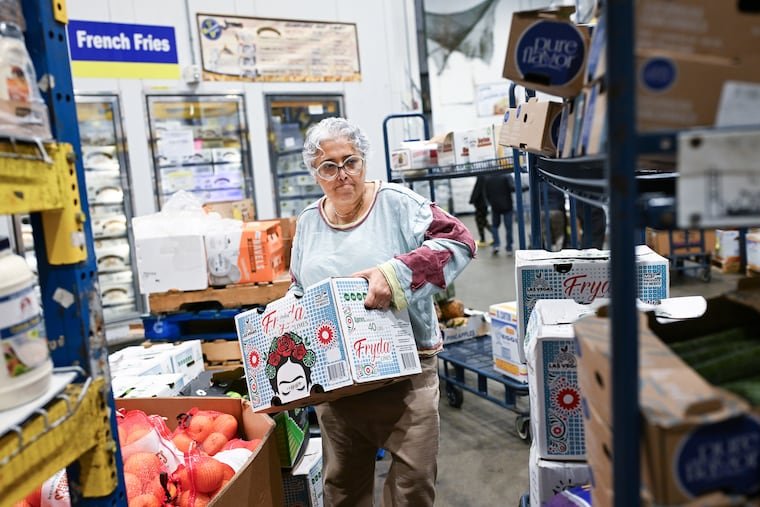
About two months ago, Dina Daniel made the difficult decision to raise prices on about 70% of the dishes at Fava Pot, her small chain of Egyptian restaurants. The chef and owner worried about alienating customers but felt she had no other choice after seeing the cost of ingredients skyrocket at the Jetro Restaurant Depot in Alexandria, Va., adding hundreds of dollars to the weekly shopping bill for her three shops in the Washington area.
Daniel is among the countless independent operators who rely on Restaurant Depot’s 167 low-cost warehouses to stock their pantries and walk-ins every week. But since the Iran war started in February, Daniel has experienced sticker shock at the wholesaler: She paid 63% more for ground halal lamb compared with last year, according to receipts forwarded to the Washington Post. She saw a similar percentage increase in the price of canola oil. The cost of fresh tomatoes soared from $17.94 for a case in ril 2025 to $76.92 a year later, a more than 400% surge.
Further complicating her future costs: In March, food service distributing giant Sysco announced plans to buy Restaurant Depot for $29.1 billion in cash and stock. Like many small-restaurant owners, Daniel is dubious that Sysco, which controls about 18% of the market and relies on high-volume accounts, will have her best interests at heart. She expects further wholesale increases — with ripple effects on restaurant prices and budget-conscious diners who ultimately pay those costs.
Daniel’s dire forecast is based in a kind of contemporary cynicism: The Egyptian native has listened to President Donald Trump’s promises to lower costs, only to face continued rising gas prices. She’s lost trust in a system where the big just get bigger.
I don’t believe promises anymore from big people, she told the Washington Post. Of course they’re not buying it to help small businesses.
But in an interview with the Post, Kevin Hourican, chief executive of Sysco, said these kinds of worries are misplaced. I can’t possibly be more clear about this. We will not raise prices at Restaurant Depot, hard stop, Hourican said.
The purchase still faces federal regulatory proval, but just the prospect of it has fractured the hospitality ecosystem into two distinct worlds. One is a group of independent operators, antitrust reformers, and at least one state agriculture commissioner who say the purchase could decrease product choices at Restaurant Depot, lead to higher prices for chefs and in turn diners, narrow sales opportunities for U.S. farmers, cause more restaurants to close, and potentially flatten America’s restaurant culture into some Sysco-branded monolith.
The other contingent is more bullish on the deal. This group includes some analysts and business executives — including those at Sysco and Restaurant Depot — who say the sale could be a boon for the industry. They say that it could greatly increase the number of Restaurant Depot locations, especially in smaller markets not currently serviced by the company, and that it could expand, not limit, product choices. They say the purchase could generate thousands of new jobs across the country.
Relying on purchasing efficiencies, the Sysco sale could lead to lower prices, David Henkes, senior principal at Technomic research firm, said recently on the A Deeper Dive podcast. Lower prices are good for operators. It may not be good for other members of the distribution business or even manufacturers.
Yet many independent restaurant owners are worried the deal may alter the way Restaurant Depot conducts business. The Post talked to seven such operators. None expressed enthusiasm for the deal. It’s a consolidation of distribution, right? said Gus May, co-founder of La Tejana, a breakfast taco shop in Washington. So then basically they’ll have a monopoly and raise the prices.
Founded in 1976 by Nathan Natie Kirsh as Jetro Cash & Carry, Restaurant Depot has become a major supplier for small operators who don’t have the purchasing power to negotiate better prices from large food service distributors, such as Sysco, known as broadliners in the industry because they carry a broad line of products. Restaurant Depot’s prices are significantly lower than those at Sysco, multiple people say, up to 20% cheer.
The hassle, however, is worth it to many small operators who are already dealing with inflated costs across the board that contributed to the closure of nearly 10,000 independent restaurants last year. (Washington alone saw more than 200 restaurants and taverns return their liquor licenses in 2025, which usually signals a closure). The savings offered by Restaurant Depot — routinely $10,000 or more a year for operators — can mean the difference between staying open and closing for good, said Erika Polmar, executive director of the Independent Restaurant Coalition.
Operators’ panic is very real, and that is the message that we’re taking to the [Federal Trade Commission]: These restaurants, these incredible businesses that are cornerstones of their local economies, are thinking about closing because they just can’t bear one more increased expense, Polmar told the Post in an interview.
The IRC has been soliciting its 54,000 members about their relationships with Restaurant Depot, and the organization plans to submit its findings to the FTC in hopes of scuttling Sysco’s planned purchase. The coalition argues the deal is the largest proposed merger in U.S. food service distribution history, creating a combined company that will dominate both the broadline delivery and cash-and-carry wholesale channels, according to a draft fact sheet shared with the Post. The group argues that the purchase would violate Section 7 of the Clayton Antitrust Act of 1914, which prohibits any acquisition that may substantially lessen competition.
The combined company, the IRC says, would be larger than the 2013 proposed merger of Sysco and US Foods, which the FTC argued would violate antitrust laws. After a U.S. district court granted the FTC’s request for a preliminary injunction, Sysco and US Foods withdrew their plans to merge. Both Sysco and US Foods are broadline delivery companies that compete for market share.
Federal regulators will have to determine whether Sysco’s proposed purchase of Restaurant Depot would limit competition, even though the companies operate in different supply channels. The IRC argues that many of its members use Restaurant Depot as leverage to negotiate lower prices from Sysco.
But Hourican said there is only about a 10% overl between Sysco and Restaurant Depot customers. More to the point, Sysco wants to keep Restaurant Depot as it is, he said. The company is a cash cow: Restaurant Depot generated about $16 billion in revenue last year, according to Sysco’s acquisition announcement, with nearly $2 billion in free cash flow, or the amount of money on hand after covering operating expenses. That will help Sysco cover the $21 billion that the company will have to raise to finance the purchase, Hourican said.
The business will be run separately from Sysco, he said. Restaurant Depot’s leadership team will remain under the guidance of Richard Kirschner, its chief executive. They will make the decisions, including store locations and prices. Sysco doesn’t plan to even add its name to Restaurant Depot.
It would hurt our business if we raised prices, Hourican told the Post. That customer would go to BJ’s, Costco, Sam’s Club, Walmart, other cash-and-carry choices that are out there. There’s no financial benefit to us in doing that.
Stanley Fleishman, executive chairman of Jetro Restaurant Depot, said he was superconfident that Sysco would not mess with the company’s product line or its pricing structure. There’s no way they would pay this full price if they were going to destroy the business, Fleishman said about raising prices. It would be such a bad thing for them to screw with our model. We’ve been so successful on every level.
This corporate optimism, however, is not shared by everyone. Sysco stock dropped $12 per share to $69.30 on the day the acquisition was announced. (The stock has partially rebound to around $74 per share.)
Some operators said recent history may not bode well for the acquisition. They pointed to US Foods buying Smart Foodservice Warehouse Stores in 2020 and renaming it Chef’Store, only to try to sell the cash-and-carry company four years later so that it could focus on its broadline business. (In a statement to the Post, US Foods said the company still believes it is not the right long-term owner for Chef’Store. For the foreseeable future, however, we plan to retain and continue to grow and improve the business while serving our customers well.)
But other operators talked about their previous experiences with Sysco: During the pandemic, Rebecca Masson, the founder and chef behind Fluff Bake Bar in Houston, said Sysco trucks would frequently show up hours late with deliveries, showing no remorse. Thomas Costa, chef and owner of the North Plank Road Tavern in Newburgh, N.Y., recalled a conversation in which his then-Sysco sales representative suggested the representative was wasting his time because the tavern’s account was so tiny compared with, say, a hotel. Others mentioned they can’t work with Sysco because the company requires minimum orders, which can be too large for mom-and-pop restaurants that may not have the storage or volume of customers to handle so much product.
Their experiences reinforced an idea expressed by Costa: It’s easy for small, independent restaurateurs to feel sidelined by a corporate giant such as Sysco. They do not care about the little guy, he said.
Yet Hourican said Sysco is already thinking of ways to help customers who rely on Restaurant Depot. Sysco wants to lower costs, through the company’s purchasing efficiencies, he said, and create loyalty programs for frequent users of the warehouses. It’s bringing more affordability to more consumers, to more restaurants, and growing our business profitably as a result of doing those things, the executive said.
On a recent Friday, as Daniel and her Fava Pot business partner, Chris Samuels, pushed around four carts at the Restaurant Depot in Alexandria, she noticed that the price of fresh tomatoes had dropped to $29.95 a case. It was still $12 higher than a year ago but well below the price tag from earlier this spring. It was a small victory for a chef and owner who’s watching every penny. At 57, Daniel is looking to retire in the next 12 months or so and hand over her business to Samuels and his brother, Stephen. Whatever hpens with Restaurant Depot would probably fall on them.
Daniel held out little hope that if the sale is proved by regulators, Sysco would leave Restaurant Depot alone. Sysco only cares about the money, she said. They are not a charity.
test
RFK Jr. Appears Disengaged on Many Health Department Matters Beyond Vaccines

Shortly after the World Health Organization declared the Ebola outbreak in Africa a public health emergency, a reporter asked Health Secretary Robert F. Kennedy Jr. if he was worried about the virus. Six Americans had already been exposed. His response was brief: Yeah, we’re working on it.
In the nearly three weeks since, as the Centers for Disease Control and Prevention imposed travel restrictions to keep the virus from coming to the United States, Mr. Kennedy has made no public comments about the spreading outbreak. He has received very few briefings about the virus from C.D.C. scientists, although he speaks daily to the acting director, according to people familiar with his response.
Mr. Kennedy’s proach to the crisis reflects his broader management of the Department of Health and Human Services, which affects the health of 340 million Americans and provides health care to 40 percent of the population through Medicare and Medicaid.
Mr. Kennedy has shown little interest in managing the details of work in his department, according to multiple colleagues. Instead, they say, he is single-mindedly focused on his top priorities, including food recommendations and pesticide exposures, and hunting for evidence to support his long-held beliefs that vaccines are harmful.
Deeply mistrustful of career civil officials, the secretary has surrounded himself with a close circle of handpicked advisers and stacked agencies with political pointees aligned with his views. While major posts have sat vacant and a wave of veteran health experts and scientists have departed, Mr. Kennedy has remained isolated from much of the department’s top staff.
He rarely engages with members of Congress, colleagues said, unless he is asked to testify. He has made just one known visit to the C.D.C., after a gunman opened fire on its headquarters and killed a police officer last August.
Thank you for your patience while we verify access. If you are in Reader mode please exit and log into your Times account, or subscribe for all of The Times.
Thank you for your patience while we verify access.
Already a subscriber? Log in.
Want all of The Times? Subscribe.
Драгон Мани: Мифическое Символика в Мире Азарта
Драгон Мани: Мифическое Символика в Мире Азарта В индустрии онлайн-казино символика играет огромную роль. Образ дракона, как и термин драгон...


Anshul Kuncha, Hyderabad man shot dead in US, was a data expert: How weekend pizza delivery turned fatal
An Indian man named Anshul Kuncha was reportedly shot dead in the United States while delivering pizza in Pennsylvania’s Philadelphia...

A N.H. food innovator looks to increase availability of local vegetables
This process takes our product to a whole different level, said Zydenbos. And, she said, it tastes delicious. Vermont has...


John Early Is Ready to Go There
There are two tacks for the contemporary performer facing the decline of classic genres of film and comedy. The first...


Literary calendar for week of June 7
To share the story of your loved one, you can submit an obituary using any of the following methods: Online:...


Qatar Airways to Increase Operations to Dubai with Five Daily Flights
Qatar Airways continues to increase its cacity between Qatar and the United Arab Emirates (UAE) by gradually expanding frequencies between...


Fifa adds new offside tech for World Cup. #Fifa #WorldCup #BBCNews


Star-Spangled Spectacular Berks County set for July 4
In addition to the text of the obituary, any photogrhs that you wish to include can be attached to this...


RFK Jr. Appears Disengaged on Many Health Department Matters Beyond Vaccines
Shortly after the World Health Organization declared the Ebola outbreak in Africa a public health emergency, a reporter asked Health...


As restaurants struggle with costs, a major food supplier deal raises new fears
About two months ago, Dina Daniel made the difficult decision to raise prices on about 70% of the dishes at...
-

 Tech2 weeks ago
Today's NYT Connections Hints, Answers and Help for May 25, #1079
-

 UsaLocalNews2 weeks ago
DOJ says it scrubbed news releases about Jan. 6 criminal cases from its website
-

 Tech2 weeks ago
Sennheisers Momentum 5 headphones are all about the audio and ANC upgrades – Engadget
-

 Business2 weeks ago
What we know and dont know about the emerging deal to end the Iran war
-

 Business2 weeks ago
Federal court blocks Alabama plan for new congressional districts that could help Republicans
-

 Video2 weeks ago
Should Disneyland visitors worry about toxic leak?
-

 Video2 weeks ago
Pope Leo issues manifesto warning about AI
-

 Video2 weeks ago
Trump at Cabinet meeting: 'I don't care about the midterms'