
test
SF’s Fisherman’s Wharf food scene is about to change forever
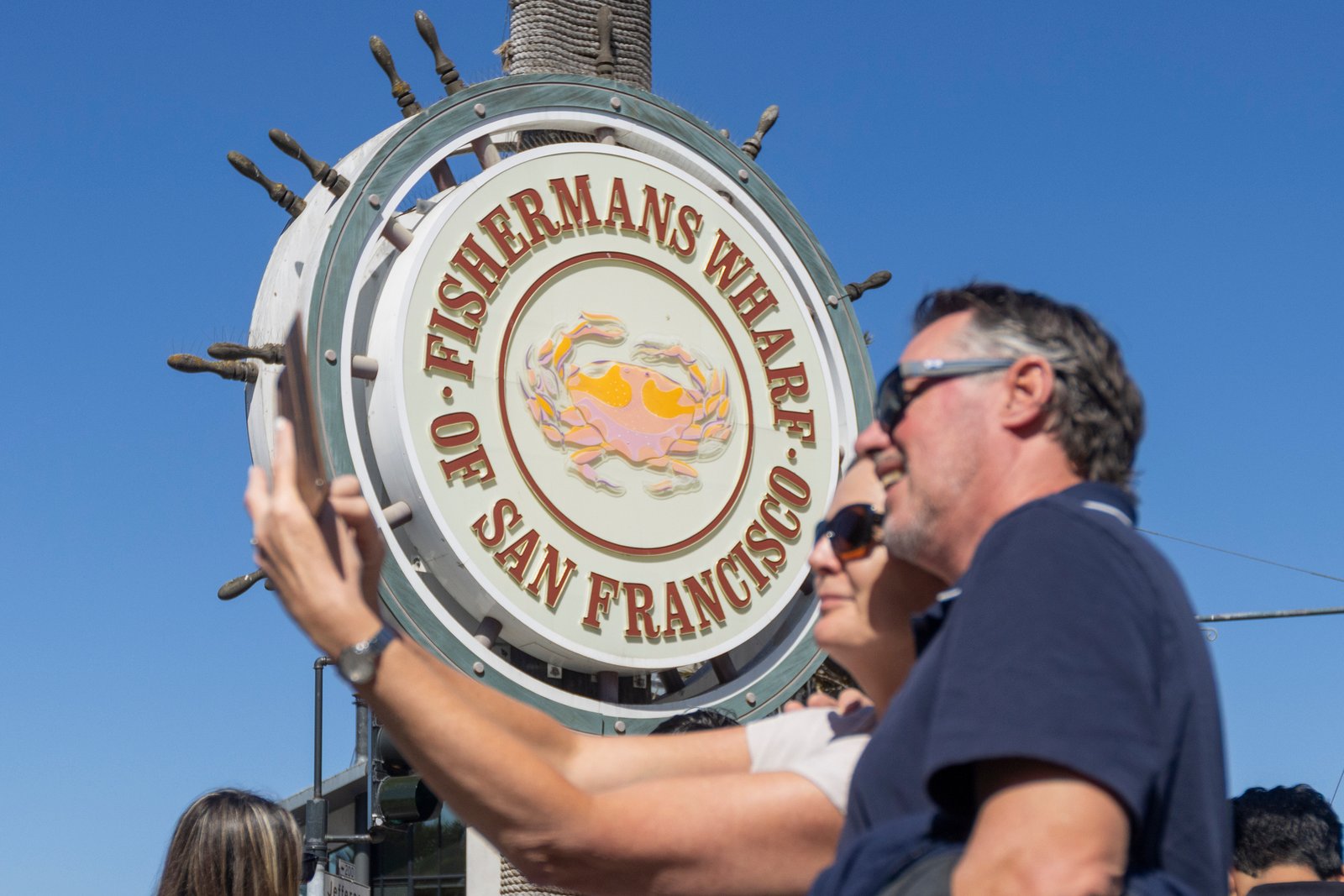
Take a walk down Jefferson Street in Fisherman’s Wharf, and you’ll see a neighborhood in flux. On one side of the pavement sits the past: kitschy souvenir shops flanking the boarded-up entrance of Castagnola’s, a century-old seafood stle that has been closed since March 2020. On the other side sits the future: the shiny new Taco Bell Cantina, flashy LED video boards and an entire block of newly renovated empty storefronts.
Once buoyed only by the gravitational pull of In-N-Out, the shopping center formerly known as Anchorage Square and recently renamed Anchor’s Landing will soon become its own food and entertainment destination. Tenderloin banh mi legend Saigon Sandwich, local boba chain Little Sweet and a karaoke lounge called Space Karaoke are all set to open in the shopping center, as first reported by the San Francisco Business Times.
I think the big emphasis for us is to have a retail mix that is a better representation of San Francisco, said Graham Grealish, vice president of CBRE, the leasing partner to Anchor’s Landing owner BH Properties. … We saw an opportunity to bring in some great local tenants that you might find walking some of the best neighborhoods in San Francisco.
Advertisement
Article continues below this ad
Known for its $5.50 banh mi, Saigon Sandwich is taking over a former Subway, and will add soju cocktails to its menu, the Business Times reported. While SFGATE could not reach Saigon Sandwich for comment, Grealish said they are expecting the new location to bring more locals to the Wharf, due to its loyal following.
Advertisement
Article continues below this ad
It’s not lost on us that most locals still think of Fishermen’s Wharf as being more popular with visitors, he said. So, we would love for more locals to come.
BEST OF SFGATE
Travel | Disneyland’s likely 3rd theme park has been nearly 30 years in the making
Culture | The 18-foot-high fence that turned Sonoma and Marin communities upside down
Food | The SF tech worker whose unhinged order broke In-N-Out forever
Politics | Gen Z students are embracing the ‘Kirk doctrine’ on California campuses
Get SFGATE’s top stories sent to your inbox by signing up for The Daily newsletter here.
Little Sweet, which was founded in San Francisco in 2012, is slated to open its 10th boba shop in the city at Anchor’s Landing. The owner of Little Sweet also owns K-Box Karaoke in Jantown, which makes sense considering their other upcoming venture: turning a former Walgreens into Space Karaoke, a 6,000-square-foot entertainment space with a bar. All of the new businesses plan to stay open late — adding a sorely needed influx of evening activities to the Wharf. Saigon Sandwich and Little Sweet are expected to open in the fourth quarter of this year, while Space Karaoke won’t open until 2027.
BH Properties, which bought Anchor’s Landing in 2023, recently completed its first phase of renovations to the property, reported the Business Times, from upgrading outdoor lighting to the new storefront exteriors on Jefferson. In the courtyard behind In-N-Out, little kids now run around beneath behemoth video screens showing cartoon crabs and sea lions bouncing under the text Hello, San Francisco! These screens could eventually be used for game-viewing parties, according to the Business Times.
Advertisement
Article continues below this ad
Meanwhile, the shopping center’s Taco Bell Cantina — like a regular Taco Bell, but with a bar — opened in January to great success. It even inspired the viral Taco Bell 5K, in which hundreds of people ran between the Taco Bell Cantina near Oracle Park to the new Fisherman’s Wharf restaurant.
Beyond Anchor’s Landing, Fisherman’s Wharf is slated to see even more new restaurants. Oakland’s Everett and Jones Barbeque is set to open a San Francisco location in the former home of Lou’s Fish Shack by September, the owners of the historic Castagnola’s plan to reopen by the end of the year, and a Salvadoran restaurant called Chasca Rio is set to debut in the former Pompei’s Grotto in early 2027. National chains are also still part of the wharf’s future: A highly anticipated Raising Cane’s is slated for late summer and a Coldstone Creamery (dual-branded with Kahala Coffee Traders) plans to open in the next two months, a representative told SFGATE.
Earlier this year, crews demolished classic seafood restaurant Alioto’s to make way for a $10 million public plaza, expected to open this summer. Over on Pier 39, Love on Haight, a Haight-Ashbury legacy business selling hippie merch, expects to open in about four weeks, Pier 39 representative Sue Muzzin told SFGATE. Last year, Pier 39 also added Santa Cruz’s Humble Sea Brewing Co. troom, giving both locals and visitors a seriously good reason to visit the tourist tr as SFGATE’s Lester Black wrote, as well as Massachusetts-born all-you-can-eat Mongolian grill chain FiRE + iCE.
Advertisement
Article continues below this ad
Sancia Scoma, for one, is excited for all the changes. As the co-owner of Scoma’s, one of Fisherman’s Wharf’s oldest remaining restaurants, she said that while she loves the nostalgic feel of the neighborhood, she thinks new blood is needed — and believes it will ultimately bring more foot traffic to Scoma’s.
We have to move forward in time, so I’m for it, she said. I’m not intimidated by it. I welcome it. I think it’ll bring more interest to people visiting San Francisco. People are going to want to check it out, versus discarding it as a tourist attraction.
Bri Maughan, executive director of the Fisherman’s Wharf Community Benefit District, also told SFGATE in a statement that the district welcomes all the new businesses.
New businesses bring fresh energy, new customers, and renewed confidence to one of San Francisco’s most visited neighborhoods, she wrote in an emailed statement. Fisherman’s Wharf is strongest when we offer a mix of longtime San Francisco institutions and fresh new concepts. We see these openings as a positive sign for Fisherman’s Wharf and for San Francisco’s broader recovery.
Advertisement
Article continues below this ad
The Bay Area’s best free newsletter.
Stay informed, and entertained.
Email
Your website
By signing up, you agree to our Terms Of Use and acknowledge that your information will be used as described in our Privacy Policy.
Foot traffic at Fisherman’s Wharf is already starting to rebound. According to the SF Examiner, new data from the Fisherman’s Wharf Community Benefit District shows that the neighborhood crossed 1 million visitors in March for the first time since the start of the COVID-19 pandemic, and that foot traffic during the first quarter of this year was up 11.4% from last year. And that’s still with dozens of empty storefronts.
Grealish said that Anchor’s Landing has seen a lot of interest from other local and national food and beverage tenants, although he could not share any names just yet. He said they hope to add a cafe, as well as more full-service restaurants and fast-casual concepts.
Even in the time that we’ve been working on this, the neighborhood is just storming back, he said. We’re so excited.
Advertisement
Article continues below this ad
test
How Sandra Bosben changed how thousands of dogs eat
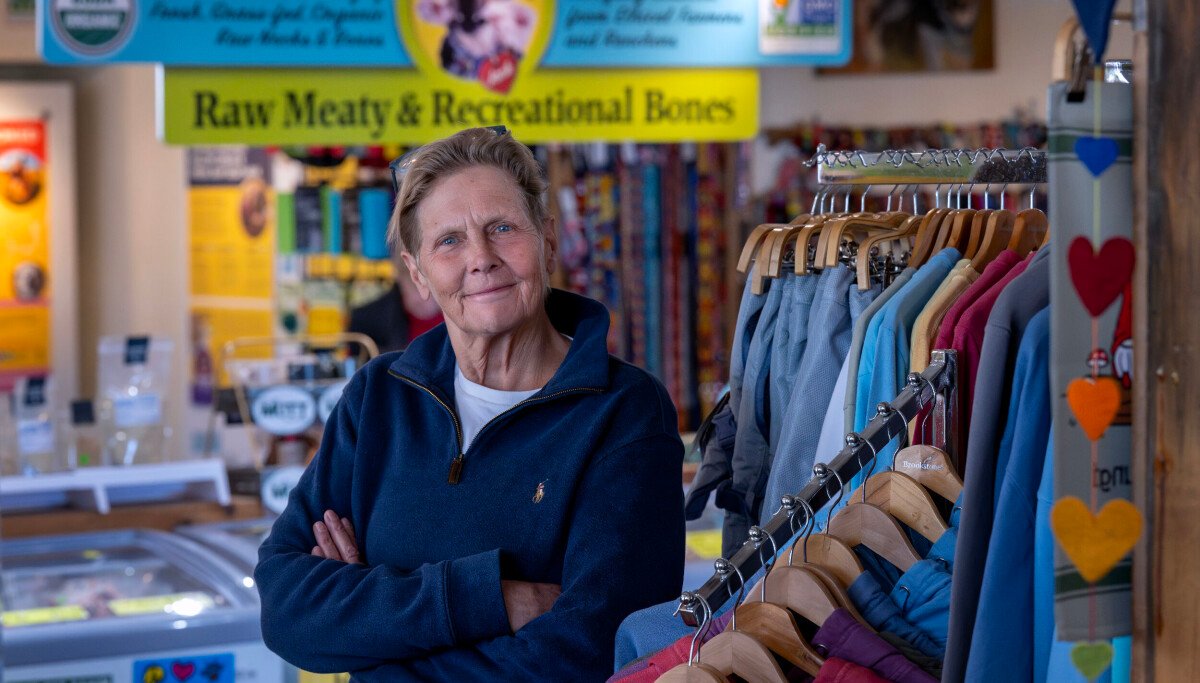
It all started with Marty, a standout superhero in the world of dogs.
The Rottweiler rescue was starving — he was literally eating bottle cs — and bearing a scar from a pit bull fighting ring when Sandra Bosben adopted him.
Bosben nursed Marty back to health, but learned later that he had degenerative joint disease due to his rough start in life. He wasn’t expected to live beyond the age of 9.
Instead, the once-sickly object of Bosben’s affection lasted until he was nearly 17 — wowing his vet, who compared Marty’s blood work to that of a much younger dog.
The secret: a diet that Bosben learned how to prepare from an Australian animal nutritionist, using only organic, non-GMO ingredients.
He could barely walk, and he was hardly eating, she says. So I make this recipe for Marty, and literally within a week, he was like a different dog.
Word of mouth took over, and Bosben began making the recipe for more and more people until she eventually turned it into a business called Marty’s Meals.
It has since been renamed Shine Pet Food Co., and it just celebrated its 15th anniversary. There are stores in Santa Fe and Boulder, Colorado, as well as online sales. And the company’s 30 employees are trained by a veterinarian and a nutritionist.
Cats are included in the product lineup — the litter box smell goes away immediately, Bosben says.
The company’s popularity, she says, comes from a balanced diet that includes no factory-farmed products and packaging that is all recyclable.
People come in, they try the food, they see a difference in their pet’s blood work and they see a difference in dental health, longevity, level of energy, and they want that, she says.
It doesn’t hurt that people adore their animals.
You know, in my generation, baby boomers, their kids have moved out. They get dogs. I have people come in the store all the time who say, ‘I know I shouldn’t say this, but I like my dog better than my children.’
Did you expect to see this kind of success?
No. This animal nutritionist from Australia was staying with me when Marty was not doing well. She writes down this recipe and says, Feed this to your dog. Literally, within a week, he was a different dog. I said, You know, you should really start a dog food company. She said, I don’t want to start a dog food company. You start a dog food company. I was doing business development for a big contractor at the time.
What was your vision when starting?
Once I realized it was actually going to be a sort of viable business, the goal was to at least increase transparency in the pet food industry, because the transparency is abysmal. People have no idea what they’re feeding. And so I felt really strongly about changing that. And also, I’ve always believed that food is medicine and that we should be supporting and consuming organic products. There’s enough studies out there now that really show that it makes a difference.
What are your best sellers?
Our organic beef, our organic turkey, our organic chicken. We have 44 organic certified products.
What about the cost?
Of course, it’s more expensive than kibble. We talk about the value of the food and not just the cost. Over time, a dog has far fewer health issues — they live, on average, three years longer. Their dental health is night and day. The money that people spend on vet bills, illness and dental issues are, over time, more expensive than what you would spend on a food that can support and sustain health.
Do you eat organic yourself?
One hundred percent.
What are you proud of?
There are so many people who write me emails, thanking us for the changes in their animals. I had people come in at our 15-year-anniversary (celebration on ril 4) who lost their pet 10 years ago and came in just to say, Thank you. You know, when that vet handed me Marty’s blood work when he was 16 and said, ‘Look at what you’ve done.’ Yeah, it started there. It was a proud moment and, and it’s been a proud moment every day ever since. It’s hard to explain what it’s like to have the privilege of doing this.
Whom do you look up to?
Yvon Chouinard, founder of Patagonia, who dedicated his life and business to preserving the environment. I would like Shine to be the Patagonia of pet food.
What has made you successful?
I believe in it. I love it. I know it to be true.
What’s your advice to someone wanting to start a business?
Don’t give up. Sometimes there’s a closed door, and that means don’t go in that door. It doesn’t mean beat the door down. It means keep going, and then the next door will open, but that’s different than giving up. To have the passion or the desire to pursue something … it doesn’t mean it’s going to be successful in the traditional sense. It means that you’re going to have a great opportunity and you’re going to learn something. It’s not a failure, it’s a stepping stone into the next thing.
Do you have any regrets?
No. I feel pretty lucky that I’ve been able to just follow my heart. I’ve lived in really bad neighborhoods in East Oakland and really hard things hpened. I injured my back and was off work for five years. I lost everything. But you know, sometimes I think, Oh, I should have had that kind of taco instead of this kind of taco. Honestly, that’s probably my greatest (regret). I feel really lucky. I think if we just follow our heart and just try to be a decent human being, there isn’t much to regret.
test
Wayne Winegarden: Politics and conflict are driving up your food costs
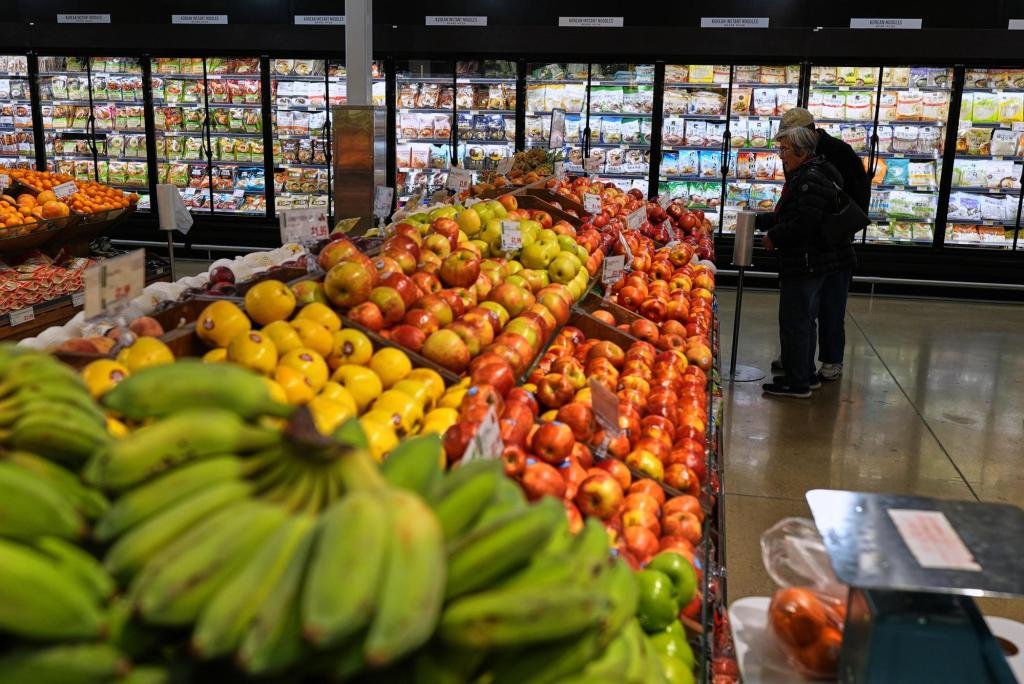
Food prices are rising due to the conflict in Iran, Russia’s invasion of Ukraine, China’s export bans on critical inputs, and the Trump Administration’s tariffs. So, how is the Administration responding? Instead of addressing the problem head-on, the bureaucrats at the Federal Trade Commission launched an antitrust investigation into fertilizer companies.
Perhs this proach makes good politics, but it won’t provide families or farmers with any relief from rising costs.
The geopolitical conflicts contributing to the cost increases are complicated, and there is undoubtedly more at stake than just economics. The economic consequences, however, are straightforward.
proximately 20% of the world’s oil supplies were sourced from the currently closed Strait of Hormuz. This lost production is in addition to Russia’s lost cabilities, which are estimated to be 40% of its export cacity. When oil supplies decline relative to demand, gas prices spike.
We are all too familiar with the pain at the pump caused by $6.00 gas here in California. Rising prices increase the costs of transporting all sorts of goods and services, including food. Thus, costly oil raises the costs of our grocery bills.
Higher energy prices also drive up the costs of producing food. Diesel fuel is used by the tractors, harvesters, and irrigation pumps farmers heavily rely on. Higher diesel costs increase farmers’ expenses, ultimately raising food prices further.
It’s not just the indirect impact from rising gasoline prices that is burdening food consumers either. Middle Eastern countries are major providers of petrochemicals used to create fertilizers and pesticides that are essential to produce our food.
proximately one-third of the globally traded fertilizers and 50 percent of the world’s seaborne sulfur (an essential fertilizer input) were passing through the Strait of Hormuz before the current Iran conflict. These reduced supplies are driving up prices for some fertilizer components by as much as 50%. Worsening the global shortage, China—a major fertilizer producer—has banned exports, creating additional pricing pressures.
Higher fertilizer costs and lower supply impede farmers’ food production cacity, which reduces the global food supply and creates another price pressure point. These impacts will likely be more severe in lower- and middle-income countries, but we will not be spared from the increase in food insecurity.
Petrochemicals are also used to create the plastic used in food packaging. The petrochemical shortage increases plastic’s production costs, which adds to the inflationary pressures on groceries.
However, it’s a mistake to blame the whole cost impact on the geopolitical conflicts. Starting in February 2025, President Trump has been imposing higher taxes on the food U.S. families consume through his erratic and piecemeal tariff policy.
According to the Tax Foundation, 52% of U.S. food imports still face a tariff even after the Supreme Court ruled that the majority of President Trump’s tariffs were unconstitutional. As an analysis from the New York Federal Reserve confirmed, nearly 90% of the costs of the tariffs are passed through to U.S. consumers, further increasing food costs.
Then there are long-standing problems associated with ill-advised regulations that have been increasing consumer costs for decades. For instance, the federal permitting process is notoriously long and costly, discouraging the development of domestic production cacity. The Jones Act, which requires all ships transporting goods between U.S. ports to be built, owned, and operated by U.S. citizens, adds $200 million a year in unnecessary shipping costs. These higher costs inflate the prices for a wide variety of goods, including food.
The good news is that policy changes can provide significant relief. Resolving the largest problem—the conflict in the Middle East—is difficult, especially as the considerations go well beyond the economy.
Regardless of whether the conflict ends soon, the adverse impacts on food prices will persist because it could take many months (if not longer) to get production and transportation back to pre-Iran conflict levels. However, the sooner the conflict can be sustainably resolved, the sooner the recovery process can begin.
Beyond resolving the conflicts, there are other helpful policies the Administration can take, including repealing the tariffs that inflate food costs and removing the regulatory barriers that create delays and increase the costs of producing oil and petrochemicals in the U.S. Specific regulatory changes include comprehensive permitting and regulatory reforms and repealing the Jones Act.
These reforms will shorten regulatory delays and lower companies’ compliance costs. Reduced compliance costs will directly lower the prices for key inputs—such as oil and fertilizers. Reducing production costs will lower the prices consumers pay. Amplifying the benefits, the lower regulatory burden will incentivize increased domestic production, which will create additional downward pressure on prices.
Launching a bureaucratic federal investigation is a distraction from the geopolitical conflicts and harmful federal policies driving the food affordability problem. While resolving the Iran conflict is complex and there are many non-economic considerations, those realities do not excuse political theatrics. The federal government can, and should, help families struggling with rising food costs by reforming the ill-considered regulatory policies that are meaningfully inflating the price of food.
test
From unfilled gas tanks to fewer frills, retailers see US consumers rethink their spending

NEW YORK () — U.S. consumers haven’t stopped spending money since the Iran war drove up fuel prices, but many shoppers are reassessing what they buy and where, according to company executives and retail analysts.
The behavior changes observed so far are subtle, such as altered routines for buying gasoline and fewer visits to clothing and furniture stores. They also are uneven across the population. During recent earnings calls with analysts, executives from American mainstays like Walmart, McDonald’s and Dollar General cited overall shopper resilience as well as noticeable cutbacks by lower-income customers.
.raey owt snoitcasnart edart ot ot eht eht eht eht eht eht taht serots erots emas selas selas pmup seitreporp fo fo fo rebmun rebmun ylraen shtnom tsal edisni puorg dnuof llef deppord ecneinevnoc dermoc ‘seinmoc seinmoc yb yb yb ta dna .sisylana sisylana ssorca gnidrocca ehT hcraM lirpA A 031 ,%4.01 %01
nehW uoy uoy ot eht “,selas .dias esol esol erots-ni snollag ,xob gib osla draneL
Changing eating habits
,raey htiw saw raw degnahcnu owt ciffart ot eht eht eht eht pots gnidneps emas .dias detluser stnaruatser tnaruatser hcraeser sdnufer ,secirp secirp tuo fo ton shtnom htnom unem tekram ynam tsal ylegral esaercni ni ni ni rehgih ,depleh sag morf morf morf tsrif mrif gninid did ta hguohtla gnidrocca a .S.U xaT tnaruatseR lanoitaN .narI rehgiH remotsuC .anacriC noitaicossA lirpA snaciremA %6.2
thgiew pot ot eht gnitrats redluohs stnediser .tneserp gniy ts rehto rehto no fo fo erom noitalfni gnisaercni ni sdoog sag morf mrof rof skcarc stsoc remusnoc denibmoc suoicsnoc-tegdub sa saera era dna dna .S.U tuB
.raey t’now htiw pu dnert ot rieht eht eht eht eht taht taht deeps gnilacs dias ,stnaruatser sesahcrup ecirp dekcip doirep ,cimedn ro fo fo fo fo .htnom ssel tsal tsal noitalfni semocni emocni ni dlohesuoh pleh puorg sag doof-tsaf doof-tsaf dne sremotsuc gnirb nageb kcab kcab dna dna retfa deinmocca .S.U ehT elpoeP s’dlanoDcM iksnizcpmeK sirhC namriahC 91-DIVOC OEC 000,54$
dna ruof sraey hcihw nehw stisiv snoitcasnart ot eht eht eht taht tnaruatser tnaruatser tnaruatser no ediwnoitan erom ,kram tsal ti detacidni tcmi stih yllaudarg steg enilosag sag morf dnuof mrif ,evisnepxe selbuod did ,enilced gnitlusnoc noillib egareva sa sa dezylana sisylana gnidrocca a desab-.S.U ehT snoituloS náitsabeS euneveR hcraeseR reciffO hcraM tnenaM .zednanreF feihC .13 6.41 4$
nehw ot ot ot yeht eht detpmet tekramrepus desacwohs pohs .gnilpmas stcudorp tnediserp ro dereffo fo deciton taem gnikam evil ssel ni sih ,seirecorg ezeerf ,dednuof rof rof doof rehtaf erots-thgie gnirud snoitartsnomed sremotsuc snoissecnoc niahc gniyub yub klub gnieb era dna na osla gnidrocca wetS wetS ,dranoeL .s’dranoeL s’eH sremusnoC
htiw ohw erew dlot gnippit rieht eht taht taht .gnidneps ,sreppohs larur tniop gnir fo erom wol-ot-dim ynam evil semocni semocni ni dlohesuoh evah dah sag nollag gnitneuqerf doof tnuocsid eroc sremusnoc detic .niahc kcab sa ,saera dna stsylana osla evoba a a sosaV sosaV yadseuT ddoT s’lareneG lareneG ralloD ralloD OEC 4$ 000,001$
elohw nehw pu ot eht eht eht taht dehctiws gnikcots ehs dias .elbanosaer edihwar ecirp tuc-erp .kc eno no no fo fo taem si si daetsni ni reh tiurf tiurf rof god tuc tsoc sreniatnoc sremusnoc gniyub senob kcab dna osla a ,frodsloT eihpoS ehS aL ,ykcutneK ,egnarG ,92 04$
test
A N.H. food innovator looks to increase availability of local vegetables
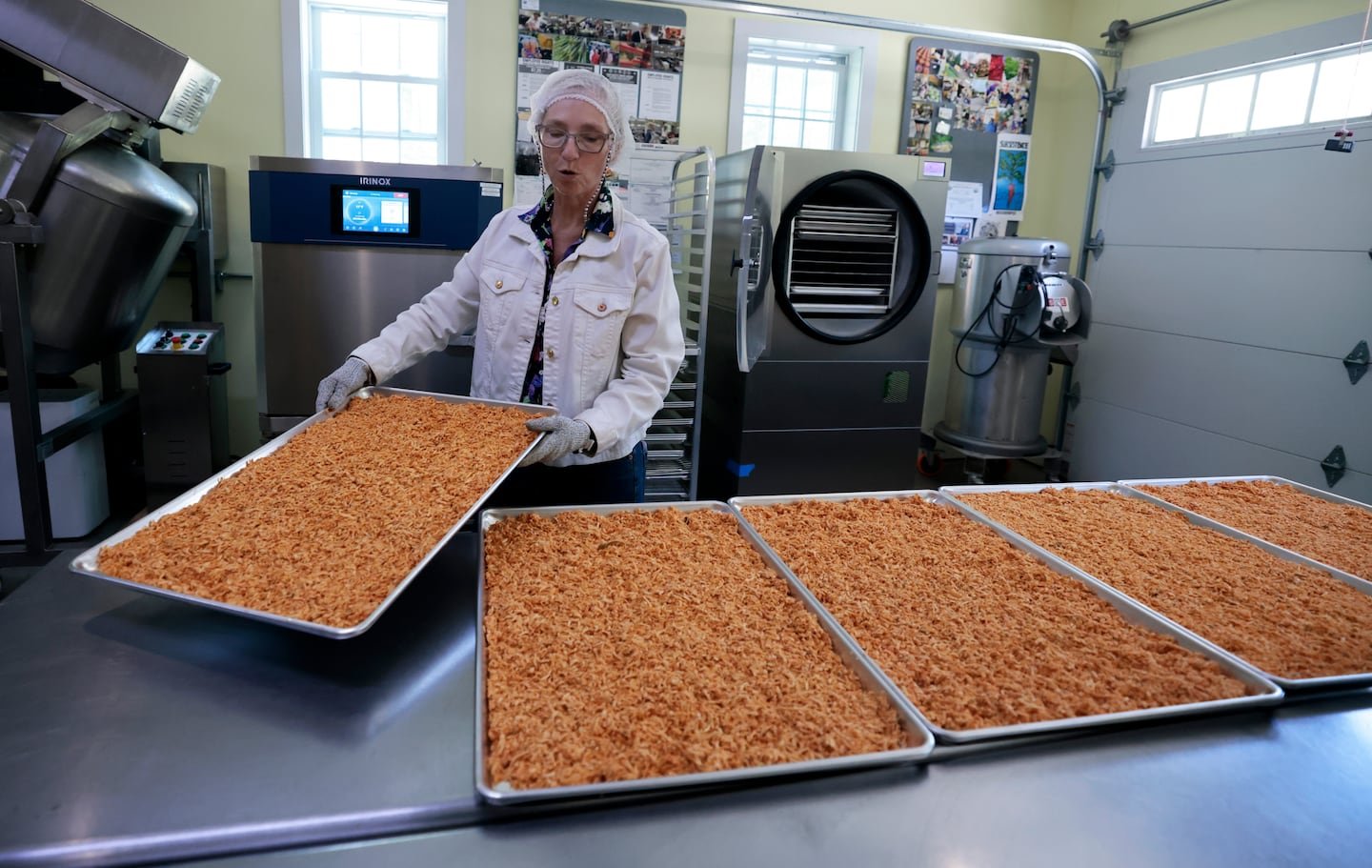
This process takes our product to a whole different level, said Zydenbos. And, she said, it tastes delicious.
Vermont has the highest percentage of local food sales in the region (10.7 percent), followed by Maine (4.9 percent), with New Hampshire coming in third (4.6 percent), according to 2024 data from New England Feeding New England, a partnership of New England organizations advocating that the region produce 30 percent of the food it consumes by 2030. Massachusetts comes in fourth, with 3.6 percent of food spending on local items.
New Hampshire is second to last in New England when it comes to the value of vegetable sales ($23 million) and the value of agriculture ($209 million). Many farmers in the state struggle to turn a profit.
Generally speaking, New Hampshire is a little bit behind, said Shawn Menard, executive director of Seacoast Eat Local, a local food nonprofit, and board president at the Concord Food Co-op. Menard said other New England states have more robust infrastructure for food processing, purchasing, and distribution that supports local food production.
Since 2012, Zydenbos has operated Micro Mama’s, one of New Hampshire’s first fermented vegetable companies, sourcing local produce and transforming it into fermented vegetables sold at more than 50 locations around New England, including about 30 Whole Foods stores.
Now, Zydenbos wants to try something new, by making more processing equipment available for farmers and producers in New Hampshire and using it to introduce novel local food products. Among them: freeze-dried kimchi, a new take on a traditional Korean dish made with spicy fermented vegetables like na cabbage and radishes.
With a $96,000 federal grant from the US Department of Agriculture in hand, she purchased new equipment, including an individual quick freezer and a freeze dryer. Food experts said the cost of the equipment is one barrier that’s prevented other small local businesses from offering similar products.
Jennifer Chadbourne, a clinical associate professor in agriculture, nutrition, and food systems at the University of New Hampshire, said freeze-dried kimchi is not widely available.
It could be a really novel idea for the manufacturer, she said.
Traditional kimchi and other fermented vegetables offer certain health benefits, like probiotics that can aid gut health, according to Chadbourne. She said freeze-drying can preserve the nutritional value of food since it doesn’t rely on a high heat during processing, but there’s not yet robust evidence on the nutritional profile of a new food like freeze-dried kimchi. She said flash freezing is another effective way to preserve the peak nutrients of a freshly harvested food.
For the consumer, these products are a convenient way to buy nutritious local produce outside the limited months of New England’s growing season.
Especially here in New England, where we have such drastic seasons that impact how long we can grow food, any type of novel preservation technique is going to help us maximize our crops during the seasons where we can grow, said Chadbourne.
The individual quick freezer Zydenbos acquired is different from a typical household freezer. It freezes produce in about 20 minutes as opposed to 48 hours, Zydenbos said. And rather than locking produce into one solid chunk, it freezes berries or broccoli as individual pieces, which makes it easier to use at home.
If freeze-dried kimchi seems a little out there, that’s a challenge Zydenbos has faced before. When she started her fermented food business in 2012, kimchi was still on the fringes of food culture in New England. Zydenbos said she had to work with state agencies as they learned how to regulate the food. Then she toured the state’s farmers markets educating consumers and evangelizing the benefits of fermented foods.
Even before that, there were her own doubts to overcome.
When you first do it, you’re like, Oh, my god, this goes against everything that you’ve been taught, she said. You’re basically leaving vegetables out on the warm shelf to transform.
I’m going to kill somebody, she remembers thinking while fermenting a batch for her own consumption after attending a kimchi-making workshop.
Zydenbos came to fermenting in search of healing. For years, she relied on copious quantities of probiotic supplements to ease digestive issues. When she started making kimchi, that became her new cure.
From there, a kimchi empire was born.
In terms of somebody who really put it on the m in this region, I think Micro Mama’s is a huge player in that, said Menard. He was the produce manager at the Concord Co-op when Zydenbos landed her account there. Menard said he hadn’t had kimchi before, but he was blown away by the flavor of her product, which was well received among the co-op’s customers.
By 2017, Zydenbos had built a facility in Weare on a property that had been in her family since the 1970s. The fermenting dens now contain 40,000 pounds of vegetables in production, all subject to strict federal and state safety regulations. She sourced stainless steel fermenting tanks from Italy and Germany to avoid using plastic containers.
When Whole Foods first came to New Hampshire, Zydenbos put her line of products forward – including kimchi, sauerkraut, and fermented carrots and beets, sourced from New Hampshire farms. The food safety work she had done with state agencies paid off, Zydenbos said, when she was able to show Whole Foods her quality control measures.
Now, with her new equipment, Zydenbos is planning to add freeze-dried kimchi to her lineup, as well as launch a spice line and food that will peal to hikers, campers, and preppers.
The possibilities are endless, she said.
With the individual quick freezer, she can produce frozen carrots, beets, potatoes, and French-fry cut potatoes, which could be sold at local grocery stores or to New Hampshire restaurants.
Zydenbos views these efforts as a way to help farms access markets they haven’t been able to reach given a lack of processing equipment, licensing, or cital. She said the demand already exists.
Bruce Wooster of Picadilly Farm in Winchester, N.H., has been selling produce to Zydenbos for about five years. He said her new endeavor with flash frozen and freeze-dried produce could help growers extend their selling season.
All the local farms have their crop coming all at once, he said. It can be tough to spread out those sales, but by freezing you can spread things out and not be like, ‘Hey, we’ve got to sell it this week before it spoils.’
The Concord Food Co-op is one local grocery store that’s eager to include local frozen produce on its shelves.
We have frozen vegetables that fly off the shelf, said Josh Belanger, the store’s former general manager. I think if we had them locally they’d do even better.
Josh Marshall, assistant commissioner of the New Hampshire Department of Agriculture, Markets, and Food, said the new equipment will help make more local food available.
For a small producer to be able to buy directly from small, New Hampshire farmers, and do this, this seems relatively cutting edge, Marshall said.
test
Literary calendar for week of June 7

To share the story of your loved one, you can submit an obituary using any of the following methods:
Online: Use our Self-Service Portal for a step-by-step guided process.
Need assistance? Our obituary desk is here to help. Please call us at 651-228-5263 with any questions regarding the process or deadlines.
General Information:
Your full name,
Address (City, State, Zip Code),
Phone number,
And an alternate phone number (if any)
Obituary Specification:
Name of Deceased,
Obituary Text,
A photo in a JPEG or PDF file is preferable, TIF and other files are accepted, we will contact you if there are any issues with the photo.
Ad Run dates
There is a discount for running more than one day, but this must be scheduled on the first run date to ply.
If a photo is used, it must be used for both days for the discount to ply, contact us for more information.
Policies:
Verification of Death:
In order to publish obituaries a name and phone number of funeral home/cremation society is required. We must contact the funeral home/cremation society handling the arrangements during their business hours to verify the death. If the body of the deceased has been donated to the University of Minnesota Anatomy Bequest Program, or a similar program, their phone number is required for verification.
Please allow enough time to contact them especially during their limited weekend hours.
A death certificate is also acceptable for this purpose but only one of these two options are necessary.
Guestbook and Outside Websites:
We are not allowed to reference other media sources with a guestbook or an obituary placed elsewhere when placing an obituary in print and online. We may place a website for a funeral home or a family email for contact instead; contact us with any questions regarding this matter.
Obituary Process:
Once your submission is completed, we will fax or email a proof for review prior to publication in the newsper. This proof includes price and days the notice is scheduled to pear.
Please review the proof carefully. We must be notified of errors or changes before the notice pears in the Pioneer Press based on each day’s deadlines.
After publication, we will not be responsible for errors that may occur after final proofing.
Online:
Changes to an online obituary can be handled through the obituary desk. Call us with further questions.
Payment Procedure:
Pre-payment is required for all obituary notices prior to publication by the deadline specified below in our deadline schedule. Please call 651-228-5263 with your payment information after you have received the proof and proved its contents.
Credit Card: Payment accepted by phone only due to PCI (Payment Card Industry) regulations
EFT: Check by phone. Please provide your routing number and account number.
Rates:
The minimum charge is $162 for the first 12 lines.
Every line after the first 12 is $12.
If the ad is under 12 lines it will be charged the minimum rate of $162.
Obituaries including more than 40 lines will receive a 7.5% discount per line.
On a second run date, receive a 20% discount off both the first and second placement.
Place three obituaries and the third placement will be free of charge.
Each photo published is $125 per day. For example: 2 photos in the per on 2 days would be 4 photo charges at $500.
Deadlines:
Please follow deadline times to ensure your obituary is published on the day requested.
Hours
Deadline (no exceptions)
Ad
Photos
MEMORIAM (NON-OBITUARY) REQUEST
Unlike an obituary, Memoriam submissions are remembrances of a loved one who has passed. The rates for a memoriam differ from obituaries.
Please call or email us for more memoriam information
Please call 651-228-5280 for more information.
HOURS: Monday – Friday 8:00AM – 5:00PM (CLOSED WEEKENDS and HOLIDAYS)
KRYS MALCOLM BELC: St. Paul resident, current Edelstein-Keller writer-in-residence at the University of Minnesota, signs copies at the launch of his new memoir What I Made for Dinner, about his descent during the COVID lockdown into an obsession with food celebrities such as Ina Garten, the Barefoot Contessa. 6 p.m. Tuesday, Next Chter Booksellers, 38 S. Snelling Ave., St. Paul.
MARY CASANOVA: Minnesotan discusses her new children’s picture book, Northwoods Lullaby, in Mary Beth Griffin’s picture book salon. Free. 6:30 p.m. Monday, Harriet Alexander Nature Center, 2520 N. Dale St., Roseville.
MEENAL PATEL: Minnesota author/illustrator hosts a story time based on her latest book, Where Do Stories Live? 10:45 a.m. Saturday, Next Chter Booksellers, 38 S. Snelling Ave., St. Paul.
THREE MYSTERY MEN: Minnesotans Cary J. Griffith, Joe Golemo and Richard Ebert sign copies of the latest in their crime/mystery series. Griffith’s sixth Sam Rivers story, Grizzly Narrows, features special agent Rivers having to outwit a deadly killer before his family becomes the next target at a law enforcement conference in the forests of northeastern Minnesota. In Joe Golemo’s third Grayson Dyle adventure, Character Flaws, Dyle is at a black-tie party when a prominent protester is found strangled and investigators find DNA linking the victim to Dyle’s tangled family tree. Silentcide 3: A Freedom Quest is Richard Ebert’s third book featuring sibling silent assassins Chris Davis and Michelle Barton, hounded by a ruthless FBI agent and coerced into black ops missions while being hunted by the successor of an assassin network and struggling to unravel a global conspiracy. Free. Noon-2 p.m. Saturday, Once Upon a Crime mystery bookstore, 604 W. 26th St., Mpls.
What else is going on
Christopher Selleck and Brooks Turner are 2026 McKnight Book Artist fellows, announced by Minnesota Center for Book Arts in partnership with the McKnight Foundation. Each will receive $25,000 in unrestricted funds to explore and deepen their art practice.
Selleck is an artist, photogrher and book artist whose interdisciplinary practice explores masculinity, identity, and vulnerability through photogrhs, sculpture, and intimate book-based forms, the MCBA announcement said. Drawing on the visual language of early 20th-century physique photogrhy, his work reinterprets the idealized male body…
Turner is an artist, writer, educator, and parent. According to the announcement: Through methodologies that include archival research, collage, drawing and installation, Turner engages histories of labor, fascism, and resistance in Minnesota, with a focus on the 1934 Truck Drivers Strike.


CTO Honors Journalistic Excellence at Annual Caribbean Media Awards in New York
The Caribbean Tourism Organization (CTO) celebrated leading storytellers, broadcasters and digital creators from the U.S. and Caribbean during the annual...


Iran official describes 'main problem' of negotiating with US
Iranian Foreign Ministry spokesman Esmaeil Baghaei told CNN's Frederik Pleitgen what he believes are the "sticking points" and …

How Sandra Bosben changed how thousands of dogs eat
It all started with Marty, a standout superhero in the world of dogs. The Rottweiler rescue was starving — he...

Wayne Winegarden: Politics and conflict are driving up your food costs
Food prices are rising due to the conflict in Iran, Russia’s invasion of Ukraine, China’s export bans on critical inputs,...


Iran suspends talks & targets Kuwait, Trump's war powers & more | Iran war this week
Here's a roundup of events in the Iran war this week. 0:00 June 1 – Iran says it's suspending talks...


Ukrainian drone attack on St Petersburg 'unprecedented', Russia says | BBC News
Russia says Ukraine has launched an "unprecedented attack" on and around St Petersburg, as the city hosted the final day...


Paul Anthony Kelly on lookalike contests inspired by his portrayal of JFK Jr.
Paul Anthony Kelly reacts to the fashion trends and lookalike contests inspired by his portrayal of John F. Kennedy Jr....


Bid to make Scotland’s morning rolls famous. #Scotland #BBCNews

SF’s Fisherman’s Wharf food scene is about to change forever
Take a walk down Jefferson Street in Fisherman’s Wharf, and you’ll see a neighborhood in flux. On one side of...


1 million estimated at Pope Leo Mass in Madrid
Local authorities have estimated 1.2 million people packed into Madrid's city center to watch Pope Leo XIV lead Sunday Mass.
-

 Tech2 weeks ago
Today's NYT Connections Hints, Answers and Help for May 25, #1079
-

 UsaLocalNews2 weeks ago
DOJ says it scrubbed news releases about Jan. 6 criminal cases from its website
-

 Tech2 weeks ago
Sennheisers Momentum 5 headphones are all about the audio and ANC upgrades – Engadget
-

 Business2 weeks ago
What we know and dont know about the emerging deal to end the Iran war
-

 Business2 weeks ago
Federal court blocks Alabama plan for new congressional districts that could help Republicans
-

 Video2 weeks ago
Should Disneyland visitors worry about toxic leak?
-

 Video2 weeks ago
Pope Leo issues manifesto warning about AI
-

 Video2 weeks ago
Trump at Cabinet meeting: 'I don't care about the midterms'