

Tech
B-52 crash raises worries about Air Force’s legendary wor

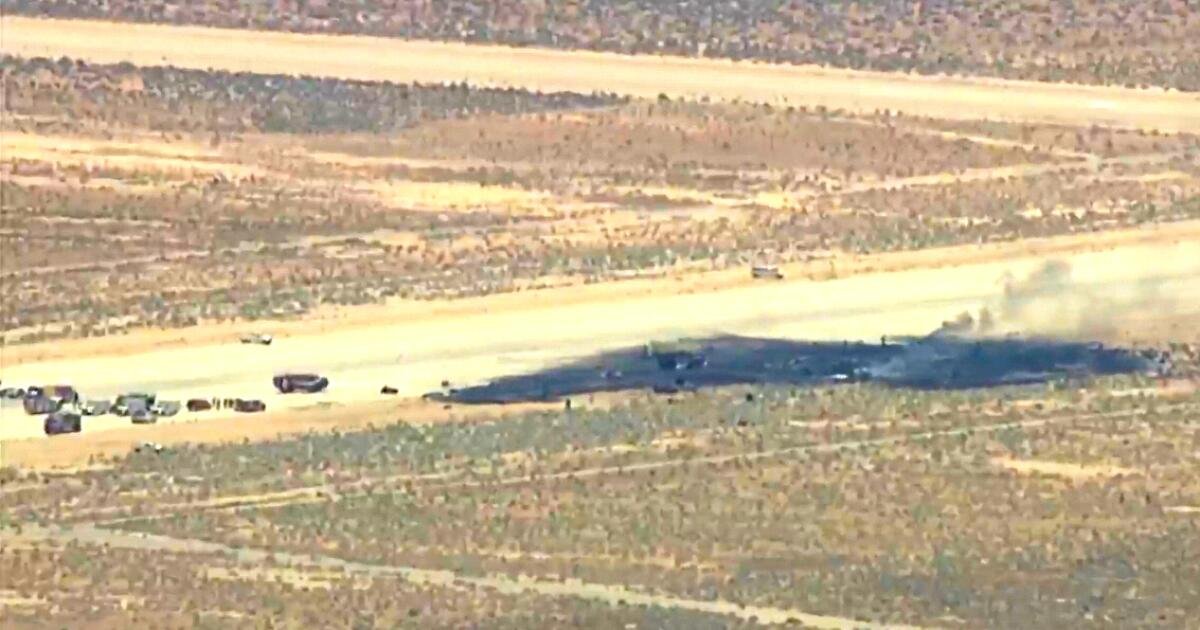
The U.S. Air Force at Edwards Air Force Base was in the process of tests to upgrade the aging fleet of B-52 bombers with new engines and radar systems when one of the planes crashed Monday, killing eight people, officials said.
The tests, and planned upgrades for the bomber, are just the latest in what has been long history for the plane that has undergone more than half a dozen transformations and has remained in the U.S. arsenal for more than 70 years.
The B-52 is considered a legendary workhorse, remaining a key part of the military’s fleet for decades thanks to constant improvements to the planes.
It’s still unclear what caused the deadly crash at Edwards Air Force Base just after 11 a.m., sending a huge plume of smoke from the base. In a press conference, Col. James Hayes said the B-52 that crashed was supporting a “radar modernization program.”
Edwards Air Force Base officials confirmed the plane crashed shortly after take-off of a “routine test mission.” They declined to identify the victims until the next of kin had been notified.
The airfield remained closed Tuesday after a night of crews fighting small start-up fires in the area.
Air Force officials announced in May and December that B-52s would be undergoing testing at Edwards Air Force Base as the Department of Defense looked to upgrade the plane’s engines and radar.
Efforts to upgrade and create a new version of the iconic B-52 bomber have been ongoing for decades, making it a constant presence in the country’s armed conflicts from the Vietnam War to the Gulf and Iraq wars.
“Some of these airplanes are literally twice the age of the pilots who fly them,” said Ross Aimer, a retired United Airlines pilot and CEO of Aero Consulting Experts. But, he added, “if you take care of an airplane, you can fly them forever, basically.”
In December, Air Force officials announced a B-52 Stratofortress was ferried from Boeing’s San Antonio facility to Edwards Air Force Base after it was equipped with a new radar system. The aircraft, according to the statement, was set to undergo a series of tests throughout 2026.
The Air Force has not said whether that was the B-52 that crashed.
In May, the Air Force Life Cycle Management Center announced that Boeing was moving to modify two B-52H aircraft in its San Antonio facility. The plan was to replace the planes’ 1960s-era TF33 engines with F130 Rolls-Royce engines — and test them at Edwards Air Force Base.
Pentagon officials referred questions to the U.S. Air Force. U.S. Air Force officials and officials at Edwards Air Force Base did not immediately respond to inquiries Tuesday.
As of November 2025, the Air Force’s fleet of B-52s were assigned to the 5th Bomb Wing at Minot Air Force Base in North Dakota, the 2nd Bomb Wing at Barksdale Air Force Base in Louisiana and the Air Force Reserve Command’s 307th Bomb Wing also at Barksdale, according to the Air Force.
But some of the Air Force’s B-52 fleet was taken to Edwards Air Force Base for testing.
Military officials have not released details of those who were onboard during the crash but, in a statement, Boeing confirmed two of its employees were among crew.
As it happens, test teams are sometimes accompanied by contractors, so they can ask questions about the technology, said Brian Sinclair, a retired Navy test pilot who graduated from the Air Force’s Test Pilot School and now runs consulting firm 3WIRE Solutions.
“Edwards, for the Air Force, is the heart of developmental testing,” he said.
When Sinclair flew F-18s in Iraq, he said he would often see B-52s flying over him.
“They just have an incredible payload capacity,” Sinclair said. “They can drop large amounts of ordnance and they can also carry said ordnance very far.”
The first B-52, known as the B-52A, first flew in 1954 but, for more than 70 years, the heavy bomber has undergone a series of modifications and improvements.
It has a range of 8,000 miles but, because it can refuel in the air, the craft can stay in flight for much longer. According to the U.S. Air Force, it also has a payload capacity of 70,000 pounds.
As of November, a total of 58 B-52Hs are in the military’s active force, with another 18 in reserve, according to the U.S. Air Force.
“Even though the airframe from the original concept is quite old, the Air Force has stayed up with modifications,” said J. F. Joseph, a retired airline pilot and U.S. Marine Corps colonel who oversees Joseph Aviation Consulting.
Aimer said the plane’s longevity is evidence of its importance to the Air Force: “It worked from Day One for the mission that it was designed for and it does a fantastic job,” he said. “It carries so much ordnance, so many bombs that we never could replace it.”
Still, other aviation experts said the continual efforts to modify the B-52 suggests more robust and consistent military funding is needed.
“We’re asking airmen to strap into jets that their grandfathers, fathers and now they are flying, and it is time for a reset,” said Doug Birkey, executive director of the Mitchell Institute for Aerospace Studies.
Described by the U.S. Air Force as the “backbone of the manned strategic bomber force for the United States,” the B-52 Stratofortress has been a vital aircraft for the country’s armed conflicts.
According to the Air Force, B-52 Stratofortresses delivered 40% of all the weapons dropped by coalition forces during Operation Desert Storm in 1991. It was also used to hit wide-area troop concentrations and bunkers.
Two B-52H’s were also used to hit Baghdad’s power stations and communications facilities in 1996 during Operation Desert Strike, using air-launched cruise missiles. That mission, according to the Air Force, was the longest distance flown for a combat mission at the time, with the planes making a 16,000-mile round trip from Barksdale Air Force Base in Louisiana for the 34-hour flight.
The B-52 was brought back again for Operation Enduring Freedom in 2001, providing close air support as it hovered above the battlefield, according to the U.S. Air Force.
During Operation Iraqi Freedom in 2003, it launched about 100 missiles during a single night mission.
Officials said Monday’s crash took place immediately upon takeoff.
Such low-altitude emergencies are particularly dangerous because planes are typically heavy with fuel and crews have little time to react given how close they are to the ground and how slow they are moving, Aimer said.
“It’s probably the worst time for any major failure to happen, for them to control it,” Aimer said.
The deadly crash marked what aviation experts told The Times was an otherwise robust safety record for the seasoned plane. Before Monday, the most recent incident involving a B-52 occurred in Guam in 2016, after the aircraft overran the runway and crashed. In 2008, another B-52 crashed off the coast of Guam, killing six.
In 1982, a B-52 also crashed outside of Sacramento Mather Air Force Base, killing nine people onboard.
Tech
Tropical Storm Arthur lashes Gulf Coast, unleashing life-threatening flood threat


9:19 PM ET 2 Min Ago
Rainfall associated with Tropical Storm Arthur expected to increase as conditions worsen overnight
Tropical Storm Arthur continues to move along the Gulf Coast with maximum sustained winds of 40 mph.
During the overnight hours, rainfall caused by Arthur is expected to increase, with the worst impacts and life-threatening flooding still to come.
Many areas across the Gulf Coast, including Louisiana and Texas, are already experiencing flooding that is expected to worsen overnight.
Over the coming days, Arthur is forecast to track across the Southeast before approaching the Carolinas by Friday evening.
As the storm moves offshore, it is expected to pass over the warmer waters of the Gulf Stream.
During this period, a new area of low pressure could develop, bringing gusty winds and heavy downpours to coastal communities.
7:34 PM ET 1 HR AgoBreaking News
Pinned
8:00 p.m. ET advisory: Arthur’s center re-forms near Galveston as winds ease slightly to 40 mph
The National Hurricane Center’s 8:00 p.m. ET (7:00 p.m. CDT) advisory reveals that Tropical Storm Arthur’s disorganized center has erratically re-formed further northeastward, placing it just 10 miles northwest of Galveston, Texas.
Moving northeast at 8 mph with a minimum central pressure of 1000 mb, the storm has seen its maximum sustained winds ease slightly to 40 mph.
Because the system’s core has shifted, officials have officially discontinued the Tropical Storm Warning west of High Island, Texas, though the warning remains in effect from High Island eastward to Morgan City, Louisiana.
Despite the minor drop in wind intensity, Arthur’s sprawling wind field still stretches outward up to 175 miles—primarily to the southeast of the center over open water—where an offshore oil rig recently clocked sustained winds of 38 mph.
While the official track indicates Arthur should grind further inland over southeastern Texas tonight before potentially dissipating by Thursday morning, the FOX Forecast Center stresses that the catastrophic, life-threatening flash flood threat remains entirely unchanged.
The storm’s slight structural decay over land does not diminish its massive tropical moisture shield, which will continue to act as an atmospheric pump across the Deep South overnight.
Relentless training downpours are still projected to dump widespread totals of 5 to 10 inches across portions of the Gulf Coast and the wider Southeastern United States.
7:30 PM ET 1 HR Ago
Numerous Texas beaches damaged as Tropical Storm Arthur moves along the Gulf Coast
Tropical Storm Arthur is currently moving east along the Gulf Coast, impacting several states, including Texas, Louisiana and Alabama.
In Texas, officials have reported significant beach erosion and damage, creating hazardous conditions for beachgoers. Dangerous rip currents are also affecting the coast.
Storm surge levels have reached up to 3 feet in some areas and are expected to increase overnight.
Rising water levels will likely worsen beach conditions and contribute to additional flash flooding across the region.
7:30 PM ET 1 HR Ago
Awaiting the 8:00 p.m. ET advisory for critical checks on Tropical Storm Arthur
The FOX Forecast Center is keeping a close watch on the radar as we approach the National Hurricane Center’s 8:00 p.m. ET (7:00 p.m. CT) intermediate advisory on Tropical Storm Arthur.
Following this afternoon’s slow crawl further inland over southeastern Texas, this evening data drop will offer a vital status check on whether Arthur’s 45 mph sustained winds have begun to spin down over land.
Meteorologists will be pinpointing the exact position of Arthur’s messy center of circulation to see if it is maintaining its north-northeastward trajectory toward southwestern Louisiana.
6:27 PM ET 2 HRS Ago
Satellite video shows Tropical Storm Arthur moving along Texas coast
Satellite video shows Tropical Storm Arthur swirling and moving along the Texas coast.
5:37 PM ET 3 HRS Ago
Live tracking: Watch Tropical Storm Arthur in real time as it slams the South
As Tropical Storm Arthur continues to dump rain across portions of the South, here’s how you can track the storm in real time.
Click the link below for the live radar, forecast cone, flood threat, spaghetti models and warnings.
5:23 PM ET 3 HRS Ago
Analysis: Did Tropical Storm Arthur ever actually go out to sea?
As Tropical Storm Arthur grinds its way over Texas, armchair meteorologists and coastal residents tracking the storm online have noticed something bizarre. At one checkpoint, the National Hurricane Center’s official coordinates place Arthur’s center over the open waters of the Gulf of America.
Just a few hours later, the coordinates map out firmly over solid Texas dirt. This has triggered a wave of confusion: did Arthur officially make landfall in Texas? And was it ever really out over the open Gulf waters in the first place?
To answer the second question first: no, Arthur was never truly out over the “open” waters of the Gulf of America after it officially earned its name. The storm spent its brief lifecycle practically touching the beach.
When the NHC plots the center of a tropical system, they are pinpointing a single mathematical dot representing the low-level center of circulation.
Because the Texas coastline curves dramatically and is heavily fragmented by barrier islands, bays, and protruding marshes, a storm tracking in a straight line northeast will naturally map over water one hour and over a peninsula the next.
This geographical zig-zag is exactly why we haven’t seen—and likely won’t see—a formal Texas landfall declaration from the NHC.
For a system to officially make landfall, its center of circulation must decisively cross from the ocean onto a major landmass. Arthur isn’t doing that; it is essentially “scraping” the shoreline.
The center is straddling the literal surf, occasionally cutting across small barrier islands or inland bays like Matagorda Bay before clipping the next piece of coastline.
While it might look like a technical error on tracking maps, it is just the reality of a messy, lopsided storm hugging a jagged coast.
5:09 PM ET 4 HRS Ago
“This happened within 30 minutes:” Mississippi resident loses animals, workshop to sudden deluge
The devastating human and emotional toll of Tropical Storm Arthur’s relentless moisture shield became painfully clear in southern Mississippi, where a local resident lost her home, workshop, and family animals to a sudden, catastrophic flash flood.
Heartbreaking video footage captured by Kristina Malott in Picayune, Mississippi, showcases a front yard completely swallowed by rising water, with household items floating aimlessly and plants completely submerged.
Wading through the deep deluge, Malott can be heard saying, “That’s up to my shin,” as she navigates the property. The footage takes a tragic turn as she opens the door to her heavily inundated backyard shed, revealing that the water rose too fast for her farm animals to escape.
No words. This happened within 30 minutes. Whole downtown was flooded. My chickens drowned. Workshop total loss.
– Kristina Malott
Malott noted that the rapid high water also severely damaged her house, pointing out that while her yard has experienced minor flooding in the past due to overwhelmed street drains, it has never experienced anything close to this scale.
The localized disaster perfectly illustrates how dangerous Arthur’s outer rainbands are, even hundreds of miles away from the storm’s actual center.
According to the FOX Forecast Center, the Picayune area has already been battered by a staggering 5 to 8 inches of rain over the last 48 hours.
With the ground entirely saturated and more tropical downpours on the way, the National Weather Service has extended a Flood Watch for Picayune and surrounding Pearl River County through Friday.
4:58 PM ET 4 HRS Ago
5:00 p.m. ET advisory: Tropical Storm Arthur slows down as it crawls further inland over Texas
The National Hurricane Center’s 5:00 p.m. ET (4:00 p.m. CT) advisory confirms that Tropical Storm Arthur is holding onto 45 mph maximum sustained winds but has slowed its forward movement to a 7 mph crawl.
The center of the structurally disorganized storm is currently located about 20 miles north-northwest of Matagorda, Texas, and 195 miles west-southwest of Lake Charles, Louisiana, with a minimum central pressure of 1001 mb.
While the official track keeps the core grinding north-northeastward farther inland over southeastern Texas tonight before potentially dissipating by Thursday morning, a Tropical Storm Warning remains firmly in effect from Sargent, Texas, to Morgan City, Louisiana.
The storm’s expansive wind field continues to whip the region, stretching tropical-storm-force winds outward up to 175 miles and prompting a recent offshore buoy report of a 52 mph gust east of Galveston.
Despite the expectation that Arthur will rapidly spin down into a remnant low over land, the primary threat remains intensifying, life-threatening flash flooding across the Southeastern United States.
Because the storm has slowed to a crawl, it will continue to act as an atmospheric pump, relentlessly dragging rich Gulf moisture inland long after the center breaks apart.
Forecasters warn that a widespread 5 to 10 inches of rain—with catastrophic, localized totals threatening to eclipse 20 inches—will slam portions of Texas, Louisiana, Mississippi, and Alabama through the end of the week.
With dangerous 2-to-4-foot storm surge already causing inundation along the immediate coast and intense inland rainfall trapping drivers, emergency management officials reiterate that residents should stay off the roads, remain sheltered in place, and keep multiple methods active for receiving wireless weather warnings throughout the night.
4:39 PM ET 4 HRS Ago
What to watch for in Tropical Storm Arthur’s major 5:00 p.m. ET advisory
The FOX Forecast Center is gearing up for the National Hurricane Center’s 5:00 p.m. ET (4:00 p.m. CT) advisory package on Tropical Storm Arthur.
Unlike the intermediate updates we’ve tracked throughout the afternoon, this late-afternoon release is a full advisory data drop, meaning meteorologists will receive a completely updated forecast track, an official look at whether Arthur’s 45 mph winds have fluctuated, and fresh guidance on the storm’s exact trajectory toward the Louisiana border.
4:01 PM ET 5 HRS Ago
Turn around, don’t drown: Water rises up to taillights in scary Texas flood video
This harrowing video out of The Woodlands, Texas, serves as a stark reminder of why emergency officials constantly preach the phrase, “Turn around, don’t drown.”
Torrential downpours completely transformed a local roadway into a treacherous swamp on Tuesday, trapping a driver as water quickly rose just beneath their vehicle’s taillights.
Forced to abandon the car, the driver had to take refuge on a tiny patch of higher ground among nearby trees while waiting for rescue. The frightening footage underscores how rapidly hidden dips in the road can become death traps during intense tropical rain events.
3:30 PM ET 5 HRS Ago
Video captures torrential rain turning backyard into a river in Magnolia, Texas
New video out of Magnolia, Texas, highlights the severe flash flood threat unfolding north of Houston as Tropical Storm Arthur lashes the region.
Persistent, torrential downpours have completely overwhelmed local drainage systems, turning neighborhood streets into rushing rivers and straddling roadways with several feet of high water.
3:19 PM ET 6 HRS Ago
Analysis: Has Tropical Storm Arthur already made landfall? Why an official call is complicated
With the center of Tropical Storm Arthur tracking just inches from the sand, many coastal residents are wondering: has the storm already technically made landfall?
Looking at the exact coordinates from the National Hurricane Center’s last advisory, the exact center of circulation is already over land and has practically bounced right across the barrier islands and mudflats of the middle Texas coast over the last few hours.
Yet, the (NHC) has not issued an official, formal “landfall declaration.”
This lack of an official announcement comes down to a strict meteorological technicality. By definition, the NHC only declares an official landfall when the precise, low-level center of a storm crosses fully over a solid landmass.
Because Arthur is an incredibly messy, lopsided, and highly “sheared” system, its center is fluid and elongated rather than a tight, well-defined eye. As it tracks northeast, it is moving almost perfectly parallel to the shape of the upper Texas shoreline.
The center is essentially scraping the surf—wobbling slightly onto the beach one minute and slipping back over a coastal bay the next.
Because it is straddling the literal coastline rather than definitively marching inland over Texas, forecasters at the NHC may choose to bypass a formal landfall alert entirely for this leg of the trip.
Instead, they may treat this stretch as a continuous “scraping” of the coast until the center makes its final, decisive push inland over southwestern Louisiana tonight.
The FOX Forecast Center reminds everyone that whether the center is 5 miles offshore or 5 miles inland changes nothing about the reality on the ground: the powerful wind gusts, 2-to-4-foot storm surge, and life-threatening flash flooding are already actively hammering the region.
2:49 PM ET 6 HRS Ago
Storm surge spills over Galveston Bay with over 2 feet of inundation observed
The rapid onset of Tropical Storm Arthur is making a visible impact on local waterways this afternoon, with gauge observations confirming that storm surge has officially surpassed 2 feet of inundation across parts of the Galveston Bay area.
People in flood-prone areas near the bay should monitor rising water levels closely and avoid driving through submerged roads, as saltwater can quickly stall vehicles and mask deeper washouts.
2:44 PM ET 6 HRS Ago
Tornado spotted in southern Alabama as tropical downpours inundate the state
The National Weather Service has issued a Tornado Warning for Dale County in southeastern Alabama.
Radar data has officially confirmed a tornado is on the ground and actively moving near the town of Ozark.
This is a dangerous situation, and anyone in the path of this rotating storm needs to act immediately.
If you are located in Ozark or the surrounding Dale County area, drop what you are doing and seek safe shelter right now. Move to the lowest floor of a sturdy building, placing yourself in an interior room like a closet, hallway, or bathroom away from all windows.
Avoid mobile homes or vehicles at all costs, as flying debris will be highly lethal to anyone caught unsheltered in this zone.
2:32 PM ET 6 HRS Ago
Analysis: Where Arthur’s worst downpours will focus tonight as the storm moves inland
While the center of Tropical Storm Arthur is busy scraping the upper Texas coast, the atmospheric steering currents are already mapping out where the absolute worst of the deluge will set up tonight.
Because Arthur is structural mess with its heaviest elements skewed far to the east, the FOX Forecast Center is tracking a dangerous axis of heavy rain that is forecast to solidify well away from the center this evening.
This maximum rain zone is expected to form just north of New Orleans, stretching across southern Mississippi and cutting directly into western and central Alabama.
This particular setup is highly concerning because a massive corridor of rich, deep Gulf moisture is pooling along a stationary coastal front.
As Arthur pushes inland later today, it will act like a pump, relentlessly driving training tropical thunderstorms—storms that roll over the exact same neighborhoods like railroad cars—along this specific line.
With widespread rain totals of 5 to 10 inches expected across this target zone and localized amounts easily capable of eclipsing a foot, communities in southern Mississippi and central Alabama must prepare for an intensifying flash flood threat that will last straight through the overnight hours.
1:56 PM ET 7 HRS Ago
Arthur maintains 45 mph strength in 2:00 p.m. ET advisory, moving toward Louisiana
The National Hurricane Center has released its 2:00 p.m. ET (1:00 p.m. CT) intermediate advisory on Tropical Storm Arthur, confirming the system is maintaining its 45 mph strength as it edges closer to landfall.
The center of the storm is currently located about 55 miles northeast of Port O’Connor, Texas, tracking steadily northeastward at 9 mph.
While there are no formal changes to the current slate of watches and warnings, a Tropical Storm Warning remains in full effect from Sargent, Texas, all the way to Morgan City, Louisiana, with tropical-storm-force conditions actively spreading across the region.
The latest data shows Arthur’s central pressure has deepened slightly to 1000 mb, and its expansive wind field continues to stretch outward up to 175 miles from the center.
Offshore, a NOAA buoy east of Galveston recently clocked sustained winds of 47 mph and a hefty gust of 54 mph. The official forecast track keeps Arthur scraping along southeastern Texas before moving fully inland over southwestern Louisiana tonight.
Forecasters warn that once the center moves further inland, Arthur will weaken rapidly and likely dissipate by early Thursday—but the primary hazard remains a massive punch of tropical moisture capable of causing life-threatening flash flooding across the southeastern United States today.
1:43 PM ET 7 HRS Ago
What to look for in the upcoming 2:00 p.m. ET intermediate advisory on Arthur
The FOX Forecast Center is keeping a close eye on the clock as we approach the National Hurricane Center’s upcoming 2:00 p.m. ET (1:00 p.m. CT) intermediate advisory.
Since Arthur was officially upgraded to a tropical storm just a few hours ago, this next data drop will provide crucial mid-day checkpoints on the storm’s exact location, current forward speed, and whether those fierce 45 mph sustained winds are continuing to fluctuate.
1:15 PM ET 8 HRS Ago
Tropical Storm Arthur nears landfall along Texas coast after intensifying to 45 mph
The final countdown is officially on for the first named storm of the season. According to a special update from the National Hurricane Center, Tropical Storm Arthur is steadily losing real estate over open water as its center tracks perilously close to the upper Texas shoreline, steering it toward an imminent final landfall.
Arthur has intensified slightly, with maximum sustained winds now up to 45 mph, and the system is beginning to pick up forward speed as it pushes northeastward at 9 mph.
Because Arthur’s center of circulation is traveling nearly parallel to the beachheads, it will continue to scrape along or briefly cross the immediate Texas coast over the next few hours.
1:01 PM ET 8 HRS Ago
Tropical Storm Arthur flexes its muscles with a 64 mph wind gust in Galveston
Tropical Storm Arthur is showcasing some serious power this afternoon as it continues to brush past the upper Texas coast.
The system has unleashed a barrage of tropical-storm-force winds across regional beaches, highlighted by a fierce, peak wind gust of 64 mph officially clocked at a monitoring station in Galveston.
12:44 PM ET 8 HRS Ago
Galveston clocks fierce 59 mph wind gust as Tropical Storm Arthur lashes the coast
The true strength of newly upgraded Tropical Storm Arthur was felt directly on land this midday when a powerful wind gust of 59 mph was officially recorded on Galveston Island.
As the core of the storm aggressively scrapes along the upper Texas beaches, its massive wind field is punching inland, downing tree limbs and causing scattered power outages across the area.
12:37 PM ET 8 HRS Ago
Tropical Storm Arthur intensifies to 45 mph; warnings extended south to Sargent, Texas
The National Hurricane Center has issued a special midday update for Tropical Storm Arthur as the system shows signs of slight intensification while hugging the upper Texas coast.
Arthur’s maximum sustained winds have ticked up to 45 mph, a modest increase from the 40 mph winds observed just hours earlier.
In response to the storm’s expanding wind field and closer track, the NHC has extended the Tropical Storm Warning southward to include Sargent, Texas.
This upgraded warning means that tropical-storm-force conditions are now imminent for the Sargent area over the next several hours.
With Arthur’s winds strengthening and its core continuing to track perilously close to the beachfronts, residents from Sargent, Texas, all the way to Morgan City, Louisiana, should prepare for worsening coastal flooding, dangerous surf, and localized power outages as the tropical storm prepares to make its final move inland.
12:06 PM ET 9 HRS Ago
Into the storm: How the Hurricane Hunters sealed the deal on naming Tropical Storm Arthur
When a messy, disorganized tropical disturbance is lurking right along the coastline, meteorologists can only learn so much from satellites sitting thousands of miles out in space.
To truly understand what is happening inside a system like Tropical Storm Arthur, you have to go straight to the source. That is where the brave men and women of the Hurricane Hunters come in.
Their data-gathering missions this morning were the ultimate “smoking gun” that allowed the National Hurricane Center to officially upgrade the system to Tropical Storm Arthur at 11:00 a.m. ET.
Flying directly into the world’s most violent weather requires specialized, incredibly robust aircraft. The U.S. government utilizes two primary types of planes to hunt storms, each serving a unique scientific purpose:
The Lockheed WC-130J Hercules: Flown by the Air Force Reserve’s 53rd Weather Reconnaissance Squadron out of Keesler Air Force Base in Mississippi, this rugged turboprop is the workhorse of low-to-mid-level storm hunting. It is built to fly directly through the eyewall of a storm at altitudes around 10,000 feet, alpha-checking the center, measuring surface winds, and dropping sensors called dropsondes directly into the tempest.
The NOAA WP-3D Orion & Gulfstream IV-SP: NOAA employs two heavily modified P-3 turboprops (affectionately named Kermit and Miss Piggy) to gather high-resolution radar and atmospheric data inside the storm core. To complement them, NOAA also flies a high-altitude Gulfstream IV jet. Operating at up to 45,000 feet, this jet maps the steering currents around a storm, providing the crucial data needed to predict exactly where a storm will travel.
It was a WC-130J crew flying right through the messy core of Potential Tropical Cyclone One this morning that officially broke the forecasting logjam. While satellites showed a highly sheared, lopsided system, the Hurricane Hunters were able to pinpoint a closed low-level center of circulation scraping the Texas beaches.
More importantly, their onboard instruments clocked powerful flight-level winds reaching up to 60 mph just above the ocean.
By beaming this real-time ground truth back to forecasters in Miami, the Hurricane Hunters provided the definitive proof that Arthur had achieved tropical storm intensity.
Without these flights, emergency managers and coastal residents would be missing the vital, precise data needed to prepare for life-threatening flash flooding and tropical-storm-force winds.
11:37 AM ET 9 HRS Ago
Could Arthur rise from the dead? Forecasters eye potential second act near North Carolina
Tropical Storm Arthur hasn’t even made its Gulf Coast landfall yet, but FOX Weather meteorologists are already keeping a close eye on a potential second act for the system later this week.
Long-range computer models suggest that after Arthur moves inland over Louisiana tonight and falls apart over the Deep South, its leftover energy and tropical moisture will get swept eastward across the Southeast.
On Friday, these remnants are expected to push off the coast of North Carolina and emerge over the warm waters of the Atlantic Ocean.
Once back over open water, there is a distinct possibility that the ghost of Arthur could try to slowly reorganize.
While the system would have to contend with unfavorable atmospheric wind shear, the combination of rich Gulf moisture and warm ocean temperatures near the Gulf Stream might give it just enough fuel to attempt a subtropical or tropical reformation off the Carolina coast.
11:16 AM ET 10 HRS Ago
When will Tropical Storm Arthur make landfall? Center continues to scrape Texas coast
Now that Tropical Storm Arthur has officially formed, the next big question is exactly when and where the center will make landfall.
Because the newly christened storm is scraping right along the middle Texas coast, its center of circulation will continue to wobble incredibly close to—and occasionally over—the immediate Texas beaches over the next few hours.
Because of this, Arthur could make landfall along the Texas coast in the next few hours before ultimately moving inland, spreading flooding rains across the South.
11:05 AM ET 10 HRS Ago
Analysis: Why the National Hurricane Center officially named Tropical Storm Arthur
For hours, meteorologists debated whether a messy cluster of thunderstorms hugging the Texas coast would ever become a named storm, but at 11:00 a.m. ET, the National Hurricane Center officially pulled the trigger on Tropical Storm Arthur.
The decision came down to a sudden burst of persistent thunderstorm activity and a mountain of fresh data proving the storm had finally checked all the structural boxes.
Satellite analysis from the Tropical Analysis and Forecast Branch (TAFB) confirmed that despite intense atmospheric wind shear tearing at the storm, it had developed enough core organization to officially be designated as a sheared tropical cyclone.
The real smoking gun, however, came from a combination of brave crews in the sky and sensors in the sea. Within the hour leading up to the advisory, automated ocean buoys and a passing ship braving the rough waters clocked legitimate tropical-storm-force winds on the eastern side of the storm.
Simultaneously, Air Force Reserve Hurricane Hunters flying directly into the system recorded powerful flight-level winds reaching up to 60 mph (52 knots) just above the ocean surface.
Combined, this wealth of real-time data proved Arthur was packing sustained surface winds of at least 40 mph (35 knots)—giving forecasters all the evidence they needed to officially cross Potential Tropical Cyclone One off the board and crown Arthur as the first named storm of the season.
10:58 AM ET 10 HRS Ago
Tropical Storm Warning extended into Texas as Tropical Storm Arthur lashes the coast
With the storm officially naming, officials have extended the Tropical Storm Warning westward to include High Island, Texas, meaning tropical storm conditions are expected from High Island all the way to Morgan City, Louisiana, within the next 12 hours.
10:56 AM ET 10 HRS Ago
The first named storm of the season is here: Tropical Storm Arthur develops in the Gulf
We have a named storm. The National Hurricane Center’s highly anticipated 11:00 a.m. ET (10:00 a.m. CT) advisory confirms that Potential Tropical Cyclone One has officially organized into Tropical Storm Arthur.
Data from the Air Force Reserve Hurricane Hunters and nearby coastal surface observations show the system’s maximum sustained winds have ticked up to 40 mph, officially crossing the tropical storm threshold.
The center of Arthur is currently located about 40 miles east-northeast of Port O’Connor, Texas, and is trekking northeast along the coast at a slightly faster 9 mph clip.
10:54 AM ET 10 HRS Ago
National Hurricane Center announces Tropical Storm Arthur has formed in the Gulf of America
The National Hurricane Center just dropped its highly anticipated 11:00 a.m. ET (10:00 a.m. CT) full advisory package for Tropical Storm Arthu.
The FOX Forecast Center is actively breaking down the fresh data, including the newly revised official forecast track, updated wind fields, and the latest coordinates from the Air Force Reserve Hurricane Hunters.
Stay tuned for updates on the forecast.
10:44 AM ET 10 HRS Ago
Hurricane Hunters find a center for PTC One, but structural hurdles remain
The Air Force Reserve Hurricane Hunters flying inside Potential Tropical Cyclone One this morning have officially located a low-level center of circulation, but the system is still a long way from becoming a organized tropical storm.
Even though a center exists, satellite and radar data show there is virtually no deep thunderstorm activity directly surrounding it. Instead, the severe wind shear continues to lop-sidedly displace all the heavy weather more than 100 miles off to the east.
Because this newly found center is still scraping right along the muddy coastline rather than emerging over the wide-open, warm waters of the Gulf of America, the system appears too structurally starved to formally earn the name Arthur for now.
10:38 AM ET 10 HRS Ago
What to expect when the 11:00 a.m. ET storm update drops from the NHC
The FOX Forecast Center is closely monitoring the clock as we approach the National Hurricane Center’s crucial 11:00 a.m. ET (10:00 a.m. CT) advisory package.
Unlike the smaller intermediate checkpoints, this full advisory is a major one that will provide a brand-new, officially revised forecast track and an updated look at the “forecast cone” as the system scrapes the Texas coast.
FOX Weather meteorologists will be dissecting fresh data to determine if the system has managed to build a closed core or if severe wind shear has continued to keep it disorganized.
10:05 AM ET 11 HRS Ago
Rough surf and churning waves lash Galveston beaches as PTC One approaches
New video out of Galveston shows increasingly violent, churning waves slamming into the Texas coastline this morning as Potential Tropical Cyclone One pushes its wind field closer to shore.
The powerful surf is already spilling over seawalls and pushing water into coastal roads, serving as a visual reminder of the dangerous storm surge and localized beach erosion expected along the upper Texas coast today.
9:49 AM ET 11 HRS Ago
Flash flood threat rises across south-central Alabama as tropical downpours expand
The threat of flash flooding is increasing across portions of south-central Alabama this morning as an influx of intense tropical moisture collides with an approaching coastal front.
The FOX Forecast Center warns that rapidly expanding showers and thunderstorms are tracking directly over communities already dealing with saturated soils.
Atmospheric conditions are primed for dramatic downpours, with tropical moisture levels climbing to near-historic levels. Fueled by this surge of unstable Gulf air, these organizing storms are capable of unleashing ferocious rain rates of up to 2.5 inches per hour.
These extreme hourly totals are expected to trigger rapid water accumulation, presenting a significant threat for sudden flash flooding into this afternoon, particularly in low-lying and urban areas.
9:43 AM ET 11 HRS Ago
New Hurricane Hunters mission underway to see if Potential Tropical Cyclone One has organized
The Air Force Reserve Hurricane Hunters are back in the sky, flying a brand-new reconnaissance mission directly into Potential Tropical Cyclone One this morning.
With the disorganized system currently hugging the Middle Texas coastline and running out of time over open water, the specialized aircrew is tasked with checking the storm’s vital signs to see if it has managed to pull itself together.
The data gathered during this flight is crucial for forecasters at the National Hurricane Center. The plane will fly directly through the broad low-pressure center to look for two specific elements: a well-defined, closed low-level circulation and sustained tropical-storm-force winds of 40 mph or greater.
If the crew finds that the center has finally stopped straddling the coast and organized a tight core, it could trigger the official upgrade to Tropical Storm Arthur.
The real-time atmospheric data from the flight will be immediately injected into global computer models to sharpen the final track and rainfall predictions before the system pushes inland over southwestern Louisiana tonight.
9:25 AM ET 11 HRS Ago
Picayune fire station surrounded by floodwaters as tropical downpours slam Mississippi
The hurricane season’s first major tropical threat is unleashing life-threatening flash flooding across multiple states as Potential Tropical Cyclone One sends relentless bands of torrential rain deep into the Gulf Coast.
The extreme nature of the deluge was put on full display in Picayune, Mississippi, where a local fire station became completely surrounded by rapidly rising high waters as the core of the heavy rainfall shifted into the state on Tuesday.
9:21 AM ET 11 HRS Ago
Flash Flood Warning issued for Houston metro area as torrential tropical rain hits
The National Weather Service has issued a Flash Flood Warning for the Houston metro area, in effect until 10:30 a.m. CT (11:30 a.m. ET).
Intense, moisture-packed rainbands from Potential Tropical Cyclone One have moved directly over the city, unleashing torrential downpours capable of producing dangerous flooding across heavily populated urban areas.
The FOX Forecast Center warns that the tropical downpours are dropping water at a rate of 2 to 3 inches per hour over highly saturated ground, which will quickly overwhelm local drainage systems, bayous, and neighborhood streets.
The timing of this warning heavily impacts the morning commute and daily travel across the metroplex.
Drivers are strongly urged to stay off the roads if possible, avoid notoriously low-lying highway underpasses, and remember to turn around, don’t drown if they encounter water-covered roadways.
8:43 AM ET 12 HRS Ago
Teenager drowns in flooded Texas retention pond amid tropical downpours
Tragedy has struck southeast Texas as officials confirm the first known fatality tied to the severe weather sweeping the state.
A 15-year-old teenager drowned Tuesday evening after walking into a flooded retention pond in the Magnolia area, located in Montgomery County just north of Houston.
Texas has been battling life-threatening flash flooding and relentless tropical downpours triggered by Potential Tropical Cyclone One as the broad system churns along the Gulf Coast.
The Montgomery County Sheriff’s Office received an urgent 911 call around 6:00 p.m. local time regarding a missing juvenile and immediately launched a massive, multi-unit search operation.
Authorities report that a group of teenagers had been playing near a construction roadway and an adjacent retention pond when the 15-year-old entered the high water and failed to resurface.
Emergency crews quickly deployed specialized diving teams, rescue boats, and advanced sonar technology to scour the flooded basin.
Following an extensive search, the teenager was located submerged in the water and tragically pronounced deceased at the scene.
While a standard death investigation is currently being conducted as part of official protocol, authorities are heavily emphasizing the extreme dangers that flooded retention ponds, ditches, and construction sites pose during tropical weather events.
Water levels in these areas can rise rapidly and feature deceptively strong, hidden currents capable of pulling down even strong swimmers.
The Montgomery County Sheriff’s Office has extended its deepest condolences to the family and loved ones during this devastating time, and emergency officials continue to urge parents to keep children far away from all rising floodwaters.
8:32 AM ET 12 HRS Ago
Texas coast clocks 45 mph wind gusts as Potential Tropical Cyclone One hugs shore
Potential Tropical Cyclone One is lashing the Texas coastline with wind gusts up to 45 mph this Wednesday morning.
These stronger gusts are kicking up because the broad low-pressure center is tracking tightly along the immediate coastline rather than staying farther out in the Gulf of America, bringing its wind field directly onshore.
However, despite these tropical-storm-force wind gusts being actively felt on land, the system still lacks the closed core circulation required to officially classify it as a tropical storm.
8:12 AM ET 13 HRS Ago
High-water rescues underway in Texas as torrential rain inundates Brazoria County
The FOX Forecast Center is getting reports of high-water rescues in Brazoria County this morning as torrential downpours from Potential Tropical Cyclone One overwhelm local roads.
A Flash Flood Warning is in effect until 8:00 a.m. CT with Doppler radar estimating more than 7 inches of rain has fallen in the past few hours.
With rain rates of 1-2 inches per hour, additional flooding is expected.
Right now, officials are warning of life-threatening flash flooding in the area as water piles up in low-lying areas and across the county.
8:07 AM ET 13 HRS Ago
FIFA World Cup organizers monitor Potential Tropical Cyclone One as heavy rain hits Houston
The threat of torrential rain and lightning from Potential Tropical Cyclone One has put FIFA World Cup organizers in Houston on high alert.
On Tuesday, severe weather already forced the outdoor FIFA Fan Fest Houston to delay its opening until 6:30 p.m., and officials are keeping a close eye on real-time radar as tropical downpours move through the metro area today.
FIFA’s emergency preparedness team stated that they are working hand-in-hand with national meteorological and local emergency management authorities across all host cities, using pre-planned severe weather exercises to ensure robust risk management and stadium evacuation procedures are ready to go.
FIFA will continue to monitor conditions in real time and stands ready to apply established contingency protocols should extreme weather events occur.
– FIFA Spokesperson
For fans heading to the outdoor Fan Fest, strict safety protocols are in place. If lightning strikes within an eight-mile radius of the venue, attendees will be required to immediately evacuate the grounds to a safe location, and the gates will remain closed until 30 minutes pass without another strike.
Fortunately, emergency management officials note that while rain is expected for Wednesday’s World Cup match at Houston Stadium, they do not currently anticipate significant travel impacts for fans heading to the game.
Houston Mayor John Whitmire reassured the public that the city has trained for these exact scenarios long before the tournament began, adding that Houston is ready to show the world it is a “can-do city” even in the face of a tropical threat.
7:52 AM ET 13 HRS Ago
National Hurricane Center 8:00 a.m. update: Potential Tropical Cyclone One inches along Texas coast
The National Hurricane Center has released its 8:00 a.m. ET (7:00 a.m. CT) intermediate advisory for Potential Tropical Cyclone One, and the system continues to hug the Texas coastline.
The center of the broad low-pressure area is currently located just 15 miles east-southeast of Port O’Connor, Texas, and about 220 miles southwest of Lake Charles, Louisiana.
The disturbance has picked up a tiny bit of forward speed, now moving northeast at 7 mph, while maximum sustained winds remain holding steady at 30 mph.
A Tropical Storm Warning remains in place for the Louisiana coast from Sabine Pass to Morgan City, where tropical storm conditions are expected within the next 12 to 24 hours. A Tropical Storm Watch also remains active from Sargent, Texas, to Sabine Pass.
Forecasters note that the minimum central pressure has ticked down slightly to 1002 mb, indicating the system is trying to organize, and it still holds a 60% chance of becoming Tropical Storm Arthur today.
However, the system’s close proximity to land will continue to limit its strength before the center moves inland over southwestern Louisiana tonight.
Regardless of any official tropical upgrade, the NHC maintains that life-threatening flash flooding is the primary hazard as torrential rains target the wider Deep South today.
7:25 AM ET 13 HRS Ago
What to expect from the National Hurricane Center’s upcoming 8:00 a.m. ET advisory
The FOX Forecast Center is monitoring the clock as we await the National Hurricane Center’s upcoming 8:00 a.m. ET (7:00 a.m. CT) intermediate advisory for Potential Tropical Cyclone One.
This incoming update will provide forecasters with fresh, real-time data on the storm’s exact location, current wind speeds, and any immediate shifts in its track along the Texas and Louisiana coastlines.
Stay tuned to FOX Weather for instant analysis and radar updates the second the new coordinates drop.
7:01 AM ET 14 HRS Ago
Analysis: Potential Tropical Cyclone One may get a second lease on life off the Carolina coast
Even if Potential Tropical Cyclone One fails to organize over the Gulf today, its story might not be over yet.
The FOX Forecast Center is closely monitoring computer models that show the system’s leftover energy surviving its trek across the Deep South and emerging off the Southeast coast late this week.
If that residual rotation hitches a ride on the warm waters of the western Atlantic, it could finally get its act together and strengthen into Tropical Storm Arthur off the coast of North Carolina by Friday or Saturday.
The global weather models—including the European, Canadian, and UKMET systems—all hint that a new low-pressure area could redevelop rapidly once the storm’s remnants push offshore.
While the exact structure of this potential Atlantic system is still up in the air, residents from the North Carolina Outer Banks to Virginia will want to keep a close eye on the forecast heading into the weekend.
For now, the system will primarily bring a slug of tropical moisture and rain chances to the Carolinas by Thursday night, but the FOX Forecast Center will be watching closely to see if the first named storm of the season officially triggers over the Atlantic instead.
6:49 AM ET 14 HRS Ago
Odds for Tropical Storm Arthur fade as wind shear and land batter the system
The clock is officially running out on Potential Tropical Cyclone One’s chances of earning the name Tropical Storm Arthur.
According to the latest discussion from the National Hurricane Center, the system’s center is currently dragging right along the Middle Texas coast, starving it of the warm Gulf waters it needs to strengthen.
To make matters worse, severe atmospheric wind shear is acting like a giant leaf blower, ripping thunderstorms completely away from the storm’s center and pushing them more than 120 miles out to sea.
Because the system is so visually fractured, satellite analysis officially labeled it “Too Weak To Classify” as a true tropical cyclone this morning.
Forecasters have nudged the official track slightly westward, meaning the center will straddle the Texas coast today before moving inland over Louisiana tonight, where it will likely completely fall apart.
But don’t let the lack of a formal name fool you—the danger to the Gulf Coast has not changed one bit. While the odds of seeing “Arthur” today are rapidly fading, the National Hurricane Center explicitly warned that heavy rain and life-threatening flash flooding remain the primary hazards.
Because the storm’s heaviest weather has been blown far to the east of its center, intense, tropical downpours will continue to slam eastern Texas, Louisiana, and the wider Deep South.
6:39 AM ET 14 HRS Ago
Why Potential Tropical Cyclone One is unlikely to be named Arthur at 8:00 a.m. ET
While the National Hurricane Center is set to release its next advisory at 8:00 a.m. ET (7:00 a.m. CT), a name change to Tropical Storm Arthur is unlikely to happen just yet due to the storm’s current physical structure.
Overnight data collected by the Air Force Reserve Hurricane Hunters confirmed that Potential Tropical Cyclone One is still missing a closed, low-level center of circulation.
The system’s winds are currently holding steady at a sustained 30 mph, which sits well below the 40-mph threshold required to achieve tropical storm status.
Furthermore, because the storm’s center is closely hugging the Texas coastline, land friction is actively disrupting the system’s ability to pull its thunderstorms into a compact, spinning core.
Even if the disturbance remains a disorganized “Potential Tropical Cyclone” through the morning hours, the lack of a formal name does not lessen the danger to residents along the Gulf Coast.
The massive shield of tropical moisture is entirely independent of how well-defined the center of the storm is.
The threat of catastrophic, life-threatening flash flooding remains completely identical whether the system officially gets upgraded to Arthur or remains a broad, messy low-pressure system through landfall.
6:32 AM ET 14 HRS Ago
When to expect the next update on Potential Tropical Cyclone One
When a tropical system is actively threatening the U.S. coastline, tracking the latest information requires keeping a close eye on the clock.
The National Hurricane Center (NHC) operates on a highly strict, standardized schedule to deliver data to emergency officials, meteorologists, and the public.
Because active coastal Tropical Storm Warnings and Watches are currently in effect for parts of Texas and Louisiana, the NHC steps up its communication frequency. Instead of only releasing updates every six hours, forecasters issue Intermediate Public Advisories every three hours.
Following the 5:00 a.m. ET (4:00 a.m. CT) full advisory, the next scheduled release from the National Hurricane Center will be an Intermediate Advisory at 8:00 a.m. ET (7:00 a.m. CT).
6:30 AM ET 14 HRS Ago
Tropical downpours move into Houston metro for morning commute
The outer rainbands of Potential Tropical Cyclone One are pushing directly into the Houston metro area, presenting an increasingly messy and hazardous morning commute for drivers across southeast Texas.
Tropical downpours are expanding northward from the coastline, bringing sheets of rain and reduced visibility to major arterial highways, including the I-45, I-10, and US-59 corridors.
5:47 AM ET 15 HRS Ago
Flash Flood Warning issued for Brazoria County as heavy rain hammers Texas Gulf Coast
The heaviest rainbands from Potential Tropical Cyclone One are targeting the upper Texas coast this morning, delivering relentless tropical downpours to communities near Galveston.
Because these intense rain bands are clustering and stalling over the region, the National Weather Service has issued a Flash Flood Warning for Brazoria County that remains in effect until 7:15 a.m. ET (6:15 a.m. CT).
Radar estimates show that water is accumulating rapidly in low-lying areas and on roadways, prompting local officials to urge drivers to avoid unnecessary travel during the early morning commute.
5:29 AM ET 15 HRS Ago
Deep South faces catastrophic flood threat from Potential Tropical Cyclone One
A catastrophic, life-threatening flash flood threat is locking into the Deep South as Potential Tropical Cyclone One channels an immense plume of tropical moisture straight into the Gulf Coast.
The disorganized system is set to dump torrential downpours over the same communities for the next 48 hours.
Flood Watches now envelop millions of residents from eastern Texas through Louisiana, Mississippi, Alabama, and into the Florida Panhandle.
Widespread rainfall totals of 5 to 12 inches are expected across the region through early Friday, with localized bullseyes potentially exploding to an isolated 12 to 18 inches where the heaviest rainbands setup.
The FOX Forecast Center emphasizes that a system does not need to be a major hurricane, or even officially named Tropical Storm Arthur, to inflict historic water damage.
Disorganized tropical disturbances are notoriously dangerous rain-producers, and local emergency officials are already responding to swift-water rescues as water rapidly inundates low-lying roads.
5:23 AM ET 15 HRS Ago
Analyze: Why the window is rapidly closing for Potential Tropical Cyclone One to organize
The clock is ticking loudly for Potential Tropical Cyclone One if it wants to officially claim the name “Arthur” before making its final landfall.
While the system is currently churning over the warm waters of the western Gulf of America, its path is heavily working against it.
The National Hurricane Center’s track has the disorganized low-pressure center hugging the upper Texas coastline very tightly today before moving inland over southwestern Louisiana by tonight.
Because the storm’s center is staying so close to land, it has a very narrow strip of open water to feed on.
Tropical systems require deep, uninterrupted ocean heat to wrap their thunderstorms tightly around a core and build a closed low-level circulation.
With land constantly scraping the western side of the storm’s structure, the friction is actively disrupting the organization process.
FOX Weather meteorologists also say strong winds aloft (wind shear) are likely working against PTC One from organizing into a full blown tropical storm.
Wind shear tears developing tropical systems apart, starving them of the calm, conducive conditions required to grow into a tropical storm.
Forecasters note that the disturbance still maintains a 60% chance of getting its act together to become a named tropical storm today.
However, the exact moment the center crosses the marshlands of southwestern Louisiana tonight, the window slams shut completely.
Once over land, the system will lose its warm-water fuel source entirely and chances of strengthening will diminish.
Whether a 40-mph wind spike officially earns this system the name “Arthur” in a future advisory or not, it changes nothing for residents on the ground. The system is already successfully dragging an immense plume of tropical moisture into the South, meaning catastrophic, life-threatening flash flooding remains a certainty for parts of Texas and Louisiana today.
5:10 AM ET 16 HRS Ago
Inside the hunt for Arthur: Why Hurricane Hunters couldn’t find a developed storm
Satellites provide an excellent bird’s-eye view of a storm, but they struggle to measure exact atmospheric conditions near the ocean’s surface.
To bridge this critical data gap, the Hurricane Hunters dropped 10 dropsondes into the disturbance during their flight.
A dropsonde is a rugged, cylindrical sensor package equipped with a small parachute. Once dropped from the belly of the aircraft, it records vertical data on its way down to the ocean, measuring:
Barometric pressure (to see if the storm’s center is intensifying)
Temperature and humidity (to track the storm’s fuel source)
Wind speed and direction (to pinpoint the strongest part of the system)
This precise data is transmitted continuously from the dropsonde back to the aircraft’s weather officer in real-time. From there, it is fed directly into global computer models.
Even though this first mission proved that Arthur has not yet organized, the dropsonde data helps forecasters immensely by refining the track and predicting exactly where the system’s catastrophic rain will fall along the Texas and Louisiana coastlines.
5:06 AM ET 16 HRS Ago
Hurricane Hunters finish first mission into Potential Tropical Cyclone One
The Air Force Reserve Hurricane Hunters have officially wrapped up their first data-gathering mission of the season, flying directly into Potential Tropical Cyclone One to investigate the developing system over the western Gulf of America.
While the mission provided vital data for forecasters, the aircrew did not find the environmental elements required to officially upgrade the system into Tropical Storm Arthur.
Specifically, the flight confirmed that the system still lacks a closed low-level circulation—meaning the winds are not yet spinning in a complete, defined circle around a centralized core.
Furthermore, they did not find a pocket of sustained tropical-storm-force winds (40 mph or greater) near a developing center that would trigger a renaming.
4:56 AM ET 16 HRS Ago
Tropical Storm Warnings, Watches cover Gulf Coast as Potential Cyclone One nears
Coastal alerts remain in place along the western and central Gulf Coast as Potential Tropical Cyclone One edges its way northeastward.
Emergency officials are urging residents within these alert zones to finalize their property and family safety preparations this morning.
Tropical Storm Warning (Sabine Pass to Morgan City, Louisiana): Tropical storm conditions—including sustained winds of 39 to 73 mph—are actively expected within this area over the next 12 to 24 hours.
Tropical Storm Watch (Sargent, Texas to Sabine Pass): Tropical storm conditions are possible within this corridor, heavily overlapping with the low-pressure system’s projected track along the upper Texas coastline.
Outside of wind alerts, Flash Flood Watches cover a massive footprint of the deep South, enveloping millions of residents from eastern Texas through Louisiana and into Mississippi.
Whether the storm officially gains the name “Arthur” or not, FOX Weather meteorologists emphasize that torrential, life-threatening rain remains the primary hazard across all warned areas.
4:51 AM ET 16 HRS Ago
Potential Tropical Cyclone One crawling along the Texas Gulf Coast
While Potential Tropical Cyclone One is currently crawling along the Texas Gulf Coast, forecasters expect the system to speed up its northeastward trek today.
The current forecast track takes the low-pressure center directly along the middle and upper Texas coast through the day before pushing inland over southwestern Louisiana tonight.
Because the center of the storm is hugging the coastline so closely, it has a very narrow window of warm Gulf water to draw from. However, the NHC notes that some strengthening is still forecast, and the system still carries a 60% chance of organizing into Tropical Storm Arthur before it makes landfall.
4:48 AM ET 16 HRS Ago
National Hurricane Center issues 5 a.m. ET advisory on Potential Tropical Cyclone One
The National Hurricane Center just released its 5:00 a.m. ET (4:00 a.m. CT) advisory for Potential Tropical Cyclone One, keeping a heavy emphasis on the threat of life-threatening flash flooding across portions of the southeastern United States.
The center of the broad low-pressure system is currently located about 35 miles southwest of Port O’Connor, Texas, and 255 miles southwest of Lake Charles, Louisiana.
The disturbance is inching northeast at 6 mph with maximum sustained winds holding steady at 30 mph.
Tech
Republicans in Washington on edge over Iran deal as Trump touts its merits
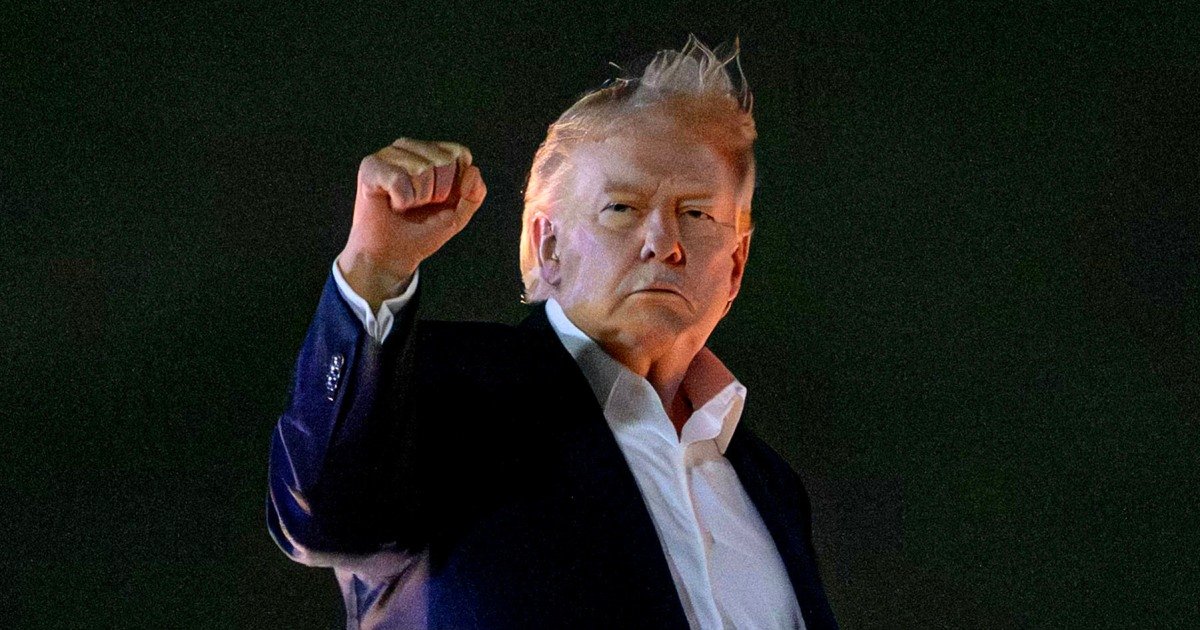
President Donald Trump is framing a tentative peace deal with Iran as a victory for the U.S., but fractures in the Republican Party suggest that could be a hard sell both on Capitol Hill and in the run-up to November’s midterm elections.
“It’s a very strong deal,” Trump said at the G7 summit in France on Wednesday, seated across from Egyptian President Abdel Fattah el-Sisi. “Nobody knows what it is, but it’s very strong.”
The early response from Republican leaders and the conservative commentariat is mixed at best, in part because not everyone has had a chance yet to digest the memorandum of understanding (MOU) between the two countries.
Most Republicans agree that the administration “has taken steps” to diminish Iran as “an existential threat,” Senate Majority Leader John Thune, R-S.D., told reporters Tuesday before the White House released the bullet points. “I’m hoping that when we get more information about the memorandum of understanding, we’ll have a better sense about what the path forward is.”
With Trump under pressure from Republicans wary of forever wars and those worried about inflation ahead of the midterm elections, the short-term gain for consumers and candidates is the MOU, which promises a tentative end to hostilities and a reopening of the Strait of Hormuz. Administration officials believe that will bring down prices for gas and other goods as freighters flow freely again through a major conduit in the global supply chain.
But cutting a preliminary deal to immediately reopen a seaway that was clear when the U.S. launched the war in late February — without ensuring enriched uranium is removed, effecting regime change or continuing to squeeze Tehran’s economy — is a “low-grade humiliation” for the president, a person close to the White House said. Most of the remaining items have been punted to follow-on negotiations that are expected to take place after the memorandum is finalized this weekend.
“It’s an embarrassing way to get out of this, but I think everyone just wants to get out of it,” this person said.
The White House defended the agreement in a statement, saying it strengthens U.S. interests and national security and will help drive down energy costs.
“Following the historic destruction of Iran’s military capabilities through the successful Operation Epic Fury, President Trump and his negotiating team have brokered an excellent MOU that advances the interests of the United States by ending the fighting, reopening the Strait of Hormuz to significantly lower energy prices, and forcing Iran to commit to abandon its nuclear ambitions,” White House spokeswoman Olivia Wales said. “What the President has achieved on the battlefield and at the negotiating table is nothing short of remarkable and will strengthen American security for many years to come.”
What Netanyahu thinks of Trump’s Iran deal
01:32
A more comprehensive pact remains as elusive as it is politically fraught for the president. As much as voters want the U.S. out of Iran — and polls consistently show that they do — the price of getting Tehran to abandon its nuclear ambitions is giving the regime access to money. That’s a cost that many of the president’s supporters don’t want to bear, and it’s one that GOP candidates may have to wrestle with if a final agreement is ever reached.
“If this is true, Iran wins,” Nikki Haley, the U.S. ambassador to the United Nations during Trump’s first term, wrote on X on Tuesday after The Wall Street Journal reported that sanctions on Iranian oil would be lifted immediately as part of the MOU. “There should be zero sanctions relief day one.”
The memorandum released by the White House includes an agreement by the U.S. to waive sanctions on Iranian oil, which a senior administration official said Wednesday would end an effective subsidy for China to buy oil from Iran.
Former Trump adviser Steve Bannon, whose views generally differ from Haley’s, also criticized the economic sanctions reversal on his “War Room” podcast on Tuesday.
“Keep the sanctions, because if we lose that, it will take forever to get back,” he said, adding that the president should not unfreeze billions of dollars in captured Iranian assets as the memorandum envisions. “Just walk away, but keep their money.”
Those concerns come as even top Republican leaders on Capitol Hill are just learning about the details of the pact. Still, GOP lawmakers are divided over whether now is the time to end the war, according to Sen. Eric Schmitt, R-Mo.
“I think you have a couple of camps,” Schmitt said. “You have the camp that wants us to lose. And then you have the camp that wants a forever war. And President Trump is not in either one of those camps. And neither am I.”
Presidents are typically reluctant to be the face of policies that split their base, and Trump is no different. That means the job of selling the plan to the public may eventually fall more fully on Vice President JD Vance, who was the lead negotiator for the U.S., and Trump’s most stalwart supporters in Congress. The announcement of a deal coincided with the launch of a Vance media tour to promote his new book, making him a more frequent TV presence than usual.
“It’s going to be interesting to observe as all of the people who pushed hardest for the war and celebrated the president’s sublime judgment are now going to hate the deal,” one person close to the administration said. “And they’re going to turn on Vance because he’s a useful proxy because they don’t want to turn on the president.”
Among Trump’s top advisers, Vance was the most hesitant about the launch of the war at the end of February, but the president designated him to help bring an end to it, along with envoys Steve Witkoff and Jared Kushner, Trump’s son-in-law. So far, that has yielded the MOU.
A senior administration official said Trump, who has been meeting with world leaders this week at a G7 summit in Geneva, will be fully engaged in pitching the MOU to the American people.
“The alternative would be a worldwide depression,” Trump said in Geneva, citing the economic devastation wrought by Tehran’s closure of the strait, which was precipitated by U.S. military strikes on Iran and followed by an American naval blockade that prevented Iran from using the waterway while blocking access to others.
Some in Trump’s orbit are optimistic that the reviews will improve once the full impact is felt.
“People are understandably focused on the immediate provisions of the deal, but the president’s approach is centered on the long-term strategic position of the U.S.,” one person familiar with the administration’s perspective said. “The broader objective is to strengthen American influence, reinforce critical defense and technology partnerships, maintain U.S. leadership against competitors such as China and Russia, and create durable advantages that may not always be apparent in the initial public debate.”
Several Republican aides who spoke with NBC News said early reporting of its contents exacerbated tensions within the caucus between those who want to wrap the war as soon as possible to mitigate the political impacts at home and those committed to seeing the conflict advance their long-standing foreign policy aims.
The final text lined up closely with earlier versions that circulated through capitals around the globe in recent days.
“Obviously everybody wants this to be over,” one aide to a Senate Republican said, adding that the White House has asked senators for backup in defending the new agreement. “Gas prices are way too high. This is a politically toxic issue.”
However, this person said they were concerned that the deal would be too similar to the Obama-era nuclear deal with Iran, called the Joint Comprehensive Plan of Action, that Republicans pilloried for years. Trump withdrew from the JCPOA during his first term and has sought to push back on the idea that the agreements are similar.
Sen. Lindsey Graham, R-S.C., who speaks frequently with the president and is among his most consistent defenders on Capitol Hill, gave his blessing to the first phase of a deal with the caveat that he is not convinced that Iran will ultimately give up its nuclear weapons program and its funding of proxy militias.
“We’re off to a good start — opening up the strait, having a framework,” Graham told NBC News. “If we can pull this off as described by the Trump administration, it’d be a good deal. The only question I have is, will Iran actually go there? But time will tell.”
Asked how the deal is different from the JCPOA, Graham said it would be different if Iran had zero nuclear enrichment and got fully “out of the enrichment business for 15 years.” The original deal had a 10-year timeline and capped enrichment at 3.67%, far below the level needed for nuclear weapons.
But others are giving more full-throated endorsements.
Sen. Bernie Moreno, R-Ohio, called the MOU “really monumental” and said the president would get the benefit of the doubt from the Senate Republican Conference.
“He’s the leader of our party. We have to give him the grace and the space to do what he needs to do,” Moreno said in an interview. “He’s a phenomenal negotiator, better than anybody here in the Senate, times 100, and he’s doing what needs to be done. … With extraordinarily few exceptions, he’s got the full backing and support of the conference.”
He cited the fact that the JCPOA did not bear physical signatures as one key difference between that pact and Trump’s memorandum. The Obama-era deal, agreed to by the U.S., Iran, Russia, China, France and the United Kingdom, allowed for international weapons inspections in Iran, released frozen assets to Tehran and eased sanctions. It held until Trump unilaterally ended U.S. participation in 2018.
“Oh, my God, the world’s in a better position,” Moreno said of whether the war has benefited the U.S., adding his belief that further economic pain would have been inflicted had Iran obtained a nuclear weapon. “I mean we would be in a place that we can’t even imagine. President Trump prevented that. … Voters count on us to avoid problems, not just solve them.”
Moreno, like Schmitt, is not on the ballot in 2026. Republican House and Senate candidates in competitive races will have to decide whether they want to run on the war and the deal, run away from them or simply put them on the back burner.
Tudor Dixon, the GOP gubernatorial candidate in Michigan in 2022 and the head of the political action committee United We Fund, said Republican candidates will take their cues from the president on the agreement.
“I don’t see a reason to shy away from it,” she said. “They trust his position.”
Lawmakers are going to want to know as much as they can about the details, and “it would really behoove the administration to engage with Congress,” said Mark Bednar, a Republican strategist who served as a top aide to former House Speaker Kevin McCarthy, R-Calif.
Bednar said most candidates won’t emphasize the deal on the campaign trail because it’s “almost a Catch-22.”
“The more successful the Iran deal is, the less salient it will be in voters’ minds on a day-to-day basis,” he said. Instead, they may include it in their pitches as one example of “smart, sober, competent governance” by Republicans.
Tech
Capital Factory CEO Joshua Baer killed in plane crash near Laredo, Texas


Capital Factory co-founder and CEO Joshua Baer was killed Tuesday night when a small business jet crashed onto a highway near Laredo, Texas, according to the Austin-based startup accelerator.
The crash happened shortly before 10 p.m. on Loop 20 in Laredo after the aircraft reported mechanical problems while attempting to reach Laredo International Airport, authorities said.
Five other people aboard the plane survived and were transported to a local hospital for treatment. None of the injuries was considered serious.
Authorities said the aircraft also struck a moving vehicle as it descended. One person in the car was hospitalized.
Video from the scene showed emergency responders and bystanders helping pull passengers from the burning wreckage. Five Laredo police officers were also taken to a hospital after suffering injuries during rescue efforts.
Laredo’s Mayor says the heroic efforts of first responders and the public helped to save lives.
“There were police officers and firefighters who put themselves in harm’s way and risked their own lives to reach the aircraft and rescue passengers,” said Laredo Mayor Dr. Victor Trevino in a press conference on Wednesday.
ALSO| Austin Transit Partnership reviews light rail design as business stresses about relocation
The aircraft, a NetJets-operated Cessna Citation Latitude, had departed San José del Cabo, Mexico, and was originally headed to Austin before diverting to Laredo.
According to Laredo police, the plane lost contact with air traffic controllers before crashing about 2.5 miles short of the runway. Flight tracking data showed the aircraft descending toward the airport before its signal disappeared at roughly 600 feet above the ground.
“The mechanical issues that they reported could be anything from engine and propulsion system issues, electrical systems, fuel system, or aircraft maintenance issues. So, there is a wide variety of potential problems that may have occurred,” said Andres Pereira, senior attorney with DJC Law.
In a statement on Wednesday, Capital Factory confirmed Baer’s death and described him as a driving force behind Texas’ technology and startup ecosystem.
“It is with profound sadness that Capital Factory announces the tragic passing of our Co-Founder and CEO, Joshua Baer,” the company said.
For more than two decades, Baer helped entrepreneurs launch and grow businesses across Texas. Under his leadership, Capital Factory became one of the state’s most influential startup incubators and venture networks, connecting founders with investors, mentors, and corporate partners.
“Josh was a fearless leader, a brilliant partner, and a dear friend to so many of us,” Capital Factory President Bryan Chambers said in a statement. “While we are devastated by this unimaginable loss, Josh built an incredibly resilient organization and a deeply capable team. Capital Factory remains fully operational, and we are completely committed to continuing our mission of backing unstoppable founders.”
Federal investigators from the National Transportation Safety Board (NTSB) and the Federal Aviation Administration (FAA) are on-site and are starting their investigation into the cause of the crash. Local officials said the aircraft experienced mechanical issues before going down.
“They will sequester all of the physical remnants of the aircraft. They will obtain the mechanical records, the information regarding the pilot and the first officer, and all of their training records. They will go through a very careful investigation that generally lasts up to two years,” said Pereira.
Every aspect of the flight will be analyzed, including the weather, the crew, and the aircraft itself. In addition, the cockpit voice recorder and the data recorder will be used in the investigation.
Capital Factory said it will not comment further on the circumstances of the crash while the federal investigation remains active and asked for privacy for Baer’s family and loved ones.
Tech
Macron deploys Versailles in high-stakes courtship of Trump
PARIS (AP) — Donald Trump explained the appeal in one sentence: “Versailles is not gold leaf — Versailles is the real deal.”
For Emmanuel Macron, that was precisely the point.
On Wednesday night, the French president threw open Louis XIV’s palace to his U.S. counterpart for a private reception, show and dinner marking America’s 250th birthday. At a turbulent moment for the trans-Atlantic alliance, it could help Macron keep a personal channel open as the two navigate differences over Iran, Ukraine and tariffs.
It already kept Trump from leaving a Group of Seven summit early, as he did last year in Canada.
“I’m a fan of beautiful places,” he told reporters, saying he had planned to leave earlier until “a very nice man” invited him to dinner. Upon arrival at the chateau, he posed for photographers in front of its golden doors.
The welcome also served a practical purpose. In an interview earlier this week with France’s TF1 television, Macron said Trump “needs to stay until the end” to help complete the summit’s agreements.
It is perhaps the biggest soft-power flex available to a French president: Versailles, the Hall of Mirrors, the gardens of the Sun King and several centuries of carefully polished national grandeur.
“Versailles is a diplomatic tool and an instrument of influence,” Macron said Wednesday, likening diplomacy to soccer. “Whether I’m playing at home or away, my goal is to score goals. And when I host other teams, I try to give them a nice welcome.”
France holds little economic or military sway over Washington, so pageantry is one of its few levers — even as its use elsewhere has brought mixed results at best.
Soft power built from stone
Macron and Trump have often clashed over policy.
Their relationship has endured partly because Macron understands the power of personal attention, dramatic settings and a well-timed invitation.
Their first meeting in 2017 produced a white-knuckled handshake that instantly became a symbol of their competitive rapport.
Months later came dinner inside the Eiffel Tower and a place of honor at France’s Bastille Day parade.
Versailles raises the stakes, allowing a French president to wrap a modern political encounter in the scale and authority of national history.
“It is soft-power flex based on hard buildings,” said Denis Lacorne, professor of American studies at Sciences Po.
Macron has used the palace before, receiving Russian President Vladimir Putin there in 2017 and later hosting King Charles III and Queen Camilla for a state dinner.
Versailles has been a favored setting for French leaders to honor foreign guests for over three centuries, the palace told The Associated Press. It remains “a place in the service of French diplomacy.”
With Trump, the setting carries added resonance.
The former real estate developer has long treated architecture as a statement of status, success and power. In his second term, he has sought to erect a legacy in stone — with plans for a new White House ballroom and a 250-foot (76-meter) triumphal arch resembling Paris’ Arc de Triomphe.
The real deal — and 357 mirrors
French media reported the evening could include a Hall of Mirrors visit and fountain display with fireworks. The full program was not released.
The Hall of Mirrors was once a feat of technology: 357 mirrors set in 17 arches along a 73-meter (240-foot) gallery, showing French manufacturers could rival Venice’s celebrated glassmakers.
They were also built to multiply a king. Every royal entrance ricocheted across the glass, and a modern guest gets the same treatment.
“You will be reflected many, many times, from one mirror to another,” Lacorne said.
For a president who has spent his second term turning the Oval Office gold, the appeal is clear, he added.
Trump arrives, in a sense, at a building he has quoted for years: He has said he modeled Mar-a-Lago’s ballroom after Versailles.
Others have sought to flatter a visiting Trump
Trump remembers spectacle, and often brings it home.
The 2017 Bastille Day parade saw tanks, horses and marching bands fill the Champs-Élysées as fighter jets trailing red, white and blue smoke soared overhead.
Trump called it “one of the greatest parades I’ve ever seen.”
“We’re going to have to try and top it,” he said back in Washington, where he began pressing for a military parade. In 2025, he finally presided over a large Army anniversary parade through the capital.
China employed dazzle diplomacy when it hosted Trump for a “state visit plus” in 2017, including a rare tour of its Forbidden City, an experience once reserved for emperors.
Britain offered its own version last September, greeting Trump’s second state visit with mounted troops, a carriage procession and a Windsor Castle banquet.
The gleam is the easy part
The diplomatic pomp has clearly flattered Trump, who called the Windsor banquet one of the highest honors of his life.
But it seems to have won few concessions.
The early Macron-Trump “bromance” has hardened into something rougher and more transactional.
Trump has threatened tariffs of up to 100% on French wine and Champagne amid a broader trade fight. France opposed the U.S. war against Iran, even as Macron pressed Washington to keep backing Ukraine.
At home, the dinner has drawn criticism.
“We must learn once and for all to live without Trump,” said Jean-Luc Mélenchon, the veteran far-left leader.
Versailles hands Macron some advantages, experts say: centuries of diplomatic history, a setting built for Trump’s taste for ceremony, and a palace already familiar to the hundreds of thousands of Americans who visit each year.
History counsels caution. Ronald Reagan dined beneath the same mirrors on the sidelines of the 1982 G7, and central disagreements outlasted the splendor.
Tech
Anthropic ships major Claude Design overhaul with design system imports, code round-trips, and a fix for its token-burning problem


When Anthropic quietly released Claude Design in April as a “research preview,” it generated the kind of instant traction most product teams dream about: more than one million users in its first week. It also generated a problem. The tool consumed tokens so voraciously that a PCWorld reviewer burned through 80 percent of his weekly Claude Pro allowance in roughly 25 minutes, producing just three variations of a single webpage prototype. “We’re talking another token-hungry Claude product here,” the reviewer wrote, “one that Pro users in particular will barely be able to use before burning through their usage limits.”
Two months later, Anthropic is shipping a substantially overhauled version of Claude Design that attempts to fix the consumption issue while simultaneously repositioning the product from a flashy demo into something far more strategically important: a design system compliance layer that connects to code, connects to the tools enterprises already use, and — critically — keeps everything on brand.
The update, announced Wednesday, arrives at a moment when Anthropic is executing one of the most aggressive product expansions in the AI industry’s brief history. In the past ten weeks alone, the company has launched Claude Opus 4.8, released (and then suspended) the Mythos-class Fable 5 model, shipped ten agent templates for financial services, announced a multi-year alliance with DXC Technology to embed Claude inside the IT infrastructure of the world’s largest banks and airlines, rolled out Claude for Small Business with integrations into QuickBooks and PayPal, and published research showing that Claude Code users now average 20 hours per week on the tool.
Claude Design’s transformation from prototype toy to enterprise platform is the latest move in a company-wide strategy to make Claude not just an assistant people talk to, but a worker embedded in the systems where work actually happens.
How design system imports make Claude Design an enterprise brand-compliance tool
The headline feature in Wednesday’s update is not the new drag-and-resize editor, nor the expanded list of export destinations, though both matter. The feature that signals where Anthropic is heading is the rebuilt design system import.
Users can now bring one or several design systems into Claude Design from a GitHub repository, design files, or raw uploads. Once imported, Claude builds with those components, checks its output against the design system, and auto-corrects before the user ever sees the result. For larger organizations, a new admin role can approve a single standard system and lock down edits, ensuring that every asset Claude produces conforms to company guidelines.
This is a meaningful departure from the tool’s original positioning. In April, Claude Design was a blank canvas: give it a prompt, and it would generate something visually impressive but stylistically arbitrary. Business Insider tested it against Canva AI for a photography workshop slide deck and found that Claude Design “anticipated my needs” and “identified its own errors and corrected them without prompting.” But the output reflected Claude’s aesthetic judgment, not the user’s brand. For an individual freelancer or a startup founder sketching ideas, that was fine. For a 10,000-person enterprise with a 200-page brand standards document, it was a non-starter.
The design system import changes that equation. By ingesting a company’s actual components — its buttons, typography, color tokens, spacing rules — and then validating output against them before surfacing results, Claude Design is attempting something that most human designers struggle with: consistent brand compliance at speed and scale. The admin lockdown feature, which prevents individual users from overriding the approved system, is a direct play for the enterprise procurement conversation, where “can we control what it produces?” is often the first question.
Why the Claude Code round-trip could end the design-to-engineering handoff problem
The second major update is the bidirectional integration between Claude Design and Claude Code. Users can now run /design-sync in Claude Code to import their local codebase’s design system into Claude Design, ensuring that prototypes start from real components rather than approximations. When a design is ready to ship, it hands off to Claude Code, which picks up exactly where the designer left off — no screenshot, no rebuild. The integration works in reverse, too. From a Claude Code terminal, the /design command lets developers create, edit, and sync design projects without leaving their workflow.
This matters because the handoff between design and engineering has been one of the most persistent friction points in software development for decades. Tools like Figma’s Dev Mode and Zeplin have tried to bridge the gap by generating specifications and code snippets from design files, but the translation has always been lossy. A designer’s prototype and an engineer’s implementation inevitably diverge, creating a cycle of visual QA, redlines, and “that’s not what the mockup looked like” conversations.
Anthropic is betting that if the same AI system both designs and codes — and if both modes share the same underlying component library — the gap disappears. It is, in effect, arguing that the design-to-code problem was never really about better specification formats or smarter handoff tools. It was about the fact that two different humans (or two different tools) were interpreting the same intent. A single AI system that operates on both sides of the workflow doesn’t need to interpret; it just continues.
The timing of this integration is also significant in light of Anthropic’s own research. Just yesterday, the company published an analysis of roughly 400,000 Claude Code sessions showing that domain expertise — not coding proficiency — is the primary driver of successful outcomes. Every major occupation succeeded at coding tasks at nearly the same rate as software engineers. If designers can now move fluidly between visual prototyping and code implementation through a single AI system, the research suggests they will succeed not because they learned to code, but because they deeply understand the design problems they are solving.
Token consumption gets a fix, but the economics of generative design remain tight
The token consumption issue that dogged Claude Design’s launch was not just a user experience annoyance — it was a structural threat to the product’s viability. If a $20-per-month Pro subscriber could exhaust their entire weekly allowance in a single 30-minute session, the tool was effectively inaccessible to the individual users and small teams who drove its initial viral adoption.
Anthropic’s response is twofold. First, Claude Design now shares usage limits with chat, Claude Cowork, and Claude Code, rather than drawing from a separate, smaller pool. This gives most users significantly more headroom. Second, the company says it has reduced the average token consumption per turn while maintaining output quality, and that error rates have dropped sharply.
Whether this is enough remains an open question. The fundamental tension is architectural: generative design is inherently token-expensive. Every variation Claude produces requires the model to reason about layout, typography, color, spacing, responsiveness, and content simultaneously, then generate a complete, functional artifact. That is a fundamentally different workload than answering a question in chat, and it consumes tokens accordingly. Anthropic’s efficiency improvements may push the breaking point further out, but they do not eliminate the underlying economics. For enterprise customers on Team and Enterprise plans with higher limits, this may be a non-issue. For Pro subscribers, the math is still likely to be tight.
The new editor helps mitigate this somewhat by giving users direct control over individual elements — drag, resize, and align — without burning a model turn for every small adjustment. Hundreds of stability fixes also mean fewer wasted turns on errors and regenerations, which were a significant source of token drain in the original release. These are not glamorous improvements, but they are the kind of grind work that separates a research preview from a daily-use tool.
Nine new export partners position Claude Design as a creative hub, not a destination
The update’s third pillar is an expanded set of export destinations. Claude Design now sends work to Adobe, Base44, Canva, Gamma, Lovable, Miro, Replit, Vercel, and Wix, in addition to PDF and PowerPoint. The breadth of this list reveals a deliberate positioning strategy: Anthropic is building Claude Design not as a place where work is finished, but as the place where it begins.
The partner quotes tell the story. Replit’s president Michele Catasta frames the integration as meeting “builders wherever ideas begin.” Canva’s Anwar Haneef describes the flow from Claude Design as turning “a first draft” into “a finished asset — kept on-brand, personalized for the moment.” Vercel’s Andrew Qu talks about pushing a concept “straight to Vercel to ship.” In each case, Claude Design is the origin point, and the partner tool is where polish, collaboration, and deployment happen.
This hub-and-spoke model also serves as a defensive moat against the open-source alternative that has emerged with surprising speed. Open Design, a community-built project tracked by Augment Code, reached 57,400 GitHub stars and 310 contributors in just eight weeks after Claude Design’s launch. It offers local-first operation, model flexibility supporting 16 different coding agents, and 259 skills with 142 design systems — all without cloud lock-in. Augment Code’s Paula Hingel noted that for “teams that need to self-host, use their own API keys, or swap models, Open Design is currently the only local-first option with this level of skill and design system coverage.”
Anthropic’s answer to this competitive pressure is not to match Open Design on self-hosting or model flexibility — those are philosophical concessions the company is unlikely to make. Instead, it is building an integration ecosystem that open-source projects cannot easily replicate. A native Adobe Express connector, a verified Canva export pipeline, a first-party Vercel deployment path — these are partnerships, not features, and they require business relationships that community projects cannot forge at the same pace.
Claude Design fits into Anthropic’s broader push to embed AI across the entire enterprise stack
To understand why Claude Design’s evolution matters, it helps to zoom out. Anthropic is building a product surface that now spans creative work (Design), code (Code), knowledge work (Cowork), and enterprise operations (Managed Agents) — all unified by the same underlying models and, increasingly, by shared context that carries across tools.
The trajectory of the past quarter makes the pattern unmistakable. In May, Anthropic launched Claude for Small Business with connectors to QuickBooks, PayPal, and HubSpot, putting Claude inside the tools that small business owners already use for payroll, invoicing, and marketing. The same month, the company released ten agent templates for financial services covering everything from pitchbook creation to KYC screening, with connectors to FactSet, S&P Capital IQ, and Morningstar. Claude Opus 4.8 shipped on May 28 with a “dynamic workflows” feature enabling hundreds of parallel sub-agents in a single Claude Code session. Then came the Fable 5 and Mythos 5 launch on June 9, followed almost immediately by a US government export control directive that suspended access to both. DXC Technology announced a multi-year alliance to train tens of thousands of Claude-certified engineers to embed Claude inside the systems it operates for major banks, airlines, and insurers.
The design system you import into Claude Design is the same component library that Claude Code uses to implement. The financial model you build in Claude for Excel can flow into a pitchbook created in Claude Design and exported to PowerPoint. The brand assets a small business owner creates through Claude Design can be pushed directly to Canva for team collaboration. This is not a chatbot strategy. It is a platform strategy, and the Claude Design update — with its design system imports, code round-trips, and export ecosystem — is one of the clearest expressions of it yet.
Anthropic also published an engineering deep-dive last month detailing how it contains Claude across products using sandboxes, virtual machines, and egress controls — infrastructure that becomes more critical as tools like Claude Design gain access to proprietary design systems and brand assets. The containment architecture reveals both the ambition and the risk: the more deeply Claude embeds into enterprise workflows, the higher the stakes when something goes wrong, and the more sophisticated the security envelope must become.
Three questions will determine whether Wednesday’s update delivers on its ambitions. First, whether the token economics actually work for the broadest user base — shared limits and efficiency gains help, but generative design remains expensive. Second, whether the design system import proves robust enough for real enterprise use, because ingesting a GitHub repository of React components and faithfully using them across dozens of design variations is a genuinely hard technical problem. And third, whether the Claude Code round-trip actually eliminates the design-engineering gap or merely shifts it.
Claude Design launched two months ago as a thing people tried once and marveled at. Anthropic is now trying to make it a thing people use every day — and more than that, a thing their entire team trusts to stay on brand while they do. In the AI industry, the distance between a viral demo and an indispensable tool has swallowed more products than it has produced. Anthropic just bet that design systems, not just design prompts, are the bridge across.


Daveigh Chase, voice behind Lilo and Chihiro, dies at 35
Actress Daveigh Chase, known for beloved animated roles like the voice of Chihiro in “Spirited Away” and Lilo in “Lilo...


Harry and Meghan to visit UK with family for the first time in 4 years, British media reports
Britain’s Prince Harry and his family will return to the United Kingdom for a visit next month, British media reported...


Tornado rips through southeast Illinois
A destructive tornado stays on the ground for miles amid a tornado outbreak in the Midwest Wednesday evening. A cluster...


Plane crash witness describes husband's daring rescue effort
CNN spoke to Zayra Garza, who drove upon the scene of a plane crash on a highway in Laredo, Texas...


2026 U.S. Open predictions, picks: One of these nine will win at Shinnecock Hills
SOUTHAMPTON, NY — If the PGA Championship taught us anything, it is that even amid an era of professional golf...


‘Heated Rivalry’ Musical, Honorary Awards For Will Ferrell & Lisa Kudrow & All The Winners Of The Night
The 2026 Las Culturistas Culture Awards, hosted by Bowen Yang and Matt Rogers, celebrated the best in pop culture. It...


Olivia Wilde Reacts to Photo Looking “Sick,” Like “Dead Body” on Red Carpet
“NBD but I just achieved a major milestone as a woman online,” Reese Witherspoon and ex-husband Ryan Phillippe’s daughter wrote...


‘Survivor’ Animated Movie Set In Animal Kingdom In Works At Paramount
The tribe that is CBS has spoken, and Survivor is getting the animated comedy treatment. An animated Survivor movie set...


Moment Trump signs US-Iran agreement at Palace of Versailles #BBCNews


Damage reported after severe storms slam the Midwest in June outbreak
11:11 PM ET 24 Min Ago Midwest severe weather outbreak leaves trail of tornadoes, damaging winds and large hail Wednesday’s...
-

 Business5 days ago
How much of Musk’s wealth comes from government help? Virtually all of it
-

 LifestyleNews2 weeks ago
120 minutes of strength training per week may help extend lifespan
-

 Politics7 days ago
What to know about the stabbing that set off fiery riots in Northern Ireland
-

 Video6 days ago
Download fans say what they love about the festival. #DownloadFestival #BBCNews
-

 Video6 days ago
Why SpaceX IPO isn't about space. #SpaceX #ElonMusk #BBCNews
-

 HealthNews6 days ago
The people of Okinawa, Japan only eat until they are about 80 percent full, then stop — and the practice has been linked in multiple peer-reviewed studies to lower rates of cardiovascular disease, slo
-

 TravelNews6 days ago
My Paternal Instinct Should’ve Warned Me About Netflix’s Maternal Instinct
-

 Food5 days ago
Pope Leo’s plane was grounded. Then the King of Spain stepped in to help