

Food
Here’s how much the the Iran war cost — and how its effects will linger

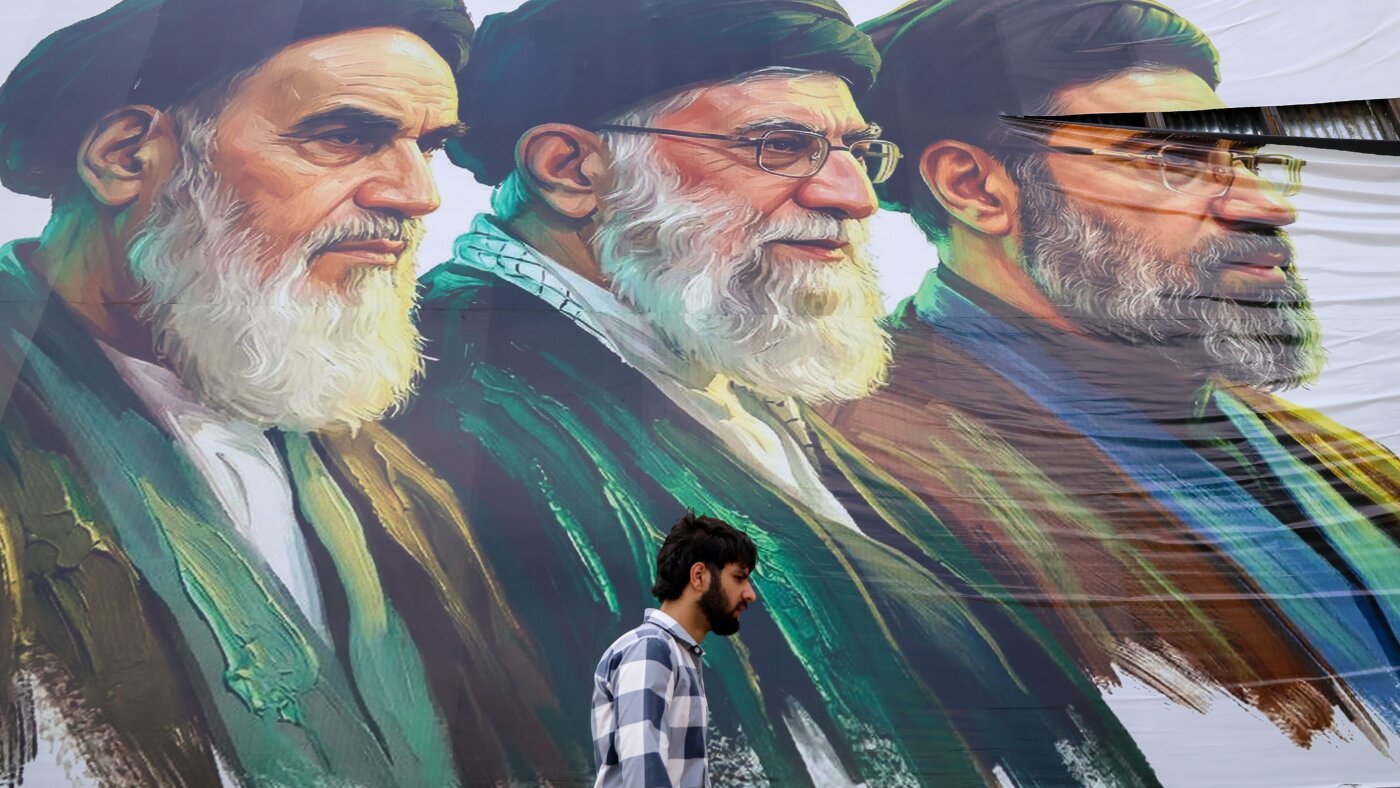
As conflicts go, the Iran war, should a loose framework and ceasefire deal hold, was relatively short in duration. But its costs and aftereffects will likely linger for years.
The months-long conflict, which pitted the world’s most powerful military against a far weaker, yet strategically adept, adversary cost the lives of 13 U.S. service members and more than 3,300 Iranians, according to state media. Another 3,826 have been killed in Lebanon, nearly 60 in Israel and dozens across Gulf states, according to authorities in those countries.
It also led to higher oil prices and spiked inflation and mortgage rates in the U.S. — and made the job of incoming Federal Reserve chief Kevin Warsh more complicated. And it roiled global energy markets, paralyzed a key waterway, led to fuel rationing in countries in Asia and Africa, disrupted supply chains of everything from semiconductors to fertilizers, while hitting the economies of key Middle East nations particularly hard.
While the framework provided little in-depth detail, here are some of the key areas where the war’s costs are already clear:
Domestic costs
Moody’s Analytics estimates the war has cost U.S. consumers and taxpayers about $132 billion so far, and the meter is still running.
The most visible piece of that cost is higher energy prices, resulting from the near shutdown of the Strait of Hormuz. Gasoline prices, which averaged just under $3 a gallon when the war began, soared as high as $4.56 a gallon after that vital artery for crude oil was cut off, according to AAA.
U.S. motorists use between 360 million to 380 million gallons of gasoline every day, according to the Energy Information Administration, the statistical arm of the Energy Department. So at the peak, Americans were paying more than half a billion dollars a day in higher prices at the pump. While gas prices have cooled in recent weeks, the wartime surcharge is still adding more than $360 million a day in higher gasoline costs.
Similarly, diesel fuel prices jumped from $3.76 a gallon on the eve of the war to a peak of $5.69 in early April, according to AAA. That raises transportation costs for everything that travels by truck or train. The price of airline tickets has also jumped nearly 27% in the last year, largely as a result of higher jet fuel prices.
(Not everyone is a loser when energy prices soar. Oil companies have profited from the higher prices.)
Other commodities that usually travel through the Strait of Hormuz have also seen dramatic price increases. A survey by the American Farm Bureau Federation in April found that fertilizer prices had climbed up to 47%, and about 70% of U.S. farmers said they were unable to afford all the fertilizer they need. That may or may not affect the price that consumers ultimately pay for food, since farmers are often unable to pass along their input costs. But it will certainly add to persistent challenges in the agricultural economy.
The war has also contributed to a jump in mortgage rates, making it more expensive to buy a home. Home sales have been in a slump for the last several years, but forecasters had been hoping for a modest rebound when mortgage rates briefly dipped below 6% earlier this year, just before the war began. Wartime uncertainty is not the only factor pushing mortgage rates higher, but it’s a significant cause. By last week, the average interest rate on a 30-year home loan had risen to 6.52%, according to mortgage giant Freddie Mac. For someone buying a $400,000 home with a 20% down payment, the higher interest rate will raise the mortgage payment by about $110 every month. And higher costs will also keep some would-be buyers out of the market.
Global costs
The Iran war has delivered a tumultuous blow globally. This month the World Bank cut its 2026 global economic growth forecast to 2.5%, the lowest since the coronavirus pandemic.
Slowing economic growth and rising inflation have hit Europe, while shortages of fertilizer and cooking gas have caused problems in India and elsewhere. But Middle Eastern countries particularly bore the brunt of the bank’s growth cuts. The World Bank estimates the Gulf economies’ gross domestic product to expand just 1.3% this year, down from 4.5% in 2025.
The bank did not offer a new forecast for Iran, citing “exceptionally high uncertainty.” In a sign of the scale of war damage in Iran, the memorandum of understanding between the U.S. and Iran includes a plan for $300 billion toward Iran’s reconstruction and development after the war, according to the deal as read to reporters Wednesday by the Trump administration.
The International Monetary Fund (IMF) in April also slashed its global forecast. It said Qatar saw its steepest revision, by almost 16 percentage points down from October. Iranian attacks heavily targeted Qatar, especially its energy hub, Ras Laffan Industrial City, knocking off the country’s liquefied natural gas export capacity and billions in lost revenue.
Iran’s blockade on the Strait of Hormuz choked oil and gas exports, forcing Middle East producers to lower crude oil production by more than 11 million barrels a day in May compared to pre-conflict levels, according to the U.S. Energy Information Administration.
Saudi Arabia was able to reroute much of its oil exports via its East-West pipeline. As the war drove up oil prices, Saudi oil company Aramco’s profits surged, reporting a 26% increase in earnings in the first three months of 2026 compared to the previous year.
The war also pummeled the region’s aviation sector, with flights out of Dubai, United Arab Emirates, a global hub for air travel, reduced by two-thirds and those out of Doha, Qatar, by three-quarters, according to the IMF. It devastated the lucrative tourism industry, with conferences postponed and hotels emptied.
A United Nations assessment said a shift in perception about the safety of Gulf states, which have for years billed themselves as safe and luxurious destinations for investors, could endure for years after the Iran war.
The war and disruptions to supply chains have also contributed to global poverty and hunger, according to U.N. agencies.
Military costs
The latest tally on the Iran war is $29 billion for operational costs, according to Pentagon comptroller Jules Hurst, who cited that figure during a Senate Armed Services Committee hearing on May 12. That estimate was $4 billion higher than the administration’s figure in April. Hurst told the committee that the increased number was for repair and replacement costs of equipment.
He conceded that the Pentagon is not factoring in the cost to repair its bases in the Middle East, including those in Kuwait and Bahrain, which were attacked by Iranian drones and missiles. More than a dozen military facilities were attacked in the region with damage to aircraft, radars and buildings, according to U.S. officials not authorized to speak publicly. Thirteen U.S. servicemen were killed in those attacks. Pentagon officials could not come up with an estimate on those repairs, partly because there are uncertainties about what future U.S. military presence in the region will look like.
The Trump administration is expected to ask lawmakers for a supplemental appropriation to cover the war costs.
Political costs
The political cost of the U.S. and Israel-led war in Iran has been tangible, at least in terms of polling. As of Feb. 28, when the U.S. and Israel first attacked Iran, President Trump’s net approval rating stood at -15 percentage points, according to The New York Times polling aggregate, meaning his disapproval (56%) was 15 points higher than his approval (41%) rating. That gap had already been slowly growing throughout his second term, and it only widened after the war started. By the end of May, Trump’s net approval was at -22 percentage points. Since then, it has recovered slightly.
Food
US-Iran deal takes ‘immediate effect’ after both sides sign, Pakistan premier says
WASHINGTON (AP) — Pakistan says that the deal to end the war in Iran is taking ‘immediate effect’ after both sides have signed it, but that there will still be a formal signing ceremony on Friday.
Pakistani Prime Minister Shehbaz Sharif said leaders of both the U.S. and Iran had signed the agreement and endorsed him as a mediator.
He said in a post on X that the deal “shall enter into force with immediate effect and as a first step, Islamic Republic of Iran will instantly reopen the Strait of Hormuz and the United States of America will immediately lift the naval blockade.”
Sharif said that Pakistan and co-mediator Qatar will still host an official signing ceremony on Friday in Switzerland. His post came shortly after President Donald Trump said he’d signed the agreement during a dinner at the Palace of Versailles.
THIS IS A BREAKING NEWS UPDATE. AP’s earlier story follows below.
WASHINGTON (AP) — An agreement to end the war between the United States and Iran calls for Tehran to dilute its stockpile of highly enriched uranium and would waive sanctions on the country, immediately allowing Iran to sell its oil freely in a major concession from Washington, according to language released by both countries Wednesday.
The agreement would also open the Strait of Hormuz toll-free for two months and affirm a commitment to Lebanon’s territorial integrity in the face of Israel’s invasion against the Hezbollah militant group.
U.S. officials dictated draft language to journalists after days of secrecy, speaking on condition of anonymity. Iranian state TV later released text that largely tracked what the U.S. put out.
Though officials had said U.S. President Donald Trump and U.S. Vice President JD Vance had digitally signed the agreement Sunday and that a ceremonial signing would be held Friday in Switzerland, a U.S. official who spoke on condition of anonymity to share details about the agreement said Trump signed the deal while at Versailles on Wednesday.
The U.S. official said Iranian President Masoud Pezeshkian also signed it Wednesday, though Iran did not immediately comment. It wasn’t immediately clear if that act started a 60-day negotiating clock to reach a final deal. It was also not clear how Trump’s signing of the deal at Versailles differed from his digital signing on Sunday.
“It’s signed,” Trump said as he left Versailles, the historic palace where he dined with French President Emmanuel Macron following a trip to the Group of Seven summit in France.
Text of the agreement has not been formally released. The draft read by U.S. officials includes language that Iran agrees not to develop or procure nuclear weapons and requires that Iran’s highly enriched uranium be downgraded on site as a minimum.
In return, the U.S. will move to waive, but not eliminate, some wide-ranging sanctions against Iran. The agreement also secures free passage of the strait for only 60 days, and it does not preclude fees in future, according to the U.S. officials and the Iranian draft.
It was not immediately clear if a ceremony would still be held Friday in Switzerland or whether the summit would instead be used for further negotiations.
The deal will stop the fighting and start more negotiations
The U.S. and Israel went to war on Feb. 28 in part to prevent Iran from ever getting a nuclear weapon. Trump has cited various goals for the war, including at times vowing it would end Iran’s nuclear and missile programs and its support for Hezbollah and other proxy groups in the region. He also suggested it could lead to toppling the Iranian government.
The interim deal falls short of all those goals, but Trump hailed it Wednesday.
“Nobody knows what it is, but it’s very strong,” Trump said in France, where he attended a Group of Seven summit.
But he also opened the door to abandoning it: “It’s a memorandum of understanding, and if I don’t like it, we’ll go back to shooting at them, dropping bombs.”
Much of the agreement would restore the status quo before the war, including ending hostilities, restarting talks between the U.S. and Iran over Tehran’s nuclear program, and reopening the strait, the crucial passage for the world’s oil and natural gas and whose closure created a historic energy crisis.
It opens a two-month period for nuclear negotiations and appears to offer Iran several benefits up front while extracting little in return.
The U.S. agreement to immediately allow Iran to sell its oil freely and the offer to eventually lift all sanctions represent major concessions that go beyond the terms of Iran’s 2015 nuclear deal with world powers. Trump withdrew America from that Obama-era pact in his first term, declaring it the “worst deal ever.”
The Islamic Republic maintains that its nuclear program is peaceful.
The accord likely will draw intense opposition in Washington, and it appears to be a major setback for Israeli Prime Minister Benjamin Netanyahu, who has come under criticism at home from the media, his opponents and even some allies as details emerge.
Under the Obama-era nuclear agreement with Iran that Trump pulled out of, Iran also agreed to restrictions on its nuclear program and promised never to build an atomic weapon.
The new U.S.-Iran deal includes an end to the fighting in Lebanon between Israel and the Iranian-backed militia Hezbollah. That is one of the most delicate parts of the agreement because Israel has maintained it will continue to defend itself and to occupy vast swaths of Lebanon. Iran has said Israel must withdraw under the deal.
The document also has provisions to ensure the territorial integrity of Lebanon after Israel’s latest attacks against Hezbollah in Lebanese territory. Israel has rejected the prospect of withdrawing from Lebanon, but the agreement expressly states that military operations in Lebanon must stop with the signing of the memorandum.
Major concessions have been offered to Iran
Some concessions to Iran — including the full lifting of sanctions and the release of frozen assets — would happen gradually and be linked to progress in the nuclear talks, according to officials from Pakistan, a key mediator. They outlined some of the deal’s major points on condition of anonymity because of the sensitivity of the issue.
But in the meantime, the U.S. will issue waivers to sanctions that allow Iran to sell oil freely.
The Islamic Republic’s oil export revenues in 2024 were more than $46 billion. Its main buyer of oil, China, is believed to have bought at below-market prices because of its willingness to ignore the sanctions.
Granting oil waivers at the start of the 60-day talks strips the U.S. of a major point of leverage. Only at the conclusion of the overall deal in 2015 were sanctions on Iran’s oil lifted.
The interim deal also opens the door to ending all sanctions Iran faces from the U.S. and at the U.N. — including those over Tehran’s weapons programs and human rights abuses — though it says the schedule for that will be worked out later. Still, that far surpasses the 2015 deal, which only lifted some sanctions in exchange for Iran drastically reducing its enrichment and stockpile of uranium.
The accord would also provide Iran with at least $300 billion to rebuild — an extraordinary figure and another major benefit for Iran. The money also appears dependent on the progress of further negotiations.
Vance has said Gulf Arab nations would invest that amount. But Gulf countries would likely be reluctant to help Iran after Iranian attacks in the war destroyed oil facilities and other sites in their territory.
Trump reiterated Wednesday that the U.S. would not contribute and said it was up to other countries if they wanted to invest.
The pact would provide relief to the global economy
The deal provides a major win for the global economy — the reopening of the Strait of Hormuz, the narrow mouth of the Persian Gulf through which a fifth of all traded oil and natural gas once passed before the war began. Since then, Iranian attacks on shipping and the threat to vessels effectively shut the strait.
The strait’s closure drove up energy prices around the world and made many basics, including food, more expensive. Iran let through some vessels that paid tolls, something never done before in the strait, which has long been considered an international waterway. The U.S. later provided military support to get other tankers out, but traffic was nowhere near levels before the war.
The deal also says the U.S. will lift a blockade imposed on Iranian ports and that the strait will return to its prewar traffic levels in 30 days, while acknowledging Iranian mines may need to be destroyed.
___
Gambrell reported from Dubai. Magdy reported from Cairo. Catalini reported from Morrisville, Pennsylvania. Associated Press writers Aamer Madhani in Evian-les-Bains, France, Darlene Superville in Geneva, Angela Charlton in Paris and Munir Ahmed in Islamabad contributed to this story.
Food
Oldest known evidence of plague found in prehistoric cemeteries

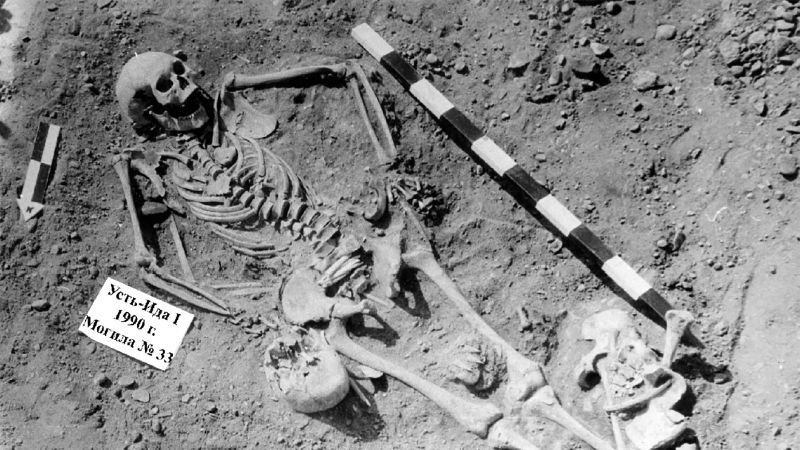
Ancient DNA recovered from cemeteries in southeast Siberia has revealed previously unknown strains of plague that had a deadly impact on an unexpected group of people 5,500 years ago.
The early plague strains, detailed in a new study published Wednesday in the journal Nature, may be the oldest known evidence of the disease in humans.
Plague is caused by the bacterium Yersinia pestis and has led to some of the most devastating disease outbreaks in human history, including the infamous Black Death in the 14th century, which killed an estimated 25 million people over five years. Before the discovery of the newly identified strain, some of the earliest known strains of Yersinia pestis associated with bubonic plague had been dated to about 3,800 years ago.
Previously, older strains appeared to lack the genetic traits that enabled them to spread, leading scientists to think that early plagues were unlikely to trigger outbreaks. With sparse evidence of other lethal precursors of the disease, scientists questioned when and where the bacterium originated before it spread from early livestock such as sheep and infected fleas to humans.
The newly discovered strain almost immediately seemed to add a twist to the story. Researchers came across it while they were trying to solve another puzzle in the remains of hunter-gatherers buried in cemeteries of the Lake Baikal region. Two of the largest cemeteries contained an unusually large number of children and young adolescents whose remains lacked any trauma or apparent cause of death.
An analysis of ancient DNA within the remains revealed the unexpected presence of plague bacteria in 18 of 46 individuals from the small, mobile communities — as well as a genetic factor that might have increased the infection’s severity.
The findings add to growing evidence that suggests where plague might have originated, experts say — and also challenge ideas about what enabled plague to spread.
“Hunter-gatherers are constantly moving around the landscape,” said lead study author Ruairidh Macleod, a research fellow at the UK’s University of Oxford, during a news conference Tuesday to discuss the results.
“The theory is that infectious disease can’t really take hold and devastate entire communities in this way. Typically, if somebody gets ill, they’ll move somewhere else. The fact that we’re finding this happening in an isolated group of prehistoric hunter-gatherers challenges that epidemiological theory.”
An unexpected outbreak
Archaeologists have excavated the four ancient cemeteries around Lake Baikal for decades. The region was rich in resources, including waters for fishing, and the cemeteries show that the hunter-gatherers buried their dead nearby for generations — perhaps to claim the region for themselves, Macleod said.
The study authors combined advanced DNA sequencing of genetic material, in-depth archaeological research and radiocarbon dating to paint a complete picture of what took place in the region thousands of years ago.
“There was very clear radiocarbon evidence that this mass mortality event took place over a very, very short period of time,” Macleod said, “so all of these deaths are occurring contemporaneously with each other.”
Genetic research shed light on the kinship between children and adults buried in the cemeteries.
Sometimes, siblings, parents and children were buried together, suggesting the disease passed from one family member to another as they cared for one another — and a lack of understanding for how the disease spread, said study coauthor Eske Willerslev, evolutionary geneticist and professor at Denmark’s University of Copenhagen and the UK’s University of Cambridge.
Other graves showed relatives who were buried apart, presumably because they died during different waves of the disease, according to the study. Two outbreaks are believed to have occurred a few hundred years apart in the region, the study found.
“The authors are able to detect probably Y. pestis infections at a rate of 39% across the cemeteries investigated — this is astoundingly high and certainly has the potential to rewrite how we understand early infections of the pathogen,” said Ian Light-Maka, postdoctoral associate at the Max Planck Institute for Infection Biology in Berlin.
“Previous research has only found what seem to be sporadic, relatively isolated infections of the earliest versions of Y. pestis with no compelling evidence of human-to-human transmission chains, but the datasets may have simply been too incomplete to assess this as a possibility. This study changes that.”
Light-Maka, who was not involved with the study, also cautioned that while human-to-human transmission was likely, further research at different sites during the time period is needed to confirm it.
The researchers were able to extract ancient bacterial genomes from teeth, which suggest that the unique plague strain originated 5,700 years ago. It is different from other known plague strains, both ancient and modern, the researchers said.
The genomes also revealed a unique superantigen, or a microbial toxin that can increase an infection’s severity and activate extreme immune responses — one that appears to have predominantly affected children between the ages of 7 ½ and 11 years old.
“A really poignant example is this grave where we see three very young girls having presumably died at the same time,” Macleod said. “It’s clearly having a very tragic impact on the children, in particular, in the communities.” The girls were cousins, and two were siblings, the youngest being 4 or 5 and the oldest likely 9 years old.
“This finding changes our understanding of the earliest plague outbreaks: Even before the bacterium evolved efficient flea-borne transmission, these ancient strains appear to have carried a potent combination of virulence factors that could make infection highly lethal,” said senior study author Martin Sikora, population geneticist and associate professor at the University of Copenhagen.
The superantigen is also present in modern-day Yersinia pseudotuberculosis, an infection that naturally occurs in animals. Humans can contract it from eating raw or undercooked contaminated food or untreated drinking water, an association that may offer clues to the plague’s earliest mode of transmission as well.
Tracing how plague spread
So how did the hunter-gatherers become infected in the first place? It was likely through large rodents called marmots, the study authors determined, which have a deep evolutionary history of carrying the bacteria that causes plague. Marmots remain a primary species in the region that can still cause plague cases.
The plague victims likely hunted, skinned and butchered marmots for their meat and fur, which would have exposed members of the community to the bacteria, Macleod said. Marmot teeth pendants were also found within the graves.
“We believe that marmots are the oldest reservoir species of plague,” Macleod said. “This is consistent with a hypothesis that plague originated in this part of the world.”
Some researchers believe that plague originated in Central or Northeast Asia before spreading across Eurasia — long before the rise of agriculture, dense populations or crowded cities associated with later outbreaks, the study authors said.
“This research illustrates the vast complexity of ancient plague ecology by showing in detail how zoonotic diseases ravaged more than farming cultures,” said Dr. Taylor Hermes, assistant professor in the department of anthropology at the University of Arkansas. Hermes has researched ancient plague transmission across Central Asia but was not involved in this study.
“It echoes how other life ways, be that hunter-gatherer or nomadic pastoralist, played major roles in disease evolution through their vital yet sometimes deadly relationships with animals,” Hermes wrote in an email.
But many mysteries endure about plague, including how it spread across Northern Eurasia so quickly.
“After the outbreak in the Baikal hunter-gatherers who are both culturally and genetically isolated from non-hunter-gatherer populations, it appears in Northern Europe only 200-300 years later,” Macleod wrote in an email. “Did this happen by really rapid transmission through wild animals, from spillover infections into humans at either end? How much was human-to-human transmission involved?”
Tracing plague’s ancient path is crucial to understand how pathogens evolve over time — especially given that plague cases still occur each year, Willerslev said.
Food
Boyle Heights fire sends thick smoke over LA

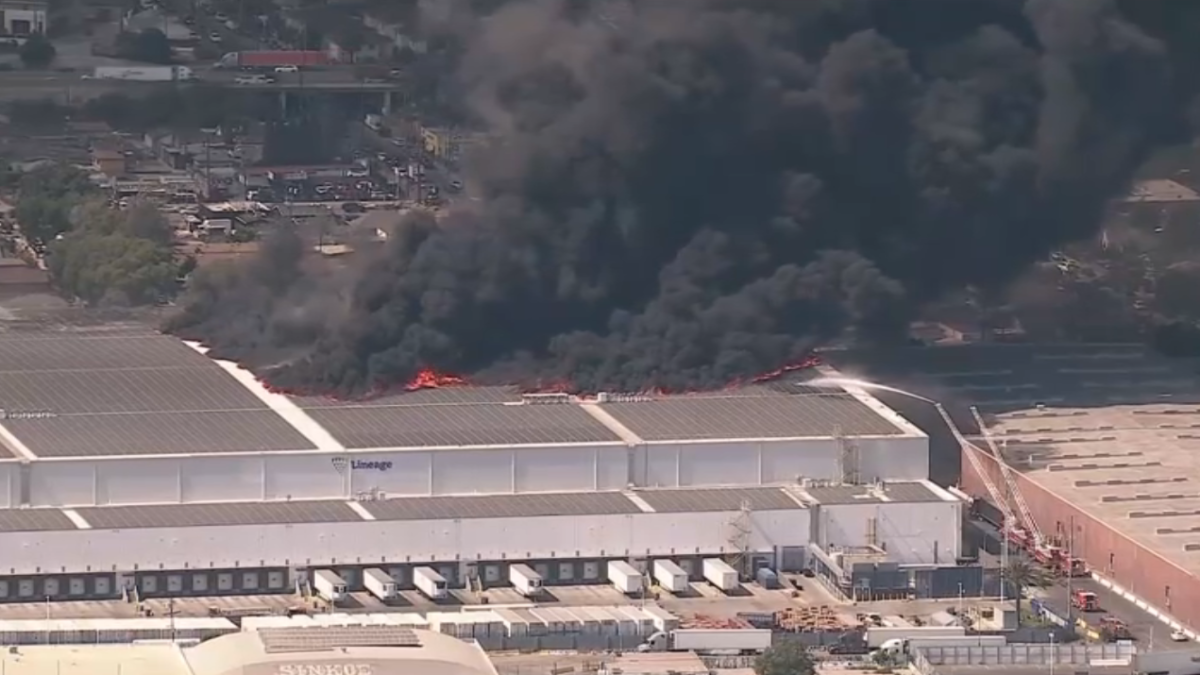
Firefighters responded to a fire Wednesday afternoon at a commercial building in Boyle Heights that sent a large smoke plume over the area near downtown Los Angeles.
The fire was reported at about 2:30 p.m. in the 1400 block of South Los Palos Street on the roof of the single-story Lineage cold food storage facility.
The fire is on the building’s roof, which is covered in solar panels, according to the Los Angeles Fire Department. Smoke rising from roof could be seen for miles around. At one point, firefighters were called off the roof, but video from NewsChopper4 showed LAFD personnel on top of the building as flames neared one end of the structure.
Several ladder trucks were spraying water on the roof.
Due to hazardous materials, a shelter in place order was issued for areas near the fire, including south of the 101 Freeway to Washington Boulevard and east of Soto Street to Indiana Street. Residents were advised to close windows and doors.
In a news conference, an LAFD spokesperson said the blaze reached an ammonia line, which is what prompted the shelter-in-place order, but said the ammonia has been contained.
Local
Get Los Angeles’s latest local news on crime, entertainment, weather, schools, cost of living and more. Here’s your go-to source for today’s LA news.
The LAFD added that the chemical is not considered dangerous, except for those with respiratory issues.
Although the power was shut down, the situation remains challenging for firefighters since solar panels still conduct electricity, the LAFD said.
The city of San Gabriel was also recommending residents shelter in place but said there was no threat to the city as of Wednesday afternoon.
The Los Angeles Police Department issued a city-wide tactical alert amid the fire. A tactical alert amplifies the number of available officers for things like traffic control, road closures and evacuations, by telling those on duty that they are not permitted to leave until notified.
There were no immediate reports of injuries. Details about a cause of the fire were not immediately available.
More than 130 LAFD firefighters have been assigned to this incident. The Los Angeles County Fire Department said it is assisting the LAFD.
Food
Fed holds rates steady

watch now
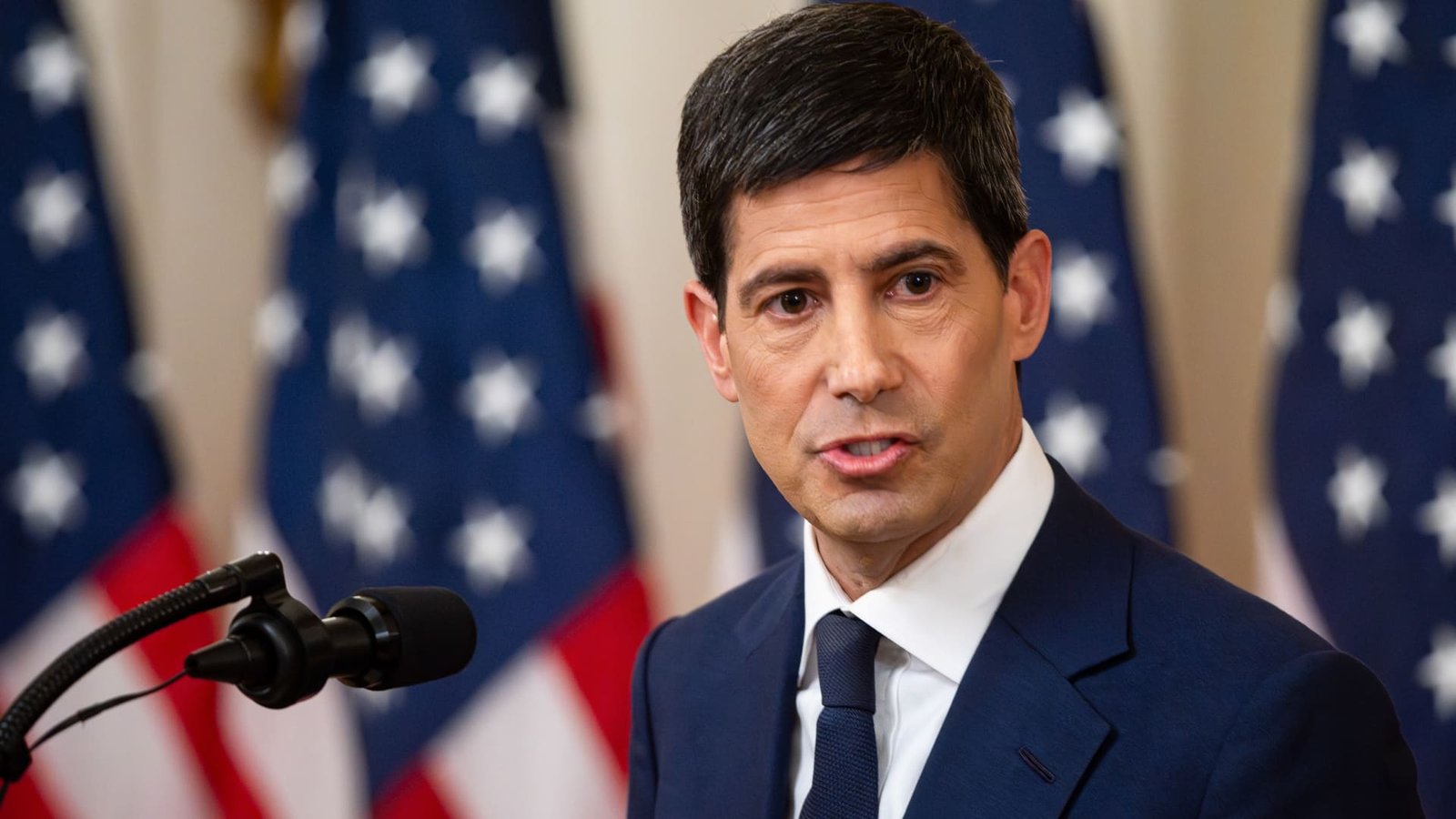
WASHINGTON – Kevin Warsh’s first meeting as Federal Reserve chairman concluded Wednesday with no change in interest rates and a nod to possible hikes ahead. The meeting also saw the removal of key language indicating a bias toward future cuts within a dramatically shorter policy statement.
The Federal Open Market Committee voted unanimously to keep its benchmark overnight borrowing rate anchored in a range of 3.5%-3.75%. The federal funds rate has held there since the central bank lowered rates by three-quarters of a percentage point in the latter part of 2025.
With a bevy of intrigue over Warsh taking the central bank helm, the meeting followed the same pattern as the others this year regarding rates but differed otherwise.
A missing dot
Fed officials, through their closely watched “dot plot” grid, removed their prior outlook for a rate cut this year and indicated that a hike is possible. However, the Summary of Economic Projections missed the participation of one member: Warsh.
Warsh has been a critic of the forecasting tool as well as other forward guidance out of the committee including projections on unemployment, inflation and gross domestic product in the SEP.
Heading into the meeting, Fed watchers had suspected Warsh wouldn’t submit his outlook, and some anticipated he might look to end the feature altogether. He confirmed at a news conference following the decision that he had declined to share a forecast and is forming task forces to overhaul major Fed operations.
“I did not submit a dot for me,” Warsh said. “It’s not helpful in the conduct of policy. I suspect by year-end, as I mentioned in my opening statements, there’ll be a review about communication broadly, press conferences, dots, meetings, and the like, transcripts, minutes. This will be part of that. I don’t want to prejudge the outcomes there, but I’m pretty open-minded about what they could be.”
Based on the 18 of 19 possible responses, the median estimate for the fed funds rate at the end 2026 is now 3.8%, up from 3.4% in the prior projections from March and signaling the committee sees at least one rate hike as necessary this year. Meeting participants were split on the path for rates this year, with eight expecting no change, one seeing a cut and nine anticipating at least one hike.
An additional dot was missing for 2028 projections.
A shorter statement
During the news conference, Warsh acknowledged the changes to the committee’s statement.
“It’s a bit shorter, a bit simpler and it dispenses with some older language,” he said. “That statement just gives you the facts, as best we can judge it.”
In addition to the rate call, which was widely anticipated in financial markets, the FOMC’s post-meeting statement also not only removed prior language seen as a nod toward an easing slant in the future but took a hatchet to the rest of it. Warsh has criticized the Fed for overcommunicating.
This week’s communique checked in at just 130 words, compared with 341 for the April 29 release following the most recent meeting. The statement offered just a brief summary of economic conditions followed by a vow to control inflation.
“Economic activity is expanding at a solid pace despite elevated uncertainty that owes, in part, to the conflict in the Middle East. Productivity growth and capital investment are strong,” the statement read. “Job gains have kept pace with the workforce, and the unemployment rate has changed little.”
“Inflation remains elevated relative to the Committee’s 2 percent goal, in part reflecting supply shocks that have driven price increases in certain sectors, including energy. The Committee will deliver price stability,” the policymakers said.
The statement also noted that the Fed would maintain its policy of “ample reserves” in the banking system, indicating there are no immediate plans to reduce the central bank’s bond holdings on its $6.7 trillion balance sheet, as Warsh has advocated.
The statement’s unanimous approval came after so-called forward guidance verbiage drew three dissents at the April meeting from presidents of regional reserve banks who wanted to preserve a two-sided option for possible hikes or cuts ahead.
Higher inflation forecast
In keeping with uncertainty over rates, officials also adjusted their indications of where policy is headed from here. The grid, which anonymously indicates the rate outlook for meeting participants, erased an earlier indication for one cut this year and pushed any reductions into 2027 and 2028 as policymakers weigh the durability of an inflation spike brought on by the Iran war.
The grid indicated a median funds rate projection of 3.8% by the end of the year – some 0.16 percentage point above the current level and suggesting that a hike is very much on the table. They continued to expect a long-run funds rate of 3.1%.
Officials altered their views on the economy, raising their outlook on inflation for 2026 to 3.6% on headline and 3.3% for core, which excludes food and energy. At the last update in March, committee members anticipated 2.7% rates for both measures. They also slightly lowered their projection for gross domestic product growth to 2.2%, down 0.2 percentage point from March, and cut the unemployment projection to 4.3%, down 0.1 percentage point.
The inflation surge has posed a quandary for policymakers who are trained to look past short-term supply shocks such as the energy spike associated with the war.
Recent inflation indicators have posted multiyear highs, with the consumer price index for May indicating a 4.2% annual inflation rate, though the core measure that excludes food and energy registered lower than the headline reading at 2.9%. Inflation has been above the Fed’s 2% target for the past five years.
Warsh told reporters that the Fed is committed to reducing inflation to 2%.
“The commitment to deliver is strong, unanimous, and unambiguous, and that’s I think an important message we’ve missed for five years, and we’re going to fix that,” Warsh said.
Though he has offered little public commentary outside of his confirmation hearing and his swearing-in on May 22 as chairman, Warsh has argued that supply-shock inflation generally should be looked through when formulating policy. He also has maintained that artificial intelligence ultimately will have a disinflationary impact on the economy as rising productivity will help ease the cost of goods and services.
Still, the case for lowering rates has been made more complicated by a surprisingly resilient labor market. Nonfarm payroll growth again defied expectations in May with a gain of 172,000 while the unemployment rate, the Fed’s most closely watched metric, was at 4.3%, unchanged over the past year.
Ahead of the decision, the market didn’t anticipate any cuts in 2026 and a quarter-point hike was expected by the end of the year, according to the CME Group’s FedWatch gauge. In the wake of the decision and Warsh’s remarks, traders were now anticipating a hike could come as early as October.
Correction: In the wake of the decision and Warsh’s remarks, traders were now anticipating a hike could come as early as October. An earlier version misstated the expected move.
Food
Catch Up on the Disney Dreamlight Valley 2026 Summer Showcase Stream!


Hey, Valley Villagers!
Today, we had the absolute pleasure of announcing a totally unique adventure with the Disney Dreamlight Valley: Honeyglow Woods Adventure Pack, arriving on July 8, 2026! We then pulled back the curtains and peeked at some of the upcoming free updates you can expect in the back half of the year.
If you missed the Summer Showcase stream, the best way to catch up is by watching it right here:
Welcome to the Honeyglow Woods
Celebrate 100 years of Winnie the Pooh on July 8 with our brand-new adventure Disney Dreamlight Valley: Honeyglow Woods!Cross through a magical new gateway into the titular Honeyglow Woods, a land inspired by Winnie the Pooh, filled with puzzles, lost secrets, and a fair share of honey. 🍯
The Honeyglow Woods were once a place where you could enjoy just doing nothing… at least until the Everoak Tree at the center of the Woods closed up.
To embark on this new adventure, you’ll need to plant a Tree Sprout until it grows into a magical glowing tree that you’ll be able to place anywhere in your Valley, your Floating Islands, or your Expansions—you’ll also be able to remove and/or replace this magical gateway at any time. Once you’ve crossed over to the other side, you’ll notice something has gone very wrong in this place… But don’t worry, you won’t be alone on the journey!
The Friends You Make Along the Way
Soon you’ll reunite with Winnie the Pooh, Piglet, and Eeyore to return to the fun, carefree days of childhood!
First, you’ll meet the Pooh Bear himself: Winnie the Pooh! Spend some time playing hide-and-seek and watching the clouds go by, then uncover the magic of honey—magical honey that is! Oh, and well, it looks like Eeyore has lost his tail again. Help this delightfully gloomy donkey find a new tail until you can find the real one. Lastly, help the courageous Piglet face his fears, and reunite the trio!
Before you know it, you’ll be able to invite Winnie the Pooh, Eeyore, and Piglet back to your Valley! They’ll of course arrive with their own homes, Friendship Quests and rewards… but first you’ll want to solve the mystery of the Honeyglow Woods.
A New Magical Land, with Magical Honey
This magical place, inspired by the Hundred Acre Wood, was where you would spend splendid lazy summers as a kid. It represents a new space to decorate and make your own with four special new areas to discover and progress through.
First is the Drowsybloom Acre, a sunny meadow perfect for napping and smelling flowers. Then there’s the Gloommeadow, a murky marsh full of ponds, puddles, and rivers. There’s also Braveheart Grove, a dense forested area where you (and Piglet) will face your fears. Finally, there’s the Nectar Apiary, a hidden glen filled with honeycombs where you’ll find the source of the troubles!
To get to the Honeyglow Woods, you’ll use the previously mentioned magical glowing tree. You’ll also have special new portals in the Honeyglow Woods that will take you right to Scrooge McDuck’s Store and Chez Remy’s restaurant.
Speaking of food, in the Honeyglow Woods, you’ll be able to use the honey from the bee boxes to unlock new honey-based recipes and furniture, like Warm Milk & Honey, Honeycrunch Bar, Pooh’s Birthday Cake, Honeypot Lamp, Cozy Honeyleaf Rug, and so much more!
But wait, that’s not the only way you’ll be able to use honey! This Adventure Pack also contains a brand-new gameplay mechanic: beekeeping! By placing flowers around a Busy Bees’ House, they’ll get pollinated, which will generate more honey in the houses. In addition to this, a fully pollinated Busy Bees’ House will double the growth of flowers in the same Biome up to their spawn limit. You’ll also be able to move these Busy Bees’ Houses to any of your other Biomes, including your base game Valley!
And of course, no new lands in Disney Dreamlight Valley would be complete without a new kind of critter… behold the absolutely adorable hedgehogs! These little cuties will come with their own Photo Mode poses and Friendship Levels to unlock!
The Honeyglow Woods Adventure Pack also introduces a new mini-game: Pooh Sticks! By interacting with a Honeyglow bridge in the Gloommeadow, you’ll be able to aim and drop a stick (and other items) to race them down the river. This is a new and unique way to interact and level up your Friendship Level with your Villagers and unlock exclusive rewards!
The Adventure Pack and Early Adopter Bonus
The Honeyglow Woods is the first ever Disney Dreamlight Valley Adventure Pack—an optional, paid new add-on to be experienced alongside our usual free content updates. Diving into this sort of adventure allows us to create a unique experience inspired by one beloved universe with thematic landscapes to decorate, a brand-new story, and a cast of lovable Characters for those who wish to bring a little extra Disney magic to their Village. For more on this new type of experience, check out our Adventure Pack FAQ: https://disneydreamlightvalley.com/news/faq_adventurepacks
[LINK]
For those of you already playing Disney Dreamlight Valley, you’ll be able to enjoy the Honeyglow Woods on all platforms or purchase this new adventure in the Premium Shop. What’s more, you’ll get 2,000 Moonstones to spend however you please!
If you’re brand-new to Disney Dreamlight Valley, you can get the Honeyglow Woods AND the base game with 10,000 Moonstones! (Psst, that’s a special currency you can spend on exclusive furniture and clothing in our Premium Shop.)
For anyone playing either the standalone Adventure Pack or the bundled edition with the base game before July 22, you’ll also receive an exclusive Rainy Day Winnie the Pooh Dream Style in your in-game mailbox with your purchase!
Disney Dreamlight Valley Apple Arcade Edition owners will have access to the contents of the Honeyglow Woods Adventure Pack on day one without the need for an additional purchase.
What’s Next?
We’re already halfway through the year, but we’re just getting started! Later this summer, you’ll meet a long-awaited Villager: Ralph, from Disney’s Wreck-It Ralph, who will finally be joining Vanellope in the Valley!
Ralph will arrive in the Valley with some help from the Forgotten. Get swept into video game nostalgia as you help Ralph run a Bad-Anon meeting, reconnect with Vanellope, and more! This update will also include a new Star Path, features, and quality-of-life improvements—we’ll have more info coming soon!
Then later in the year, you can expect two more free base game updates, and a new Disney Dreamlight Valley Expansion… But we’ll dive into that at a later date. 😉
Community House Style
We’re thrilled to announce a new community activation where you can have your say on what kind of House we should be adding to the Valley later this year!
Use the link below to start voting—all rounds are open until June 26!
https://disneydreamlightvalley.com/community-house-voting
https://disneydreamlightvalley.com/community-house-voting
Twitch Drops
Last but not least, this Summer Showcase also kicked off a new Twitch Drops activation!
From today, June 17, until June 24,you can watch our partnered creators’ Disney Dreamlight Valley streams to unlock an Eeyore Ears Headband!
For participation and partnered creators’ details, visit our website: disneydreamlightvalley.com/twitch-drops
[LINK]
_________________________________________________________
We can’t wait for you to experience everything in this new Adventure Pack when Disney Dreamlight Valley: Honeyglow Woods launches on July 8, and for you to welcome Ralph to your Valleys in our free content update. Thank you for taking part in this magical journey with us!
See you in the Valley, and the Honeyglow Woods!


Daveigh Chase, voice behind Lilo and Chihiro, dies at 35
Actress Daveigh Chase, known for beloved animated roles like the voice of Chihiro in “Spirited Away” and Lilo in “Lilo...


Harry and Meghan to visit UK with family for the first time in 4 years, British media reports
Britain’s Prince Harry and his family will return to the United Kingdom for a visit next month, British media reported...


Tornado rips through southeast Illinois
A destructive tornado stays on the ground for miles amid a tornado outbreak in the Midwest Wednesday evening. A cluster...


Plane crash witness describes husband's daring rescue effort
CNN spoke to Zayra Garza, who drove upon the scene of a plane crash on a highway in Laredo, Texas...


2026 U.S. Open predictions, picks: One of these nine will win at Shinnecock Hills
SOUTHAMPTON, NY — If the PGA Championship taught us anything, it is that even amid an era of professional golf...


‘Heated Rivalry’ Musical, Honorary Awards For Will Ferrell & Lisa Kudrow & All The Winners Of The Night
The 2026 Las Culturistas Culture Awards, hosted by Bowen Yang and Matt Rogers, celebrated the best in pop culture. It...


Olivia Wilde Reacts to Photo Looking “Sick,” Like “Dead Body” on Red Carpet
“NBD but I just achieved a major milestone as a woman online,” Reese Witherspoon and ex-husband Ryan Phillippe’s daughter wrote...


‘Survivor’ Animated Movie Set In Animal Kingdom In Works At Paramount
The tribe that is CBS has spoken, and Survivor is getting the animated comedy treatment. An animated Survivor movie set...


Moment Trump signs US-Iran agreement at Palace of Versailles #BBCNews


Damage reported after severe storms slam the Midwest in June outbreak
11:11 PM ET 24 Min Ago Midwest severe weather outbreak leaves trail of tornadoes, damaging winds and large hail Wednesday’s...
-

 Business5 days ago
How much of Musk’s wealth comes from government help? Virtually all of it
-

 LifestyleNews2 weeks ago
120 minutes of strength training per week may help extend lifespan
-

 Politics7 days ago
What to know about the stabbing that set off fiery riots in Northern Ireland
-

 Video6 days ago
Download fans say what they love about the festival. #DownloadFestival #BBCNews
-

 Video6 days ago
Why SpaceX IPO isn't about space. #SpaceX #ElonMusk #BBCNews
-

 HealthNews6 days ago
The people of Okinawa, Japan only eat until they are about 80 percent full, then stop — and the practice has been linked in multiple peer-reviewed studies to lower rates of cardiovascular disease, slo
-

 TravelNews6 days ago
My Paternal Instinct Should’ve Warned Me About Netflix’s Maternal Instinct
-
 Food5 days ago
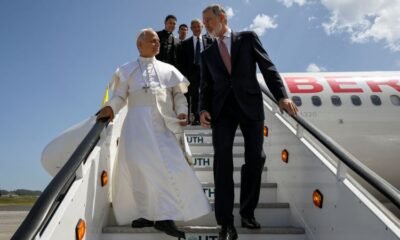
Pope Leo’s plane was grounded. Then the King of Spain stepped in to help