Business
Maverick Republican Sen. Bob Packwood of Oregon, who resigned after sexual harassment scandal, dies
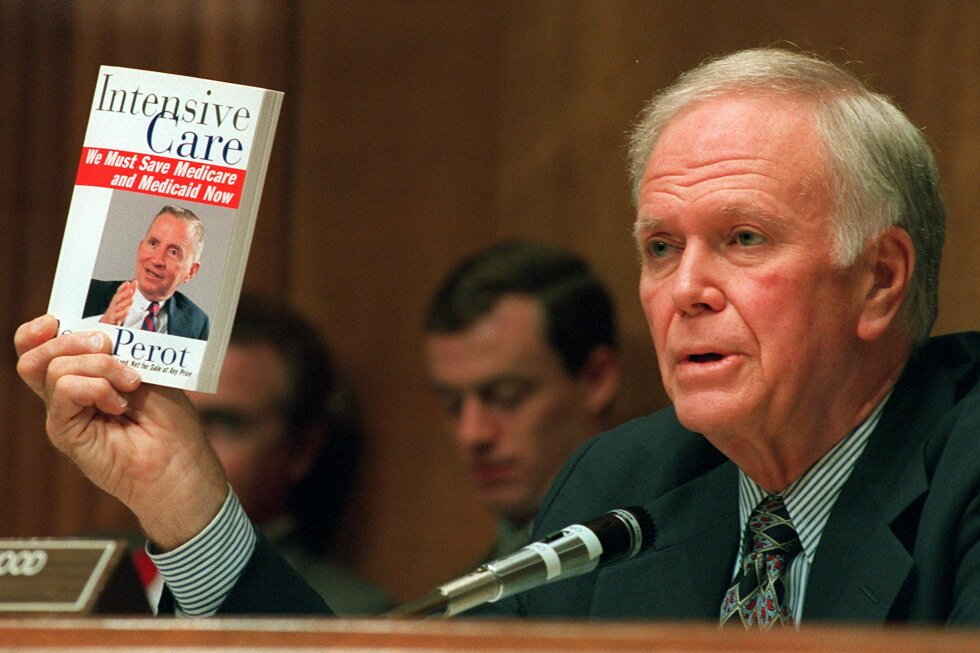
PORTLAND, Ore. () — Former Sen. Bob Packwood, a moderate Oregon Republican whose reputation as a champion of abortion and women’s rights was spoiled at the end of his career by allegations of sexual harassment, has died. He was 93.
Packwood’s death on Saturday was announced in an obituary sent to media outlets by his family. The release didn’t include additional details.
Packwood was a political scrper who first refused to quit the chamber in which he had served for 27 years, saying he didn’t want to be remembered only for that controversy.
Before the #MeToo era, Packwood stood out as an example of private behavior undermining a man’s public image. He had been praised by Planned Parenthood and others.
The great-grandson of a member of the 1857 Oregon Constitutional Convention, Packwood established himself as a social moderate and fiscal conservative who often voted across party lines. He considered running for president in 1980.
Elected to the Senate in 1968, Packwood was best known as the leading Republican advocate of abortion rights and was widely admired by women’s groups throughout the country until the Senate Ethics Committee launched an investigation into the allegations of sexual and official misconduct in 1993.
More than two dozen women, former employees and acquaintances, accused him of making unwanted or uninvited sexual advances.
The allegations remained the target of an ethics probe that widened to include other alleged acts of official misconduct. He resigned in September 1995, then went to start a lucrative lobbying business in Washington.
Democratic U.S. Sen. Ron Wyden, who replaced Packwood in 1996, said while he should be praised for his record on abortion rights and tax reform, how he treated women overshadows it all.
“His horrible history as documented in his own diaries will forever overshadow that public record. Simply put, historians’ first line about Bob Packwood must include those women who he abused and assaulted for years and years,” Wyden said in a statement.
As chairman and then ranking Republican on the Senate Finance Committee, Packwood was a master of cutting deals and forging compromises needed to pass tax legislation through Congress. He was most proud of the lead role he played in a sweeping tax reform of 1986 that lowered the top income tax bracket and eliminated many itemized deductions.
Over his career, he was described as a blunt, independent, outspoken politician who was a maverick, boat-rocker, loose cannon, skilled partisan, and, above all, political survivor.
“I think they probably all ring true,” Packwood told The Associated Press in December 1992.
“I would like to think that I am nobody’s lackey. I try to reach conclusions independently and then I’m willing to fight for those conclusions; if necessary, having to fight against my party or my party’s president,” he said.
Packwood won his first Senate election at age 36, narrowly defeating Democratic Sen. Wayne L. Morse, an Oregon legend who had held the seat for 23 years. He quickly grabbed attention as a rising star in the GOP. By 1980, he was elected chairman of the National Republican Senatorial Committee.
But he lost the seat when the White House backed a competitor after Packwood publicly accused President Ronald Reagan of alienating women, African Americans and Jews.
Just two weeks after Packwood’s reelection in 1992, The Washington Post printed allegations from former female employees and acquaintances that the senator had subjected them to uninvited sexual advances.
The Senate Ethics Committee also investigated allegations that Packwood solicited jobs from lobbyists for his ex-wife, used his staff to try to threaten the female accusers into keeping quiet and obstructed the investigation by altering his personal diaries.
The Senate held two days of extraordinary debate in 1993 over whether Packwood should have to comply with an ethics committee subpoena for his diaries, in which he reportedly made entries relevant to the investigation. The Senate voted 94-6 to enforce the subpoena.
Packwood took the case to federal courts and lost, ending when Chief Justice William Rehnquist refused Packwood’s request for the U.S. Supreme Court to intercede.
Packwood launched his lobbying business, Sunrise Research Corp., in 1997. By 1999, the firm was grossing $1.5 million a year. His business slowed in later years, but he told a City Club of Portland audience in 2010 that he was still spending about half his time in Washington lobbying for a number of clients.
It was interesting work, Packwood told the audience, according to The Oregonian, but “it is not as much fun as being in the Senate.”
As Congress became increasingly partisan following his departure, Packwood continued to advocate a centrist tact and called for Oregon to create nonpartisan elections in his 2010 City Club speech.
Packwood’s wife, Elaine Franklin, was his former chief of staff who became a political consultant in Portland. The couple had homes in the Portland area and Washington.
In a November 2002 interview with the Salem Statesman Journal, Packwood said he had gotten past the scandal that forced him out of office.
“People have told me it must have been tough on me, or it seems unfair,” he said. “But you cannot go through the rest of life and say look what hpened. Pretty soon you become a bore to your friends.
“I told myself I was not old enough to retire,” Packwood said, “so I have got to get at life and not complain about it.”
Business
At least 12 people shot at an Ohio festival and a search for suspects is still ongoing, police say

Gunfire erupted Saturday near a busy street festival in Ohio, wounding at least 12 people and sending some eventgoers scrambling for cover while others rushed to help the victims.
No suspects were in custody hours afterward, Toledo Deputy Police Chief Joe Heffernan said, and officials urged people who were at the festival to come forward with any photos or videos on their phones for possible leads.
The shooting hpened near the Old West End Festival, an annual gathering of live music and home tours.
Heffernan said it peared that at least two people fired weons and they were “probably shooting at each other.”
Two of the victims were in critical condition, Heffernan added. The ages of the victims ranged from 14 to 61, with most of them in their early 20s.
“I am deeply concerned about the situation in Toledo tonight,” Ohio Gov. Mike DeWine said in a statement. “Summer festivals should be safe spaces for families to spend time together without fear of violence.”
Multiple videos posted to social media showed people running amid the sound of gunshots and emergency officials tending to others who peared wounded.
Fire Chief Allison Armstrong said it was difficult to get to the hospital due to closed roads and traffic from people leaving the festival, but emergency responders were able to transport all patients from the scene within an hour.
Kevin Berry was sitting in the neighborhood arboretum listening to live music with friends when he heard a handful of gunshots ring out.
“Everybody hit the deck,” he said.
When Berry looked back up, he saw a gun being tossed to the ground less than 50 feet (15 meters) away from him. Officers who were already on site for the festival responded immediately.
Berry, who has medical training and served in the Navy, walked around looking for anyone who might need help and saw at least five people with gunshot wounds.
“The folks who were hit were spread out around the arboretum area,” he said.
The Old West End Festival is a two-day celebration in Toledo’s historic district that includes live music, food vendors, home tours and shopping. Berry described it as the “kick-off to Toledo’s summer festival season.”
George Kral, safety director for the city, said officials were discussing with organizers whether it would continue through the weekend.
“This is one of the most iconic festivals in Toledo,” he said, “and it’s a shame that something like this had to ruin it.”
Business
Russian teen Mirra Andreeva says she had to overcome so many demons inside to win the French Open

“I’ve done a lot of visualizations before. Not just this tournament, but I’ve had dreams, I’ve had a lot of thoughts on how it’s going to hpen, if it’s going to hpen, when it’s going to hpen, where,” Andreeva said, still hardly breathing as she talked quickly in true teenage style. “The feeling in real life is so much better than in your dreams.
“I can call myself a Grand Slam champion,” Andreeva added.
The biggest challenges for Andreeva have not been on the court — she already has one of the best attacking baseline games in the sport — it’s been the mental side. And her stubbornness.
“Her attitude is difficult,” said Conchita Martinez, Andreeva’s coach and a former Wimbledon champion. “You tell her something, and maybe she’s not open to listening. … When she works hard and when she listens and she does everything, she has no limits.”
Andreeva acknowledged as much during the trophy ceremony.
“I know I can be a tough cookie sometimes and it’s pretty hard to put up with me,” Andreeva said.
The victory took Andreeva one step further than Martinez, who lost the 2000 French Open final to Mary Pierce.
Pierce presented the winner’s trophy to Andreeva, who became the youngest woman to win the clay-court Grand Slam since Monica Seles was 18 when she claimed her third straight French Open in 1992.
“You’re so young and talented. It’s so annoying,” the 24-year-old Chwalinska told Andreeva.
Andreeva took the unusual step of thanking herself “for believing in myself, always giving my 100%, even when it’s tough, trying every day to be better as a person and as a player, believing that I can do this, fighting so many demons inside of me.
“Only I know how tough it was for me,” Andreeva added. “How nervous I was throughout these two weeks.”
Andreeva also thanked her psychologist, who she said was watching from Florida: “Everything that you’ve told me I’ve been trying to use these two weeks.”
Chwalinska opens up about depression
Chwalinska was attempting to become the first qualifier to cture the Roland Garros title. She was a promising junior alongside four-time Roland Garros champion Iga Swiatek before she began struggling with depression in 2019.
“Tennis is such a tough sport. It’s so individual. We start so early. We are basically kids when we start,” Chwalinska said. “People are expecting that we are going to behave like adults already and we are just kids really. So the pressure is huge.”
Andreeva was born in Siberia and moved to Sochi and eventually France to develop her tennis career.
She drew a loud plause from the crowd on Court Philippe-Chatrier when she spoke a few words of French during the trophy presentation.
“Thanks for your support today and over these past two marvelous weeks here in Paris,” Andreeva said in French. “It was very important for me.”
Breakthrough at 15
Andreeva has been considered a Grand Slam contender since she burst onto the scene as a 15-year-old at the 2023 Madrid Open, where she became the third-youngest player to win a main draw match at a WTA 1000 tournament and made the quarterfinals.
Lately, Andreeva has had to contend with playing under neutral status and without her country’s flag because of the war with Ukraine.
When she beat Marta Kostyuk in the semifinals, Kostyuk refused to shake her hand, as has been the custom for Ukrainian players facing Russians ever since the war started in 2022.
“Every person doesn’t want to have a war in the world,” Andreeva said. “I never think about those things when I play.”
Mastering the wind
The final was played under a mostly sunny sky, though wind was a factor in the first Grand Slam final for both players.
Chwalinska double-faulted on the opening point of the match, but she was the first player to hold serve in the fifth game for a 3-2 lead.
But then Andreeva won nine stright games to take control as she found a way to hit through the wind and answer Chwalinska’s array of spins and drop shots.
Whereas Chwalinska would retreat to handle high balls in the wind, Andreeva often would move forward and take balls on the rise.
“She definitely handled wind much better than me,” Chwalinska said. “She was not running away from the ball.”
Andreeva produced 25 winners to Chwalinska’s 10 and also had fewer unforced errors: 26 to 29.
There was a strong Polish presence in the crowd.
When Chwalinska was introduced, fans held aloft red-and-white Polish flags and chanted her name: “Ma-ja, Ma-ja.”
Andreeva had little support from the crowd, although there was a shout of “Davai, Mirra!” (“Go, Mirra”) in Russian late in the match.
___
Sports Writer Samuel Petrequin contributed to this report.
___
Business
Israeli airstrikes kill 9 including Lebanese army officers after ceasefire deal

An airstrike on a vehicle on a road linking the city of Nabatiyeh with the town of Marjayoun killed a brigadier general, a ctain and another soldier, the army said, without immediately releasing their names. Another airstrike on the southern village of Saksakiyah killed six people and wounded four, state-run National News Agency said.
“The continued, deliberate, and repeated Israeli aggression against Lebanon, its people and its army only strengthens our resolve, faith and determination,” the army said in its statement.
It said Israel’s attacks aim to thwart all efforts “to reach a solution that would restore stability, establish a comprehensive ceasefire and lead to the Israeli withdrawal from the occupied Lebanese territories.”
The Israeli military confirmed hitting a vehicle and said the incident is being reviewed. The statement added that the vehicle was “moving suspiciously” toward Israeli soldiers near the village of Kfar Tibnit, after the military received “concrete indications” that Hezbollah would direct fire toward Israeli soldiers from the same area.
The military said that it operates against Hezbollah and not against the Lebanese army.
Lebanon’s President Joseph Aoun called the strike “a flagrant violation to Lebanese sovereignty and international law.” He said it came in the context of “ongoing escalation that threatens stability and security in the south (of Lebanon), despite the efforts Lebanon is exerting in the Washington negotiations to put an end to the ongoing Israeli attacks without deterrent.”
“Had Lebanon been a bargaining chip for Iran, we’d have a deal long ago. Save Lebanon from your real foe, Mr. President,” Araghchi said in reference to Israel.
The war began on March 2, when Hezbollah fired rockets at northern Israel, two days after Israel and the U.S. began their attacks on Iran. Israel has since launched a ground invasion of Lebanon and carried out wide attacks that have displaced more than 1 million people.
Israeli troops have seized around a fifth of Lebanon, pushing further into the country’s south than at any time since the end of Israel’s 1982-2000 occupation. More than 3,500 people have been killed in Lebanon since the war began. The fighting has killed at least 29 Israeli soldiers and three civilians.
Business
The pope is in secularized, polarized Spain, where the Catholic Church has a complex legacy

Leo’s weeklong visit begins Saturday in Madrid, where upon landing he was greeted by the country’s Catholic monarchs, King Felipe VI and Queen Letizia, and Spanish Prime Minister Pedro Sánchez. His first day ends with a prayer vigil with young people, many of whom will be witnessing their first pope on Spanish soil.
The visit, the first by a pope in 15 years, signals Leo is returning pal attention to Europe and its Christian roots. Pope Francis largely stayed away from the traditional centers of European Christianity in favor of smaller Catholic communities farther away.
Leo acknowledged Saturday as he headed to Spain that he’s competing with another VIP in Madrid this weekend.
Puerto Rican sensation Bad Bunny is performing two shows of his 10-concert Spanish tour this weekend in the Spanish cital.
“When confronted with the question ‘Do I go see Bad Bunny or do I go to see the pope?’ I think many will go to see Bad Bunny,” Leo said. But he said he believed others would go to see him.
A first-ever pal speech to the Spanish Parliament
The highlight of Leo’s visit to Madrid will be his speech Monday to both chambers of the Spanish Parliament. Even though St. John Paul II visited Spain five times and Pope Benedict XVI three, no pope has ever addressed Las Cortes Generales, as the Parliament is known.
Such speeches are rare and often become one of the most important of a pontificate.
The pal visit will be hard to miss in Madrid. Leo’s face has been plastered across subway cars, billboards and ads in metro stations in the Spanish cital. On display at some souvenir shops are posters and magnets of Leo and other pal knick-knacks. Bakeries are selling limited edition pope cakes and pastries.
While much of Europe has secularized in recent decades, Spain stands out after it underwent a religious crisis following the 1975 death of Gen. Francisco Franco. A staunch Catholic, Franco viewed his reign as something of a religious crusade against the anticlerical anarchist, leftist and secular tendencies in Spain.
As Spain transitioned to a democracy, the percentage of Spaniards who declared themselves Catholics fell from 90% in the 1970s to just 55% in 2025, according to polling data collected by Spain’s state opinion agency. Of that group only 19% say they regularly attend Mass.
“The truth from a common view is not that God is in fashion. What is new in this moment, in this visit of the pope, is that God in the Spanish society is not a tattoo anymore,” he said.
A Mass at Sagrada Familia and migration message
After Madrid, the other highlights of the trip include Leo’s visit midweek to Barcelona, where he will celebrate Mass in the Sagrada Familia basilica on the centenary of the death of its famed architect, Antoni Gaudí. While Catalonia’s beloved native son is on the path to possible sainthood, no announcements on his canonization are expected during the trip, Bruni said.
During the June 10 Mass, Leo will inaugurate the soaring central spire of the basilica, the Tower of Jesus Christ, which when it was moved into place earlier this year made Sagrada Familia the tallest church in the world.
Leo will also fulfill a wish of Francis by ending his visit with a two-day stop in the Canary Islands, the Spanish archipelago that is closer to Africa than the Iberian peninsula and a key destination for migrants leaving West Africa.
Francis had made reaching out to migrants and refugees a hallmark of his pacy and Leo has followed suit by demanding dignified treatment of migrants, especially in his native United States.
“For those of us who are immigrants and find ourselves in this situation of having family far away, someone like the Pope — who is an important figure for the entire world — coming here is truly something that makes me say ‘wow,’” said Constantina Nchama, an immigrant from Equatorial Guinea in Madrid days before Leo’s visit.
“It’s something that hpens once in a lifetime,” she said. “I’m very, very excited about that, truly.”
___
Business
A federal judge strikes down Trump administration immigration policy affecting 39 countries

BOSTON () — A federal judge on Friday struck down a Trump administration policy enacted after the shooting of two National Guard members that made it harder for immigrants from dozens of countries to stay and enter the U.S.
In a ruling harshly criticizing the administration, U.S. District Chief Judge John McConnell Jr. said the policy “threw the lives of countless immigrants living in the United States into indeterminate legal limbo,” and he accused the U.S. Citizenship and Immigration Services of ignoring the law.
“In enacting its latest immigration policies, USCIS: claims statutory and regulatory authority that it does not possess; makes decisions without the reasoned explanations that it must provide; acts without regard for the reliance interests of plicants that it must consider; and justifies its actions with pretextual concerns of ‘national security’ that mask anti-immigrant sentiments that it is forbidden from letting influence its decision-making,” he wrote. “In legal terms that means USCIS’s actions are contrary to law and arbitrary and cricious.”
A spokesperson for the Department of Homeland Security did not immediately respond to a request for comment.
The policies enacted after the National Guard shooting last year meant that immigrants from 39 African, Asian, Latin American, and Middle Eastern countries have been “categorically barred” from receiving final decisions on, among other things, their asylum, work permit, green card, and citizenship plications.
“This ruling reaffirms a basic principle: the federal government cannot shut down lawful immigration pathways or discriminate against people based on where they come from,” said Skye Perryman, president and CEO of Democracy Forward, which represented the plaintiffs in the case. “These unlawful policies caused enormous harm to families, workers, asylum-seekers, and communities across the country who were left in limbo, unable to work, access protections, or move forward with their lives.”
The policies ply to U.S. Citizenship and Immigration Services or USCIS, which proves plications for immigrants to work and become citizens. The agency, which is within the Homeland Security Department, often grants asylum, but only for those already in the United States when they ply. Immigration judges grant asylum to those stopped at the border; the ruling does not affect them, nor do the policies that sparked the lawsuit.
The broad ruling would impact all pending cases at USCIS involving people from the travel ban countries, not just those included in the lawsuit, Shev Dalal-Dheini, senior director of government relations at the American Immigration Lawyers Association.
“It is an important legal victory to ensure that legal immigration pathways remain open and that USCIS is held accountable to doing their congressionally mandated job of adjudicating plications,” she said.
In its motion to dismiss, which the court denied, the government argued that Congress gave the executive branch broad authority over immigration policy, including “the entry of aliens into the United States as well as discretion within the statutory scheme to confer as well as withdraw various discretionary benefits.”
“This case rests on a remarkable premise: that a federal court should prevent an agency from issuing the very policy guidance that provides government personnel with the guardrails necessary to ensure consistent, non-arbitrary, and individualized decisionmaking consistent with federal law,” the government wrote in its brief.
Immigration groups celebrated the ruling.
“This ruling sets a powerful precedent that the administration cannot ignore the law as laid down by Congress and cannot arbitrarily bar immigration benefits on the basis of national origin by fiat,” Jamal Abdi, president at the National Iranian American Council, said. “Fortunately, this is still a nation of laws, and those who uphold America’s values have recourse to challenge and push back on such discriminatory, arbitrary policies.”
Shawn VanDiver, a Navy veteran who heads a coalition that supports Afghan resettlement efforts called #AfghanEvac, said the ruling was a “significant victory for the rule of law and for thousands of Afghan allies and other immigrants who followed every requirement asked of them.”
“Just this week in Dallas and Fort Worth, we met people who feared losing jobs because delayed work permit renewals threatened their livelihoods, families who postponed education, travel, and homeownership because they did not know when their cases would be resolved, and future Americans who had expected to become citizens only to see their plications stall without explanation,” VanDiver said.


Popular food stand has kept its signature burger at $1.34 for nearly 20 years
NEWYou can now listen to Fox News articles! A burger stand in a popular beach town has managed to keep...


Undead Labs finally shows off State of Decay 3 gameplay in new trailer – Engadget
The game is slated for release in 2027. Undead Labs It’s been six years since State of Decay 3 was...


Defense secretary warns of a migrant 'invasion' in D-Day speech
US Defense Secretary Pete Hegseth used his remarks at a D-Day anniversary event in France on Saturday to call on...


Caribbean Week and the Emergence of a New Caribbean Tourism Agenda
My first Caribbean Week in New York came with a degree of curiosity. Over the past year, I have covered...

Maverick Republican Sen. Bob Packwood of Oregon, who resigned after sexual harassment scandal, dies
PORTLAND, Ore. () — Former Sen. Bob Packwood, a moderate Oregon Republican whose reputation as a champion of abortion and...

How Ukraine is finally turning the tide against Russia | Fareed's Take
CNN's Fareed Zakaria says Ukraine's recent strategic gains in its fight with Russia could present President Donald Trump with an...


Kankakee celebrates Independence Day with live music and fireworks along the river
The Kankakee Valley Symphony Orchestra is hosting its annual Independence Day celebration Saturday, July 4, along the south banks of...

Scott Pelley claims CBS leadership pushed a pro-Trump framing.
Former ’60 Minutes’ correspondent Scott Pelley accused CBS News Chief Bari Weiss in an emotional New York Times article published...


Sen. Dan Sullivan reacts to last-minute challenger with same name
It was three days before the filing deadline when Alaska Sen. Dan Sullivan learned of an eleventh-hour Republican challenger in...

Sen. Warner calls Bill Pulte a 'security risk'
Sen. Mark Warner (D-VA) called Bill Pulte, the new acting director of national intelligence, a "security risk" in an interview...