
TravelNews
Caribbean Week and the Emergence of a New Caribbean Tourism Agenda
My first Caribbean Week in New York came with a degree of curiosity. Over the past year, I have covered many of the defining gatherings in global travel, from the WTTC Global Summit in Rome, the UN Tourism General Assembly and TOURISE in Riyadh, FITUR in Madrid and ITB Berlin, to ILTM Africa and WTM Africa in Ce Town, ITB China in Shanghai, Caribbean Travel Marketplace in Antigua & Barbuda and the IATA Annual General Meeting in Rio de Janeiro. Against that backdrop, I arrived wanting to understand why Caribbean Week continues to hold such an important place in the region’s tourism calendar.
What I discovered over four days of meetings, ministerial discussions, industry briefings and more than twenty one-to-one interviews was an event that feels increasingly unlike a traditional tourism conference. Caribbean Week remains an important platform for destination promotion, relationship building and market engagement. Yet it is also becoming something more significant, a forum where the region’s leaders are beginning to debate the future she of Caribbean tourism itself.
That evolution reflects the growing maturity of the Caribbean tourism sector. For decades, the region’s tourism strategy has understandably focused on attracting visitors, building air connectivity, expanding accommodation cacity and strengthening one of the most recognisable destination brands in global travel. Those efforts have been remarkably successful. Tourism today underpins economic activity across much of the region and remains one of the most powerful drivers of employment, investment and foreign exchange earnings.
Yet throughout Caribbean Week there was a clear sense that many leaders believe the next stage of development will require a broader conversation.
The Caribbean’s challenge is no longer simply how to attract visitors. It is how to maximise the value that tourism creates, how to retain more of that value within local economies and how to ensure tourism serves as a catalyst for broader economic development.
That distinction may pear subtle. Its implications are profound.
The importance of the United States remains beyond question. New York continues to serve as the Caribbean’s most important tourism marketplace and the United States remains the region’s largest customer. American travellers account for proximately half of all stayover arrivals to the Caribbean and generate tens of billions of dollars in annual visitor expenditure each year. For many destinations, no other source market comes close in either volume or economic contribution.
What was notable, however, was that the conversation no longer ended there.
While the United States remains the foundation of Caribbean tourism, discussions throughout the week increasingly focused on where future growth may emerge. Latin America featured prominently in conversations with tourism boards, airlines and hotel groups. Several destinations reported encouraging growth from Brazil, Mexico, Colombia and other South American markets, particularly within higher-spending segments. Improved connectivity and growing regional awareness are beginning to create opportunities that were largely absent a decade ago.
Beyond Latin America, there was also considerable discussion around longer-term opportunities in the Gulf, Africa and China. No one suggested these markets would replace North America, nor was that the objective. Rather, there was recognition that future resilience will depend upon diversification. Tourism leaders increasingly view aviation strategy, trade relationships and international partnerships as central components of destination development. The Caribbean’s future growth story will not be written solely in tourism board marketing plans. It will be shed through connectivity, investment and the ability to position the region within emerging global travel flows.
Alongside these discussions was a noticeable shift in the role being played by the Caribbean Tourism Organization itself.
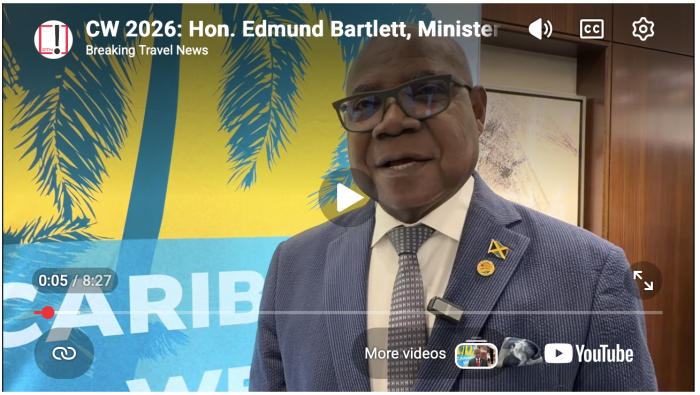
CW 2026: Hon. Edmund Bartlett, Minister of Tourism, Jamaica
For many outside the region, CTO has traditionally been viewed primarily as a destination marketing and advocacy organisation, responsible for promoting the Caribbean brand, supporting member destinations and convening industry stakeholders. While those functions remain central to its mission, Caribbean Week suggested an organisation in the midst of a broader evolution.
In many ways, the week felt like the emergence of a new identity for CTO.
Rather than simply serving as the organisation behind Caribbean Week, CTO increasingly pears to be positioning itself as a strategic platform for tourism policy, economic development, innovation and regional collaboration. The conversations taking place throughout the week reflected an organisation becoming more comfortable operating at the intersection of tourism, technology, investment, workforce development and public policy.
Under the leadership of Secretary-General Dona Regis-Prosper, there is a growing sense that CTO is seeking to play a larger role in shing the future of Caribbean tourism rather than simply promoting its present. The organisation has become an increasingly effective convener, bringing together ministers, development agencies, airlines, cruise operators, hoteliers, technology companies, investors and educators around a shared set of challenges and opportunities.
That shift was evident throughout the programme. Discussions around artificial intelligence were substantive rather than speculative. Conversations about resilience extended beyond climate adtation to include economic resilience, workforce resilience and supply chain resilience. There was a clear willingness to tackle complex issues such as economic leakage, local value creation and regional competitiveness, subjects that sit far beyond the traditional remit of destination marketing.
The strongest expression of this broader ambition came with the launch of the Tourism Supply Side Initiative, which many participants viewed as the most consequential announcement of the week.
For more than half a century, Caribbean tourism policy has focused primarily on the demand side of the equation. Success was measured by visitor arrivals, hotel occupancy, cruise passenger volumes and tourism receipts. Those metrics remain important, but they reveal only part of the picture.
The Supply Side Initiative starts from a different premise. It asks not only how many visitors arrive, but how much of their spending remains within Caribbean economies.
Formally launched during Caribbean Week by CTO Chairman and Barbados Minister of Tourism and International Transport Ian Gooding-Edghill, alongside Jamaica’s Minister of Tourism Edmund Bartlett, who will chair the newly established Tourism Supply Side Ministerial Committee, the initiative represents one of the most ambitious attempts yet to redefine the role of tourism in Caribbean development.
The initiative has been driven by the vision of Secretary-General Dona Regis-Prosper and supported by a growing coalition of governments, development institutions and private-sector partners. Joining the launch remotely, Prime Minister of St Kitts and Nevis and CARICOM Chairman Dr Terrance Drew described it as a defining moment for the region, arguing that the next chter of Caribbean tourism must focus not only on growth but on resilience, inclusion and development.
Research presented during the week highlighted a challenge long understood by economists but often overlooked in tourism strategy. While tourism generates substantial revenues across the region, significant portions of visitor expenditure frequently leave local economies through imported goods, overseas ownership structures and fragmented supply chains. Retention rates vary considerably from destination to destination. Some jurisdictions retain only a relatively small proportion of visitor spending, while others have succeeded in keeping far greater value circulating within domestic economies.
The initiative seeks to address that imbalance by strengthening the connections between tourism and the wider economy. Agriculture, fisheries, manufacturing, logistics, professional services, technology, creative industries and local SMEs all have a role to play in ensuring tourism functions as a more powerful engine of development.
What makes the initiative particularly interesting is its scale of ambition. This is not simply a local procurement programme or a collection of isolated projects. The framework encompasses eight strategic pillars covering tourism economic linkages, supply chain resilience, regional collaboration, digital infrastructure, investment, logistics, workforce development and visitor facilitation.
At its core is a recognition that tourism cannot achieve its full developmental potential if it operates in isolation from the rest of the economy.
The vision presented in New York imagines a future where Caribbean hotels source more produce from Caribbean farmers, where regional manufacturers supply a greater share of tourism demand, where digital platforms connect buyers and suppliers across borders, where logistics networks become more efficient, and where local entrepreneurs participate more fully in tourism value chains.
CW 2026: Sanovnik Destang, President, Caribbean Hotel and Tourism Association (CHTA)
If realised, the implications would extend well beyond tourism itself.
The initiative has the potential to influence employment, entrepreneurship, food security, regional trade, investment flows and economic resilience. It represents a shift from viewing tourism primarily as a consumer of economic activity to viewing it as a catalyst for broader economic development.
That explains why support for the initiative extended well beyond governments. The Caribbean Hotel and Tourism Association, under the leadership of President Sanovnik Destang, has become an important partner in its development, alongside CTO allied members, regional institutions and technical experts from across the tourism ecosystem.
Several participants described the initiative as the beginning of a third chter in Caribbean tourism.
The first chter was attracting visitors.
The second was building connectivity, infrastructure and scale.
The third may be about value creation, economic linkages and ensuring tourism delivers more inclusive and resilient prosperity.
Looking beyond the immediate policy agenda, there were also encouraging signs that the region is investing in the next generation of tourism leadership.
One of the highlights of the week was the CTO Regional Nex-Gen Tourism Showcase, delivered in partnership with the Inter-American Development Bank and the Royal Caribbean Group Foundation. The programme brought together students from across the Caribbean to develop and present innovative solutions to tourism challenges, offering a glimpse into how future leaders are thinking about sustainability, technology, entrepreneurship and destination development.
The winning team came from the H. Lavity Stoutt Community College in the British Virgin Islands, representing the Government of the Virgin Islands. Naomi Onwufuju, Adrianne Thomas and Auri Ana El Sahibs impressed judges with a presentation that combined creativity, commercial thinking and a sophisticated understanding of the opportunities and challenges facing Caribbean tourism. Supported by their cherone, Ziina Hanley of the Ministry of Tourism, Culture and Sustainable Development, their success served as a reminder that the future competitiveness of Caribbean tourism will depend as much on developing talent as it does on developing infrastructure.
That, perhs, was the most striking takeaway from Caribbean Week.
For all the discussion around visitor growth, airlift, artificial intelligence and investment, the central theme was ultimately people. How tourism can create more opportunity. How it can support more entrepreneurs. How it can strengthen communities. How it can retain more value within local economies.
The Caribbean tourism industry has long been recognised for its resilience. What became parent in New York is that the region is also becoming increasingly sophisticated in how it thinks about growth. Success is no longer being measured solely through arrivals and occupancy rates. The conversation is expanding to include participation, productivity, value retention and long-term economic impact.
CW 2026: Dona Regis-Prosper, Secretary General and CEO, Caribbean Tourism Organization (CTO)
For a first-time attendee, Caribbean Week felt less like a celebration of where the industry is today and more like a serious discussion about where it wants to be tomorrow.
If the ideas launched and debated during the week gain momentum, Caribbean Week 2026 may come to be remembered as an important marker in the continuing evolution of Caribbean tourism, from an industry focused primarily on attracting visitors to one increasingly focused on maximising the value those visitors create for the people who call the region home. More importantly, it may also be remembered as the week when the Caribbean Tourism Organization itself began to reveal a broader ambition, not simply to market the Caribbean to the world, but to help she the future of the Caribbean visitor economy.
By Justin Cooke
TravelNews
CTO Honors Journalistic Excellence at Annual Caribbean Media Awards in New York

The Caribbean Tourism Organization (CTO) celebrated leading storytellers, broadcasters and digital creators from the U.S. and Caribbean during the annual Caribbean Media Awards Luncheon, a signature event of Caribbean Week in New York. Sponsored by The Bahamas Ministry of Tourism, the luncheon honored outstanding journalism and content creation that showcase the Caribbean’s people, culture, environment and evolving tourism landsce.
Great storytelling has the power to transform perceptions and create deeper connections between people and destinations, said Dona Regis-Prosper, CTO’s secretary-general and CEO. The individuals recognized through the Caribbean Media Awards are helping to tell a more complete story of our region — one that goes beyond beaches and resorts to showcase our people and heritage. Through thoughtful, impactful journalism, they are elevating Caribbean voices and bringing greater visibility to the stories that matter most.
Awards were presented across three categories: Storytelling Excellence, Digital and Innovation, and Voices of the Caribbean. CTO commended this year’s entries for their depth, originality and commitment to authentic storytelling beyond traditional destination promotion.
Among the winners, Dana Givens earned Best Consumer Story for Jamaica’s Greenest Parish Is Its Best-Kept Secret in National Geogrhic while Christina Jelski of Travel Weekly received Best Trade Article for her interview with former Bahamas Director General of Tourism Joy Jibrilu. Ryan Bachoo of Guardian Media in Trinidad & Tobago won Best Podcast/Radio for his examination of sargassum’s impact on Caribbean tourism, and the Jamaica Tourist Board ctured the Social Media Campaign award for its Reggae Marathon 2025 campaign.
In the Voices of the Caribbean category, Meschida Philip’s documentary Echoes of Waltham received top honors in Video Production, while Esther Jones of the Caribbean Investigative Journalism Network won Best News Reporting for her exploration of the balance between cruise tourism and marine protection in Barbados.
The Personal Immersive Story award went to Ralph Thomassaint Joseph of Documented NY for Dancing Through Fear: A Haitian Performer Faces Deportation in New York, praised for its compelling portrayal of the Caribbean diaspora experience. Jacqueline Charles of the Miami Herald was named Diaspora Journalist of the Year for her reporting on Haiti, while Luis Joel Méndez González of the Center for Investigative Journalism received Emerging Journalist of the Year honors for the investigative Esencia series.
The luncheon also marked the official launch of CTO TV, a new digital platform designed to expand the organization’s reach through video storytelling, leadership interviews, policy discussions and destination content. The platform will leverage an existing library of more than 700 videos while creating new opportunities to spotlight Caribbean tourism, innovation and regional collaboration.
TravelNews
Qatar Airways to Increase Operations to Dubai with Five Daily Flights
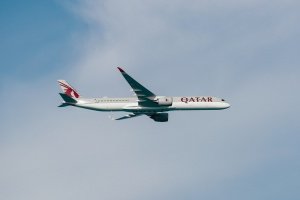
Qatar Airways continues to increase its cacity between Qatar and the United Arab Emirates (UAE) by gradually expanding frequencies between Hamad International Airport (DOH) and Dubai International Airport (DXB) from two to five daily services, starting 5 June 2026.
The additional frequencies will be introduced in phases to meet growing demand and provide greater flexibility for passengers travelling between the two cities. The existing two daily flights will be increased to three daily flights effective today, followed by the introduction of the fourth flight from 15 June, and a fifth daily flight resumed during the summer season. The flights will be operated on Boeing 777 and Airbus A350 aircraft.
This expansion reinforces Qatar Airways’ commitment to enhancing connectivity within the region and supporting both business and leisure travel between Qatar and the United Arab Emirates with up to 35 weekly flights.
Qatar Airways has been steadily restoring its network across the Middle East and is currently operating to over 20 destinations in the region. Providing passengers convenient and seamless connectivity, the airline resumed operations to Dubai (DXB) and Sharjah (SHJ) in ril, and restarted flights to Abu Dhabi (AUH) in May.
Building on this momentum, Qatar Airways is continuing the phased restoration and expansion of its global network to over 160 destinations by this summer.
The airline advises passengers to regularly check its official website or p, and ensure their contact details are correct and updated.
Please note that flight schedules are subject to change or cancellation due to operational, regulatory, safety, or other circumstances beyond our control.
For booking-related assistance, please visit the Qatar Airways’ FAQs page.
TravelNews
Raven launches the Customer Growth Index at the IATA AGM

Raven, the aviation growth specialists, today launched the Customer Growth Index (CGI) at the 82nd IATA Annual General Meeting in Rio de Janeiro: a single, comparable rating of the digital experience that wins or loses airline bookings. The CGI scores carriers on four measures of airlines’ digital estates – speed, accessibility, booking flow and AI findability – and ranks each one against a bespoke competitive set matched by both business model and geogrhy. In practice, this means a low-cost carrier is judged against comparable low-cost carriers in the same region rather than against a long-haul flag carrier or an operator in another market.
The launch operationalises the central argument of Aviation’s New Flight Plan, Raven’s groundbreaking report on the future of airline customer experience: that after two decades of competing on efficiency, the next decade of flight will be won on experience. As the report puts it, customer experience is becoming the new currency of the sector, and the CGI gives airlines the first like-for-like way to measure how much of it they are earning across their owned digital journey.
Each measure reflects where revenue is made or lost. Speed ctures the conversions that slow, clunky booking flows shed on commodity routes. Accessibility matters because around one in five travellers has a disability: a large, loyal and underserved market that an accessible booking flow wins, and one that the EU Accessibility Act, the US Americans with Disabilities Act (ADA) and the UK Equality Act increasingly require carriers to serve. Booking flow exposes the real friction that costs completed bookings. And AI findability measures whether AI assistants and meta-search can find, read and recommend a carrier as discovery shifts from search results to AI answers.
The gains are not confined to the point of sale. A faster, clearer, fairer and more accessible journey also builds loyalty: the retention that compounds over time as travellers return to a carrier they trust. McKinsey finds that airlines with consistently high satisfaction retain customers around 30% more effectively than peers on similar fares, and that integrated customer-experience investment is associated with +6–8% EBITDA within three years.
The index is delivered in three tiers of rising depth. The Index is an automated benchmark giving a CGI score, category rank, plain-English read on every measure and a confidence rating. The Analyst Review adds human judgement, including screen-reader and live booking-flow testing, to confirm where friction is real and what it is costing. The Distribution Review examines deeper revenue leaks across price, trust and channel mix, including how a carrier’s NDC and distribution setup helps or hurts. As a dedicated AGM offering, Raven is making The Index complimentary for IATA member carriers.
Methodologically, the CGI blends automated scanning with expert human review. Its automated speed, accessibility and web-vitals analysis is powered by the Pythia rating engine, with scoring designed by Dr Conor Farrington, the index and methodology lead.
Quotes
For two decades aviation competed on efficiency. The next decade will be won on experience. Customer experience is the new currency, and the Customer Growth Index gives airlines the first comparable way to see how much of it they are earning, or leaving on the table, across their digital journey.
Louise Croft Baker, Experience Director, Raven, and author of Aviation’s New Flight Plan
Discovery is moving from search results to AI answers. If an assistant cannot read and recommend you, you are invisible at the very moment a traveller is choosing. That is why AI findability sits at the heart of the CGI: it is fast becoming the front door to every booking.
Edward Croft Baker, Transformation Director, Raven
INDUSTRY VOICE · FROM AVIATION’S NEW FLIGHT PLAN
Younger passengers don’t buy loyalty, they buy alignment.
Caroline Whyatt, Head of Seamless Travel Programme, British Airways
TravelNews
Aviation Leaders Gather in Rio de Janeiro for IATAs 82nd AGM

The International Air Transport Association (IATA) announced that leaders of the global aviation industry are gathering in Rio de Janeiro, Brazil for the 82nd IATA Annual General Meeting (AGM) and World Air Transport Summit (WATS) on 6-8 June 2026.
The last AGM to be held in South America was in 1999, also in Rio de Janeiro. This marked the formal introduction of the World Air Transport Summit format, recognizing the IATA AGM as the leading industry platform for high-level debate on critical issues surrounding aviation.
LATAM Airlines Group is the host airline of the event in which some 1,500 industry leaders, government officials, and media are expected to participate.
We are thrilled to meet in South America after 27 years. Over the past decades the entire region has made significant investments in aviation infrastructure, positioning the continent to benefit economically and socially from air connectivity. Brazil’s ridly modernizing aviation sector already supports 2.1% of the country’s GDP. With rich tourism resources, enormous SAF production potential, and growing exports, the potential to further strengthen Brazil’s air connectivity is a winning proposition for people, jobs, trade, and the wider economy. We’ll highlight policies and changes needed to turn Brazil’s potential into reality as part of a program addressing aviation’s most pressing global issues, said Willie Walsh, IATA’s Director General.
Brazil continues to consolidate its leadership in South America, reaching nine million international visitors in 2025. According to IATA’s Value of Aviation report (pdf), the country’s aviation sector (airlines, airport operators and onsite businesses, air navigation service providers, and manufacturers) employs 246,800 people and generates USD 10.3 billion of economic output or 0.5% of total GDP. Taking into account the wider aviation value chain, including employee spending and tourism activities, the total number of jobs supported reached 1.9 million with a GDP contribution of USD 46.4 billion equivalent to 2.1%.
Aviation demand in South America’s largest aviation market remains strong. In 2025, Brazil recorded an 11.5% year-on-year growth in total passenger demand, with both domestic and international markets surpassing pre-pandemic levels. Domestic traffic exceeded 100 million passengers for the first time, while international demand grew by 17% as compared to 2024, gaining 20.4 percentage points on 2019 pre-pandemic levels.
As the host airline of the 82nd IATA Annual General Meeting, LATAM Airlines Group is honored to welcome members of the global aviation community to Brazil. In Brazil, they will see an aviation market that is contributing significantly to the country’s economic development. LATAM Airlines Group is proud to be a key player in that progress which is changing people’s lives for the better. The event is a great opportunity to inspire the conditions to make aviation in Brazil and across South America an even greater catalyst for growth and development, said Roberto Alvo, CEO of LATAM Airlines Group.
World Air Transport Summit
The World Air Transport Summit (WATS), which follows immediately after the AGM, will address key issues facing the aviation industry with an ambitious agenda of global and regional topics.
Highlights include the ever-popular CEO Panel hosted by CNN’s Richard Quest and featuring Luis Rodrigues, CEO of T Air Portugal, Con Korfiatis, CEO of Oman Air, Güliz Öztürk, CEO of Pegasus Airlines, and Adrian Neuhauser, CEO of Abra.
Key topics to be addressed in the WATS include:
Turning Brazil’s aviation potential into reality
Closing the g between Brazil’s Sustainable Aviation Fuel production potential and airline needs
Securing airspace to accommodate growth as conflicts proliferate
Trade, tariffs, and the role of air cargo
The Psychology of passengers in stressful situations
Passenger rights, data, and prospects for better regulation
Is AI living up to its promises for airlines?
The program also includes the eighth edition of the IATA Diversity & Inclusion Awards. These awards recognize individuals and organizations who are advancing gender balance in the industry through the 25by2025 initiative.
TravelNews
The Origins of the Airline Alliance: How Three Rival Networks Redefined Global Aviation

Most airline passengers interact with an alliance before they realise one exists.
The lounge access waiting at the other end of a long-haul flight. The frequent-flyer miles earned on a carrier they have never flown before. The ability to check baggage in London and collect it in Sydney despite travelling on multiple airlines with different owners, different liveries and different national identities.
Today these experiences feel routine. In the late 1990s they represented one of the most ambitious experiments the aviation industry had ever attempted.
The emergence of Star Alliance, Oneworld and SkyTeam fundamentally changed how airlines compete. Together, the three alliances now carry more than 1.8 billion passengers each year, generate revenues proaching US$700 billion and connect almost every significant aviation market on the planet. In scale alone, they rank among the most influential commercial organisations ever created in travel.
Yet none of them were originally conceived as marketing programmes.
They were born out of a structural problem.
As globalisation accelerated throughout the 1990s, airlines found themselves trped between two opposing realities. Their customers increasingly operated internationally, while the airlines themselves remained constrained by national ownership rules, bilateral air service agreements and political sensitivities that made cross-border mergers extraordinarily difficult.
A multinational corporation could serve customers around the world. An airline largely could not.
The solution emerged not through consolidation, but cooperation.
Chter One: Star Alliance Creates a New Category
When executives from United Airlines, Lufthansa, Air Canada, SAS and Thai Airways gathered in Frankfurt on 14 May 1997, they were not simply announcing a partnership. They were attempting to create an entirely new category of business.
Among the driving forces behind the initiative were Lufthansa chief executive Jürgen Weber and United Airlines chief executive Gerald Greenwald. Both recognised that airlines needed to find a way of behaving globally without actually becoming global companies.
This is a historic step in commercial aviation, Weber declared at launch.
At the time, the claim sounded bold.
The aviation industry had spent decades competing through route networks, aircraft orders and national prestige. Cooperation was generally limited to bilateral agreements and relatively simple codeshare arrangements. The notion that five independent airlines could effectively market themselves as a single network struck many observers as overly ambitious.
Not everyone was convinced.
Some analysts questioned whether airlines with different cultures, labour structures and commercial priorities could genuinely work together. Others argued that passengers still bought tickets primarily based on schedule and price. Frequent-flyer reciprocity and shared branding seemed unlikely to influence consumer behaviour on a meaningful scale.
The sceptics underestimated how quickly the market was changing.
Corporate travel buyers immediately understood the value proposition. Multinational companies wanted fewer supplier relationships, broader coverage and more consistent service. Star Alliance offered exactly that.
Greenwald framed the opportunity succinctly when he observed that customers were increasingly demanding a seamless travel system.
The timing was almost perfect. International business travel was expanding ridly. Global consulting firms, investment banks and multinational corporations were building increasingly international workforces. The internet was beginning to shrink distances between markets. Airlines that remained confined to their own route networks suddenly looked vulnerable.
Star Alliance transformed the economics of aviation by creating what was effectively a virtual global airline. A passenger could book through one carrier, earn miles across multiple carriers, access lounges around the world and enjoy coordinated schedules without ever needing to understand the complexity behind the scenes.
The alliance expanded ridly. Airlines across Europe, Asia, Africa and Latin America sought membership. The network effect became increasingly powerful. Every new member increased the value of the alliance for existing members.
Today Star Alliance remains the world’s largest airline alliance, comprising 25 member airlines, more than 5,000 aircraft, proximately 760 million annual passengers, over 18,000 daily flights and estimated combined revenues of US$230-250 billion.
Its membership now includes some of aviation’s most respected brands, among them Lufthansa, United Airlines, Singore Airlines, ANA, Air Canada, Swiss and Turkish Airlines.
What makes Star Alliance remarkable is not simply its scale but its influence. It established the template that every major competitor would eventually follow. Before Star Alliance, there was no recognised category called the global airline alliance. After Star Alliance, every major airline needed an alliance strategy.
The industry had been changed permanently.
Chter Two: Oneworld Fights Back
Star Alliance’s success created an uncomfortable reality for everyone outside the network.
The alliance was attracting corporate contracts, strengthening customer loyalty and expanding its global reach. Airlines that had previously viewed themselves as competitors suddenly found themselves competing against something larger, a coordinated ecosystem.
For British Airways and American Airlines, the response could not wait.
In September 1998, British Airways, American Airlines, Cathay Pacific, Qantas and Canadian Airlines announced plans to form Oneworld. The alliance formally launched in February 1999 and immediately positioned itself as a credible alternative to Star Alliance’s growing dominance.
The personalities behind the launch were formidable. British Airways chief executive Robert Ayling and American Airlines chief executive Donald Carty understood the strategic stakes. Their carriers already occupied dominant positions in some of the world’s most valuable aviation markets. London and New York remained the centre of global business travel. The transatlantic corridor generated extraordinary yields. Allowing Star Alliance to dominate the emerging alliance landsce was not an option.
Unlike Star Alliance, however, Oneworld did not attempt to win through sheer scale.
If Star Alliance was built around reach, Oneworld was built around influence.
British Airways brought Heathrow. American Airlines brought the largest domestic aviation market in the world. Cathay Pacific controlled one of Asia’s most important gateways through Hong Kong. Qantas dominated Australia’s long-haul connections.
The alliance effectively assembled a collection of premium brands whose combined influence exceeded their numbers.
This is all about people, customers, employees and shareholders, Donald Carty said at launch, emphasising that the alliance was intended to create value far beyond route ms and schedules.
Robert Ayling described Oneworld as a truly global alliance, but even as the alliance launched, there remained a fascinating tension at its heart. British Airways and American Airlines continued pursuing deeper bilateral cooperation across the Atlantic. The alliance was the public face of global cooperation, but the real commercial value increasingly sat beneath the surface in more integrated partnerships.
Some industry observers questioned whether airlines with such powerful individual brands would ever truly subordinate themselves to a shared alliance strategy. Others wondered whether Oneworld was simply a defensive reaction rather than a coherent vision.
What emerged was something different.
Rather than becoming a unified network in the Star Alliance mould, Oneworld evolved into a federation of premium carriers. The alliance focused heavily on business travellers, premium passengers and some of the world’s most lucrative long-haul routes.
This positioning proved highly effective.
Over the following decades Oneworld attracted additional high-profile members including Finnair, Iberia, Jan Airlines and, perhs most significantly, Qatar Airways. The addition of Qatar brought one of the aviation industry’s fastest-growing global networks into the alliance and strengthened its position across the Middle East.
Today Oneworld comprises proximately 13 member airlines, around 4,300 aircraft, roughly 500-550 million annual passengers and estimated combined revenues of US$180-220 billion.
Its influence extends well beyond those numbers.
Many of the world’s most profitable aviation corridors sit within the Oneworld ecosystem. London-New York, London-Hong Kong, Sydney-Los Angeles and numerous transatlantic business markets continue to generate substantial value for member airlines.
While Star Alliance may be larger, Oneworld demonstrated that alliances could compete on quality, premium positioning and strategic influence rather than scale alone.
Chter Three: SkyTeam Arrives Late and Wins Anyway
By the summer of 2000, the alliance movement peared to be settling into a two-horse race.
Star Alliance had pioneered the model. Oneworld had assembled an impressive roster of premium brands. Many observers assumed the industry’s future would revolve around these two competing networks.
Delta Air Lines and Air France saw things differently.
On 22 June 2000, Delta Air Lines, Air France, Aeroméxico and Korean Air launched SkyTeam in New York.
Unlike Star Alliance, which was driven by first-mover ambition, or Oneworld, which emphasised premium positioning, SkyTeam emerged from necessity.
The airlines involved recognised that remaining outside the alliance system carried increasing risks. Corporate travel buyers were beginning to evaluate networks rather than individual airlines. Loyalty programmes were becoming more important. Global connectivity was ridly becoming a competitive requirement rather than a differentiator.
Leading the initiative were Delta chief executive Leo Mullin and Air France chief executive Jean-Cyril Spinetta, two executives who understood that aviation was entering a period of structural change.
Spinetta described SkyTeam as a customer-focused alliance that would deliver global reach and seamless service. Mullin similarly emphasised simplicity and convenience for travellers navigating increasingly international lives.
The launch was greeted with less excitement than Star Alliance had generated three years earlier, largely because the concept itself no longer needed proving.
The debate had shifted.
The question was no longer whether alliances would succeed.
The question was which alliances would dominate.
SkyTeam’s founding members brought together a compelling collection of hubs. Atlanta provided unrivalled domestic connectivity within the United States. Paris Charles de Gaulle offered one of Europe’s most important international gateways. Seoul strengthened the alliance’s position in Asia. Mexico City expanded its reach across Latin America.
Critics nevertheless questioned whether the alliance could match Star Alliance’s scale or Oneworld’s prestige.
Those concerns proved short-lived.
A series of industry-defining mergers transformed SkyTeam’s trajectory. Air France merged with KLM in 2004, creating one of Europe’s largest airline groups. Delta merged with Northwest Airlines in 2008, dramatically expanding its international footprint.
Rather than trying to replicate its rivals, SkyTeam built strength through consolidation, operational scale and powerful connecting hubs.
The strategy worked.
Today SkyTeam comprises proximately 19 member airlines, around 4,000 aircraft, between 630 and 700 million annual passengers and estimated combined revenues of US$180-210 billion.
Members include Delta Air Lines, Air France-KLM, Korean Air, China Eastern, Saudia and Aeroméxico, creating one of the world’s most extensive aviation networks.
Its success demonstrated an important lesson. Being first is not always necessary. Sometimes arriving later allows an organisation to learn from the strengths and weaknesses of those who came before.
Is That It? Or Is Another Chter About to Be Written?
Looking back, the airline alliance pears almost inevitable.
In reality, it was anything but.
The industry spent much of the twentieth century organised around national carriers competing primarily within regulatory frameworks designed for another era. The rise of globalisation exposed the limitations of that model. Airlines needed international scale, but governments remained reluctant to surrender national ownership and control.
Alliances became aviation’s workaround.
They allowed airlines to create global businesses without creating global airlines.
The results have been extraordinary. Combined, Star Alliance, Oneworld and SkyTeam carry more than 1.8 billion passengers each year, operate proximately 13,000 aircraft and generate revenues proaching US$700 billion.
Yet for all their success, airline alliances no longer sit at the centre of aviation strategy in quite the same way they once did.
The industry’s deepest commercial relationships increasingly exist beneath the alliance brands themselves. Joint ventures between British Airways and American Airlines, Lufthansa and United, or Delta and Air France-KLM often generate more value than the broader alliance structures in which they sit. At the same time, airlines such as Emirates have demonstrated that global scale can be achieved without joining any alliance at all.
Meanwhile, a new generation of partnerships is emerging.
The relationship between Riyadh Air and Delta. The growing cooperation between Gulf carriers and Western airlines. The rise of digital distribution, AI-driven trip planning and increasingly personalised loyalty ecosystems. Each points towards a future where passengers may care less about alliance logos and more about whether their journey simply works.
There is also a geopolitical dimension. The centre of gravity in global aviation continues to shift eastward, with India, Saudi Arabia, the UAE and Southeast Asia becoming increasingly influential in shing future air travel flows. The alliances that emerged from the North Atlantic aviation order of the 1990s may eventually need to adt to a very different world.
Which raises a fascinating question.
Were Star Alliance, Oneworld and SkyTeam the final answer to aviation’s globalisation challenge?
Or were they simply the first answer?
Nearly thirty years after five airlines gathered in Frankfurt to launch Star Alliance, the alliance era remains one of the most successful innovations in aviation history. Yet the forces that created it, technology, globalisation, changing consumer expectations and shifting economic power, continue to evolve.
The first chter of airline alliances has undoubtedly been written.
Whether the next chter belongs to deeper joint ventures, AI-powered travel ecosystems, new Gulf-led partnerships, or perhs an entirely new form of global aviation network remains one of the most intriguing strategic questions facing the industry.
Because if aviation history teaches us anything, it is that the structures that seem permanent rarely are.


This $80 Amazon kitchen gadget makes leftovers last up to 8x longer
The Fresko V6 vacuum sealer is currently available for 20% off on Amazon. This model features fully automatic operation, a...


What Are the Best Street Food Cities? A Traveler’s Guide
Travel changes you, but food cultures are how a city shows you who it really is. The best street food...


Popular food stand has kept its signature burger at $1.34 for nearly 20 years
NEWYou can now listen to Fox News articles! A burger stand in a popular beach town has managed to keep...


Undead Labs finally shows off State of Decay 3 gameplay in new trailer – Engadget
The game is slated for release in 2027. Undead Labs It’s been six years since State of Decay 3 was...


Defense secretary warns of a migrant 'invasion' in D-Day speech
US Defense Secretary Pete Hegseth used his remarks at a D-Day anniversary event in France on Saturday to call on...

Caribbean Week and the Emergence of a New Caribbean Tourism Agenda
My first Caribbean Week in New York came with a degree of curiosity. Over the past year, I have covered...


Maverick Republican Sen. Bob Packwood of Oregon, who resigned after sexual harassment scandal, dies
PORTLAND, Ore. () — Former Sen. Bob Packwood, a moderate Oregon Republican whose reputation as a champion of abortion and...


How Ukraine is finally turning the tide against Russia | Fareed's Take
CNN's Fareed Zakaria says Ukraine's recent strategic gains in its fight with Russia could present President Donald Trump with an...


Kankakee celebrates Independence Day with live music and fireworks along the river
The Kankakee Valley Symphony Orchestra is hosting its annual Independence Day celebration Saturday, July 4, along the south banks of...

Scott Pelley claims CBS leadership pushed a pro-Trump framing.
Former ’60 Minutes’ correspondent Scott Pelley accused CBS News Chief Bari Weiss in an emotional New York Times article published...
-

 Tech2 weeks ago
Today's NYT Connections Hints, Answers and Help for May 25, #1079
-

 UsaLocalNews2 weeks ago
DOJ says it scrubbed news releases about Jan. 6 criminal cases from its website
-

 Tech2 weeks ago
Sennheisers Momentum 5 headphones are all about the audio and ANC upgrades – Engadget
-

 Business2 weeks ago
What we know and dont know about the emerging deal to end the Iran war
-

 Business2 weeks ago
Federal court blocks Alabama plan for new congressional districts that could help Republicans
-

 Video2 weeks ago
Should Disneyland visitors worry about toxic leak?
-

 Video2 weeks ago
Your energy bills could be about to go up – here's why. #BBCNews
-

 Video2 weeks ago
Pope Leo issues manifesto warning about AI