
TravelNews
Why Indian travellers are returning to festivals instead of destinations?
For decades, outbound travel from India was largely centred around destinations—visiting iconic landmarks, ticking countries off bucket lists and pursuing traditional sightseeing itineraries. Today, that model is ridly evolving.
A growing segment of Indian travellers is increasingly planning trips around experiences rather than destinations, with music festivals, cultural gatherings, sporting events and community-led travel formats emerging as major drivers of outbound tourism. According to industry stakeholders, travellers are no longer asking where they should go, but what they want to experience once they get there.
This shift has created opportunities for specialised travel companies such as Revel Travels, a Bengaluru-headquartered travel company founded in 2002, with a growing focus on experiential and event-led travelwhich has evolved from a traditional travel services provider into a curator of experiential and event-led journeys, including travel programmes around some of the world’s largest music festivals.
Speaking about changing traveller preferences, Sahil Wahid, Director of Revel Travels, said demand for music and cultural tourism has expanded significantly over the past few years.
Revel has built a strong portfolio of global experiential projects, including its role as the official travel partner for Tomorrowland and UNTOLD, two of the world’s most iconic music festivals. In addition, the company has developed curated travel programs around international festivals, luxury yacht experiences, and bespoke group itineraries inspired by formats like Yacht Week —designed for travellers seeking community, exclusivity, and once-in-a-lifetime moments.
We’ve moved from travellers checking off bucket-list destinations to people travelling repeatedly, specifically for music festivals, Wahid said. While festivals continue to have massive peal, we’re also seeing growing demand for smaller, more intimate events that offer a stronger sense of community and connection.
Festivals become travel anchors
This trend mirrors broader global tourism shifts, where experiences increasingly influence destination choice.
Large-scale events such as music festivals have become tourism catalysts, encouraging travellers to extend stays, explore local culture and engage with destinations in ways traditional sightseeing often does not.
According to Wahid, Indian travellers are increasingly seeking curated, immersive experiences that combine world-class entertainment with exclusivity and cultural engagement.
The evolved Indian traveller is seeking experiences that feel personal and curated. They’re not just attending once—they’re returning year after year because they’re chasing a particular feeling and sense of belonging, he said.
Managing travel at scale
The growing popularity of event-led tourism has also introduced new operational complexities.
Managing travel for large international events involves far more than booking flights and accommodation. It requires coordinating visas, transportation, local logistics and contingency planning for hundreds of travellers simultaneously.
Wahid said unexpected disruptions remain one of the biggest challenges in the business.
A sudden road closure can mean reorganising transport plans for hundreds of guests. Passport issues, last-minute visa rejections and unforeseen operational disruptions are realities that require dedicated systems and rid response mechanisms, he said.
At the same time, scale creates significant advantages. Strong relationships with hotels, airlines and local operators allow travel companies to negotiate better access and deliver experiences that may not be available to individual travellers booking independently.
Reading travel trends before they emerge
One of the defining characteristics of experiential travel is its ability to evolve quickly.
Unlike traditional tourism products that may remain stable for years, experiential travel is heavily influenced by cultural shifts, consumer behaviour and emerging communities.
Wahid believes staying ahead of trends requires direct engagement with the experiences themselves.
We’re not sitting in an office analysing spreadsheets. We’re attending events, travelling, speaking with fellow travellers and understanding what people are looking for before those trends become mainstream, he said.
This hands-on proach has helped identify growing demand for boutique festivals and niche experiences that peal to travellers seeking more meaningful interactions and smaller communities.
Luxury becomes more personal
The evolution of experiential travel is also influencing the luxury segment.
Traditionally associated with premium hotels, first-class flights and exclusive amenities, luxury travel is increasingly being defined by access, personalisation and community.
Wahid pointed to growing interest in formats such as yacht-based travel experiences, where travellers seek not only high-end settings but also opportunities to connect with like-minded individuals.
According to him, community-based luxury travel is likely to become a major growth segment in India over the coming decade.
Today’s traveller doesn’t just want to be in a beautiful destination. They want to be there with the right people, sharing the right experiences and creating meaningful connections, he said.
He added that the growing preference for experience-first travel reflects a broader shift in consumer priorities, where memories and personal stories are increasingly valued over material purchases.
A changing outbound travel landsce
For the travel industry, the rise of music tourism, cultural travel and community-led experiences signals an important evolution in outbound travel demand.
As Indian travellers become more experienced and globally connected, destinations alone may no longer be sufficient to drive travel decisions. Instead, festivals, events, cultural immersion and curated communities are emerging as the new motivators for travel.
The trend also highlights how outbound tourism is becoming increasingly experience-driven, with travellers seeking not just places to visit, but moments to participate in and stories to take home.
For travel companies, that shift could redefine how future journeys are designed, marketed and sold.
TravelNews
Atout France Adds Six New Palace Hotels to Its National Collection
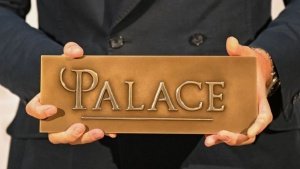
On 2 June, Atout France was pleased to unveil the 2026 collection of France’s Palace hotels, an exclusive selection of properties that embody the excellence of French expertise in hospitality. This prestigious distinction, above five star, was re-awarded for the first time in seven years. Recognized for the unique experiences they offer their guests, these flagship establishments of French hospitality now total 33, including six new additions for 2026.
In 2025, Atout France agreed the members of the Palace commission on several occasions to review the plications from establishments seeking renewal of their Palace distinction, valid for three years.
Earlier this year, the Commission also examined plications from new hotels that never previously obtained the distinction.
Following the various review sessions, and upon recommendation of the Commission, Serge Pin, Minister for Small and Medium-Sized Enterprises, Commerce, Craft Industries, Tourism and Consumer Affairs, officially awarded the Palace distinction.
As a result, 27 establishments have had their Palace distinction renewed, whilst six new establishments have joined the very exclusive circle of France’s Palace hotels for the first time.
—-
France now has 33 establishments officially designated as ‘Palaces’:
PARIS
Bvlgari Hotel Paris (new for 2026)
Cheval Blanc Paris (new for 2026)
Fouquet’s Paris (new for 2026)
Four Seasons Hotel George V
Hôtel de Crillon, A Rosewood Hotel
Hotel Plaza Athénée, Dorchester Collection Paris
La Réserve Paris – Hotel and Spa
The Bristol Paris
Le Meurice, Dorchester Collection Paris
Mandarin Oriental Lutetia Paris
Royal Monceau – Raffles Paris
Shangri-La Paris
The Peninsula Paris
ALPS
Airelles Courchevel, Les Airelles – Courchevel
Cheval Blanc Courchevel – Courchevel
Fouquet’s Courchevel – Courchevel
Four Seasons Resort Megève – Megève (new for 2026)
Royal Hotel – Evian-Les-Bains
L’ogée Courchevel – Courchevel
The K2 Palace – Courchevel
FRENCH RIVIERA – SOUTH-EAST
Airelles Gordes, La Bastide – Gordes
Cranberries Saint-Tropez, Château de la Messardière – Saint-Tropez
Château Saint-Martin & Spa – Vence
Cheval Blanc St-Tropez – Saint-Tropez
Grand-Hôtel du C-Ferrat, A Four Seasons Hotel – Saint-Jean-C-Ferrat
Hotel du C-Eden-Roc – Antibes
Hotel Martinez Cannes – Cannes (new for 2026)
La Réserve Ramatuelle Hotel, Spa & Villas – Ramatuelle
Villa La Coste – Le Puy-Sainte-Réparade
SOUTH-WEST
Eugénie’s Meadows – Eugénie-Les-Bains
The Sources of Caudalie – Martillac
EAST
Royal Champagne Hotel & Spa – Champillon (new for 2026)
FRENCH OVERSEAS TERRITORIES
Cheval Blanc St-Barth Isle de France – Saint-Barthélemy
—-
Serge Pin, Minister for Small and Medium-Sized Enterprises, Commerce, Craft Industries, Tourism and Consumer Affairs, comments : If France is a must-visit tourist destination for everyone, it is also thanks to the excellence of French hospitality, a fact once again recognized this year by the Palace distinction. We can take pride in seeing our country shine through its expertise. Behind all these prestigious establishments are teams that do incredibly demanding work and whose attention to detail is truly remarkable: to these women and men, I want to say well done. You can be proud of yourselves!
KEY FACTS
The Palace distinction was created in 2010 to showcase France’s most exceptional hotels, a hallmark of the country’s unique hospitality offering. It recognizes, among five-star establishments, those whose outstanding location, historical, aesthetic and/or heritage value, as well as their excellence in service and amenities, place them among the finest properties in French hospitality.
The Palace distinction is an official category, recognized and regulated by the French State. Based on highly demanding and specific criteria, it forms an integral part of France’s proactive policy to promote excellence in tourism. The distinction is awarded for a period of three years following a rigorous assessment process: an initial review conducted by Atout France, followed by an evaluation phase—including site inspections and a hearing before a commission composed of leading figures from the hospitality and luxury sectors, pointed by the Minister responsible for Tourism.
The Palace distinction also provides an opportunity to promote these exceptional properties on the international stage, contributing to the global peal and prestige of Destination France.
TravelNews
Circus Circus Las Vegas Offers Iconic Family Fun, Entertainment and Unforgettable Summer Memories

Circus Circus Las Vegas, the iconic Las Vegas Strip resort and the city’s premier family-friendly destination, is welcoming in guests this summer to experience the Las Vegas that started it all: coin-operated slots, per bingo cards, mesquite-grilled steaks, circus acts, carnival midway, and a five-acre indoor theme park all under one roof.
With weekend hotel room rates starting at just $28.95 and a 25% discount on Adventuredome theme park tickets for hotel guests, and free Las Vegas Strip parking, the classic Las Vegas vacation is as alive and accessible as ever.
Las Vegas has always been a city built on big experiences and even bigger memories, and at Circus Circus we’re building upon what’s made Las Vegas the entertainment destination for generations, said Shana Gerety, general manager of Circus Circus Las Vegas. Families deserve a summer they’ll talk about for years. Las Vegas can be exciting and fun without the cost overshadowing the entire experience.
Beat the Heat at The Adventuredome: Las Vegas’ Only Indoor Theme Park
Spanning five acres under a climate-controlled glass dome, the Adventuredome at Circus Circus Las Vegas is the largest indoor theme park in the United States and a must-visit Las Vegas attraction for families with kids of all ages. For millions of visitors, it’s where the magic of Las Vegas first clicked, and where summer vacation stories are still being written today. Rides and attractions include:
Canyon Blaster – America’s largest indoor double-loop, double-corkscrew roller coaster
El Loco – A high-intensity coaster featuring a beyond-vertical drop
NebulaZ, Sand Pirate, Inverter, and Twistin’ Tea Cups – Thrills for all ages
Go-Karts and Rock-Climbing Wall – Active adventures for older kids and teens
SpongeBob’s Crazy Carnival Ride – Created by Sally Dark Rides and inspired by Nickelodeon’s beloved animated series, this immersive dark ride transports guests to Bikini Bottom through vivid sets, animatronics, special effects, and projections. Riders join Mr. Krabs’ wacky carnival games while Plankton schemes to steal the Krabby Patty secret formula, a hilarious, sensory adventure that little ones will be talking about long after the trip is over
Arcade, carnival-style games, virtual reality experiences, and an 18-hole miniature golf course
More Family Fun at Circus Circus Las Vegas
Beyond the Adventuredome, Circus Circus delivers a full roster of family entertainment across the entire resort — the kind that pulls everyone away from their screens and into moments worth remembering:
The Midway — One of the most nostalgic spaces on the Las Vegas Strip, the legendary Circus Circus Carnival Midway has been sparking joy for families since 1968. Featuring more than 200 arcade games — from retro classics that parents and grandparents will recognize to the latest in modern gaming — the free-to-explore Midway is one of the rare places where multiple generations can share the same excitement at the same time. At the heart of the Midway, guests can watch free world-class circus acts performed daily on the dedicated circus stage, a signature Circus Circus tradition that has been stopping people in their tracks for more than 50 years.
The Garage — A fully immersive entertainment space featuring Birdly virtual reality (VR) flight simulation, neon-lit mini-bowling lanes, and Full Swing Golf Simulators with multi-sport modes including golf, soccer, baseball, dodgeball, and more.
Splash Zone — The resort’s expansive outdoor pool complex is the perfect Las Vegas summer esce for families looking to create a few hours of pure, unscripted fun. The water park features two pools, whirlpools, a Splash Pad with interactive water cannons, spill buckets, and rain trees, plus a 50-foot slide tower with three slides — the Mat Racer, Aqua Tube, and Speed Slide. Private cabana rentals and poolside bites from the Splash Snacks food truck round out the experience.
Affordable Las Vegas Hotel Rooms for Families
With nearly 4,000 guest rooms — including lodge rooms, tower rooms, suites, and an RV Park — Circus Circus Las Vegas offers some of the most accessible hotel accommodations on the Las Vegas Strip. Weekend rates starting at $28.95, combined with the 25% Adventuredome discount for hotel guests, make it easy to build a full family vacation around a few days of genuine, screen-free, memory-making fun on the Strip.
Classic Las Vegas Lives Here: A Nostalgic Vegas Experience Unlike Any Other on the Strip
For guests who remember Las Vegas before the resorts and celebrity chef restaurants, Circus Circus has preserved something rare: the authentic, unpretentious spirit of the original Las Vegas. A stroll through the resort this summer is a reminder that some of the city’s best experiences have always been the simplest ones, and that the Vegas that made people fall in love with this city in the first place is still very much alive.
THE Steakhouse — In a city where restaurants open and close with the seasons, THE Steakhouse at Circus Circus Las Vegas has earned something almost unheard of on the Strip: generational loyalty both from our guests and our long-standing teammates. A longtime Las Vegas favorite, THE Steakhouse has been part of the Circus Circus story for decades, drawing generations of guests for celebrations, quiet dinners, and the kind of memorable evenings that don’t require a celebrity name above the door. Steaks are grilled center-of-the-room and served with classic pairings in a warm, intimate setting that reflects an era when dining was an experience meant to be savored. Open Monday through Friday 4 p.m. – 9 p.m., Saturday 4 p.m. – 10 p.m., and Sunday 4 p.m. – 9 p.m. Reservations available via OpenTable.
Slots-A-Fun — In an era when Las Vegas gaming has gone increasingly digital, Slots-A-Fun stands art as the only coin-operated casino experience on the Las Vegas Strip. A throwback to classic Vegas gaming since 1968, Slots-A-Fun features 100 coin-operated slot machines ranging from $0.25 to $5, with the retro sounds of clinking coins and flashing lights that feel like a time csule from the city’s golden era. The experience is made complete with bar stles priced the way Vegas used to price them, $2 draft beer, $2 hot dog, $2 shrimp cocktail, and $2 popcorn. Open 24 hours a day, seven days a week and just steps off the Las Vegas Strip.
Bingo — Circus Circus is home to the only bingo room on the Las Vegas Strip, a purely analog, per and dauber-in-hand experience that has all but dispeared from the modern casino landsce. Sessions run Friday at 5 p.m., 7 p.m., and 9 p.m.; Saturday at 3 p.m., 5 p.m., 7 p.m., and 9 p.m.; and Sunday at 11 a.m., 1 p.m., and 3 p.m. Cards start at $30 per session.
TravelNews
From Pitch to Paradise: Football Fever Puts Cape Verdes Islands in the Spotlight

Ce Verde’s growing visibility on the international football stage, including recent success and qualification for the FIFA World Cup, is driving fresh interest in the Atlantic nation as a year-round holiday choice, according to UK specialist operator Ce Verde Experience.
With increased global attention on the islands the operator says more travellers are looking beyond Ce Verde’s well-known beach offering and discover its wider peal, including volcanic landsces, Creole culture, live music, hiking and island-hopping experiences.
Ce Verde Experience Product Manager Suzanne Brown said the destination’s profile is shifting among UK holidaymakers.
Ce Verde has always had a unique identity, shed by African, Brazilian and Portuguese influences, alongside warm hospitality and striking natural scenery, she said. What we are seeing now is growing curiosity that goes beyond the beaches, with customers increasingly interested in the culture, music and island experiences.
The increased attention is also being reflected in local life during major football fixtures, where matches are widely screened in bars and cafés across the islands, creating lively social atmospheres that bring communities and visitors together.
On Sal, Resort Manager Tracey Hall said match days often become a focal point for social interaction.
When there’s a big game on, you really feel the islands come alive, she said. People gather in cafés and beachfront bars, share food, talk football and enjoy the atmosphere in a very relaxed, welcoming way. It’s easy for visitors to join in and feel part of it.
On São Vicente, local representative Edson Oliveira said football sits alongside a wider cultural identity that continues to define the islands.
Football is part of everyday life here, but it sits alongside music, festivals and tradition, he said. Visitors are often surprised by the depth of culture, from morna music and Carnival in Mindelo to hiking in Santiago, Santo Antão and the volcanic landsces of Fogo.
Interest in Ce Verde has broadened in recent months, with increased demand for multi-island itineraries that combine beaches, culture and adventure. Holidays often centre on island-hopping experiences that showcase the diversity of the archipelago, from volcanic landsces and mountain hiking trails to colourful towns and golden-sand beaches.
The operator offers ATOL-protected holidays and tailor-made itineraries across eight of the ten islands.
Holiday features include:
TravelNews
Caribbean Week and the Emergence of a New Caribbean Tourism Agenda
My first Caribbean Week in New York came with a degree of curiosity. Over the past year, I have covered many of the defining gatherings in global travel, from the WTTC Global Summit in Rome, the UN Tourism General Assembly and TOURISE in Riyadh, FITUR in Madrid and ITB Berlin, to ILTM Africa and WTM Africa in Ce Town, ITB China in Shanghai, Caribbean Travel Marketplace in Antigua & Barbuda and the IATA Annual General Meeting in Rio de Janeiro. Against that backdrop, I arrived wanting to understand why Caribbean Week continues to hold such an important place in the region’s tourism calendar.
What I discovered over four days of meetings, ministerial discussions, industry briefings and more than twenty one-to-one interviews was an event that feels increasingly unlike a traditional tourism conference. Caribbean Week remains an important platform for destination promotion, relationship building and market engagement. Yet it is also becoming something more significant, a forum where the region’s leaders are beginning to debate the future she of Caribbean tourism itself.
That evolution reflects the growing maturity of the Caribbean tourism sector. For decades, the region’s tourism strategy has understandably focused on attracting visitors, building air connectivity, expanding accommodation cacity and strengthening one of the most recognisable destination brands in global travel. Those efforts have been remarkably successful. Tourism today underpins economic activity across much of the region and remains one of the most powerful drivers of employment, investment and foreign exchange earnings.
Yet throughout Caribbean Week there was a clear sense that many leaders believe the next stage of development will require a broader conversation.
The Caribbean’s challenge is no longer simply how to attract visitors. It is how to maximise the value that tourism creates, how to retain more of that value within local economies and how to ensure tourism serves as a catalyst for broader economic development.
That distinction may pear subtle. Its implications are profound.
The importance of the United States remains beyond question. New York continues to serve as the Caribbean’s most important tourism marketplace and the United States remains the region’s largest customer. American travellers account for proximately half of all stayover arrivals to the Caribbean and generate tens of billions of dollars in annual visitor expenditure each year. For many destinations, no other source market comes close in either volume or economic contribution.
What was notable, however, was that the conversation no longer ended there.
While the United States remains the foundation of Caribbean tourism, discussions throughout the week increasingly focused on where future growth may emerge. Latin America featured prominently in conversations with tourism boards, airlines and hotel groups. Several destinations reported encouraging growth from Brazil, Mexico, Colombia and other South American markets, particularly within higher-spending segments. Improved connectivity and growing regional awareness are beginning to create opportunities that were largely absent a decade ago.
Beyond Latin America, there was also considerable discussion around longer-term opportunities in the Gulf, Africa and China. No one suggested these markets would replace North America, nor was that the objective. Rather, there was recognition that future resilience will depend upon diversification. Tourism leaders increasingly view aviation strategy, trade relationships and international partnerships as central components of destination development. The Caribbean’s future growth story will not be written solely in tourism board marketing plans. It will be shed through connectivity, investment and the ability to position the region within emerging global travel flows.
Alongside these discussions was a noticeable shift in the role being played by the Caribbean Tourism Organization itself.
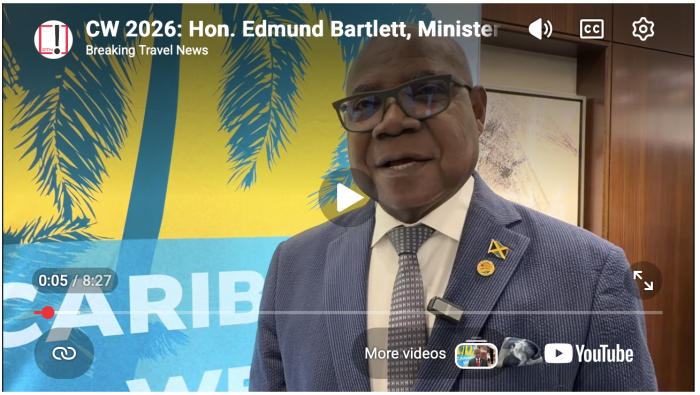
CW 2026: Hon. Edmund Bartlett, Minister of Tourism, Jamaica
For many outside the region, CTO has traditionally been viewed primarily as a destination marketing and advocacy organisation, responsible for promoting the Caribbean brand, supporting member destinations and convening industry stakeholders. While those functions remain central to its mission, Caribbean Week suggested an organisation in the midst of a broader evolution.
In many ways, the week felt like the emergence of a new identity for CTO.
Rather than simply serving as the organisation behind Caribbean Week, CTO increasingly pears to be positioning itself as a strategic platform for tourism policy, economic development, innovation and regional collaboration. The conversations taking place throughout the week reflected an organisation becoming more comfortable operating at the intersection of tourism, technology, investment, workforce development and public policy.
Under the leadership of Secretary-General Dona Regis-Prosper, there is a growing sense that CTO is seeking to play a larger role in shing the future of Caribbean tourism rather than simply promoting its present. The organisation has become an increasingly effective convener, bringing together ministers, development agencies, airlines, cruise operators, hoteliers, technology companies, investors and educators around a shared set of challenges and opportunities.
That shift was evident throughout the programme. Discussions around artificial intelligence were substantive rather than speculative. Conversations about resilience extended beyond climate adtation to include economic resilience, workforce resilience and supply chain resilience. There was a clear willingness to tackle complex issues such as economic leakage, local value creation and regional competitiveness, subjects that sit far beyond the traditional remit of destination marketing.
The strongest expression of this broader ambition came with the launch of the Tourism Supply Side Initiative, which many participants viewed as the most consequential announcement of the week.
For more than half a century, Caribbean tourism policy has focused primarily on the demand side of the equation. Success was measured by visitor arrivals, hotel occupancy, cruise passenger volumes and tourism receipts. Those metrics remain important, but they reveal only part of the picture.
The Supply Side Initiative starts from a different premise. It asks not only how many visitors arrive, but how much of their spending remains within Caribbean economies.
Formally launched during Caribbean Week by CTO Chairman and Barbados Minister of Tourism and International Transport Ian Gooding-Edghill, alongside Jamaica’s Minister of Tourism Edmund Bartlett, who will chair the newly established Tourism Supply Side Ministerial Committee, the initiative represents one of the most ambitious attempts yet to redefine the role of tourism in Caribbean development.
The initiative has been driven by the vision of Secretary-General Dona Regis-Prosper and supported by a growing coalition of governments, development institutions and private-sector partners. Joining the launch remotely, Prime Minister of St Kitts and Nevis and CARICOM Chairman Dr Terrance Drew described it as a defining moment for the region, arguing that the next chter of Caribbean tourism must focus not only on growth but on resilience, inclusion and development.
Research presented during the week highlighted a challenge long understood by economists but often overlooked in tourism strategy. While tourism generates substantial revenues across the region, significant portions of visitor expenditure frequently leave local economies through imported goods, overseas ownership structures and fragmented supply chains. Retention rates vary considerably from destination to destination. Some jurisdictions retain only a relatively small proportion of visitor spending, while others have succeeded in keeping far greater value circulating within domestic economies.
The initiative seeks to address that imbalance by strengthening the connections between tourism and the wider economy. Agriculture, fisheries, manufacturing, logistics, professional services, technology, creative industries and local SMEs all have a role to play in ensuring tourism functions as a more powerful engine of development.
What makes the initiative particularly interesting is its scale of ambition. This is not simply a local procurement programme or a collection of isolated projects. The framework encompasses eight strategic pillars covering tourism economic linkages, supply chain resilience, regional collaboration, digital infrastructure, investment, logistics, workforce development and visitor facilitation.
At its core is a recognition that tourism cannot achieve its full developmental potential if it operates in isolation from the rest of the economy.
The vision presented in New York imagines a future where Caribbean hotels source more produce from Caribbean farmers, where regional manufacturers supply a greater share of tourism demand, where digital platforms connect buyers and suppliers across borders, where logistics networks become more efficient, and where local entrepreneurs participate more fully in tourism value chains.
CW 2026: Sanovnik Destang, President, Caribbean Hotel and Tourism Association (CHTA)
If realised, the implications would extend well beyond tourism itself.
The initiative has the potential to influence employment, entrepreneurship, food security, regional trade, investment flows and economic resilience. It represents a shift from viewing tourism primarily as a consumer of economic activity to viewing it as a catalyst for broader economic development.
That explains why support for the initiative extended well beyond governments. The Caribbean Hotel and Tourism Association, under the leadership of President Sanovnik Destang, has become an important partner in its development, alongside CTO allied members, regional institutions and technical experts from across the tourism ecosystem.
Several participants described the initiative as the beginning of a third chter in Caribbean tourism.
The first chter was attracting visitors.
The second was building connectivity, infrastructure and scale.
The third may be about value creation, economic linkages and ensuring tourism delivers more inclusive and resilient prosperity.
Looking beyond the immediate policy agenda, there were also encouraging signs that the region is investing in the next generation of tourism leadership.
One of the highlights of the week was the CTO Regional Nex-Gen Tourism Showcase, delivered in partnership with the Inter-American Development Bank and the Royal Caribbean Group Foundation. The programme brought together students from across the Caribbean to develop and present innovative solutions to tourism challenges, offering a glimpse into how future leaders are thinking about sustainability, technology, entrepreneurship and destination development.
The winning team came from the H. Lavity Stoutt Community College in the British Virgin Islands, representing the Government of the Virgin Islands. Naomi Onwufuju, Adrianne Thomas and Auri Ana El Sahibs impressed judges with a presentation that combined creativity, commercial thinking and a sophisticated understanding of the opportunities and challenges facing Caribbean tourism. Supported by their cherone, Ziina Hanley of the Ministry of Tourism, Culture and Sustainable Development, their success served as a reminder that the future competitiveness of Caribbean tourism will depend as much on developing talent as it does on developing infrastructure.
That, perhs, was the most striking takeaway from Caribbean Week.
For all the discussion around visitor growth, airlift, artificial intelligence and investment, the central theme was ultimately people. How tourism can create more opportunity. How it can support more entrepreneurs. How it can strengthen communities. How it can retain more value within local economies.
The Caribbean tourism industry has long been recognised for its resilience. What became parent in New York is that the region is also becoming increasingly sophisticated in how it thinks about growth. Success is no longer being measured solely through arrivals and occupancy rates. The conversation is expanding to include participation, productivity, value retention and long-term economic impact.
CW 2026: Dona Regis-Prosper, Secretary General and CEO, Caribbean Tourism Organization (CTO)
For a first-time attendee, Caribbean Week felt less like a celebration of where the industry is today and more like a serious discussion about where it wants to be tomorrow.
If the ideas launched and debated during the week gain momentum, Caribbean Week 2026 may come to be remembered as an important marker in the continuing evolution of Caribbean tourism, from an industry focused primarily on attracting visitors to one increasingly focused on maximising the value those visitors create for the people who call the region home. More importantly, it may also be remembered as the week when the Caribbean Tourism Organization itself began to reveal a broader ambition, not simply to market the Caribbean to the world, but to help she the future of the Caribbean visitor economy.
By Justin Cooke
TravelNews
CTO Honors Journalistic Excellence at Annual Caribbean Media Awards in New York

The Caribbean Tourism Organization (CTO) celebrated leading storytellers, broadcasters and digital creators from the U.S. and Caribbean during the annual Caribbean Media Awards Luncheon, a signature event of Caribbean Week in New York. Sponsored by The Bahamas Ministry of Tourism, the luncheon honored outstanding journalism and content creation that showcase the Caribbean’s people, culture, environment and evolving tourism landsce.
Great storytelling has the power to transform perceptions and create deeper connections between people and destinations, said Dona Regis-Prosper, CTO’s secretary-general and CEO. The individuals recognized through the Caribbean Media Awards are helping to tell a more complete story of our region — one that goes beyond beaches and resorts to showcase our people and heritage. Through thoughtful, impactful journalism, they are elevating Caribbean voices and bringing greater visibility to the stories that matter most.
Awards were presented across three categories: Storytelling Excellence, Digital and Innovation, and Voices of the Caribbean. CTO commended this year’s entries for their depth, originality and commitment to authentic storytelling beyond traditional destination promotion.
Among the winners, Dana Givens earned Best Consumer Story for Jamaica’s Greenest Parish Is Its Best-Kept Secret in National Geogrhic while Christina Jelski of Travel Weekly received Best Trade Article for her interview with former Bahamas Director General of Tourism Joy Jibrilu. Ryan Bachoo of Guardian Media in Trinidad & Tobago won Best Podcast/Radio for his examination of sargassum’s impact on Caribbean tourism, and the Jamaica Tourist Board ctured the Social Media Campaign award for its Reggae Marathon 2025 campaign.
In the Voices of the Caribbean category, Meschida Philip’s documentary Echoes of Waltham received top honors in Video Production, while Esther Jones of the Caribbean Investigative Journalism Network won Best News Reporting for her exploration of the balance between cruise tourism and marine protection in Barbados.
The Personal Immersive Story award went to Ralph Thomassaint Joseph of Documented NY for Dancing Through Fear: A Haitian Performer Faces Deportation in New York, praised for its compelling portrayal of the Caribbean diaspora experience. Jacqueline Charles of the Miami Herald was named Diaspora Journalist of the Year for her reporting on Haiti, while Luis Joel Méndez González of the Center for Investigative Journalism received Emerging Journalist of the Year honors for the investigative Esencia series.
The luncheon also marked the official launch of CTO TV, a new digital platform designed to expand the organization’s reach through video storytelling, leadership interviews, policy discussions and destination content. The platform will leverage an existing library of more than 700 videos while creating new opportunities to spotlight Caribbean tourism, innovation and regional collaboration.


Bowen Yang opens up about his decision to leave SNL mid-season
Bowen Yang opens up about his decision to leave SNL mid-season: “I think the show is in a great place...

China’s Xi Jinping lands in North Korea to meet Kim Jong Un in rare visit | BBC News
Chinese leader Xi Jinping has landed in North Korea, in his first official visit since 2019. Xi's visit follows separate...


Xi visits North Korea for first time in 7 years
On the heels of his separate summits in Beijing with the US and Russian presidents, Chinese leader Xi Jinping arrived...
Dragon Money: The Ultimate Guide to Asian-Inspired Slot Gaming
Dragon Money: The Ultimate Guide to Asian-Inspired Slot Gaming What is Dragon Money? dragon money represents a thrilling category of...


The Business Case For Organic Agriculture And Why Nonprofits Must Lead
Jeff Tkach, CEO of Rodale Institute and author of The Farm Is Here, is a leading voice in regenerative organic...


Campbell’s sticks to annual targets as US consumer spending remains strained
Consumer sentiment sank to record lows in recent months as rising gasoline prices linked to the Iran war have squeezed...


How Is Keurig Dr Pepper’s Stock Performance Compared to Other Food & Beverage Stocks?
Frisco, Texas-based Keurig Dr Pepper Inc. (KDP) is a leading beverage company that produces, markets, and distributes a broad portfolio...


OUTRAGE! HelloFresh Goes Full Pride Month Cringe With Crude ‘BOTTOMSUP’ Discount Code-Grindr Jumps Into Comments
Another major brand has decided customers no longer deserve normal marketing. HelloFresh, the meal-kit company that built its name delivering...

Sagrada Família’s sky-high workshop
As the Sagrada Familia nears the end of its 144-year construction journey, CNN's Pau Mosquera gains rare access to a...


Iran & Israel trade largest strikes since April: Did Netanyahu defy Trump?
Israel and Iran are trading strikes in the worst escalation since the April truce — a major test for negotiations....
-

 UsaLocalNews2 weeks ago
DOJ says it scrubbed news releases about Jan. 6 criminal cases from its website
-

 Tech2 weeks ago
Today's NYT Connections Hints, Answers and Help for May 25, #1079
-

 Tech2 weeks ago
Sennheisers Momentum 5 headphones are all about the audio and ANC upgrades – Engadget
-
 Business2 weeks ago
Federal court blocks Alabama plan for new congressional districts that could help Republicans
-

 Video2 weeks ago
Your energy bills could be about to go up – here's why. #BBCNews
-

 Video2 weeks ago
Should Disneyland visitors worry about toxic leak?
-

 Video2 weeks ago
Trump at Cabinet meeting: 'I don't care about the midterms'
-

 Video2 weeks ago
Pope Leo issues manifesto warning about AI