
Politics
Environmentalists welcome retention of term Natural Conservation Zone in NCR Regional Plan 2041

New Delhi, Environmentalists have welcomed the retention of ecological safeguards in the NCR Regional Plan 2041, which will soon replace the 2021 plan and provide a development plan for the National Cital Region.
Earlier, a draft of the 2041 plan, released in 2022, replaced the term “Natural Conservation Zone” – mentioned in the 2021 plan – with “Natural Zone”.
Environmentalists said the change meant that conservation was no longer important in the NCR Regional Plan, putting the Aravallis, forest areas, and all water bodies in the region at risk. However, environmentalists say, the latest agenda for the National Cital Region Planning Board’s meeting, to be held on June 16, states, “The concept of ‘Natural Conservation Zone’ of NCR Regional Plan 2021 will be retained in the new NCR Plan 2041.”
In a statement, Neelam Ahluwalia, co-founder of Aravalli Bachao Citizens Movement, said that it was a “huge relief” for people who had opposed the change in terminology.
She said to oppose the new term’s introduction, several ground protests were organised and people wrote letters to different authorities.
“In all the objection letters… it was suggested that the term NCZ used in 2021 Regional Plan be retained in new Regional Plan 2041, and not be replaced with ‘Natural Zones’… [A]reas categorised as Natural Zones in Draft Regional NCR Plan 2041 do not require mandatory conservation like NCZ areas which the states are bound to conserve as the current NCR Regional Plan 2021 restricts any construction to only 0.5% of the total natural conservation area,” she added.
Dr Rajendra Singh, a water and Aravalli conservationist, said in a statement that the term natural zone in the 2022 draft plan comprised natural features such as mountains, hills, rivers, water bodies, and forests that were notified for conservation under central or state laws, and recognised as such in land records.
“This was a very harsh restriction as it would have excluded a majority of the forests and Aravallis and even rivers, flood plains, and waterbodies in the NCR – as very few of them met both the criteria proposed – of notification and presence in revenue records,” Singh added.
In the NCR Regional Plan 2021, the major natural features, identified as environmentally sensitive areas are the extension of Aravalli ridge in Rajasthan, Haryana and Delhi, forest areas, the rivers and tributaries of Yamuna, Ganga, Kali, Hindon and Sahibi, sanctuaries, have been demarcated as NCZ.
It also includes major lakes and water bodies such as Badkal lake, Suraj Kund and Damdama in Haryana Sub-region and Siliserh lake in Rajasthan, etc.
This article was generated from an automated news agency feed without modifications to text.
Politics
Election Jersey 2026

Politics
How Mexican cartels turned South Africas farms into meth production hubs

Johannesburg, South Africa – In the quiet mining town of Swartruggens, a small courthouse is preparing to decide whether five Mexicans accused of a major illegal drug operation will be granted bail or remain in custody.
Their arrests followed a raid on a remote farm in North West province, where police said they uncovered a large methamphetamine laboratory worth about one billion rand ($60m).
The case is one of several pointing to a pattern taking she in South Africa’s rural interior.
The Swartruggens laboratory was not an isolated discovery.
It was one of four major meth sites linked to Mexican criminals uncovered in South Africa in just two years, a pattern that has unsettled investigators and organised crime experts.
In 2024, police dismantled a large meth facility worth about $105–110 million on a farm near Groblersdal in Limpopo. Later that year, another laboratory worth roughly $5–6 million was discovered near Tshwane, followed by arrests last year in Mpumalanga.
Then came Swartruggens.
When police moved in on the North West farm in May, they found 481 kilos of methamphetamine, containers of chemicals and firearms. Among those arrested were Mexican nationals Fabian Astorga, Jesus Alonso Medina Astorga, Luis Alberto Ramirez Rios, Jose Andres Medina and Jacquelin Lopez Madrid, alongside co-accused South Africans.
All the sites followed the same pattern: remote farmland, long distances from towns and enough isolation for criminal activity to go undetected.
For investigators, the pattern is becoming harder to ignore.
Mexicans are increasingly being found working alongside local collaborators in rural production sites, suggesting a shift from trafficking meth into Africa to producing it there.
Organised crime researcher Julian Rademeyer told Al Jazeera the model reflects a deliberate strategy.
It’s quite a unique development where you have members of Mexican drug cartels franchising, moving chemists into remote rural areas and farms, he said.
The proach has been building for more than a decade, he added.
The logic is straightforward: produce closer to consumers, cut transport costs and reduce exposure to border and maritime enforcement.
How it spread
Mexican-linked networks in Africa did not begin in South Africa.
Researchers trace early activity back to Nigeria, where local groups were producing meth with Mexican involvement by around 2016.
From there, the networks spread through East Africa, then south through Mozambique and Botswana, before reaching South Africa more recently.
For years, users on the streets spoke of Mexican meth, often assumed to be imported. That supply chain has now shifted inward.
Now, basically, the cartel chemists are being sent here, Rademeyer told Al Jazeera.
Analysts say multiple supply routes now feed the South African market, but the most significant change is the rise of local production.
Who looks the other way
Methamphetamine dominates parts of South Africa’s illicit drug market because cheer drugs such as cocaine and heroin remain out of reach for many users, creating steady demand for a cheer, highly addictive stimulant.
Crime expert Willem Els says demand is only part of the story.
The main reason why manufacturing locally is lucrative to cartels is the local conditions that exist, where there is protection from corrupt police and politicians, he told Al Jazeera.
It is very lucrative. The cartels can make a lot of money because South African conditions result in undetected and protected operations.
A separate commission of inquiry into law enforcement has heard testimony alleging deep corruption within policing structures, including missing drug consignments and suspected inside involvement in major cases.
One case under scrutiny involves 541 kilos of cocaine seized in 2021 and later stolen from a police facility, in what investigators believe was an inside job.
Former Interpol ambassador Andy Mashiale told Al Jazeera the problem is visible on the ground.
There is no way in which police don’t know those labs, he said. So corruption plays a role.
He said officers deployed to rural areas were often aware of suspicious activity but failed to act.
What inspires the drug manufacturers or the drug cartels is the willingness of the police to enable the drug trade from hpening, he said.
South Africa’s elite Hawks unit says recent raids show progress in disrupting networks, while international partners, including the US Drug Enforcement Administration, have provided intelligence linking some suspects to the Sinaloa Cartel.
But investigators warn that the system behind the labs is resilient.
A frontier that keeps moving
US Africa Command officials have warned that Mexican cartels are now not only moving drugs through Africa, but also producing them on the continent.
For South Africa, the challenge is no longer just border control, it is institutional cacity, intelligence and corruption within the system meant to contain it.
Without deeper reform, analysts warn, the pattern is likely to continue: new farms, new labs, new chemists arriving quietly in rural provinces.
For the five men in Swartruggens, the question is immediate, whether they will be released.
For South Africa, the question is larger and more difficult: how to contain a trade that is no longer arriving at its borders, but taking root in the country.
Rademeyer says the structure is built to absorb disruption.
It’s a game of whack-a-mole, he told Al Jazeera. You seize a meth lab here, you seize a meth lab there. They’ll spring up elsewhere.
Politics
Centre allays concerns over missing NHFS indicators, says fact sheets not final report

Certain health indicators found missing in the recently released National Family Health Survey (NFHS)-6 fact sheet are a result of the government’s efforts toward data harmonisation, according to people familiar with the matter.
The fact sheets are designed to present the most policy-relevant headline findings while supporting efforts to streamline reporting across India’s growing network of specialised surveys and administrative databases, they said.
On reports regarding the absence of certain indicators, a senior official in the ministry of health and family welfare said, The objective is to ensure that each indicator is reported through the most propriate and authoritative source, reducing duplication and improving overall data coherence.
The evolution of the NFHS reporting framework reflects the growing maturity of India’s statistical architecture, where multiple specialised surveys and administrative databases increasingly complement one another to provide a more comprehensive, accurate and policy-relevant picture of the country’s development journey, the official added.
The official further said that several indicators cited as missing from the Fact Sheets are already being monitored through dedicated national systems. Sanitation and clean cooking fuel coverage, for instance, are tracked through specialised surveys and administrative platforms such as Swachh Survekshan Grameen and the ministry of statistics and programme implementation’s surveys, making duplication within the fact sheets unnecessary.
Similarly, key statistics relating to mortality, birth registration and population characteristics continue to be generated through established systems such as the Sample Registration System (SRS), Civil Registration System (CRS) and Census framework, which remain the country’s designated sources for these indicators.
On anaemia estimates, the official said that haemoglobin testing was not undertaken in NFHS-6 due to concerns surrounding the cillary blood sampling methodology used in previous rounds. Instead, anaemia prevalence estimates will be derived from the Indian Council of Medical Research’s Diet and Biomarkers Survey, which employs gold-standard venous blood sampling methods to improve accuracy and reliability.
Far from narrowing the survey’s scope, NFHS-6 has introduced several new indicators into the Fact Sheets, including population composition, elderly population share, financial inclusion, antenatal care utilisation, vaccination coverage, severe diarrhoeal disease prevalence and expanded breastfeeding indicators, said the official. The release of the NFHS-6 Fact Sheets marks an important milestone in India’s evolving health and statistical ecosystem, highlighting key gains in health, nutrition and population indicators while advancing the government’s broader efforts to harmonise national data systems, the official added.
The officials in the health ministry also said that the fact sheets are only the first stage of dissemination and should not be viewed as the comprehensive NFHS-6 national report, which will be released subsequently with a far wider range of indicators, detailed analyses and methodological documentation.
It will be presented in greater detail in the full National Report, including granular family planning indicators, selected child health interventions, further aspects related to women’s health and HIV-related findings. NFHS remains India’s largest and most comprehensive household health survey and continues to serve as a cornerstone for evidence-based policymaking, said the official cited above.
The official informed that the final national report is being prepared in consultation with technical experts, relevant ministries and development partners before its release.
The NFHS questionnaire undergoes periodic refinement to reflect emerging policy priorities while maintaining survey quality and reducing respondent burden. Such refinement is a globally accepted practice adopted by major household surveys worldwide, said the official.
The Fact Sheets are the first stage of dissemination. The detailed National Report will provide a much broader picture. The focus of NFHS-6 remains unchanged—delivering high-quality evidence to support better health outcomes and informed policymaking, the official added.
Politics
Peru polls open in Keiko Fujimori, Roberto Sanchez presidential runoff
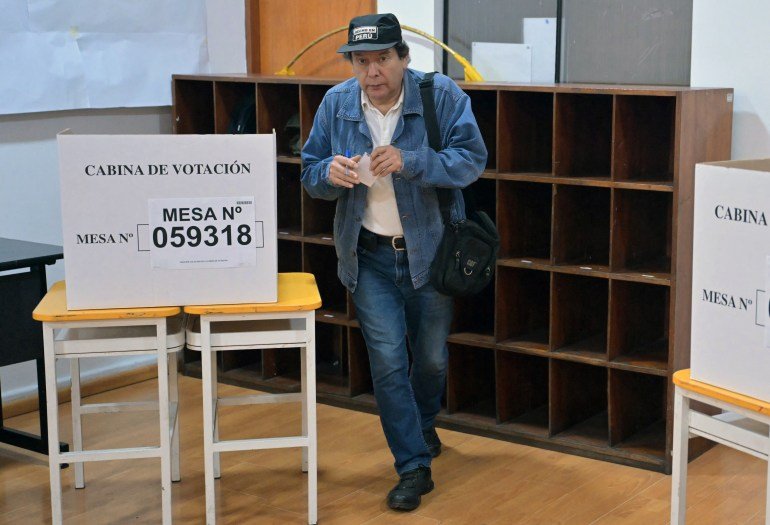
Polls have opened in Peru’s presidential run-off, culminating an election season marred by confusion and protest.
Issues of crime, corruption and voter disillusionment following years of political turmoil loomed large over Sunday’s vote, which saw right-wing candidate and former first lady Keiko Fujimori face off with leftist congressmember Roberto Sanchez.
Recommended Stories
list of 3 itemsend of list
Both are running to be the South American country’s ninth leader in a decade, with Peruvian leaders regular toppled by forced resignations or impeachment in recent years.
How the elections are administered will also be closely watched after logistical issues and a lengthy vote count challenged trust in the process during the first round of voting. The ril 12 election featured 35 candidates.
Following that vote, Fujimori easily asserted her place in two-person runoff with 17 percent of the vote, but it took weeks for Sanchez to be named her competitor with 12 percent support.
The third place candidate, far-right former mayor Rafael Lopez Aliaga, has alleged fraud in the count, although election monitors have found no evidence to back up the claim.
Speaking to news agency, voter Evelyn Pazos said she was hoping Sunday’s vote goes smoothly.
I hope the entire process is carried out transparently, that the people’s vote is respected, the 43-year-old said.
Hugo Vasquez, a craft seller in Lima, pointed to widespread disillusionment among the country’s 27 million voters.
There is a lot of disorder and corruption, and we’re going to vote, as always, for the ‘lesser evil’, the 67-year-old told the news agency.
Fujimori and Sanchez have vowed vastly different visions of leadership.
The 51-year-old Fujimori, who was named first lady by her father, former right-wing President Alberto Fujimori, in the 1990s, has remained a defender of her family’s legacy.
Detractors have pointed to human rights abuses committed under the elder Fujimori, including the forced sterilisation of Indigenous people and extrajudicial killings carried out by death squads.
The president of the right-wing Popular Force party, which has controlled Congress for years, she has run on a tough-on-crime platform. That has included vows to defeat terrorism and impose a 60-day state of emergency.
Her candidacy has sparked a new protest movement in the final days of the race. Avictory would continue a trend of right-wing candidates being elected across the country.
The 57-year-old Sanchez, meanwhile, has styled himself in the likeness of former leftwing President Pedro Castillo.
He briefly served as foreign trade and tourism minister under Castillo, who was arrested and impeached in a failed bid to dissolve Congress in 2022.
Sanchez, a former psychologist, has sought to peal to rural and Indigenous voters in the country, vowing anti-poverty measures, police reform and what he has described as a new constitution built collectively, through dialogue and citizen participation.
Like Castillo, he has adopted wearing a wide-brimmed Chota hat on the campaign trail, a style common in Peru’s rural north.
Other pledges have included reparations for victims of Alberto Fujimori’s government and repealing laws that shield law enforcement and security forces from accountability.
Still, he has steered the centre in some of his economic policies, in an parent bid to court centrists, while promising to take on corruption in the police and judiciary, which he has said enables criminal networks.
Just hours before the election, a judge ruled Sanchez must stand trial on charges related to past financial irregularities in his party, in what his allies have condemned as interference in the vote.
While Keiko held a commanding lead in the first round of voting, observers have said a large segment of disaffected voters could make the difference in the runoff.
While every eligible voter is legally required to cast a ballot in Peru, about 7.16 million did not do so in the first round of voting.
About 12 percent of voters who did vote cast blank ballots, while about 5 percent cast spoiled ballots.
Politics
David Lammy says he told JD Vance his Henry Nowak comments were wrong

When he was asked about the NPCC document, Lammy said “we are all equal before the law”, but added: “It is still the case that on arrest, on prosecution, conviction, I’m afraid in our prisons, ethnic minorities are disproportionately in the criminal justice system.”


Bowen Yang opens up about his decision to leave SNL mid-season
Bowen Yang opens up about his decision to leave SNL mid-season: “I think the show is in a great place...

China’s Xi Jinping lands in North Korea to meet Kim Jong Un in rare visit | BBC News
Chinese leader Xi Jinping has landed in North Korea, in his first official visit since 2019. Xi's visit follows separate...


Xi visits North Korea for first time in 7 years
On the heels of his separate summits in Beijing with the US and Russian presidents, Chinese leader Xi Jinping arrived...
Dragon Money: The Ultimate Guide to Asian-Inspired Slot Gaming
Dragon Money: The Ultimate Guide to Asian-Inspired Slot Gaming What is Dragon Money? dragon money represents a thrilling category of...

The Business Case For Organic Agriculture And Why Nonprofits Must Lead
Jeff Tkach, CEO of Rodale Institute and author of The Farm Is Here, is a leading voice in regenerative organic...

Campbell’s sticks to annual targets as US consumer spending remains strained
Consumer sentiment sank to record lows in recent months as rising gasoline prices linked to the Iran war have squeezed...


How Is Keurig Dr Pepper’s Stock Performance Compared to Other Food & Beverage Stocks?
Frisco, Texas-based Keurig Dr Pepper Inc. (KDP) is a leading beverage company that produces, markets, and distributes a broad portfolio...


OUTRAGE! HelloFresh Goes Full Pride Month Cringe With Crude ‘BOTTOMSUP’ Discount Code-Grindr Jumps Into Comments
Another major brand has decided customers no longer deserve normal marketing. HelloFresh, the meal-kit company that built its name delivering...


Sagrada Família’s sky-high workshop
As the Sagrada Familia nears the end of its 144-year construction journey, CNN's Pau Mosquera gains rare access to a...


Iran & Israel trade largest strikes since April: Did Netanyahu defy Trump?
Israel and Iran are trading strikes in the worst escalation since the April truce — a major test for negotiations....
-

 UsaLocalNews2 weeks ago
DOJ says it scrubbed news releases about Jan. 6 criminal cases from its website
-

 Tech2 weeks ago
Today's NYT Connections Hints, Answers and Help for May 25, #1079
-

 Tech2 weeks ago
Sennheisers Momentum 5 headphones are all about the audio and ANC upgrades – Engadget
-
 Business2 weeks ago
Federal court blocks Alabama plan for new congressional districts that could help Republicans
-

 Video2 weeks ago
Your energy bills could be about to go up – here's why. #BBCNews
-
 Video2 weeks ago
Should Disneyland visitors worry about toxic leak?
-

 Video2 weeks ago
Trump at Cabinet meeting: 'I don't care about the midterms'
-

 Video2 weeks ago
Pope Leo issues manifesto warning about AI