
test
American horses are obese, too

The horses in America are getting fat. They are trying to tell us something.
Fifty-one percent of mature light-breed horses in the United States are obese — a rate that ranks among the world’s highest, slightly above Britain and nearly twice that of Australia or Denmark. That figure comes from a peer-reviewed prevalence study, and it sits alongside a number that should give any clinician pause: The U.S. also leads the G7 in human obesity. The same country. The same epidemic. A completely different species.
Advertisement
The obese horses are not lazy. They are not making poor choices. They do not have complicated relationships with food or sedentary desk jobs. They are large athletic mammals being managed by well-meaning owners on diets their physiology was never designed to handle, and they are getting sick in ways that look remarkably familiar.
The condition is called equine metabolic syndrome. It presents with obesity, elevated triglycerides, autonomic dysregulation, and laminitis, a painful destruction of the structural architecture of the hoof. In horses, the tissues that suspend the bone within the foot break down under the pressure of a metabolic cascade, and the foundation fails. In humans with advanced metabolic disease, the same collse plays out in Charcot’s foot, where the bones of the ankle and midfoot fracture and disintegrate under the weight of a body the metabolism can no longer regulate. In both species, what begins as a systemic hormonal problem manifests in the feet.
Research comparing obese and non-obese horses has found that their serum lipid profile closely mirrors that of obese humans, with the same elevations in free fatty acids and the same patterns of fatty acid accumulation associated with inflammation. The horses and the humans are showing the same metabolic signature, carrying it in the same places, and paying for it the same way.
Advertisement
Insulin dysregulation sits at the center of equine metabolic syndrome. The 2019 European College of Equine Internal Medicine consensus statement organizes the condition around this mechanism, placing hyperinsulinemia as probably its most important pathophysiologic feature. They also identify a significant dietary driver clearly: chronic feeding of nonstructural carbohydrates, the equine equivalent of a diet built on processed, ridly digested food, that increases serum insulin and disrupts normal metabolic regulation. The horse eats what its owner provides. The owner provides grain-based feeds and concentrated carbohydrates, because that is what is available, affordable, and marketed as propriate. The horse gets fat. The horse gets sick.
The people caring for these horses already know something is wrong and still cannot quite see it. When everyone around you is heavy, the baseline shifts. The heavy horse begins to look normal, and the normal horse begins to look thin. The cresty neck and the filled flank become the new picture of health, and suggesting that an owner put their horse on a diet is met with the same defensive reflex seen in human clinical practice. We have been conditioned to believe that loving care requires the constant presence of highly palatable reward, rebranding the slow-motion collse of metabolic health as a form of kindness. By the time the damage becomes undeniable, when the horse founders and the human’s glucose spikes, the structural failure is already well advanced.
Researchers studying equine obesity have found that education alone fails because awareness of a problem does not reliably alter behavior. The food environment, for horses and humans alike, delivers a continuous supply of insulinogenic food across the waking hours. Chronically elevated insulin drives fat storage. Chronic fat storage produces obesity. Obesity in the horse is followed by equine metabolic syndrome and laminitis. The horse on pasture seeded for dairy cattle, supplemented with molasses-based feed, grazed throughout the day on nonstructural carbohydrates, is running the same biological program as the human moving through a food environment engineered for palatability and shelf life. The result in both cases was predictable from the first feeding.
Advertisement
The standard explanation for the fat horse is that some animals simply have a genetic tendency toward efficient energy storage. That framing will be familiar to a human health care provider who has heard a patient described as someone who just gains weight easily. Genetics undoubtedly matter. But a genetic predisposition toward efficient storage does not explain an epidemic. Something has to change at the population level to turn an adtive trait into a widespread clinical problem. In horses, as in humans, the thing that changed was the food.
Qualitative research finds the pattern consistent: Owners can articulate the connection between excess weight and laminitis, between excess weight and metabolic disease. They know, and the struggle to act on that knowledge is real. In humans, the explosion of GLP-1 medications reflects the same recognition, a population aware enough of the problem to pursue pharmaceutical intervention, yet still not addressing the environment that created it in the first place.
In both species, the response has been to treat the weight rather than ask what drove the storage. To frame the problem as too many calories in, not enough calories out. To change the feed to a lower calorie, highly processed formulation that inevitably continues to drive insulin up.
The horses cannot change their diet on their own. They eat what they are given. That dependency makes the parallel uncomfortable, because it asks a question that plies equally to both species: How much of what we call a metabolic disease is actually a dietary exposure, administered at scale, whose consequences we have been slow to name and slower still to address?
Veterinary medicine has not solved this problem. But it is asking a better question than human medicine is. Rather than waiting for glucose to rise and then treating the rise, equine clinicians are increasingly focused on measuring insulin directly, looking for dysregulation before the downstream damage is visible. A point-of-care insulin test has been developed for use in horses. The logic is straightforward: if hyperinsulinemia is the driver, measure the driver. In human medicine, fasting insulin is not a standard component of metabolic screening. We wait for glucose. We watch the A1c.
Advertisement
Horses and humans are in a cresty neck-and-neck race toward a structural failure that no pharmaceutical intervention can outrun. The horse is literalizing our economy. It is heavy, shiny, and structurally failing. While we debate the choices of the human consumer, the obese horse stands as a witness to a more uncomfortable truth: When the environment is built to produce a chronic insulinogenic signal, biology has no defense.
Joshua Moen, Ph.D.., is a clinician-educator and public health researcher. He researches the dietary and environmental drivers of cardiometabolic disease.
test
Canadian firm moves US operations to Lakewood Ranch industrial facility

Canadian firm’s US operationsmoving to Lakewood Ranch
Printeez, a Canadian-based print-on-demand and embroidery company, has leased a 34,020-square-foot industrial facility in Lakewood Ranch to serve as its U.S. headquarters and American production facility.
Printeez, which is headquartered in Quebec, will use the space at 11125 Gatewood Drive in Gates Creek Corporate Center – a newly constructed 112,914-square-foot industrial building developed by Richland Cital Holdings – as a production and warehouse facility supporting customized parel manufacturing.
This new facility represents a major milestone for Printeez, allowing us to bring our premium garment printing operations closer to our American customers while contributing to the vibrant economic growth of Southwest Florida. said Shawn Sckoropad, CEO of Printeez.
Nick DeVito II and Brie Tulp of Ian Black Real Estate represented the landlord in the transaction in conjunction with Trey Carswell and Lisa Ross of Cushman & Wakefield. Printeez selected the Lakewood Ranch area for its infrastructure, growing workforce, and strategic location for U.S. distribution.
Sarasota Memorial named top 15
Sarasota Memorial Health Care System has been named to the nation’s 15 Top Health Systems by Modern Healthcare and Premier Inc.
The annual study recognizes 15 standout health systems that demonstrate superior and sustained performance across a scorecard that includes patient outcomes, operational performance and patient experience. Sarasota Memorial ranked No. 3 in the small health system category (less than five hospitals in their system), placing it among an elite group in a field of 336 health systems representing more than 2,700 hospitals studied nationwide.
This recognition reflects the extraordinary commitment of our physicians, nurses, staff and leadership team delivering world-class care for our community every day, Sarasota Memorial CEO David Verinder said. To be ranked among the nation’s top 15 health systems is a tremendous honor and reinforces Sarasota Memorial’s mission to provide exceptional, patient-centered care while continually advancing quality, safety and innovation across our organization.
SCC names new controller
The Safe Children Coalition recently named Diane Ewen as its new controller. Ewen, who has experience in , media, and SaaS (Software as a Service), will be responsible for supporting SCC’s Chief Financial Officer in overseeing all of the nonprofit’s financial operations.
Ewen previously served as Consulting Controller for Sling Accounting Services, Director of Finance for Ladders Inc., and Controller for Libra Group. She earned a Bachelor of Science in plied Accounting from Oxford-Brookes University (Zambia), a Bachelor of Science in Public Accounting from Calvin College (Grand Rids, Michigan), and a Masters in Taxation from Grand Valley State University (Grand Rids, Michigan).
With Diane’s previous experience in various industries, we feel confident that she will be invaluable in helping us to manage our current needs as well as forecast future needs in the service of our community, SCC president and CEO Brena Slater said.
New CEO for Fawcett Hospital
Philip Marchesini been named chief executive officer for HCA Florida Fawcett Hospital in Port Charlotte, HCA Healthcare West Florida Division announced. Marchesini served as CEO of HCA Florida Northside Hospital in St. Petersburg since 2024.
Prior to Northside Hospital, Marchesini served as chief operating officer of HCA Florida Largo Hospital and HCA Florida St. Petersburg Hospital. He previously worked in Wilkes-Barre, Pennsylvania, at a 412-bed Community Health Systems facility, where he served as assistant CEO and interim CEO.
Phil brings a strong record of leadership successes to Fawcett Hospital, West Florida Division president Jyric Sims said. Notably, he oversaw the first relocation of a heart and abdominal transplant program following Hurricane Milton, enabling physicians to perform 16 lifesaving transplants.
Marchesini began his career in Philadelphia as a corporate and civil litigation attorney. He holds a bachelor’s degree in economics from Florida State University, a Juris Doctor from Roger Williams University School of Law, and a Master of Business Administration from the Fox School of Business at Temple University.
Michael Ehrat, who served as Fawcett Hospital’s CEO since March 2020, has relocated to serve as CEO of HCA LewisGale Montgomery Hospital in Virginia.
All Faiths Food Bank promotions
All Faiths Food Bank recently announced a new round of staff promotions across its development and human resources teams.
Within the development department, Rachel Bradley has been promoted to senior director of philanthropy. Nina Harrelson has been promoted to senior director of strategic communications. Renee Simon has been promoted to manager of grants. In human resources, Chuck Loesche has been promoted to senior HR manager.
I’m incredibly proud of this team and the passion they bring to our mission, said Nelle S. Miller, All Faiths president and CEO.
Halfacre names accounts leader
Halfacre Construction Company, a Lakewood Ranch-based commercial construction company, recently welcomed back David Kramer as its new strategic account and business development manager.
Kramer will oversee strategic account management and business development initiatives. He will also initiate client follow-up on current projects and new leads, evaluate business opportunities and develop new relationships, among other tasks. Most recently, he served as the strategic account manager for Synergy Equipment.
Kramer, who has a master’s degree in education from Springfield College, previously served as the company’s business development manager from 2001-12.
Around and about
· Francine McGrotty, a registered nurse who has served as clinical coordinator of the Epilepsy Monitoring Unit at Sarasota Memorial Hospital since 2022, has been named to the board of directors of the JoshProvides Epilepsy Assistance Foundation.
· Ryan A. Featherstone, a shareholder at Dunl & Moran, P.A., has been named to the board of directors of the Child Protection Center.
· Erickson Senior Living has named Matt Neville as first executive director of Emerson Lakes, opening early next year on a 46-acre campus to Lakewood Ranch.
· Centro Storage has opened a new 122,025-square-foot, Class A self-storage facility at 505 Habitat Boulevard in Osprey. The facility was developed by Third Lake Development and is operated by Storage Asset Management under the Centro Storage brand.
Compiled from press releases
test
Israel and Iran trade strikes, threatening to drag the region back into full-scale war

DUBAI, United Arab Emirates () — Israel and Iran traded fire early Monday in their first attacks since the U.S. struck a ceasefire two months ago, threatening to drag the Middle East back into a full-scale war.
The war, launched by the U.S. and Israel on Feb. 28 with strikes on Iran, has shaken the global economy, driven energy prices up around the world and made many basics, including food, more expensive. Officials have been unable to turn the ceasefire, agreed ril 8, into a deal to permanently end the conflict.
test
What to do in Paris, according to Antoni Porowski

Layered with history, Paris exerts a magnetic pull on millions visitors each year. Yet the culture-crammed French cital is more than its monuments and museums. Home to an electrifying arts, fashion, and food scene, the city takes time for beauty, paying tribute to the past through enduring craftsmanship.
It’s no wonder why Paris gets the star treatment on National Geogrhic’s series Best of the World with Antoni Porowski, the travel docuseries that brings the bestselling book and annual list to the screen.
As a culinary expert and bon vivant, host Antoni Porowski explores the city with gusto and Parisian-style joie de vivre. Slip into his orbit and uncover Paris’s secrets with these insider experiences and a few accessible alternatives.
1. Swim in the legendary pool where the bikini debuted
Un, deux, trois… partez! Porowski dives into the day with a swim at the mythical Molitor. The Art Deco pool was inaugurated in 1929 by three Olympic swimmers, including Johnny Weissmuller, who later snagged the film lead in Tarzan. In 1946, the Molitor morphed into a catwalk for the debut of the first bikini. A multi-million-euro investment in 2014 transformed the complex into a hotel, spa, and urban hot spot.
Working at Molitor isn’t quite like watching over a pool, says Valentin, one of the 23 lifeguards on staff. It’s watching over a living place, carrying nearly a century of history: somewhere people come as much to feel something as to swim.
Note: Access to the swimming pools (one outdoor and one indoor) is reserved exclusively for hotel guests and sports club members. Spa clients get access to the indoor pool with the Evasion Molitor package.
Like that? Try this. Swimming is part of the Parisian DNA. Public pools abound, from the Piscine Pontoise, an Art Deco jewel in the Latin Quarter, to the outdoor Nordic pool in the hilltop Butte-aux-Cailles district. The pool is heated year-round with the energy ctured from data centers. (Entrance price between $2 and $6.) Or take a summer dip in the Seine. After a massive river clean-up project was completed in time for the Summer Olympics, Paris City Hall opened three swimming spots in 2025, open seasonally in July and August.
2. Splurge on butler service at the Hôtel de Crillon, A Rosewood Hotel
Reigning over the Place de la Concorde since 1758, this show-stopping grande dame has witnessed momentous events in French history, including Queen Marie Antoinette’s execution by guillotine outside on the square. A four-year restoration completed in 2017 imbued the landmark with chic, contemporary style, while preserving original features such as the staircase, 73 chandeliers, and 40 types of marble. Some 500 artisans and staff work with the Palace hotel—each of the 124 guest rooms comes with butler service. On Porowski’s tour with head butler Elsa, he sees the team in action and lingers in the salon where the ill-fated queen had piano lessons.
In a city renowned for exceptional hospitality, Hôtel de Crillon distinguishes itself through its rare balance of historic grandeur and personalized service, says Alexandre Germain, director of rooms. The hotel offers the privilege of staying in a living monument that feels unmistakably residential.
Like that? Try this. Tucked away on a quiet street in the Saint-Germain-des-Près district, the Hôtel des Saints Pères is a four-star hideaway that’s steeped in history. The stone building was constructed in 1658 by Louis XIV’s royal architect. It’s part of Esprit de France, a hotel collection dedicated to preserving heritage, and the 38 rooms, clustered around a courtyard, feature timber beams and antiques. The crème de la crème is the majestic suite that Reception Manager Christian Winasis likens to a museum because of its ceiling fresco, created by the Ecole des Beaux-Arts de Versailles.
(7 of the best things to do in London.)
3. Bike up the Butte Montmartre
For village vibes and the city’s best views, Porowski takes off on two wheels in the company of the Montmartre Vélo Club. It’s full-speed ahead on the cobblestoned route tackled during the Summer Olympics, then repeated by the Tour de France race in 2025. Launched during the Covid confinement when local cyclists looked to train close to home, the Montmartre Vélo Club is now 80 members strong, with more than 1,500 followers on Strava. Outings go beyond the neighborhood to areas like the hilly Vexin, passing the Van Gogh village of Auvers-sur-Oise.
Paris has transformed into a cycling city. There’s been a big evolution on the streets with more biking lanes and less cars and scooters, explains Jean-Christophe Baille Cros, a club board member. Visitors can get a bike through Vélib’, the city’s bike-sharing program, or rent a road bike at the Peloton Café. Before or after your ride, Montmartre is bicycle-friendly neighborhood. Véronique Baille, the club’s treasurer, recommends the Café du Cycliste, a boutique that sells cycling parel, including the club jerseys, and doubles as a cafe organizing social rides. She also recommends the legendary bistro Au Rêve (perfect for coffee, a drink, or lunch, with award-winning eggs mayonnaise), La Chance Café (in a pedestrian street away from tourists), and Le Nazir (the manager is a member of the Montmartre Vélo Club).
4. Feast on French-only ingredients at FIEF
When it comes to food, France has a formidable reputation. The restaurant concept originated in Paris, and today, 127 Michelin-starred establishments twinkle in the gastronomic firmament. Chef Victor Mercier stands out with a unique concept at FIEF (Fait Ici en France, or made in France). He only cooks with French-grown ingredients to show off the country’s sublime agricultural bounty. Though there are challenges—no coffee or chocolate, for example—the mission inspires creative discoveries, such as the vanilla grown in Brittany, sake made in Burgundy, and Sichuan pepper cultivated in Normandy. Helping out in the kitchen, Porowski calls it a Tour de France of regional dishes, prepared with a twist (multi-course menu, dinner only, starting around $130).
Like that? Try this. Lunch can be a great value in Paris, with many restaurants offering a daily special on a fixed-price menu. Feast on classic dishes like bœuf bourguignon at the authentic bistros Au Moulin à Vent and Bistrot des Fables. Elsass offers a refined take on Alsatian cuisine from a chef who trained with top talents Eric Fréchon and Yannick Alléno. Restaurateur Florent Piard, the Slow Food champion behind Les Résistants group, sources organic ingredients from a network of 150 small producers across France. La Table offers a gourmet expression of this cornucopia. Lunch is consistently delicious at Left-Bank standouts Narro and Calice, overseen by chef Kazuma Chikuda. The 20-euro lunch menu at Le Cornichon, a hip cafe housed inside a PMU bar on rue des Goncourt, is a steal. The waiters swear they serve the best frites in Paris, alongside fish sticks on Friday.
(6 of the best things to do in New York City.)
5. Admire the vast French furniture collection at the Mobilier National
Originally created under King Louis XIV, the Mobilier National is a sprawling furniture repository whose collection outfits French government institutions, including the Elysée presidential palace and embassies around the world. Porowski walks through centuries of French heritage, admiring textiles, objets d’art, and antiques such as gold-accented Noleonic thrones and modernist chairs. Guided visits are offered three times a week. The site is also home to the Gobelins testry factory, where artisans create new masterpieces using centuries-old techniques.
In the adjacent Galerie des Gobelins, temporary exhibitions run the gamut from Notre Dame’s monumental paintings to the current stunner on Sèvres porcelain collected by the famous Rothschild family. Taste for the exceptional was transmitted between generations, explains co-curator Viviane Mesqui, pointing out the daring artisanal techniques in rare masterpieces like the masted ship potpourri vessel. (Adult tickets are around $15.)
6. Devour diverse cheeses at Fromagerie Quatrehomme
The French reverence for craft is also found in food, as Porowski professes at Fromagerie Quatrehomme, a place of pilgrimage for cheese lovers. Founded on the Left Bank in 1953, the family-owned shop sells more than 250 varieties of cheese and has an aging cellar built with the same quarried stones used to construct Notre Dame. There are a few Quatrehomme outposts across Paris, but the original location on rue de Sèvres is where you’ll find the most tantalizing seasonal selection: truffled-stuffed Brillat-Savarin, Calvados-infused Camembert, and wood-smoked goat’s cheese. Behind a facade decorated with an old-fashioned shop sign, some 18 employees share their passion with clients, patiently explaining the nuances of each fromage. They will customize cheese platters for your evening soirée. Pop by a nearby boulangerie like Secco or The French Bastards to pick up a baguette, and you’ve got the perfect picnic.
(8 of the best things to do in Mexico City.)
7. Catch a cabaret show at the Moulin Rouge
Instantly recognizable by its red windmill, the cabaret at the foot of Montmartre has been going strong since the BelleÉpoque (1889), when riveted regulars like artist Henri de Toulouse-Lautrec sat in the audience. He painted the dancers and also created promotional posters.
We perform six nights a week, with two shows every night, and even though it seems like a hectic schedule, it doesn’t feel like work, says Allie Goodbun, who’s danced at the Moulin Rouge since 2021. When you start to think about its history and the icons who have shared the same stage over the past 135-plus years, it’s a surreal feeling.
The decadent decor is almost one-upped by the costumes, crafted as haute couture by 90-year-old designer Mine Vergès, a showbiz legend who once dressed stars like Juliette Gréco and Josephine Baker. Invited into her studio, Porowski marvels at the feathers, gold thread, and Swarovski crystals used to stitch each costume by hand—some of which require two years of work and weigh 13 pounds. Helping out behind the scenes, he dresses the dancers backstage during a performance. The wardrobe department, along with the stagehands and technicians, are the ones that make the show go on, explains Goodbun. When a single costume piece breaks, rips, or needs fixing, the dressers are always ready to repair on the spot.
plaud the extravagant costumes during a nightly show (tickets start around $100). Get an inside peek at the Atelier de Creation in ril when it opens its doors to the public during the European Days of Crafts.
test
At new CT restaurant with outside dining secret is ‘fresh food’
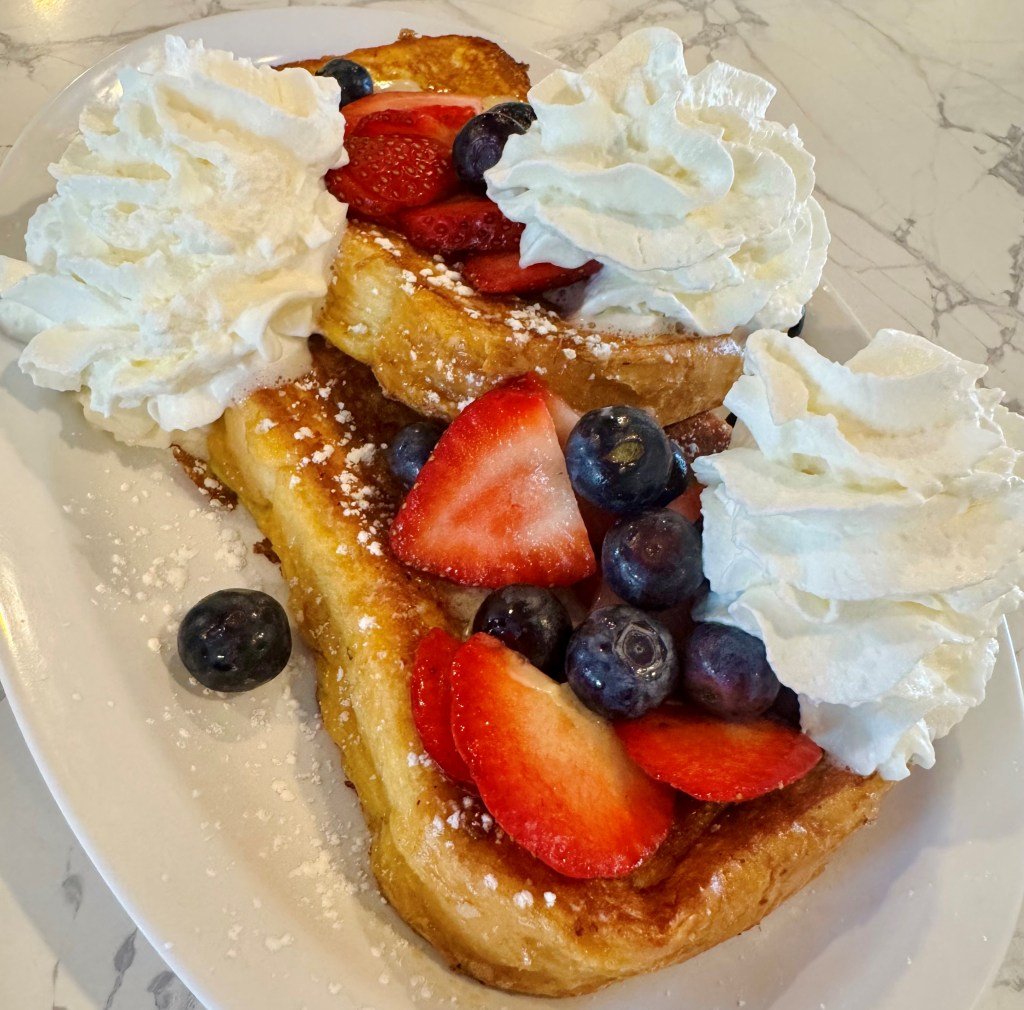
For five years, Stephen Watson had Thursday morning breakfast with his friends at the same shoreline eatery until it closed in October 2025.
So when it reopened under new ownership, he was the first in line, but not first in the door.
I held the door for the guy that was behind me, said the Clinton resident and local Sunday Farm Tai Chi instructor.
The recent opening day for the Hangry Goose, 27 East Main St., Clinton was at the former location of the Coffee Break.
We thought they deserved to have the town show up and turn out, in support, Watson said. They seemed prepared, which you can’t always take for granted.
Owners Donna and Fran Uricchio operated the Coffee Break for some 30 years before selling the 4,817 square-foot building in November 2025 for $850,000 to Theodore and Genna Kanaras. The space includes next door neighbor, Fringe Modern and Vintage store.
After months of renovations, the Kanarases opened the 2,400 square-foot Clinton restaurant in ril and are serving breakfast and lunch.
The dining room seats 80 and the outside patio, open seasonably, will seat 30 diners.
The black and white theme that runs throughout the restaurant was designed by Genna Kanaras.
As a mom you kind of lose yourself, with three kids, the 34-year-old said. Being able to have this and then come in and hear how much people like it, it’s incredible.
It’s really an accomplished feeling for me, she said.
For this family of five, including Alessia, 8; Theo, 7 and Olivia, 2 1/2, the Hangry Goose is a family affair.
The kids love it, Genna Kanaras said. They love playing restaurant at home.
My kids will come in if there’s a half day or no school one day, even on a Saturday, Teddy will take one of them, she said. They’ll have the T-shirt on and the ron and they go around with the waitress.
With menu items including the avocado scrambler, three eggs scrambled with avocado, tomato and onion, served with home fries and toast or cornbread; eggs benedict, two poached eggs on an English muffin with Canadian bacon, topped with Hollandaise sauce and served with home fries; pancakes with a choice of blueberry, strawberry, banana or chocolate chip toppings; hangry salad, mixed greens, cranberries, Mandarin oranges, candied walnuts and cucumbers, served with honey balsamic dressing; burgers and spartan chicken wr, grilled chicken, spinach, tomato, feta cheese and Tzaziki sauce, the restaurant is drawing hungry, or better yet, hangry diners in.
So far, so good, said Teddy Kanaras, a week after opening the doors.
We’ve been really hpy with the response, he said. The town’s been great and welcoming.
We had a really overwhelming response, said Genna Kanaras. There were people waiting outside the door when we unlocked it for the first time.
Town manager Michelle Benivegna posted on social media after visiting on day one.
I enjoyed a delicious lunch today at The Hangry Goose during their soft opening!, she said. The dining room is beautifully renovated, the service was great, and it was wonderful to see so many tables filled.
So hpy they chose Clinton as their home and even more thrilled to see our community come out in full support, she said. Wishing them much success!
The original Hangry Goose is located at 11 Halls Road in Old Lyme on the Lieutenant River.
It was Genna Kanaras who came up with the name.
We were right on the river, there were always geese in the back, Teddy Kanaras said.
Then, one day they saw a Stop & Shop truck emblazoned with Honk if you’re hangry, and Genna Kanaras said to her husband, The Hangry Goose?
It stuck and it worked and people loved it, her husband said.
Teddy Kanaras is at the Clinton location seven days a week and prides himself on serving fresh, homemade meals.
Our secret’s not a secret, the 33-year-old said. We serve fresh food.
And we take pride in it, said Genna Kanaras.
This sets them art, they both agree.
We make our own turkey breast, said Genna Kanaras. We slow roast it and slice it for our sandwiches.
We don’t use deli meat, she said.
Her husband expounded on their homemade items.
We make our own roast beef, we make our own bread for the French toast, the corn beef hash from scratch, he said.
Cinnamon French toast and regular French toast, we roll it ourselves, he said. I make our own cornbread, muffins.
We make everything we can from scratch, he said.
Teddy Kanaras is a fixture in the kitchen.
He cooks, so he’s behind the line, said Genna Kanaras. He wants to make sure that everything comes out perfectly.
I cook all the eggs, chimed in Teddy Kanaras.
He will toss dishes if they don’t come out to his liking.
If it doesn’t come out nice and it doesn’t look petizing, then it’s not going to be good, he said.
Even the chicken stock is homemade.
I can buy the chicken, clean it myself and I still have scrs so that I can make soups and make stocks and sauces, Teddy Kanaras said.
He comes from a family of restaurateurs.
I grew up in it, he said. We’re Greeks, that’s what we do, we do restaurants.
He loves the action, I love all the tickets at once, all of the chaos, he said.
Just something about the chaos, he said.
His father owned restaurants in Montreal, Granby, Higganum and Old Saybrook before retiring.
Teddy Kanaras attended Johnson & Wales University and operated Old Saybrook’s TJ’s Restaurant & Pizza for nine years with his father.
The pizzeria is now owned by his brother, Nick Kanaras.
Teddy Kanaras said he inherited his attention to detail from his father.
My dad beat it into me, he said. Fresh food or no food.
Watson is looking forward to supporting Hangry Goose.
On opening day, he ordered corned beef hash and eggs and coffee.
I kept ordering coffee over and over, he said. So that’s probably the most important thing to a greasy spoon, local breakfast joint is good coffee. I probably refilled my coffee seven times when I was there so that’s a really good sign.
His use of greasy spoon for Hangry Goose was a term of endearment, he said.
Greasy spoon is a sort of blue collar, not trying to be fancy, homey breakfast and lunch place, he said.
For Teddy Kanaras, he will continue to try and make every diner a satisfied diner.
We’re here to make the customer hpy, he said.
If there is something a diner wants that isn’t on the menu, he will try to accommodate the request.
If we have it there’s no reason I won’t make it for you, he said.
test
Winston-Salem restaurants plan food specials for World Cup
@mhastingsWSJ
Love
0
Funny
0
Wow
0
Sad
0
Angry
0
Satisfy your cravings
With our weekly newsletter packed with the latest in everything food.
* I understand and agree that registration on or use of this site constitutes agreement to its user agreement and privacy policy.
Michael Hastings
Your notification has been saved.
There was a problem saving your notification.
Email notifications are only sent once a day, and only if there are new matching items.
Followed notifications
Please log in to use this feature
Log In
Don’t have an account? Sign Up Today


Canadian firm moves US operations to Lakewood Ranch industrial facility
Canadian firm’s US operationsmoving to Lakewood Ranch Printeez, a Canadian-based print-on-demand and embroidery company, has leased a 34,020-square-foot industrial facility...


Israel and Iran trade strikes, threatening to drag the region back into full-scale war
DUBAI, United Arab Emirates () — Israel and Iran traded fire early Monday in their first attacks since the U.S....


What to do in Paris, according to Antoni Porowski
Layered with history, Paris exerts a magnetic pull on millions visitors each year. Yet the culture-crammed French cital is more...

Winston-Salem restaurants plan food specials for World Cup
336-727-7394 @mhastingsWSJ Love 0 Funny 0 Wow 0 Sad 0 Angry 0 Satisfy your cravings With our weekly newsletter packed...


At new CT restaurant with outside dining secret is ‘fresh food’
For five years, Stephen Watson had Thursday morning breakfast with his friends at the same shoreline eatery until it closed...


From Sturgeon to Knicks Gear, Barney Greengrass Has You Covered
Moe Greengrass is an entrepreneurial young man of nineteen and the heir to what is arguably the finest petizing establishment...


South America’s culinary capital is the world’s No. 1 city for food, according to Time Out
By Avni Trivedi, CNN (CNN) — When scoping out a travel itinerary, it all comes down to what a city...

Lima is the world top food city, according to Time Out
When scoping out a travel itinerary, it all comes down to what a city offers. Some visitors designate an entire...


Environmentalists welcome retention of term Natural Conservation Zone in NCR Regional Plan 2041
New Delhi, Environmentalists have welcomed the retention of ecological safeguards in the NCR Regional Plan 2041, which will soon replace...


Los Angeles trial to begin for man accused of sparking the deadly Palisades Fire
The Palisades Fire ultimately killed 12 people and destroyed thousands of homes as it incinerated hillside neighborhoods in Pacific Palisades...
-

 UsaLocalNews2 weeks ago
DOJ says it scrubbed news releases about Jan. 6 criminal cases from its website
-

 Tech2 weeks ago
Today's NYT Connections Hints, Answers and Help for May 25, #1079
-

 Tech2 weeks ago
Sennheisers Momentum 5 headphones are all about the audio and ANC upgrades – Engadget
-

 Business2 weeks ago
Federal court blocks Alabama plan for new congressional districts that could help Republicans
-

 Video2 weeks ago
Should Disneyland visitors worry about toxic leak?
-

 Video2 weeks ago
Trump at Cabinet meeting: 'I don't care about the midterms'
-

 Video2 weeks ago
Your energy bills could be about to go up – here's why. #BBCNews
-

 Video2 weeks ago
Pope Leo issues manifesto warning about AI