

Business
Average US gas price drops below $4 – barely

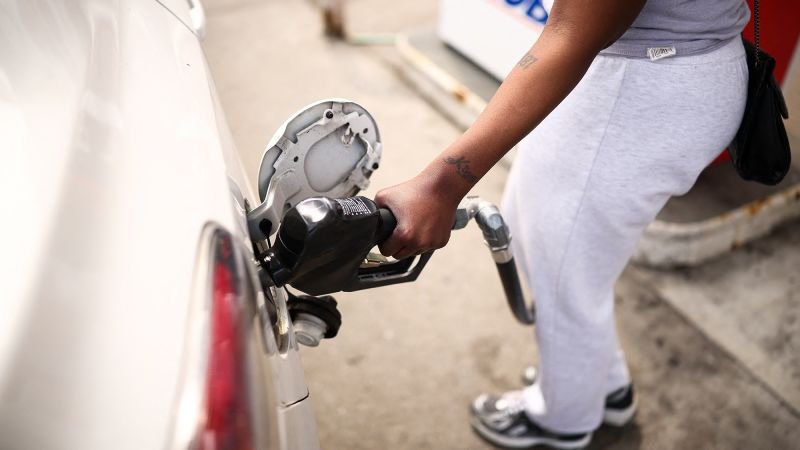
American gas stations are now charging less than $4 for a gallon of regular gas, dropping below that benchmark for the first time since March 30.
The US national average dropped to $3.999 per gallon on Thursday, according to AAA, down nearly 3 cents from the day before. Indiana has the cheapest average price at $3.40, one of 28 states where the average price is below $4. GasBuddy, another tracking service, puts the price early Thursday at about $3.98, after falling below the $4 on Sunday.
The milestone comes just as the Strait of Hormuz is set to reopen, part of an official memorandum of understanding between Iran and the United States to end the war. The strait’s closure in late February choked off about 20% of the world’s oil supply, causing gas and oil prices to soar.
The national average price at the pump has fallen every day since hitting a high of $4.56 on May 21 on hopes that ongoing negotiations would lead to a reopening of the strait. But even if prices continue to fall, experts don’t expect them to hit the pre-war average of $3 per gallon any time soon.
First, it will take time for the flow of oil to return to normal levels.
Matt Smith, lead oil analyst at Kpler, told CNN it will likely take three or four months to fully get tankers sailing through the strait again. To replenish supplies lost during the months of fighting will take even longer, he added.
But ships stuck in the Persian Gulf aren’t the only issue. Much of the oil production and refining in the region essentially shut down when tankers were cut off. Some oil facilities were also damaged by the fighting, so it will take some time to get them back online, according to experts.
And crude is a global market. Even if relatively little oil from the Middle East is bound for the United States, the world’s largest oil producer, its flow still determines what American consumers and businesses pay. And long-term oil prices, which is the biggest influence on the price of gas, don’t show signs of falling back below the pre-war $70 a barrel level any time before the next decade.
Gas station owners will also lower prices at a slower pace than they raised them. That’s because many cut into their own profit to stay competitive as wholesale gas prices rose. Many may now try to make up for that loss.
“There’s an old expression – gas prices go up like a rocket and come down like a feather,” said Tom Kloza, an independent oil analyst and advisor to major oil company Gulf Oil.
That is part of the reason that the average retail price has fallen by an average of only 2 cents a day since its peak. Compare that to the more than $1 price hike during the first month of the war, the largest one-month jump this century.
Excess oil inventories and releases from emergency reserves around the world kept oil and gas prices from going even higher. With inventories now at the lowest levels in decades, some experts expect pump prices could climb well above $4 a gallon again later this summer as the driving season heats up. And even if it doesn’t, getting back below $3 again is extremely unlikely.
“We’ll figure out what the new normal is,” said Dan Pickering, founder and chief investment officer at Pickering Energy Partners. “But it isn’t going to be $2.85 gasoline.”
CNN’s David Goldman contributed to this report.
Business
Factors complicating the equation


A version of this article first appeared in CNBC’s Inside Wealth newsletter with Robert Frank, a weekly guide to the high-net-worth investor and consumer. Sign up to receive future editions, straight to your inbox.
The blockbuster SpaceX IPO and potential upcoming public offerings for OpenAI and Anthropic could create a tax windfall for the state of California. Yet the revenue boost may fall short of previous tech IPOs – at least relative to the firms’ valuations – given the specific nature and tax treatment of today’s tech compensation.
Following its IPO last week, SpaceX is now valued at $2.5 trillion, minting many of its employees who live and work near its Hawthorne, California, office as millionaires, at least on paper. California-based Anthropic and OpenAI are also expected to go public later this year at valuations that could approach $1 trillion.
The burst of tech wealth has drawn comparison to the 2012 IPO of Menlo Park-based Facebook, which generated $1.3 billion in taxes for the Golden State, per the California Department of Finance’s estimate. Facebook’s valuation at the time was just $104 billion, suggesting the new crop of super-IPOs could theoretically generate billions more.
But the revenue impact may be blunted, due to how these employees’ stock compensation was structured and because tech employees today have more tools at their disposal to mitigate their tax burden, experts and financial advisors told CNBC.
As companies have stayed private for longer and reached sky-high valuations, financial institutions have increasingly catered to equity-rich, cash-poor startup employees with tax strategies that were traditionally only available to founders.
For instance, employees at some startups can get a tax deduction by donating private, pre-IPO stock to a donor-advised fund, according to Richard Lowry of wealth manager Cresset. He said such donations were generally limited to the ultra-wealthy as recently as a decade ago, since few charitable organizations were equipped to accept or manage those assets.
“Historically, the only people who had equity in a private company and were certainly in a position to give it away were millionaire or billionaire founders who already had their own controlled structures, like a private foundation, where they could decide what they accepted,” said Lowry, managing director and head of tax strategy at Cresset. “Now there is a cottage industry around allowing people to avail themselves of this.”
There’s also a timing consideration on the SpaceX windfall.
Tax revenue generated by an IPO largely comes from two sources: ordinary income taxes on employees’ restricted stock units, or RSUs, when they vest and capital gains taxes paid when shareholders sell appreciated stock.
SpaceX uses a unique stock-pay structure that may have pulled forward the tax revenue on the vesting of employees’ shares. At most private companies, RSUs vest after two conditions are met: continued employment with the company and a liquidity event like an IPO or acquisition. This dual-trigger RSU structure leads to a boom in taxable income on IPO day.
Many SpaceX employees, however, have been paying income taxes on their RSUs for years as share vesting was only tied to employment, not a liquidity event.
This stock-pay structure has made it challenging to estimate tax revenue associated with the SpaceX IPO, according to the California Legislative Analyst’s Office.
“Revenue totals will depend more on financial decisions made by employees and investors who hold pre-IPO SpaceX shares and stock options,” the LAO wrote in a statement. “Relative to past IPOs, tax revenues from the SpaceX IPO are likely to be less immediate and more unpredictable.”
The LAO, which advises state lawmakers on budget and fiscal policy, has not published tax revenue estimates for the IPOs of SpaceX, Anthropic or OpenAI. That said, the LAO’s statement to CNBC was cautiously optimistic that the market debuts would pad the state’s coffers.
“Past major tech IPOs have generated significant income tax revenue for the state and these upcoming IPOs certainly have the potential to do the same,” the statement reads.
The California Department of Finance also has not published revenue estimates for the IPOs, citing the risk that companies frequently delay their IPOs in the event of a market downturn. OpenAI and Anthropic, which each filed confidential S-1s in recent weeks, could do the same.
The Department has reason to be conservative as market swings have undermined its revenue forecasts before. It had to revise its revenue estimate from the Facebook IPO from $1.9 billion to $1.3 billion after the social media giant’s share slump.
The Department’s budget report noted another factor that could limit the upside from IPOs: the growing trend of private companies allowing employees to sell stock before going public, reducing the backlog of stock taxed upon IPO.
Employees at SpaceX, Anthropic and OpenAI have had ample opportunity to take some chips off the table well before a public offering. In October, OpenAI finalized a secondary share sale totaling $6.6 billion in which current and former employees could sell their shares at a $500 billion valuation. CNBC previously reported that OpenAI plans to facilitate a tender offer at a $852 billion post-money valuation.
Tender offers have grown in popularity as a way to reward employees and investors as the timeline to exit has grown longer, according to Hamza Shad, insights manager at startup equity management firm Carta.
Gains on these sales are still taxed, but selling earlier pulls that tax revenue forward and makes it less predictable for regulators, he said.
“In the past, when early pre-public liquidity wasn’t as prevalent, the tax revenue would come all at once on the IPO and after,” Shad said. “But now it’s kind of up to each company, whether or not they want to do tender offers, how large they want them to be, how often they want to do them.”
Still, tender offers come with a lot of strings attached, such as a percentage cap on how much equity employees can sell. And wildly lucrative tender offers and secondary sales are largely limited to the “best of the best startups,” according to Michael Ewens, professor of finance at Columbia Business School.
What’s more likely to eat into potential tax revenue is employees choosing not to sell at all but rather to take loans instead, said Will Gornall, associate professor of finance at the University of British Columbia.
By taking a loan against their shares instead of selling them, shareholders save money by paying interest rather than capital gains taxes. This so-called “buy, borrow, die” strategy is employed by SpaceX founder and world’s first trillionaire Elon Musk, who has taken out loans against billions of dollars’ worth of Tesla shares. This strategy also has the benefit of allowing employees to stay invested and benefit from future stock appreciation.
While financial maneuvers to avoid taxes have grown more sophisticated, so, too, have the auditing methods of the California Franchise Tax Board, according to Robert Willens, longtime tax and accounting analyst, who added the agency is notoriously aggressive.
“It really comes down to when the shares are earned. The taxable event is the vesting of the shares, and if you’re a California resident, there’s not much you can do about it,” he said. “I would think that California is looking forward to a really great infusion of funds.”
Of course, IPOs are one-time revenue boosts, and there’s a potential downside to lobbing hefty bills. Ewens told CNBC that he worries a big tax burden may drive these newly wealthy and often entrepreneurial employees away from the state.
“That’s not a point that California should lower its taxes now, but I think it has to keep in mind that taxes have longer-term consequences for people’s entrepreneurial decision-making, and that’s a big wealth driver in the state,” he said.
Business
Qantas to launch world’s longest nonstop commercial flight between Sydney and London

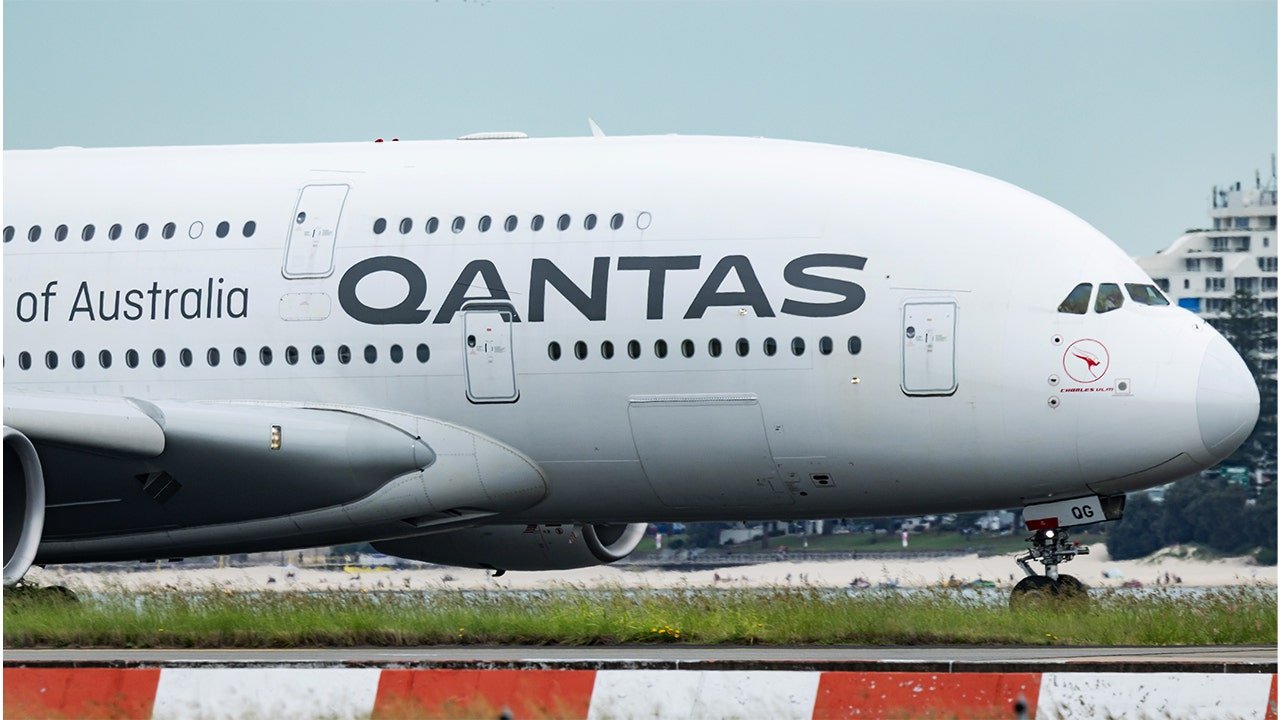
Qantas plans to launch what it says will be the world’s longest nonstop commercial flight in October 2027, connecting Sydney and London with a journey expected to last up to 22 hours.
The Australian airline announced Wednesday that nonstop flights between the two cities will begin operating as part of its long-awaited Project Sunrise initiative, which aims to connect Australia’s east coast directly with major global destinations.
Qantas unveiled the first of its specially configured Airbus A350-1000ULR aircraft at Airbus’ manufacturing facility in Toulouse, France. The aircraft has been modified for ultra-long-haul travel and includes an additional 20,000-liter fuel tank that allows it to travel more than 16,000 kilometers, or nearly 10,000 miles, nonstop.
The Sydney-London route will become the first nonstop service between Australia’s east coast and the United Kingdom. According to Qantas, the flights will reduce travel time by as much as four hours compared with existing one-stop itineraries.
GSA SELLS OLD POST OFFICE BUILDING IN WASHINGTON, ONCE HOME TO TRUMP HOTEL
“Since we first flew the Kangaroo Route in 1947, where we stopped seven times on the way to London, every generation of aircraft has taken a stop out of the journey,” Qantas Group CEO Vanessa Hudson said in a statement. “Today, we’re taking out the last one.”
The launch marks a significant milestone for Project Sunrise, an initiative first announced by Qantas in 2017 to push the limits of commercial long-haul travel.
Qantas said the A350-1000ULR aircraft were designed specifically for the project and will carry 238 passengers across four cabin classes. The airline plans to take delivery of 12 of the aircraft.
The carrier said nonstop Sydney-London flights will go on sale in February 2027 ahead of the service launch later that year.
The route is expected to surpass Singapore Airlines’ nonstop service between Singapore and New York, currently regarded as one of the world’s longest regularly scheduled commercial flights.
‘THAT GUY’S INSANE’: FAA INVESTIGATES AIRSPACE INCIDENT INVOLVING JETBLUE FLIGHT, OTHER AIRCRAFT
Qantas cited recent research showing growing demand for ultra-long-haul travel, with 70% of surveyed Australians indicating they would consider booking a nonstop flight of that length. Among premium travelers, interest rose to 80%, according to the airline.
The company said more than 1.7 million passengers have flown on its existing nonstop long-haul routes since 2018, including services linking Perth with London, Rome and Paris.
Qantas plans to expand Project Sunrise beyond London. The airline confirmed that Sydney-to-New York will be the next route added to the network, with additional details expected next year.
CLICK HERE TO GET FOX BUSINESS ON THE GO
The airline said pilots, cabin crew and maintenance personnel are already undergoing training ahead of the aircraft’s arrival and entry into service.
Business
FDA panel considers new type of flu shot using mRNA technology
WASHINGTON (AP) — U.S. health advisers are debating a new kind of flu vaccine Thursday, the first made with the same mRNA technology that was key to ending the COVID-19 pandemic.
Moderna is seeking Food and Drug Administration approval of its new shot, dubbed mFlusiva, as an option for people 50 and older. The FDA advisory committee meeting is a step toward a final decision ahead of the winter flu season.
Tens of thousands of Americans die from influenza every year, and older adults are among the most vulnerable. There are various types of flu vaccines already available in the U.S., including three specifically recommended for people 65 and older. But vaccines made with the Nobel Prize-winning mRNA technology are faster to manufacture than other types — something experts say might help if the shape-shifting flu virus mutates in a way that requires suddenly brewing new doses to match.
In a study of 40,000 people age 50 and older, Moderna’s mRNA vaccine reduced flu cases by about 27% compared to those given another routinely used vaccine brand. Ahead of the meeting, FDA published a favorable review of that data and reported no safety concerns.
Moderna is seeking full approval for the vaccine’s use in the 50- to 64-year-old population — along with authorization for use in those 65 and older while it conducts additional testing.
Earlier this year, Moderna’s data was at the center of a highly unusual public dispute as a then-top FDA official blocked the company’s application for its first-of-its-kind shot.
The embattled vaccine chief at the time, Dr. Vinay Prasad, said the company should have compared its shot to a high-dose flu vaccine recommended for seniors rather than a standard-dose brand. It was a sign of FDA’s heightened vaccine scrutiny under Health Secretary Robert F. Kennedy Jr.
Moderna challenged that decision, noting that FDA staff had approved that main study’s design and citing a separate, smaller study comparing the mRNA shot with a high-dose vaccine for seniors. Days after the spat, the FDA accepted Moderna’s application.
The expert panel also will assess that smaller study, which found Moderna’s shot generated flu-fighting antibodies similarly to a high-dose senior shot. The FDA’s initial review noted the new vaccine lacks data on very frail older adults and those with weak immune systems.
____
The Associated Press Health and Science Department receives support from the Howard Hughes Medical Institute’s Department of Science Education and the Robert Wood Johnson Foundation. The AP is solely responsible for all content.
Business
Hollister partners with Target to sell dorm bedding, apparel

Abercrombie & Fitch ‘s Hollister is branching out of its apparel roots and partnering with Target to start selling home and dorm decor for the first time as both brands look to new categories to drive growth.
The collaboration, dubbed The Hollister Collection at Target, will launch online, in most Target stores and select Hollister locations on June 28 and will feature almost 60 items across men’s and women’s apparel and bedding.
Hollister’s tie-up with Target comes as both companies contend with declines in discretionary spending and waning consumer confidence, which have forced retailers to get creative to entice shoppers to spend.
Hollister, Abercrombie’s brand targeting shoppers ages 13 to 22, has been comfortably growing for much of the past year but is looking to become more of a lifestyle brand that sells more than clothes. By offering a wider assortment, especially across a larger footprint, Hollister can acquire new customers, encourage existing shoppers to spend more and create a new pipeline for organic growth.
On the other hand, Target already has a large home and dorm decor department but has long leaned on brand collaborations as a competitive differentiator, especially because they’re not as common at rival Walmart . Across the business, it has regularly brought in buzzy names like Kendra Scott, Diane von Furstenberg, Bombas and Champion, even before it was dealing with sluggish sales and shrinking profits.
For both companies, the collaboration offers access to the lucrative back-to-college shopping market, which reached $88.8 billion last year, or about $1,325 in spending per person that participates, according to data from the National Retail Federation.
Within that market, spending on dorm or apartment furnishings has been steadily growing for more than a decade. In 2025, it reached $12.8 billion, second only to electronics or computer-related equipment.
Hollister’s expansion into home and dorm decor comes as sister brand Abercrombie & Fitch expands into outside footwear brands like Puma, Sperry and Hunter as a means to drive growth. In interviews with CNBC, executives said category expansion across the business can both draw in new customers and entice existing shoppers to spend more.
With Target’s “brick-and-mortar presence, we should be able to expose the Hollister brand to people who aren’t shopping with us today,” said Corey Robinson, the company’s chief product officer, overseeing both the Abercrombie and Hollister brands. “And then with those customers who love us so much today, to be able to be an even bigger part of their lives is something we’re looking forward to.”
Under the terms of the collaboration, Hollister and Target are working together to design the products while Target, given its expertise in the space, will handle manufacturing, Robinson said. The collaboration will last at least through next year with drops expected during the fall, holiday and spring 2027 shopping seasons.
“Moving beyond just bedding and thinking about blankets, wearable blankets, plush, that’s how we will evolve the partnership,” Robinson said. “With our target age, dorm is top of mind. From a seasonality perspective, there’s a lot of ways you can refresh your dorm, and decorate with newness based on seasonality.”
Business
Jeff Bezos Called Washington Post His Worst Investment and Staff He Laid Off ‘Terrible’ People
Like many of the world’s richest people, Amazon founder Jeff Bezos is no stranger to investing his wealth into other companies in order to make the number next to his net worth keep going up. Many of these wheelings and dealings have proven wise, such as Amazon’s acquisition of Whole Foods, Audible, and Twitch. Some, like SpaceX competitor Blue Origin—recently in the news for delivering one of the most spectacular explosions ever caught on film—are still finding their footing.
As any investor knows, not every speculation will pay off. Now decades into his time as a member of the 0.01 percent, it should come as no surprise that even Bezos has hit his share of whammies. Some were unfortunate whiffs on reasonable ventures like LivingSocial, the Groupon competitor Amazon sunk $175 million into in 2010 only to see it collapse and be bought by Groupon for $0 six years later. Other investment stumbles were the result of more seismic, industry-wide shifts—in a 2014 interview with Business Insider, Bezos likened the loss of his $50 million Pets.com buy-in to “getting a root canal with no anesthesia.”
But according to a soon-to-be-published book by New York Times writers Jonathan Swan and Maggie Haberman, Regime Change: Inside the Imperial Presidency of Donald Trump, the tech titan bemoans a much more recent investment as the worst of his life: The Washington Post.
At a December 2024 dinner with President Trump, just two months before laying off over 300 people at the paper, Bezos was heard complaining about Post staffers, reports the California Post after reviewing an excerpt ahead of the book’s June 23 release date.
“The people there are terrible,” Bezos griped to Trump. “They don’t listen. My other companies, they listen.”
Bezos’ failure to shape the newsroom in his worldview wasn’t for lack of trying. In the weeks leading up to the November 2024 election, he personally intervened to squash the paper’s already-written endorsement of Kamala Harris. And as he posted on X in February 2025, weeks after slashing staff, the paper’s new insubordination-free opinion page would be “writing every day in support and defense of two pillars: personal liberties and free markets.” The damage had already been done, however. After seeing the nearly 150-year-old media institution reduced to a rag in the ill-equipped hands of a would-be Hearst, it’s no surprise Post subscribers abandoned ship in droves.
Though Bezos points to the Post’s $100 million in losses in 2024 as the impetus for the downsizing, Swan and Haberman’s recording of that dinner with Trump hint at a more complicated, emotional reason.
“In Trump’s telling, Bezos told him he had lost half his friends over the investment,” the authors told the California Post. “Bezos would tell others that wasn’t quite right: He hadn’t lost friends, but people close to him had urged him to sell the newspaper.”




Ukraine launches largest attack on Moscow since war started
Ukraine has launched the largest drone offensive on Moscow of the full-scale war, in an attack that damaged a key...


Live: White House briefing with JD Vance
Vice President JD Vance conducts a White House press briefing. Watch 24/7 live news with CNN Headlines: …


Moscow hit by 200 Ukrainian drones in biggest attack since Russia's full-scale war began. #BBCNews


Tyrese Haliburton pays tribute to fiancée’s BFF who died on bachelorette trip
Indiana Pacers star Tyrese Haliburton shared a touching tribute to his fiancée’s close friend who died unexpectedly during his bride-to-be’s...


Steve Rosenberg inside Putin's economic forum | BBC News
Ukrainian drone attacks cast a dark cloud over Vladimir Putin's annual international economic forum in St Petersburg earlier in …


Jamie Lynn Spears details daughter Maddie having last rites read post-ATV accident
Jamie Lynn Spears’ daughter Maddie had her last rites read after her near-fatal ATV accident in February 2017. The “Sweet...


Daveigh Chase, star of ‘The Ring’ and the voice of Lilo in Disney’s ‘Lilo & Stitch,’ dies at 35
Former child actor Daveigh Chase, best known for her roles in “Lilo & Stitch” and “The Ring,” has died. She...


Olympic skier Mikaela Shiffrin on grief: 'I wish my dad could see who I’ve become'
Mikaela Shiffrin is considered the greatest alpine skier of all time. Her dad, Jeff, was one of her biggest champions....


Ebola mourners learn how to grieve safely after outbreak in DR Congo | BBC News
Mourners in DR Congo are learning how to grieve safely, as large traditional funerals are scrapped in a bid to...


Here’s how Russia’s nuclear-powered ‘Skyfall’ missile works : NPR
Loading… Sometime on Oct. 21 of last year, high above the Arctic Circle, a lone missile shot skyward from a...
-

 Business5 days ago
How much of Musk’s wealth comes from government help? Virtually all of it
-

 LifestyleNews2 weeks ago
120 minutes of strength training per week may help extend lifespan
-

 Politics7 days ago
What to know about the stabbing that set off fiery riots in Northern Ireland
-

 Video6 days ago
Download fans say what they love about the festival. #DownloadFestival #BBCNews
-

 Video6 days ago
Why SpaceX IPO isn't about space. #SpaceX #ElonMusk #BBCNews
-

 HealthNews6 days ago
The people of Okinawa, Japan only eat until they are about 80 percent full, then stop — and the practice has been linked in multiple peer-reviewed studies to lower rates of cardiovascular disease, slo
-

 TravelNews6 days ago
My Paternal Instinct Should’ve Warned Me About Netflix’s Maternal Instinct
-

 Food6 days ago
Pope Leo’s plane was grounded. Then the King of Spain stepped in to help