

Business
FDA panel considers new type of flu shot using mRNA technology
WASHINGTON (AP) — U.S. health advisers are debating a new kind of flu vaccine Thursday, the first made with the same mRNA technology that was key to ending the COVID-19 pandemic.
Moderna is seeking Food and Drug Administration approval of its new shot, dubbed mFlusiva, as an option for people 50 and older. The FDA advisory committee meeting is a step toward a final decision ahead of the winter flu season.
Tens of thousands of Americans die from influenza every year, and older adults are among the most vulnerable. There are various types of flu vaccines already available in the U.S., including three specifically recommended for people 65 and older. But vaccines made with the Nobel Prize-winning mRNA technology are faster to manufacture than other types — something experts say might help if the shape-shifting flu virus mutates in a way that requires suddenly brewing new doses to match.
In a study of 40,000 people age 50 and older, Moderna’s mRNA vaccine reduced flu cases by about 27% compared to those given another routinely used vaccine brand. Ahead of the meeting, FDA published a favorable review of that data and reported no safety concerns.
Moderna is seeking full approval for the vaccine’s use in the 50- to 64-year-old population — along with authorization for use in those 65 and older while it conducts additional testing.
Earlier this year, Moderna’s data was at the center of a highly unusual public dispute as a then-top FDA official blocked the company’s application for its first-of-its-kind shot.
The embattled vaccine chief at the time, Dr. Vinay Prasad, said the company should have compared its shot to a high-dose flu vaccine recommended for seniors rather than a standard-dose brand. It was a sign of FDA’s heightened vaccine scrutiny under Health Secretary Robert F. Kennedy Jr.
Moderna challenged that decision, noting that FDA staff had approved that main study’s design and citing a separate, smaller study comparing the mRNA shot with a high-dose vaccine for seniors. Days after the spat, the FDA accepted Moderna’s application.
The expert panel also will assess that smaller study, which found Moderna’s shot generated flu-fighting antibodies similarly to a high-dose senior shot. The FDA’s initial review noted the new vaccine lacks data on very frail older adults and those with weak immune systems.
____
The Associated Press Health and Science Department receives support from the Howard Hughes Medical Institute’s Department of Science Education and the Robert Wood Johnson Foundation. The AP is solely responsible for all content.
Business
Regulators back Trump plan to speed power to energy-hungry AI data centers
WASHINGTON (AP) — Federal regulators on Thursday agreed to let large energy users connect more quickly to the nation’s inefficient and electric transmission system to accommodate surging demand from power-hungry artificial intelligence data centers.
Energy Secretary Chris Wright had urged the Federal Energy Regulatory Commission to act in an effort to help the United States better compete with China for superiority in the fast-growing AI sector. Tech companies and data center developers have welcomed the chances for faster connections to the country’s power supply.
But utilities, states and regional grid operators worried that the Republican administration’s plan would remove their authority to manage the process. Clean energy advocates want the agency to advance, rather than undermine, state-level efforts to require the use of renewable energies.
The commission’s actions come as a backlash grows against data centers over fears about rising electricity prices and concerns about the massive amounts of energy and water they use, polluting communities across the country and straining water resources and the electric grid.
Unanimous vote and affordability
FERC members voted unanimously to direct that AI data centers and other large power users are “able to connect to the transmission system in a timely and orderly manner.”
Laura Swett, an appointee of President Donald Trump who chairs the commission, called the vote historic action to push the country’s electricity market into the future while also protecting ratepayers from shouldering the costs of connecting big power users to the grid.
“I know that Americans across the country are concerned about affordability, and so are we,” Swett said, referring the five-member commission.
“Many Americans are increasingly concerned about the interconnection of large (power) loads, and data centers will increase their bills in that stress,” Swett said. “As chairman, I am taking extremely seriously the mission that Congress has entrusted us to ensure that rates are reasonable and that Americans pay their fair share or less.”
Data centers would pay the full cost of any grid upgrades needed for their connection, under the commission order. But that order can do little to address the tightening energy supplies that are driving up electricity bills in some areas and raising warnings of blackouts as the construction of data centers outpaces the speed of new power plants coming online to serve them.
The vote comes eight months after Wright asked the independent agency to take more control over ensuring that the vast network of massive computing warehouses needed to power AI are connected quickly to high-voltage transmission lines.
A search for power
Tech giants are scrambling to find enough power for their data centers and report that, in some places, it will take years to connect to the electric grid.
Besides power bottlenecks, the tech industry is running into widespread opposition from communities Residents do not want to live next to or near a data center, citing fears about rising electricity prices, pollution and water consumption. There have been protests over losing open space, farmland or rural character.
More than 4,000 data centers now operate in the U.S., according to one estimate, with an additional 3,000 planned or under construction, including some that consume more energy than a small city. Such facilities have ballooned in size to accommodate the demands of AI.
Trump has tried to deflect public concerns about AI, seeing the fast-evolving technology as crucial for the U.S. to attract foreign investment and maintain its economic and military prowess. Trump signed an executive order this month that establishes a framework for the federal government to vet the national security risks of the most advanced AI systems for up to a month before their public release.
In December, FERC took an earlier step to help data center operators get electricity quickly, voting to allow tech companies to effectively plug a data center directly into a power plant.
Power demands from data centers
Companies such as xAI, Google, Microsoft, Meta, Oracle, OpenAI and Amazon have signed Trump’s Ratepayer Protection Pledge, in which they agreed to build or buy new sources of power generation for their data centers and cover the expense of infrastructure upgrades.
They also committed to making backup generation available to prevent blackouts in times of emergency, and to hire locally for their data center build out.
Data from the Electric Power Research Institute shows that data centers now account for about 5% of U.S. electricity demand, but could triple by 2035. In Virginia, data centers account more than 25% of overall demand and could rise to more than 40% by 2030.
Tech companies have continued to raise their spending on data centers, but there is evidence that construction is lagging.
A J.P. Morgan report last month said that, based on satellite images, over 60% of data center capacity planned for completion in 2027 hasn’t begun construction, and another 7% is delayed. It said the culprits are typically related to permitting and delays in getting gas turbines, transformers and skilled labor.
___
Levy reported from Harrisburg, Pa.
Business
Gas prices fall under $4 as Trump signs deal to reopen Strait of Hormuz


The average price of a gallon of gas has dropped for the third straight week, falling under $4 for the first time in months after the war inflated energy costs.
June 18, 2026 at 8:33 a.m. EDTToday at 8:33 a.m. EDT
The average price of gas in the United States was $3.99 on Thursday, falling under $4 for the first time since March, after the U.S. and Iran signed an initial agreement to end the war in Iran.
The memorandum of understanding signed by President Donald Trump and Iranian President Masoud Pezeshkian lays out terms to begin opening the Strait of Hormuz to commercial vessels and for the U.S. blockade of Iranian ports to be lifted. Future arrangements that could govern passage through the strait remain subject to negotiation.
Business
iPhone 18 Pro could start at $1,399 or more, per report


Due to unprecedented cost increases for RAM and storage, Apple has confirmed that price increases are coming for its products. Here’s how much the iPhone 18 Pro is now expected to cost, per WSJ estimates.
WSJ estimates $1,399+ iPhone 18 Pro starting price based on rising component costs
Nicole Nguyen and Rolfe Winkler write at The Wall Street Journal:
Apple isn’t immune to soaring chip prices, Chief Executive Tim Cook told The Wall Street Journal. When asked which devices would be getting price increases and when, Cook responded, “We’re still working through that.” We’re likely to find out more this September, when the next iPhone and other devices are expected to arrive.
So for now, we decided to make an educated guess at how much more Apple hardware will cost, using the anticipated but as yet unannounced iPhone 18 Pro.
Through internal analysis and pricing insights from research firm TechInsights, WSJ estimates that iPhone 18 Pro is likely to start at a minimum price of $1,299—but $1,399 or higher is more likely.
That’s a $200-300+ increase over iPhone 17 Pro. And it means larger storage tiers, and premium models like iPhone 18 Pro Max and iPhone Ultra, will start even higher.
WSJ’s numbers were reached by adding up the expected price hikes for iPhone 18 Pro’s RAM and storage, plus camera upgrades, and giving Apple comparable margins to its norms.
While Apple doesn’t report the gross profit margins on individual products, the TechInsights research suggests the margin on the $1,099 iPhone 17 Pro was a tidy 47%. To maintain that profit margin for the iPhone 18 Pro, based on estimated costs, the company would have to charge $1,371. Because the company likes standardized pricing, the starting price tag would more likely be $1,299, yielding a 44% gross profit.
And this calculation doesn’t account for a potential new camera system that will also cost Apple about 50% more than previous models, according to supply chain analyst Ming-Chi Kuo. In that case, following the same math, Apple could set the starting price of the iPhone 18 Pro at $1,399—or higher.
iPhone 18 Pro is expected to bring some especially significant camera upgrades, but with much higher component costs than iPhone 17 Pro had.
If iPhone 18 Pro does start at $1,299 or $1,399, we can expect iPhone 18 Pro Max to start $100 higher. That would match the gap between Apple’s Pro and Pro Max models currently.
At these prices, perhaps iPhone Ultra’s expected ~$2,000 price tag won’t feel quite as exorbitant.
How high would be too high a cost for you to upgrade to an iPhone 18 Pro or Pro Max? Let us know in the comments.
Best iPhone accessories
Business
Trump attack on Fed’s Lisa Cook cost her more than $1 million

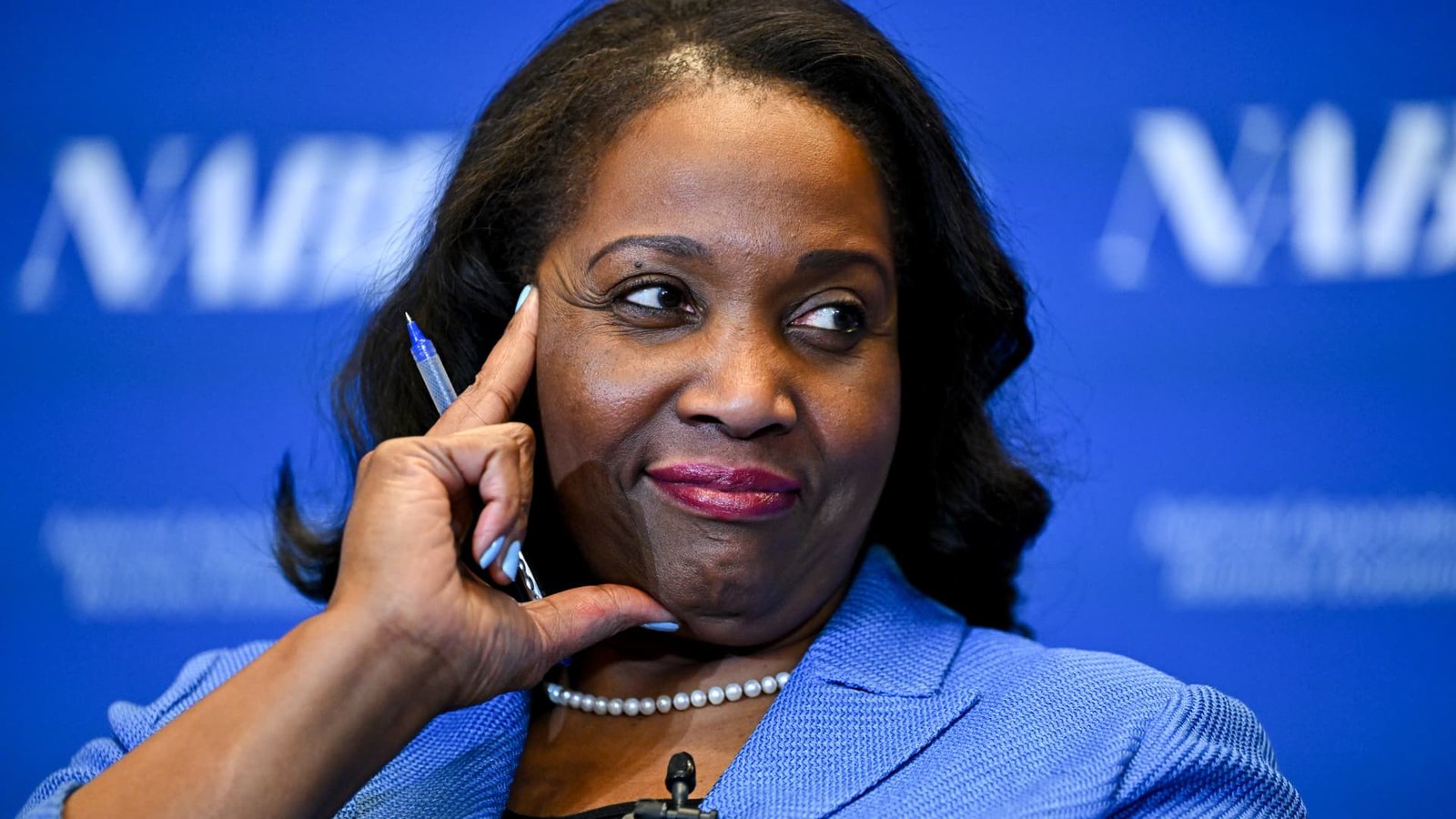
Federal Reserve Governor Lisa Cook incurred more than $1.3 million in legal and security expenses following President Donald Trump’s attempt to fire her in August from the Fed’s board, a new ethics filing revealed Thursday.
The filing showed those expenses were paid by other individuals and organizations.
The Supreme Court is expected to rule within the next several weeks whether Trump has the power to fire Cook for the reasons he cited.
Trump tried to remove Cook from the Fed’s board while alleging that she had committed mortgage fraud, based on claims made by Bill Pulte, director of the Federal Housing Finance Agency.
Cook denies she did anything wrong and sued to block her firing. She has remained on the board pending the outcome of that lawsuit.
“A Supreme Court case is not cheap,” a person familiar with Cook’s situation said about her legal expenditures, speaking anonymously to describe sensitive financial matters.
Cook’s address was publicized in the aftermath of the administration’s accusations against her.
“Being relentlessly and publicly attacked by the president and Pulte required certain measures to be taken for her protection,” the person said.
The Federal Reserve and an attorney for Cook each declined to comment.
Cook’s annual financial disclosure for 2025 filed with the Office of Government Ethics lists nearly $1.2 million in “payment for legal services” from the Democracy Defenders Fund and Contina Impact, two nonprofit organizations.
Contina Impact also provided approximately $144,000 in funds for security services. Cook’s form also mentions other smaller pro bono contributions to her legal and security expenses.
Cook’s attorney, Norm Eisen, is a co-founder of Democracy Defenders Fund.
“Democracy Defenders Fund is proud to be part of the legal defense team on this case as part of our fight to defend the rule of law,” Eisen said.
Contina Impact’s website describes it as providing fiscal sponsorship, a service that enables other entities that don’t have legal nonprofit status to take tax-deductible donations. Contina Impact did not immediately respond to an email seeking comment that was sent through an accounting contact listed on its website.
Pulte is set to become the acting director of the Office of National Intelligence on Friday.
Cook is on leave from Michigan State University while she serves at the Fed.
Her disclosure indicates she received rental income from a home in Ann Arbor, Mich., and another in Cambridge, Mass., that she describes as an investment property.
Federal ethics regulations permit outside payments in cases like Cook’s, where expenses were incurred in the course of their jobs.
Business
Factors complicating the equation

A version of this article first appeared in CNBC’s Inside Wealth newsletter with Robert Frank, a weekly guide to the high-net-worth investor and consumer. Sign up to receive future editions, straight to your inbox.
The blockbuster SpaceX IPO and potential upcoming public offerings for OpenAI and Anthropic could create a tax windfall for the state of California. Yet the revenue boost may fall short of previous tech IPOs – at least relative to the firms’ valuations – given the specific nature and tax treatment of today’s tech compensation.
Following its IPO last week, SpaceX is now valued at $2.5 trillion, minting many of its employees who live and work near its Hawthorne, California, office as millionaires, at least on paper. California-based Anthropic and OpenAI are also expected to go public later this year at valuations that could approach $1 trillion.
The burst of tech wealth has drawn comparison to the 2012 IPO of Menlo Park-based Facebook, which generated $1.3 billion in taxes for the Golden State, per the California Department of Finance’s estimate. Facebook’s valuation at the time was just $104 billion, suggesting the new crop of super-IPOs could theoretically generate billions more.
But the revenue impact may be blunted, due to how these employees’ stock compensation was structured and because tech employees today have more tools at their disposal to mitigate their tax burden, experts and financial advisors told CNBC.
As companies have stayed private for longer and reached sky-high valuations, financial institutions have increasingly catered to equity-rich, cash-poor startup employees with tax strategies that were traditionally only available to founders.
For instance, employees at some startups can get a tax deduction by donating private, pre-IPO stock to a donor-advised fund, according to Richard Lowry of wealth manager Cresset. He said such donations were generally limited to the ultra-wealthy as recently as a decade ago, since few charitable organizations were equipped to accept or manage those assets.
“Historically, the only people who had equity in a private company and were certainly in a position to give it away were millionaire or billionaire founders who already had their own controlled structures, like a private foundation, where they could decide what they accepted,” said Lowry, managing director and head of tax strategy at Cresset. “Now there is a cottage industry around allowing people to avail themselves of this.”
There’s also a timing consideration on the SpaceX windfall.
Tax revenue generated by an IPO largely comes from two sources: ordinary income taxes on employees’ restricted stock units, or RSUs, when they vest and capital gains taxes paid when shareholders sell appreciated stock.
SpaceX uses a unique stock-pay structure that may have pulled forward the tax revenue on the vesting of employees’ shares. At most private companies, RSUs vest after two conditions are met: continued employment with the company and a liquidity event like an IPO or acquisition. This dual-trigger RSU structure leads to a boom in taxable income on IPO day.
Many SpaceX employees, however, have been paying income taxes on their RSUs for years as share vesting was only tied to employment, not a liquidity event.
This stock-pay structure has made it challenging to estimate tax revenue associated with the SpaceX IPO, according to the California Legislative Analyst’s Office.
“Revenue totals will depend more on financial decisions made by employees and investors who hold pre-IPO SpaceX shares and stock options,” the LAO wrote in a statement. “Relative to past IPOs, tax revenues from the SpaceX IPO are likely to be less immediate and more unpredictable.”
The LAO, which advises state lawmakers on budget and fiscal policy, has not published tax revenue estimates for the IPOs of SpaceX, Anthropic or OpenAI. That said, the LAO’s statement to CNBC was cautiously optimistic that the market debuts would pad the state’s coffers.
“Past major tech IPOs have generated significant income tax revenue for the state and these upcoming IPOs certainly have the potential to do the same,” the statement reads.
The California Department of Finance also has not published revenue estimates for the IPOs, citing the risk that companies frequently delay their IPOs in the event of a market downturn. OpenAI and Anthropic, which each filed confidential S-1s in recent weeks, could do the same.
The Department has reason to be conservative as market swings have undermined its revenue forecasts before. It had to revise its revenue estimate from the Facebook IPO from $1.9 billion to $1.3 billion after the social media giant’s share slump.
The Department’s budget report noted another factor that could limit the upside from IPOs: the growing trend of private companies allowing employees to sell stock before going public, reducing the backlog of stock taxed upon IPO.
Employees at SpaceX, Anthropic and OpenAI have had ample opportunity to take some chips off the table well before a public offering. In October, OpenAI finalized a secondary share sale totaling $6.6 billion in which current and former employees could sell their shares at a $500 billion valuation. CNBC previously reported that OpenAI plans to facilitate a tender offer at a $852 billion post-money valuation.
Tender offers have grown in popularity as a way to reward employees and investors as the timeline to exit has grown longer, according to Hamza Shad, insights manager at startup equity management firm Carta.
Gains on these sales are still taxed, but selling earlier pulls that tax revenue forward and makes it less predictable for regulators, he said.
“In the past, when early pre-public liquidity wasn’t as prevalent, the tax revenue would come all at once on the IPO and after,” Shad said. “But now it’s kind of up to each company, whether or not they want to do tender offers, how large they want them to be, how often they want to do them.”
Still, tender offers come with a lot of strings attached, such as a percentage cap on how much equity employees can sell. And wildly lucrative tender offers and secondary sales are largely limited to the “best of the best startups,” according to Michael Ewens, professor of finance at Columbia Business School.
What’s more likely to eat into potential tax revenue is employees choosing not to sell at all but rather to take loans instead, said Will Gornall, associate professor of finance at the University of British Columbia.
By taking a loan against their shares instead of selling them, shareholders save money by paying interest rather than capital gains taxes. This so-called “buy, borrow, die” strategy is employed by SpaceX founder and world’s first trillionaire Elon Musk, who has taken out loans against billions of dollars’ worth of Tesla shares. This strategy also has the benefit of allowing employees to stay invested and benefit from future stock appreciation.
While financial maneuvers to avoid taxes have grown more sophisticated, so, too, have the auditing methods of the California Franchise Tax Board, according to Robert Willens, longtime tax and accounting analyst, who added the agency is notoriously aggressive.
“It really comes down to when the shares are earned. The taxable event is the vesting of the shares, and if you’re a California resident, there’s not much you can do about it,” he said. “I would think that California is looking forward to a really great infusion of funds.”
Of course, IPOs are one-time revenue boosts, and there’s a potential downside to lobbing hefty bills. Ewens told CNBC that he worries a big tax burden may drive these newly wealthy and often entrepreneurial employees away from the state.
“That’s not a point that California should lower its taxes now, but I think it has to keep in mind that taxes have longer-term consequences for people’s entrepreneurial decision-making, and that’s a big wealth driver in the state,” he said.


Is China's 'gaokao' college entry exam too tough?
The number of students taking China's notoriously difficult college entry exam, called the "gaokao," has dropped for a second year...


New York celebrates Knicks with championship parade
The New York Knicks players rode in floats in a ticker-tape parade to celebrate their championship with fans across New...


DR Congo supporters celebrate historic goal in Portugal fan park. #BBCNews
Subscribe to our channel here: https://bbc.in/bbcnews For the latest news download the BBC News app or visit BBC.com/news …


I Lived Another Life In a Coma | It Happened to Me
Keenan was at peak fitness when he collapsed with total organ failure. He woke from a month-long coma having lived...
U.S. Open Thursday leaderboard, tee times: Keep up with Rory McIlroy, Scottie Scheffler and others early at Shinnecock Hills
It’s time for the U.S. Open. The golf world is descending on Shinnecock Hills outside of New York City for...
Regulators back Trump plan to speed power to energy-hungry AI data centers
WASHINGTON (AP) — Federal regulators on Thursday agreed to let large energy users connect more quickly to the nation’s inefficient...


Is the Strait of Hormuz now open?
As the US and Iran signed a memorandum of understanding, ships have begun to go through the Strait of Hormuz,...


Grand Theft Auto VI cover art and pre-order dates revealed. #GTAVI #GrandTheftAuto #Gaming #BBCNews


Beavers solved years of flooding at London tube station
A neighborhood in the UK's capital was plagued by flooding. So, conservationists from the Ealing Beaver Project reintroduced the …


Hunter-gatherers in Siberia died of a plague outbreak 5,500 years ago
Plague swept through groups of hunter-gatherers in southeastern Siberia 5,500 years ago, leaving dozens dead in its wake—with DNA from...
-

 Business5 days ago
How much of Musk’s wealth comes from government help? Virtually all of it
-

 LifestyleNews2 weeks ago
120 minutes of strength training per week may help extend lifespan
-

 Politics7 days ago
What to know about the stabbing that set off fiery riots in Northern Ireland
-

 Video6 days ago
Download fans say what they love about the festival. #DownloadFestival #BBCNews
-

 Video6 days ago
Why SpaceX IPO isn't about space. #SpaceX #ElonMusk #BBCNews
-

 HealthNews6 days ago
The people of Okinawa, Japan only eat until they are about 80 percent full, then stop — and the practice has been linked in multiple peer-reviewed studies to lower rates of cardiovascular disease, slo
-

 TravelNews6 days ago
My Paternal Instinct Should’ve Warned Me About Netflix’s Maternal Instinct
-

 Food6 days ago
Pope Leo’s plane was grounded. Then the King of Spain stepped in to help