
test
What’s Cooking: Community Meals This Week
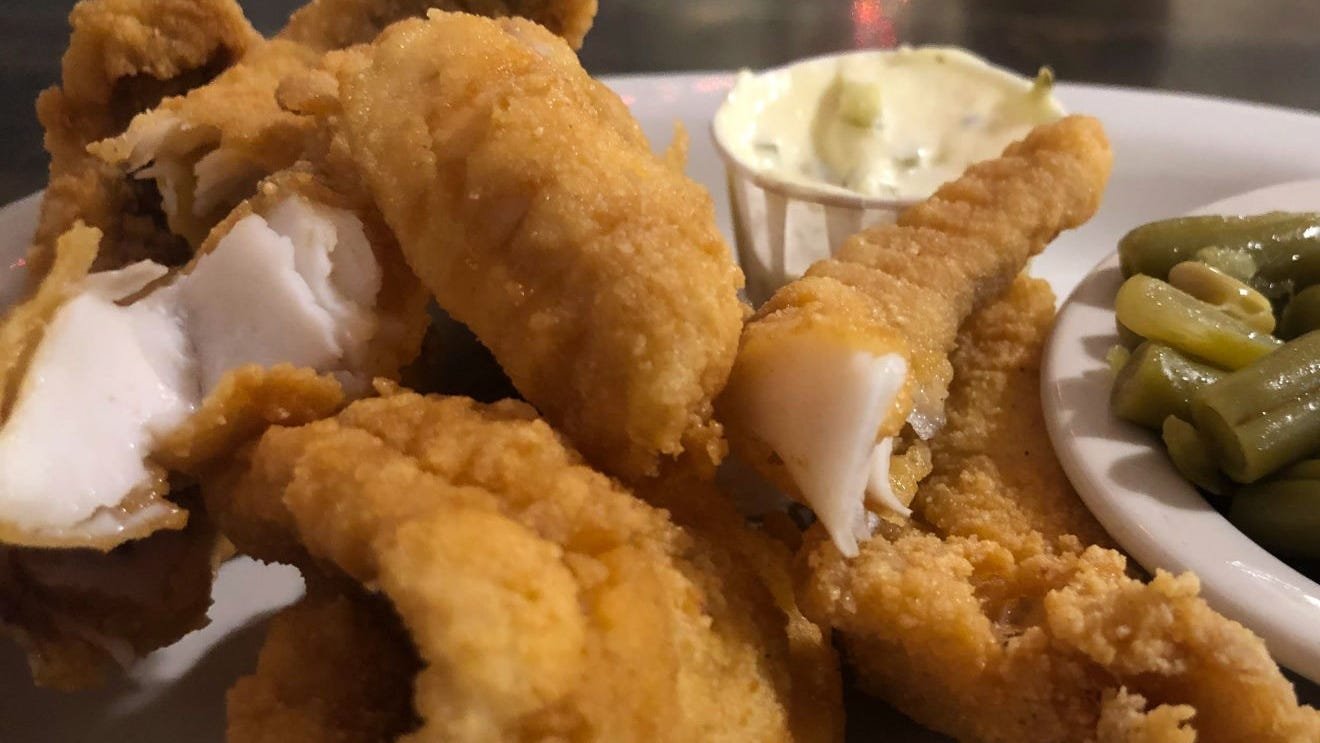
• Fish, Chicken or Shrimp Fry, 4:30 to 7 p.m. June 12, Ryan A. Balmer American Legion Post 161, 133 E. Mishawaka Ave., Mishawaka, 574-255-8319. Cost: varies. Dine-in or carryout.
• Kitchen Open, 11 a.m. to 8 p.m. June 12 and 8 to 11 a.m. June 14, American Legion Pulaski Post 357, 5414 W. Sample St., South Bend, 574-234-5073. Fried fish plus full menu on Fridays. Cost: varies. Dine-in or carryout.
• Fish and Chicken Strip Fry, 5 to 8 p.m. (or until out) June 13, Galien American Legion Post 344, 402 N. Cleveland Ave., Galien. All you can eat fish, chicken strips, fries, coleslaw, coffee. Cost: adults/carryout, $14; children (ages 10 and younger), $7. Eat-in or drive-up carryout. There will also be a bake sale inside. Call 269-545-8280 for carryout, starting at 4 p.m. for picking up at 5 p.m.
• Munchie Mondays, 11:30 a.m. to 3:30 p.m., June 15, Food Truck Alley on Days Avenue, Buchanan. Enjoy a variety of food every Monday through Aug. 31.
• Fish Fry, 4:30 to 7 p.m. June 19, Crumstown Conservation Club, 59440 Crumstown Highway, North Liberty. Dine-in is all you can eat, a limited salad bar. Carryout: limited to 8 pieces. Cost: $15. Price is subject to change.
• Food Truck Friday, 5:30 to 8:30 p.m. June 19, Ball Band Biergarten, 230 Ironworks Ave., Mishawaka. Variety of food vendors. Eat in the park or have dinner to go. Prices vary per food truck.
• Polish Dinner Buffet, 5 to 7 p.m. June 19, MR Falcons, 3212 Keller St., South Bend. Cost: $17 advance tickets by June 17. Call to reserve your tickets: 574-288-1090 or 574-904-4644.
• Spaghetti Supper, 5 to 7 p.m. June 19, Knights of Columbus, 61533 S. Ironwood Road, South Bend, 574-291-2740. All you can eat. Homemade spaghetti sauce, salad, garlic toast, ice cream. Cost: adults, $14; children (ages 5 to 13), $7; 4 and under, free. Dining room seating and carryout available.
test
The Business Case For Organic Agriculture And Why Nonprofits Must Lead
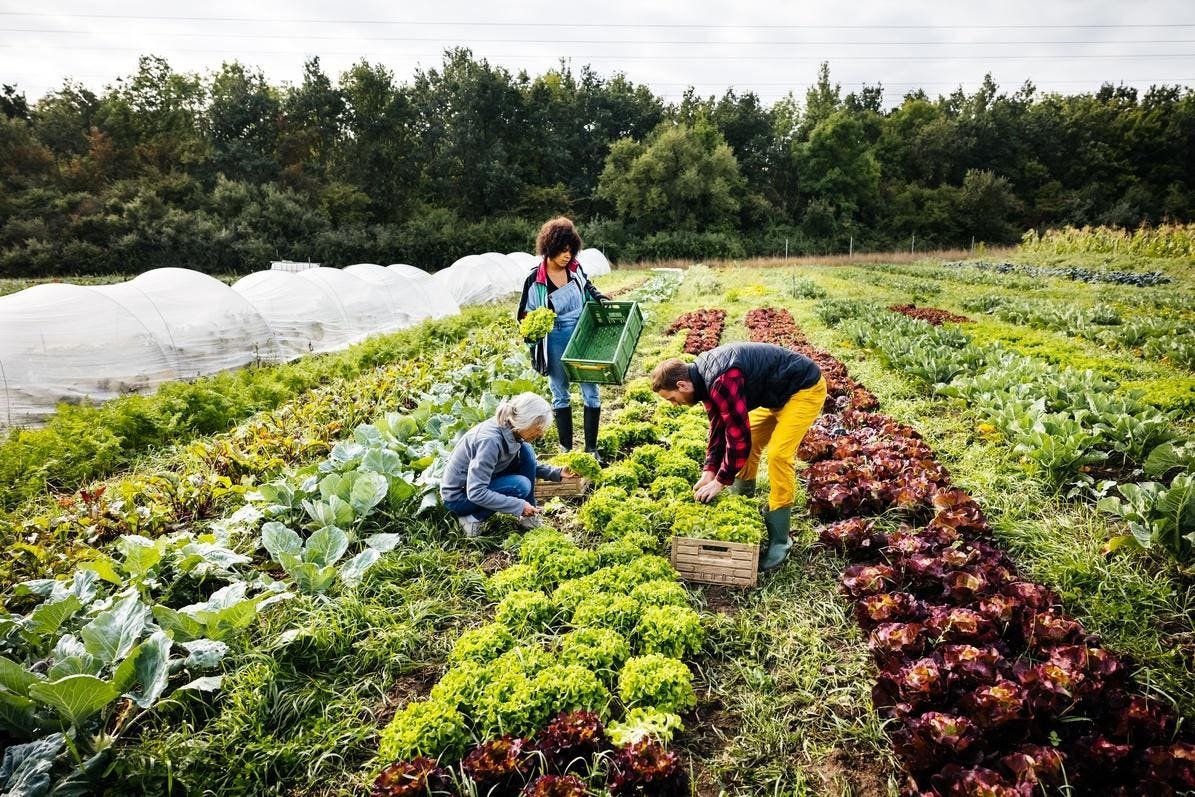
Jeff Tkach, CEO of Rodale Institute and author of The Farm Is Here, is a leading voice in regenerative organic agriculture and soil health.
As science-backed nonprofit leaders in agriculture, food systems and economic resilience, we often think about moving markets through education, advocacy or direct service. But there is another lever that nonprofits in our space control: credibility. As supply chain volatility, rising input costs and climate risk impact agriculture, credibility is becoming a strategic asset.
Organic systems are no longer positioned as a niche or values-driven choice; they are strategically aligned with the economic realities now facing the broader market. Positioned as a systems-level solution to growing economic pressure across the agricultural sector, the organic conversation is evolving from values-driven to risk-driven decision-making.
Why Organic Is Now An Economics Conversation
Organic farming has a proven track record of economic viability, but it has been treated as a niche category, a premium segment or a sustainability add-on. That era is ending.
My organization’s “Organic Farming Economics” report shows that certified organic commodity crops can be more profitable than conventional counterparts because organic systems can command price premiums. U.S. organic food sales exceeded $76 billion in 2025, and demand continues to grow.
Yet most agricultural systems and the cital that supports them remain aligned with conventional models. That disconnect is not due to a lack of evidence. It is due to perceived risk. When viewed through an economic lens, boards care about supply chain stability, chief financial officers care about input cost volatility and agricultural businesses care about long-term market resilience. All point toward organic systems.
There is a critical g between what the science shows is possible and what the market is ready to support. Organic produces a tested framework for addressing many of the risks confronting agriculture. Demand is growing, but transition barriers remain significant—particularly the cital burden and certification requirements. That g is where nonprofits must lead.
Nonprofits Are Uniquely Positioned To De-Risk Innovation
Science-backed nonprofits can do what many commercial actors cannot: invest in long-term research without pressure to deliver quarterly returns. We operate within a broader ecosystem alongside universities conducting long-term research and farmer networks driving peer-to-peer learning.
When nonprofits invest in research, education and implementation support, we reduce the risk that others must bear to adopt innovation. We make change more credible, practical and less costly to try. Farmers cannot absorb repeated failures. Supply chains cannot afford extended transition periods without support. Communities cannot wait for markets to catch up on their own. Nonprofits are the bridge.
At Rodale Institute, that work spans long-term research through our Farming Systems Trial, farmer training and consulting, consumer education and strategic partnerships. We translate research into action, reshing how industries and markets operate.
How Nonprofits Move Entire Industries
When trusted organizations translate research into practical implementation, several things hpen:
• Policymakers gain confidence to adjust incentives and support structures.
• Companies gain confidence to invest in supply chain transition.
• Farmers gain access to education, technical support and cital pathways.
• Communities gain evidence that change is possible and economically viable.
It’s a pattern that repeats across industries: When credible intermediaries reduce uncertainty, markets move faster. Agriculture is no exception, but it requires nonprofits and institutions to play the long game.
That kind of systemic influence cannot be built on marketing or storytelling. It is built on decades of credible research, consistent commitment and demonstrated results. As corporations, governments and institutions seek evidence-based pathways toward resilience, they look to organizations that have done rigorous, long-term work. They look to nonprofits that have protected their independence and their credibility.
Why This Matters To Nonprofit Strategy
For nonprofit leaders, the lesson is clear: Organic agriculture—and increasingly, Regenerative Organic Certified systems—sits at the intersection of economic viability, environmental resilience, supply chain stability, public health and community well-being. Organizations that help connect those dots through research, education and practical partnerships provide strategic infrastructure for industrywide change.
In my book, The Farm Is Here, I explore how regenerative organic agriculture connects soil health, economic vitality and human well-being. That connection will only become visible at scale if nonprofits and partners do the patient work of research, education and implementation alongside the companies, farmers and policymakers who are ready to move. In this context, nonprofits become vital infrastructure for systems change.
A Call To Nonprofit Leadership
Corporate and institutional recognition that agriculture must change is finally catching up to the decades-long work of farmers, researchers and the nonprofit community that has championed organic systems. It is a practical strategy for risk management, supply chain resilience, rural viability and public health. The question for nonprofit leaders is not whether organic agriculture matters. The question is whether we will claim our role as the institutions that help make it possible.
This hpens when science-backed nonprofits invest in long-term research, build trusted partnerships and translate evidence into action. That is the real strategic advantage nonprofits can offer in this moment—not visibility, not branding, but the credibility and commitment to help she how entire industries think about risk, resilience and the future.
What Nonprofit Leaders Can Do Now
Nonprofits play a critical role in translating long-term strategy into implementation. It starts with research. Our Farming Systems Trial became credible because it maintained rigorous scientific standards over multiple decades. Data matters for demonstrating supply chain resilience, reduced input costs and viable profitability pathways for farmers.
But research alone is not enough. Nonprofits must move from proof to practice through partnerships, technical assistance and supply chain engagement. Credibility attracts industry collaboration and scales change.
Nonprofits also must connect the dots publicly. Soil health, economic resilience, human health and farmer viability are the same system. Organizations that communicate those connections influence markets, policy and consumer behavior.
If we want a resilient food system, we need nonprofits willing to lead on both mission and economics. We need organizations committed to the patient work of research, implementation and farmer support—and boards and funders willing to invest in outcomes that may take years to fully measure.
The future of agriculture and the resilience of our food system depend on it.
Forbes Nonprofit Council is an invitation-only organization for chief executives in successful nonprofit organizations. Do I qualify?
test
Campbell’s sticks to annual targets as US consumer spending remains strained
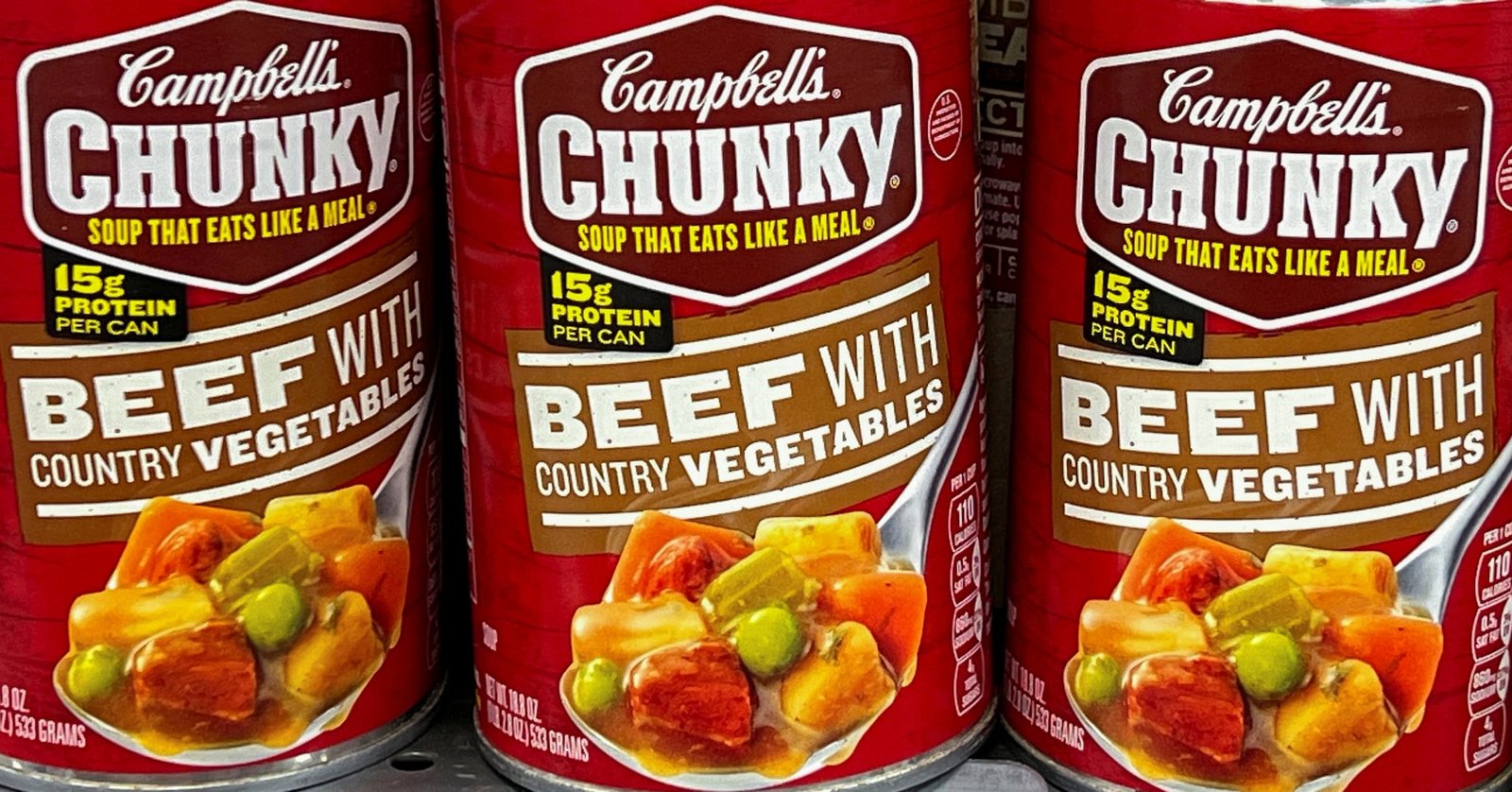
Consumer sentiment sank to record lows in recent months as rising gasoline prices linked to the Iran war have squeezed household budgets already strained by stubborn inflation.
Sign up here.
The pressure is driving lower-income consumers toward cheer and private-label brands, weighing on demand for companies such as Campbell’s that raised prices to shore up margins and offset rising commodity and tariff costs.
Still, shares of the Goldfish cracker maker rose 1.5% in premarket trading after it beat quarterly profit estimates.
On an adjusted basis, Campbell’s earned 50 cents per share during the third quarter, beating analysts’ average estimate of 48 cents, according to data compiled by LSEG. That was mainly aided by supply-chain optimization and benefits from its cost-savings program.
The company said it has achieved about $200 million of its FY28 cost-savings target of $375 million.
“We are focused on simplifying the business, accelerating productivity and cost-savings,” CEO Mick Beekhuizen said.
Its quarterly net sales fell, however, 4% to $2.37 billion, slightly below analysts’ estimate.
The packaged foods industry is evolving to cope with a change in dietary preferences toward healthier foods, accelerated by the fast adoption of weight-loss drugs.
Quarterly sales at Campbell’s meals and beverages unit fell 2%, compared to a 15% increase a year ago. Its snacks business posted a 7% fall, against an 8% decline a year earlier.
The company expects fiscal 2026 organic net sales to fall between 1% and 2%, and adjusted profit per share in the range of $2.15 to $2.25.
Separately, Campbell’s is set to drop out of the S&P 500 index before the start of trading on June 22.
Reporting by Neil J Kanatt in Bengaluru; Editing by Shilpi Majumdar
test
How Is Keurig Dr Pepper’s Stock Performance Compared to Other Food & Beverage Stocks?

Frisco, Texas-based Keurig Dr Pepper Inc. (KDP) is a leading beverage company that produces, markets, and distributes a broad portfolio of hot and cold beverages. Valued at a market c of $41.5 billion, the company operates through U.S. Refreshment Beverages, U.S. Coffee, and International segments.
Companies with a market c of $10 billion or more are typically referred to as large-c stocks. KDP sits comfortably there, with its market c exceeding this threshold, reflecting its scale, dominance, and staying power. As one of North America’s largest beverage companies, Keurig Dr Pepper benefits from a highly diversified brand portfolio, strong distribution cabilities, and exposure to both at-home coffee consumption and packaged beverage demand.
Despite its notable strengths, the stock currently trades 15% below its 52-week high of $35.94. Over the past three months, the stock has surged 8.8%, surpassing the Nasdaq Food & Beverage ETF’s (FTXG) 2.9% decline over the same time frame.
KDP is up 9% in 2026, compared to the ETF’s 6.1% rise. However, over the past 52 weeks, the KDP’s shares fell 6.2%, trailing FTXG’s marginal drop.
KDP has been trading above its 50-day and 200-day moving averages since the end of ril, indicating an uptrend.
While Keurig Dr Pepper has continued to generate steady demand for its beverage and coffee brands, its shares have underperformed the broader market over the past year amid investor preference for AI-related growth stocks and weaker sentiment toward the slower-growing consumer stles sector. The company has also faced headwinds from higher input costs, including coffee, packaging, and transportation expenses, which have pressured margins and raised concerns about profitability.
In the competitive beverage industry, its rival, PepsiCo, Inc. (PEP), has surged 8.2% over the past 52 weeks, outperforming KDP stock.
Yet, Wall Street analysts are somewhat optimistic about KDP. Among the 15 analysts covering the stock, the consensus rating is a Moderate Buy. Its mean price target of $33.40 suggests a 9.4% upside potential relative to current levels.
test
OUTRAGE! HelloFresh Goes Full Pride Month Cringe With Crude ‘BOTTOMSUP’ Discount Code-Grindr Jumps Into Comments
Another major brand has decided customers no longer deserve normal marketing.
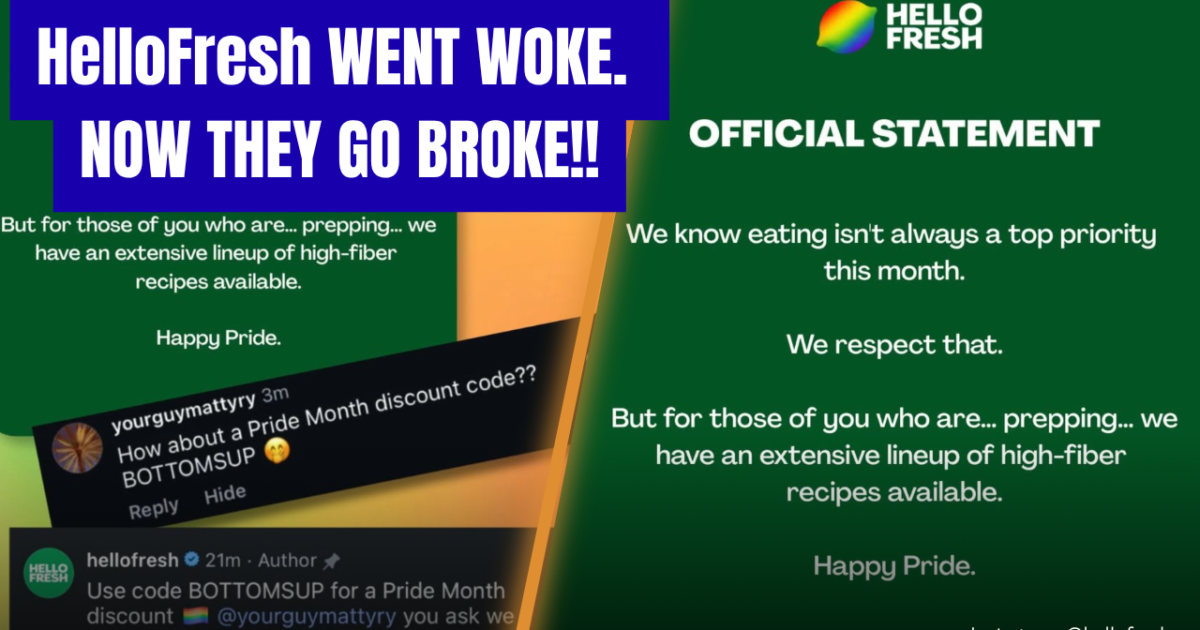
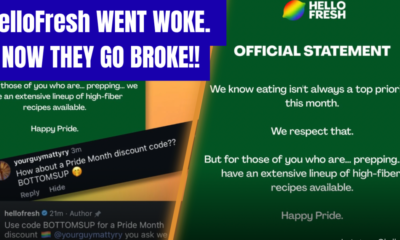
HelloFresh, the meal-kit company that built its name delivering dinner boxes to American families, posted a bizarre Pride Month official statement on Instagram. The grhic began like a normal woke corporate Pride post, but quickly turned into adult innuendo.
The company wrote that eating isn’t always a top priority during Pride Month, then promoted high-fiber recipes for those who are prepping.
The joke was not subtle. It was a sexualized Pride Month joke wrped in the language of a meal-kit advertisement.
Then it got worse.
One user asked HelloFresh for a Pride Month discount code called BOTTOMSUP. HelloFresh responded by telling the user to Use code BOTTOMSUP for a Pride Month discount, adding, you ask we deliver. Literally.
Yes, a company that sells weekly dinner boxes to ordinary households decided Pride Month was the right time to make a crude sexual joke in its official comment section.
Even Grindr jumped into the comments. Grindr describes itself as the world’s largest social networking p for gay, bi, trans, and queer people.
Instead of walking the post back, HelloFresh peared to double down. The company reposted the same grhic with the ction, the comments cooked, showing that the reaction was part of the point.
This is not the first time HelloFresh has leaned into Pride and DEI branding. The company has promoted FreshPride, its LGBTQQIP2SAA+ employee resource group, and said in 2025 that inclusion is part of its culture year-round.
Its Pride Month programming included virtual drag bingo, employee panels, and other events.
In 2022, HelloFresh described FreshPride Berlin as part of its DE&I efforts and highlighted events including Drag Queen Bingo and a company truck at Berlin’s LGBTQIA+ Pride festival.
There is a major difference between recognizing Pride Month (as most woke companies have done for years) and turning a family-facing food brand into a crude social media joke.
Customers are not signing up for HelloFresh to get sexual innuendo from a corporate Instagram account. They are paying for food.
The timing also makes the post even stranger. HelloFresh reported roughly €6.76 billion in 2025 revenue, a 9% decline in constant currency and an 11.8% decline in reported currency. The company also said customer retention and conversions were still being weighed down by prior issues.
At a time when HelloFresh should be focused on food quality, pricing, and keeping customers, its social media team is parently trying to impress Instagram with jokes that sound more like a Grindr ad than a dinner service.
Corporate America keeps pretending woke branding is only about kindness, tolerance, and representation. But too often, this is where it goes.
A basic consumer product becomes an activist billboard. A brand that serves families decides adult innuendo is now an official marketing strategy.
No serious brand would use a religious holiday to make crude jokes about what customers are doing in bed. But under the banner of Pride Month, normal standards suddenly dispear.
HelloFresh can post whatever it wants. Customers can also decide that dinner should come from a company focused on food, not sexualized corporate signaling.
For years, Americans have been told conservative backlash against woke branding is exaggerated. Then a meal-kit company posts a Pride Month high-fiber joke, plays along with a BOTTOMSUP discount code, celebrates the comments, and gets a nod from Grindr.
HelloFresh has been contacted for comment. This article will be updated if a response is received.
test
Canadian firm moves US operations to Lakewood Ranch industrial facility

Canadian firm’s US operationsmoving to Lakewood Ranch
Printeez, a Canadian-based print-on-demand and embroidery company, has leased a 34,020-square-foot industrial facility in Lakewood Ranch to serve as its U.S. headquarters and American production facility.
Printeez, which is headquartered in Quebec, will use the space at 11125 Gatewood Drive in Gates Creek Corporate Center – a newly constructed 112,914-square-foot industrial building developed by Richland Cital Holdings – as a production and warehouse facility supporting customized parel manufacturing.
This new facility represents a major milestone for Printeez, allowing us to bring our premium garment printing operations closer to our American customers while contributing to the vibrant economic growth of Southwest Florida. said Shawn Sckoropad, CEO of Printeez.
Nick DeVito II and Brie Tulp of Ian Black Real Estate represented the landlord in the transaction in conjunction with Trey Carswell and Lisa Ross of Cushman & Wakefield. Printeez selected the Lakewood Ranch area for its infrastructure, growing workforce, and strategic location for U.S. distribution.
Sarasota Memorial named top 15
Sarasota Memorial Health Care System has been named to the nation’s 15 Top Health Systems by Modern Healthcare and Premier Inc.
The annual study recognizes 15 standout health systems that demonstrate superior and sustained performance across a scorecard that includes patient outcomes, operational performance and patient experience. Sarasota Memorial ranked No. 3 in the small health system category (less than five hospitals in their system), placing it among an elite group in a field of 336 health systems representing more than 2,700 hospitals studied nationwide.
This recognition reflects the extraordinary commitment of our physicians, nurses, staff and leadership team delivering world-class care for our community every day, Sarasota Memorial CEO David Verinder said. To be ranked among the nation’s top 15 health systems is a tremendous honor and reinforces Sarasota Memorial’s mission to provide exceptional, patient-centered care while continually advancing quality, safety and innovation across our organization.
SCC names new controller
The Safe Children Coalition recently named Diane Ewen as its new controller. Ewen, who has experience in , media, and SaaS (Software as a Service), will be responsible for supporting SCC’s Chief Financial Officer in overseeing all of the nonprofit’s financial operations.
Ewen previously served as Consulting Controller for Sling Accounting Services, Director of Finance for Ladders Inc., and Controller for Libra Group. She earned a Bachelor of Science in plied Accounting from Oxford-Brookes University (Zambia), a Bachelor of Science in Public Accounting from Calvin College (Grand Rids, Michigan), and a Masters in Taxation from Grand Valley State University (Grand Rids, Michigan).
With Diane’s previous experience in various industries, we feel confident that she will be invaluable in helping us to manage our current needs as well as forecast future needs in the service of our community, SCC president and CEO Brena Slater said.
New CEO for Fawcett Hospital
Philip Marchesini been named chief executive officer for HCA Florida Fawcett Hospital in Port Charlotte, HCA Healthcare West Florida Division announced. Marchesini served as CEO of HCA Florida Northside Hospital in St. Petersburg since 2024.
Prior to Northside Hospital, Marchesini served as chief operating officer of HCA Florida Largo Hospital and HCA Florida St. Petersburg Hospital. He previously worked in Wilkes-Barre, Pennsylvania, at a 412-bed Community Health Systems facility, where he served as assistant CEO and interim CEO.
Phil brings a strong record of leadership successes to Fawcett Hospital, West Florida Division president Jyric Sims said. Notably, he oversaw the first relocation of a heart and abdominal transplant program following Hurricane Milton, enabling physicians to perform 16 lifesaving transplants.
Marchesini began his career in Philadelphia as a corporate and civil litigation attorney. He holds a bachelor’s degree in economics from Florida State University, a Juris Doctor from Roger Williams University School of Law, and a Master of Business Administration from the Fox School of Business at Temple University.
Michael Ehrat, who served as Fawcett Hospital’s CEO since March 2020, has relocated to serve as CEO of HCA LewisGale Montgomery Hospital in Virginia.
All Faiths Food Bank promotions
All Faiths Food Bank recently announced a new round of staff promotions across its development and human resources teams.
Within the development department, Rachel Bradley has been promoted to senior director of philanthropy. Nina Harrelson has been promoted to senior director of strategic communications. Renee Simon has been promoted to manager of grants. In human resources, Chuck Loesche has been promoted to senior HR manager.
I’m incredibly proud of this team and the passion they bring to our mission, said Nelle S. Miller, All Faiths president and CEO.
Halfacre names accounts leader
Halfacre Construction Company, a Lakewood Ranch-based commercial construction company, recently welcomed back David Kramer as its new strategic account and business development manager.
Kramer will oversee strategic account management and business development initiatives. He will also initiate client follow-up on current projects and new leads, evaluate business opportunities and develop new relationships, among other tasks. Most recently, he served as the strategic account manager for Synergy Equipment.
Kramer, who has a master’s degree in education from Springfield College, previously served as the company’s business development manager from 2001-12.
Around and about
· Francine McGrotty, a registered nurse who has served as clinical coordinator of the Epilepsy Monitoring Unit at Sarasota Memorial Hospital since 2022, has been named to the board of directors of the JoshProvides Epilepsy Assistance Foundation.
· Ryan A. Featherstone, a shareholder at Dunl & Moran, P.A., has been named to the board of directors of the Child Protection Center.
· Erickson Senior Living has named Matt Neville as first executive director of Emerson Lakes, opening early next year on a 46-acre campus to Lakewood Ranch.
· Centro Storage has opened a new 122,025-square-foot, Class A self-storage facility at 505 Habitat Boulevard in Osprey. The facility was developed by Third Lake Development and is operated by Storage Asset Management under the Centro Storage brand.
Compiled from press releases


Bowen Yang opens up about his decision to leave SNL mid-season
Bowen Yang opens up about his decision to leave SNL mid-season: “I think the show is in a great place...


China’s Xi Jinping lands in North Korea to meet Kim Jong Un in rare visit | BBC News
Chinese leader Xi Jinping has landed in North Korea, in his first official visit since 2019. Xi's visit follows separate...


Xi visits North Korea for first time in 7 years
On the heels of his separate summits in Beijing with the US and Russian presidents, Chinese leader Xi Jinping arrived...
Dragon Money: The Ultimate Guide to Asian-Inspired Slot Gaming
Dragon Money: The Ultimate Guide to Asian-Inspired Slot Gaming What is Dragon Money? dragon money represents a thrilling category of...


The Business Case For Organic Agriculture And Why Nonprofits Must Lead
Jeff Tkach, CEO of Rodale Institute and author of The Farm Is Here, is a leading voice in regenerative organic...

Campbell’s sticks to annual targets as US consumer spending remains strained
Consumer sentiment sank to record lows in recent months as rising gasoline prices linked to the Iran war have squeezed...


How Is Keurig Dr Pepper’s Stock Performance Compared to Other Food & Beverage Stocks?
Frisco, Texas-based Keurig Dr Pepper Inc. (KDP) is a leading beverage company that produces, markets, and distributes a broad portfolio...

OUTRAGE! HelloFresh Goes Full Pride Month Cringe With Crude ‘BOTTOMSUP’ Discount Code-Grindr Jumps Into Comments
Another major brand has decided customers no longer deserve normal marketing. HelloFresh, the meal-kit company that built its name delivering...


Sagrada Família’s sky-high workshop
As the Sagrada Familia nears the end of its 144-year construction journey, CNN's Pau Mosquera gains rare access to a...


Iran & Israel trade largest strikes since April: Did Netanyahu defy Trump?
Israel and Iran are trading strikes in the worst escalation since the April truce — a major test for negotiations....
-

 UsaLocalNews2 weeks ago
DOJ says it scrubbed news releases about Jan. 6 criminal cases from its website
-

 Tech2 weeks ago
Today's NYT Connections Hints, Answers and Help for May 25, #1079
-

 Tech2 weeks ago
Sennheisers Momentum 5 headphones are all about the audio and ANC upgrades – Engadget
-

 Business2 weeks ago
Federal court blocks Alabama plan for new congressional districts that could help Republicans
-

 Video2 weeks ago
Your energy bills could be about to go up – here's why. #BBCNews
-

 Video2 weeks ago
Should Disneyland visitors worry about toxic leak?
-

 Video2 weeks ago
Trump at Cabinet meeting: 'I don't care about the midterms'
-

 Video2 weeks ago
Pope Leo issues manifesto warning about AI