
Politics
US Navy attacks tanker with 24 Indian crew, all rescued

A fire erupted on a Palau-flagged tanker with a crew of 24 Indians when it was attacked by the US Navy off the coast of Oman on Monday, and all crew members of the vessel sanctioned by the US were later evacuated to safety by the Oman Air Force.
The fire was reported by the crew of MT Marivex, which was not carrying any cargo, at 1.30 pm, Opesh Kumar Sharma, director in the shipping ministry, told a media briefing. The vessel was well out of the Strait of Hormuz, and well clear to the south, he said, adding that all the crew members were safe.
Several hours later, the crew members were evacuated by a helicopter of the Oman Air Force. The Indian embassy in Muscat thanked Omani authorities for rescuing all 24 Indian crew members in a social media post.
An audio recording of a SOS message sent by the crew of Marivex featured a crew member saying that the vessel was on fire after a US Navy attack by missile on our engine room.
People familiar with the matter said on condition of anonymity Marivex had been black-listed and sanctioned by the Office of Foreign Assets Control (OFAC), the financial intelligence and enforcement agency of the US treasury department. OFAC is the body that acts against vessels involved in violating US sanctions on the sale of Iranian and Russian oil.
The vessel is not Indian-owned. Over the last few days, Marivex made four attempts to evade the US blockade of Iranian ports, one of the people said. On three occasions, the vessel turned away after repeated warnings by the US Navy.
The people said Marivex made a fourth attempt to get past the US blockade by using Oman’s territorial waters on Monday. The vessel switched off its signal devices so that it could go undetected. This pattern made it clear the vessel’s intentions were not above board, they said.
The shipping ministry coordinated with the external affairs ministry, the Indian mission in Oman, the defence ministry and Indian Navy to ensure the safety of the crew members.
The Forward Seamen’s Union of India, one of the country’s oldest organisations representing seafarers, said in a social media post that the attack on a vessel carrying 24 Indian seafarers…is a matter of serious concern. It added, FSUI urges swift and coordinated action to ensure the safety of the crew, provide support to their families, and uphold the security of seafarers at sea.
Oman is located adjacent to the Strait of Hormuz, which has been blocked by Iran since the start of a conflict with Israel and the US in February. The attack on Marivex came against the backdrop of a fresh flare-up in hostilities between Israel and Iran since Sunday.
Ten Indians have died in West Asia since the start of the conflict, including three seafarers who were killed in attacks on merchant vessels in the early days of the hostilities.
Politics
IAEA chief says Iran-US nuclear talks in complicated phase
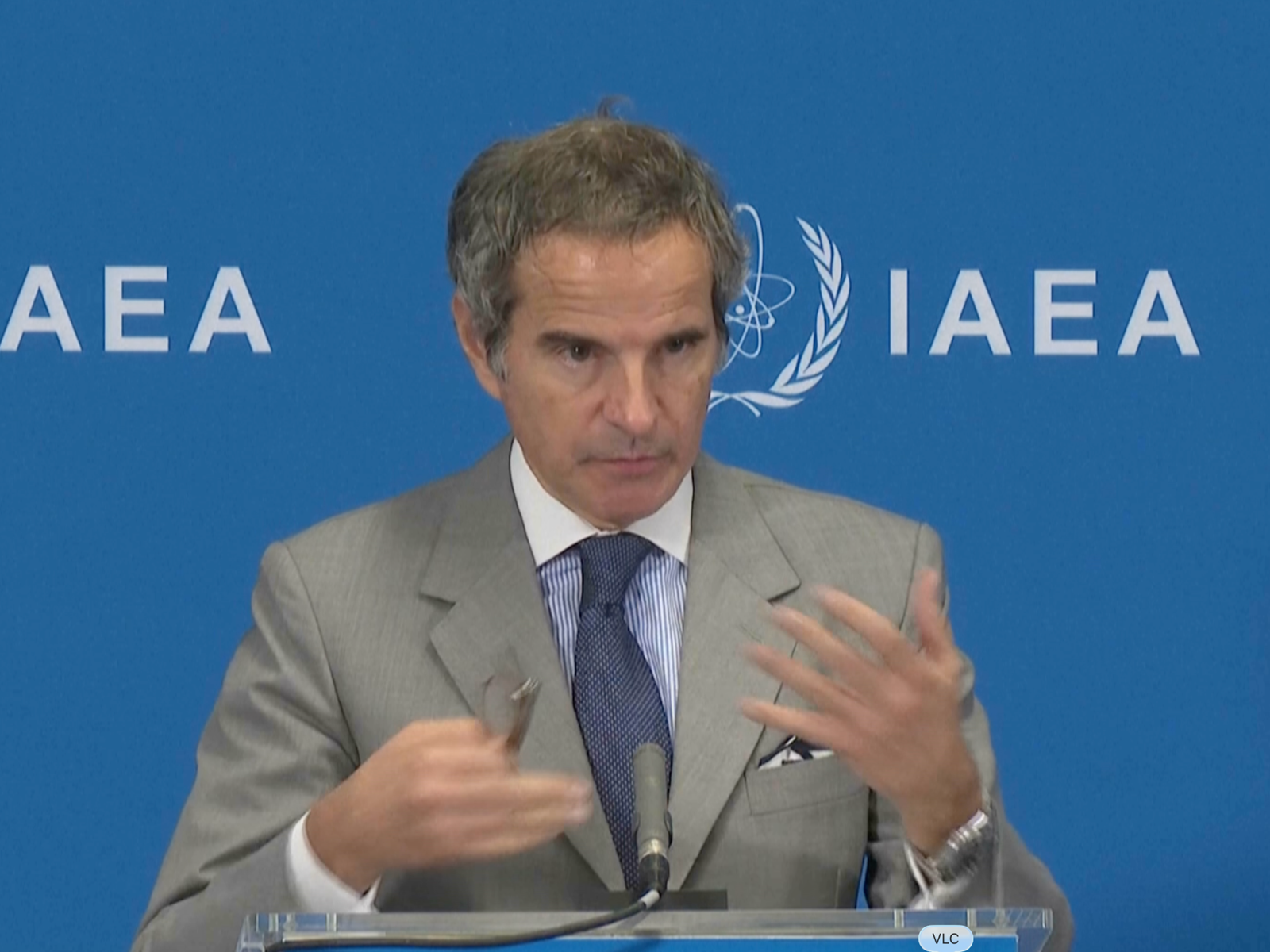
IAEA chief Rafael Grossi said Iran-US nuclear talks were in a ‘complicated phase’ and dialogue with Iran ‘broken’ as Iran and Israel traded fire on Monday, the worst escalation since a ceasefire was reached in ril.
Published On 8 Jun 2026
Politics
Environmentalists welcome retention of term Natural Conservation Zone in NCR Regional Plan 2041

New Delhi, Environmentalists have welcomed the retention of ecological safeguards in the NCR Regional Plan 2041, which will soon replace the 2021 plan and provide a development plan for the National Cital Region.
Earlier, a draft of the 2041 plan, released in 2022, replaced the term “Natural Conservation Zone” – mentioned in the 2021 plan – with “Natural Zone”.
Environmentalists said the change meant that conservation was no longer important in the NCR Regional Plan, putting the Aravallis, forest areas, and all water bodies in the region at risk. However, environmentalists say, the latest agenda for the National Cital Region Planning Board’s meeting, to be held on June 16, states, “The concept of ‘Natural Conservation Zone’ of NCR Regional Plan 2021 will be retained in the new NCR Plan 2041.”
In a statement, Neelam Ahluwalia, co-founder of Aravalli Bachao Citizens Movement, said that it was a “huge relief” for people who had opposed the change in terminology.
She said to oppose the new term’s introduction, several ground protests were organised and people wrote letters to different authorities.
“In all the objection letters… it was suggested that the term NCZ used in 2021 Regional Plan be retained in new Regional Plan 2041, and not be replaced with ‘Natural Zones’… [A]reas categorised as Natural Zones in Draft Regional NCR Plan 2041 do not require mandatory conservation like NCZ areas which the states are bound to conserve as the current NCR Regional Plan 2021 restricts any construction to only 0.5% of the total natural conservation area,” she added.
Dr Rajendra Singh, a water and Aravalli conservationist, said in a statement that the term natural zone in the 2022 draft plan comprised natural features such as mountains, hills, rivers, water bodies, and forests that were notified for conservation under central or state laws, and recognised as such in land records.
“This was a very harsh restriction as it would have excluded a majority of the forests and Aravallis and even rivers, flood plains, and waterbodies in the NCR – as very few of them met both the criteria proposed – of notification and presence in revenue records,” Singh added.
In the NCR Regional Plan 2021, the major natural features, identified as environmentally sensitive areas are the extension of Aravalli ridge in Rajasthan, Haryana and Delhi, forest areas, the rivers and tributaries of Yamuna, Ganga, Kali, Hindon and Sahibi, sanctuaries, have been demarcated as NCZ.
It also includes major lakes and water bodies such as Badkal lake, Suraj Kund and Damdama in Haryana Sub-region and Siliserh lake in Rajasthan, etc.
This article was generated from an automated news agency feed without modifications to text.
Politics
Keir Starmer preparing to announce social media limits for children

Politics
Election Jersey 2026

Politics
How Mexican cartels turned South Africas farms into meth production hubs
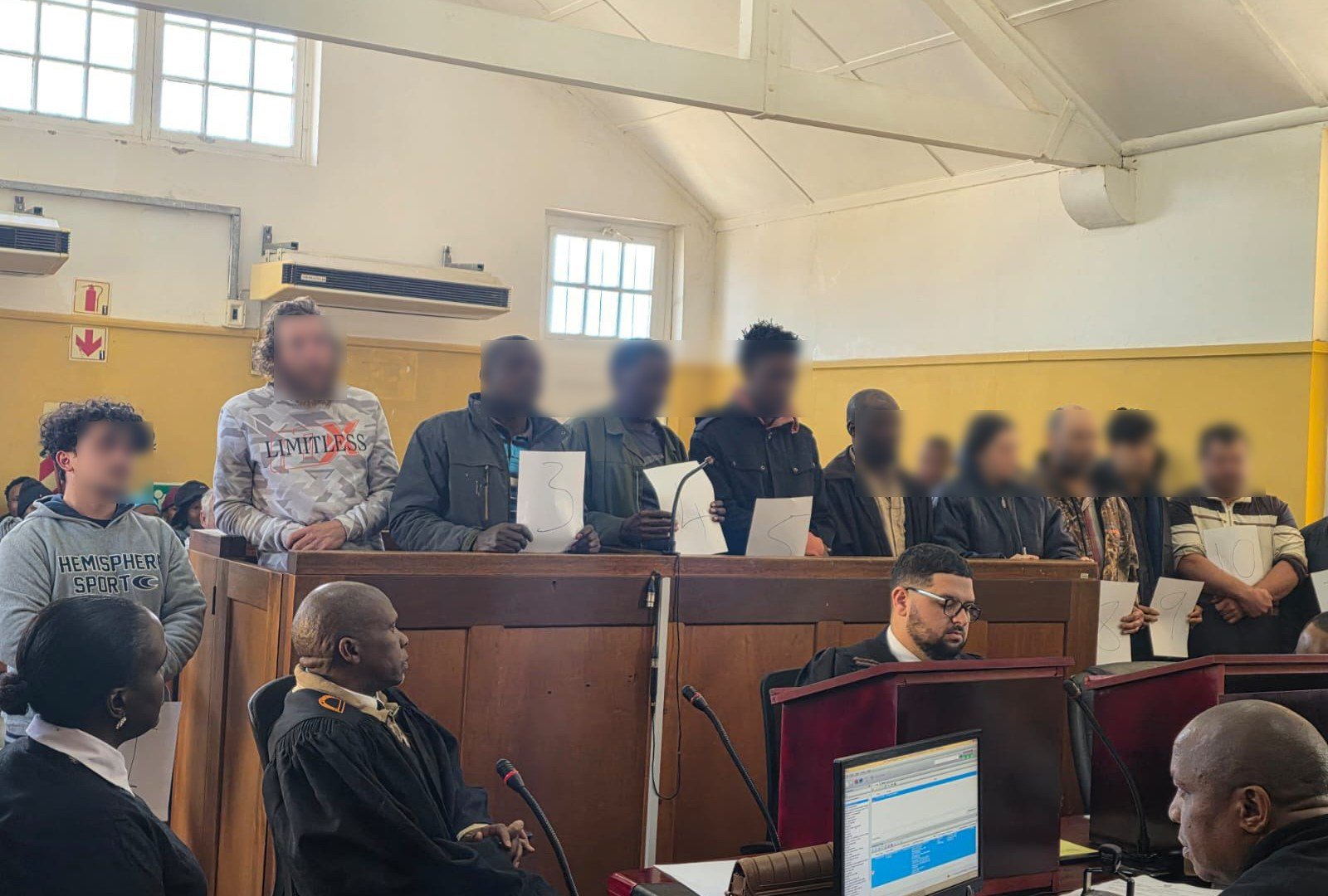
Johannesburg, South Africa – In the quiet mining town of Swartruggens, a small courthouse is preparing to decide whether five Mexicans accused of a major illegal drug operation will be granted bail or remain in custody.
Their arrests followed a raid on a remote farm in North West province, where police said they uncovered a large methamphetamine laboratory worth about one billion rand ($60m).
The case is one of several pointing to a pattern taking she in South Africa’s rural interior.
The Swartruggens laboratory was not an isolated discovery.
It was one of four major meth sites linked to Mexican criminals uncovered in South Africa in just two years, a pattern that has unsettled investigators and organised crime experts.
In 2024, police dismantled a large meth facility worth about $105–110 million on a farm near Groblersdal in Limpopo. Later that year, another laboratory worth roughly $5–6 million was discovered near Tshwane, followed by arrests last year in Mpumalanga.
Then came Swartruggens.
When police moved in on the North West farm in May, they found 481 kilos of methamphetamine, containers of chemicals and firearms. Among those arrested were Mexican nationals Fabian Astorga, Jesus Alonso Medina Astorga, Luis Alberto Ramirez Rios, Jose Andres Medina and Jacquelin Lopez Madrid, alongside co-accused South Africans.
All the sites followed the same pattern: remote farmland, long distances from towns and enough isolation for criminal activity to go undetected.
For investigators, the pattern is becoming harder to ignore.
Mexicans are increasingly being found working alongside local collaborators in rural production sites, suggesting a shift from trafficking meth into Africa to producing it there.
Organised crime researcher Julian Rademeyer told Al Jazeera the model reflects a deliberate strategy.
It’s quite a unique development where you have members of Mexican drug cartels franchising, moving chemists into remote rural areas and farms, he said.
The proach has been building for more than a decade, he added.
The logic is straightforward: produce closer to consumers, cut transport costs and reduce exposure to border and maritime enforcement.
How it spread
Mexican-linked networks in Africa did not begin in South Africa.
Researchers trace early activity back to Nigeria, where local groups were producing meth with Mexican involvement by around 2016.
From there, the networks spread through East Africa, then south through Mozambique and Botswana, before reaching South Africa more recently.
For years, users on the streets spoke of Mexican meth, often assumed to be imported. That supply chain has now shifted inward.
Now, basically, the cartel chemists are being sent here, Rademeyer told Al Jazeera.
Analysts say multiple supply routes now feed the South African market, but the most significant change is the rise of local production.
Who looks the other way
Methamphetamine dominates parts of South Africa’s illicit drug market because cheer drugs such as cocaine and heroin remain out of reach for many users, creating steady demand for a cheer, highly addictive stimulant.
Crime expert Willem Els says demand is only part of the story.
The main reason why manufacturing locally is lucrative to cartels is the local conditions that exist, where there is protection from corrupt police and politicians, he told Al Jazeera.
It is very lucrative. The cartels can make a lot of money because South African conditions result in undetected and protected operations.
A separate commission of inquiry into law enforcement has heard testimony alleging deep corruption within policing structures, including missing drug consignments and suspected inside involvement in major cases.
One case under scrutiny involves 541 kilos of cocaine seized in 2021 and later stolen from a police facility, in what investigators believe was an inside job.
Former Interpol ambassador Andy Mashiale told Al Jazeera the problem is visible on the ground.
There is no way in which police don’t know those labs, he said. So corruption plays a role.
He said officers deployed to rural areas were often aware of suspicious activity but failed to act.
What inspires the drug manufacturers or the drug cartels is the willingness of the police to enable the drug trade from hpening, he said.
South Africa’s elite Hawks unit says recent raids show progress in disrupting networks, while international partners, including the US Drug Enforcement Administration, have provided intelligence linking some suspects to the Sinaloa Cartel.
But investigators warn that the system behind the labs is resilient.
A frontier that keeps moving
US Africa Command officials have warned that Mexican cartels are now not only moving drugs through Africa, but also producing them on the continent.
For South Africa, the challenge is no longer just border control, it is institutional cacity, intelligence and corruption within the system meant to contain it.
Without deeper reform, analysts warn, the pattern is likely to continue: new farms, new labs, new chemists arriving quietly in rural provinces.
For the five men in Swartruggens, the question is immediate, whether they will be released.
For South Africa, the question is larger and more difficult: how to contain a trade that is no longer arriving at its borders, but taking root in the country.
Rademeyer says the structure is built to absorb disruption.
It’s a game of whack-a-mole, he told Al Jazeera. You seize a meth lab here, you seize a meth lab there. They’ll spring up elsewhere.
Maximize Your Play with the Kaasino Casino Bonus
Maximize Your Play with the Kaasino Casino Bonus Online casino bonuses are a powerful way to extend your bankroll, and...


Meet the ‘Spurs Nuns’ who are the San Antonio Spurs’ superfans
The Salesian Sisters of St. John Bosco — also known as the “Spurs Nuns” — are going viral, but their...
New Jersey health inspectors find Delaney Hall food premises ‘satisfactory’
Democratic members of Congress, who have conducted oversight tours, as well as the families of detainees, have described squalid conditions...


Timelapse of Southern Lights display from space #BBCNews


How the war in Iran is driving Trump and Netanyahu apart
The latest Israel-Iran attacks are exposing a growing rift between President Donald Trump and Israeli Prime Minister Benjamin …


Nine Tarik Skubal trade ideas to shake up the MLB trade deadline
Let’s make a Tarik Skubal deal! With the best pitcher in baseball’s name being mentioned frequently in MLB trade deadline...


Spike Lee says New Yorkers coming together right now is not 'some BS'
CNN's Omar Jimenez sat down with Knicks superfan and filmmaker Spike Lee as his favorite team competes to win its...


Comedians roast Trump, Epstein Files, Iran & more | HIGNFY S4 roundup
Host Roy Wood Jr. and the “Have I Got News For You” panelists joke around a slew of topics across...


The perfect Bay Area music festival you’ve never heard of
Spoon’s Britt Daniel screamed Healdsburg! into the windy Saturday night darkness. The guitarist-frontman of the Grammy-nominated rock band — some...


Prices by brand and what to expect
Fresh dog food delivery services typically cost more than traditional kibble, ranging from $2 to $13 per day. The price...
-

 UsaLocalNews2 weeks ago
DOJ says it scrubbed news releases about Jan. 6 criminal cases from its website
-

 Tech2 weeks ago
Today's NYT Connections Hints, Answers and Help for May 25, #1079
-

 Tech2 weeks ago
Sennheisers Momentum 5 headphones are all about the audio and ANC upgrades – Engadget
-
 Business2 weeks ago
Federal court blocks Alabama plan for new congressional districts that could help Republicans
-

 Video2 weeks ago
Your energy bills could be about to go up – here's why. #BBCNews
-
 Video2 weeks ago
Should Disneyland visitors worry about toxic leak?
-

 Video2 weeks ago
Trump at Cabinet meeting: 'I don't care about the midterms'
-

 Business2 weeks ago
What we know and dont know about the emerging deal to end the Iran war