
test
Major Food Group reviving landmark Tribeca Grill address with new restaurant

Major Food Group — the hospitality powerhouse behind downtown hotspots Carbone and Torrisi — is taking over one of downtown Manhattan’s most storied addresses, with a new restaurant set to open in the space long occupied by Tribeca Grill, Page Six can exclusively confirm.
The yet-to-be-named American tavern and steakhouse will breathe new life into 375 Greenwich Street, with the project spearheaded by MFG co-founder Chef Rich Torrisi, alongside partners Mario Carbone and Jeff Zalaznick.
Mario, Jeff and I have always been inspired by New York restaurants that become part of people’s lives — places that endure because they have real character, generosity and soul, Torrisi told Page Six.
That is what excites me about this project, he continued. It is an opportunity to honor the legacy of an extraordinary address while giving people a completely new reason to walk through the door.
Tribeca Grill, co-owned by Robert De Niro, shuttered its doors in March 2025 after a 35-year run as a beloved neighborhood fixture frequented by Hollywood heavyweights, Wall Street power players and longtime regulars. De Niro retains ownership of the historic property beloved by stars like John F. Kennedy Jr., Bruce Springsteen and Nelson Mandela.
Mario, Jeff, and I had been eyeing that space when I hpened to cross paths with Bob, Torrisi said of De Niro. We talked about the vision. He got it immediately. And just like that, together, we made it real.
While honoring the legacy of the original space, MFG promises to reinvent the dining room with a fresh concept built for a new generation of downtown diners, according to a press release.
It is impossible to overstate the importance of 375 Greenwich Street in the history of downtown New York dining, Zalaznick said.
This is the kind of project that comes along once: the right place, the right moment, and the right chef.
We are honored to help carry that legacy forward and write the next chter for one of New York’s greatest dining rooms, he added.
Rumors started swirling that MFG was in the process of signing a lease for the commercial space in March. Eater reported at the time that the restaurant would likely keep its name.
While many details remain under wrs, the new outpost is already poised to become one of Manhattan’s hottest reservations, joining Major Food Group’s portfolio of coveted dining destinations, including Carbone, Torrisi, ZZ’s Club, The Grill, Sadelle’s, Dirty French and more.
test
Ship ferrying aid from Mexico and Belize docks in Cuba

HAVANA () — A ship laden with 1,700 tons of food and other aid collected in Mexico and Belize has docked in Cuba to help ease the island’s crises.
Cuba’s President Miguel Díaz-Canel said that the aid was sent by government officials in both countries, as well as supporters and Cubans living abroad.
We preciate the supportive embrace in such difficult times, Díaz-Canel wrote in a post on X on Sunday.
A U.S. energy blockade that began in late January has halted oil shipments to Cuba, which is experiencing severe blackouts and food shortages.
Ongoing U.S. sanctions also have deepened one of the worst economic crises to hit Cuba in recent history.
This gesture of brotherhood has immense significance for the Cuban people, who are heroically resisting the brutal energy blockade, the extreme intensification of the embargo, and the military threat from the U.S. government, said Cuba’s Foreign Affairs Minister Bruno Rodríguez.
Colombia’s Presidential Agency for Cooperation said a vessel carrying 100,000 tons of supplies, including food, departed the South American country for Cuba on Friday.
test
Texas screwworm cases don’t risk food supply, Brooke Rollins says

The U.S. food supply is “not at risk” from the return of the flesh-eating screwworm parasite to Texas, U.S. Department of Agriculture Secretary Brooke Rollins said on Monday.
“This is not a virus, it’s not a disease, it’s just a little pest, a larva that lands in a calf’s wound, for example, and it can be treated,” Rollins said in an interview on CNBC’s “Squawk Box.”
“We have boots on the ground … we’ll be able to beat this back, but we’re going to do everything we can, investing over a billion dollars to push this pest back into Mexico, then to eradicate, as we did about 50 years ago,” she later added.
Her comments came shortly before the USDA confirmed two additional cases of screwworm in Texas — one in a calf in La Salle County and another in a dog in Andrews County — bringing the total cases to four. The agency said more information will be released on the new cases, but that early reports indicate that the dog was recently in Mexico.
The newest case in Zavala County, Texas, was detected on a ranch roughly 5 miles from the first positive case of screwworm in Texas, which the USDA confirmed on Wednesday. They are the first screwworm cases since the 1960s.
The New World screwworm is a parasitic fly whose larvae burrow into the flesh of living warm-blooded animals, causing painful wounds that can become life-threatening without treatment. The pest poses a risk to livestock, wildlife, pets and, in uncommon cases, people.
Screwworms do not infest meat, fruits, vegetables or other food products, according to the USDA. Still, the cases mark a troubling return of the parasite and raise questions about how to keep it from spreading further into the U.S., reviving a threat the country spent decades working to eliminate.
Texas agriculture officials, including Commissioner Sid Miller, have criticized the USDA for a slow response that failed to halt the New World screwworm from crossing the border. In response, Rollins said Miller’s recent comments are “disturbing and disruptive and so harmful to what we’re trying to achieve.”
“He knows that we have been moving at Trump speed,” Rollins said.
She said the U.S. will lean on the same playbook it used starting in the late 1950s, part of which involves releasing sterile insects to suppress the pest’s population. She said the U.S. is already dropping around 10 million sterile flies a week on the affected area, both from the air and the ground.
“We’ve beaten it before, we’ve got to beat it again,” Rollins said.
test
United Way of Kankakee & Iroquois Counties provides updated list of food pantries
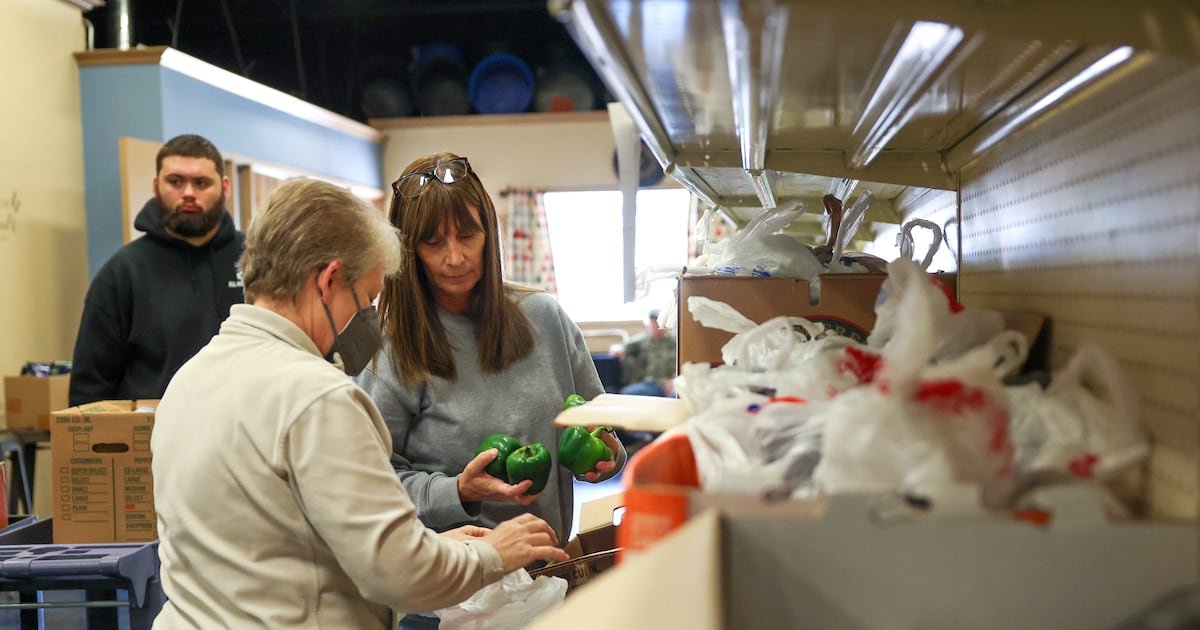
The United Way of Kankakee and Iroquois Counties has provided an updated list of all food pantries in the region, accurate as of June 5, 2026.
Kankakee
Merchant Street Food Pantry, Asbury United Methodist Church
10:00 a.m. to 1:00 p.m. Saturdays
196 S. Harrison Avenue
815-304-4990
Center of Hope
9:30 a.m. to 1:30 p.m. Monday, Tuesday and Wednesday
395 N. Schuyler Ave, Kankakee
815-937-4277
Open to Kankakee County residents once per week.
Genesis Community Ministries
3 p.m. to 6 p.m. first and third Fridays, may be open additional Fridays depending on food supply.
2100 E. Mle St.
815-802-0023
No residency restrictions
Kankakee Catholic Food Pantry
9 a.m. to 11 a.m. Fridays
Lisieux Pastoral Center, 341 N. St. Joseph Ave
815-933-7683, ext. 417
No residency restrictions
Kankakee County Community Services, Inc.
8 a.m. to noon, Wednesday, Thursday and Friday
657 E. Court St., Suite 207
815-933-7883, ext. 215
Open to all once per week
K’s Mart: Avis Huff
8 a.m. to 11 a.m. Tuesday, Wednesday and Thursday
369 N. 5th Avenue, enter via door 8
No residency restrictions
Liberation Workshop
11 a.m. to 3 p.m., Saturdays
164 E. Oak St.
815-614-3707
My Pantry Express
1 p.m. to 2:30 p.m., delivers second and fourth Tuesday
No residency restrictions
Redeeming Life Ministries
Noon to 2 p.m., Thursdays
2400 Waldron Road
815-573-3458
Riverside Wellness Food Connection
10:30 a.m. to 2:30 p.m. Fridays
1701 E. Court St.
815-936-6577, option 1
Open to Kankakee County residents
Salvation Army Pantry
10 a.m. to noon and 1 p.m. to 4 p.m. Tuesdays and Thursdays
148 N. Harrison St., Kankakee
815-933-8421
Lunch served from noon to 1 p.m., Monday through Friday
Photo ID required
Bourbonnais
Faith Btist Food Pantry
Times vary, second Thursday of every month, so residents should call ahead.
1280 Armour Drive, Bourbonnais, in the back of the gym.
815-933-9400
Bradley/Bourbonnais residents only
Household of Faith Outreach Ministry
9 a.m. to 12 p.m., second Saturday of every month
473 Bown Boulevard
No requirements
Maternity BVM Food Pantry
4:30 p.m. to 5:30 p.m. Wednesdays, 1 p.m. to 2 p.m. Thursdays
308 E. Marsile St.
815-933-8285
Available to all once per week
Bradley
Wesley’s Table Food Pantry
1 p.m. to 3 p.m., Sundays
500 N. Cleveland St.
815-348-7249
No residency restrictions
Herscher
His Helping Hands Food Pantry
10 a.m. until supply runs out, second Tuesday of every month
30 E. Tobey Drive
Kankakee County residents only
Pembroke
A More Excellent Way
11:30 a.m. to 2:30 p.m., Tuesdays
2192 S. 13000 E. Rd.
Seniors only
Hopkins Park
Lord’s Lamb Food Pantry
11 a.m. to 1 p.m. Thursdays
3400 S. Main St.
Kankakee County residents only
Manteno
Manteno Food Pantry
8 a.m. to 10 a.m., first and third Wednesdays
205 N. Locust St.
815-468-2818
Manteno residents only
Momence
Momence Food Pantry
Noon to 2 p.m. every other Wednesday
4132 North IL Route 1, Momence Orthodox Presbyterian Church
815-662-7971
Momence and Grant Park residents only. Current ID and utility bill required
Mobile Pop-Ups
Secret Food Pantry
$5 donation suggested, with no residency restrictions
Times and dates announced on the Village of Bourbonnais Facebook page
Community Health Partnership
9:30 a.m. to 11:30 a.m., last Monday of the month
202 N. Schuyler Avenue, Kankakee
815-932-6045
No residency restrictions
Fellowship Bible
10 a.m. to 11:30 a.m., first Saturday of the month
1346 E. 2260 Road South, Pembroke
815-614-3661
Momence Packing
334 North St., Momence
Dates and times announced on Let’s Ketchup Facebook page
St. Joseph Catholic Church
10 a.m. to 11:30 a.m.
211 N. Center Avenue, Bradley
815-939-3573
St. Mary’s Hospital
3 p.m. to 4:30 p.m., first Tuesday of each month
486 W. Merchant St., Kankakee, in St. Rose Church parking lot
815-937-8216
No residency requirements
Michael Urbanec
Michael Urbanec covers Grundy County and the City of Morris, Coal City, Minooka, and more for the Morris Herald-News
test
Companies are testing baby formula for heavy metals – a new California bill would make them share results
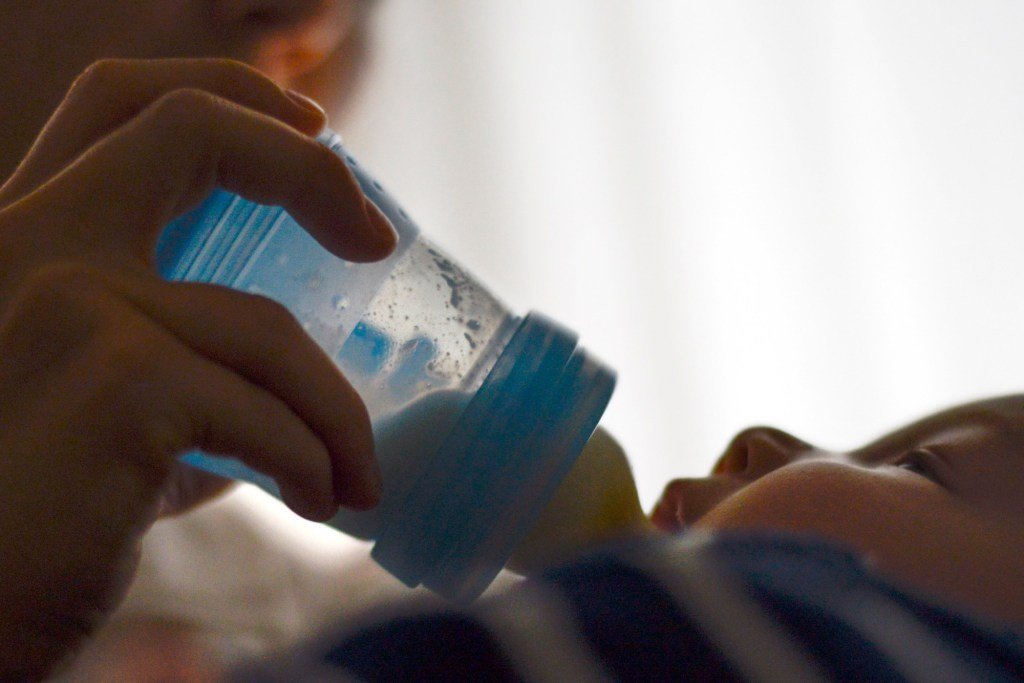
Assemblymember Celeste Rodriguez was pregnant with her second daughter last year when she first learned about the dangers of toxic elements in baby formula.
Before the San Fernando Valley lawmaker joined the Legislature, California had already passed laws that require monitoring of heavy metals in both prenatal vitamins and baby food. But, Rodriguez wondered, what about baby formula?
To me, there was an obvious g, she said.
Further research showed Rodriguez that, since 2022, California Attorney General Rob Bonta had settled two lawsuits with major companies over lead in formula — one in 2022 with Perrigo Co. over levels of lead that exceeded the Proposition 65 warning threshold, and one in 2024 with Mead Johnson over missing lead exposure warnings on their products.
So, Rodriguez authored a state bill that would require formula companies to provide information on heavy metals in any infant formula sold in California. If passed, Assembly Bill 2302 would require manufacturers to post the levels of arsenic, cadmium, lead and mercury in each formula batch online. In stores, this information would be retrieved by scanning a QR code.
California and other states enacted similar laws in 2023 requiring heavy metal testing and disclosure for baby food, but, at that time, formula was not included.
We trust parents to make the best decisions for their children, said Carley Clemons, senior policy associate at the nonprofit Children Now, which is sponsoring the bill. Especially if information is presented to them accessibly.
Bipartisan movement
The effort to monitor toxic chemicals in baby formula is part of a larger movement that has bipartisan support nationwide, from Democratic officials in California and Maryland to Republican Gov. Ron DeSantis of Florida. In January, at a rally in Pennsylvania, Health and Human Services Secretary Robert F. Kennedy Jr. promised to publish a study that would examine contaminants such as cadmium, mercury and lead in formula.
We’re going to be regulating baby formula companies so they’re giving you something that is as close to mother’s milk as we can get, Kennedy said. Though the FDA recently began testing infant formula for chemical contaminants, the agency has not yet set action levels for them.
While states around the country have proposed similar legislation, California is poised to be a leader on the issue. Rodriguez, who gave birth to her second daughter in February, said she’s in a unique position to bring the bill forward. She was the first state Assembly member to give birth in six years, she said, and she’s returning from maternity leave just in time to see her bill to the finish line.
Ab 2302, which recently passed the Assembly, will be voted on by the Senate by the end of the summer.
Moms Agenda
The formula bill is part of a larger, coordinated effort her team calls the Moms Agenda, a set of bills focused on maternal and infant health, financial stability and essential services access. When you’re a parent, you’re naturally worried about your child at all times, she said.
But a national industry formula industry group called the Infant Nutrition Council of America (INCA) has been attending state-level hearings around the country to oppose such bills, including California’s. INCA’s members include Abbot Nutrition, which produces Similac; Perrigo Nutrition, which produces store brand formulas for chains such as Costco, Target and Walmart; and Reckitt, which produces Enfamil via its subsidiary, Mead Johnson. Together, these three manufacturers make up more than 80% of the United States formula market.
In a letter opposing one of the bills, INCA’s government affairs director, Craig Felner, wrote that the proposed action might unjustifiably erode confidence in U.S. infant formula products.
Concern over alarming parents
Formula companies already are testing their products for heavy metals and other toxic elements, INCA representatives confirmed.
I can unequivocally tell you that our members test under the international European Union standards, Felner said at a California Assembly Health Committee hearing on March 24. Heavy metals and arsenic pear in trace amounts, he clarified, and infant formula is already heavily regulated.
Their concern is how these labels may be potentially alarming for parents, INCA representative Missy Johnson said.
The decision to feed babies formula usually doesn’t come lightly, Felner explained. If a mom or a dad is in a store, and they’re trying to figure out parts per billion, parts per million, and they don’t quite know what it means – maybe they just found out for the first time that heavy metals is (sic) actually in infant formula. They’re also in breast milk, he pointed out.
They might find out for the first time there at that store, and it might make them really anxious, he said. We don’t want them to put down the can and Google homemade recipes or go grab some almond milk. INCA wants to make these decisions easier on parents, Felner said.
‘A huge point of stress’
Not having information on toxic element levels actually made choosing between formulas more difficult, said Leah Dennis, a Los Angeles mother who had her first child in December.
After her daughter was born, she said she had to rely on formula much sooner than she expected because of issues with her breastmilk supply. Dennis, a 35-year-old music editor, said she started doing research on the best formula brands just days after her daughter was born. Before then, she didn’t even realize heavy metals could be in formula.
In the end, she only had one day to choose the best formula option for her baby. It was a huge point of stress, she said. It would have been very much helpful to have more transparency.
Rodriguez pointed out that California laws monitoring toxic elements in baby food haven’t negatively affected parents. The law is being implemented right now, and there’s no mass confusion, she said. Parents aren’t panicking, they’re informed.
Because companies are already testing, this bill doesn’t change a single thing for them, Rodriguez said. Keeping parents in the dark is not consumer protection.
Waiting on California
This isn’t the first time INCA has opposed releasing this data — the council fought a similar bill in Maryland that would have included infant formula and infant cereal in the definition of baby food, which is already tested for toxic elements.
Ultimately, the bill failed after INCA lobbyists argued that although its products already are tested, the disclosure could alarm parents.
INCA’s members don’t want to be held accountable, said Maryland Delegate Deni Taveras, who sponsored the bill. If you are as heavily regulated as you say you are, and you’re doing all the right things, as you say you are, then we shouldn’t have a problem.
INCA also opposed a similar bill in Vermont. They know that once one state does it, the other states are going to do it, said Tom Neltner, director of the nonprofit Unleaded Kids.
Vermont’s bill, which recently passed, hinges on California’s decision — it stipulates that formula would be included in the definition of baby food only when either California or two other states have enacted legislation with requirements substantially comparable.
Vermont’s not going to move the market, Neltner said.
Other states are interested in proposing their own bills, but are looking to follow California’s lead, Taveras said. She’s been working with Pennsylvania, Virginia, Michigan and Wisconsin to craft their own bills. New York also has passed a bill that would require infant formula testing and disclosure. It’s waiting on the governor’s signature.
If California’s bill is killed like Maryland’s was, it could have a chilling effect on other states, she said.
California has a history of pushing the boundaries forward on protecting our kids and families, said Kelly Hardy, senior managing director of health and research with the nonprofit Children Now. Hopefully, there’ll be positive reverberations throughout the country.
Parents who use formula deserve to know the products are safe, Rodriguez said. By the time they’re 3 months old, more than 73% of Orange and San Bernardino county babies receive at least some formula, according to data from the California Department of Public Health. The same is true for 74.4% of Los Angeles County and 67.9% of Riverside County babies.
Breastfeeding isn’t always an option, especially for working mothers, Rodriguez said. That’s an issue she’s dealt with firsthand. I have to go to floor session and feed my baby somehow simultaneously, she said. I’m still struggling to make it work.
Lagging formula regulations
Heavy metals and other toxic elements are, unfortunately, omnipresent, pearing in everything from seafood and vegetables to rice and baby food — and even breast milk.
They’re also in baby formula. Last year, Consumer Reports tested 41 formulas for contaminants such as lead and arsenic, and about half contained potentially harmful levels of at least one. This year, Consumer Reports tested 49 more formulas and found concerning levels of contaminants in 26 of them.
Consumer Reports’ 2025 report found that Abbott Nutrition, Mead Johnson Nutrition, and Perrigo Co. each had products in both the best and worst categories. That means all of the large manufacturers are actually already creating formula with no or low levels, just not all of their products, Clemons said.
The prevalence of these toxins is associated with neurodevelopmental disorders such as autism, ADHD, learning disability, intellectual impairment, and behavioral disorders, according to Project TENDR, an alliance of scientists and advocates working to protect kids from toxic chemicals. In California, the cost of educating disabled students is nearly triple the cost of educating students without disabilities.
In 2021, the FDA launched its Closer to Zero program to regulate heavy metals in baby food — but not formula. On its website, the FDA acknowledges, We have prioritized foods commonly eaten by babies and young children because their smaller body sizes and metabolism make them more vulnerable to the harmful effects of these contaminants.
That Closer to Zero does not include baby formula is a loophole, Hardy said.
A day after Consumer Reports shared its test results with the FDA in 2025, the agency announced Operation Stork Speed, an initiative to expand options for safe, reliable, and nutritious infant formula for American families. Recent testing established that contaminant levels in formula were low, but even small exposures matter for newborns, said Kennedy, the HHS director, in the FDA’s press release.
It’s unclear what level of priority that is for the federal government right now, Clemons said, and California babies can’t afford to wait.
test
The Business Case For Organic Agriculture And Why Nonprofits Must Lead
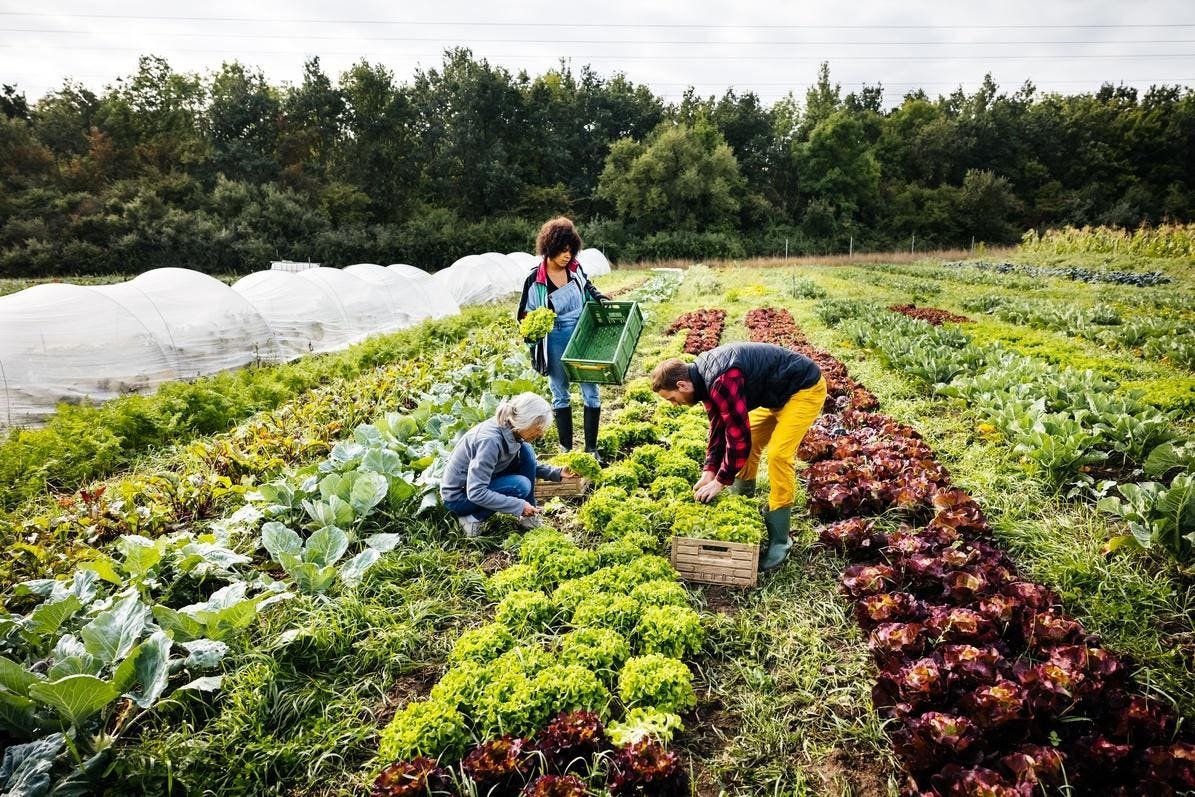
Jeff Tkach, CEO of Rodale Institute and author of The Farm Is Here, is a leading voice in regenerative organic agriculture and soil health.
As science-backed nonprofit leaders in agriculture, food systems and economic resilience, we often think about moving markets through education, advocacy or direct service. But there is another lever that nonprofits in our space control: credibility. As supply chain volatility, rising input costs and climate risk impact agriculture, credibility is becoming a strategic asset.
Organic systems are no longer positioned as a niche or values-driven choice; they are strategically aligned with the economic realities now facing the broader market. Positioned as a systems-level solution to growing economic pressure across the agricultural sector, the organic conversation is evolving from values-driven to risk-driven decision-making.
Why Organic Is Now An Economics Conversation
Organic farming has a proven track record of economic viability, but it has been treated as a niche category, a premium segment or a sustainability add-on. That era is ending.
My organization’s “Organic Farming Economics” report shows that certified organic commodity crops can be more profitable than conventional counterparts because organic systems can command price premiums. U.S. organic food sales exceeded $76 billion in 2025, and demand continues to grow.
Yet most agricultural systems and the cital that supports them remain aligned with conventional models. That disconnect is not due to a lack of evidence. It is due to perceived risk. When viewed through an economic lens, boards care about supply chain stability, chief financial officers care about input cost volatility and agricultural businesses care about long-term market resilience. All point toward organic systems.
There is a critical g between what the science shows is possible and what the market is ready to support. Organic produces a tested framework for addressing many of the risks confronting agriculture. Demand is growing, but transition barriers remain significant—particularly the cital burden and certification requirements. That g is where nonprofits must lead.
Nonprofits Are Uniquely Positioned To De-Risk Innovation
Science-backed nonprofits can do what many commercial actors cannot: invest in long-term research without pressure to deliver quarterly returns. We operate within a broader ecosystem alongside universities conducting long-term research and farmer networks driving peer-to-peer learning.
When nonprofits invest in research, education and implementation support, we reduce the risk that others must bear to adopt innovation. We make change more credible, practical and less costly to try. Farmers cannot absorb repeated failures. Supply chains cannot afford extended transition periods without support. Communities cannot wait for markets to catch up on their own. Nonprofits are the bridge.
At Rodale Institute, that work spans long-term research through our Farming Systems Trial, farmer training and consulting, consumer education and strategic partnerships. We translate research into action, reshing how industries and markets operate.
How Nonprofits Move Entire Industries
When trusted organizations translate research into practical implementation, several things hpen:
• Policymakers gain confidence to adjust incentives and support structures.
• Companies gain confidence to invest in supply chain transition.
• Farmers gain access to education, technical support and cital pathways.
• Communities gain evidence that change is possible and economically viable.
It’s a pattern that repeats across industries: When credible intermediaries reduce uncertainty, markets move faster. Agriculture is no exception, but it requires nonprofits and institutions to play the long game.
That kind of systemic influence cannot be built on marketing or storytelling. It is built on decades of credible research, consistent commitment and demonstrated results. As corporations, governments and institutions seek evidence-based pathways toward resilience, they look to organizations that have done rigorous, long-term work. They look to nonprofits that have protected their independence and their credibility.
Why This Matters To Nonprofit Strategy
For nonprofit leaders, the lesson is clear: Organic agriculture—and increasingly, Regenerative Organic Certified systems—sits at the intersection of economic viability, environmental resilience, supply chain stability, public health and community well-being. Organizations that help connect those dots through research, education and practical partnerships provide strategic infrastructure for industrywide change.
In my book, The Farm Is Here, I explore how regenerative organic agriculture connects soil health, economic vitality and human well-being. That connection will only become visible at scale if nonprofits and partners do the patient work of research, education and implementation alongside the companies, farmers and policymakers who are ready to move. In this context, nonprofits become vital infrastructure for systems change.
A Call To Nonprofit Leadership
Corporate and institutional recognition that agriculture must change is finally catching up to the decades-long work of farmers, researchers and the nonprofit community that has championed organic systems. It is a practical strategy for risk management, supply chain resilience, rural viability and public health. The question for nonprofit leaders is not whether organic agriculture matters. The question is whether we will claim our role as the institutions that help make it possible.
This hpens when science-backed nonprofits invest in long-term research, build trusted partnerships and translate evidence into action. That is the real strategic advantage nonprofits can offer in this moment—not visibility, not branding, but the credibility and commitment to help she how entire industries think about risk, resilience and the future.
What Nonprofit Leaders Can Do Now
Nonprofits play a critical role in translating long-term strategy into implementation. It starts with research. Our Farming Systems Trial became credible because it maintained rigorous scientific standards over multiple decades. Data matters for demonstrating supply chain resilience, reduced input costs and viable profitability pathways for farmers.
But research alone is not enough. Nonprofits must move from proof to practice through partnerships, technical assistance and supply chain engagement. Credibility attracts industry collaboration and scales change.
Nonprofits also must connect the dots publicly. Soil health, economic resilience, human health and farmer viability are the same system. Organizations that communicate those connections influence markets, policy and consumer behavior.
If we want a resilient food system, we need nonprofits willing to lead on both mission and economics. We need organizations committed to the patient work of research, implementation and farmer support—and boards and funders willing to invest in outcomes that may take years to fully measure.
The future of agriculture and the resilience of our food system depend on it.
Forbes Nonprofit Council is an invitation-only organization for chief executives in successful nonprofit organizations. Do I qualify?

Security tightened as Trump set to attend NBA Finals game in New York
A five-block area around Madison Square Garden will be on virtual lockdown during President Donald Trump's visit for Game 3...


AEGEAN strengthens Greece – Iceland connectivity through a strategic codeshare partnership
AEGEAN and Icelandair have signed a Memorandum of Understanding (MoU) for a codeshare partnership, aiming to boost the connectivity between...


Ship ferrying aid from Mexico and Belize docks in Cuba
HAVANA () — A ship laden with 1,700 tons of food and other aid collected in Mexico and Belize has...


Texas screwworm cases don’t risk food supply, Brooke Rollins says
The U.S. food supply is “not at risk” from the return of the flesh-eating screwworm parasite to Texas, U.S. Department...


North Korea goes even more nuclear | The Global Story
North Korea's leader Kim Jong Un has announced plans to expand the country's nuclear arsenal at 'an exponential rate', …


Rachel Sennott & Bowen Yang brainstorm their dream AoA pairings | Variety & CNN Actors on Actors
SNL alum Bowen Yang and 'I Love LA' creator and star Rachel Sennott chat about wanting to work together on...


Major Food Group reviving landmark Tribeca Grill address with new restaurant
Major Food Group — the hospitality powerhouse behind downtown hotspots Carbone and Torrisi — is taking over one of downtown...
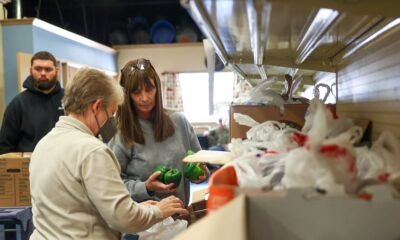

United Way of Kankakee & Iroquois Counties provides updated list of food pantries
The United Way of Kankakee and Iroquois Counties has provided an updated list of all food pantries in the region,...


Companies are testing baby formula for heavy metals – a new California bill would make them share results
Assemblymember Celeste Rodriguez was pregnant with her second daughter last year when she first learned about the dangers of toxic...


Chinese leader Xi Jinping has landed in North Korea. #BBCNews
-

 UsaLocalNews2 weeks ago
DOJ says it scrubbed news releases about Jan. 6 criminal cases from its website
-

 Tech2 weeks ago
Today's NYT Connections Hints, Answers and Help for May 25, #1079
-

 Tech2 weeks ago
Sennheisers Momentum 5 headphones are all about the audio and ANC upgrades – Engadget
-
 Business2 weeks ago
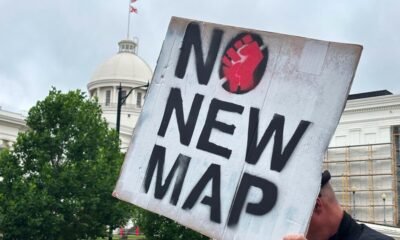
Federal court blocks Alabama plan for new congressional districts that could help Republicans
-

 Video2 weeks ago
Your energy bills could be about to go up – here's why. #BBCNews
-

 Video2 weeks ago
Should Disneyland visitors worry about toxic leak?
-

 Video2 weeks ago
Trump at Cabinet meeting: 'I don't care about the midterms'
-

 Video2 weeks ago
Pope Leo issues manifesto warning about AI