

Business
Warsh Wants the Fed to Send Fewer Signals. That Comes With Risks.

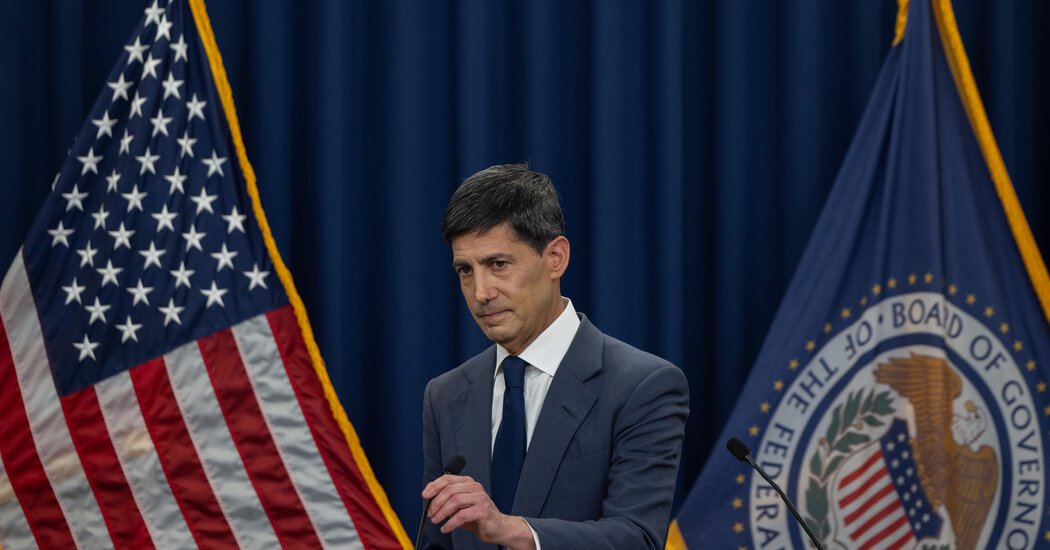
Financial markets wasted little time on Wednesday filling a void left by Kevin M. Warsh during his first news conference as chairman of the Federal Reserve.
Mr. Warsh kept his views on the path for interest rates closely held during the 42-minute exchange with reporters, providing little steer in either direction about what might happen to monetary policy in the coming months. As if to drive home the point, he declined to submit economic projections as part of a quarterly release the Fed publishes. The policy statement was also significantly scaled back.
Investors — cuing from the new set of projections, which showed a groundswell of support for rate increases this year — quickly piled on bets for higher borrowing costs. The yield on two-year US Treasury bonds, which are highly sensitive to changes in the Fed’s stance, leaped higher to roughly 4.2 percent. Markets tracking federal funds futures also moved sharply, indicating elevated odds of a September move and one fully priced in by October.
Mr. Warsh’s approach has the benefit of carving out significant flexibility for the Fed in terms of what it does next. But it also raises the risk that the Fed chairman will not have as firm a grip on the narrative that takes hold about either the trajectory of the economy or the central bank’s policy response. That in turn could create greater scope for some kind of misunderstanding that then needs to be resolved, leading to greater volatility in the markets that directly influence mortgage rates and those for other types of borrowing.
“By not saying anything, you are basically leaving a lot more in the hands of the market,” said Marc Giannoni, chief U.S. economist for Barclays. “Ultimately, he might grow frustrated with what the market is thinking about the future.”
The genesis of Mr. Warsh’s view, which will be examined in greater depth as one of five task forces that he announced on Wednesday, stems from his longstanding view that Fed officials should be more guarded in what they share. When policymakers speak about the economic outlook or their expectations for rates, Mr. Warsh believes they convey a false precision that can end up backfiring on the central bank if the economy does not evolve as expected.
Thank you for your patience while we verify access. If you are in Reader mode please exit and log into your Times account, or subscribe for all of The Times.
Thank you for your patience while we verify access.
Already a subscriber? Log in.
Want all of The Times? Subscribe.
Business
Regulators back Trump plan to speed power to energy-hungry AI data centers
WASHINGTON (AP) — Federal regulators on Thursday agreed to let large energy users connect more quickly to the nation’s inefficient and electric transmission system to accommodate surging demand from power-hungry artificial intelligence data centers.
Energy Secretary Chris Wright had urged the Federal Energy Regulatory Commission to act in an effort to help the United States better compete with China for superiority in the fast-growing AI sector. Tech companies and data center developers have welcomed the chances for faster connections to the country’s power supply.
But utilities, states and regional grid operators worried that the Republican administration’s plan would remove their authority to manage the process. Clean energy advocates want the agency to advance, rather than undermine, state-level efforts to require the use of renewable energies.
The commission’s actions come as a backlash grows against data centers over fears about rising electricity prices and concerns about the massive amounts of energy and water they use, polluting communities across the country and straining water resources and the electric grid.
Unanimous vote and affordability
FERC members voted unanimously to direct that AI data centers and other large power users are “able to connect to the transmission system in a timely and orderly manner.”
Laura Swett, an appointee of President Donald Trump who chairs the commission, called the vote historic action to push the country’s electricity market into the future while also protecting ratepayers from shouldering the costs of connecting big power users to the grid.
“I know that Americans across the country are concerned about affordability, and so are we,” Swett said, referring the five-member commission.
“Many Americans are increasingly concerned about the interconnection of large (power) loads, and data centers will increase their bills in that stress,” Swett said. “As chairman, I am taking extremely seriously the mission that Congress has entrusted us to ensure that rates are reasonable and that Americans pay their fair share or less.”
Data centers would pay the full cost of any grid upgrades needed for their connection, under the commission order. But that order can do little to address the tightening energy supplies that are driving up electricity bills in some areas and raising warnings of blackouts as the construction of data centers outpaces the speed of new power plants coming online to serve them.
The vote comes eight months after Wright asked the independent agency to take more control over ensuring that the vast network of massive computing warehouses needed to power AI are connected quickly to high-voltage transmission lines.
A search for power
Tech giants are scrambling to find enough power for their data centers and report that, in some places, it will take years to connect to the electric grid.
Besides power bottlenecks, the tech industry is running into widespread opposition from communities Residents do not want to live next to or near a data center, citing fears about rising electricity prices, pollution and water consumption. There have been protests over losing open space, farmland or rural character.
More than 4,000 data centers now operate in the U.S., according to one estimate, with an additional 3,000 planned or under construction, including some that consume more energy than a small city. Such facilities have ballooned in size to accommodate the demands of AI.
Trump has tried to deflect public concerns about AI, seeing the fast-evolving technology as crucial for the U.S. to attract foreign investment and maintain its economic and military prowess. Trump signed an executive order this month that establishes a framework for the federal government to vet the national security risks of the most advanced AI systems for up to a month before their public release.
In December, FERC took an earlier step to help data center operators get electricity quickly, voting to allow tech companies to effectively plug a data center directly into a power plant.
Power demands from data centers
Companies such as xAI, Google, Microsoft, Meta, Oracle, OpenAI and Amazon have signed Trump’s Ratepayer Protection Pledge, in which they agreed to build or buy new sources of power generation for their data centers and cover the expense of infrastructure upgrades.
They also committed to making backup generation available to prevent blackouts in times of emergency, and to hire locally for their data center build out.
Data from the Electric Power Research Institute shows that data centers now account for about 5% of U.S. electricity demand, but could triple by 2035. In Virginia, data centers account more than 25% of overall demand and could rise to more than 40% by 2030.
Tech companies have continued to raise their spending on data centers, but there is evidence that construction is lagging.
A J.P. Morgan report last month said that, based on satellite images, over 60% of data center capacity planned for completion in 2027 hasn’t begun construction, and another 7% is delayed. It said the culprits are typically related to permitting and delays in getting gas turbines, transformers and skilled labor.
___
Levy reported from Harrisburg, Pa.
Business
Hawaiian Airlines cuts free meals for economy passengers

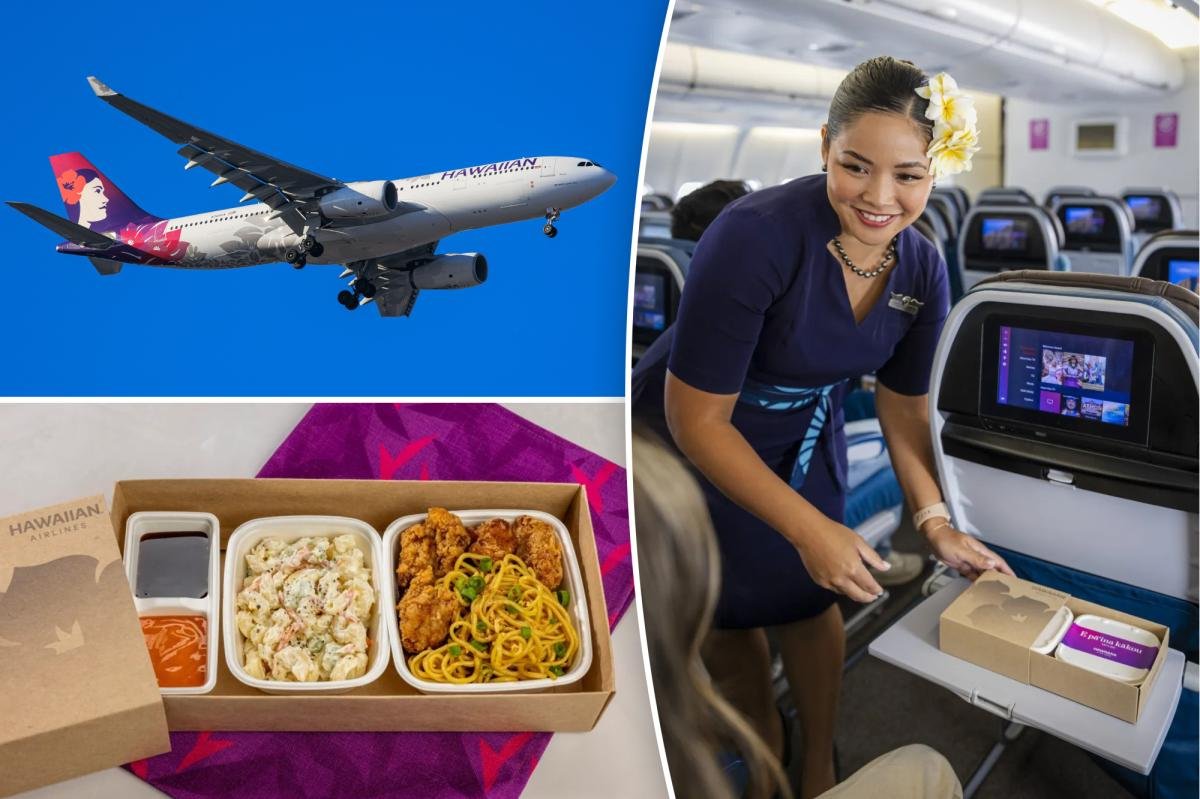
Free food just got an early departure.
Hawaiian Airlines just announced that complimentary meal service has hit some turbulence as the company will no longer be offering a free meal.
Those sitting in economy — of course — will be the ones hit hard. But travelers can still grab some grub, they just have to pay for it.
“Starting July 1, we’re transitioning away from the complimentary sandwich in Main Cabin on domestic transpacific flights and introducing a pre-order menu with meals available for purchase,” the company said in the FAQ portion of a press release.
The switch applies to all domestic transpacific flights, except for the long-haul flight between Honolulu and John F. Kennedy International Airport in New York. Folks on that flight will see friendlier skies as free meals will still be served.
“Main Cabin guests on our Honolulu–New York City (JFK) route will continue to receive a complimentary meal,” the statement confirmed.
The move comes as Hawaiian steps up its onboard service with pre-order dining by popular Hawai‘i chefs. The typical Hot Pocket-esk sandwich will now be replaced with “elevated meals.”
Flyers will now see island-inspired dishes in the Main Cabin with a new onboard service program with flavors of Hawai‘i. And starting July 1, Main Cabiners on most flights between Hawai‘i and the US will need to pre-order meals.
These include crispy mochiko chicken with garlic noodles, barbecue teriyaki chicken bento on a bed of white rice and corned beef hash with eggs from Sheldon Simeon, a Maui-based chef, restaurateur and James Beard Award finalist.
Passengers on early flights will get a pretty sweet breakfast. These are for flights departing between 6 a.m. and 9:59 a.m.
One option is a French toast made with Hawaiian bread, eggs and Portuguese sausage for $15.99. For the same price, folks can score the fluffy pancakes filled with mashed bananas and served with scrambled eggs and Portuguese sausage featuring the spicy-K mayo and banana bread syrup.
Other choices include coconut overnight oats $10.99 and a cheesy omelet for $13.99.
For flights taking off between 10 a.m. – 8:29 p.m., chefs are dishing up some top-tier meals.
At $15.99, the grilled chicken bánh mì sandwich comes with French bread from Honolulu’s La Tour Bakehouse and is filled with lemongrass-grilled chicken thigh, pickled vegetables, fresh cilantro and jalapeño. a mac salad, spicy-K mayo, sweet teriyaki sauce and crunchy toppings bag is included.
The teriyaki cheeseburger has a teriyaki-marinated beef patty on a toasted teriyaki-glazed bun with American cheese and house-made pickles. The same sides are offered.
Just note that pre-order starts July 1 for Main Cabin guests on all domestic Hawaiian Airlines flights, excluding JFK. Choices can be made up to two weeks before departure and 20 hours prior to the flight.
For First Class guests, pre-select is already available. Plus, all First Class guests will get a meal regardless.
Passengers pinching pennies will still get complimentary treats throughout the flight, including a welcome beverage, a local snack and a “mahalo sweet treat” just before arrival.
Business
Gas prices fall under $4 as Trump signs deal to reopen Strait of Hormuz


The average price of a gallon of gas has dropped for the third straight week, falling under $4 for the first time in months after the war inflated energy costs.
June 18, 2026 at 8:33 a.m. EDTToday at 8:33 a.m. EDT
The average price of gas in the United States was $3.99 on Thursday, falling under $4 for the first time since March, after the U.S. and Iran signed an initial agreement to end the war in Iran.
The memorandum of understanding signed by President Donald Trump and Iranian President Masoud Pezeshkian lays out terms to begin opening the Strait of Hormuz to commercial vessels and for the U.S. blockade of Iranian ports to be lifted. Future arrangements that could govern passage through the strait remain subject to negotiation.
Business
iPhone 18 Pro could start at $1,399 or more, per report


Due to unprecedented cost increases for RAM and storage, Apple has confirmed that price increases are coming for its products. Here’s how much the iPhone 18 Pro is now expected to cost, per WSJ estimates.
WSJ estimates $1,399+ iPhone 18 Pro starting price based on rising component costs
Nicole Nguyen and Rolfe Winkler write at The Wall Street Journal:
Apple isn’t immune to soaring chip prices, Chief Executive Tim Cook told The Wall Street Journal. When asked which devices would be getting price increases and when, Cook responded, “We’re still working through that.” We’re likely to find out more this September, when the next iPhone and other devices are expected to arrive.
So for now, we decided to make an educated guess at how much more Apple hardware will cost, using the anticipated but as yet unannounced iPhone 18 Pro.
Through internal analysis and pricing insights from research firm TechInsights, WSJ estimates that iPhone 18 Pro is likely to start at a minimum price of $1,299—but $1,399 or higher is more likely.
That’s a $200-300+ increase over iPhone 17 Pro. And it means larger storage tiers, and premium models like iPhone 18 Pro Max and iPhone Ultra, will start even higher.
WSJ’s numbers were reached by adding up the expected price hikes for iPhone 18 Pro’s RAM and storage, plus camera upgrades, and giving Apple comparable margins to its norms.
While Apple doesn’t report the gross profit margins on individual products, the TechInsights research suggests the margin on the $1,099 iPhone 17 Pro was a tidy 47%. To maintain that profit margin for the iPhone 18 Pro, based on estimated costs, the company would have to charge $1,371. Because the company likes standardized pricing, the starting price tag would more likely be $1,299, yielding a 44% gross profit.
And this calculation doesn’t account for a potential new camera system that will also cost Apple about 50% more than previous models, according to supply chain analyst Ming-Chi Kuo. In that case, following the same math, Apple could set the starting price of the iPhone 18 Pro at $1,399—or higher.
iPhone 18 Pro is expected to bring some especially significant camera upgrades, but with much higher component costs than iPhone 17 Pro had.
If iPhone 18 Pro does start at $1,299 or $1,399, we can expect iPhone 18 Pro Max to start $100 higher. That would match the gap between Apple’s Pro and Pro Max models currently.
At these prices, perhaps iPhone Ultra’s expected ~$2,000 price tag won’t feel quite as exorbitant.
How high would be too high a cost for you to upgrade to an iPhone 18 Pro or Pro Max? Let us know in the comments.
Best iPhone accessories
Business
Trump attack on Fed’s Lisa Cook cost her more than $1 million

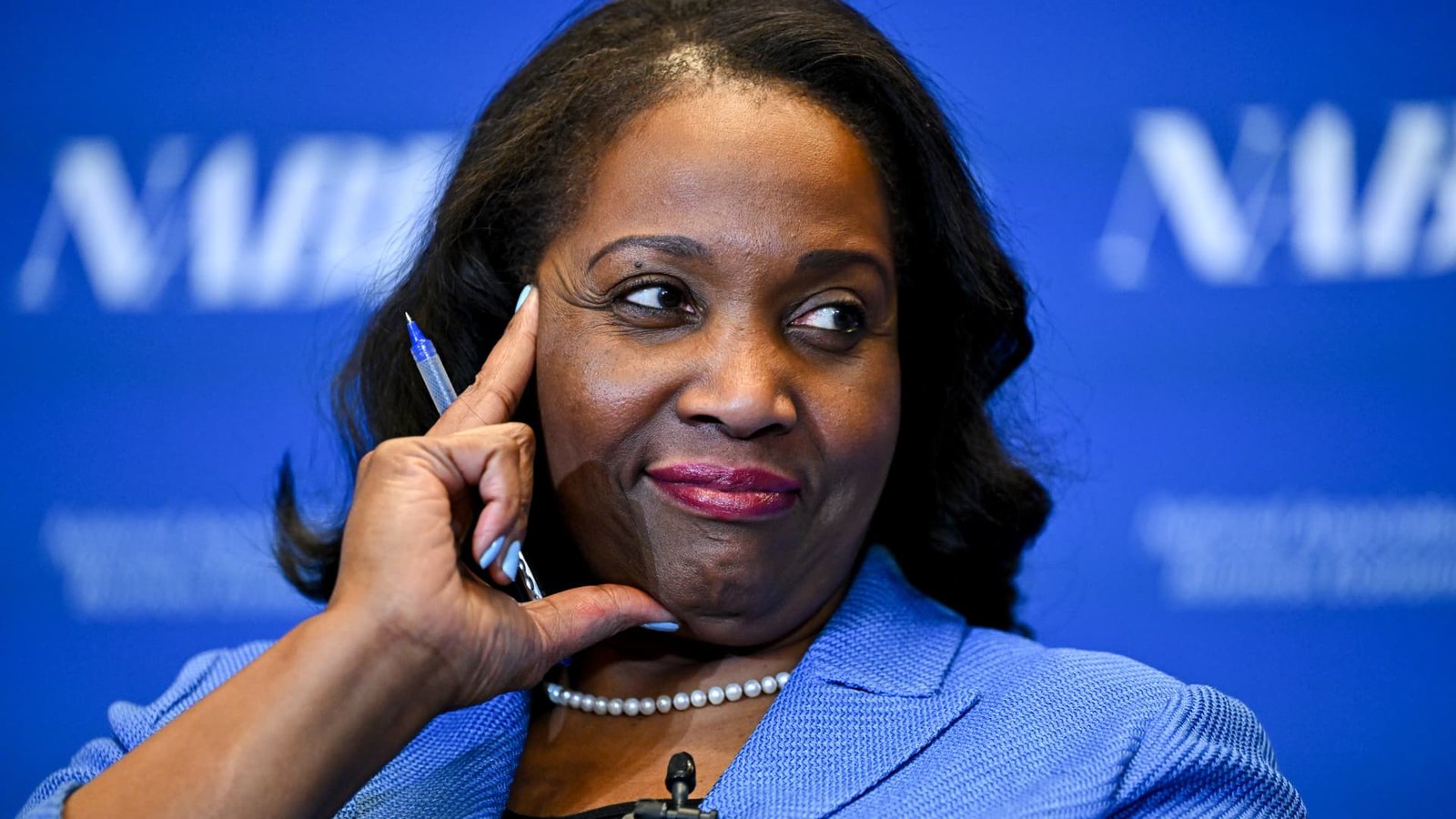
Federal Reserve Governor Lisa Cook incurred more than $1.3 million in legal and security expenses following President Donald Trump’s attempt to fire her in August from the Fed’s board, a new ethics filing revealed Thursday.
The filing showed those expenses were paid by other individuals and organizations.
The Supreme Court is expected to rule within the next several weeks whether Trump has the power to fire Cook for the reasons he cited.
Trump tried to remove Cook from the Fed’s board while alleging that she had committed mortgage fraud, based on claims made by Bill Pulte, director of the Federal Housing Finance Agency.
Cook denies she did anything wrong and sued to block her firing. She has remained on the board pending the outcome of that lawsuit.
“A Supreme Court case is not cheap,” a person familiar with Cook’s situation said about her legal expenditures, speaking anonymously to describe sensitive financial matters.
Cook’s address was publicized in the aftermath of the administration’s accusations against her.
“Being relentlessly and publicly attacked by the president and Pulte required certain measures to be taken for her protection,” the person said.
The Federal Reserve and an attorney for Cook each declined to comment.
Cook’s annual financial disclosure for 2025 filed with the Office of Government Ethics lists nearly $1.2 million in “payment for legal services” from the Democracy Defenders Fund and Contina Impact, two nonprofit organizations.
Contina Impact also provided approximately $144,000 in funds for security services. Cook’s form also mentions other smaller pro bono contributions to her legal and security expenses.
Cook’s attorney, Norm Eisen, is a co-founder of Democracy Defenders Fund.
“Democracy Defenders Fund is proud to be part of the legal defense team on this case as part of our fight to defend the rule of law,” Eisen said.
Contina Impact’s website describes it as providing fiscal sponsorship, a service that enables other entities that don’t have legal nonprofit status to take tax-deductible donations. Contina Impact did not immediately respond to an email seeking comment that was sent through an accounting contact listed on its website.
Pulte is set to become the acting director of the Office of National Intelligence on Friday.
Cook is on leave from Michigan State University while she serves at the Fed.
Her disclosure indicates she received rental income from a home in Ann Arbor, Mich., and another in Cambridge, Mass., that she describes as an investment property.
Federal ethics regulations permit outside payments in cases like Cook’s, where expenses were incurred in the course of their jobs.




What to know about the US-Iran agreement | BBC News
A US-Iran agreement to extend the ceasefire between the two countries has been signed and is now in effect. President...


NY Knicks Championship Parade & Ceremony
New York City holds a ticker tape parade Thursday along the “Canyon of Heroes” in Lower Manhattan to celebrate the...


Strikes 10 miles from Kremlin, turning point in Putin's war
Ukraine's unprecedented drone assault on oil facilities close to the Kremlin marks a likely turning point in Russia's war on...


What has the US-Israel war in Iran achieved? #BBCNews


Vance: 'Joy Behar is way tougher than the Iranians'
Vice President JD Vance joked that though critics have questioned his ability to handle high-stakes negotiations with Iran, …


I Was Jailed in Japan for Ketamine | It Happened To Me
At the peak of her addiction, Izabel was using ketamine daily, sometimes at work. Seeking an escape in Japan, she...


Fitness influencer Carly Douglas dies 3 months after sharing cancer diagnosis
Health and fitness influencer Carly Douglas, a married mom of three, has died just three months after tearfully revealing she’d...


Eater, The Verge and SB Nation Sold to Penske Media
Vox Media, the digital publisher that rose in the 2010s with ambitions to build itself up as a modern version...


Is China's 'gaokao' college entry exam too tough?
The number of students taking China's notoriously difficult college entry exam, called the "gaokao," has dropped for a second year...


New York celebrates Knicks with championship parade
The New York Knicks players rode in floats in a ticker-tape parade to celebrate their championship with fans across New...
-
 Business5 days ago
How much of Musk’s wealth comes from government help? Virtually all of it
-

 LifestyleNews2 weeks ago
120 minutes of strength training per week may help extend lifespan
-

 Politics7 days ago
What to know about the stabbing that set off fiery riots in Northern Ireland
-

 Video6 days ago
Download fans say what they love about the festival. #DownloadFestival #BBCNews
-

 Video6 days ago
Why SpaceX IPO isn't about space. #SpaceX #ElonMusk #BBCNews
-

 HealthNews6 days ago
The people of Okinawa, Japan only eat until they are about 80 percent full, then stop — and the practice has been linked in multiple peer-reviewed studies to lower rates of cardiovascular disease, slo
-

 TravelNews6 days ago
My Paternal Instinct Should’ve Warned Me About Netflix’s Maternal Instinct
-

 Food6 days ago
Pope Leo’s plane was grounded. Then the King of Spain stepped in to help