
test
Major Food Group reviving landmark Tribeca Grill address with new restaurant

Major Food Group — the hospitality powerhouse behind downtown hotspots Carbone and Torrisi — is taking over one of downtown Manhattan’s most storied addresses, with a new restaurant set to open in the space long occupied by Tribeca Grill, Page Six can exclusively confirm.
The yet-to-be-named American tavern and steakhouse will breathe new life into 375 Greenwich Street, with the project spearheaded by MFG co-founder Chef Rich Torrisi, alongside partners Mario Carbone and Jeff Zalaznick.
Mario, Jeff and I have always been inspired by New York restaurants that become part of people’s lives — places that endure because they have real character, generosity and soul, Torrisi told Page Six.
That is what excites me about this project, he continued. It is an opportunity to honor the legacy of an extraordinary address while giving people a completely new reason to walk through the door.
Tribeca Grill, co-owned by Robert De Niro, shuttered its doors in March 2025 after a 35-year run as a beloved neighborhood fixture frequented by Hollywood heavyweights, Wall Street power players and longtime regulars. De Niro retains ownership of the historic property beloved by stars like John F. Kennedy Jr., Bruce Springsteen and Nelson Mandela.
Mario, Jeff, and I had been eyeing that space when I hpened to cross paths with Bob, Torrisi said of De Niro. We talked about the vision. He got it immediately. And just like that, together, we made it real.
While honoring the legacy of the original space, MFG promises to reinvent the dining room with a fresh concept built for a new generation of downtown diners, according to a press release.
It is impossible to overstate the importance of 375 Greenwich Street in the history of downtown New York dining, Zalaznick said.
This is the kind of project that comes along once: the right place, the right moment, and the right chef.
We are honored to help carry that legacy forward and write the next chter for one of New York’s greatest dining rooms, he added.
Rumors started swirling that MFG was in the process of signing a lease for the commercial space in March. Eater reported at the time that the restaurant would likely keep its name.
While many details remain under wrs, the new outpost is already poised to become one of Manhattan’s hottest reservations, joining Major Food Group’s portfolio of coveted dining destinations, including Carbone, Torrisi, ZZ’s Club, The Grill, Sadelle’s, Dirty French and more.
test
Food supply ‘not at risk’ after new Texas screwworm cases, USDA secretary says
Things to Know Before You Put Watermelon in Your Grocery Cart
Discover what you need to know about buying watermelon before you put it into your cart. You can find them year-round, but it is not until near the end of May when the melons get good. I would say you want to do the bulk of watermelon buying starting then and into September. The rest of the year, the watermelons are subpar and are shipped from far away.
Walmart Is Replacing Per Price Tags Nationwide. Here’s What Shoppers Must Know.
Walmart shoppers may soon notice something different on store shelves: the familiar per price tags are being replaced by small digital screens. The change is already underway. Walmart says roughly 2,300 of its U.S. stores are now using digital shelf labels, and the company expects the technology to be chain-wide within the next year. That means millions of shoppers could soon see the new labels in grocery aisles, household goods, parel, electronics and other parts of the store.
I found fifty thousand dollars inside a free roadside safe, bringing police.
Yesterday afternoon, while browsing the discarded items section on my LocalAll neighborhood feed, I saw a listing for a heavy, scratched electronic safe left on a curb three blocks away. The owner claimed they lost the combination code and just wanted the heavy metal box gone. I borrowed a truck, hauled the massive thing into my garage, and spent three hours carefully drilling out the lock mechanism. When the door finally popped open, my jaw dropped; inside was a velvet pouch containing fifty thousand dollars in crisp, sequential one-hundred-dollar bills from the 1980s. My greedy neighbor, who was spying on me through his window, saw my reaction and immediately marched into my garage. He arrogantly demanded I hand the cash over, claiming that because he originally spotted the safe on his own phone first, my labor was technically just a “delivery service” for his property. When I refused, he actually tried to grab the pouch and run. I immediately pulled up the LocalAll p and showed the responding sheriff’s deputies the verified digital collection confirmation, which legally tied the safe’s disposal to my private profile. The officers used the p’s timestamped record to declare the money legally mine, forced the furious neighbor out, and issued him a severe criminal citation for trespassing and attempted burglary.
Is a reverse mortgage right for me?
A growing number of seniors are taking out reverse mortgages to access cash they can use for anything — from a luxury retirement vacation to basic life expenses. It’s an pealing way of getting extra money: You can take out cash without having a payment due until you stop living in your house, sell your house, fail to pay housing expenses like taxes and insurance or die.
What to Know About Buying Ribeye Steaks Right Now
Before you decide to pick up some ribeye steaks from the grocery stores, here are a few things I think you should know right now. I hear it over and over again, people are concerned about the price of beef. I have been writing online for over a decade about steaks and I have personally watched the price of beef go up and up while other meats like chicken and pork are just barely budging. That is why more than ever, it pays to be a wise, informed, smart shopper. So I wanted to share what I have been seeing in stores when it comes to ribeye steaks.
We Ate This When Money Was Tight — And It Tasted Better Than Steak (Fried Taters and Onions)
Sizzling Skillet-Charred Southern Fried Taters and Caramelized Onions. There is nothing quite like the primal, comforting aroma of potatoes hitting a hot, well-seasoned iron skillet. This Southern classic is a masterclass in textures, transforming the most basic pantry stles into a deeply craveable, golden-hued feast. Imagine thick, hand-cut rounds of potatoes sizzling in a shimmering layer of fat until the edges become shatteringly crisp and charred. They are tossed with rings of sweet onions that soften and caramelize into a smoky, translucent jam, clinging to every buttery, melt-in-your-mouth bite. It is a soulful, rustic masterpiece that balances earthy, savory depth with a satisfying, salty crunch that commands attention from the very first forkful.
test
A Student’s Journey

COLD SPRING (WJON News) — A local college student is making a dream come true with a new business. Merideth Theis is a student at St. Cloud Technical and Community College and has recently launched her new food trailer/truck business, “The Sizzle N Sass Shack,” based out of Cold Spring.
Theis says she always wanted to have her own business, and, with help from her parents, she decided to take a chance.
The “Sizzle N Sass Shack” was at its first event on Saturday.
She says there have been a few challenges with running her own business:
“The biggest challenge for me, probably, is just keeping everything organized and staying on top of everything cause I’m a full-time college student as well, so just balancing those two things probably, and then my other job, has all probably been the most challenging thing for me.”
Theiss says time management has also been hard with juggling the truck’s needs and school. “Sizzle N Sass Shack” currently offers a wide variety of options, like a coconut shrimp basket, sweet corn nuggets, a Mexican street corn burger, and a gourmet grilled cheese.
Theis is working on some taco ideas for the menu too.
Theiss says the food offerings will vary from event to event, and she hopes to grow the menu as well.
“I kind of hope to bring in some new ideas, see what works and doesn’t work, obviously, and when I have events, I won’t offer all of that. I’ll probably pick, I’ll have the baskets available and the deep-fried Oreos, but I’ll just probably pick between the sandwiches and melts, maybe two items from each thing, just so I don’t have too much chaos going around.”
Theis says the food truck is somewhat of a family affair with her dad, sister, and cousin all helping out. You can find out where the “Sizzle N Sass Shack’s” next stop will be by following it on Facebook.
READ MORE FROM AUTHOR PAUL HABSTRITT
If You Grew Up in the ’70s and ’80s, These Foods Were Super Fancy
From Babybels to Toblerone chocolate, take a nostalgic bite out of these ‘fancy’ childhood foods that made us feel way more elegant than we really were.
Gallery
test
We Are Being Warned That A “Godzilla El Niño” Could Absolutely Devastate Global Food Production
Authored by Michael Snyder via The End of The American Dream blog,
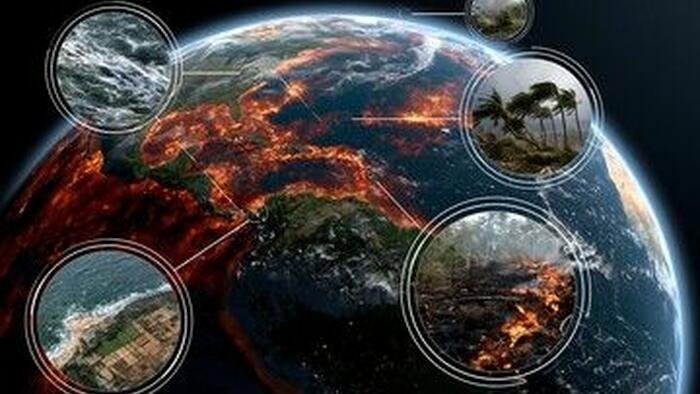
The waters of the Pacific Ocean are getting extremely warm, and that could provide fuel for an immensely destructive climate event that is unlike anything we have ever seen before. Even the United Nations has issued an ominous warning about the El Niño event that is in the long-term forecast, because it will have a dramatic impact on every man, woman, and child on the entire planet.
We are being told that there is more than an 80 percent chance that El Niño conditions will arrive by the end of next month due to ridly warming equatorial waters in the Pacific. Meanwhile, an unprecedented “9,000-mile marine heatwave” has developed in the North Pacific. Many experts are concerned that the confluence of those two factors could produce a “Godzilla El Niño”…
The chance of an El Niño event emerging by July is now over 80 percent, which will likely make 2026 one of the hottest years on record. At the same time, an exceptionally large 9,000-mile marine heatwave has been forming in the North Pacific since the end of 2025. These extreme warming events are now evolving together across the Pacific. Scientists are increasingly concerned that the warm water will fuel a “super” or “Godzilla” El Niño, potentially prolonging marine heatwaves, disrupting fisheries and ecosystems, and intensifying global climate impacts well into 2027.
The “9,000-mile marine heatwave” in the North Pacific is absolutely astounding climate scientists.
At the same time, the warming in the equatorial waters where El Niño events normally develop is at a level that we haven’t seen since at least 1877…
The temperature of the ocean in the equatorial waters where these El Niños form was predicted to be 3 degrees Celsius above average. Experts are saying that this is a level of heat in the Pacific Ocean that hasn’t been recorded since 1877.
I have written about the “Super El Niño” that started in 1877 before.
That “Super El Niño” was one of the primary reasons why 50 million people starved during the Great Famine that stretched from 1876 to 1878…
This El Niño, they say, could rival the intense event of the late 19th century that triggered “the Great Famine” on a global scale, killing millions of people. And its scythe sliced through southern Africa.
“The 1876-78 Great Famine impacted multiple regions across the globe, including parts of Asia, Nordeste [Northeast] Brazil, and northern and southern Africa, with total human fatalities exceeding 50 million people, arguably the worst environmental disaster to befall humanity,” a team of scientists said a decade ago in a ground-breaking per presented at a meeting of the American Geophysical Union.
3 percent of the entire population of the world starved to death during those years.
Today, 3 percent of the entire population of the world would be 240,000,000 people.
In 1982 and 1983, we experienced the most severe “Super El Niño” of the 20th century…
In 1982-83, the most intense El Niño of the 20th century caused extreme weather events throughout the world, including floods in the American Pacific and in the southern United States, and droughts in north-eastern Brazil and Indonesia. It also caused a very mild winter in the mid-latitudes of Europe, Asia and North America.
That “Super El Niño” sparked a horrific famine in eastern Africa that wiped out a very large proportion of the population…
A widespread famine affected Ethiopia from 1983 to 1985. The worst famine to hit the country in a century, it affected 7.75 million people out of Ethiopia’s 38-40 million and left proximately 300,000 to 1.2 million dead. 2.5 million people were internally displaced whereas 400,000 refugees left Ethiopia. Almost 200,000 children were orphaned.
Now we are being warned that the most powerful “Super El Niño” of all time could potentially be ahead of us.
We could see insanely hot temperatures all over the world this summer, and we are being told that we are likely to see severe drought conditions “in southern Africa, Australia, India, the Indochina Peninsula and Oceania”…
Easterly trade winds across the equator, meanwhile, are replaced by bursts of westerly surface winds. Those pile warm waters against the western shores of South America. That suppresses cool ocean upwelling from below, which is needed to bring nutrient-rich waters closer to the surface. That starves baitfish and means poor fish harvests for dependent countries in Central America and the Pacific coast of South America.
Drought, meanwhile, is likely in southern Africa, Australia, India, the Indochina Peninsula and Oceania. Southeast Asia, meanwhile, could see above-average rainfall and more flooding.
Here in the United States, we could see a lot less rain than normal in the Midwest, and temperatures in the heartland could be 3 to 6 degrees above normal.
In other words, it would be horrible growing weather.
Our farmers are already facing much higher diesel prices, much higher fertilizer prices, and a multi-year drought that never seems to end. Now a “Godzilla El Niño” could be on the way, and the World Meteorological Organization is telling us to brace for the worst…
The World Meteorological Organization is warning that this summer’s El Nino event could be the worst yet. Compounded by fertiliser shortages, inflation and rising oil prices, these shocks threaten to push an already fragile food industry to the brink, and the impact will land squarely in consumers’ shopping baskets.
Coming into this year, the number of people around the world experiencing acute food insecurity was already at the highest level ever recorded.
And now a “Godzilla El Niño” could absolutely devastate food production in many of the areas around the world that grow the four crops that account for 60 percent of all global calories…
Global food security relies heavily on a highly concentrated supply chain. Just four crops, wheat, rice, maize and soybeans, account for over 60% of global calories. While localised regional shortages are typically balanced by other markets, a global El Nino triggers teleconnections: simultaneous weather anomalies across different continents that cause correlated crop failures. And this systemic drop in supply leads to direct price increases at supermarket tills.
In this country, where do we grow most of our wheat, rice, corn, and soybeans?
Everyone knows that it is in the heartland, and the heartland of this country is about to get hit by a climate sledgehammer.
Of course, we all still have to eat, and so demand for food is not going to go down.
Since there won’t be as much food produced, that means that prices are likely to spike…
Because demand for basic stles is inelastic – consumers must eat regardless of cost – even small supply deficits cause disproportionate price surges. Scenarios for this El Nino indicate price shocks of 10% to 50% across core commodities, with highly exposed crops, including rice, palm oil, sugarcane and coffee, potentially experiencing surges of 50% to 100%, or more.
In the past, price shocks struck one commodity at a time. A simultaneous, cross-category surge means consumers will be hit harder and broader than ever before.
If you think that food prices at your local supermarket are high now, just wait until you see what they are like in the future.
What will struggling American families do if basic stles that they purchase on a regular basis suddenly go up by 50 percent or more?
Of course, conditions will be much worse in many impoverished nations around the globe.
In some cases, there simply won’t be nearly enough food to feed everyone.
We really are facing a nightmare scenario, and the vast majority of the global population is completely and utterly unprepared for it.
test
How to slash baby’s risk of developing most common food allergy

It’s a shock in the fight against anhylaxis.
Affecting 1 in 13 children in the US, food allergies saw a 50% increase between 1997 and 2011 — a jump due to several factors, including more refined diets, vitamin D deficiencies and the hygiene hypothesis, which posits cleaner environments cause the immune system to overreact to certain foods.
But parents can slash their baby’s risk of one of the most common food allergies in one easy step, according to a new study.
Some of the most common food allergies for infants include wheat, fish, dairy, nuts (especially peanuts), soy and egg.
The general recommendation is to wait until your baby is at least 6 months old to feed them eggs, with guidelines from the early 2000s recommending avoiding it until they’re 1 to 3 years of age.
However, a study published Monday in JAMA Pediatrics is recommending earlier introductions to reduce food allergies.
Comparing two Australian population samples of 1-year-old infants, the study found that earlier egg intake resulted in a decrease of egg allergy prevalence from just over 9% of the participants to only 7.6%.
As for why serving your kiddo up some scrambled eggs could reduce their chances of an allergic reaction, health experts believe it has to do with how the allergen is introduced.
What we know about the immune system is that if an allergen is introduced initially through skin exposure, the body actually produces an allergic response, Dr. Gina Coscia, an attending physician of the Division of Allergy and Immunology at Northwell Health who was not involved with the study, told The Post.
However, if the initial introduction of a food allergen is through oral exposure, through ingestion of the food, that actually produces a protective response to the allergen, Coscia added.
The new recommendations are a major change from current guidelines, which say to avoid allergenic foods until three years at the latest — particularly in kids with a family history of allergies.
Coscia also notes that one of the most important takeaways from the study was the effects on children with eczema.
An inflammatory condition characterized by dry, red and intensely itchy skin, eczema makes sufferers particularly vulnerable to food allergies because of the impaired skin barrier.
Seeing concrete evidence that this reduction in the prevalence of food allergy is even more pronounced in babies with eczema is so important because we have a specific group of patients that we can educate even more emphatically about the importance of early introduction, Coscia explained.
Previous research has shown that introducing peanuts earlier actually resulted in a 77% decrease in peanut allergies for 4-month-old infants with severe eczema and 6 months for those with mild or no eczema.
And while food allergies are often genetic, a baby’s diet and when they start eating certain foods can also have an impact on whether allergies develop.
Another study found that 9-month-old babies eating a diverse diet consisting of 13 or 14 different foods was associated with a 45% decrease in the risk of food allergies by the time the infant reached 18 months.
Beyond introduction at an earlier age, Coscia also recommends another crucial step to avoid potential food allergies.
Maintenance of this allergen several times a week is critical in order to remain tolerant to the food, she said.
test
Ship ferrying aid from Mexico and Belize docks in Cuba

HAVANA () — A ship laden with 1,700 tons of food and other aid collected in Mexico and Belize has docked in Cuba to help ease the island’s crises.
Cuba’s President Miguel Díaz-Canel said that the aid was sent by government officials in both countries, as well as supporters and Cubans living abroad.
We preciate the supportive embrace in such difficult times, Díaz-Canel wrote in a post on X on Sunday.
A U.S. energy blockade that began in late January has halted oil shipments to Cuba, which is experiencing severe blackouts and food shortages.
Ongoing U.S. sanctions also have deepened one of the worst economic crises to hit Cuba in recent history.
This gesture of brotherhood has immense significance for the Cuban people, who are heroically resisting the brutal energy blockade, the extreme intensification of the embargo, and the military threat from the U.S. government, said Cuba’s Foreign Affairs Minister Bruno Rodríguez.
Colombia’s Presidential Agency for Cooperation said a vessel carrying 100,000 tons of supplies, including food, departed the South American country for Cuba on Friday.


MLB 2026: What makes Padres closer Mason Miller so hard to hit
Alden GonzalezJun 8, 2026, 07:00 AM ET Close Multiple Authors Five years ago, the Trajekt Arc made its way into...
Food supply ‘not at risk’ after new Texas screwworm cases, USDA secretary says
Things to Know Before You Put Watermelon in Your Grocery Cart Discover what you need to know about buying watermelon...


A Student’s Journey
COLD SPRING (WJON News) — A local college student is making a dream come true with a new business. Merideth...


How to slash baby’s risk of developing most common food allergy
It’s a shock in the fight against anhylaxis. Affecting 1 in 13 children in the US, food allergies saw a...

We Are Being Warned That A “Godzilla El Niño” Could Absolutely Devastate Global Food Production
Authored by Michael Snyder via The End of The American Dream blog, The waters of the Pacific Ocean are getting...


Great white shark filmed underwater in Mediterranean
Conservation divers removing abandoned fishing nets from a shipwreck between Sicily and Tunisia say they captured what may …

IAEA chief says Iran-US nuclear talks in complicated phase
NewsFeed IAEA chief Rafael Grossi said Iran-US nuclear talks were in a ‘complicated phase’ and dialogue with Iran ‘broken’ as...


Quake strikes as Philippine schools open for new academic year
Children were seen crouching outside and a school roof collapsed after a deadly 7.8-magnitude earthquake struck the southern …
Драгон Мани: Удача на крыльях мифического зверя
Драгон Мани: Удача на крыльях мифического зверя В мире азартных игр регулярно появляются новые проекты, обещающие невероятные выигрыши и захватывающий...


One of Trump’s ‘most heated’ interviews: Media analyst reacts
President Donald Trump abruptly ended an interview with NBC's “Meet the Press” moderator Kristen Welker. CNN chief media …
-

 UsaLocalNews2 weeks ago
DOJ says it scrubbed news releases about Jan. 6 criminal cases from its website
-

 Tech2 weeks ago
Today's NYT Connections Hints, Answers and Help for May 25, #1079
-

 Tech2 weeks ago
Sennheisers Momentum 5 headphones are all about the audio and ANC upgrades – Engadget
-

 Business2 weeks ago
Federal court blocks Alabama plan for new congressional districts that could help Republicans
-

 Video2 weeks ago
Your energy bills could be about to go up – here's why. #BBCNews
-

 Video2 weeks ago
Should Disneyland visitors worry about toxic leak?
-

 Video2 weeks ago
Trump at Cabinet meeting: 'I don't care about the midterms'
-

 Video2 weeks ago
Pope Leo issues manifesto warning about AI