

Food
Lincoln Memorial Reflecting Pool before and after


Algae returns to the Lincoln Memorial Reflecting Pool days after the Trump administration’s $14.2 million overhaul.
Days after the completion of the Lincoln Memorial Reflecting Pool’s renovations, the “American flag blue” pool turned green because of algae. The Trump administration spent $14.2 million on a no-bid contract to have the bottom of the reflecting pool painted and the seams resealed in preparation for the country’s 250th birthday this summer. The algae were visible from the water’s edge a day after the reservoir was filled and workers could be seen clearing algae from the bottom of the pool last week.An Interior Department spokesperson told CNN the algae is residual and a normal part of the early process of restarting operations at the reflecting pool. “What you are seeing is residual algae from the supply lines, which have been sitting dormant for eight weeks while construction has been taking place. It’s part of the normal startup process. We are removing the algae, and the nanobubblers will maintain the pool and keep it algae free,” communications director Kate Martin said in a statement.Scroll below for a photo timeline of the reflecting pool’s renovation.What causes algae bloom?Algae are plant-like organisms that use sunlight, water and carbon dioxide to create their own food. These organisms thrive in places with warm water temperatures, abundant sunlight and stagnant water.The reflecting pool, which is more than 2,000 feet long, was originally built in the 1920s. Its shallow, slow-moving water has long been prone to appearing green in the summer, particularly when heat, sunlight and stagnant conditions combine.
Days after the completion of the Lincoln Memorial Reflecting Pool’s renovations, the “American flag blue” pool turned green because of algae.
The Trump administration spent $14.2 million on a no-bid contract to have the bottom of the reflecting pool painted and the seams resealed in preparation for the country’s 250th birthday this summer.
Advertisement
The algae were visible from the water’s edge a day after the reservoir was filled and workers could be seen clearing algae from the bottom of the pool last week.
An Interior Department spokesperson told CNN the algae is residual and a normal part of the early process of restarting operations at the reflecting pool.
“What you are seeing is residual algae from the supply lines, which have been sitting dormant for eight weeks while construction has been taking place. It’s part of the normal startup process. We are removing the algae, and the nanobubblers will maintain the pool and keep it algae free,” communications director Kate Martin said in a statement.
Scroll below for a photo timeline of the reflecting pool’s renovation.
What causes algae bloom?
Algae are plant-like organisms that use sunlight, water and carbon dioxide to create their own food. These organisms thrive in places with warm water temperatures, abundant sunlight and stagnant water.
The reflecting pool, which is more than 2,000 feet long, was originally built in the 1920s. Its shallow, slow-moving water has long been prone to appearing green in the summer, particularly when heat, sunlight and stagnant conditions combine.
Food
Warsh shocks Wall Street with hawkish turn as Fed rate hikes come back into play


Federal Reserve Chair Kevin Warsh shocked Wall Street this week by delivering one of the most hawkish messages investors have heard in months, prompting traders to rapidly abandon expectations for interest-rate cuts and begin pricing in the possibility of rate hikes before year-end.
The dramatic shift in market sentiment came after the Federal Open Market Committee left rates unchanged but signaled that inflation remains its top concern despite signs of slowing economic growth.
The message was reinforced by former Dallas Fed President Robert Kaplan, who warned that policymakers may need to raise rates as soon as September if inflation fails to cool over the summer.
“If inflation prints don’t cool between now and we get to September, I actually think the balance of risks suggests it would be wise to take some action, either in September or in the fall,” Kaplan, now vice chairman at Goldman Sachs, said in an interview with Bloomberg Television.
Kaplan added that rate increases rarely come alone.
“If you move in September, you need to be prepared. There could be one or two more,” he said.
The hawkish turn caught many investors off guard. Earlier this year, markets largely expected the Fed’s next move to be a rate cut as economic growth moderated and inflation appeared to be moving closer to the central bank’s target.
Instead, Warsh’s debut as Fed chairman has shifted the conversation back toward inflation and the possibility that monetary policy may need to become even tighter.
“The odds of a rate hike are certainly higher than they were a month ago,” Scott Martin, partner at Kingsview Wealth Management, told The Post.
“The Fed has made it clear that inflation remains its primary concern, and if the next few inflation reports fail to show meaningful improvement, September is absolutely in play.”
Martin said the central bank appears increasingly focused on preserving its inflation-fighting credibility.
“Right now, it’s less about economic growth and more about protecting the Fed’s credibility on inflation,” he said.
Others see the Fed’s shift as even more dramatic.
Derek Reisfield, co-founder and former chairman of MarketWatch, said investors should prepare for higher borrowing costs.
“While the Fed rate remained unchanged for the moment, it is clear the positioning changed to reflect the increased likelihood of a rate hike later this year,” Reisfield said.
“I would say there is an 80 percent chance of a rate hike this Fall.”
Reisfield pointed to persistent inflation risks ranging from food prices to energy markets, warning that geopolitical uncertainty could keep inflation elevated through the end of the year.
The implications would extend far beyond Wall Street.
“Credit card, auto loan and other rates are likely to go up as well. So consumers will be paying more for credit all around,” Reisfield said.
Higher rates would also increase borrowing costs for the federal government as it finances its massive debt load.
For now, investors are left reassessing assumptions that had dominated markets for much of the year.
“I don’t think the market is overreacting,” Martin said.
“Investors spent much of the last year assuming the next move from the Fed would be a rate cut. Warsh is signaling that inflation is still a problem and that policymakers are willing to keep all options on the table.”
Food
California billionaire tax qualifies for November ballot


A union wants California’s billionaires to rescue the state’s healthcare system. The billionaires have other ideas.
On June 17, an initiative to tax the state’s wealthiest residents qualified for the ballot, according to the secretary of state’s office, which verifies petition signatures.
Gov. Gavin Newsom, who has consistently swatted down the idea of tax increases throughout his tenure, emerged early as an opponent of the proposed tax. Wealthy allies in Silicon Valley joined the fray armed with deep pockets and threats to leave the state, which depends disproportionately on high earners for revenue.
The union funding the measure, Service Employees International Union-United Healthcare Workers West, says California needs the revenue that would be generated by the measure to rescue the healthcare system from deep cuts that the Trump administration made last year in the president’s tax reform package, known as the “One Big Beautiful Bill Act.”
Newsom is reportedly trying to negotiate a last-minute deal that would pull the initiative before the ballot is finalized on June 25.
What would it do?
The proposed initiative would levy a one-time 5% tax on California residents whose net worth exceeded $1 billion at the start of this year. The tax would hit roughly 200 people, and billionaires could pay in installments over five years.
Proponents of the measure estimate it would generate $100 billion for the state. The revenue would go into a special fund with 90% reserved for healthcare spending and 10% for education and food assistance programs.
The Legislature would control the funds and could allocate up to $25 billion annually to designated programs including Medi-Cal and CalFresh.
It needs a simple majority to pass.
Who is supporting it?
The state’s largest healthcare workers union is bankrolling the measure, pouring more than $31 million into the campaign. “We are facing literally a collapse of our healthcare system here in California and elsewhere,” Dave Regan, president of SEIU-UHW, said in October when the campaign launched.
The union, which is known for wielding ballot measures aggressively, argues that federal healthcare cuts will result in hospital and clinic closures, worsened patient access and thousands of lost jobs if the state doesn’t step in to backfill tens of billions of federal dollars. The group also points out that the Trump tax breaks for income, businesses and investments disproportionately benefit the wealthy people who would then be subject to the proposed billionaire tax.
“Whether or not folks support this, they can’t deny that these massive cuts to healthcare are coming,” said union spokesperson Renée Saldaña. “Nobody else has a solution to fill this massive $100 billion funding gap that is facing California.”
Saldaña noted that people signing the initiative petition were supportive and sometimes wanted the tax to be continuous rather than one-time.
“This is popular. The public is feeling the strain of their own healthcare costs,” she said.
The measure has won high-profile support from Vermont Sen. Bernie Sanders and former Secretary of Labor Robert Reich. A handful of local unions as well as the Teamsters and AFSCME California have also backed the measure.
Who is opposed to it?
Newsom is an unsurprising and vocal critic of the proposal. He has long argued that increased taxes would drive wealthy people and businesses out of the state. In a recent appearance on Real Time with Bill Maher, Newsom claimed that “we’ve already seen dozens and dozens of people leave the state.”
Google co-founder Sergey Brin, with a net worth of $300 billion, according to Forbes, reportedly moved to Nevada because of the tax threat. Brin, a one-time supporter of liberal causes turned Trump supporter, is also the biggest spender among opponents. As of June 15, he has contributed $82 million to Building a Better California, which is funding multiple countermeasures designed to invalidate or weaken the initiative should it pass. The committee has not, however, taken a position on the wealth tax.
The top two measures — the Retirement and Personal Savings Protection Act and the Improving Transparency, Effectiveness and Efficiency in California Government Act — will also likely appear on the November ballot. The retirement act would prohibit new state taxes on personal property, effectively canceling the billionaire tax if both measures pass. The transparency act would require audits of state programs funded by special taxes.
Other tech and industry titans, including Google CEO Eric Schmidt, worth $43.3 billion, Kleiner Perkins chairman John Doerr, worth $25 billion, and The Wonderful Company president Stewart Resnick, worth $5.4 billion, have donated millions of dollars to Brin’s committee.
Ripple Labs co-founder Chris Larsen, worth an estimated $12.4 billion, also started Golden State Promise, a political action committee dedicated to opposing the tax initiative directly. Venture capitalist Ron Conway, who does not appear on Forbes’ billionaires list, is funding a third group, Stop The Squeeze.
Collectively, the opposition campaigns have raised $107.9 million as of June 15, according to state campaign finance data.
Robert Lapsley, president of the California Business Roundtable, said one of the most concerning parts of the proposal is a provision allowing the Legislature to amend the tax after passage. “They can change the level of taxation; they can change how often they get taxed; they can keep ratcheting down the income level of who pays it.” The union disputes this claim.
Progressive groups like Planned Parenthood and the California Teachers Association have opposed the measure in recent weeks. Healthcare industry groups like the California Medical Association, California Primary Care Association and California Hospital Association also oppose it.
What’s really going on with healthcare?
The “One Big Beautiful Bill Act,” which Congress passed last year, enacts a number of sweeping changes to Medicaid, the health insurance program for low-income people and those with disabilities.
Over time, experts say the changes will dramatically reduce the number of people with publicly funded insurance through mandates such as work requirements and shorter eligibility periods. The law also limits federal Medicaid spending. Because Medicaid programs draw on state and federal dollars, reductions in enrollment or federal spending mean less money for states like California.
The state Department of Health Care Services projected early on that federal cuts could cost California $30 billion annually. Roughly 14 million people rely on Medicaid, also known as Medi-Cal, in California.
State lawmakers have also grappled with successive budget deficits and ballooning program costs. Last year, Newsom and the Legislature limited Medi-Cal enrollment for low-income people without legal status. State leaders are eyeing additional cuts this year to align with new federal requirements.
Miranda Dietz, director of the Health Care Program at the UC Berkeley Labor Center, said close to 3 million Californians will lose healthcare over the next two years as a result of state and federal changes.
“The need for health insurance and healthcare is not going anywhere,” Dietz said.
What are the challenges?
Should the measure pass, it will surely face legal challenges that could tie the potential revenue up for years, experts say. The seemingly retroactive nature of the tax invites a constitutional challenge, many say, though supporters reject those concerns. The initiative proposes taxing those who are California residents as of Jan. 1, 2026, meaning those who have since left the state would still owe it.
Mark Peterson, a public policy professor at UCLA School of Law, said revenue from the initiative would “make a huge difference” in helping the state offset federal funding losses, but that’s only if the initiative survives legal challenges and efforts by billionaires to move or hide assets.
Economists and state budget watchers are also wary of the number of billionaires who have already left the state, taking their assets and businesses with them. Only six people moved out of state last year before the proposed tax would apply to them, but their collective worth would have generated the state $27 billion, Fortune reported. Others, including Meta CEO Mark Zuckerberg, worth $231 billion, have also reportedly moved out but not before Jan. 1.
On the other hand, there’s no evidence yet that a majority of the state’s 200 billionaires are leaving. Some, including former gubernatorial candidate and billionaire Tom Steyer, have stated they support the proposal.
Early polling shows 50% of voters favor the initiative, with most strongly behind it, according to the UC Berkeley Citrin Center for Public Opinion Research-POLITICO poll. But that is not as strong a position as it may seem: 54% of voters are concerned about wealthy individuals leaving the state, and 63% are concerned about them taking their businesses with them. A UC Berkeley Institute of Government Studies-Los Angeles Times poll from March showed similar division among voters with 52% in support.
Generally, campaigns running ballot initiatives want their early polling numbers to be much higher because support nearly always dwindles as the election creeps closer.
Supported by the California Health Care Foundation (CHCF), which works to ensure that people have access to the care they need, when they need it, at a price they can afford. Visit www.chcf.org to learn more.
Food
Controversial billionaire tax proposal declared eligible for the November ballot

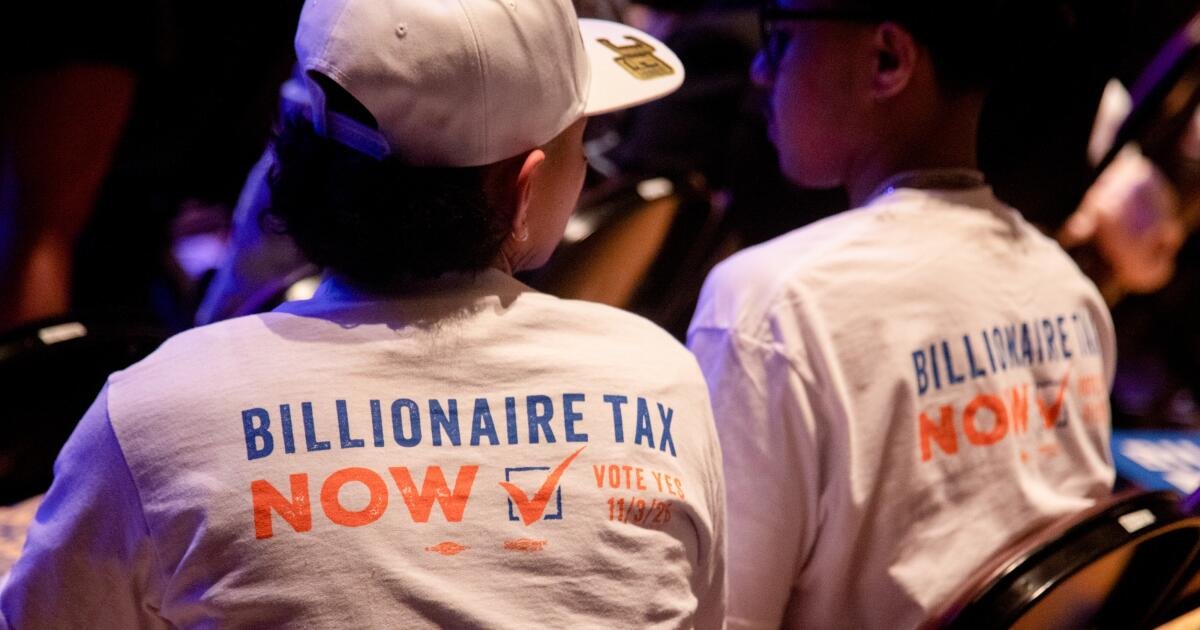
A controversial proposal to tax California billionaires to fund healthcare has tenatively qualified for the November ballot, setting the stage for a more intense and expensive battle over whether the state should squeeze the ultra-rich.
Supporters say the proposed tax is crucial to compensate for federal healthcare funding cuts, approved by President Trump and the Republican-controlled Congress, that will harm millions of the state’s most vulnerable residents.
In April, supporters of the billionaire tax submitted nearly 1.6 million signatures, roughly double the number needed to qualify. The California secretary of state’s office on Wednesday declared that enough valid signatures were submitted. The initiative will officially qualify for the Nov. 3 ballot on June 25 unless the proponents withdraw it beforehand.
The initiative would impose a one-time tax of up to 5% on taxpayers and trusts with assets valued at more than $1 billion, with some exceptions, such as property. The levy could be paid over five years. Ninety percent of the revenue would fund healthcare programs, and the remaining funds would be spent on food assistance and education programs. The proposal would cost the state’s richest residents about $100 billion if a majority of voters support it.
Opponents of the measure say the proposal is an ineffective attempt to address the long-term effects of the healthcare cuts and would destroy California’s economy and budget.
The state budget in California is already largely dependent on income taxes paid by its highest earners. Because of that, revenues are prone to volatility, hinging on capital gains from investments, bonuses to executives and windfalls from new stock offerings, and are notoriously difficult for the state to predict.
The proposal already triggered a fierce debate, accentuating the divide between the rich and poor in a state that’s expensive to live in.
The Service Employees International Union-United Healthcare Workers West and other supporters of the billionaire tax say that it would raise $100 billion, offsetting federal funding cuts to healthcare as well as funding education and state food assistance.
But supporters face strong opposition from billionaires with deep pockets. Tech executives and other business leaders oppose the idea and have threatened to move to other states. Opponents say taxing billionaires would harm California’s economy while not addressing underlying financial issues.
The proposal also has divided politicians within the Democratic Party. California Gov. Gavin Newsom spoke out against the billionaire tax, expressing fears that billionaires would move out of the state. But U.S. lawmakers such as California Rep. Ro Khanna and Vermont Sen. Bernie Sanders have backed a billionaire tax, saying the rich should pay their fair share to fund essential services.
Business executives have already poured millions of dollars into groups that oppose the billionaire tax or are promoting alternative solutions to wealth inequality.
Tech executives, venture capitalists and business leaders have donated roughly $118 million to a nonprofit called Building a Better California, according to data on the secretary of state’s website. Most of the funding comes from Google co-founder Sergey Brin, who has given more than $82 million to the group. Executives from DoorDash, Ripple, Stripe and other companies also have contributed.
The group says it supports policies such as expanding access to affordable housing, protecting innovation, requiring government transparency and securing more stable education funding.
PayPal and Palantir co-founder Peter Thiel has contributed $3 million to the California Business Roundtable, which opposes the tax. Former Google Chief Executive Eric Schmidt donated $1 million to that group as well.
California would probably collect tens of billions of dollars from the wealth tax if it passed, but it could also lose other tax revenue, a December letter from the state legislative analyst’s office said. The office also mentioned that it’s tough to predict the exact amount the state would collect because of factors that can affect a billionaire’s wealth such as fluctuating stock prices.
California billionaires who were residents of the state as of Jan. 1 would be affected by the ballot measure if it passes. Some wealthy residents announced plans to moves out of state. On Dec. 31, venture capitalist David Sacks announced that he was opening an office in Austin, Texas, the same day Thiel publicized his firm had opened a new office in Miami.
Food
US-Iran deal takes ‘immediate effect’ after both sides sign, Pakistan premier says
WASHINGTON (AP) — Pakistan says that the deal to end the war in Iran is taking ‘immediate effect’ after both sides have signed it, but that there will still be a formal signing ceremony on Friday.
Pakistani Prime Minister Shehbaz Sharif said leaders of both the U.S. and Iran had signed the agreement and endorsed him as a mediator.
He said in a post on X that the deal “shall enter into force with immediate effect and as a first step, Islamic Republic of Iran will instantly reopen the Strait of Hormuz and the United States of America will immediately lift the naval blockade.”
Sharif said that Pakistan and co-mediator Qatar will still host an official signing ceremony on Friday in Switzerland. His post came shortly after President Donald Trump said he’d signed the agreement during a dinner at the Palace of Versailles.
THIS IS A BREAKING NEWS UPDATE. AP’s earlier story follows below.
WASHINGTON (AP) — An agreement to end the war between the United States and Iran calls for Tehran to dilute its stockpile of highly enriched uranium and would waive sanctions on the country, immediately allowing Iran to sell its oil freely in a major concession from Washington, according to language released by both countries Wednesday.
The agreement would also open the Strait of Hormuz toll-free for two months and affirm a commitment to Lebanon’s territorial integrity in the face of Israel’s invasion against the Hezbollah militant group.
U.S. officials dictated draft language to journalists after days of secrecy, speaking on condition of anonymity. Iranian state TV later released text that largely tracked what the U.S. put out.
Though officials had said U.S. President Donald Trump and U.S. Vice President JD Vance had digitally signed the agreement Sunday and that a ceremonial signing would be held Friday in Switzerland, a U.S. official who spoke on condition of anonymity to share details about the agreement said Trump signed the deal while at Versailles on Wednesday.
The U.S. official said Iranian President Masoud Pezeshkian also signed it Wednesday, though Iran did not immediately comment. It wasn’t immediately clear if that act started a 60-day negotiating clock to reach a final deal. It was also not clear how Trump’s signing of the deal at Versailles differed from his digital signing on Sunday.
“It’s signed,” Trump said as he left Versailles, the historic palace where he dined with French President Emmanuel Macron following a trip to the Group of Seven summit in France.
Text of the agreement has not been formally released. The draft read by U.S. officials includes language that Iran agrees not to develop or procure nuclear weapons and requires that Iran’s highly enriched uranium be downgraded on site as a minimum.
In return, the U.S. will move to waive, but not eliminate, some wide-ranging sanctions against Iran. The agreement also secures free passage of the strait for only 60 days, and it does not preclude fees in future, according to the U.S. officials and the Iranian draft.
It was not immediately clear if a ceremony would still be held Friday in Switzerland or whether the summit would instead be used for further negotiations.
The deal will stop the fighting and start more negotiations
The U.S. and Israel went to war on Feb. 28 in part to prevent Iran from ever getting a nuclear weapon. Trump has cited various goals for the war, including at times vowing it would end Iran’s nuclear and missile programs and its support for Hezbollah and other proxy groups in the region. He also suggested it could lead to toppling the Iranian government.
The interim deal falls short of all those goals, but Trump hailed it Wednesday.
“Nobody knows what it is, but it’s very strong,” Trump said in France, where he attended a Group of Seven summit.
But he also opened the door to abandoning it: “It’s a memorandum of understanding, and if I don’t like it, we’ll go back to shooting at them, dropping bombs.”
Much of the agreement would restore the status quo before the war, including ending hostilities, restarting talks between the U.S. and Iran over Tehran’s nuclear program, and reopening the strait, the crucial passage for the world’s oil and natural gas and whose closure created a historic energy crisis.
It opens a two-month period for nuclear negotiations and appears to offer Iran several benefits up front while extracting little in return.
The U.S. agreement to immediately allow Iran to sell its oil freely and the offer to eventually lift all sanctions represent major concessions that go beyond the terms of Iran’s 2015 nuclear deal with world powers. Trump withdrew America from that Obama-era pact in his first term, declaring it the “worst deal ever.”
The Islamic Republic maintains that its nuclear program is peaceful.
The accord likely will draw intense opposition in Washington, and it appears to be a major setback for Israeli Prime Minister Benjamin Netanyahu, who has come under criticism at home from the media, his opponents and even some allies as details emerge.
Under the Obama-era nuclear agreement with Iran that Trump pulled out of, Iran also agreed to restrictions on its nuclear program and promised never to build an atomic weapon.
The new U.S.-Iran deal includes an end to the fighting in Lebanon between Israel and the Iranian-backed militia Hezbollah. That is one of the most delicate parts of the agreement because Israel has maintained it will continue to defend itself and to occupy vast swaths of Lebanon. Iran has said Israel must withdraw under the deal.
The document also has provisions to ensure the territorial integrity of Lebanon after Israel’s latest attacks against Hezbollah in Lebanese territory. Israel has rejected the prospect of withdrawing from Lebanon, but the agreement expressly states that military operations in Lebanon must stop with the signing of the memorandum.
Major concessions have been offered to Iran
Some concessions to Iran — including the full lifting of sanctions and the release of frozen assets — would happen gradually and be linked to progress in the nuclear talks, according to officials from Pakistan, a key mediator. They outlined some of the deal’s major points on condition of anonymity because of the sensitivity of the issue.
But in the meantime, the U.S. will issue waivers to sanctions that allow Iran to sell oil freely.
The Islamic Republic’s oil export revenues in 2024 were more than $46 billion. Its main buyer of oil, China, is believed to have bought at below-market prices because of its willingness to ignore the sanctions.
Granting oil waivers at the start of the 60-day talks strips the U.S. of a major point of leverage. Only at the conclusion of the overall deal in 2015 were sanctions on Iran’s oil lifted.
The interim deal also opens the door to ending all sanctions Iran faces from the U.S. and at the U.N. — including those over Tehran’s weapons programs and human rights abuses — though it says the schedule for that will be worked out later. Still, that far surpasses the 2015 deal, which only lifted some sanctions in exchange for Iran drastically reducing its enrichment and stockpile of uranium.
The accord would also provide Iran with at least $300 billion to rebuild — an extraordinary figure and another major benefit for Iran. The money also appears dependent on the progress of further negotiations.
Vance has said Gulf Arab nations would invest that amount. But Gulf countries would likely be reluctant to help Iran after Iranian attacks in the war destroyed oil facilities and other sites in their territory.
Trump reiterated Wednesday that the U.S. would not contribute and said it was up to other countries if they wanted to invest.
The pact would provide relief to the global economy
The deal provides a major win for the global economy — the reopening of the Strait of Hormuz, the narrow mouth of the Persian Gulf through which a fifth of all traded oil and natural gas once passed before the war began. Since then, Iranian attacks on shipping and the threat to vessels effectively shut the strait.
The strait’s closure drove up energy prices around the world and made many basics, including food, more expensive. Iran let through some vessels that paid tolls, something never done before in the strait, which has long been considered an international waterway. The U.S. later provided military support to get other tankers out, but traffic was nowhere near levels before the war.
The deal also says the U.S. will lift a blockade imposed on Iranian ports and that the strait will return to its prewar traffic levels in 30 days, while acknowledging Iranian mines may need to be destroyed.
___
Gambrell reported from Dubai. Magdy reported from Cairo. Catalini reported from Morrisville, Pennsylvania. Associated Press writers Aamer Madhani in Evian-les-Bains, France, Darlene Superville in Geneva, Angela Charlton in Paris and Munir Ahmed in Islamabad contributed to this story.
Food
Oldest known evidence of plague found in prehistoric cemeteries

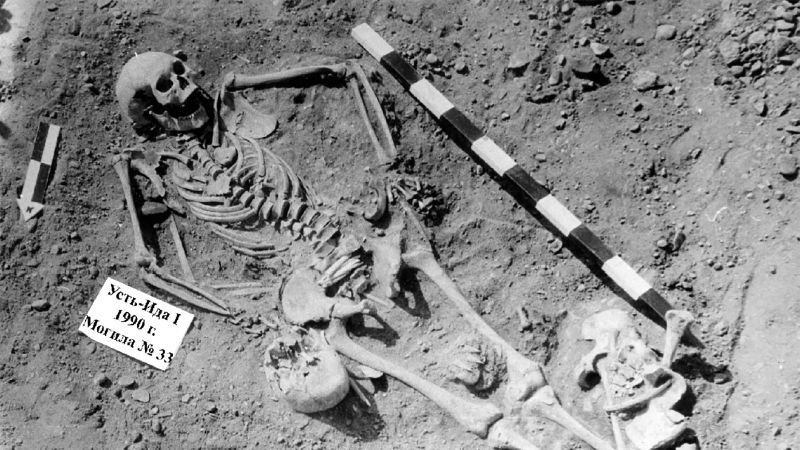
Ancient DNA recovered from cemeteries in southeast Siberia has revealed previously unknown strains of plague that had a deadly impact on an unexpected group of people 5,500 years ago.
The early plague strains, detailed in a new study published Wednesday in the journal Nature, may be the oldest known evidence of the disease in humans.
Plague is caused by the bacterium Yersinia pestis and has led to some of the most devastating disease outbreaks in human history, including the infamous Black Death in the 14th century, which killed an estimated 25 million people over five years. Before the discovery of the newly identified strain, some of the earliest known strains of Yersinia pestis associated with bubonic plague had been dated to about 3,800 years ago.
Previously, older strains appeared to lack the genetic traits that enabled them to spread, leading scientists to think that early plagues were unlikely to trigger outbreaks. With sparse evidence of other lethal precursors of the disease, scientists questioned when and where the bacterium originated before it spread from early livestock such as sheep and infected fleas to humans.
The newly discovered strain almost immediately seemed to add a twist to the story. Researchers came across it while they were trying to solve another puzzle in the remains of hunter-gatherers buried in cemeteries of the Lake Baikal region. Two of the largest cemeteries contained an unusually large number of children and young adolescents whose remains lacked any trauma or apparent cause of death.
An analysis of ancient DNA within the remains revealed the unexpected presence of plague bacteria in 18 of 46 individuals from the small, mobile communities — as well as a genetic factor that might have increased the infection’s severity.
The findings add to growing evidence that suggests where plague might have originated, experts say — and also challenge ideas about what enabled plague to spread.
“Hunter-gatherers are constantly moving around the landscape,” said lead study author Ruairidh Macleod, a research fellow at the UK’s University of Oxford, during a news conference Tuesday to discuss the results.
“The theory is that infectious disease can’t really take hold and devastate entire communities in this way. Typically, if somebody gets ill, they’ll move somewhere else. The fact that we’re finding this happening in an isolated group of prehistoric hunter-gatherers challenges that epidemiological theory.”
An unexpected outbreak
Archaeologists have excavated the four ancient cemeteries around Lake Baikal for decades. The region was rich in resources, including waters for fishing, and the cemeteries show that the hunter-gatherers buried their dead nearby for generations — perhaps to claim the region for themselves, Macleod said.
The study authors combined advanced DNA sequencing of genetic material, in-depth archaeological research and radiocarbon dating to paint a complete picture of what took place in the region thousands of years ago.
“There was very clear radiocarbon evidence that this mass mortality event took place over a very, very short period of time,” Macleod said, “so all of these deaths are occurring contemporaneously with each other.”
Genetic research shed light on the kinship between children and adults buried in the cemeteries.
Sometimes, siblings, parents and children were buried together, suggesting the disease passed from one family member to another as they cared for one another — and a lack of understanding for how the disease spread, said study coauthor Eske Willerslev, evolutionary geneticist and professor at Denmark’s University of Copenhagen and the UK’s University of Cambridge.
Other graves showed relatives who were buried apart, presumably because they died during different waves of the disease, according to the study. Two outbreaks are believed to have occurred a few hundred years apart in the region, the study found.
“The authors are able to detect probably Y. pestis infections at a rate of 39% across the cemeteries investigated — this is astoundingly high and certainly has the potential to rewrite how we understand early infections of the pathogen,” said Ian Light-Maka, postdoctoral associate at the Max Planck Institute for Infection Biology in Berlin.
“Previous research has only found what seem to be sporadic, relatively isolated infections of the earliest versions of Y. pestis with no compelling evidence of human-to-human transmission chains, but the datasets may have simply been too incomplete to assess this as a possibility. This study changes that.”
Light-Maka, who was not involved with the study, also cautioned that while human-to-human transmission was likely, further research at different sites during the time period is needed to confirm it.
The researchers were able to extract ancient bacterial genomes from teeth, which suggest that the unique plague strain originated 5,700 years ago. It is different from other known plague strains, both ancient and modern, the researchers said.
The genomes also revealed a unique superantigen, or a microbial toxin that can increase an infection’s severity and activate extreme immune responses — one that appears to have predominantly affected children between the ages of 7 ½ and 11 years old.
“A really poignant example is this grave where we see three very young girls having presumably died at the same time,” Macleod said. “It’s clearly having a very tragic impact on the children, in particular, in the communities.” The girls were cousins, and two were siblings, the youngest being 4 or 5 and the oldest likely 9 years old.
“This finding changes our understanding of the earliest plague outbreaks: Even before the bacterium evolved efficient flea-borne transmission, these ancient strains appear to have carried a potent combination of virulence factors that could make infection highly lethal,” said senior study author Martin Sikora, population geneticist and associate professor at the University of Copenhagen.
The superantigen is also present in modern-day Yersinia pseudotuberculosis, an infection that naturally occurs in animals. Humans can contract it from eating raw or undercooked contaminated food or untreated drinking water, an association that may offer clues to the plague’s earliest mode of transmission as well.
Tracing how plague spread
So how did the hunter-gatherers become infected in the first place? It was likely through large rodents called marmots, the study authors determined, which have a deep evolutionary history of carrying the bacteria that causes plague. Marmots remain a primary species in the region that can still cause plague cases.
The plague victims likely hunted, skinned and butchered marmots for their meat and fur, which would have exposed members of the community to the bacteria, Macleod said. Marmot teeth pendants were also found within the graves.
“We believe that marmots are the oldest reservoir species of plague,” Macleod said. “This is consistent with a hypothesis that plague originated in this part of the world.”
Some researchers believe that plague originated in Central or Northeast Asia before spreading across Eurasia — long before the rise of agriculture, dense populations or crowded cities associated with later outbreaks, the study authors said.
“This research illustrates the vast complexity of ancient plague ecology by showing in detail how zoonotic diseases ravaged more than farming cultures,” said Dr. Taylor Hermes, assistant professor in the department of anthropology at the University of Arkansas. Hermes has researched ancient plague transmission across Central Asia but was not involved in this study.
“It echoes how other life ways, be that hunter-gatherer or nomadic pastoralist, played major roles in disease evolution through their vital yet sometimes deadly relationships with animals,” Hermes wrote in an email.
But many mysteries endure about plague, including how it spread across Northern Eurasia so quickly.
“After the outbreak in the Baikal hunter-gatherers who are both culturally and genetically isolated from non-hunter-gatherer populations, it appears in Northern Europe only 200-300 years later,” Macleod wrote in an email. “Did this happen by really rapid transmission through wild animals, from spillover infections into humans at either end? How much was human-to-human transmission involved?”
Tracing plague’s ancient path is crucial to understand how pathogens evolve over time — especially given that plague cases still occur each year, Willerslev said.


Man arrested on suspicion of attempted murder after boy injured in UK crocodile enclosure. #BBCNews


Michelle Obama delivers emotional tribute to her husband
Former first lady Michelle Obama paid an emotional tribute to her husband, former President Barack Obama, during the opening …
Jason Sudeikis Frustrated With Olivia Wilde Sharing Breakup Convo: ‘Real Story Is Being Overlooked’
Jason Sudeikis is reportedly frustrated after his ex-fiancée, Olivia Wilde, went into detail about the end of their relationship. During...

Timothy Busfield Asks Judge to Dismiss Grand Jury Indictment
Timothy Busfield wants his indictment thrown out … telling a judge the prosecutors’ presentation of evidence to the grand jury...


I Was Crushed by Cows | It Happened To Me
A violent cattle attack left Mary-Jane needing skin grafts and fighting for her life. She was crushed and dragged along...


AI predicts entire first round of NBA draft
There might still be a debate about the No. 1 pick in the 2026 NBA Draft. The early consensus centered...


Michelle Obama praises her husband: ‘You were unflappable’
Former first lady Michelle Obama praised her husband for his resilience in the face of criticism, including conspiracy theories …


The UK is banning social media for children under the age of 16. Should the US do the same? #BBCNews


Obama at presidential center opening: Full speech
Former President Barack Obama speaks at the opening ceremony of his presidential center in Chicago. The highly anticipated …


Tree where Robin Hood was rumored to hideout has died
Scientists believe the 1200-year-old oak tree in Sherwood Forest associated with Robin Hood has died after it failed to produce...
-

 Business5 days ago
How much of Musk’s wealth comes from government help? Virtually all of it
-

 LifestyleNews2 weeks ago
120 minutes of strength training per week may help extend lifespan
-

 Politics1 week ago
What to know about the stabbing that set off fiery riots in Northern Ireland
-

 Video6 days ago
Download fans say what they love about the festival. #DownloadFestival #BBCNews
-

 Video6 days ago
Why SpaceX IPO isn't about space. #SpaceX #ElonMusk #BBCNews
-

 HealthNews6 days ago
The people of Okinawa, Japan only eat until they are about 80 percent full, then stop — and the practice has been linked in multiple peer-reviewed studies to lower rates of cardiovascular disease, slo
-

 TravelNews6 days ago
My Paternal Instinct Should’ve Warned Me About Netflix’s Maternal Instinct
-

 Food6 days ago
Pope Leo’s plane was grounded. Then the King of Spain stepped in to help