
PM office canada
First Nations court challenges pile up against Carney’s Pacific Link pipeline
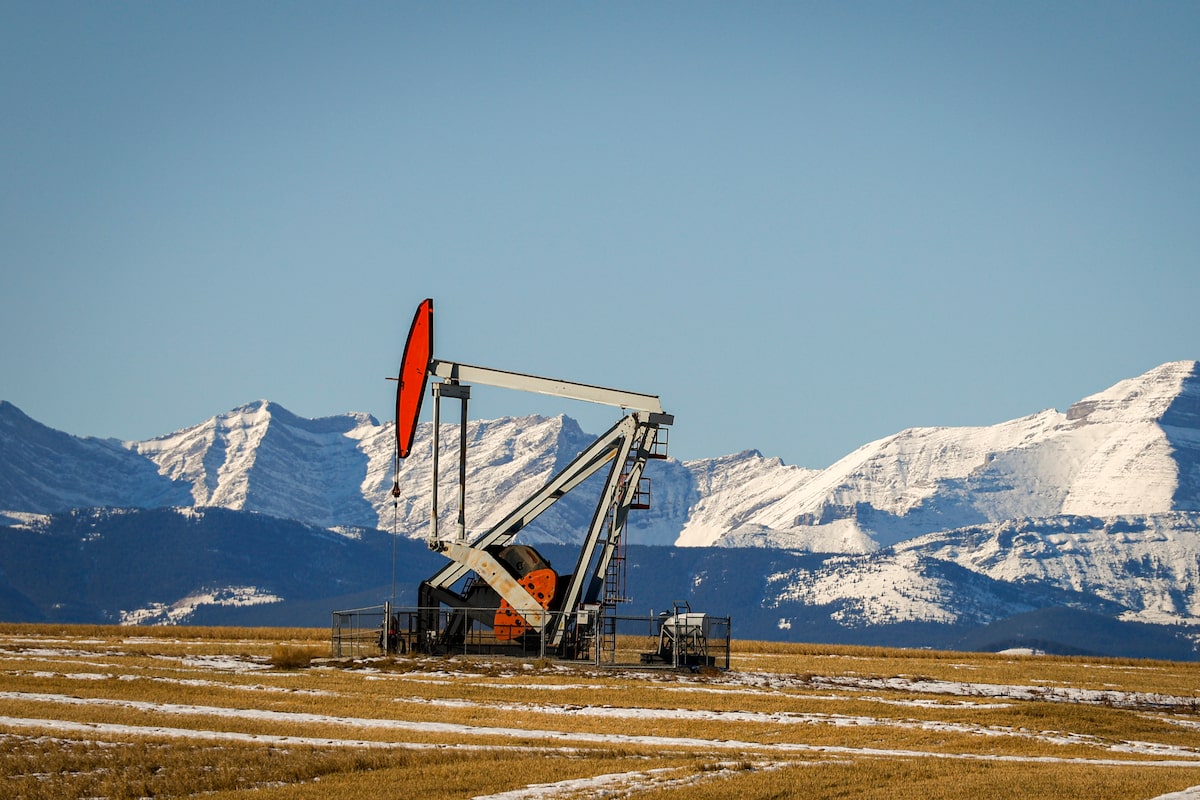
Indigenous leaders have launched a new volley of court challenges against Prime Minister Mark Carney’s push to rapidly approve the Pacific Link oil pipeline, arguing Ottawa failed to adequately consult an array of First Nations.
Two new applications for judicial review, representing nine First Nations, call on the Federal Court to quash Ottawa’s declaration of the proposed oil pipeline as a project of national interest.
At a Monday press conference in the Vancouver suburb of Richmond, Indigenous leaders asserted that Ottawa’s plan is unconstitutional and effectively pre-approved the pipeline after cursory talks with some First Nations over three months through the summer.
“It bypasses the meaning of what consultation is,” said Terry Teegee, regional Chief of the British Columbia Assembly of First Nations. “Other First Nations should all be concerned across this country.”
The federal government, at the start of October, announced the national-interest designation for the Pacific Link oil pipeline, from the Edmonton area to a port in the Vancouver region. This plan provides Ottawa’s backing at the start of the process and will enable it to grant many necessary and varied permits much more quickly than in the past. It also marked the first such move under the Building Canada Act, a centrepiece of Mr. Carney’s work to shift Canada’s economy away from the capricious whims of the United States.
The latest court challenges up the stakes against the national-interest designation. In October, Cold Lake First Nations in Alberta filed the first case in Federal Court, focused on inadequate consultation and the related Pathways carbon capture project in the oil sands that Mr. Carney has tied to the Pacific Link pipeline.
The federal Liberals want the Pacific Link review process done by September and the pipeline built and moving oil by 2032, at an estimated cost of about $40-billion. This is an unprecedented timetable for such major infrastructure work in recent decades and more so echoes pipeline building in the 1950s.
Oil industry faces major spending hikes to fill planned pipeline expansions
While Mr. Carney aims to transform the Canadian economy in a handful of years, the risk looming over these ambitions has always been legal challenges against the fast-track pipeline review process.
In the 2010s, before the Trans Mountain pipeline expansion was eventually built, setbacks in court because of inadequate Indigenous consultations delayed the plan for years. The legal losses followed former Conservative prime minister Stephen Harper’s legislative changes to speed pipeline approvals.
As of last year, Canada produced 5.4 million barrels of oil a day – double the output of the mid-2000s when the oil sands boom began. The country is the world’s fourth-largest oil producer, with 3.9 million barrels a day going to the United States.
In the federal government’s official order on Oct. 1 declaring the Pacific Link pipeline in the national interest, it stated it had “taken into account the concerns” identified in consultations with Indigenous people. It also described “meaningful dialogue” and concluded “Canada has fulfilled the duty to consult, consistent with the honour of the Crown,” invoking key pillars of constitutional obligations affirmed in several Supreme Court of Canada rulings.
As Ottawa prioritized Pacific Link, Energy Minister Tim Hodgson acknowledged legal challenges were coming. “Whether they’ll be successful or not is a very different question,” he said on Oct. 1.
Pacific Link would carry a million barrels a day, on the same terrain and with about the same capacity as Trans Mountain.
Here’s how Carney’s promises stack up ahead of his government’s second budget
On Monday, a spokeswoman for Intergovernmental Affairs Minister Dominic LeBlanc said Ottawa had “conducted rigorous consultations” with more than 110 Indigenous communities near or along the potential pipeline route.
“Canada will continue to uphold its duty to meaningfully consult with Indigenous peoples,” spokeswoman Eve Loignon-Giroux said in a statement.
In the new Federal Court challenges, the Cheam First Nation alleged that “Cabinet erred in law by proceeding without adequate consultation.” The Cheam – located on the Fraser River east of Vancouver near the Trans Mountain pipeline and proposed Pacific Link – filed as an applicant on behalf of itself and seven other First Nations.
“We stand up to hold the Federal Crown accountable,” Cheam Chief Michael Victor said. “Our Nation believes in Nation-building but it must treat First Nations as equal constitutional partners.”
The Tsartlip First Nation, near Victoria, also announced on Monday that it had filed a Federal Court challenge, stating that Ottawa’s Major Projects Office only provided “very general information” about the proposed pipeline and calling the consultation process “defective.”
Experts have forecasted details of the legal challenges the federal government would face.
In early October before the first legal challenge, University of Calgary law professor David Wright described the Building Canada Act as “experimental deregulation,” a law that had come into force in June “after a virtually unprecedented expedited legislative process.”
The key question is whether Ottawa fulfilled its duty to consult and accommodate each First Nation involved. Prof. Wright cited a 2020 Federal Court of Appeal decision, which Ottawa won, after the Trans Mountain project had been challenged a second time over inadequate Indigenous consultation. The ruling, in its look at meaningful consultation, spoke of “two-way dialogue” that leads to “demonstrably serious consideration of accommodation.”
“How the government will try to achieve this in such an extremely compressed timeframe remains to be seen,” Prof. Wright said in his analysis of the goal to complete the Pacific Link review by September. “The term ‘mission impossible’ comes to mind.”
Last week, Dawn Farrell, chief executive officer of Ottawa’s Major Projects Office, told MPs on Parliament Hill that her team compiled the concerns of affected First Nations this summer and is still consulting with them. She said she understands some First Nations are critical of the accelerated approval process.
“We haven’t been able to show them what our intentions are and we haven’t been able to follow through and make sure that the work that we do is as we say it’s going to be,” Ms. Farrell told a meeting of the Standing Committee on Environment and Sustainable Development.
PM office canada
If the Democrats win the U.S. midterms, what would change for Canada?
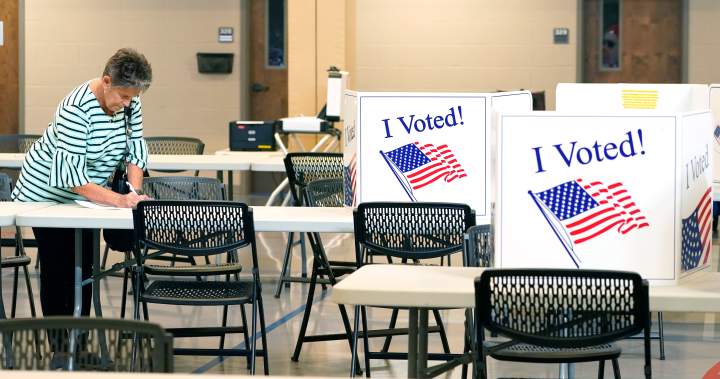
American voters are heading to the polls on Tuesday for the U.S. midterms and many in Ottawa will be watching the results closely for what it means for the future of U.S. President Donald Trump’s trade war and threats against Canada.
Since he took office for his second term in January 2025, Trump has repeatedly escalated his economic attacks against Canada. Democratic candidates have seized on his tariff policies and trade war against Canada, linking them to affordability struggles.
Democrats appear to be surging across the country, with some polls predicting Democratic control of the House of Representatives and the Senate being in play.
However, would anything change for Canada if Democrats sweep both chambers and win the midterms?
While Canada “historically has never been an election issue,” in the U.S., that appears to have changed this year, said University of Ottawa political science professor Emily Regan Wills.
“Canada is an election issue because Trump has made Canada into an enemy. A lot of people are like, why would you antagonize the nice guys?” she said.
Democratic candidates like Abdul El-Sayed in Michigan and Troy Jackson in Maine, have tried to link Trump’s tariffs against Canada with higher costs for American consumers.
“If you’re picking a fight with Canada, you’re the asshole,” El-Sayed told reporters last month.
But the cloud of uncertainty around Trump’s Canada trade policy is “unlikely” to change even if the Democrats sweep the election, said University of Guelph political science professor Julie Simmons.
The two major sets of tariffs – the Section 232 sectoral tariffs on steel, aluminum and autos as well as the sweeping 50 per cent Section 338 tariffs – were imposed via executive order, not Congress.
Trump simply circumvented the U.S. Congress in imposing his tariffs on Canada.
“He can bypass Congress with his use of things like the Trade Expansion Act and the Trade Act of 1930, which have been two tools that he has used thus far. It’s unlikely that that will change,” Simmons said.
While Congress does need to approve any new treaties the U.S. enters, it can do little to curb Trump’s use of executive power to impose tariffs the way he has, Wills said.
Trump has signaled he will become more confrontational in executing his agenda in the event of a Democratic sweep.
“I guess I’ll become Mr. Veto,” Trump told the New York Post in a podcast that released on Monday.
“In order to override that veto, the Democrats would have to have two-thirds majority in a vote. It’s unlikely that even if they do take back both the House of Representatives and the Senate, that they would have that kind of a supermajority,” Simmons.
However, the Democrats do have a big tool in their toolbox in stopping Trump’s agenda.
“A Democratic sweep does put impeachment of Donald Trump on the table,” Wills said.
“However… there’s no guarantee that an impeachment would lead to his removal from office,” she added.
Trump was impeached twice during his first time. First in 2019, for abuse of power and obstruction of Congress in 2019. Later in January 2021, a week before his term ended, for inciting an insurrection.
In both instances, he was not removed from office because of the impeachment. A simple majority in the House is enough to impeach a president, but only a two-thirds vote by the Senate can remove a president from office.
Whether Democrats win both chambers or just one, Canadians should be cautious in assuming they would all be opposed to tariffs, Simmons said.
“We also have to remember that even if Congress were to become Democratic in both houses, we can’t assume that Democratic representatives would want to remove all tariffs,” she said.
“It’s incumbent upon trade negotiators in Canada to think of ways to pitch to their Democratic colleagues across the border ways in which reduced tariffs can somehow be in the interests of American voters and also American business owners,” she said.
It is also likely that Trump could become more hostile, not less, if Republicans lose control of Congress, she said.
“If the Republicans are to lose both houses, that given Mr. Trump’s narratives of the past, we can anticipate that he may turn and blame Canada for those outcomes,” Simmons said.
U.S. Ambassador to Canada Pete Hoekstra has said American officials are “closely watching” Canadian politicians for signs of election interference ahead of the midterm elections.
Prime Minister Mark Carney rebutted Hoekstra and said there was “no merit” in the claims that Canada was looking to interfere in American elections.
PM office canada
24 hours in Antigua: Mark Carney’s priorities at this year’s Commonwealth Summit
Prime Minister Mark Carney’s oft-stated determination to keep his government focused on what Canadians can control could be tested today, as he meets with leaders from the 55 other member countries of the Commonwealth in Antigua.
As he boarded his flight with his wife Diana on Monday, Carney gestured as if he couldn’t hear reporters yelling for clarification on where things stand following his conversation with U.S. President Donald Trump over the weekend.
Trade negotiations could return to a full boil, but for now they remain on a back burner while the White House focuses on the verdict about to be rendered by American voters in their midterm elections.
The future of the Canada-U.S. relationship hangs so heavy over the Carney government’s agenda that it could be hard to focus on anything else. But this week’s Commonwealth talks are the first in a series of multilateral summits this month where Canadian officials will pursue alternative partnerships in trade, security and diplomacy.
Here are five things to watch for:
1. Push to double intra-Commonwealth trade
The Commonwealth has three main priorities leading up to 2030: democratic resilience, economic resilience and environmental resilience.
On that first priority, ministers, including Foreign Minister Anita Anand, met Sunday to welcome the restoration of an elected government in Gabon, the central African country which had its membership partially suspended following a military coup in 2023.
But the main focus at this summit is trade partnerships: specifically the association’s ambition to lower trade barriers and double trade between member countries by the time they meet for their next biennial summit.
That dovetails perfectly with the Carney government’s attempt to pivot away from the U.S.
“I think people don’t realize the economic clout of the Commonwealth. There’s almost a trillion dollars of trade,” said Arif Lalani, a former diplomat who served as a senior official the last time a Canadian prime minister attended the Commonwealth Summit, in 2022.
“There are studies which show that it’s cheaper to do business between Commonwealth countries because we have the same practices, same language, generally the same set of regulations. So it’s definitely a place to pursue the economic diversification agenda,” Lalani said.
His fear, however, is that the Commonwealth’s “relevance is growing faster than its capacity to deliver.”
Leaders need to get more outcome-oriented on trade, he said. He agrees with Carney’s efforts to expand this focus to defence and security co-operation too.
At a time when conflicts over choke points like the Strait of Hormuz are restricting global trade, “Commonwealth countries have a lot of coastline, they have strong navies, and so I think there’s something that can be done to increase maritime co-operation,” Lalani said.
2. Evolving Caribbean relationships
This is Carney’s first trip to the Caribbean as prime minister.
That diplomatic deficiency will be addressed this morning in a bilateral meeting with this year’s Commonwealth host, Antigua and Barbuda’s Prime Minister Gaston Browne, followed by a working breakfast Canada is hosting for all the Caribbean leaders attending this year’s summit.
While not a complete gathering of CARICOM leaders, officials briefed reporters that this breakfast is a chance to discuss trade and investment, climate action and regional security.
Vandana Kattar, who worked in the prime minister’s office under former prime minister Justin Trudeau, says Carney’s approach so far makes sense to her.
“Multilateralism is important to him,” she said. Carney went after some of the bigger pieces of his puzzle first, she reckons — pursuing the “low-hanging fruit” of a closer relationship with Europe, attempting to resolve tariff tensions with China.
“Those are big pieces of the puzzle that he’s been able to put together,” she said. But he also needs to fit smaller pieces into that puzzle, like nurturing Canada’s relationships in the Caribbean, “otherwise that doesn’t complete the whole picture.”
3. Climate finance commitments
“You can’t go to the Caribbean countries and not talk of climate resiliency,” Kattar said. “They’re the ones impacted the most.”
Canada’s already contributed $4.65 million over three years to the Commonwealth’s climate finance access hub to help small island states. It’s also made a bigger $13-billion commitment to support all developing countries adapt to the consequences of climate change — like stronger and more frequent hurricanes — over the next five years.
Canada hopes to amplify the voices of smaller Commonwealth partners on climate issues, officials told reporters prior to the trip.
“That’s what actually builds the trust, and that’s what ensures that Canada is seen as a reliable and a trustworthy partner that actually listens to the concerns of their partners and [is] not just forcing their own agenda onto them,” said Climate Action Network’s Soomin Han.
Han believes conversations on climate financing between big and small Commonwealth partners might be more productive than at United Nations climate conferences, where a few large countries can block progress.
“Countries should not have to take out more debt simply to survive a crisis they contributed comparatively little to creating,” she said.
4. Tensions, debate on reparations
While the Commonwealth has 56 members, King Charles is the head of state in only 15 of them. Half of those are Caribbean countries, and for the week leading up to this summit, he’s been touring the region, amid ongoing political pressure for the Crown and the government of the United Kingdom to apologize for its historical role profiting off the slave trade in British colonies.
So far, the King has acknowledged “the great suffering and injustices of the past in these islands and beyond,” but he has not apologized.
Canadian officials briefing reporters prior to the trip said Canada acknowledges the generational and lasting impact of slavery, and supports “open and respectful dialogue” on reparations, but noted there are a “diversity” of perspectives on reparatory justice among Commonwealth members.
Nicholas Marcus Thompson, an advocate for reparations for Canada’s Black communities, says the current U.K. government’s opposition to negotiating reparations for slavery is “simply a non-starter” for Caribbean nations.
“Reparations is not giving away a freebie. It’s repaying what you took, right? Wealth extracted from enslaved Africans built businesses, financial institutions, universities,” said Thompson, who is also the president and CEO of the Black Class Action Secretariat.
“It would have been billions of dollars in today’s currency.”
5. The Trump factor
Former diplomat Lalani said he believes Canada is heading into this summit with more credibility than it’s had in the past, thanks to the “provocative vision” Carney laid out in his speech on middle powers at the World Economic Forum in Davos last winter.
Carney’s conversations today won’t be limited to people he’s close to, like Australian Prime Minister Anthony Albanese. It’s also a chance to talk to leaders with whom he doesn’t have full agreement — without being overshadowed by superpowers like the U.S. or China.
“Canada can have a discussion with other countries without the baggage of having the United States at the table,” he said.
“The biggest destabilizing power in the world right now is the United States. … That requires a candid discussion.”
PM office canada
B.C. First Nations file legal challenges to feds’ Pacific Link pipeline decision
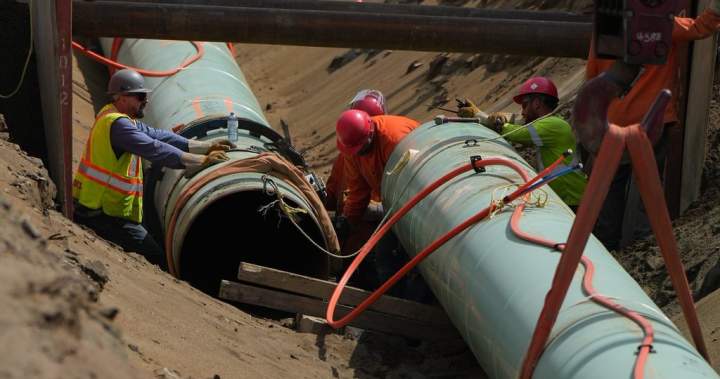
First Nations in British Columbia have filed eight separate legal challenges to the federal government’s decision to list the proposed Pacific Link oil pipeline between Alberta to B.C.’s coast as a project of national interest, fast-tracking its review.
Among them is Tsartlip First Nation on Vancouver Island, which said it filed a Federal Court application for judicial review on Friday, asserting Ottawa had not “given sufficient information about the project and its potential impacts.”
Adam Olsen, a spokesman for the nation, called the pipeline decision “reckless” and “rushed,” saying in an interview on Monday that Ottawa had failed in its duty to consult Indigenous communities.
“Tsartlip has a responsibility, as has been expressed by our chief and council, to look after its territory, stand up for those places for the past, present, and future,” said Olsen, who is a former B.C. Green legislator.
“These are incredibly important fishing areas for our people, and so the process was rushed. It was through the middle of summer and the government failed its basic test.”
The pipeline was the first project to receive the national interest designation under the Building Canada Act during an announcement by Prime Minister Mark Carney and Alberta Premier Danielle Smith last month.
It means the project would be subject to a fast-tracked, streamlined regulatory process conducted by the federal major projects office.
Olsen said the process is moving too fast.
“The national interest designation concerns a multibillion-dollar publicly funded project that is not expected to be completed until 2032,” he said in the Tsartlip statement. “Yet the consultation and decision-making process happened in less than three months.”
The proposed pipeline would largely follow the path of the existing Trans Mountain pipeline to an export terminal in Metro Vancouver, with an estimated price tag between $35.2 billion and $42.7 billion.
The nine nations involved in challenging Ottawa’s decision are located along the proposed pipeline and tanker routes or use the Fraser River for fishing.
The Boston Bar, Cheam, Lower Nicola, Kwantlen and Kwikwetlem First Nations and the Skeetchestn Indian Band filed their own legal challenges, while the St’at’imc Nation and T’Sou-ke First Nation filed a joint application.
The St’at’imc Chiefs Council, which represents 11 communities along the Lillooet and Fraser rivers, issued a statement on Monday saying it had launched legal action in Federal Court to the government’s designation of the pipeline.
Approving the Pacific Link project without full assessment of risks to salmon and fishing rights, and without deep consultation to ensure the consent of all affected First Nations, is unacceptable and unlawful, the statement said.
The council said its members rely on Fraser River salmon, and the risk of an oil spill from the proposed pipeline’s river crossings was a “heinous” threat to the communities’ fishing rights and way of life.
“The collusion of the federal and provincial governments along with a few industry and corporate elites, who cloak themselves as economic saviours, will force First Nations further into third-world conditions contributed to by the extinction of the Fraser River wild salmon and the collapse of First Nations’ culture and traditions relating to wild salmon,” St’at’imc elder Art Adolph said in the statement.
The statement said the pipeline proposal involves more than 500 river crossings, including two new crossings along the Fraser River.
It would also increase tanker traffic in the Salish Sea, the group said.
The Tsartlip application asks the court to confirm the Canadian government must “meaningfully consult” the nation before deciding whether the pipeline is in the national interest.
Olsen said there is concern there may be more projects of national interest affecting First Nations, pointing to last week’s announcement that the Port of Vancouver’s Roberts Bank Terminal 2 expansion has also been added to the list.
Federal Transport Minister Steven MacKinnon said the existing port facility is approaching the limit of its capacity and the expansion would add 2.4 million containers of capacity annually.
He said the national interest listing provided certainty for a project that’s a key part of Ottawa’s drive to expand and diversify trade, including a goal to double exports to markets other than the United States by 2035.
MacKinnon said the project, which has an estimated capital cost of $5.9 billion, would “fit gently into the ecosystem,” with Ottawa committing funding to protect the habitat of fish, marine mammals and endangered southern resident killer whales.
Olsen, however, wasn’t convinced, saying Tsartlip “has the same level of concern” for the terminal expansion as it does for the new pipeline.
“How these decisions are made are going to shape decisions going forward, not just for First Nations, but for all Canadians,” Olsen said.
“I think that it’s important that we understand the implications of those laws, and in this case, the Government of Canada has a duty to consult Tsartlip, and we believe they failed in that duty.”
PM office canada
B.C. First Nations challenge Ottawa’s decision to fast-track Pacific Link pipeline
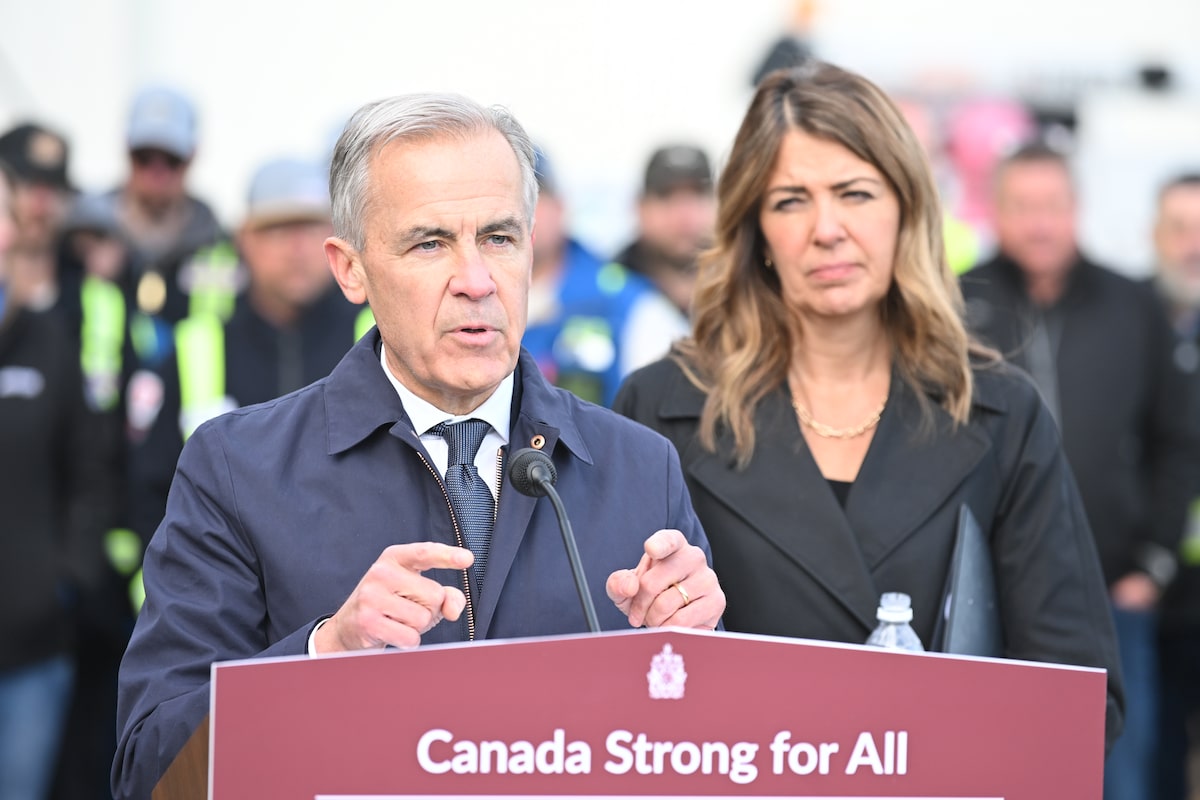
Several First Nations in British Columbia have filed legal challenges to the federal government’s decision to list the proposed Pacific Link oil pipeline between Alberta to B.C.’s coast as a project of national interest, fast-tracking its review.
A statement from Tsartlip First Nation on Vancouver Island says it has filed a Federal Court application for judicial review on the move, saying Ottawa has not “given sufficient information about the project and its potential impacts.”
The St’at’imc Chiefs Council, representing nine nations along the proposed pipeline route in B.C.’s Interior and Fraser Valley, says it has also launched legal action asking the court to overturn the listing as a project of national interest.
The group says in a statement that approving the Pacific Link project without full assessment of risks to salmon and fishing rights, and without deep consultation to ensure the consent of all impacted nations, is unacceptable and unlawful.
The Tsartlip application asks the court to confirm the Canadian government must “meaningfully consult” the nation before deciding if the pipeline is in the national interest.
The pipeline was the first project to receive the designation under the Building Canada Act during an announcement by Prime Minister Mark Carney and Alberta Premier Danielle Smith last month.
Here’s how Carney’s promises stack up ahead of his government’s second budget
The proposal is for a new pipeline that largely follows the path of the existing Trans Mountain pipeline to an export terminal in Metro Vancouver with an estimated cost between $35.2-billion and $42.7-billion.
The designation means the project would be subject to a fast-tracked, streamlined regulatory process conducted by the federal major projects office, a move Tsartlip First Nation spokesman Adam Olsen calls “reckless.”
“The national interest designation concerns a multibillion-dollar publicly funded project that is not expected to be completed until 2032,” Olsen says in the statement. “Yet the consultation and decision-making process happened in less than three months.”
Olsen, who’s a former B.C. Green legislator, says there is concern there may be more projects of national interest affecting First Nations, citing last week’s announcement that the Port of Vancouver’s Roberts Bank Terminal 2 expansion has also been added to that list.
“How this decision is made will shape every one that follows, for our people, for future generations and for every community, First Nations or otherwise, that could be next,” Olsen says.
PM office canada
Small business tax troubles a target of federal budget: Champagne
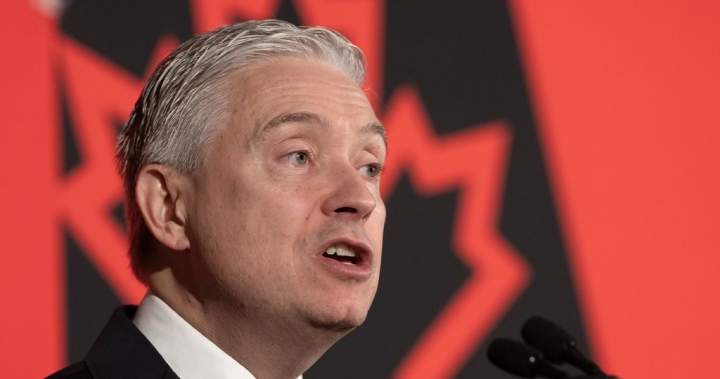
Thursday’s federal budget will look to make life easier for Canada’s small- and medium-sized businesses, says Finance Minister Francois-Philippe Champagne.
Champagne provided business leaders a preview of the government’s fiscal plan in a breakfast speech at the Canadian Club Toronto on Monday.
The budget — the second to be delivered under Prime Minister Mark Carney — is expected to support the Liberal government’s push to reduce Canada’s reliance on the United States by building up the domestic economy.
In a brief fireside chat after Monday’s speech, Champagne told the crowd Ottawa’s ambitions to stoke private investment and improve productivity are not limited to Canada’s largest companies.
He acknowledged that one of the barriers to investment, particularly among Canada’s small businesses, is the complexity of the tax code.
“We had a number of boutique things and things which might be difficult if you’re small and medium-sized businesses, unless you have a tax adviser to figure out what’s the best way forward,” Champagne told CBC News journalist Peter Armstrong during a fireside chat after his speech.
“I think you will see in this budget a journey to fixing a number of things, to make things more simple, to simplify the life of small and medium-sized businesses. And I think that on Thursday, those who represent small businesses will see themselves in that budget.”
The Canadian Federation of Independent Business has called on Ottawa to use the Nov. 5 budget to lower the small business tax rate and fix gaps in the federal tariff relief regime that box out smaller firms.
“Small businesses tell us they don’t want handouts. They want broad policies that would help them reinvest in their businesses and plan for the future,” said Corinne Pohlmann, CFIB executive vice-president of advocacy, in a statement on Oct. 29.
“While major project investments usually get the spotlight, we also need to be building the foundation of our economy by making it more attractive to start and grow a small business.”
Champagne would not offer specific examples of what the federal government is proposing in Thursday’s budget. He did suggest Ottawa is considering more changes to the Scientific Research and Experimental Development program, which encourages firms to invest in themselves to develop innovative technologies.
One of the big-ticket measures accounted for in this upcoming budget is the productivity mega-deduction, which the government announced in September and has continued to highlight as a cornerstone of its investment policy. It’s estimated to cost $36 billion over five years.
The mega-deduction allows businesses to immediately write off the full value of an eligible capital investment in its first year, rather than over the lifetime of its use. The government argues deferring tax payments in this way will encourage firms to invest more in technology and tools that can make their workers more productive.
Champagne said the productivity mega-deduction isn’t just for large firms that want to break ground on pipelines and other nation-building projects. He said it could also help a local café buy a new coffee machine, for example.
“It’s our government’s signal to Canadians to use their capital right here in Canada, to invest in new machinery and technology, to expand their enterprises and to support a Canadian economy that nurtures and develops more workers and innovators,” he said.
The minister did not answer directly when asked whether the budget will offer further details about a planned sovereign wealth fund or a proposal to open Canada’s airports up to private investment.
The Liberal government has set an ambitious goal of attracting $1 trillion in private investment over the next five years. Since Carney took office, the federal budget framework has pivoted sharply away from day-to-day government spending and toward a capital-focused agenda that prioritizes infrastructure and other nation-building projects.
“At its core, our plan is about changing Canada’s growth model. We are building one Canadian economy, unlocking private investment, raising productivity, expanding our productive capacity, and diversifying our trade,” Champagne said in his speech.
Armstrong asked Champagne how renewed momentum in U.S. trade talks could affect Ottawa’s spending plans. The finance minister brushed off the question.
“It’s not about them,” he said. “This is about us, regaining our ability to build.”


Job openings posted big September gain in positive sign for labor market ahead of payrolls report
Job openings surged in September, as did the number of workers who quit their positions, the Bureau of Labor Statistics...


Ellen DeGeneres’ late producer Matthew Wright’s family needs help returning his body home
Matthew Wright, the former “Ellen DeGeneres Show” producer who died Friday, passed away in Los Angeles — and his family...

Russell Brand Trial: Jury Begins Verdict Deliberations
Russell Brand‘s rape trial has concluded and the jury has begun deliberations on a verdict. After more than three weeks...


2026 Midterm Elections Live Updates: Voters Head to the Polls to Decide Control of Congress
“We still have to take care of, I would say, one or two sites, but we can do that in...


Johnny Depp no longer rules out a ‘Pirates of the Caribbean’ return after years away from franchise
Johnny Depp isn’t shutting the door on a return to the “Pirates of the Caribbean” franchise. “Pirates of the Caribbean”...


Can Johnny Depp Battle Back from Oblivion with “Ebenezer”? The Original Scrooge McDuck Hasn’t Had a Hit Movie in 10 Years, Since “Pirates 5”
★ Make Showbiz411 your Preferred Source on Google Johnny Depp is trying to make a comeback. He may have a...


The Problem With Taika Waititi’s ‘Klara and the Sun’ Instagram Post
I’ve seen enough: Taika Waititi is no longer riffing on a level that is frickin’ sublime. A quick update for...


Jason Statham & Guy Ritchie Reunite For Netflix Feature ‘Dogfight’
Jason Statham will star in Dogfight, a new Netflix feature written, directed, and produced by Guy Ritchie. The streamer has...
Nicolas Cage says he is ‘a little bit homeless’ after Malibu sinkhole
Nicolas Cage is opening up about the massive sinkhole that consumed his driveway. Discussing his Halloween plans, the “National Treasure”...


Rebecca Gayheart Recalls Husband Eric Dane’s Last Days: EXCLUSIVE
When the camera cuts, the interview isn’t over. With “Cut for Time,” TODAY.com spotlights the questions our anchors couldn’t get...
-

 HealthNews2 weeks ago
E. coli cases possibly linked to Bengtson’s Pumpkin Farm, Will County health officials say
-
Business2 weeks ago
GLP-1 injections recalled nationwide. See affected products
-

 Business2 weeks ago
Tesla (TSLA) Q3 2026 earnings preview: flat revenue, falling profits
-

 HealthNews2 weeks ago
She was paralyzed in a car crash that killed her parents. Now, she’s a mom of twins
-

 HealthNews2 weeks ago
My In-Laws Offered to Watch My Baby, Then Didn’t Give Her Back for Six Weeks. That Was Just the Beginning.
-

 Entertainment2 weeks ago
First October Read of 2027 Race
-

 Business2 weeks ago
I ate 12 burritos in SF, LA and SD. There’s one I still think about.
-

 Tech2 weeks ago
Microsoft reportedly projects $1,200 to $1,800 price for 2028 Project Helix