

Business
Bernie Sanders’ New AI Bill Would Pay Americans $1,000 a Year
Bernie Sanders is making the case in Washington that since modern AI systems were built using the intellectual and creative outputs of all of humanity, the revenues they generate should go directly to the people—not just to a small cohort of tech moguls.
On Thursday, Senator Sanders—an Independent from Vermont—introduced a bill which, if passed, would create a sovereign wealth fund for the United States’ AI industry. The fund would be valued at roughly $7 trillion, a number derived from the current valuation of the country’s top AI labs, and would give the American public a 50% public stake in those companies.
As a result, taxpayers would receive an annual payment of $1,000 through the fund. That amount “will probably go up as AI becomes more prosperous,” Senator Sanders told reporters in a press briefing on Thursday. The fund could also eventually funnel “significant amounts of money … into social programs, making sure that all Americans have healthcare, education, decent housing, and other basic necessities of life.”
AI as a public resource
Proposed as an amendment to the 1986 Internal Revenue Code, Sanders’ bill argues that AI is ultimately a public resource, like precious minerals or oil extracted from publicly owned land, but a tiny number of companies are profiting from this resource as if it were a proprietary, privately owned product.
AI “derives its economic value from humanity’s collective intelligence, including our books, songs, artwork, journalism, computer code, scientific research, videos, conversations, images, and ideas spanning generations,” the bill reads. “A small number of oligarchs have essentially stolen the creative work of hundreds of millions of people … without permission, acknowledgment, or compensation in order to control the majority of economic value created by artificial intelligence.”
More than 100 sovereign wealth funds currently operate in 67 countries, including the United States. One example is the Texas Permanent School Fund, established in 1854, which helps fund the state’s public school system with revenue from the extraction of natural resources such as oil and gas.
Growing bipartisan support
Sanders isn’t the first person to suggest that giving Americans a direct ownership stake in the wealthiest AI companies might be an effective way to offset the technology’s more destabilizing economic impacts. California Governor Gavin Newsom has directed state officials to start researching the practicality of the model, which is known as universal basic capital, or UBC (not to be confused with universal basic income, or UBI).
It’s even received some support within the AI sector itself. OpenAI and Anthropic have both suggested that some version of this system may be necessary to share the AI industry’s gains with the broader public and cushion workers against job losses caused by the technology’s adoption. The companies—which are both expected to finalize their IPOs later this year—have also recently called for the formation of an international organization to oversee, and if necessary slow down, the development and deployment of powerful new AI models.
Business
Waymo recalls robotaxi fleet after construction-zone freeway incidents

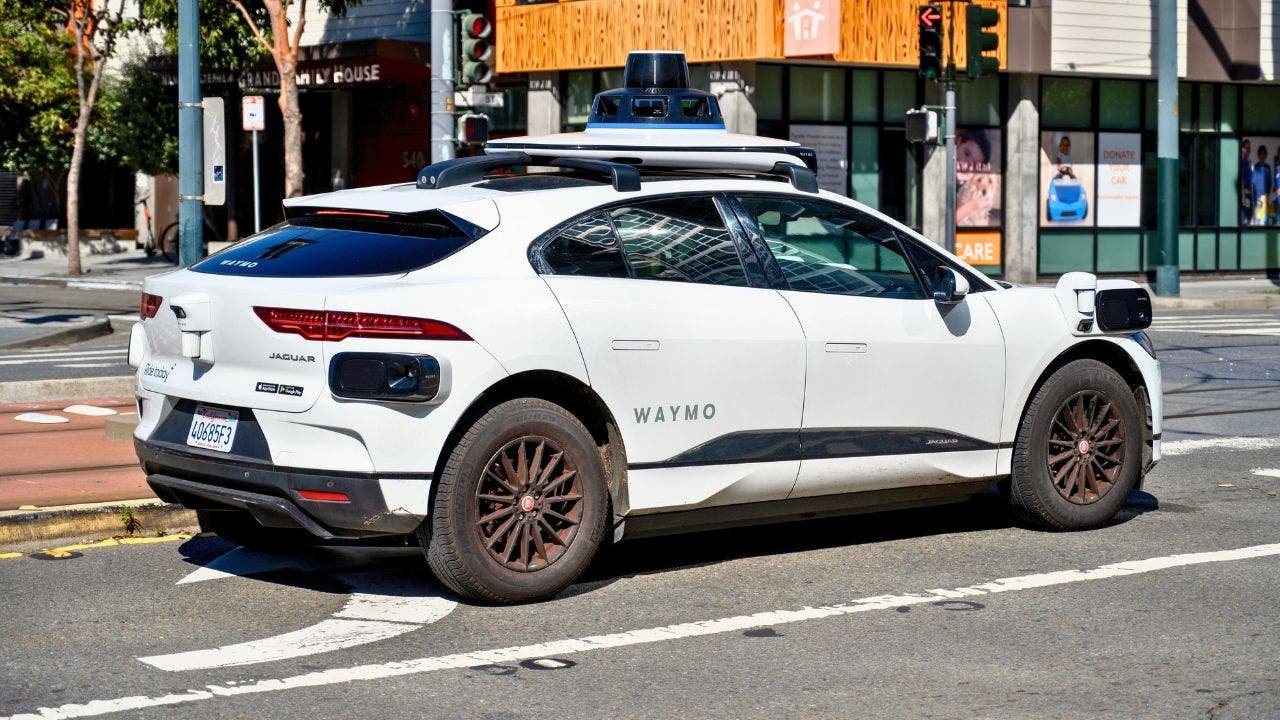
Waymo is recalling nearly 4,000 robotaxis after more than a dozen incidents in which the autonomous vehicles entered closed freeway construction zones, according to a National Highway Traffic Safety Administration (NHTSA) recall report.
The recall affects 3,871 vehicles equipped with Waymo’s 5th Generation Automated Driving System.
According to NHTSA, the software issue could allow a vehicle to enter a closed freeway construction zone and continue traveling at posted speeds. Regulators said affected vehicles may avoid or fail to recognize certain construction-zone closures because of the software defect.
Waymo estimates that all 3,871 vehicles covered by the recall are affected.
WAYMO PAUSES FREEWAY ROBOTAXI ROUTES AFTER SAFETY AND SOFTWARE CONCERNS
According to the recall report, Waymo’s Field Safety Committee began reviewing the issue in late April after examining six incidents in which robotaxis drove past ramp closure signs and entered freeway construction zones.
The committee met again in May after identifying seven additional instances involving active construction zones in the San Francisco Bay Area.
As a result of the 13 reported incidents, Waymo implemented freeway-driving restrictions while engineers worked to identify the root cause and develop a remedy, according to the filing.
The recall covers Waymo 5th Generation Automated Driving Systems manufactured between May 17, 2022, and May 19, 2026. As of June 13, a software remedy remained under development, according to the filing.
WAYMO RECALLS MASSIVE AUTONOMOUS FLEET AFTER INCIDENT FLAGS MAJOR SAFETY ISSUE
Waymo currently operates driverless ride-hailing services in cities including San Francisco, Los Angeles, Phoenix and Austin, and has announced plans to expand into additional markets.
Ticker Security Last Change Change % GOOG ALPHABET INC. 367.46 +5.36 +1.48%
GET FOX BUSINESS ON THE GO BY CLICKING HERE
A Waymo spokesperson told FOX Business the company voluntarily restricted freeway operations while making improvements, notified regulators and filed a voluntary recall with NHTSA.
“We identified an area of improvement regarding performance around freeway construction zones,” the spokesperson said.
Business
Jeff Bezos predicts AI will create labor shortages, not replace workers
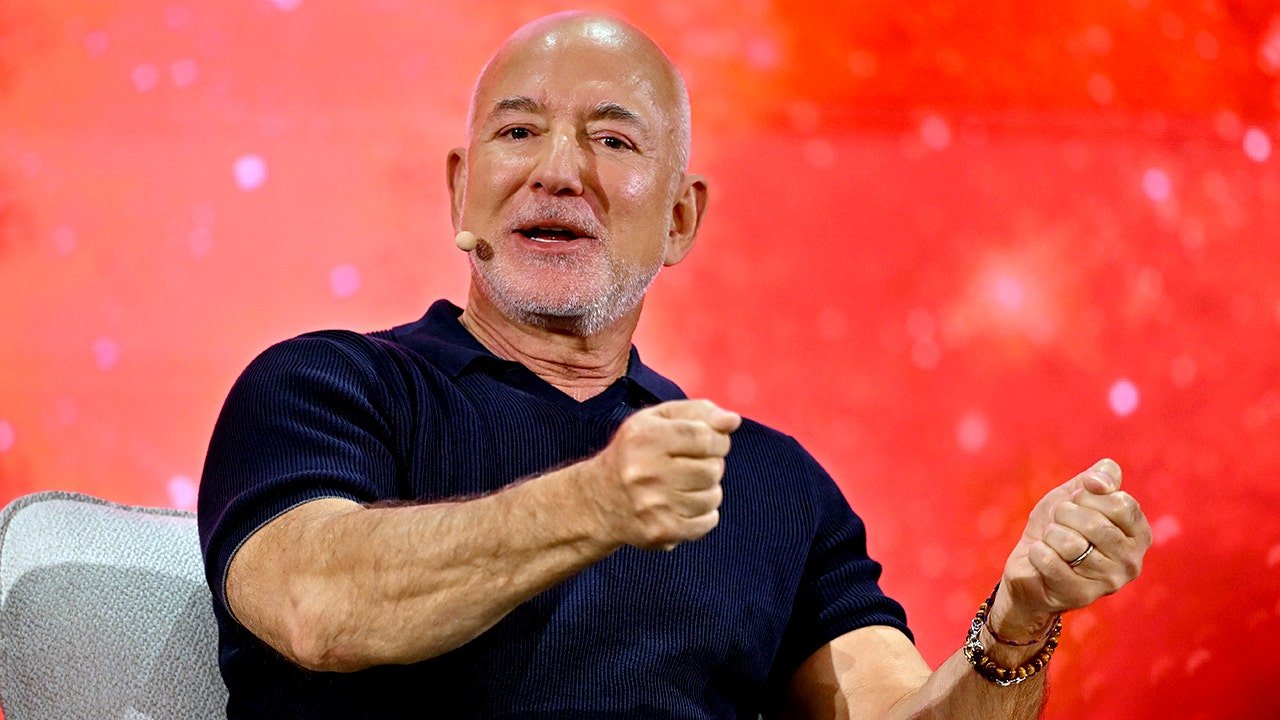
Amazon founder Jeff Bezos said that the rise of artificial intelligence (AI) won’t lead to the replacement of humans in the workforce and will instead create labor shortages.
Bezos spoke at the VivaTech technology conference in Paris on Wednesday and offered an optimistic outlook on the impact of AI on the workforce amid concerns about its impact on the role of human workers across the economy.
“I know there’s a lot of concern that many people have, including many smart people, that AI is going to make humans redundant and so on,” Bezos said.
“I totally disagree with that point of view. And I think, in fact, AI is going to create a labor shortage,” the Amazon founder added. “We have an endless set of things to invent… We are limited not by our imaginations but by what we can actually do.”
AI REMAINS TOP REASON FOR US JOB CUTS FOR THIRD STRAIGHT MONTH AS EMPLOYERS AXED 97,000 WORKERS IN MAY
“I promise you every single person in this audience has had an idea for a new business or a new product or a new device that they wish they could manufacture, and that idea stayed in your head and went nowhere,” Bezos explained. “And the reason it stayed in your head and went nowhere is because it’s too hard to do, and it wasn’t worth it.”
“If we can accelerate the dream build loop, all of the ideas will then become possible. And then we end up being limited not by our capabilities, but by our imaginations,” he added.
AMERICA CAN’T COMPETE WITH CHINA IN AI WITHOUT THESE WORKERS, META’S PRESIDENT SAYS
Ticker Security Last Change Change % AMZN AMAZON.COM INC. 244.64 +7.14 +3.01%
Bezos’ comments come as companies are reevaluating their workforces in light of the advancements in AI, with thousands of job cuts following in the wake of companies’ investments in the emerging tech.
A report by global outplacement and executive coaching firm Challenger, Gray & Christmas found that about 40% of the 97,006 job cuts announced by companies in May were attributed to AI.
The 38,579 cuts attributed to AI in May was the highest monthly total linked to that since Challenger began tracking it in 2023.
AMAZON TO CUT 16,000 ROLES AS IT LOOKS TO INVEST IN AI, REMOVE ‘BUREAUCRACY’
“The labor market is being reshaped by technology in real time. AI is now the leading reason companies give for cutting jobs and the primary industry citing it is technology,” said Andy Challenger, the firm’s chief revenue officer and a labor and workplace expert.
The tech sector announced 38,242 job cuts in May – the highest for the sector since August 2024. Firms within the sector have announced 123,653 cuts in 2026 so far, which is an increase of 66% from the same period in 2025 and leads other sectors in job cuts this year by a wide margin.
“AI isn’t yet the jobpocalypse some predicted. Like spreadsheets and email before it, the technology will ultimately make workers more productive, but our data shows companies are already acting on it, citing AI for more cuts than any other reason,” Challenger explained. “The open question isn’t whether AI changes the workforce, but how fast.”
GET FOX BUSINESS ON THE GO BY CLICKING HERE
Amazon is one of the tech firms that has cut jobs amid its investments in AI, with the company announcing 16,000 cuts in January.
Business
Amazon hopes to challenge Nvidia more directly by selling its AI chips

If Amazon Web Services has its way, the cloud giant is going to push even deeper into Nvidia’s market, in what might be one of the biggest challenges to Nvidia’s AI chip dominance we’ve seen so far.
Amazon’s AI chief Peter DeSantis told Bloomberg that AWS is in talks to sell its AI chip Trainium to other companies for use in data centers. DeSantis declined to specify which companies could be the buyers of such chips.
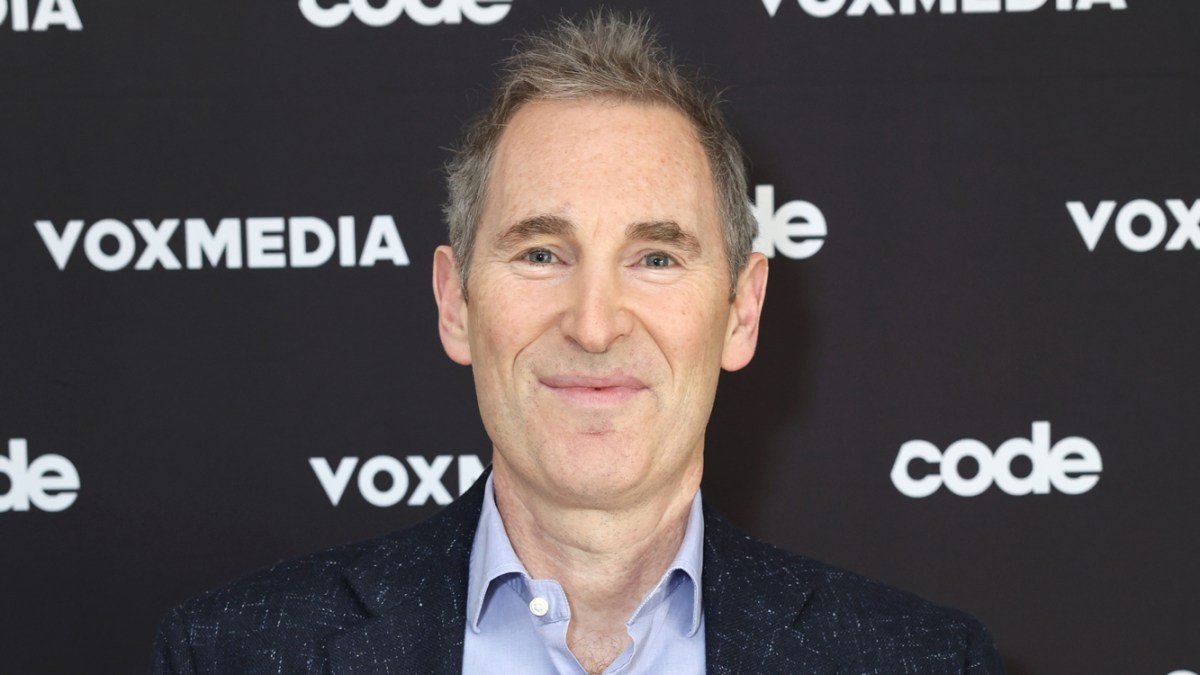
Such talks about selling chips are in the early stages, the company tells TechCrunch, and stem from Amazon CEO Andy Jassy’s annual shareholder letter in early April, in which he said the company’s homegrown AI chips were so coveted that he was thinking about selling them.
“If our chips business was a standalone business, and sold chips produced this year to AWS and other third parties (as other leading chips companies do), our annual run rate would be ~$50 billion. There’s so much demand for our chips that it’s quite possible we’ll sell racks of them to third parties in the future.”
How much of a challenge to Nvidia could Amazon be? A $50 billion competitor wouldn’t exactly tank Nvidia — which is currently on a $326 billion revenue run rate — if it keeps delivering quarters like the last one. But it’s akin to Intel’s annual revenues.
AWS has so far resisted selling its AI chips for a lot of reasons. The biggest is that the money AWS actually makes on its chips is a waterfall effect. Sure, it charges customers directly for the AI tokens those chips process on its cloud, but it also gets to charge for a host of other services companies need for their AI apps, including storage, security, networking, and monitoring services.
Equally importantly, Amazon has touted the capacity of its chips has been selling out faster than it can produce them. In that same shareholder letter in April, Jassy said the current Trainium chip capacity had sold out almost instantly. So too, he said, had the capacity for the next one, Trainium4, which won’t even be available for more than a year. This was before AWS formally added OpenAI to the models it was serving up.
So selling its chips to others means it would likely have to leave current customers on waiting lists, unless it could somehow manufacture a surplus of chips through its manufacturing partners such as TSMC. But it would have to miraculously elbow Nvidia out of the way to do that with TSMC, which has recently supplanted Apple to become the foundry’s largest customer.
AWS spokesperson Doron Aronson (who hosted me during a recent private tour of the AWS chip design facility) also confirmed that AWS may sell these chips. “While we’ve historically declined requests to sell chips directly, Andy noted it’s quite possible we’ll sell racks of them to third parties in the future.”
Business
Trump Mocked Mark Zuckerberg and Jeff Bezos by Showing Off Fawning Texts

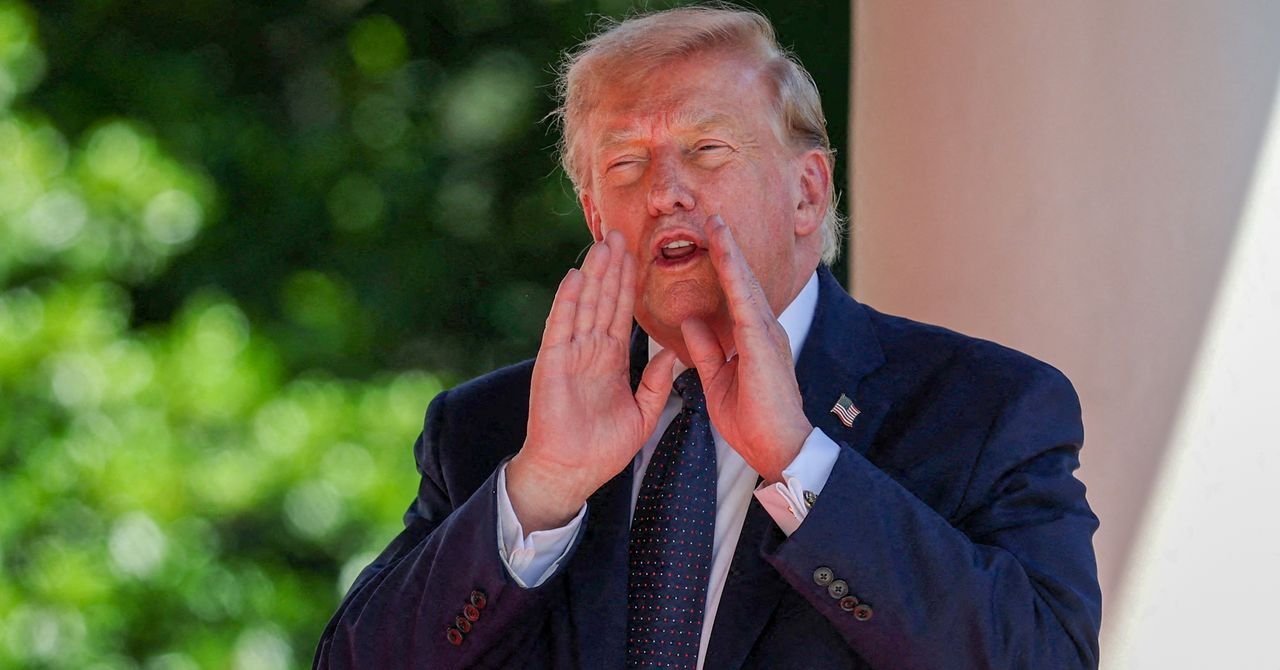
Meta CEO Mark Zuckerberg and Amazon founder Jeff Bezos sought to ingratiate themselves with President Donald Trump after he won the 2024 election, and in return he mocked their efforts behind their backs, according to a new book by The New York Times reporters Maggie Haberman and Jonathan Swan.
Zuckerberg once texted Trump a photo of a letter written by one of his grade-school-age children, who wrote that they “looked forward to the golden age of America,” a slogan Trump had repeated at rallies during the presidential campaign.
And over dinner at Trump’s Mar-a-Lago club, Bezos denigrated The Washington Post to Trump and essentially described the newspaper as one of his worst financial investments, months before he unsuccessfully sought a business favor from the president.
These episodes are detailed in the book Regime Change: Inside the Imperial Presidency of Donald Trump, a copy of which WIRED obtained ahead of its release on June 23. They illustrate the extraordinary scramble by some of the most powerful men in Silicon Valley to curry favor with Trump before the start of his second term.
Weeks after they met with Trump, he was still regaling associates with stories of how Zuckerberg and Bezos were “kissing my ass,” according to the book. “You would not believe the texts I got from these tech guys. I’ve got to show you,” Trump is quoted as telling some guests.
The episodes also show how Trump reveled in the genuflections of the titans of Big Tech—Google’s Sundar Pichai and Apple’s Tim Cook also met with the incoming president—before relentlessly deriding their efforts.
“Think of where these guys were in 2016,” Trump is quoted as saying of Zuckerberg and Bezos in a conversation with Elon Musk recounted in the book. “They hated me. They were doing everything they could to knock me down. And look at them now.”
Musk seemed delighted in the humiliation of his rivals, according to the book. “First-class groveling,” Musk is quoted as replying.
Presented with the book’s reporting, White House spokesperson Kush Desai did not directly respond. “President Trump is committed to working with every American business and business leader to cement America’s innovative dominance, re-shore critical manufacturing, and accelerate economic growth,” he said.
A person familiar with the Bezos episodes said the Amazon founder has been working with Trump in the same way that he has worked with every president since Bill Clinton, including donating $100 million to Barack Obama’s presidential library, and intended to work with whoever next occupies the Oval Office. A spokesperson for Bezos’ Blue Origin did not respond to requests for comment. Musk and spokespeople for Meta also did not respond to requests for comment.
The book shows Trump frequently mocking Zuckerberg and Bezos as they attempted to win his favor following the 2024 election—revealing, for example, text messages he received from the Meta CEO to various guests.
When Zuckerberg arrived shortly after Thanksgiving 2024, the authors write, Trump played the national anthem over the speakers. It soon became clear that this was no ordinary rendition, but one by a group of detained January 6 rioters known as the J6 Prison Choir.
Weeks later, according to the book, as Trump showed guests and visitors some of the ingratiating texts that Zuckerberg had sent, he stopped on a photo of the “letter to the president” written by one of the Meta CEO’s three children, the oldest of whom would have been 8 or 9 at the time.
Trump was also unsparing with Bezos, who is portrayed by Haberman and Swan as transactionally obsequious in indulging and doubling down on Trump’s criticisms of The Washington Post, as well as sending Trump a selfie featuring himself and his then-fiancée, Lauren Sánchez, over text.
When Trump and Bezos dined in December 2024, according to the book, Trump told Bezos, “This Washington Post is really unfair. You’ve got to take better care”—a remark that prompted Bezos to commiserate with the incoming president.
“The people there are terrible,” Bezos allegedly replied, complaining about the business side of The Washington Post he had hoped to make profitable. “They don’t listen. My other companies, they listen.” (This exchange was earlier reported by the New York Post.)
Months after the dinner, in July 2025, Haberman and Swan report, Bezos sought to capitalize on his relationship with Trump with a business request he hoped would benefit Blue Origin, his space company, which was losing ground to Musk’s SpaceX.
As the meeting started in the Oval Office, Trump asked Bezos about his recent wedding to Sánchez. Bezos told Trump the wedding had been great and mentioned that the actress Sydney Sweeney had attended. “Oooh,” Trump said, according to the book.
But Bezos was there on business, and, the authors write, he soon made a pitch to Trump that it was a national security risk to allow a single contractor—Musk’s SpaceX—to dominate America’s space infrastructure and Space Launch Complex 37 at Cape Canaveral.
Bezos, according to the book, suggested to Trump that he could direct his deputy defense secretary, Steve Feinberg, to advise officials in charge of government space contracts to seek “contractor diversity,” thereby opening the door for Blue Origin to compete with SpaceX.
Trump told Bezos that he would consider his request, Haberman and Swan write. But it never came to pass. In the months that followed, Trump reconciled with Musk, who had again started writing checks to Republicans and instead expanded access for SpaceX’s Starship operation.
Business
Auto pay will mean bigger interest rate cut on student loans : NPR

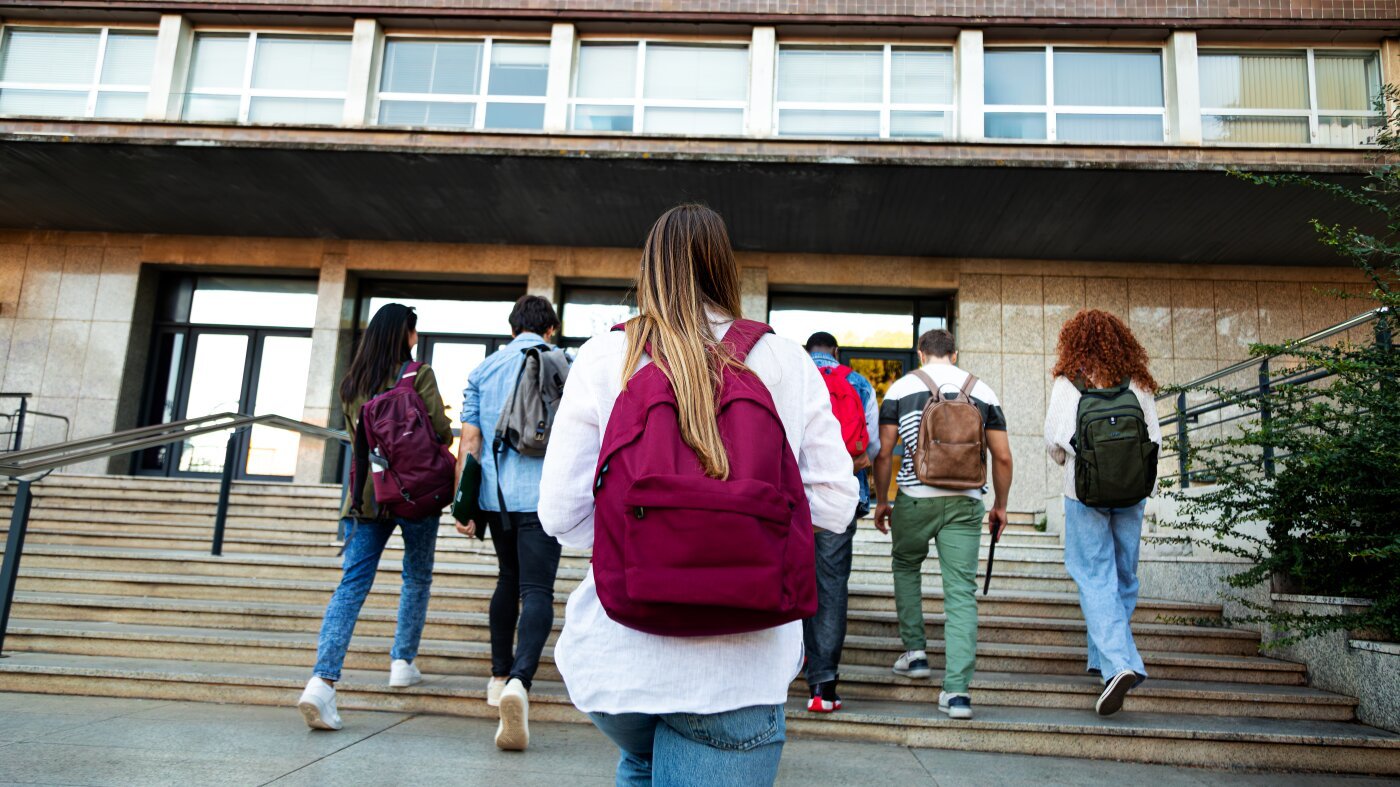
Student loan borrowers who enroll in automatic payments will get a much bigger discount on interest starting July 1, the U.S. Department of Education says.
Auto pay has long offered a modest discount off borrowers’ interest rate — .25 percentage points — but after millions of borrowers opted out during the long COVID repayment pause, with some making no payments for years, the nation’s student debt portfolio swelled to $1.7 trillion.
On Thursday, the department said it will temporarily increase its auto pay interest rate discount to one full percentage point. Practically, that means an undergraduate borrower with a loan at the current 6.39% would see their interest rate drop temporarily to 5.39%.
The rate cut will last for two years, from July 1, 2026 through June 30, 2028.
Borrowers already enrolled in auto pay do not need to act. They will automatically receive the rate cut.
In a call with reporters on Thursday, Undersecretary Nicholas Kent said that, back in 2019, roughly 83% of borrowers were enrolled in auto pay but that by late 2025, that participation rate had dropped considerably, to just 40% of borrowers.
“This temporary incentive is designed to help borrowers pay down their balances more quickly,” Kent told reporters, “take full advantage of new repayment benefits, remain on track for loan discharge opportunities and to strengthen the overall health of the federal student loan portfolio.”
The department says borrowers will have until Sept. 30 to sign up for auto pay and qualify for the two-year interest discount.
July 1 ushers in a host of big new changes to the federal student aid world, including the introduction of two new repayment plans and controversial new caps on graduate student loans.


I Came Back from the Dead | It Happened To Me
How one man survived a cardiac arrest that left him clinically dead for ten minutes after a cricket-ball-sized blood clot...


JD Vance warns Israel over opposition to US-Iran peace deal | BBC News
The US vice president JD Vance has criticised Israel over opposition to the US peace deal with Iran, saying: “You...


Vance issues stern message to Israeli officials who attacked Trump
During a press briefing at the White House, Vice President JD Vance criticized Israeli operations in Lebanon, saying they've …


Former Energy Sec.: The worst is ‘probably over’ for oil and gas prices
In an exclusive interview, former US Energy Secretary from the first Trump Administration, Dan Brouillette, tells CNN's Matt Egan …


Mamdani presents Knicks with keys to city
New York City Mayor Zohran Mamdani gave each Knicks player a symbolic key to the city after the team won...


I Fell 2000ft and Survived | It Happened to Me
A 2000ft fall off a jagged mountain ridge should have been fatal. Instead, one endurance runner survived the drop and...


NYC was a vibe today
Knicks fans crowded the streets of New York City for a parade to celebrate the first Championship win in 53...


Obama calls for hope over despair at presidential center opening
Former President Barack Obama delivered a message focused on unity and hope for the future. Joined by former first lady...


If Trump's Iran deal is good for the US, why the GOP outrage?
Months of war and a blockade have battered Iran. Its navy is at the bottom of the Persian Gulf. Its...


Grammy-nominated producer Tay Keith found dead in Nashville apartment, police confirm
NASHVILLE, Tenn. (WSMV) – Metro Nashville Police have confirmed the death of Grammy-nominated producer Brytavious Chambers, better known as Tay...
-
 Business5 days ago
How much of Musk’s wealth comes from government help? Virtually all of it
-

 LifestyleNews2 weeks ago
120 minutes of strength training per week may help extend lifespan
-

 Politics1 week ago
What to know about the stabbing that set off fiery riots in Northern Ireland
-

 Video6 days ago
Download fans say what they love about the festival. #DownloadFestival #BBCNews
-

 Video6 days ago
Why SpaceX IPO isn't about space. #SpaceX #ElonMusk #BBCNews
-

 HealthNews7 days ago
The people of Okinawa, Japan only eat until they are about 80 percent full, then stop — and the practice has been linked in multiple peer-reviewed studies to lower rates of cardiovascular disease, slo
-

 TravelNews6 days ago
My Paternal Instinct Should’ve Warned Me About Netflix’s Maternal Instinct
-
 Food6 days ago
Pope Leo’s plane was grounded. Then the King of Spain stepped in to help