

Business
Amazon investigating engineers who criticized AI data center expansion


A group of Amazon engineers said they’re being investigated by the company after they criticized the breakneck expansion of artificial intelligence data centers and called for stronger government regulation.
Earlier this month, five Amazon employees testified at Seattle City Council meetings where officials sought public feedback on a year-long pause on the construction of new large-scale data centers to give the city time to regulate the projects. Seattle passed the moratorium in a unanimous vote on June 9.
The employees criticized the hefty AI spending of tech companies, describing it as an “all-costs-justified AI build out.”
Following the hearings, three Amazon workers were separately invited to Zoom meetings with a human resources representative who said he was investigating a concern that was raised about their testimony, according to a complaint filed Friday with the Seattle Office for Civil Rights.
The employees were informed that the investigation could lead to disciplinary action, the complaint states, while one staffer was told that the potential discipline could range up to termination.
Amazon’s questioning made the staffers feel “intimidated and uncertain in their future employment,” according to the complaint, which was filed by lawyers representing the employees.
“They also learned that Amazon was monitoring their political advocacy before the Seattle City Council and was seeking to identify additional employees who had engaged in political activities,” the complaint said.
The complaint accuses Amazon of violating a Seattle ordinance that prohibits companies from discriminating against employees for their political ideology, race, religion and age, among other things.
Amazon previously told CNBC that the company respects its colleagues’ right to voice their opinions.
Amazon spokesperson Margaret Callahan said in a statement that the company doesn’t permit employees to speak as representatives of Amazon without following certain procedures.
As it looked at how the employees represented themselves and how their comments were received, the company determined they may have been speaking “in their capacity as Amazonians and not as private citizens,” Callahan said.
“We believe it’s important to apply our policies consistently so, just as we would with anyone else, we’re investigating whether there was a violation of our policies and may or may not take action based on what we find,” Callahan said in a statement.
Callahan disputed that the company has plans to terminate the employees or told the staffers they were at risk of termination. She added that Amazon doesn’t tolerate retaliatory behavior.
The staffers are part of Amazon Employees for Climate Justice, a group of current and former employees that has repeatedly pressed the company on its climate stance, treatment of its workforce and other issues.
Two employees who founded AECJ were fired by the company in 2020 for “repeatedly violating internal policies” after they criticized the company publicly, including circulating petitions calling for greater coronavirus protections for Amazon warehouse workers. Amazon in 2021 settled with the employees after they filed a complaint with federal labor regulators.
More recently, AECJ has urged Amazon to be “more responsible” in its AI rollout, and “get real about the costs of AI and the guardrails we need.”
Amazon has committed to spend up to $200 billion this year on capital expenditures, mostly for AI infrastructure. At the same time, it has laid off 30,000 corporate employees since October, part of an attempt by CEO Andy Jassy to transform Amazon into the “world’s largest startup.”
AI data centers have been a target of growing backlash across the country. A recent Gallup poll found that seven in 10 Americans oppose the construction of data centers for AI in their local area, with most respondents citing concerns around the facilities’ environmental impact and quality-of-life harms.
Darius Irani, an Amazon employee of more than five years, said in a statement that he doesn’t regret speaking at the hearing.
“All I did was testify because I believe it’s critical that the government regulates data centers and AI,” Irani said. “Workers need to be involved in these conversations.”
Business
FDA committee recommends a new mRNA flu vaccine : NPR


The Food and Drug Administration’s top vaccine advisory committee voted unanimously today to recommend Moderna’s mRNA influenza vaccine, mFlusiva, for adults 50 and over. This was its first time reviewing a new vaccine application since 2023.
The vote by the Vaccines and Related Biological Products Advisory Committee, or VRBPAC, is a step towards what may be the first vaccine filed and approved under the second Trump administration despite sustained criticism of vaccines from President Trump and Health and Human Services Secretary Robert F. Kennedy Jr. Indeed, last year, Kennedy pulled back almost $500 million in contracts to develop mRNA vaccines.
“It’s such a breath of fresh air, considering what we’ve gone through with Robert F. Kennedy Jr.” says Dr. Paul Offit, director of the Vaccine Education Center at the Children’s Hospital of Philadelphia and former committee member of the FDA panel that voted Thursday.
The rocky road to the review
In February, the FDA declined to review Moderna’s application for the mRNA flu vaccine but then reversed its decision two weeks later after criticism.
Messenger-RNA, or mRNA, provides instructions for the body to produce flu antigens to develop immunity. Moderna’s mRNA flu vaccine includes microscopic doses of mRNA for three to four strains of the flu — totaling about the same weight that a fingerprint leaves on a mirror.
Want the latest stories on the science of healthy living? Subscribe to NPR’s Health newsletter.
Researchers used the technology to develop the COVID-19 vaccine – another reason why Kennedy has been critical of its use during the pandemic with vaccine mandates.
In addition to the flu vaccine providing potentially stronger protection, many public health and infectious disease experts are excited about the shot because mRNA vaccines can be produced much more reliably and quickly — and potentially faster than traditional flu vaccines. That could make the mRNA vaccine far more effective when a new flu strain suddenly emerges.
While some public concerns have persisted, Moderna and the FDA did not find credible safety risks in Thursday’s review. Moderna wrote in its brief that the vaccine “does not enter the cellular nucleus, does not interact with the genome … and does not persist in the body.”
The research
Results from Moderna’s phase 3 trial were also published in the New England Journal of Medicine and Nature Immunology. Hanover Matz, postdoctoral researcher at Washington University in St. Louis, and colleagues examined the vaccine response from 75 patients in the trial in detail — looking at not only how many antibodies patients produced, but how good the antibodies were and why that might be the case.
“It’s not something that is typically evaluated when anybody looks at vaccine research, whether it’s a company or in academic research,” Matz says. They found that the mRNA vaccine produced a longer-lasting response and antibodies that recognized more flu strains — which Matz says could explain why the mRNA vaccine may be better than today’s flu vaccines.
“There were no shortcuts taken. There was a full efficacy evaluation done per standard FDA guidance … phase 3 efficacy studies conducted in tens of thousands of individuals,” Dr. Anna Durbin, director of the Center for Immunization Research at Johns Hopkins University and VRBPAC member, said to NPR.
Dr. Jesse Goodman, former director of FDA’s Center for Biologics Evaluation and Research, acknowledges that the mRNA vaccines became politicized and that there has been a tremendous amount of false information about them — like that they cause cancer or that they get into your cells’ DNA. He says “these things are not possible [and] disproven.”
Durbin points to the figure that over 6 billion doses of mRNA vaccines have been administered since 2020 and says they have an “incredibly safe safety profile” and “there is not a risk of DNA integration.”
“The mRNA platform has really been a game changer for vaccines, and it’s an incredibly important advancement in medical science,” Durbin says. “We have to do a much, much better job in educating the public around that, but I have the highest confidence in the vaccine.”
Goodman agrees. “It’s not going to change overnight. And I’m sure there are people who are going to remain concerned about [m]RNA-based vaccines, and there will be people who spread erroneous information about it,” he notes. “However, people will also look at the evidence.”
The review
In the meeting, Dr. Lisa Grohskopf from the CDC presented that there have been at least 32 million flu cases, 390,000 hospitalizations and 24,000 deaths in the U.S. in the past 2025-2026 flu season. She said, “approximately 85% of those eligible for vaccination were not fully vaccinated against influenza.”
Dr. Evan Anderson, vice president of epidemiology at Moderna, acknowledged flu prevalence and highlighted the issue of strain mismatch with current vaccines. Anderson said the proposed mRNA vaccine could shorten the window of time it takes to get a vaccine that targets a specific strain of flu from about 6 months now to 2-3 months — as used for COVID-19 vaccines — potentially improving the strain-selection accuracy and vaccine efficacy.
Dr. Gauri Raval, medical officer of the FDA’s Division of Clinical and Toxicology Review, presented that “[the Moderna mRNA flu vaccine] may offer greater efficacy than the standard dose comparator in preventing more severe influenza-associated illness[es].” The FDA found no “major safety issues or deficiencies.”
After six and a half hours, the committee voted. All nine members recommended the vaccine.
Durbin commended the FDA, Moderna and the rest of the committee — calling the meeting excellent and discussions robust. She says the public should be very confident in the vote.
What this means for the future of the FDA
The FDA’s reversal on reviewing the vaccine was unusual, Offit says. “You can’t say, yes, go ahead, spend tens of millions of dollars, and then, when they present data, say, no, we’re not even going to look at this data. You can’t do that.” Dr. Vinay Prasad, who made the initial call and has since left FDA, “ultimately backed down,” Offit says.
The FDA did not provide NPR a comment by the time of publication.
Offit says he was relieved to see the VRBPAC was left mostly intact in contrast to the CDC’s gutted Advisory Committee on Immunization Practices, or ACIP. “It’s great. It’s just what you want. You want to have a lively, open discussion, a discussion that’s open to the public.”
Goodman concurs: “I’m encouraged that this is happening, and in what appears to be a balanced way that’s paying attention to the feedback of the FDA vaccine experts and also the outside experts who really wanted to see this vaccine come forward and get reviewed in the light of day.”
In the public hearing portion of the meeting, Michael Abrams, a senior researcher with non-profit organization Public Citizen, echoed those sentiments. “We urge the FDA to frequently convene this committee as well as many other expert advisory committees the agency, since January 2025, has insufficiently utilized.”
There have been 44 vaccines approved between 2000 and 2019. Of those 44, the VRBPAC convened for 21 of them — meeting about once a year to review a new vaccine application.
Yet the VRBPAC hasn’t convened for over three years for a new vaccine application. The most recent was May 18, 2023, for Pfizer’s Respiratory Syncytial Virus vaccine.
Durbin agrees the VRBPAC has had fewer meetings since January 2025. A flu meeting normally held every spring did not happen in 2025, Durbin says as an example.
Durbin is more concerned about the other vaccine committee, CDC’s ACIP, however. She explains, “ACIP has a different purpose than VRBPAC — they will determine how these vaccines are used.”
“The ACIP members who were fired were highly qualified,” Durbin says. “Right now it’s not clear how recommendations would be made for the fall.”
She notes Kennedy “could reconvene the ACIP committee that he disbanded at any time, as long as it meets the charter.”
If the agencies Kennedy oversees do approve and recommend the new vaccine, Moderna says it could be available for the next flu season.
NPR Health Correspondent Rob Stein contributed to this report.
Business
FDA advisors unanimously vote to approve Moderna’s mRNA after agency drama

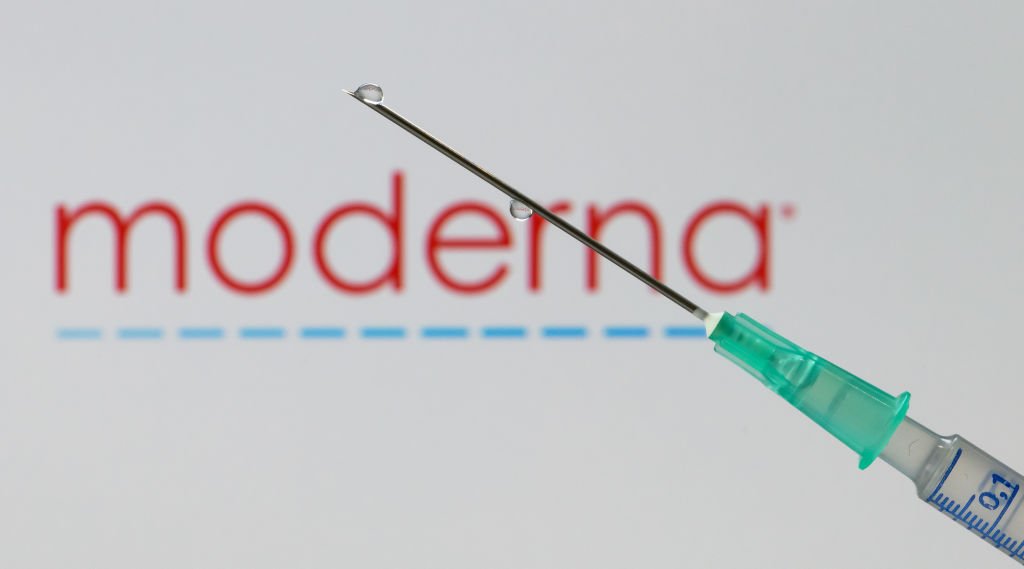
Independent advisors for the Food and Drug Administration on Friday voted 9–0 in support of approving Moderna’s seasonal mRNA flu vaccine, which a Trump appointee at the agency initially tried to block from even being reviewed.
In an all-day meeting, members of the FDA’s advisory committee—known as VRBPAC for Vaccines and Related Biological Products Advisory Committee—pored over data and presentations on the vaccine, which is dubbed mRNA-1010 and branded as mFlusiva. The presentations included a review from FDA scientists, which was supportive of the vaccine.
Data from a Phase 3 trial including over 40,000 adults age 50 and older found the mRNA vaccine was around 27 percent more effective against seasonal flu than a standard flu shot. A smaller Phase 3 trial, involving data from nearly 3,000 people age 65 years and older, showed the shot produces stronger immune responses than a high-dose flu vaccine, which is recommended for this age group. The safety profile of the vaccine was also generally good.
“I think that the studies that were presented today were very well conducted,” VRBPAC voting member Flor Munoz-Rivas, a pediatric infectious disease expert at Baylor College of Medicine, said after the vote. “They have very clear results that are very robust in terms of demonstrating that additional efficacy.”
She also expressed enthusiasm for the agile mRNA platform for the flu vaccine, which is based on the same platform Moderna used to develop its mRNA COVID-19 vaccines. In addition to the better efficacy, it allows for “rapid development of the vaccines in regular seasonal flu activity” and makes us “better prepared for emerging strains or pandemic strains in the future,” she said.
Fellow voting member Hayley Gans, a pediatric infectious disease expert at Stanford University, agreed. “I think that this particular platform adds exciting ways that we can actually move our vaccines to the future,” she said. “The signals that we’re seeing now are not putting people at risk and the benefits are actually large not only for this season, but for really what it can do for our vaccine platform. … This one has the potential to really move us in a modern direction.”
FDA drama
The outcome today is in stark contrast to a few months ago, when Trump official Vinay Prasad was overseeing vaccines at the FDA. In a shocking decision in February, Prasad rejected Moderna’s filing, refusing to even review the vaccine. Prasad claimed that the large vaccine trial was not “adequate and well-controlled” because it did not compare efficacy to a high-dose vaccine in people 65 and older. Instead, Moderna used the smaller trial to compare immune responses of mRNA-1010 to a high-dose vaccine—which was a plan the FDA had previously agreed would be acceptable.
Moderna was blindsided by the refusal, which Prasad issued over the objections of FDA scientists and career officials. Amid widespread outcry, the FDA reversed the decision the next week, agreeing to review the vaccine. Around the same time, Prasad was also behind the rejection of a closely watched gene therapy for Huntington’s disease made by UniQure, which was widely criticized and called “truly evil” by a former FDA official.
Prasad was pushed out of FDA at the end of April amid a string of decried decisions and controversies. Prasad’s decision on UniQure’s gene therapy was reversed on Wednesday.
Moderna released a statement saying it was pleased with today’s outcome.
“We appreciate the thoughtful review by the members of VRBPAC and their recognition of the clinical evidence supporting mRNA-1010,” Moderna CEO Stéphane Bancel said in the statement. “We believe mRNA-1010 has the potential to provide an important new option for seasonal flu prevention and further demonstrate the versatility of our mRNA platform. We look forward to continuing to work with the FDA as it completes its review.”
Next steps
While unanimous support from the advisors is a positive sign for the vaccine’s fate, the FDA ultimately decides whether to grant approval. The agency has set a deadline for a decision by August 5.
Moderna has previously said it is aiming to release the vaccine later this year, pending approval.
A further hurdle will be getting a recommendation from the Centers for Disease Control and Prevention. Newly FDA-approved vaccines would first be reviewed by the CDC’s advisory committee—the Advisory Committee on Immunization Practices (ACIP)—which would vote on recommendations for use that it thinks the CDC should adopt. Having recommendations from ACIP and CDC mean that almost all commercial insurance providers and federal programs would be required by law to cover the vaccine at no cost.
However, ACIP is effectively defunct after a federal judge issued a temporary injunction that blocked almost all of the allies anti-vaccine Health Secretary Robert F. Kennedy Jr. installed on the committee. The judge ruled that Kennedy’s handpicked advisors were appointed improperly. Like Kennedy, many of them hold anti-vaccine views and are also openly hostile to mRNA technology.
The US Department of Health and Human Services is now appealing the injunction on an expedited schedule that will stretch at least into July.
Business
Gavin Newsom, Biden, Harris took millions from China military firms

NEWYou can now listen to Fox News articles!
Democrats, among them some of the most recognizable names in politics, have accepted millions of dollars in campaign contributions from top employees at firms the Pentagon recently designated as “Chinese military companies” operating in the U.S.
The Department of War on June 8 designated Alibaba, Baidu and BYD as “Chinese military companies,” meaning that the three firms, in the eyes of the U.S. government, are providing assistance to the People’s Liberation Army through its military-civil fusion strategy or other means. Senior employees at these companies, including executives, have donated roughly $2.6 million to Democratic political committees since 2020, a Fox News Digital review of campaign finance filings has found.
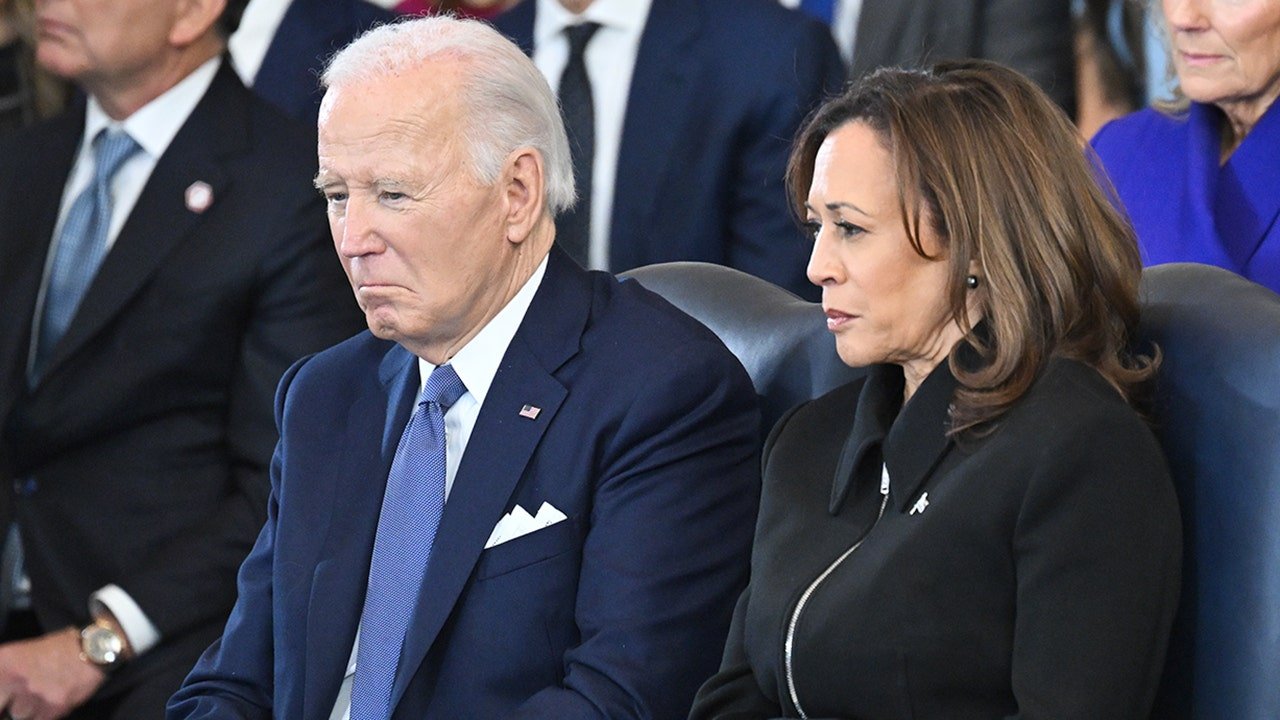
Notable individuals and organizations that received contributions from top staffers at these firms include Sen. Adam Schiff, Rep. Nancy Pelosi, former President Joe Biden, Gov. Gavin Newsom, former Vice President Kamala Harris and the Democratic National Committee.
Donors to Democratic committees from the trio of firms include executives, top-level lawyers, lobbyists and, to a much lesser extent, rank-and-file employees working in areas such as engineering or management. The staffers made some contributions to Republicans as well, though the overall sum was far lower than what Democrats received.
PLATNER’S ANTI-CORPORATE CRUSADE HITS AWKWARD SNAG AS RECEIPTS TELL ANOTHER STORY
The review included direct contributions, earmarked contributions and donations to joint-fundraising committees reported in campaign finance filings. It did not identify corporate donations from Alibaba, Baidu or BYD to the federal committees.
“American politicians should no longer accept campaign cash from any Chinese companies. Politicians who have been taking campaign cash from companies like Baidu, Alibaba and BYD now realize they were supported by blacklisted Chinese Military Companies,” Michael Lucci, CEO of the national security organization State Armor, told Fox News Digital. “The reason the Pentagon’s list of sanctioned CCP companies keeps expanding is because the Chinese Communist Party imposes a ‘civil-military fusion’ mandate upon all Chinese companies, forcing them to assist in modernizing China’s military with the goal of defeating America.”
“They all end up working to support the PLA. They should all be cut off from U.S. politics,” he added.
The Pentagon’s Chinese military company designation via its 1260H list does not function as a traditional sanction, as Americans can continue to do business with the company.
Biden-linked committees and joint fundraising vehicles were by far the biggest beneficiaries of the funds, taking in roughly $850,000 from employees at the trio of firms between 2020 and 2024. The DNC, meanwhile, had a haul of around $500,000 while Harris-linked committees brought in roughly $140,000.
TOP CALIFORNIA DEM RUNNING FOR OFFICE TIED TO CHINESE SCHOOL ACCUSED OF US DIPLOMA SCANDAL
Various state Democratic parties also received five-figure support from employees at Baidu, BYD and Alibaba. Newsom, per state campaign finance records, accepted $50,000 from an executive at BYD, an electric-vehicle manufacturer that his administration later awarded a contract.
Fox News Digital reached the offices of Biden, Harris, Schiff, Pelosi, Newsom and the DNC on Sunday for comment and has not heard back as of publishing.
Pentagon officials are legally required to release a list of what it determines to be Chinese military companies every year. The first such list was released in June 2021 under President Joe Biden.
The Pentagon’s 1260H list identifies Chinese companies the Defense Department says are “Chinese military companies” operating directly or indirectly in the United States. Required by the 2021 National Defense Authorization Act, the list is intended to warn U.S. businesses and investors about firms tied to China’s military-civil fusion strategy, though inclusion does not automatically trigger sanctions.
New defense laws, however, have given the list more bite in recent years.
The Pentagon will be barred from directly contracting with companies on the list starting June 30 and is currently banned from contracting with companies who lobby on behalf 1260H-listed firms. In 2027, the ban will be expanded to prevent indirect procurement of goods manufactured by Chinese military companies through supply chain intermediaries.
WALL STREET BANKS HELPED CHINESE MILITARY-LINKED FIRM RAISE BILLIONS DESPITE RED FLAGS, LAWMAKERS FIND
While Alibaba, Baidu and BYD only recently earned formal designations as Chinese military companies, their links to the CCP have been widely reported for years.
The Wall Street Journal, for instance, reported in 2017 that Alibaba was assisting the Chinese government in its surveillance efforts against dissidents, and Chinese state media reported in 2018 that the firm had a large CCP presence within it. Some sources within the company told Reuters in 2019 that the firm had developed an app designed specifically to increase ideological alignment with Chinese President Xi Jinping.
Alibaba, however, has come out strongly against its inclusion on the Pentagon’s list of Chinese military companies.
NATIONAL SECURITY EXPERTS RAISE CONCERNS AFTER MICROSOFT PROGRAM EXPOSED AS POSSIBLE AVENUE FOR CHINESE SPYING
“There’s no basis to conclude that Alibaba should be placed on the Section 1260H List,” a company spokeswoman told Fox News Digital. “Alibaba is not a Chinese military company nor part of any military-civil fusion strategy. We will take all available legal action against attempts to misrepresent our company.”
That statement also appears in a Securities and Exchange Commission filing made by Alibaba shortly after it was added to the Pentagon’s list.
“Inclusion in the CMC List will not affect the Group’s ability to conduct business as usual in the United States or anywhere in the world because the Group does not do business related to U.S. military procurement,” the SEC filing adds. “The CMC List does not impose any other export controls or sanctions, nor does it prohibit any persons (other than the U.S. Department of Defense) from business dealings with the Group or transacting in the securities of the Company.”
RICKETTS, FETTERMAN TEAM UP FOR CRACKDOWN ON CHINA’S ATTEMPTS TO PURCHASE US FARMLAND
As early as 2015, outlets like Bloomberg News were reporting that the Chinese government was heavily subsidizing BYD. Wang Chuanfu, the founder and CEO of the firm, is a member of the Chinese Communist Party and an ally of Xi.
BYD did not respond to a request for comment when reached by Fox News Digital on Monday.
In Baidu’s case, China’s Ministry of Science and Technology named the company as part of the country’s “national team” for AI development in 2017, with it later appointed by the CCP’s National Development and Reform Commission to lead China’s first national lab on deep learning technologies, according to state media. The firm, which primarily operates a search engine, reportedly assists the Chinese government in carrying out censorship.
“We categorically reject the inclusion of Baidu on the list, and there is no credible justification for adding Baidu to the list,” a Baidu spokesperson told Fox News Digital “The suggestion that Baidu is a military company is entirely baseless. We will not hesitate to use all options available to us to have the company removed from the list.”
CLICK HERE TO DOWNLOAD THE FOX NEWS APP
The Pentagon has defended its additions to the list.
“After the Department conducted its due diligence, it identified 188 entities that meet the statutory requirement for inclusion on the most recent 1260H List,” a Department of War spokesperson told Fox News Digital.
Business
Waymo recalls robotaxi fleet after construction-zone freeway incidents

Waymo is recalling nearly 4,000 robotaxis after more than a dozen incidents in which the autonomous vehicles entered closed freeway construction zones, according to a National Highway Traffic Safety Administration (NHTSA) recall report.
The recall affects 3,871 vehicles equipped with Waymo’s 5th Generation Automated Driving System.
According to NHTSA, the software issue could allow a vehicle to enter a closed freeway construction zone and continue traveling at posted speeds. Regulators said affected vehicles may avoid or fail to recognize certain construction-zone closures because of the software defect.
Waymo estimates that all 3,871 vehicles covered by the recall are affected.
WAYMO PAUSES FREEWAY ROBOTAXI ROUTES AFTER SAFETY AND SOFTWARE CONCERNS
According to the recall report, Waymo’s Field Safety Committee began reviewing the issue in late April after examining six incidents in which robotaxis drove past ramp closure signs and entered freeway construction zones.
The committee met again in May after identifying seven additional instances involving active construction zones in the San Francisco Bay Area.
As a result of the 13 reported incidents, Waymo implemented freeway-driving restrictions while engineers worked to identify the root cause and develop a remedy, according to the filing.
The recall covers Waymo 5th Generation Automated Driving Systems manufactured between May 17, 2022, and May 19, 2026. As of June 13, a software remedy remained under development, according to the filing.
WAYMO RECALLS MASSIVE AUTONOMOUS FLEET AFTER INCIDENT FLAGS MAJOR SAFETY ISSUE
Waymo currently operates driverless ride-hailing services in cities including San Francisco, Los Angeles, Phoenix and Austin, and has announced plans to expand into additional markets.
Ticker Security Last Change Change % GOOG ALPHABET INC. 367.46 +5.36 +1.48%
GET FOX BUSINESS ON THE GO BY CLICKING HERE
A Waymo spokesperson told FOX Business the company voluntarily restricted freeway operations while making improvements, notified regulators and filed a voluntary recall with NHTSA.
“We identified an area of improvement regarding performance around freeway construction zones,” the spokesperson said.
Business
Bernie Sanders’ New AI Bill Would Pay Americans $1,000 a Year
Bernie Sanders is making the case in Washington that since modern AI systems were built using the intellectual and creative outputs of all of humanity, the revenues they generate should go directly to the people—not just to a small cohort of tech moguls.
On Thursday, Senator Sanders—an Independent from Vermont—introduced a bill which, if passed, would create a sovereign wealth fund for the United States’ AI industry. The fund would be valued at roughly $7 trillion, a number derived from the current valuation of the country’s top AI labs, and would give the American public a 50% public stake in those companies.
As a result, taxpayers would receive an annual payment of $1,000 through the fund. That amount “will probably go up as AI becomes more prosperous,” Senator Sanders told reporters in a press briefing on Thursday. The fund could also eventually funnel “significant amounts of money … into social programs, making sure that all Americans have healthcare, education, decent housing, and other basic necessities of life.”
AI as a public resource
Proposed as an amendment to the 1986 Internal Revenue Code, Sanders’ bill argues that AI is ultimately a public resource, like precious minerals or oil extracted from publicly owned land, but a tiny number of companies are profiting from this resource as if it were a proprietary, privately owned product.
AI “derives its economic value from humanity’s collective intelligence, including our books, songs, artwork, journalism, computer code, scientific research, videos, conversations, images, and ideas spanning generations,” the bill reads. “A small number of oligarchs have essentially stolen the creative work of hundreds of millions of people … without permission, acknowledgment, or compensation in order to control the majority of economic value created by artificial intelligence.”
More than 100 sovereign wealth funds currently operate in 67 countries, including the United States. One example is the Texas Permanent School Fund, established in 1854, which helps fund the state’s public school system with revenue from the extraction of natural resources such as oil and gas.
Growing bipartisan support
Sanders isn’t the first person to suggest that giving Americans a direct ownership stake in the wealthiest AI companies might be an effective way to offset the technology’s more destabilizing economic impacts. California Governor Gavin Newsom has directed state officials to start researching the practicality of the model, which is known as universal basic capital, or UBC (not to be confused with universal basic income, or UBI).
It’s even received some support within the AI sector itself. OpenAI and Anthropic have both suggested that some version of this system may be necessary to share the AI industry’s gains with the broader public and cushion workers against job losses caused by the technology’s adoption. The companies—which are both expected to finalize their IPOs later this year—have also recently called for the formation of an international organization to oversee, and if necessary slow down, the development and deployment of powerful new AI models.




In new interview, Trump makes eye-opening Iran war claims
Trump is defiant and defensive after signing a memorandum of understanding with Iran. CNN has the first clips from Trump's...


Why more minors are upskirting in Japan
Videos of suspected upskirters being chased through Japan's streets are a daily sight on social media. But police data shows...


FDA committee recommends a new mRNA flu vaccine : NPR
The Food and Drug Administration’s top vaccine advisory committee voted unanimously today to recommend Moderna’s mRNA influenza vaccine, mFlusiva, for...


Obama Presidential Center opening, in 1 hour: Barack & Michelle, guests & more
In remarks during the opening ceremony of his presidential center in Chicago, former President Barack Obama called on …


Inside the 'world's toughest' college entry exam | Meanwhile in Asia
In China, the college entry exam, called "gaokao," pushes millions of students to the limit, but with a brutal jobs...


Oliver Tree’s Mom Honors Son With Emotional Tribute After His Death
Oliver Tree’s mom is remembering her son with a heartbreaking tribute following his tragic death in a helicopter crash. Christine...


Oil storage tank's roof launched into the air during Ukrainian attack on Moscow #BBCNews


Stars perform at Obama Presidential Center opening ceremony
The opening ceremony of the Obama Presidential Center in Chicago honored and celebrated former President Barack Obama's …


Joint-Pain Supplement Tied to Faster Alzheimer’s Progression
A supplement that many older Americans swallow for their knees may not be so benign for their brains. University of...


Omega-3 supplements may not improve brain function
If you’re taking an omega-3 fish oil or algae supplement to stave off Alzheimer’s disease and dementia, take note: A...
-

 Business5 days ago
How much of Musk’s wealth comes from government help? Virtually all of it
-

 LifestyleNews2 weeks ago
120 minutes of strength training per week may help extend lifespan
-

 Politics1 week ago
What to know about the stabbing that set off fiery riots in Northern Ireland
-

 Video6 days ago
Download fans say what they love about the festival. #DownloadFestival #BBCNews
-

 Video6 days ago
Why SpaceX IPO isn't about space. #SpaceX #ElonMusk #BBCNews
-

 HealthNews7 days ago
The people of Okinawa, Japan only eat until they are about 80 percent full, then stop — and the practice has been linked in multiple peer-reviewed studies to lower rates of cardiovascular disease, slo
-

 TravelNews6 days ago
My Paternal Instinct Should’ve Warned Me About Netflix’s Maternal Instinct
-

 Food6 days ago
Pope Leo’s plane was grounded. Then the King of Spain stepped in to help