

Business
The hidden $132,000 red tape tax facing today’s new homebuyers

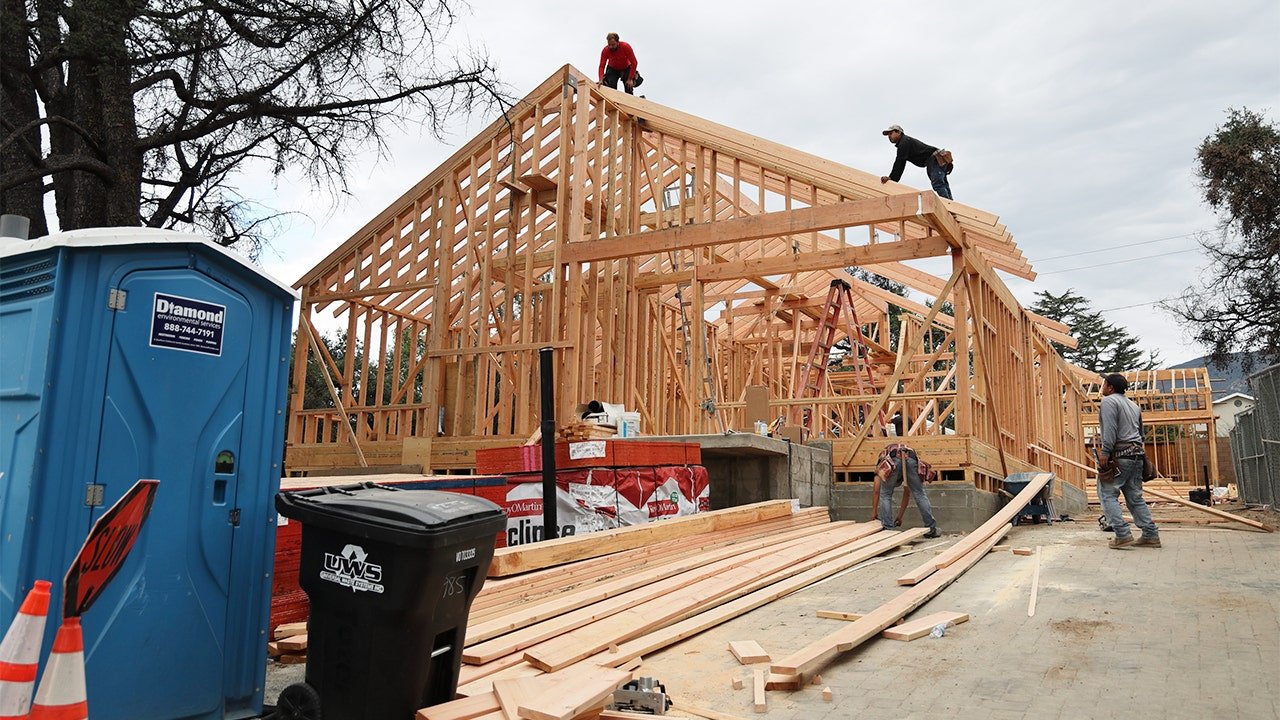
Government regulations now add roughly $132,000 to the cost of a typical newly built home, according to a new study from the National Association of Home Builders (NAHB), as industry leaders warn that mounting costs are worsening the nation’s housing affordability challenges.
The NAHB study found that regulations imposed by federal, state and local governments account for 26.4% of the final price of a new single-family home. Applied to the average sales price of a new home in January, the regulatory burden totals approximately $131,734 per house.
The estimate is based on Census Bureau data showing the average sales price of a newly built home sold in January was $499,500.
The report comes as housing affordability remains a challenge for many Americans amid elevated mortgage rates and persistently high home prices.
KEVIN WARSH’S FIRST FED PRESS CONFERENCE LOOMS AS INFLATION SURGE MAKES RATE CUTS INCREASINGLY UNLIKELY
NAHB’s analysis found regulatory costs have increased sharply in recent years. The group estimated that regulations added $93,870 to the cost of a new home in 2021, compared with $131,734 today – an increase of roughly 40% over five years.
Among the various regulatory costs examined in the report, changes to building codes over the past decade represented the largest burden. NAHB estimated those changes add approximately $40,288 to the cost of a typical newly built home.
OIL PRICES PLUNGE TO LOWEST LEVELS SINCE EARLY MARCH AFTER TRUMP SIGNS IRAN DEAL
The study also found that builders face costs associated with zoning approvals, permit and inspection fees, environmental and traffic studies, land-use requirements, labor regulations and delays in obtaining approvals.
“Costly and inefficient regulatory policy is clearly impeding the ability of builders to increase the housing supply,” NAHB Chief Economist Robert Dietz said in a statement. “According to a new NAHB study, government regulation, taxes, fees and other costs add more than 26% to the price of an average single-family home. Easing permitting bottlenecks, density limits and inefficient zoning rules would help reduce costs and support the housing growth the nation needs.”
According to the report, 94.2% of developers surveyed said regulations typically cause project delays, while 88.2% reported facing development standards that go beyond what they would ordinarily build.
NAHB Chairman Bill Owens said the nation remains short roughly 1.2 million homes and argued that reducing barriers to construction could help boost housing supply.
“With the nation short about 1.2 million homes, builder sentiment will remain soft until barriers are eased and conditions improve for home building,” Owens said in a statement released alongside the latest NAHB/Wells Fargo Housing Market Index.
Builder confidence remains subdued. The latest NAHB/Wells Fargo Housing Market Index showed builder sentiment fell to 35 in June, marking the 14th consecutive month below 40. The survey also found that 35% of builders cut prices in June, while 62% offered sales incentives to attract buyers.
The NAHB study was based on surveys of 54 land developers and 337 single-family builders conducted in March. Researchers combined the survey responses with Census Bureau housing data and other industry cost assumptions to estimate the aggregate impact of regulations on home prices.
CLICK HERE TO GET FOX BUSINESS ON THE GO
The report noted that it does not argue all regulations should be eliminated, but said quantifying their cost is important as policymakers consider ways to improve housing affordability and increase homebuilding nationwide.
Business
FDA advisors unanimously vote to approve Moderna’s mRNA after agency drama

Independent advisors for the Food and Drug Administration on Friday voted 9–0 in support of approving Moderna’s seasonal mRNA flu vaccine, which a Trump appointee at the agency initially tried to block from even being reviewed.
In an all-day meeting, members of the FDA’s advisory committee—known as VRBPAC for Vaccines and Related Biological Products Advisory Committee—pored over data and presentations on the vaccine, which is dubbed mRNA-1010 and branded as mFlusiva. The presentations included a review from FDA scientists, which was supportive of the vaccine.
Data from a Phase 3 trial including over 40,000 adults age 50 and older found the mRNA vaccine was around 27 percent more effective against seasonal flu than a standard flu shot. A smaller Phase 3 trial, involving data from nearly 3,000 people age 65 years and older, showed the shot produces stronger immune responses than a high-dose flu vaccine, which is recommended for this age group. The safety profile of the vaccine was also generally good.
“I think that the studies that were presented today were very well conducted,” VRBPAC voting member Flor Munoz-Rivas, a pediatric infectious disease expert at Baylor College of Medicine, said after the vote. “They have very clear results that are very robust in terms of demonstrating that additional efficacy.”
She also expressed enthusiasm for the agile mRNA platform for the flu vaccine, which is based on the same platform Moderna used to develop its mRNA COVID-19 vaccines. In addition to the better efficacy, it allows for “rapid development of the vaccines in regular seasonal flu activity” and makes us “better prepared for emerging strains or pandemic strains in the future,” she said.
Fellow voting member Hayley Gans, a pediatric infectious disease expert at Stanford University, agreed. “I think that this particular platform adds exciting ways that we can actually move our vaccines to the future,” she said. “The signals that we’re seeing now are not putting people at risk and the benefits are actually large not only for this season, but for really what it can do for our vaccine platform. … This one has the potential to really move us in a modern direction.”
FDA drama
The outcome today is in stark contrast to a few months ago, when Trump official Vinay Prasad was overseeing vaccines at the FDA. In a shocking decision in February, Prasad rejected Moderna’s filing, refusing to even review the vaccine. Prasad claimed that the large vaccine trial was not “adequate and well-controlled” because it did not compare efficacy to a high-dose vaccine in people 65 and older. Instead, Moderna used the smaller trial to compare immune responses of mRNA-1010 to a high-dose vaccine—which was a plan the FDA had previously agreed would be acceptable.
Moderna was blindsided by the refusal, which Prasad issued over the objections of FDA scientists and career officials. Amid widespread outcry, the FDA reversed the decision the next week, agreeing to review the vaccine. Around the same time, Prasad was also behind the rejection of a closely watched gene therapy for Huntington’s disease made by UniQure, which was widely criticized and called “truly evil” by a former FDA official.
Prasad was pushed out of FDA at the end of April amid a string of decried decisions and controversies. Prasad’s decision on UniQure’s gene therapy was reversed on Wednesday.
Moderna released a statement saying it was pleased with today’s outcome.
“We appreciate the thoughtful review by the members of VRBPAC and their recognition of the clinical evidence supporting mRNA-1010,” Moderna CEO Stéphane Bancel said in the statement. “We believe mRNA-1010 has the potential to provide an important new option for seasonal flu prevention and further demonstrate the versatility of our mRNA platform. We look forward to continuing to work with the FDA as it completes its review.”
Next steps
While unanimous support from the advisors is a positive sign for the vaccine’s fate, the FDA ultimately decides whether to grant approval. The agency has set a deadline for a decision by August 5.
Moderna has previously said it is aiming to release the vaccine later this year, pending approval.
A further hurdle will be getting a recommendation from the Centers for Disease Control and Prevention. Newly FDA-approved vaccines would first be reviewed by the CDC’s advisory committee—the Advisory Committee on Immunization Practices (ACIP)—which would vote on recommendations for use that it thinks the CDC should adopt. Having recommendations from ACIP and CDC mean that almost all commercial insurance providers and federal programs would be required by law to cover the vaccine at no cost.
However, ACIP is effectively defunct after a federal judge issued a temporary injunction that blocked almost all of the allies anti-vaccine Health Secretary Robert F. Kennedy Jr. installed on the committee. The judge ruled that Kennedy’s handpicked advisors were appointed improperly. Like Kennedy, many of them hold anti-vaccine views and are also openly hostile to mRNA technology.
The US Department of Health and Human Services is now appealing the injunction on an expedited schedule that will stretch at least into July.
Business
Waymo recalls robotaxi fleet after construction-zone freeway incidents
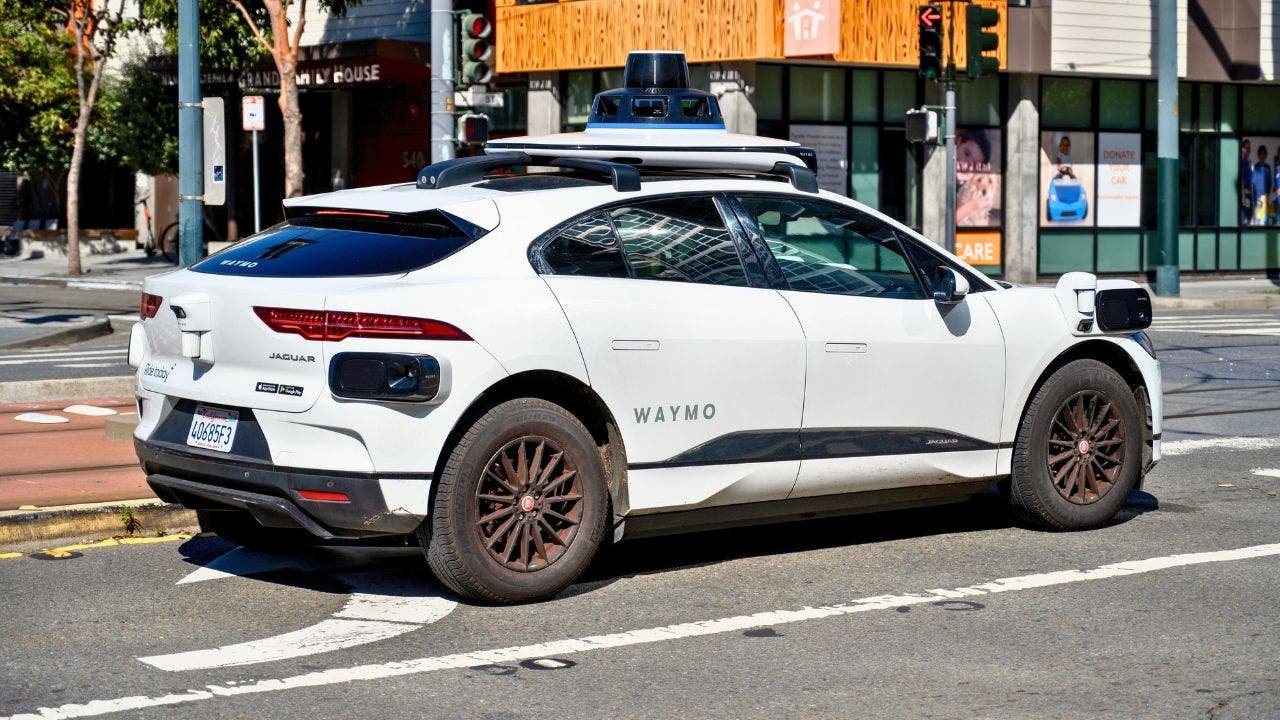
Waymo is recalling nearly 4,000 robotaxis after more than a dozen incidents in which the autonomous vehicles entered closed freeway construction zones, according to a National Highway Traffic Safety Administration (NHTSA) recall report.
The recall affects 3,871 vehicles equipped with Waymo’s 5th Generation Automated Driving System.
According to NHTSA, the software issue could allow a vehicle to enter a closed freeway construction zone and continue traveling at posted speeds. Regulators said affected vehicles may avoid or fail to recognize certain construction-zone closures because of the software defect.
Waymo estimates that all 3,871 vehicles covered by the recall are affected.
WAYMO PAUSES FREEWAY ROBOTAXI ROUTES AFTER SAFETY AND SOFTWARE CONCERNS
According to the recall report, Waymo’s Field Safety Committee began reviewing the issue in late April after examining six incidents in which robotaxis drove past ramp closure signs and entered freeway construction zones.
The committee met again in May after identifying seven additional instances involving active construction zones in the San Francisco Bay Area.
As a result of the 13 reported incidents, Waymo implemented freeway-driving restrictions while engineers worked to identify the root cause and develop a remedy, according to the filing.
The recall covers Waymo 5th Generation Automated Driving Systems manufactured between May 17, 2022, and May 19, 2026. As of June 13, a software remedy remained under development, according to the filing.
WAYMO RECALLS MASSIVE AUTONOMOUS FLEET AFTER INCIDENT FLAGS MAJOR SAFETY ISSUE
Waymo currently operates driverless ride-hailing services in cities including San Francisco, Los Angeles, Phoenix and Austin, and has announced plans to expand into additional markets.
Ticker Security Last Change Change % GOOG ALPHABET INC. 367.46 +5.36 +1.48%
GET FOX BUSINESS ON THE GO BY CLICKING HERE
A Waymo spokesperson told FOX Business the company voluntarily restricted freeway operations while making improvements, notified regulators and filed a voluntary recall with NHTSA.
“We identified an area of improvement regarding performance around freeway construction zones,” the spokesperson said.
Business
Amazon investigating engineers who criticized AI data center expansion

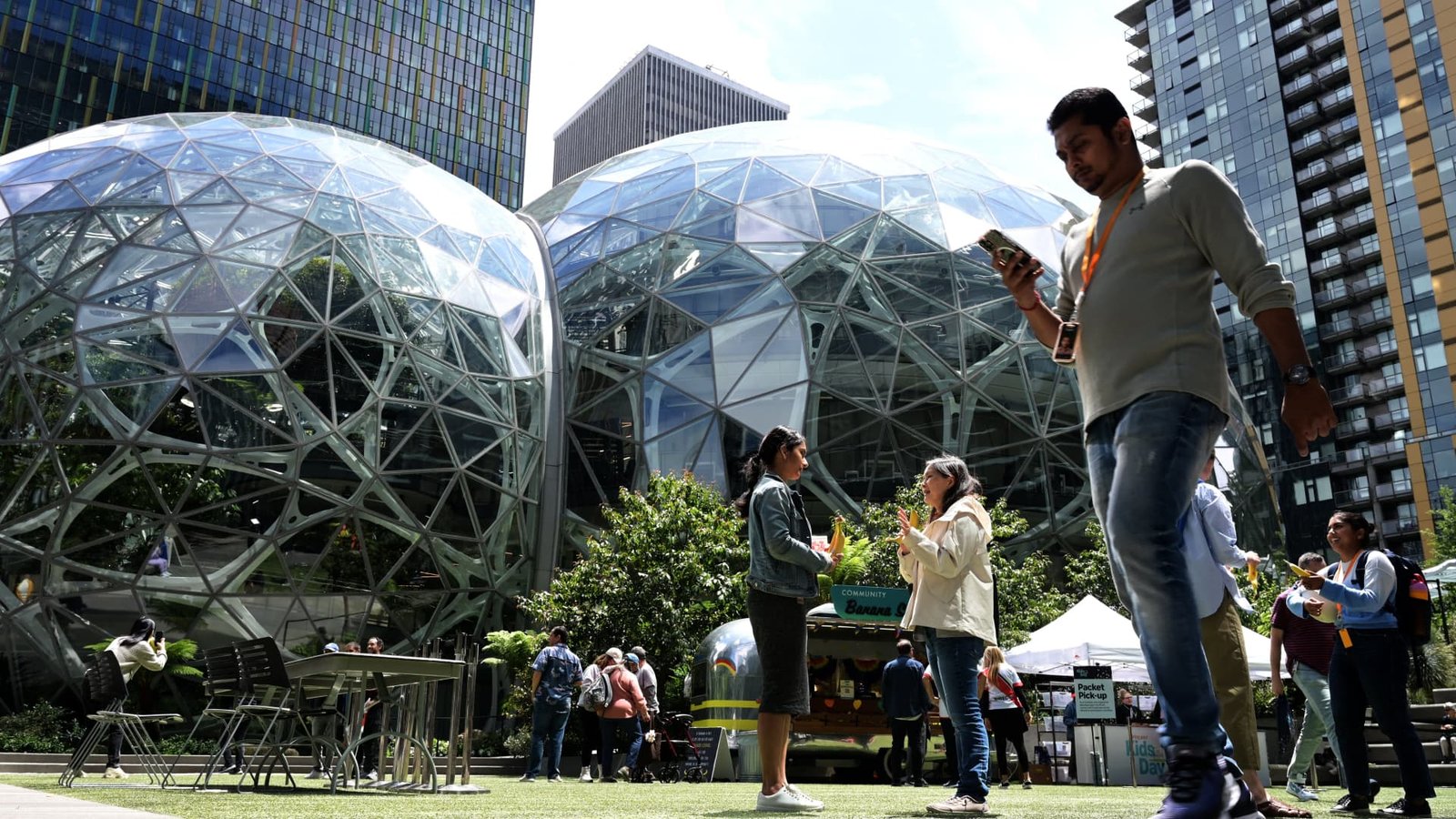
A group of Amazon engineers said they’re being investigated by the company after they criticized the breakneck expansion of artificial intelligence data centers and called for stronger government regulation.
Earlier this month, five Amazon employees testified at Seattle City Council meetings where officials sought public feedback on a year-long pause on the construction of new large-scale data centers to give the city time to regulate the projects. Seattle passed the moratorium in a unanimous vote on June 9.
The employees criticized the hefty AI spending of tech companies, describing it as an “all-costs-justified AI build out.”
Following the hearings, three Amazon workers were separately invited to Zoom meetings with a human resources representative who said he was investigating a concern that was raised about their testimony, according to a complaint filed Friday with the Seattle Office for Civil Rights.
The employees were informed that the investigation could lead to disciplinary action, the complaint states, while one staffer was told that the potential discipline could range up to termination.
Amazon’s questioning made the staffers feel “intimidated and uncertain in their future employment,” according to the complaint, which was filed by lawyers representing the employees.
“They also learned that Amazon was monitoring their political advocacy before the Seattle City Council and was seeking to identify additional employees who had engaged in political activities,” the complaint said.
The complaint accuses Amazon of violating a Seattle ordinance that prohibits companies from discriminating against employees for their political ideology, race, religion and age, among other things.
Amazon previously told CNBC that the company respects its colleagues’ right to voice their opinions.
Amazon spokesperson Margaret Callahan said in a statement that the company doesn’t permit employees to speak as representatives of Amazon without following certain procedures.
As it looked at how the employees represented themselves and how their comments were received, the company determined they may have been speaking “in their capacity as Amazonians and not as private citizens,” Callahan said.
“We believe it’s important to apply our policies consistently so, just as we would with anyone else, we’re investigating whether there was a violation of our policies and may or may not take action based on what we find,” Callahan said in a statement.
Callahan disputed that the company has plans to terminate the employees or told the staffers they were at risk of termination. She added that Amazon doesn’t tolerate retaliatory behavior.
The staffers are part of Amazon Employees for Climate Justice, a group of current and former employees that has repeatedly pressed the company on its climate stance, treatment of its workforce and other issues.
Two employees who founded AECJ were fired by the company in 2020 for “repeatedly violating internal policies” after they criticized the company publicly, including circulating petitions calling for greater coronavirus protections for Amazon warehouse workers. Amazon in 2021 settled with the employees after they filed a complaint with federal labor regulators.
More recently, AECJ has urged Amazon to be “more responsible” in its AI rollout, and “get real about the costs of AI and the guardrails we need.”
Amazon has committed to spend up to $200 billion this year on capital expenditures, mostly for AI infrastructure. At the same time, it has laid off 30,000 corporate employees since October, part of an attempt by CEO Andy Jassy to transform Amazon into the “world’s largest startup.”
AI data centers have been a target of growing backlash across the country. A recent Gallup poll found that seven in 10 Americans oppose the construction of data centers for AI in their local area, with most respondents citing concerns around the facilities’ environmental impact and quality-of-life harms.
Darius Irani, an Amazon employee of more than five years, said in a statement that he doesn’t regret speaking at the hearing.
“All I did was testify because I believe it’s critical that the government regulates data centers and AI,” Irani said. “Workers need to be involved in these conversations.”
Business
Bernie Sanders’ New AI Bill Would Pay Americans $1,000 a Year
Bernie Sanders is making the case in Washington that since modern AI systems were built using the intellectual and creative outputs of all of humanity, the revenues they generate should go directly to the people—not just to a small cohort of tech moguls.
On Thursday, Senator Sanders—an Independent from Vermont—introduced a bill which, if passed, would create a sovereign wealth fund for the United States’ AI industry. The fund would be valued at roughly $7 trillion, a number derived from the current valuation of the country’s top AI labs, and would give the American public a 50% public stake in those companies.
As a result, taxpayers would receive an annual payment of $1,000 through the fund. That amount “will probably go up as AI becomes more prosperous,” Senator Sanders told reporters in a press briefing on Thursday. The fund could also eventually funnel “significant amounts of money … into social programs, making sure that all Americans have healthcare, education, decent housing, and other basic necessities of life.”
AI as a public resource
Proposed as an amendment to the 1986 Internal Revenue Code, Sanders’ bill argues that AI is ultimately a public resource, like precious minerals or oil extracted from publicly owned land, but a tiny number of companies are profiting from this resource as if it were a proprietary, privately owned product.
AI “derives its economic value from humanity’s collective intelligence, including our books, songs, artwork, journalism, computer code, scientific research, videos, conversations, images, and ideas spanning generations,” the bill reads. “A small number of oligarchs have essentially stolen the creative work of hundreds of millions of people … without permission, acknowledgment, or compensation in order to control the majority of economic value created by artificial intelligence.”
More than 100 sovereign wealth funds currently operate in 67 countries, including the United States. One example is the Texas Permanent School Fund, established in 1854, which helps fund the state’s public school system with revenue from the extraction of natural resources such as oil and gas.
Growing bipartisan support
Sanders isn’t the first person to suggest that giving Americans a direct ownership stake in the wealthiest AI companies might be an effective way to offset the technology’s more destabilizing economic impacts. California Governor Gavin Newsom has directed state officials to start researching the practicality of the model, which is known as universal basic capital, or UBC (not to be confused with universal basic income, or UBI).
It’s even received some support within the AI sector itself. OpenAI and Anthropic have both suggested that some version of this system may be necessary to share the AI industry’s gains with the broader public and cushion workers against job losses caused by the technology’s adoption. The companies—which are both expected to finalize their IPOs later this year—have also recently called for the formation of an international organization to oversee, and if necessary slow down, the development and deployment of powerful new AI models.
Business
Jeff Bezos predicts AI will create labor shortages, not replace workers
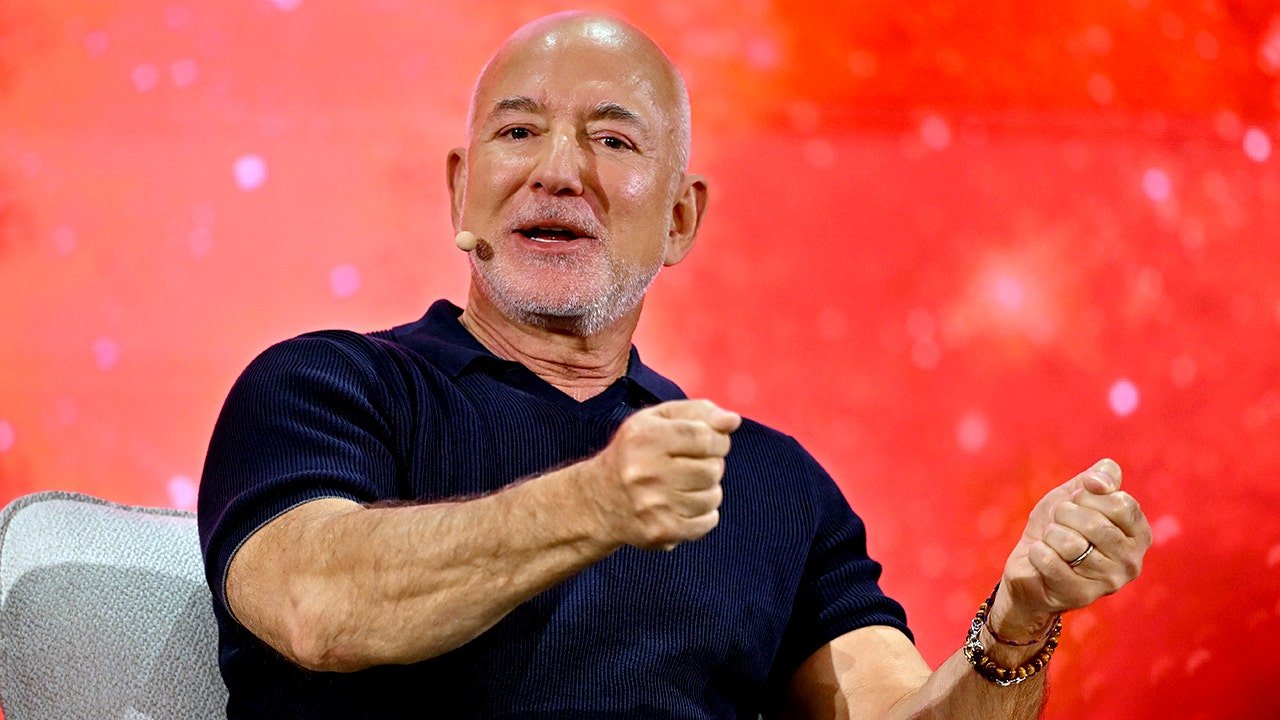
Amazon founder Jeff Bezos said that the rise of artificial intelligence (AI) won’t lead to the replacement of humans in the workforce and will instead create labor shortages.
Bezos spoke at the VivaTech technology conference in Paris on Wednesday and offered an optimistic outlook on the impact of AI on the workforce amid concerns about its impact on the role of human workers across the economy.
“I know there’s a lot of concern that many people have, including many smart people, that AI is going to make humans redundant and so on,” Bezos said.
“I totally disagree with that point of view. And I think, in fact, AI is going to create a labor shortage,” the Amazon founder added. “We have an endless set of things to invent… We are limited not by our imaginations but by what we can actually do.”
AI REMAINS TOP REASON FOR US JOB CUTS FOR THIRD STRAIGHT MONTH AS EMPLOYERS AXED 97,000 WORKERS IN MAY
“I promise you every single person in this audience has had an idea for a new business or a new product or a new device that they wish they could manufacture, and that idea stayed in your head and went nowhere,” Bezos explained. “And the reason it stayed in your head and went nowhere is because it’s too hard to do, and it wasn’t worth it.”
“If we can accelerate the dream build loop, all of the ideas will then become possible. And then we end up being limited not by our capabilities, but by our imaginations,” he added.
AMERICA CAN’T COMPETE WITH CHINA IN AI WITHOUT THESE WORKERS, META’S PRESIDENT SAYS
Ticker Security Last Change Change % AMZN AMAZON.COM INC. 244.64 +7.14 +3.01%
Bezos’ comments come as companies are reevaluating their workforces in light of the advancements in AI, with thousands of job cuts following in the wake of companies’ investments in the emerging tech.
A report by global outplacement and executive coaching firm Challenger, Gray & Christmas found that about 40% of the 97,006 job cuts announced by companies in May were attributed to AI.
The 38,579 cuts attributed to AI in May was the highest monthly total linked to that since Challenger began tracking it in 2023.
AMAZON TO CUT 16,000 ROLES AS IT LOOKS TO INVEST IN AI, REMOVE ‘BUREAUCRACY’
“The labor market is being reshaped by technology in real time. AI is now the leading reason companies give for cutting jobs and the primary industry citing it is technology,” said Andy Challenger, the firm’s chief revenue officer and a labor and workplace expert.
The tech sector announced 38,242 job cuts in May – the highest for the sector since August 2024. Firms within the sector have announced 123,653 cuts in 2026 so far, which is an increase of 66% from the same period in 2025 and leads other sectors in job cuts this year by a wide margin.
“AI isn’t yet the jobpocalypse some predicted. Like spreadsheets and email before it, the technology will ultimately make workers more productive, but our data shows companies are already acting on it, citing AI for more cuts than any other reason,” Challenger explained. “The open question isn’t whether AI changes the workforce, but how fast.”
GET FOX BUSINESS ON THE GO BY CLICKING HERE
Amazon is one of the tech firms that has cut jobs amid its investments in AI, with the company announcing 16,000 cuts in January.


Obama Presidential Center opening, in 1 hour: Barack & Michelle, guests & more
In remarks during the opening ceremony of his presidential center in Chicago, former President Barack Obama called on …


Inside the 'world's toughest' college entry exam | Meanwhile in Asia
In China, the college entry exam, called "gaokao," pushes millions of students to the limit, but with a brutal jobs...


Oliver Tree’s Mom Honors Son With Emotional Tribute After His Death
Oliver Tree’s mom is remembering her son with a heartbreaking tribute following his tragic death in a helicopter crash. Christine...


Oil storage tank's roof launched into the air during Ukrainian attack on Moscow #BBCNews


Stars perform at Obama Presidential Center opening ceremony
The opening ceremony of the Obama Presidential Center in Chicago honored and celebrated former President Barack Obama's …


Ismael Kone World Cup injury update for Canada vs. qatar
Canada’s Ismael Kone suffered a scary injury early in the second half of his team’s World Cup game against Qatar...


'There will be no kings' – Obama speaks at presidential centre opening #BBCNews


Why Netflix Canceled ‘The Boroughs’ (Exclusive)
It’s not every day that a hit TV show gets canceled while it’s on the streaming ratings charts, but that’s...


I Came Back from the Dead | It Happened To Me
How one man survived a cardiac arrest that left him clinically dead for ten minutes after a cricket-ball-sized blood clot...


JD Vance warns Israel over opposition to US-Iran peace deal | BBC News
The US vice president JD Vance has criticised Israel over opposition to the US peace deal with Iran, saying: “You...
-
 Business5 days ago
How much of Musk’s wealth comes from government help? Virtually all of it
-

 LifestyleNews2 weeks ago
120 minutes of strength training per week may help extend lifespan
-

 Politics1 week ago
What to know about the stabbing that set off fiery riots in Northern Ireland
-

 Video6 days ago
Download fans say what they love about the festival. #DownloadFestival #BBCNews
-

 Video6 days ago
Why SpaceX IPO isn't about space. #SpaceX #ElonMusk #BBCNews
-

 HealthNews7 days ago
The people of Okinawa, Japan only eat until they are about 80 percent full, then stop — and the practice has been linked in multiple peer-reviewed studies to lower rates of cardiovascular disease, slo
-

 TravelNews6 days ago
My Paternal Instinct Should’ve Warned Me About Netflix’s Maternal Instinct
-

 Food6 days ago
Pope Leo’s plane was grounded. Then the King of Spain stepped in to help