
Business
Anheuser-Busch CEO leaving to take CEO job at high-end gym chain Equinox
From getting people to lift a cheap Bud Light to getting them to lift a premium-looking dumbbell — that’s the upcoming leadership transition for Brendan Whitworth.
AB InBev (BUD) said Monday that Anheuser-Busch’s CEO Brendan Whitworth is departing the company, which is the North American arm of AB InBev, at the end of November. Whitworth will assume the CEO position at high-end gym chain Equinox.
Michel Doukeris, the CEO of Anheuser-Busch’s parent company AB InBev, will lead the key North America business in the interim until a new leader is announced. Doukeris led the North America business from January 2018 to June 2021. He became CEO of AB InBev in July 2021.
It has been an interesting run for Whitworth in the Anheuser-Busch CEO role over the past five years, to say the very least.
Under Whitworth’s watch, Bud Light felt the sales effect of a nationwide boycott and became a political punching bag by those on the right.
The sales pressure began after transgender influencer Dylan Mulvaney partnered with Bud Light to create an Instagram post during the March Madness basketball tournament in 2023 endorsing the light beer. Following the post on April 1, 2023, AB InBev saw Bud Light sales tank.
A high-profile CBS interview by Whitworth in June 2023 did little to stem the public fallout.
Bud Light sales have continued to be under pressure, more so some three years later, due to increased competition for light-beer drinkers and softer alcohol consumption among an increasingly health-conscious universe.
On the other hand, the AB InBev North America business is doing OK more broadly.
AB InBev said in its third quarter earnings report it was the top share gainer in total alcohol year to date, with market share gains in both beer and spirits. It says it gained share of total alcohol for 10 consecutive quarters, with beer performance led by Michelob Ultra and Busch Light.
AB InBev shares are up 25% year to date.
“Broadly, we remain impressed with the across-the-board progress and view ABI as increasingly the global leader in [alcoholic beverages],” Evercore ISI analyst Robert Ottenstein wrote in a note. “ABI has an unmatched beer portfolio, now meaningfully augmented by its Beyond Beer offerings, is the leader in eComm and digital tech, and has hard-to-match scale advantages in procurement and media properties. In sum, ABI has all the elements of a +high single digit percentage to +double digit percentage compounder worthy of a 20x+ multiple.”
Business
Dow Jones Futures Rise, Techs Fall; Apple, Microsoft, Amazon Flash Buy Signals In Postelection Rally

Information in Investor’s Business Daily is for informational and educational purposes only and should not be construed as an offer, recommendation, solicitation, or rating to buy or sell securities. The information has been obtained from sources we believe to be reliable, but we make no guarantee as to its accuracy, timeliness, or suitability, including with respect to information that appears in closed captioning. Historical investment performances are no indication or guarantee of future success or performance. Authors/presenters may own the stocks they discuss. We make no representations or warranties regarding the advisability of investing in any particular securities or utilizing any specific investment strategies. Information is subject to change without notice. For information on use of our services, please see our Terms of Use.
*Real-time prices by Nasdaq Last Sale. Real-time quote and/or trade prices are not sourced from all markets. Ownership data provided by LSEG and Estimate data provided by FactSet.
IBD, IBD Digital, IBD Live, IBD Weekly, Investor’s Business Daily, Leaderboard, MarketDiem, MarketSurge and other marks are trademarks owned by Investor’s Business Daily, LLC.
©2026 Investor’s Business Daily, LLC. All Rights Reserved.
Business
Datacenters were on the ballot. US voters rejected them
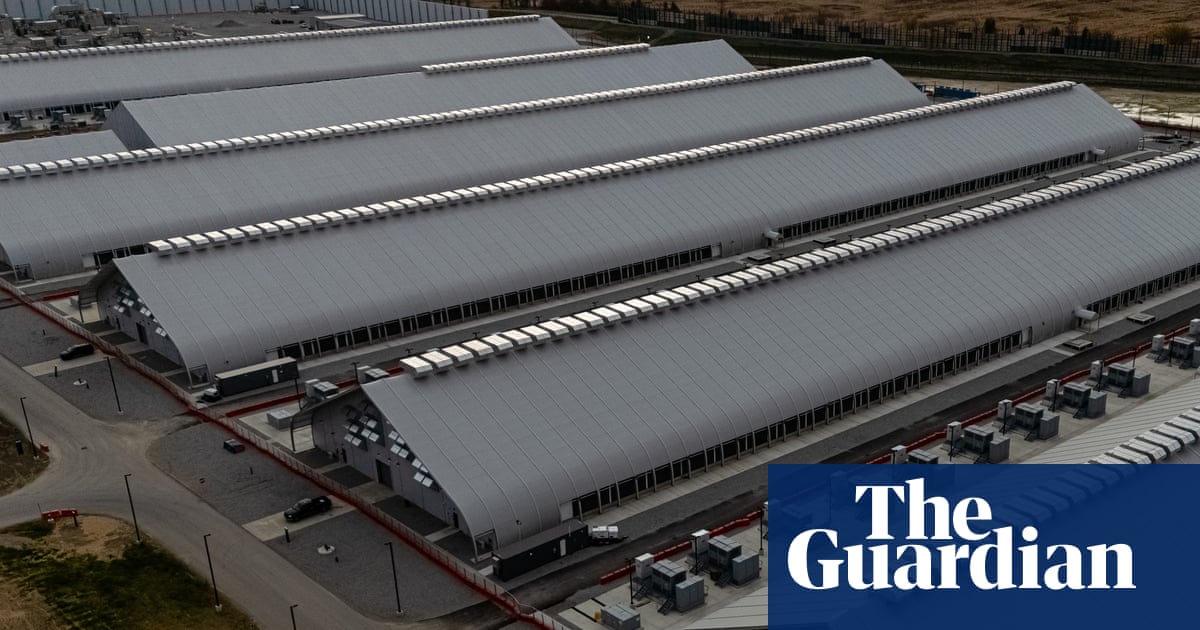
There were three big losers in Tuesday’s midterm elections in the US: Donald Trump, Elon Musk and datacenters.
Datacenters, the facilities full of semiconductor chips that power artificial intelligence and a host of other online products, were on the ballot in elections in at least 40 jurisdictions across 10 states. Voters responded with a strong rebuke of the giant buildings, which have has become a symbol of the tech industry and AI.
In Ohio alone, at least 14 municipalities passed bans or restrictions on datacenter development, including in Sunbury, where Amazon has proposed a $2m datacenter project. In Maine, eight municipalities passed temporary datacenter moratoriums. In Emporio, Kansas, where a 1,000-acre gigawatt-scale datacenter was recently proposed, a ban on high-impact datacenters was approved by voters.
Voters approved nearly every datacenter moratorium that was on the ballot, dozens in total, with one notable exception: Hardwood, North Dakota. The small city of a population of less than 1,000 people voted down a bill that would impose restrictions on datacenter development.
Where datacenters were not explicitly on the ballot, officials who have pushed back against their development were elected. In Texas, Democrat Gina Hinojosa, who secured a historical victory as governor on Tuesday night over her Republican opponent, has promised to impose moratoriums on their construction. She has pledged to implement greater restrictions on and community input into whether datacenters can be built. Towards the end of his tenure, Greg Abbott, her Republican opponent, had also tried to capitalize on anti-datacenter sentiment, demanding an end to electricity subsidies for them. He reversed his previous stance that had welcomed datacenters to the state.
Keisha Lance Bottoms, who became governor of Georgia, and Amy Acton, the newly elected governor of Ohio, have also pledged to implement moratoria on the construction of large datacenters.
Anti-datacenter sentiment has grown in the last few months has become a bipartisan issue. In May, Florida governor Ron DeSantis signed a bill imposing strict regulations on large-scale datacenters. Still, last night’s election solidified the overwhelming opposition to these centers of compute that have come to serve as a stand-in for the ultra wealthy and resource extraction by the AI industry.
“Data centers in space looking pretty appealing right now,” Elon Musk, who poured over $400m into supporting conservative candidates, posted on X.
Analyst Dan Ives said the results of the midterms are a clear sign that the pace of datacenter buildout will start to slow down.
“There is no way to sugarcoat that Democrats taking control especially over the Senate will create some major hurdles for AI and tech legislation in the Beltway over the next two years,” Ives said. Ives said he was particularly worried about Hinojosa who is a “known anti-datacenter politician”.
“The biggest worry of the night for tech investors and the AI trade was around the state of Texas where 25%-30% of data center gigawatts and capacity will come from,” he said.
Business
Lockheed Martin paying $29.5M settlement after allegedly discriminating against white workers
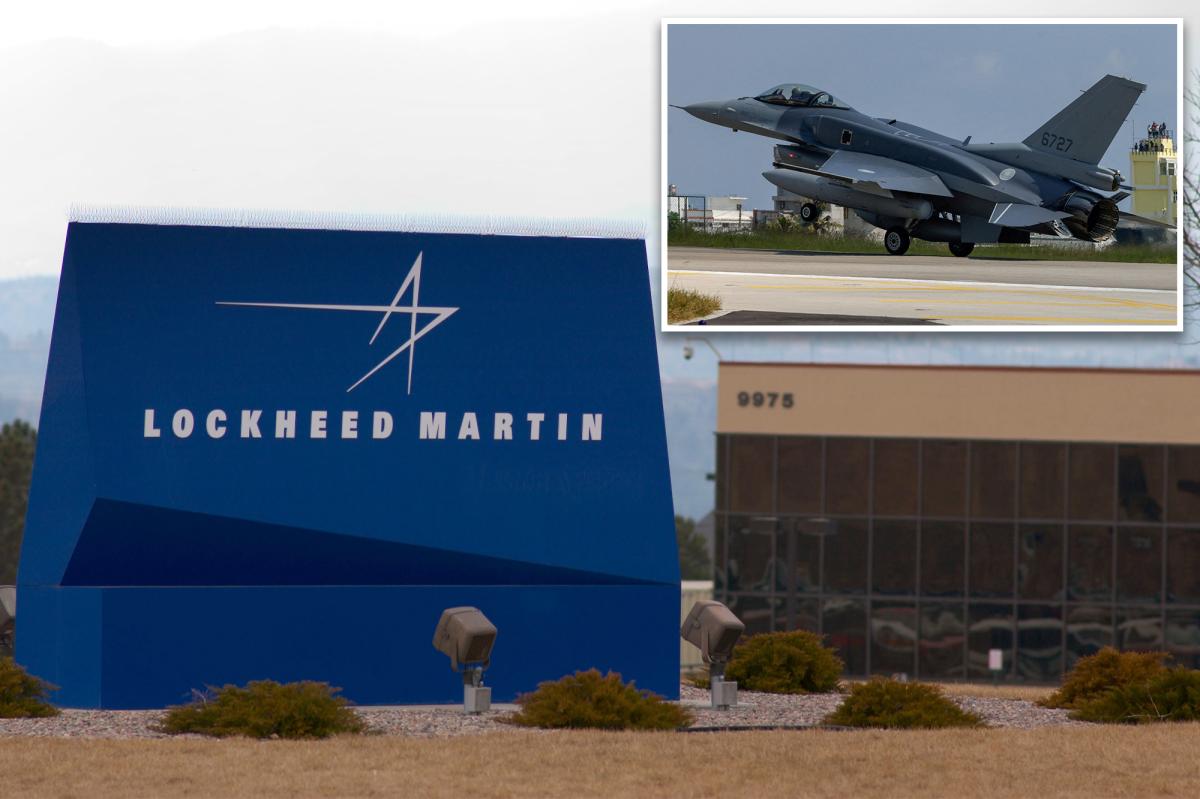
Defense contractor Lockheed Martin has agreed to pay $29.5 million to settle claims by President Donald Trump’s administration that it discriminated against white workers through its efforts to promote diversity and equity in an internal bonus program.
Lockheed Martin will pay $22 million to the US government to resolve claims that it failed to comply with anti-discrimination requirements in its federal contracts, according to the settlement announced late Tuesday by the Justice Department and the Equal Employment Opportunity Commission.
In addition, Lockheed Martin will pay $7.5 million to more than 1,000 affected employees as part of a settlement with the EEOC, which had been investigating the company for violating Title VII of the 1964 Civil Rights Act, which prohibits employment discrimination based on race.
In a statement, Lockheed Martin denied the government’s allegations but said it “agreed to resolve this matter with the Department of Justice and the Equal Employment Opportunity Commission to avoid the distraction and expense of prolonged litigation.”
“We did not admit liability, determining it would be best for all involved to put these matters behind us so we can remain focused on our critical national security mission,” the company said.
The case is the latest example of the Trump administration’s use of the 1863 False Claims Act to pressure federal contractors into abandoning diversity, equity and inclusion practices. The law states that contractors that make false claims to the government could be liable for extensive damages. Typically used to police fraud, the Trump administration has invoked the False Claims Act against companies it maintains have pursued discriminatory practices under the guise of promoting diversity.
The Justice Department has reached similar settlements with IBM, Deloitte and Accenture.
Civil rights groups have criticized the Trump administration’s policies for taking aim at many long-established practices that are aimed at ensuring the hiring, promotion and other employment practices do not intentionally or unintentionally discriminate against traditionally marginalized groups. Several groups have filed lawsuits against the Trump administration’s anti-DEI policies.
The allegations against Lockheed Martin center around a program the company introduced in 2021 to give the top 20% of employees a merit-based salary bump and promotion opportunities, according to the settlement agreement.
Managers submitted nominations for the bonuses, which the company then ran through an analysis to “flag” statistical outliers based on the race and sex composition of the list. If the nomination list raised flags, managers were asked to review their nominations and the “merit-based basis for the selections, without asking them to take any protected characteristic into account.”
But in practice, according to the Justice Department, Lockheed Martin personnel “exerted pressure on leaders in their business group to resolve race-related ‘flags’ by directing them to add or remove particular employees based on race.” The Justice Department claimed the managers were asked to remove nonminorities from the selections and add racial minorities.
The settlement with the DOJ and the EEOC stems from complaints made by Tim Booher, a former vice president at Lockheed Martin, who will be paid $4.4 million by the US government under a whistleblower provision of the False Claims Act. According to a complaint he filed in federal court in October 2025, Booher resigned from Lockheed Martin in May 2023 because he “felt that he could no longer be complicit in LMC’s illegal discrimination.”
In July 2024, Booher said he met with EEOC Commissioner Andrea Lucas to detail his allegations against the company. Lucas, who was elevated to EEOC chair after Trump took office in January 2025, filed a commissioner’s charge against Lockheed Martin, triggering the EEOC’s investigation.
Attorneys representing Booher released a statement applauding the “amicable conclusion that avoids prolonged litigation and ensures statutory compliance in federal contracting.”
Lucas, a vehement critic of DEI practices, has publicly urged white men to come to the EEOC with discrimination complaints and has filed her own “commissioner’s charges” against the diversity practices of companies, including Nike.
“Title VII protects every worker from employment discrimination on the basis of race — and that protection does not yield when discriminatory decisions are framed as diversity initiatives,” Lucas said in a statement announcing the settlement.
Business
Arm Stock: Chip Designer Beats Fiscal Q2 Targets

Information in Investor’s Business Daily is for informational and educational purposes only and should not be construed as an offer, recommendation, solicitation, or rating to buy or sell securities. The information has been obtained from sources we believe to be reliable, but we make no guarantee as to its accuracy, timeliness, or suitability, including with respect to information that appears in closed captioning. Historical investment performances are no indication or guarantee of future success or performance. Authors/presenters may own the stocks they discuss. We make no representations or warranties regarding the advisability of investing in any particular securities or utilizing any specific investment strategies. Information is subject to change without notice. For information on use of our services, please see our Terms of Use.
*Real-time prices by Nasdaq Last Sale. Real-time quote and/or trade prices are not sourced from all markets. Ownership data provided by LSEG and Estimate data provided by FactSet.
IBD, IBD Digital, IBD Live, IBD Weekly, Investor’s Business Daily, Leaderboard, MarketDiem, MarketSurge and other marks are trademarks owned by Investor’s Business Daily, LLC.
©2026 Investor’s Business Daily, LLC. All Rights Reserved.
Business
Figma (FIG) Q3 earnings report 2026
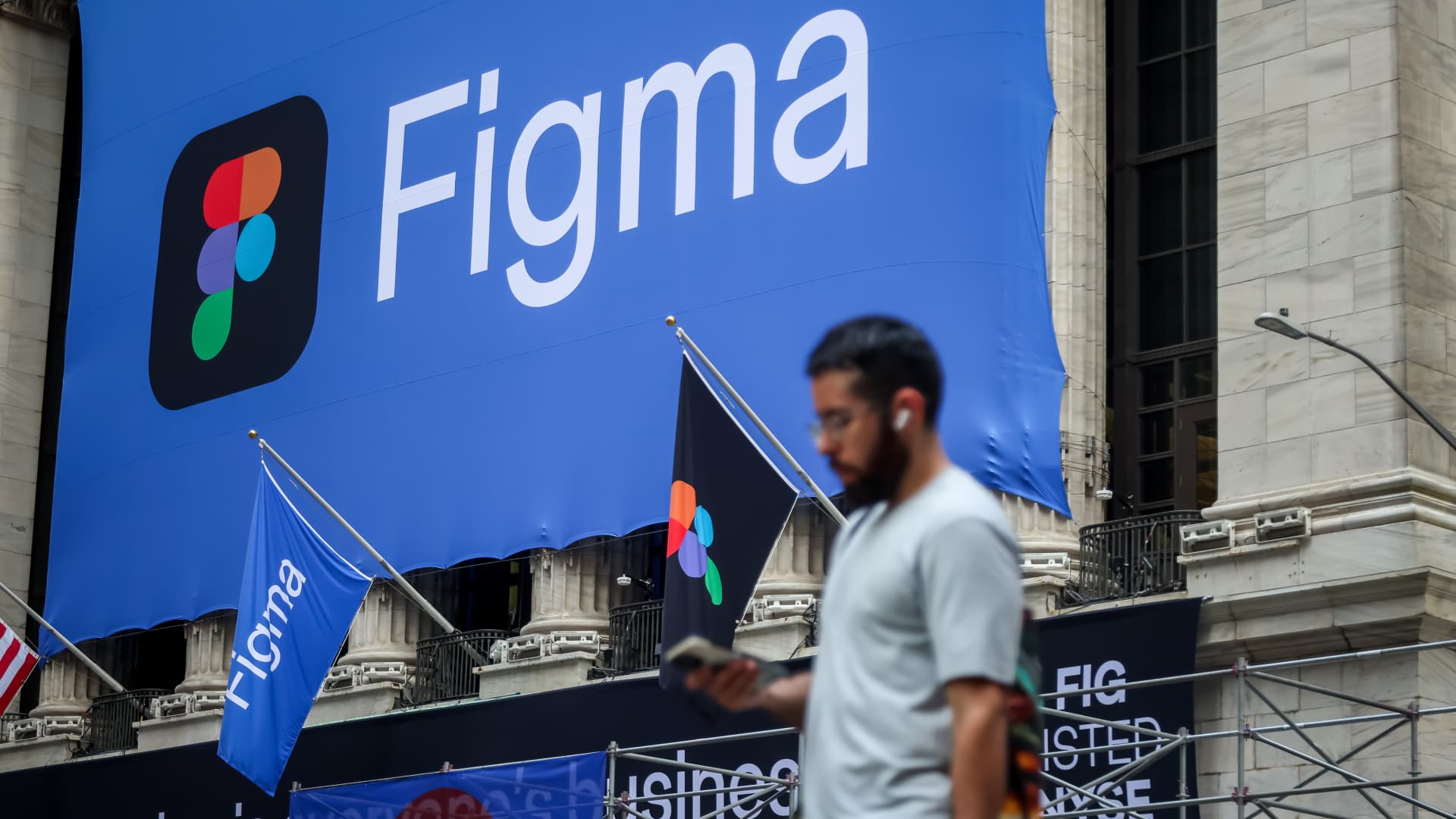
Figma shares tumbled 7% in extended trading after the company reported third-quarter results and guidance that surpassed Wall Street’s predictions.
Here’s how the company performed relative to LSEG consensus:
Earnings per share: 10 cents adjusted vs. 5 cents expected
Revenue: $391.4 million vs. $375.8 million expected
Figma’s revenue grew about 43% year over year in the quarter, according to a statement. Net loss narrowed to $81.3 million, or 15 cents per share, compared with a loss of $1.10 billion, or $2.72 per share, a year earlier.
The company’s 12% adjusted operating margin exceeded the 6.1% consensus among analysts polled by StreetAccount.
Executives lifted the full-year forecast. Figma now anticipates an 11% operating margin, up from 9% as of August, and $1.497 billion to $1.499 billion in revenue, compared with $1.463 billion to $1.467 billion before. Analysts surveyed by LSEG were looking for $1.471 billion in 2026 revenue.
The company sees fourth-quarter revenue growth slowing to about 33%. Analysts polled by LSEG had predicted 28% growth.
Figma’s announcement comes a day after highly valued design software startup Canva said it would cut 22% of its employees.
Shares have come down about 41% so far in 2026, while the S&P 500 index has gained 12%. Earlier this year, investors became concerned that artificial intelligence models could pose a competitive risk to Figma. Across much of software, AI panic has largely subsided as incumbents have posted persistent growth.
Figma wants to benefit from the rising adoption of AI to build websites and apps. During the quarter, the company started giving more AI credits to clients while maintaining prices.
“What that means is you’re potentially trading off near-term revenue, investing in your customers, and then allowing yourself to then grow durably over the long term,” Figma’s finance chief, Praveer Melwani, told CNBC in an interview on Wednesday.
The number of weekly users working at organizations that spend over $10,000 on Figma who used AI credits increased by almost 50% during the quarter, Figma said in the statement. The share of work the company’s own AI model performs doubled, and the rate of people undoing AI-generated work has fallen.
“If there’s certain actions that we can power for our customers at lower latency, lower cost, or similar quality to third party, we’re open to that as well,” Melwani said.
Executives will discuss the results with analysts on a conference call starting at 5 p.m. ET.
WATCH: Options Action: Bullish action in software


Valkyries celebrate 2026 WNBA championship title with parade
The Bay Area turned out on Wednesday to celebrate the 2026 WNBA champions, the Golden State Valkyries, with a parade...


Zohran Mamdani on Democrats’ Historic Midterm Wins
Continuing Midterm Election coverage with Jake Tapper and Anderson Cooper. Learn more about your ad choices.


'We were not immune to this wave': DeSantis on how the FL GOP survived
CNN talks to Florida Governor Ron DeSantis about the midterm results and why he thinks the Florida GOP avoided any...


‘Breaking Bad’ star Dean Norris’ secret divorce revealed amid $1M bankruptcy filing
Dean Norris and his wife, Bridget Norris, are getting divorced and are in serious financial debt. Bridget quietly filed for...


Talarico: 'I’m a border security Democrat' ready to work with Trump
Self-described "border security Democrat" James Talarico is ready to cross the aisle and work directly with Donald Trump to fix...


ESPN: Ravens acquire Jacoby Brissett from Cards
Link copied to clipboard! ESPN’s Adam Schefter reports that the Ravens are acquiring Jacoby Brissett from the Cardinals in a...


Dow Jones Futures Rise, Techs Fall; Apple, Microsoft, Amazon Flash Buy Signals In Postelection Rally
Information in Investor’s Business Daily is for informational and educational purposes only and should not be construed as an offer,...


Datacenters were on the ballot. US voters rejected them
There were three big losers in Tuesday’s midterm elections in the US: Donald Trump, Elon Musk and datacenters. Datacenters, the...


Jeffries and Schumer team up to take on Trump
After Democrats won the House and Senate, House Democratic Leader Hakeem Jeffries and Senate Democratic Leader Chuck …


President Trump makes first public appearance since midterm election defeat | BBC News
Subscribe to our channel here: https://bbc.in/bbcnews For the latest news download the BBC News app or visit BBC.com/news …
-

 HealthNews2 weeks ago
E. coli cases possibly linked to Bengtson’s Pumpkin Farm, Will County health officials say
-

 Business2 weeks ago
Tesla (TSLA) Q3 2026 earnings preview: flat revenue, falling profits
-

 Entertainment2 weeks ago
‘SNL UK’ Mocks Shane Gillis for Swearing on American TV-Then Delivers Its Own Uncensored Insult
-

 Tech2 weeks ago
Microsoft reportedly projects $1,200 to $1,800 price for 2028 Project Helix
-

 Business2 weeks ago
Utah sues Kalshi for ‘brazen pattern of unlawful conduct’
-

 Business2 weeks ago
United Airlines (UAL) 3Q 2026 earnings
-

 Tech2 weeks ago
Trump issues AI, data center position; Anthropic CEO defends safety record, sales to China
-

 Entertainment2 weeks ago
U2 to perform at halftime on Thanksgiving Eve