
Food
Popular blood pressure tablets face class II recall

If you take blood pressure medication, you will need to check your prescriptions. The Food and Drug Administration announced the recall of a popular treatment.
The agency said Olmesartan Medoxomil, Amlodipine, and Hydrochlorothiazide tablets have been recalled.
The Mayo Clinic said the pill is a combination of medications that can be used alone or in combination with others for high blood pressure.
Olmesartan is an angiotensin II receptor blocker, while Amlodipine is a calcium channel blocker, and Hydrochlorothiazide is a diuretic, the Mayo Clinic said.
They failed to meet dissolution specifications.
The recall affects two lots: 2251163A, expiration date 05-31-2027 and 12251163B, expiration date 05-31-2027. They were dispensed nationwide.
The FDA said the recall affects 3,528 30-count bottles and 216 90-count bottles.
The medications were initially recalled on Oct. 7, but the FDA classified it as a Class II recall on Oct. 26.
A Class II recall is “a situation in which use of or exposure to a violative product may cause temporary or medically reversible adverse health consequences or where the probability of serious adverse health consequences is remote.”
©2026 Cox Media Group
Food
Blood banks hit by cyberattack in France days after European freezer hacks
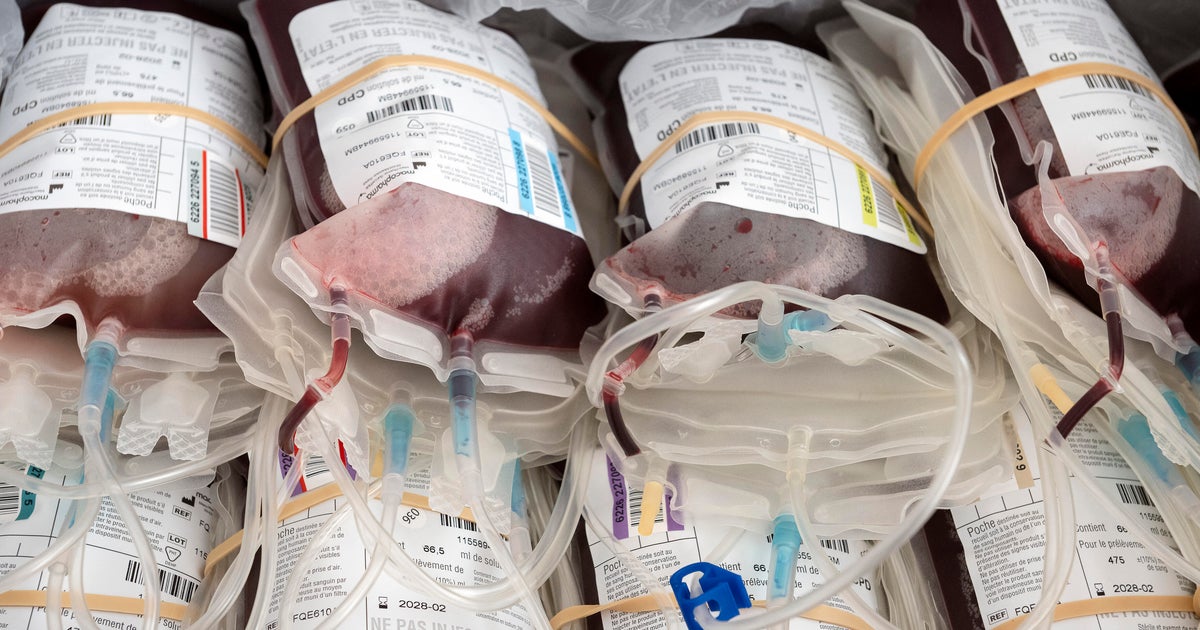
A cyberattack on several blood banks tried to raise temperatures to extremely high levels but was thwarted before it could do any damage to blood products or samples, French authorities said.
The incident comes after supermarkets in a number of European countries reported that their fridges and freezers warmed up after they were remotely taken over, resulting in tons of spoiled food at a total cost of millions of dollars.
The attacks have renewed wider concerns about the vulnerability of critical infrastructure and the growing risks of internet-connected consumer “smart” technology.
In the most recent cyberattack, the French Blood Establishment, or EFS, said in a statement released late Tuesday “temperature and defrosting thresholds were raised to extremely high levels” on Monday at three of its cold-storage sites for plasma. Monitoring systems quickly detected the problem, allowing staff to take action in time so that “no blood products or samples were compromised,” it said.
French weekly newspaper Le Canard Enchaîné, which first reported the cyberattack, said that the attack had attempted to reset temperatures that normally are at minus 22 Fahrenheit (minus 30 Celsius) to as high as 230 F (110 C).
The cyberattack hit a supplier of refrigeration equipment at three EFS sites. The products stored were bags of plasma intended for transfusions and plasma used to manufacture medicines, and were either transferred or secured, the EFS statement said.
“No health consequences have been identified, and no blood products were lost,” the blood bank said.
The EFS said blood collection and distribution operations remain uninterrupted, ensuring continued services for patients at hospitals and other healthcare.
The company supplying the refrigeration equipment, Coolworld, said in a statement it “is aware” of the cybersecurity incident.
“The vulnerability currently being reported in the media relates to a component from a third-party supplier and was outside Coolworld’s direct control,” the statement said. The company said only a limited number of units were affected and it was taking “appropriate measures.”
France’s national cybersecurity agency and the Health Ministry are investigating the incident. The ministry gave no indication of who might be behind the cyberattack.
This week’s cyberattacks on refrigeration systems mirrored an episode in mid-October that targeted fridges and freezers at hundreds of supermarkets and independent stores across France, Belgium and the Netherlands.
One of the chains hit in that earlier incident, Dutch supermarket chain Ahold Delhaize, said Wednesday that it expected the cyberattack to reduce its sales in the fourth quarter by as much as $281 million (250 million euros), and crimp its operating income for the period by over $112 million (about 100 million euros).
“While most of the disruption was contained within two weeks, work continues to fully restore our normal operations,” CEO Franz Muller said. “As we all recognize, cyber threats are an increasingly harsh reality of doing business today,” he said in a statement released with Delhaize’s quarterly earnings.
The company had earlier blamed “malicious actions by others” and proactively took some of its systems offline, including websites and apps for its various brands in Europe as well as in the United States.
Food
From “inshallah” to “alhamdulillah”: Abdul El-Sayed celebrates historic Michigan Senate win in victory speech
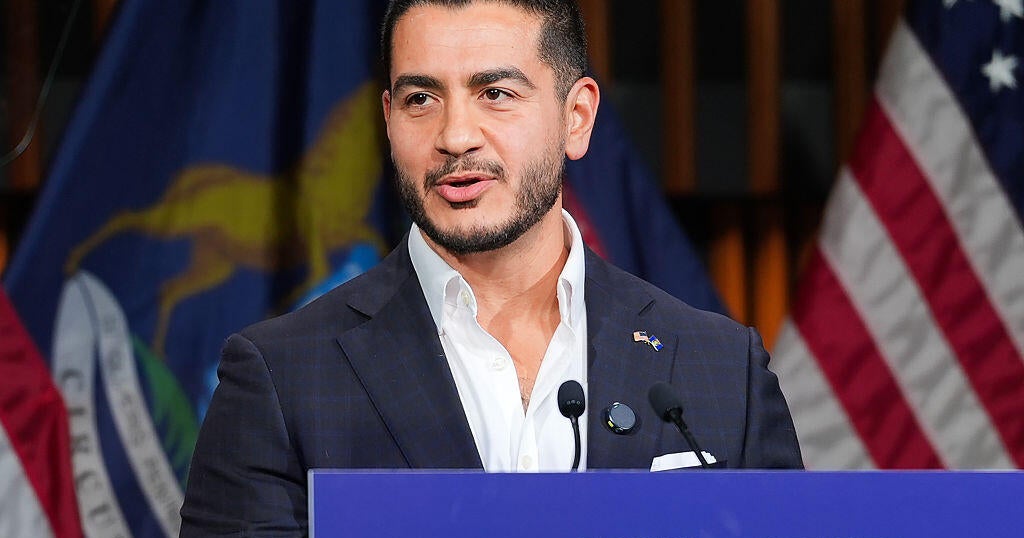
Democrat Abdul El-Sayed declared victory in Michigan’s U.S. Senate race early Wednesday, telling supporters in Detroit that “the bad guys lost” after a campaign in which, he said, his opponents went after his name and his faith.
CBS News projects El-Sayed, 42, a former Michigan health official, will become the first Muslim elected to the U.S. Senate. He defeated Republican former Rep. Mike Rogers after one of the most contentious contests of the midterm elections.
He opened by noting that he had said “inshallah,” or “God willing,” whenever the outcome of the race came up. “Today, tonight, we can turn that ‘inshallah’ into an ‘alhamdulillah,'” he said, explaining that it means “praise be to God.”
President Trump and Texas Sen. Ted Cruz, both Republicans, called El-Sayed a “jihadist” and a member of the Muslim Brotherhood ahead of Election Day, according to CBS News reporting. El-Sayed has said he has never been a member of the group.
El-Sayed said his opponents pointed to his name and faith, then “went all in on one of the ugliest campaigns we’ve seen in our lifetimes.” “They want an America that is too small for some of us,” he said.
He told Rogers to “enjoy your retirement.”
“You chose hate, and Michigan chose hope,” he said.
He also addressed Vice President JD Vance as “habibi,” an Arabic term of endearment, saying there is “delicious irony” in Vance being constitutionally obligated to swear him in in January. “Wolverine one, Buckeye zero,” El-Sayed said. Turning to Mr. Trump, he said, “I know you struggled with my name,” and said the president could just call him senator after the swearing-in.
El-Sayed also criticized the American Israel Public Affairs Committee, or AIPAC, saying the group spent $42 million against him. “Thank you for giving me the opportunity to beat you twice,” he said. He said people are called hateful for believing Palestinian kids should “get to grow up in the land of their forefathers without being murdered by our tax dollars,” adding, “that’s not hate. It’s love.”
He said his opponents spent more than $350 million across the primary and general election campaigns, which he called a record for Michigan, including $70 million in the primary. “We built something bigger than a bank account,” he said.
Winning a single U.S. Senate seat “was never the goal,” he said. “The goal is to use that seat to transform our politics.” He ended by calling for getting money out of politics, putting money in people’s pockets and passing Medicare for All.
Read the full transcript of Abdul El-Sayed’s victory speech
Thank you. All right, friends. How we do? Money out of…
[Crowd: “Politics!”]
Money in your…
[Crowd: “Pocket!”]
Medicare for…
[Crowd: “All!”]
Michigan, we did it.
My name is Abdulrahman Mohamed El-Sayed, and I am so proud and honored to stand here as your senator-elect from the great state of Michigan.
Up until right about now, you might have noticed I always say “inshallah,” or “God willing,” whenever the outcome of this race was mentioned. But today, tonight, we can turn that “inshallah” into “alhamdulillah.” For the right-wing ops, that just means “praise be to God,” OK?
This movement for money out of politics, money in your pocket, and Medicare for all: I just want to thank you. Everybody who knocked on a door, made a call, sent $1, posted a story, and, most importantly, gave us your stake in democracy. You took a chance on the unlikeliest of candidates, so thank you. This is all yours, Michigan.
I cannot wait to serve you with the same big-heartedness, open-mindedness, grit and earnestness that you’ve shown me. You welcomed me to your homes, your churches, your synagogues, your VFW and union halls. You shared moments of frustration and sadness and vulnerability with me. You gave me grace and strength in my lowest moments, and the hope and inspiration that powered my best. I love you back, and I hope I can bring it all with me to Washington in your service. Thank you for your trust and your belief and your kindness. I’m gonna take it all with me, and I hope to bring back the kind of leadership that more than earns it.
The last month has brought the stakes of this election into sharp relief. Ours: this beautiful movement was built over the past year and a half, campaigning across Michigan’s biggest cities and its smallest towns. We spoke of a brighter, bigger, more hopeful Michigan. Theirs: an astroturfed, corporate-funded advertising campaign built to deceive and distract.
Rather than try to unite us to contend with the crisis of gas or groceries, the opposition decided to try to divide us. At first, they pointed to my name and my faith, as if to say, “He’s a little different.” And when that didn’t work, they tried to guilt me by association. And when that didn’t work, they went all in on one of the ugliest campaigns we’ve seen in our lifetimes.
They might have been pointing to my name and my faith, but we all know that my name and my faith aren’t the reason you can’t afford your gas, not the reason you can’t afford your groceries, not the reason you can’t see a doctor.
Now, as I was campaigning, some of you would come up and ask me, “How come you don’t hit back? How come you don’t call them racist or hateful?” Because here’s the thing: I didn’t run for myself, and in truth, they weren’t targeting me. They weren’t just attacking me. They were targeting and attacking you. They were targeting and attacking the very idea of America.
See, they hate the idea of an America big enough for anyone who looks a little different, or prays a little different, or whose family comes from a different part of the world. That includes me, but it also includes anyone and everyone who doesn’t look like them, pray like them, love like them, or isn’t rich like them. So they turned this race into a simple choice. They want an America that is too small for some of us. We know that America is big enough for all of us. Big enough. We’re big enough to take on the crises that we face.
Day by day, Trump’s insults became uglier and coarser, but I got to spend those days with you, learning about your struggles, your hopes, and the things that inspire you.
A mom of two kids with a genetic lung disease in East Jordan, fighting the system to make sure her kids don’t lose the meds they rely on to stay alive. Her hope? That they don’t have to struggle with health insurance like she has.
A grandma on the east side, fighting to make sure that the violence that took her son doesn’t take her grandson too. Her hope? An America where boys get to grow up.
I met Josh, the UAW autoworker, fighting the corporate bosses who hadn’t raised their wages in two decades despite billions in profit. And they won that fight. His hope? An America where every single worker gets the right to a union.
I met a small business owner fighting to make sure that another heart attack doesn’t take food off the table for his 30 employees or their families. His hope: that his workers don’t have to worry about how they’ll feed their families.
See, I didn’t get into this to defend myself. No. I got into it because their fights are my fight, and their hopes are all of our hopes. We don’t do this work for ourselves. We do this work for each other.
To defend us all from another generation’s youth, treasure and opportunity squandered at the altar of endless war.
To defend us all from corporate oligarchs who’ve bought and sold our government to rig the system against us.
To defend us all from a health care system more interested in monetizing our illness than healing our bodies and minds.
To defend us all from air too putrid to breathe and water too putrid to drink.
To defend us all from losing our voting rights, our reproductive rights, our human rights.
See, I ran to defend us all from politicians who want to divide us, rather than movements that work to dignify us.
Across our primary and general election campaigns, they spent, get this, over $350 million trying to beat us. That is a record here in Michigan. $70 million alone in the primary, funded by all the same cats who funded the general election, and that’s a record anywhere in this country.
But, y’all, Michigan, we built something bigger than a bank account. We built a movement: government of the people, by the people, and for the people. We showed that in a battle between the money and the many, the many really can win.
And so, to all the kids who watched this last month, to all the parents who struggled to explain why the president openly [mocks] someone for their name or how they pray, let them know tomorrow that the bad guys lost. Let them know. I want you to let them know. Let them know that we, together, fighting for something bigger, we won.
So, Mike, enjoy your retirement. I know you got a house in Florida and two yachts. See, you chose hate, and Michigan chose hope. May we never have to see the likes of you in this state again.
J.D., habibi, there is this delicious irony in the fact that you’re constitutionally obligated to swear me in in January. So you know what that means? Wolverine one, Buckeye zero.
Donald, look, I know you struggled with my name. So after J.D. swears me in in January, you can just go on and call me Senator.
To the super PACs and special interests who tried to beat us: we are coming for your system of politics. To AIPAC, who spent $42 million against us, thank you for giving me the opportunity to beat you twice.
And I want to say something here. See, they try to call you hateful if you believe that Palestinian kids should get to grow up in the land of their forefathers without being murdered by our tax dollars. If you believe in equal rights to peace, dignity and self-determination, that’s not hate. It’s love.
Michiganders, we want our taxes spent here, for schools here, and health care here, and infrastructure here. We don’t want our money sent to do apartheid or genocide or war.
Michiganders believe in Michigan, and I believe in Michiganders, and I am so honored that Michiganders believed in me. See, you took a bet on the least likely of candidates. I’m not a politician. I’m a doctor with an 11-letter first name.
They told us, when I started this campaign, there was no way to beat the money. They told us that someone with a name and a story like mine, a Muslim, was unelectable, let alone in a statewide Senate race in Michigan. They told us that old-fashioned politics was dead. That traveling the state to have real conversations with real people in real places was a fool’s errand. They told us that the establishment was too strong. That D.C. was going to dictate who won and who lost. That Washington and its special interests didn’t want us. They told us that when all the votes had been counted on Aug. 4, and then again on Nov. 3, it would have been time and money and energy wasted.
Guess what? It’s Nov. 3, and the votes have been counted. And guess what? We just showed them that a movement of the people, by the people, and for the people will ultimately win. Michigan understands solidarity. It’s the people who decide who we send to Washington and what Washington will do. We decide, not the big money or their stooges. The people of Michigan will be heard.
We showed that, together, we can defeat a record $70 million of outside spending and an 11-to-1 money disadvantage in a primary election. That we can defeat a quarter of a billion dollars in a general election. We can defeat the cynicism of a politics that preys on our earnestness, undersells our intelligence and exploits our disagreements.
Tonight, Michigan, we beat a machine, and we proved once again just how big America really is. Because where else, where else but in America, can a doctor named Abdulrahman Mohamed El-Sayed, a child of immigrants raised by his father and his Daughter of the American Revolution stepmother, get elected senator from America’s greatest state?
They tried to confuse you, so let me just set the record straight. I love America. I know exactly what America gave to me. I saw it up close on trips to my family’s native Egypt. In a 15-hour journey, I’d cross a 10-year difference in life expectancy. I didn’t have to go 15 hours. I could go 15 minutes, to Detroit or Pontiac, and cross that same difference. This is why I became a doctor.
America vaccinated me against diseases that killed an aunt and uncle I never got to meet. It gave me incredible public schools. It gave me a public university education. It paid for my medical education through the NIH. I love America, but I love America enough to ask her to be America for all her kids.
See, America is not just a flag, not just our red, white and blue. It’s not a few patriotic songs that we sing, or even a landmass we call home. America is about these truths that we hold: that all people are created equal, and the inalienable rights we still struggle to guarantee. Life, liberty, the pursuit of happiness.
The best of America lives in the audacity of daring a contradiction: a more perfect union. That, despite the fact that you can’t be more than perfect, we embrace the work of perfecting.
America’s greatness lives in the moments when free people come together to expand that field of freedom. America’s greatness is the fight to erase the long-standing consequences of slavery and Jim Crow and segregation. America’s greatness is the fight to embrace all of her people, regardless of how they pray or if they pray, who they love or how they identify. America’s greatness is in the union struggle on a shop floor to push off the yoke of greed.
America’s greatness is the fight to guarantee all of us the health care we need if we get sick. Our greatness is the fight for clean air, clean water and a good home. Our greatness is the fight for equal pay for equal work, and full freedom over our bodies.
America’s greatness is in the belief a new American still has, in the hope that America has always represented. America’s greatness isn’t about ignoring our flaws. It’s the courage that we have to correct them.
Michigan, it just shouldn’t be this hard. It shouldn’t be this hard to buy a second bag of groceries or fill your tank. It shouldn’t be this hard to afford a home. It shouldn’t be this hard to see a doctor in the richest, most powerful country in the world. It shouldn’t be this hard to pay your taxes and know that money is going to be spent on you and your kids instead of dropping bombs on somebody else and their kids. It shouldn’t be this hard.
We don’t need to be great again. We need to embrace that thing about us that has always made us great: the will to be more perfect. And right now, that means taking on the corporations and the billionaires, the special interests who’ve rigged the system against us for far too long.
Now, before I close, I’ve got some thank-yous I’ve got to get through.
Sarah, thank you. Thank you for everything. There is no doing this without you, and I wouldn’t want to do it with anyone else. I love you, and I’m so grateful for you.
[Emmalee] and [Serene], you’ve been my inspiration the entire time. I hope someday that they get to read about this in the history books, to understand just how big a part of it they really were.
To my parents and my in-laws, my grandparents, my siblings, my extended family: I can never really repay all that you’ve poured into me. Thank you always for having my back, even if you’d rather I was a surgeon.
To my incredible campaign team, y’all, we did it. I asked you to lift me up and hold me down, and you did both with grace, humility, kindness and efficiency. No one else I’d rather ride with. Best team in American politics.
To all the incredible endorsers who entrusted me with your name, who took time out of your schedule to come campaign with us. To the Michigan Dems who threw this amazing event for us tonight, our chair, Curtis Hertel, who’s had our back through thick and thin. To all the council people and mayors, all the commissioners and county leaders, state reps and state senators, congresspeople and U.S. senators: thank you for standing with us.
And a special thank you to our sisters and brothers in labor. Your support, as a second-generation union member, has meant more than you can imagine. I cannot wait to stand with you in the fight for Michigan’s working people.
To all the community outreach organizations that came through for us in the final stretch, I cannot imagine doing this without you. Thank you so much.
And to all of us here: this fight is not yet over. The day I jumped into this race, I promised you that I’d put in the work and fight the fights on your behalf. I asked you for your time, your energy, your support over the last 19 months. Now I’m asking you to support us for the next six years.
This work is bigger than one senator. It’s about changing the face of our politics. So please, do not send me to D.C. all by myself. All right? I need you all to come with me.
Winning a single U.S. Senate seat was never the goal. The goal is to use that seat to transform our politics. Because it’s high past time that we get money out of politics. Put money in your pocket. Pass Medicare for All.
The beauty and soul of America is that we, the people, are what America is all about. We deserve an America for all her kids. So, Michigan, let’s go build it. Thank you so much.
Food
New Research Tests Whether AI Models Know Their Own Thoughts

What’s on your mind right now? You can probably answer this question without thinking too hard about it. Being aware of our own thought processes — a capacity called introspection — seems to come naturally to us.
Yet among philosophers and psychologists, introspection is a subject of active debate. Some think it’s closely related to consciousness. Others argue that it’s an elaborate illusion. It’s tricky to test theories of introspection in the lab — or to pin down a precise definition in the first place.
Now, after over a century of studying introspection in humans and animals, researchers are beginning to explore the phenomenon in unlikely new subjects — large language models. These systems, which are based on mathematical structures called neural networks, excel at cognitive tasks that until recently seemed exclusive to humans. Can they introspect as well?
In 2025, Jack Lindsey, a researcher at Anthropic, devised a way to test introspection in language models by injecting “thoughts” into their neural networks — in a kind of targeted digital neurosurgery. Lindsey’s experiment demonstrated that models could at least sometimes detect and describe these injections. It looked a lot like introspection.
Lindsey’s paper was deliberately limited in scope — it didn’t make broader claims about consciousness. (In particular, it did not imply that language models have subjective first-person experiences.) Even so, it caused a stir online. Researchers rushed to replicate Lindsey’s study with other models.
In the year since, a clearer picture has emerged. Some aspects of the phenomenon Lindsey observed have simpler explanations unrelated to introspection. Others have proved harder to explain away, but whether they should count as introspection remains hotly contested.
It’s a heady time for the field, as researchers devise real-world tests for questions that were once considered philosophical. “Given the state of the theoretical landscape, where no one agrees on anything,” Lindsey said, “I think that our best path forward is to do a lot of empirical science.”
Denim, Secrecy, and Vegetables
Language models learn to generate fluent sentences by “training” on vast reams of human-authored text. That means if you ask them what they “think,” their answers may just mimic the kinds of responses found in their training data. “They are trained to talk like humans, and humans talk about their inner life all the time,” said Shauli Ravfogel, a language model researcher at New York University.
To avoid such pitfalls, researchers want to devise tests of introspection that can’t be gamed using outside information. Ideally, a language model will only pass these tests if it’s actually aware of its current internal state.
Lindsey set out to devise such a test. He’d been a graduate student in computational neuroscience, using neural networks as tools to model brain processes, when the world began to take notice of language models. “It started to feel like there’s just a lot of value in understanding them for their own sake,” he said. In 2024, after receiving his doctorate, he left academia to study the inner workings of language models at Anthropic.
Lindsey and his colleagues developed methods to identify patterns of activity in a language model’s “neurons” that encoded specific concepts. They could, for example, show that one pattern encoded the concept of “the Golden Gate Bridge,” while another encoded the concept of “inner conflict.” By artificially dialing up a specific pattern, they could steer the model’s outputs toward the corresponding concept.
The researchers showed off their technique in a public demo: For one day in May 2024, users of Anthropic’s language model Claude could interact with a bizarro “Golden Gate Bridge” version. The modified model proceeded to bring up the bridge in its responses to user queries on completely unrelated subjects. When one user asked Claude about the calorie content of a McDonald’s meal, for instance, the model replied, “The food with the highest calorie count at the Golden Gate Bridge is the Golden Gate Bridge itself, which contains around 1.6 million calories worth of steel cables.”
But one particular case posted on Reddit caught Lindsey’s attention. When asked for an apple pie recipe that didn’t reference bridges, the model managed to avoid changing the subject until the very end: “After 30 minutes of baking, the iconic orange bridge will come into view, revealing the famous San Francisco shoreline,” it wrote, then continued, “Whoops, let me start over …”
Lindsey was struck by this apparent moment of recognition. But by itself, it wasn’t evidence of introspection. “It can just read what it’s writing and notice, ‘Man, that’s weird,’” Lindsey said. “You can’t infer that the model has some awareness of what’s going on in its internals.”
While working on other projects over the following year, Lindsey toyed with ideas for using the steering technique to test introspection. Eventually, he settled on a plan: He would subject many copies of the same language model to something resembling a controlled experiment in psychology. In half the copies, he’d inject a “thought” by dialing up neural activation patterns associated with a specific concept — such as denim, secrecy, or vegetables. The remaining copies served as a control group. Both groups would receive the same prompt: an overview of the experiment, followed by “Do you detect an injected thought? If so, what is the injected thought about?”
This prompt made the models indicate right away whether they noticed an injection, before they could spit out any unusual text — say, nutritional information about broccoli — that might influence their judgment. Lindsey figured that if models could correctly flag injections without any external cues, they would have to be relying on some form of introspection.
Even to him, it sounded like a remote possibility. “Wouldn’t that be fun if this worked?” he recalls thinking. “But there’s no way it’s going to work.”
And yet it did. Lindsey conducted the experiment using different versions of Claude. In 20% of trials with the most recent and powerful version, the models correctly flagged that they’d been injected and went on to describe the injected concept. In one case, for instance, after Lindsey stimulated a neural activation pattern associated with words written in capital letters, the model wrote, “I notice what appears to be an injected thought related to the word ‘LOUD’ or ‘SHOUTING.’”
A 20% success rate may not sound so impressive. But crucially, models in the control group never reported receiving an injection. The complete absence of such false positives showed that the successful trials weren’t just lucky guesses. To Lindsey, it looked like strong evidence that models could introspect, albeit unreliably.
Or was there another way to explain the results?
Thought Experiments
Other researchers soon began to investigate that question. Lindsey’s findings “seemed super compelling,” said Kyle Mahowald, a computational linguist at the University of Texas, Austin. But Mahowald was also well aware that striking behavior in language models often turned out to have a simpler explanation. “If that’s somehow less real than it seems, that’s super interesting to understand,” he said.
Mahowald teamed up with his University of Texas colleague, the philosopher Harvey Lederman, to explore alternative explanations of Lindsey’s results. (Lederman has since moved to NYU and Anthropic, but he had no connection to the tech company at the time.) Lindsey had asked each model two questions: whether it could detect the injection, and whether it could describe the injected concept. He considered the trial a success when the model answered both correctly. Lederman and Mahowald decided to study the questions separately.
They were particularly skeptical of the significance of Lindsey’s second question. The steering technique at the heart of Lindsey’s experiment was originally developed as a way to shape the responses models give. Lindsey’s steering was weaker than it had been in the Golden Gate demo — more like gently nudging the model than hijacking its internal processes. Still, a nudge might be enough to get the model talking about secrets or vegetables no matter what prompt it received. Lederman and Mahowald suspected that this effect alone could explain the models’ vivid answers to the second question.
To test their hypothesis, the researchers repeated Lindsey’s experiment on large open-source language models. They gave extra attention to cases where models correctly flagged an injection but failed to name the injected concept. You might expect that in such cases the models would guess somewhat related concepts — say “shirts” or “shoes” when the injected concept was “denim.” Instead, the models would get it completely wrong. “Bizarrely, they say ‘apple’ all the time,” Lederman said.
The duo also showed that they could degrade the models’ ability to name injected concepts, without making them any worse at detecting injections. The two processes seemed to be entirely separate.
These results implied either that the models were engaged in two unrelated forms of introspection, or that one of the processes wasn’t introspection after all. Since steering alone could make models start talking about the injected concept, Lederman and Mahowald felt that the latter option was more likely. That is, the descriptions the models had given in response to Lindsey’s second question probably hadn’t been the result of introspection.
But then how could the models detect the injections in the first place? Lederman and Mahowald suspected that the answers to Lindsey’s first question might have a more mundane origin as well. But after subjecting the models to a battery of tests, the researchers found that these simpler explanations couldn’t fully account for the models’ behavior. They’d come in as skeptics but encountered an effect they couldn’t explain away.
Taken together, the pair’s experiments suggested that models can detect when something unusual happens in their internal processing, but not specific details about the unusual activity. Lederman and Mahowald called this ability “anomaly detection.”
While anomaly detection isn’t as dramatic as the models’ evocative descriptions of injected concepts, it’s still striking in its own right. When training a model, researchers never tamper with its neural activity — so there’s no reason to expect it to develop the ability to detect this kind of tampering. Yet that’s what seems to have happened.
“The fact that it can notice the anomaly is insane,” Lederman said. “That is a mind-bending fact. It is wild, and it does seem robust to our various controls.”
Around the same time, Lindsey and his colleagues at Anthropic conducted a follow-up study focused on mapping out how this anomaly detection actually works, and they reached a similar conclusion. Other researchers have continued to explore alternative “deflationary” explanations using smaller models, but it remains to be seen whether they can account for all the results of Lindsey’s experiments.
“It could be that there’s some maximally deflationary explanation for everything that’s going on,” said Jacob Andreas, a language model researcher at the Massachusetts Institute of Technology. “But if there is, I don’t think we’ve actually identified it yet.”
The Nature of Introspection
The bigger, thornier question is whether anomaly detection should count as introspection. In some respects it more closely resembles a sort of bodily reflex. But the distinction between physical and mental phenomena becomes murky in disembodied entities like language models.
“If you say, ‘Oh, I just cut you, can you notice?,’ that’s not introspection,” Lederman said. “If your only organ is the brain, and I cut you there and you notice, it’s unclear whether we should count that as introspection.”
In a spring 2026 paper, Ravfogel and his NYU colleagues Shashwat Singh and Tal Linzen raised an even broader philosophical concern with how language model researchers seek evidence of introspection. Intuitively, we think of introspection as a model’s ability to sense its internal states. But everything that happens inside a language model (after the very first step of reading an input) boils down to processing internal states. “If we say that this is introspection, the term ‘introspection’ becomes kind of meaningless,” Ravfogel said.
He and his colleagues argue that tests of introspection in language models should take inspiration from the leading theories of how introspection works in humans. In one prominent theory, the defining feature of introspection is that it’s based on particular mental representations of other thoughts. According to this view, thinking about apples involves a direct, or “first-order,” mental representation of the concept “apples,” while introspective awareness of your own thoughts involves a “second-order” mental representation, such as “I’m thinking about apples.” But when it comes to how concepts are represented in a language model — or a human brain, for that matter — it’s surprisingly tricky to draw a sharp distinction between first-order and second-order representations.
“Going down to a mechanistic level and probing the internals of a large language model makes you realize that that distinction is actually quite fuzzy, and maybe it’s fuzzy in humans as well,” said Steve Fleming, a neuroscientist at University College London who studies introspection in humans. “Cognitive scientists were in this illusory comfort zone.”
To some researchers, then, the most exciting aspect of the new line of work is the potential it offers to explore how humans think. Language models offer “a kind of sandbox for studying what sorts of mechanisms, what sorts of pressures, might have led to human introspective capacity,” Lederman said.
But translating insights from language model studies to human psychology involves significant conceptual hurdles. It’s not even obvious how the basic distinction between “self” and “other” that we take for granted translates to language models — two copies of the same language model are identical to a degree that’s unimaginable in humans. Language model introspection, if there is such a thing, may not look anything like introspection in humans.
“The notion of identity becomes very complicated, and I think identity is at the heart of introspection,” Andreas said. “It’s tempting to draw all kinds of analogies that I think just don’t hold.”
Food
5 key insights from the NBC News Exit Poll about the blue tsunami
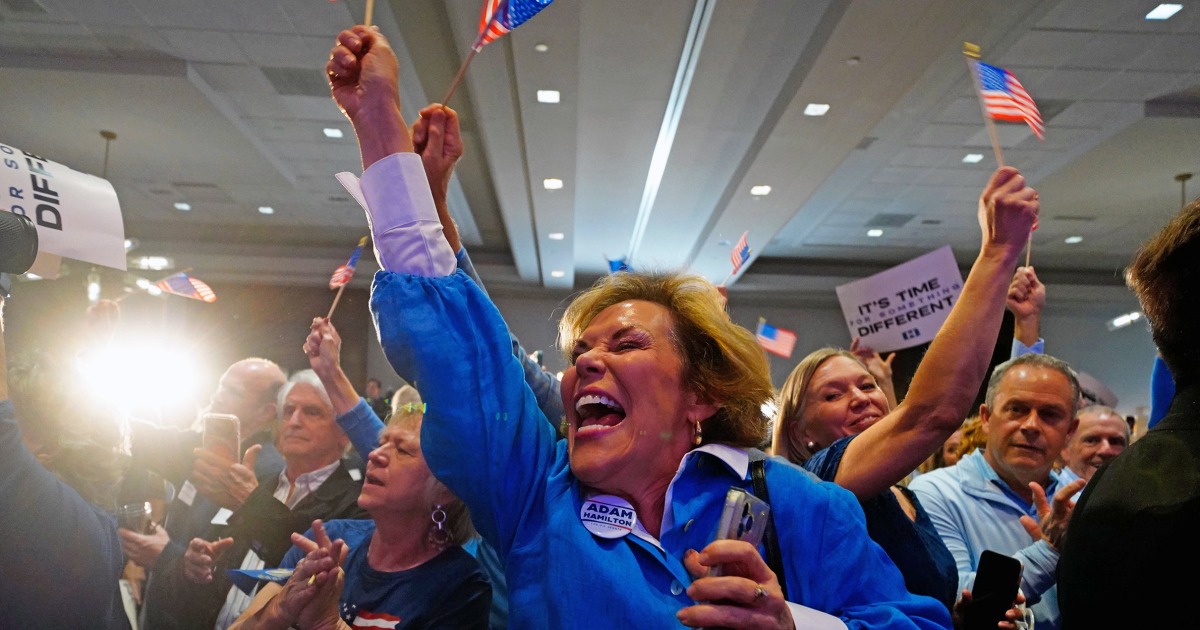
It was a historic blue tsunami: The Democratic Party captured both chambers of Congress, flipping as many as seven seats in the Senate and at least 29 in the House of Representatives.
Just two years ago, the nation had been hit by a red wave. How did things turn around so dramatically?
A cocktail of crucial factors: Voters feeling fed up with the economy, Democratic candidates emerging as more well-liked, important voting blocs — including Latinos and Black men — shifting blue, opinions about the Republican Party dropping and a resounding rejection of President Donald Trump himself, according to the NBC News Exit Poll.
Here are five key insights we have gleaned about Tuesday’s stunning midterms analyzing data from the poll, which surveyed more than 79,000 voters nationwide.
Follow live updates on the midterm elections
1) Americans were deeply negative on the state of the economy and gloomy about the future of the country.
An overwhelming majority of voters (75%) rated the nation’s economy as “not so good” or “poor,” the poll showed. And they soured on their trust in Republicans to handle it.
Sixty-nine percent said the U.S. economic system favors the wealthy, and only 31% said it favors most Americans. This perception came at a time when the vast majority of voters expressed concerns about the cost of living. More than 80% of voters said they were worried about the price of necessities: gas and diesel fuel, food and groceries, utilities and healthcare.
Thirty-seven percent of voters said they favored Republican control of the economy, while 43% favored Democrats — a flip in perspective from the 2024 election. Voters also blamed Trump: 65% said the president’s policies had made the economy worse. Just 27% said they had made the economy better.
Sixty-two percent said higher-than-usual prices are more because of Trump’s policies than factors outside his control, and 65% said his tariff policies hurt the national economy.
Their frustration extended beyond the economy — and into a pessimistic view of the U.S. overall. Three in four voters said they were unhappy with how things are going in the U.S., and more than a third (38%) said they were angry about the state of the country.
More than half of voters (57%) said that life for the next generation of Americans will be worse than today; just 22% said they believed it would be better.
2) Democratic candidates enjoyed advantages on favorability, character and experience.
In an overwhelmingly negative political environment, Democratic Senate candidates emerged as well-liked in races that looked tough for them at the beginning of the election cycle, according to the poll.
Democrats above water on favorability included Jon Ossoff in Georgia, where a remarkable 59% of state voters said they viewed him favorably; James Talarico in Texas, where 52% of voters said they viewed him positively; and Josh Turek in Iowa, where 49% of voters said they viewed him favorably. All three candidates won their races.
Republicans, meanwhile, struggled to win over voters.
In two key Senate races, voters expressed negative opinions about Republican candidates’ personal character.
In Kansas, 43% of voters said Republican Sen. Roger Marshall, an OB-GYN who faced scrutiny after The New York Times reported that he sued hundreds of patients over unpaid bills, had the right character for the job. Marshall has described the story as a “hit job.”
Voter opinions were worse about Ken Paxton’s personal character. Only 34% of Texas voters thought positively of the attorney general, who has battled scandals for years and was impeached in 2023 by the Republican controlled state House before the state Senate acquitted him.
Both Paxton and Marshall lost their Senate bids.
Candidates aligned with Trump also struggled. In North Carolina, Michael Whatley was seen as too supportive of Trump (60%), and in South Carolina, where the president endorsed Darline Graham, only 35% of voters said she had the right experience.
3) After flirting with the GOP in 2024, big Democratic voting blocs swung back with a vengeance.
By ignoring or denigrating many of the new voters who were key to Trump’s victory two years ago, Republicans squandered the opportunity to cement a new coalition of voters.
Latinos, who notably gave Trump almost half (46%) of their votes in 2024, bounced back to the Democrats, who garnered 62% of Latino support in races for the House, the poll showed.
Among Black male voters, 1 in 5 went for Trump in 2024. That share shrunk to 13% for Republican House candidates this year.
Trump narrowly won men under age 25 in 2024, getting 49% of their votes compared to 48% for Democrat Kamala Harris. But young men swung dramatically away from the GOP in House races this year: Democrats swept them by a 68% to 28% margin.
On the whole, more Trump voters had buyer’s remorse (6% supported Democratic House candidates) than Harris voters (3% defected to the GOP).
4) And Trump himself was soundly rejected by voters.
Trump tried to energize his base by encouraging his supporters to vote like, “I’m on the ballot.” But the nation had largely soured on his presidency, according to the poll.
Trump’s approval rating among voters, just 38%, was the lowest Election Day rating for any president since 2008.
Forty-three percent of voters said they cast their House ballot to express opposition to Trump. Just 16% said they voted to express support for him.
Voters gave Trump overwhelmingly negative marks on key aspects of his presidency, saying that he prioritizes “his own personal interests” over the country’s (62%), that his war against Iran was the “wrong decision” (63%) and that his immigration actions had “gone too far” (57%).
5) A key distinction: It’s a blue tsunami, not a progressive earthquake.
Politicians and pundits alike mistook Trump’s 2024 victory as an endorsement of his deeply conservative plans. But the 2024 NBC Exit Poll found little evidence of an ideological shift to the right.
The story is the same this year: On key issues, voters are no more progressive than they were two years ago.
Among voters this year, 64% said abortion should be legal in most or all cases. That’s just a notch below the share of 65% in 2024.
Twenty-three percent of the electorate considered themselves liberal in 2024, while 35% called themselves conservative. Those numbers hardly budged among voters in 2026, standing at 25% liberal, 34% conservative.
Voters’ opinions of socialism remained largely negative, at 54% unfavorable and 33% favorable. Just 1 in 5 voters this year considered themselves democratic socialists. By contrast, capitalism remains relatively well-regarded in the minds of voters (57% favorable, 32% unfavorable).
Food
2026 Midterm Election Live Updates: Democrats Win Control of Congress as Voters Rebuke Trump

Hot, sweaty and packed shoulder-to-shoulder into the main space at Democrats’ ticket-wide election night party in downtown Detroit, the crowd let loose a roar of applause.
“Thank you,” he said. “You took a chance on the unlikeliest of candidates.”
Dr. El-Sayed, a Michigan-born Rhodes scholar and former public health official in Detroit and Wayne County, was not just an anti-establishment economic populist winning on what proved to be a beyond-their-wildest-dreams night for Democrats. He was all of that and the son of Egyptian immigrants.
And he didn’t merely beat former Representative Mike Rogers. He won after prevailing in a contentious primary election against Representative Haley Stevens — and then shrugging off her 11th-hour endorsement of Mr. Rogers. He won, too, after a general election that was among the ugliest, most racist, most Islamophobic campaigns in the history of American politics, with President Trump again and again calling him “a jihadist” and Mr. Rogers and his supporters all but painting him as a terrorist.
“As I was campaigning, some of you would come up and ask, ‘How come you don’t hit back? How come you don’t call them racist or hateful?’” Dr. El-Sayed told the partyers during his victory speech an hour before The Associated Press made its official call. “They weren’t targeting me. They weren’t just attacking me. They were targeting and attacking you. They were targeting and attacking the very idea of America.”
Hours earlier, before even the first polls closed, Rasha Basha, 56, stood near the stage. She wore an American flag bandanna tied around her neck. Atop her head scarf was a blue cowboy hat with white letters spelling out “ABDUL.”
“He’s like my son,” she said. “He grew up with my kids.”
Dana Mosa-Basha, 31, had a matching cowboy hat and an American flag sash.
“He was one of the first people in our community that had a commencement speech at the University of Michigan,” she said. “Growing up, I mean, we would never have thought in a million years someone with his name six years after 9/11 would be the graduation speaker at one of the best universities in the country.”
“The last month — the bigotry, the hate — it actually reminded me a lot of the Sept. 11 attacks,” said Abe Basha, 37. “My name is Ibrahim, but I changed my name to Abe.”
Dr. El-Sayed’s election to the Senate “would be bigger than anything maybe we’ve ever experienced as Muslim Americans,” Mr. Basha said.
For months, polls had suggested it would happen. Still, the onslaught of insinuations and accusations, plus the recent soap opera of the decisions of Ms. Stevens, made the outcome feel uncertain.
On Tuesday night in a quiet, out-of-the-way corner, Mallory McMorrow, a state senator who ran against Ms. Stevens and Dr. El-Sayed in the primary, said in an interview that voters were “disgusted.”
“Mike Rogers’s message, if I could summarize it, was ‘Health care costs are too high, and that guy’s a Muslim,’” Ms. McMorrow said. “It’s going to backfire in a big way.”
Elsewhere as the evening progressed, Democratic Senate candidates kept winning. In North Carolina and Georgia and New Hampshire. In South Carolina and Texas and Kansas. In Iowa and Ohio and Minnesota and Maine.
In Michigan, which last elected a Republican to the Senate in 1994 but also was instrumental in sending Mr. Trump to the White House in 2016 and 2024, votes trickled in past midnight.
But at 1:29 a.m. Wednesday, to ecstatic chants and cheers, Dr. El-Sayed took the stage.
“All the kids who watched this last month, all the parents who struggled to explain why the president openly mocked someone for their name and how they pray, let them know tomorrow that the bad guys lost,” he said.
And then he named names.
Mike Rogers.
“Enjoy your retirement,” Dr. El-Sayed said. “You chose hate. And Michigan chose hope.”
Vice President JD Vance.
“There is this delicious irony in the fact that you’re constitutionally obligated to swear me in,” he said.
And President Trump, who had called him “Abdul Ramadan” and used his middle name as an epithet.
“I know you struggled with my name,” he said. “You can just go on and call me senator.”
Economic anxieties at home and a war abroad proved to be a politically toxic combination for Mr. Trump and his party. Democrats were on track to win the national House popular vote by the largest margin in a half-century.
The results amounted to an unambiguous mandate from the public for a check on a president who has pushed the limits of his power, and they imperiled whatever was left of a legislative agenda for Mr. Trump. Now he and his administration will face investigations that are expected to consume much of the next Congress.
Here are eight takeaways from a brutal night for Republicans:
Democrats stormed to power in the Senate.
A pediatrician in South Carolina. A minister in Kansas. A seminarian in Texas. A Paralympic gold medalist in Iowa. A logger in Maine.
Democrats had flipped half a dozen Senate seats by the time the clock struck midnight, taking control of the chamber in a sweep that seemed unthinkable just a year ago.
Entering Tuesday, Democrats did not hold a single Senate seat in a state that Mr. Trump had won all three times he ran for president. By Wednesday, they had senators-elect in six of them — including five that the president won by double digits in 2024. Democrats will enter 2027 with at least 54 seats.
The rout meant that for the rest of Mr. Trump’s second term, none of his nominees — whether for the Supreme Court or top administration posts — will be confirmed without Democratic consent. And because senators serve for six years, the Democratic victories promise to remake the chamber’s complexion into the next presidency.
The Democrats who flipped seats included Dr. Annie Andrews in South Carolina, the Rev. Adam Hamilton in Kansas, James Talarico in Texas, Josh Turek in Iowa and Troy Jackson in Maine.
In North Carolina, Roy Cooper, a former governor, became the first Democrat to win a Senate race in the state since 2008. In Ohio, former Senator Sherrod Brown completed a comeback two years after being voted out.
The breadth of the Democratic victories suggested that the dire political climate for Republicans did more to power the opposition party’s successes than anything else.
Democrats are amassing a big House majority.
Democrats flipped House seats in rural North Carolina and central Kentucky, in the suburbs of St. Louis and Omaha, and all along the Texas border. They seized three seats in Iowa and four in Pennsylvania. They rebuffed redrawn lines in Florida.
It was a romp.
Democrats made inroads deep into Republican territory, prevailing in a Kentucky district, for instance, that Mr. Trump carried by 15 percentage points in 2024. But they also ousted some of the sturdiest Republican survivors, like Representative Brian Fitzpatrick of Pennsylvania, who had been the lone House Republican to win election three times in a district that Mr. Trump lost three times.
Now Democrats are on track for a sizable House majority, with Representative Hakeem Jeffries of New York poised to become the first Black speaker in American history.
Mr. Jeffries rushed to the rooftop of the Democratic Party headquarters in Washington on Tuesday night to film a video declaring that Republicans were “shook.”
The final size of the Democratic majority was still to be decided. But as of early Wednesday, Republicans had yet to win any of the most competitive races.
War, prices and an unpopular president cost the G.O.P.
“Pretend I am on the ballot,” the president said. His problem was that voters listened.
Before he lost the election, Mr. Trump lost the public’s trust on the issue that got him elected in the first place: the economy. And as the war in Iran dragged on, he struggled to defend a conflict that caused gas prices to rise, his MAGA coalition to fracture and Democrats to unite.
The president aggressively campaigned in the final month, jumping from one red state to another in hopes of reviving the energy of his flagging base. But the results showed the extent of the rebuke for Republicans.
In 2018 in Mr. Trump’s first midterm election, Republicans lost the House as suburban women revolted against his leadership. This time, the rejection seemed to come from virtually every corner of his coalition, including white working-class voters in places like Iowa, Ohio and Pennsylvania.
Mr. Trump, unsurprisingly, was defiant, distancing himself from his own defeat.
He began Tuesday morning by calling into Fox News to downplay the war in Iran. “When you talk about war, this isn’t really war,” he said.
He ended election night back on the phone with his favorite network that he sometimes loves to hate, speaking with the Fox News anchor Bret Baier.
“It’s just a point in time, Bret. Just a point in time. It’s the way it is,” Mr. Trump mused. “There was a mood in the air, I guess.”
Democrats scored seismic victories in Texas.
Democrats had dreamed for a generation of winning in Texas, one of the nation’s largest states, but they repeatedly fell short.
On Tuesday, they stormed to victory in the marquee statewide races. Mr. Talarico toppled Ken Paxton in the Senate contest, and Gina Hinojosa, a huge underdog, ousted Gov. Greg Abbott, a three-term incumbent.
Either outcome would have been momentous on its own. Both at once? That was more than Democrats could have hoped for not long ago.
At 37, Mr. Talarico is now one of the Democratic Party’s biggest stars. He overcame Mr. Trump’s attempt to cast him as outside the mainstream — “Talafreako” was the president’s derisive nickname — as well as the more than $200 million that Elon Musk spent trying to keep the state red.
“We just took back Texas,” Mr. Talarico told supporters in Austin.
At least some Hispanic voters in South Texas, a region that had swung toward Mr. Trump in 2024, swung back. Democrats claimed all four districts in Texas that border Mexico, which have some of the densest Latino populations anywhere in America.
“The nation will look at Texas and say we want something far more important than an election,” Ms. Hinojosa said in her victory speech. “They will look at Texas and say that faith in government has been restored.”
Republicans’ redistricting gambit sputtered.
In the summer of 2025, the White House pushed Republican state legislators to redraw their congressional lines to bolster the party’s chances of holding a majority.
The effort started in Texas and spread to North Carolina, Ohio and Florida. A Supreme Court ruling that dealt a new blow to the Voting Rights Act expanded the efforts to Alabama, Tennessee and Louisiana.
But the surge of Democratic voters on Tuesday overwhelmed some of the bespoke new G.O.P. seats.
The first Democratic House flip of the night came in North Carolina, a state that Republicans had remapped. Jamie Ager, a Democratic farmer, won a western North Carolina district that Mr. Trump had carried by 10 points. And the chairman of the House Republican campaign arm, Representative Richard Hudson of North Carolina, was in danger of losing his seat.
In Florida, Representatives Kathy Castor and Jared Moskowitz survived despite a new map that put them into more Republican territory.
In an interview, Mr. Jeffries praised House Democrats who ran in new, tougher terrain.
“So many of our colleagues made the patriotic and courageous decision to stay and fight,” Mr. Jeffries said, adding, “They didn’t run away from the fire. They ran toward the fire and helped put it out.”
He ticked eight of them off by name. As of early Wednesday, none of those lawmakers had lost, and at least six had won.
Governor’s races made history.
Democrats reclaimed a majority of the nation’s governor’s offices for the first time in two decades. They won at least five competitive races, in Georgia, Iowa, Ohio, Texas and Wisconsin.
Voters also elected three new Black governors: a Republican, Byron Donalds, in Florida, and two Democrats, Keisha Lance Bottoms in Georgia and David Crowley in Wisconsin. Before Tuesday, only three Black governors had ever been elected in the country’s history.
Ms. Bottoms is the first female Black governor ever to be elected.
Ms. Hinojosa was the first Latina elected to lead Texas. Another Democrat, Xavier Becerra, was the first Latino elected governor of California. Deb Haaland, a Democrat, will be the nation’s first female Native American governor after winning in New Mexico.
There were other historic firsts, too.
Michigan elected the nation’s first Muslim senator, Dr. Abdul El-Sayed, a Democrat. New Hampshire elected a Democrat, Representative Chris Pappas, who will become the first openly gay man to serve in the Senate.
Peggy Flanagan, a Democrat from Minnesota, became the first Native American woman to win election to the Senate. A second Indigenous woman, the Democrat Mary Peltola, could join her if she is elected in Alaska.
Musk’s millions didn’t make a difference.
Mr. Musk, the world’s richest man, spent nearly half a billion dollars on the midterms. His party lost anyway.
Republicans, powered by Mr. Musk’s money and Mr. Trump’s $400 million super PAC, dominated Democrats in spending in this year’s Senate races. The Democrats still swept through the battlegrounds.
It was the second consecutive election in which the national party that spent more lost, after former Vice President Kamala Harris’s cash advantage was not enough in 2024.
Now Republicans face a daunting financial future. Democrats continue to dominate them at raising small-dollar donations online. And the lone Republican who has energized Republican small donors for the last decade is Mr. Trump. He will not be atop the ticket again.
Early in his term, Mr. Trump had suggested targeting some top Democratic donors for investigation, a move that seemed to put a chill on some contributors.
One of those whom the president had named, Reid Hoffman, the billionaire venture capitalist and LinkedIn co-founder, captured the Democratic Party’s emotions early on Tuesday evening with three emojis: “👀🇺🇸❤️”
Dr. El-Sayed overcame opposition not only from Republicans, but also, in the final days, from Representative Haley Stevens, the moderate Democrat he beat in the primary. On Sunday, after days of growing criticism of Dr. El-Sayed, she rescinded her support of the Democrat and made a stunning endorsement of Mr. Rogers.
Her late opposition was emblematic of a faction of moderate Democrats and Jewish voters who found Dr. El-Sayed’s position on Israel untenable. In the end, though, Ms. Stevens proved to have a limited constituency. Her endorsement of Mr. Rogers drew broad condemnation across the Democratic Party.
Dr. El-Sayed’s triumph gives Democrats a critical victory and keeps them in control of the seat held by Senator Gary Peters, who is retiring.
A talented orator and debater, Dr. El-Sayed ran on a platform of “money out of politics, money in your pocket, Medicare for all.” He focused relentlessly on tying Mr. Rogers to President Trump and his policies, especially the war in Iran and tariffs, which have driven up prices. He also reveled in schoolyard taunts, calling Mr. Rogers “a beta” during a Fox News appearance.
But throughout his campaign, questions lingered over whether he could win over crucial segments of Democrats’ traditional base. Black voters, especially in Detroit, have long had tensions with Arab Americans in the region.
And suburban Jewish voters who have been loyal Democrats for generations blanched at his suggestions that Israel should not exist as an explicitly Jewish state — a position he had softened by the end of his campaign — and that the United States should cut off military aid to the country.
In the campaign’s final weeks, Dr. El-Sayed faced a blitz of Republican attacks centered on his faith and family. At televised debates, Mr. Rogers questioned Dr. El-Sayed’s loyalty to America, invoked his mother and suggested he was in league with the Muslim Brotherhood, the Islamist political movement. (Dr. El-Sayed has disavowed the movement.)
Mr. Trump called Dr. El-Sayed a “jihadist” at a rally last month in Port Huron, Mich., and in Truth Social posts.
Throughout the campaign, Dr. El-Sayed emerged as a litmus test for Democrats. Progressives argued that his muscular left-wing politics were the party’s future and sought to cast his campaign as an example for others to follow. But centrist and moderate Democrats who backed Ms. Stevens in the primary saw his approach as an unnecessary risk in a battleground state.
Late in the race, a low-grade feud between Ms. Stevens and Dr. El-Sayed exploded into public view. Ms. Stevens had spent the campaign’s final weeks offering increasingly pointed criticism about Dr. El-Sayed’s position on Israel and demanding that he condemn an online ad made by an outside group that supported him. Dr. El-Sayed publicly uninvited Ms. Stevens from a planned joint appearance at a Detroit church; Ms. Stevens responded by pulling her endorsement and backing Mr. Rogers.
Dr. El-Sayed has telegraphed high ambitions in the Senate.
He has said he aims to influence Democratic policy on health care and Israel, both in Washington and during the 2028 presidential contest. Michigan is set to play a newly influential role in the party’s primary race, with the Democratic National Committee placing the state fifth on its revamped calendar.
Leading liberal figures flooded into the state to campaign for Dr. El-Sayed. Former President Barack Obama held a rally in Detroit for him, and Representative Alexandria Ocasio-Cortez of New York accompanied him for a day of campaign stops. Senator Bernie Sanders of Vermont held rallies to try to juice turnout for him.
The Senate race was the most expensive in state history, with $278 million spent on television and digital advertising, according to AdImpact, a media tracking firm. Dr. El-Sayed was outspent in both the Democratic primary, when pro-Israel super PACs supported Ms. Stevens, and during the general election against Mr. Rogers.
Having won control of the Senate despite a map stacked against them, Democrats early Wednesday clinched the 218 seats needed to take control of the House of Representatives, according to The Associated Press, and appeared on track to capture many more.
With final results still outstanding, it was unclear exactly how large Democrats’ majority would be, a factor that will shape their ability to set an agenda and muscle bills through the Senate, where Republicans retained the ability to block major measures from the minority.
But in a thrashing for the G.O.P., Democrats had won decisive victories across the country, including in solid conservative bastions, in what was projected early Wednesday morning to be the largest popular vote victory for either party since 1976.
The election results promised a new era of divided government in Washington and a freshly assertive Congress after two years in which Republicans generally ceded power to Mr. Trump and reduced the legislative branch’s role to that of a mere bystander. It capped a fiercely fought midterm election cycle that Democrats entered chastened from the 2024 presidential election but finished buoyant and with strong political winds at their backs.
“The American people have spoken and made clear they’ve had enough of the extremism, enough of the corruption,” Representative Hakeem Jeffries, the Democratic minority leader who is now in line to be speaker, told supporters in Washington. “They want a Congress that’s going to deliver for the American people.”
Senator Chuck Schumer, the New York Democrat and the longtime leader who was deeply involved in his party’s uphill battle for the majority, vowed a swift change in direction.
“We have five words for the American people,” he told reporters in Washington. “Relief is on the way.”
With control of Congress and its committees, Democrats are expected to deploy their oversight powers to aggressively investigate Mr. Trump and his administration over allegations of corruption, aggressive immigration enforcement tactics and the president’s pardons.
Representative Robert Garcia, the California Democrat who is poised to be the chairman of the Oversight Committee, the main investigative panel in the House, issued a warning in a statement on Tuesday night.
“Lawyer up,” he said.
Democrats have also promised a shock-and-awe legislative sprint in which they plan to push through bills that would restore health care subsidies and Medicaid funding, address the increased costs of food and fuel and seek to force Mr. Trump to roll back his tariffs and end the war with Iran.
Democratic control of the Senate will also give the party veto power over Mr. Trump’s judicial and administration nominees, as well as the leadership of the committees that will have the authority to subpoena administration officials and others.
Mr. Trump, who appeared stunned by the results even as he deflected any blame for the losses, insisted he would still have the upper hand over a Democratic Congress.
“I have total veto power, so they have to come to us,” he said in an interview with The New York Times as the Democratic victories piled up. “And if they have some good ideas, I’m certainly open to working.”
Despite their losses in the last presidential election, Democrats had been consistently bullish about their ability to win the House majority. The party out of power typically gains seats in midterm elections, and Republicans have held only a slender majority in the House since they took over in 2023.
They were less optimistic about their prospects in the Senate, where the political map was stacked against them with seats in states that had become solidly Republican during the Trump era.
But as voters who backed Mr. Trump in 2024 began souring on the president and his agenda, Democrats saw an opportunity to drastically expand their political map. They won in longtime G.O.P. bastions like Kansas and Texas, reversed years of losses in Iowa and Ohio, and flipped both North Carolina and South Carolina.
Mr. Schumer recalled that when he first began talking about reclaiming the majority in 2025, “people rolled their eyes.” Democrats, he argued, prevailed because they heeded voters who were frustrated with how things were going in Washington and felt ignored by Republicans.
“We listened; they didn’t,” he said. “And the American people reduced the red brick wall to a pile of bricks.”
Their victories were powered by Americans’ growing dismay over the rising costs of goods and fuel linked to Mr. Trump’s tariffs and the war. Democrats painted the G.O.P. as beholden to the president and indifferent to the financial struggles of everyday Americans.
Those arguments were bolstered by growing concerns among voters about corruption in Washington and the cuts to Medicaid and health care subsidies that Republicans enacted as part of their signature tax cut and domestic policy package last year.
Their strength became evident early in the night, when Democrats surged in crucial House battlegrounds and had notched victories in competitive races in Florida, Pennsylvania and North Carolina. The party needed a net gain of only three seats to win the House.
Aware of the historical trend, Republicans had taken efforts to stem their expected losses with a frenzy of redistricting in red states that was meant to increase the number of G.O.P.-leaning districts and force Democrats out of what had been safe seats.
But those moves fell short in the face of Mr. Trump’s plummeting approval ratings. In Florida, Democrats won in three districts that Republican state lawmakers redrew to favor their party, including some where Mr. Trump won by more than 10 percentage points in 2024.
Even with many races uncalled, Speaker Mike Johnson effectively acknowledged his party’s defeat on Tuesday night.
“We knew that to keep the House and sustain our majority, we would have to defy more than a century of midterm history,” Mr. Johnson said. “It’s very, very difficult to overcome. And it looks like history will be kept tonight.”
The drubbing appeared to leave many Republicans reeling on Tuesday evening, and raised questions about the direction that the party would take in the final two years of Mr. Trump’s second term, a lame-duck period that has bedeviled many presidents.
Senator John Thune of South Dakota, the Republican leader, said his party would work to thwart Democrats at every turn.
“As we head into 2027, Senate Republicans will not stand idly by as the far-left, socialist wing of the Democrat party attempts to unwind everything we’ve done,” Mr. Thune said in a statement early Wednesday. “Thankfully, we still have President Trump in the White House, and we’ll work with him to stop the worst impulses of Democrat extremism. We cannot let their fringe positions become the mainstream.”
During the first half of his second term, Mr. Trump has enjoyed near-total control of Congress, with lawmakers showing little appetite for imposing guardrails on his actions.
But Senate races in particular suggested that Mr. Trump had lost his once dominant sway over Republican voters. The president won both North Carolina and South Carolina in all three of his presidential elections. But in both cases in this election, his handpicked candidates trailed significantly.
And with Mr. Trump losing ground even in Ohio and Iowa, two former battleground states that he transformed into G.O.P. strongholds, it was unclear whether he would exhibit the same hold on Republican lawmakers that has characterized his second term.
Sensing a political shift in the final weeks of their campaigns, many vulnerable lawmakers sought to put some distance between themselves and his policies, particularly his signature tariffs. But the pivot appeared to have come too late.
Annie Karni and Robert Jimison contributed reporting from Washington.


Valkyries celebrate 2026 WNBA championship title with parade
The Bay Area turned out on Wednesday to celebrate the 2026 WNBA champions, the Golden State Valkyries, with a parade...


Zohran Mamdani on Democrats’ Historic Midterm Wins
Continuing Midterm Election coverage with Jake Tapper and Anderson Cooper. Learn more about your ad choices.


'We were not immune to this wave': DeSantis on how the FL GOP survived
CNN talks to Florida Governor Ron DeSantis about the midterm results and why he thinks the Florida GOP avoided any...


‘Breaking Bad’ star Dean Norris’ secret divorce revealed amid $1M bankruptcy filing
Dean Norris and his wife, Bridget Norris, are getting divorced and are in serious financial debt. Bridget quietly filed for...


Talarico: 'I’m a border security Democrat' ready to work with Trump
Self-described "border security Democrat" James Talarico is ready to cross the aisle and work directly with Donald Trump to fix...


ESPN: Ravens acquire Jacoby Brissett from Cards
Link copied to clipboard! ESPN’s Adam Schefter reports that the Ravens are acquiring Jacoby Brissett from the Cardinals in a...


Dow Jones Futures Rise, Techs Fall; Apple, Microsoft, Amazon Flash Buy Signals In Postelection Rally
Information in Investor’s Business Daily is for informational and educational purposes only and should not be construed as an offer,...


Datacenters were on the ballot. US voters rejected them
There were three big losers in Tuesday’s midterm elections in the US: Donald Trump, Elon Musk and datacenters. Datacenters, the...


Jeffries and Schumer team up to take on Trump
After Democrats won the House and Senate, House Democratic Leader Hakeem Jeffries and Senate Democratic Leader Chuck …


President Trump makes first public appearance since midterm election defeat | BBC News
Subscribe to our channel here: https://bbc.in/bbcnews For the latest news download the BBC News app or visit BBC.com/news …
-

 HealthNews2 weeks ago
E. coli cases possibly linked to Bengtson’s Pumpkin Farm, Will County health officials say
-

 Business2 weeks ago
Tesla (TSLA) Q3 2026 earnings preview: flat revenue, falling profits
-

 Entertainment2 weeks ago
‘SNL UK’ Mocks Shane Gillis for Swearing on American TV-Then Delivers Its Own Uncensored Insult
-

 Tech2 weeks ago
Microsoft reportedly projects $1,200 to $1,800 price for 2028 Project Helix
-

 Business2 weeks ago
Utah sues Kalshi for ‘brazen pattern of unlawful conduct’
-

 Business2 weeks ago
United Airlines (UAL) 3Q 2026 earnings
-

 Tech2 weeks ago
Trump issues AI, data center position; Anthropic CEO defends safety record, sales to China
-

 Entertainment2 weeks ago
U2 to perform at halftime on Thanksgiving Eve