

Food
Tay Keith, Grammy-Nominated Producer, Dead at 29

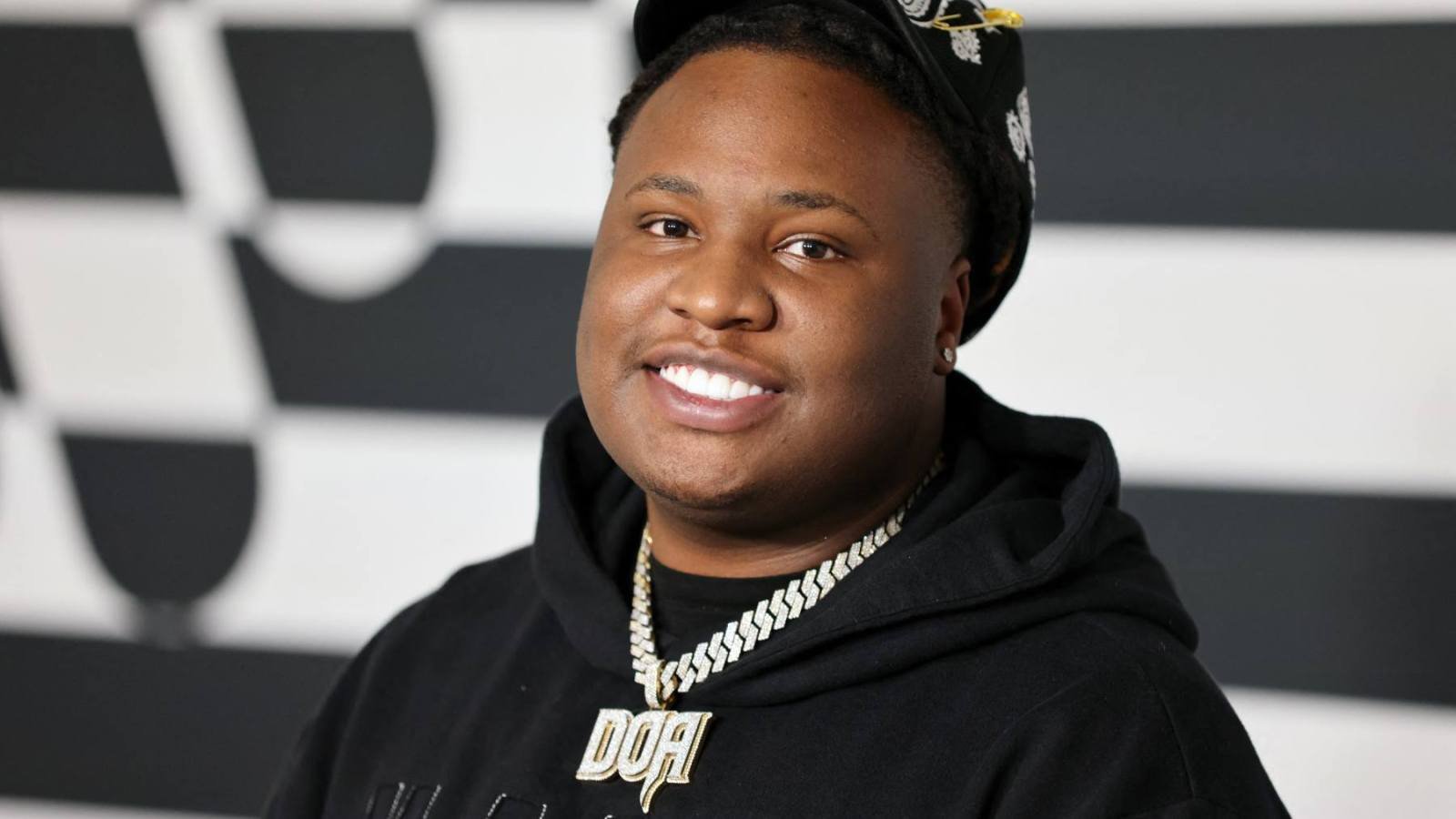
Super producer Tay Keith, whose resume includes collaborations with Future, Travis Scott, and Beyoncé, was found dead in his Nashville apartment on Thursday afternoon. He was 29.
A statement by the Metro Nashville Police Department said that no foul play is suspected in the death of the Grammy-nominated artist, born Brytavious Chambers. “He was found dead in his Martin St apt this afternoon by officers performing a welfare check,” read the statement. “His death is unclassified pending autopsy results.”
Born Sept. 20, 1996, the Tennessee native began making beats at the age of 14 and crafted a signature sound adapted from Southern hip-hop royalty like Three 6 Mafia and 8Ball & MJG. In 2018, Keith’s work with fellow Memphis native BlocBoy JB began to garner buzz beyond the borders of Memphis and their local rap music caught Drake’s attention. At 21, Keith had his first hit with Drake and BlocBoy’s “Look Alive.”
That same year, he worked on a slew of collaborations including co-producing Travis Scott’s 2018 hit track “Sicko Mode,” which topped the Billboard Hot 100 and earned a Grammy nomination for Best Rap Song. He also co-produced Eminem’s “Not Alike” for the rapper’s 10th studio album, Kamikaze.
Keith also co-produced “Before I Let Go,” a bonus track on Beyoncé’s Homecoming: The Live Album, and executive produced Sexyy Red’s 2024 album, Sexyy We Trust, whose breakout hits “Pound Town” and “SkeeYee” he also produced.
During a Rolling Stone interview in 2022, Keith discussed the influence growing up in Memphis had on his work. “I was born into this shit and raised in this shit,” he said. “Memphis music is all I listened to and all my family listened to. My stepfather who I am still close with really influenced my taste for music.”
Trending Stories
When catching up with the publication a few years later, Keith shared that he had partnered with the National Museum of African-American Music the previous Christmas to provide young people with gifts and food, while also offering a seminar and free admission to the museum to show them “that this is where I come from too, and music was my outlet for my success. So you can always go to school and go to college, but also, you can chase your dreams too.”
When reflecting on his own hardships growing up and how he relates to the youth he’s helping, Keith said, “I’m working with the city of Memphis where I’m from, to partner up with a lot of the programs to basically help the children in our communities. I was raised in Section 8, I was raised with a single mom majority of my life. I have been put out. I’ve been in situations where we had to get government assistance. I had free lunch and food stamps my whole life. I had to overcome a lot of adversity growing up and I made it a mission to be able to show the youth that it’s possible.” The artist added, “I always motivate the kids, the young producers who reach out to me and want advice. I never hesitate to talk to them.”
Food
Scientists Link 8 Common Food Additives to Heart Disease Risk
Next time you’re in the supermarket, you might want to steer clear of foods high in certain preservatives. New research identifies a laundry list of additives potentially linked to poorer heart health.
Government scientists in France and others studied the self-reported dietary habits of more than 100,000 people in the country. They found at least eight common food additives that were associated with a higher risk of high blood pressure or cardiovascular disease, while people who consumed higher amounts of these additives had a higher risk of developing these conditions. Though more study is needed, the researchers argue it might be due time to reassess the safety of these ingredients.
“If confirmed, these new data call for the re-evaluation of regulations governing the use of these additives to improve consumer protection,” they wrote in their paper, published last month in the European Heart Journal.
Additives and human health
Preservatives have long helped keep our food safe from spoiling. In recent years, however, some studies have suggested that at least some of the most commonly used preservatives in our food supply might be riskier to our cardiovascular system than assumed.
Much of this research has been in animals, so the researchers wanted to get a better sense of the situation. They turned to data from the NutriNet-Santé study, an ongoing project proactively tracking the health and diets of French residents. As part of the project, volunteers regularly fill out questionnaires about their health, lifestyle, and dietary intake. Participants’ reported major medical events, including heart disease, are also verified through linked medical or insurance records.
For this study, the researchers looked at the diets and health of 112,395 volunteers who were followed for a median length of roughly eight years. They focused on two broad groups of preservative food additives: antioxidant additives that help prevent browning or food from becoming rancid and non-antioxidant additives that prevent spoiling from microbes like bacteria and mold.
People whose diets were the highest in antioxidant preservatives had a 22% greater risk of hypertension compared to people whose diets had the lowest levels of antioxidant additives, the researchers found. Similarly, people who ate the most non-antioxidant additives had a 29% greater risk of hypertension compared to people who ate the least, and they had a 16% greater risk of cardiovascular problems like heart attack and stroke.
The researchers also looked specifically at 17 of the most common preservatives (meaning they were regularly consumed by at least 10% of volunteers in the study). Of these, eight were associated with a higher risk of hypertension: potassium sorbate, potassium metabisulphite, sodium nitrite, ascorbic acid, sodium ascorbate, sodium erythorbate, citric acid, and rosemary extracts. Ascorbic acid was additionally associated with a higher risk of cardiovascular disease.
“This study has some limitations inherent to its observational design. However, the findings are based on highly detailed data, and we have taken account of other factors that can increase or lower the risk of cardiovascular disease,” said senior study author Mathilde Touvier, one of the project leaders of the NutriNet-Santé study and a research director at the French National Institute for Health and Medical Research (Inserm), in a statement released by the European Society of Cardiology, publishers of the journal. Inserm is the French equivalent of the National Institutes of Health in the U.S.
What comes next
There should be more studies to confirm these findings, the authors say, and to better understand the mechanisms underlying this potential harm. To that end, the team is moving ahead with research studying how these additives might affect inflammation or the gut microbiome, among other factors.
That said, the authors are already pushing for regulatory agencies in Europe and the U.S. to start re-evaluating the data on these additives. And if nothing else, this study should reinforce the notion that highly processed foods, which tend to be chock full of preservatives, ought to be eaten only in moderation.
“In the meantime, these findings support existing recommendations to favor non-processed and minimally processed foods, and avoid unnecessary additives,” said Touvier.
Food
Gas prices fall below $4 on average after Trump’s signing of Iran deal to end war

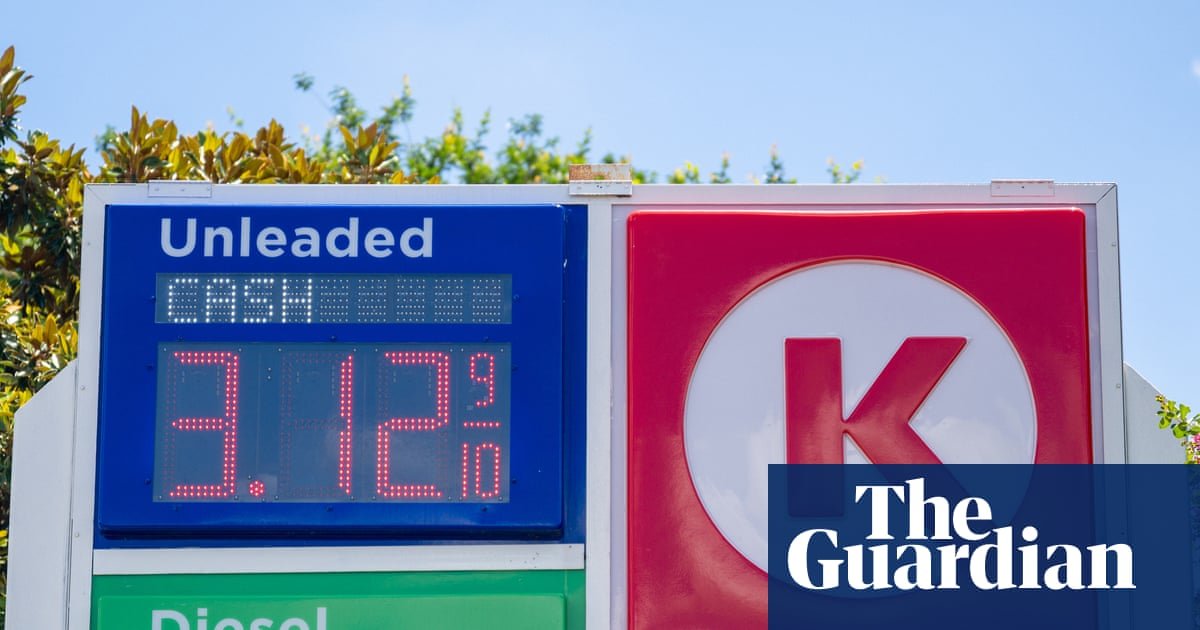
The average price of US gasoline fell to just under $4 a gallon on Thursday for the first time since March, following the announcement of a preliminary agreement between the US and Iran to end the war and reopen the strait of Hormuz.
The development has provided some relief to drivers who have seen soaring costs amid Washington’s war with Iran. But filling up still remains more expensive than it was before the conflict began.
According to the motor club AAA, the current national average price for a gallon of regular gasoline stands at $3.999, marking the first time in months that prices have been that low. The decline aligns with easing crude oil costs overall, with some optimism surrounding the initial agreement between the US and Iran.
Still, American drivers are collectively paying roughly $1 more per gallon than they were before the US joined Israel to attack Iran in February. Gas prices are also about 25% higher than they were a year ago, which has put strain on many household budgets across the country.
Gas isn’t the only thing that has become more expensive over the course of the war. Higher gasoline prices have also contributed to rising airline fares, while consumer goods such as groceries, and shoes have also gone up in cost amid global supply chain disruptions.
Even if oil and other core necessities – such as fertilizer – begin flowing from the Middle East again, experts warn that the sticker shock is likely to outlast the fighting.
“Product prices across the United States are projected to keep climbing for the rest of 2026,” Patrick Penfield, a professor of supply chain practice at Syracuse University, told the Associated Press on Thursday.
Penfield pointed to depleted inventories and ongoing supply chain consequences spanning from the war. He noted that farmers, for example, already had to pay higher costs for fertilizer and other supplies in the spring, which will “ripple through to increased food prices by autumn”. And at the gas pump, he noted that limited refinery capacity in the US “remains a significant bottleneck” towards bringing down prices.
The rising fuel costs have already pushed US inflation to its highest level in three years. And many consumers are still filling their tanks for much more than $4 a gallon.
That price is a national average, with costs varying between states due to factors such as proximity to supply and differing tax rates. In California on Thursday, regular gasoline averaged about $5.64 a gallon, according to AAA, followed by $5.57 in Hawaii. By contrast, prices in Indiana and Texas sat at about $3.40 and $3.49 a gallon.
Recent relief for fuel prices arrived with cooling costs for crude oil – the main ingredient in gasoline. Brent crude, the international standard, fell below $78 a barrel on Thursday, while US benchmark crude dropped to just over $74 a barrel. That’s still a little higher than the pre-Iran war level of roughly $70, but way below the $100-plus price seen a few weeks ago.
Major shipowners have reportedly begun moving vessels through the strait of Hormuz after Wednesday’s signing of the memorandum of understanding, according to maritime data from Lloyd’s List Intelligence – though some operators reported that only more limited side shipping routes were open.
On Thursday, US Central Command said in a statement that it has lifted its blockade on all maritime traffic entering and exiting Iranian ports and coastal areas in the strait of Hormuz.
“American forces are not impeding the transit of vessels to or from Iranian ports on the Arabian Gulf and Gulf of Oman,” it said.
Despite these developments, experts warn that it could take weeks or months for traffic to return to prewar levels.
The Associated Press contributed reporting
Food
California ‘billionaire tax’ makes ballot despite opposition from tech moguls
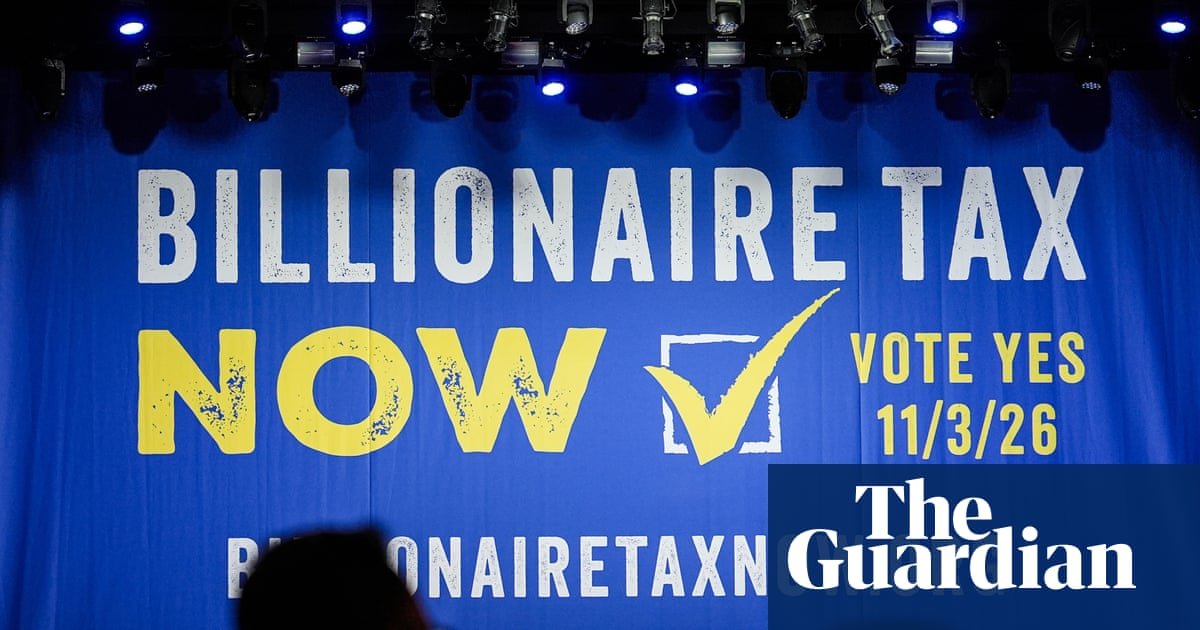
A popular proposal in California to impose a wealth tax on billionaires has gained enough signatures to qualify for the ballot in November, state officials announced on Wednesday.
The news is set to intensify an already heated debate around the tax, which has pitted tech moguls and the state’s governor, Gavin Newsom, against the labor union backing the measure.
The California Billionaire Tax Act, colloquially known as the billionaire tax, would levy a one-time 5% tax on any California resident worth more than $1bn. The proposal is backed by the Service Employees International Union-United Healthcare Workers West (SEIU-UHW) as a means of funding California’s strained healthcare, food assistance and education programs.
The proposal has become one of the state’s biggest political flashpoints. As it gained popular momentum throughout the year, it’s also prompted prominent billionaires, such as Google co-founder Larry Page and Meta co-founder Mark Zuckerberg, to makemoves to cut ties with the state and Newsom vowing to block it from going to a vote. Although it has gained enough signatures for the ballot, the coalition backing the measure has until 25 June to decide whether to move forward or potentially strike a deal.
While the union that floated the proposal has framed it as a way of getting the ultra-rich to pay their fair share, many of the state’s tech elites have condemned the tax and spent millions attempting to crush it. Google co-founder Sergey Brin has spent at least $82m alone on efforts to fight the tax and has relocated just over the California border to the Nevada side of Lake Tahoe.
The Palantir co-founder Peter Thiel, former Google CEO Eric Schmidt, crypto billionaire Chris Larsen and the DoorDash CEO, Tony Xu, are among other tech moguls who have donated millions to oppose the tax. California has the most billionaires out of any state – more than 200 – many of whom have increased their wealth in recent years amid the AI boom.
Notably, Jensen Huang, the billionaire CEO of Nvidia, has said he’s fine with the proposed tax and that he chose to live in Silicon Valley. During a talk at the Stanford Graduate School of Business in April, he said: “I say to everybody: ‘Move to California. Don’t leave.’ It’s the highest taxes in the world, but it’s OK.”
Battle lines
The proposed billionaire tax began to gain steam at the beginning of the year as the campaign sought to gather enough signatures to make it on to the November ballot. By late April, the SEIU-UHW said it had already filed more than 1.55m signatures – more than double the necessary amount and something the union has pointed to as testament to the popularity of the proposal.
On Thursday, the union announced it can now officially advance toward the November ballot.
“With today’s news, David won the second round against Goliath, but healthcare workers and our allies won’t quit until we protect patients from the looming California healthcare collapse manufactured by Trump and Congress,” said Debru Carthan, a spokesperson for the Billionaire Tax Now coalition.
The next step is for California’s secretary of state to confirm the measure by the 25 June deadline, which would officially certify it for November. The SEIU-UHW has the option, however, to withdraw it before next week. And this is where Newsom is stepping in.
The tech-friendly governor has long vowed to fight the measure. His spokesperson told the Guardian in January that he had consistently opposed such state-level wealth taxes, saying they “drive a race to the bottom”. He has publicly said that the tax would chase billionaires out of California and strip the state of revenue. Newsom is now reportedly whipping together a coalition to help him negotiate a deal with the union.
“From the get-go, SEIU-UHW has designed this measure as a ‘gun-behind-the-door’ to negotiate a better deal,” said David McCuan, a political science professor at Sonoma State University who studies the California ballot measure process. “Rather than go to the ballot and go nuclear in a ballot measure battle that can cost hundreds of millions of dollars, the goal has been to threaten to go to war.”
While several local unions and lawmakers, including the California congressman Ro Khanna, have joined the coalition to support the billionaire tax, powerful organizations in the state have also stepped in to oppose it. Those include the California Teachers Association, the State Building and Construction Trades Council of California, the California Medical Association and Planned Parenthood Affiliates of California.
McCuan said that made this week of capitol negotiations pivotal, adding that this was not the first time Newsom has waded into ballot measure campaigns. In 2024, the governor helped stave off several high-profile measures that had qualified for the November vote, including on issues such employer liability, children’s healthcare and oil drilling.
“Let’s see if that magic can be pulled off this time,” McCuan said, cautioning that the political climate was different this year with November shaping up to be the “mother of all midterms”.
“The stakes are much higher this time out,” he said.
The governor’s office declined to comment.
Food
Warsh shocks Wall Street with hawkish turn as Fed rate hikes come back into play

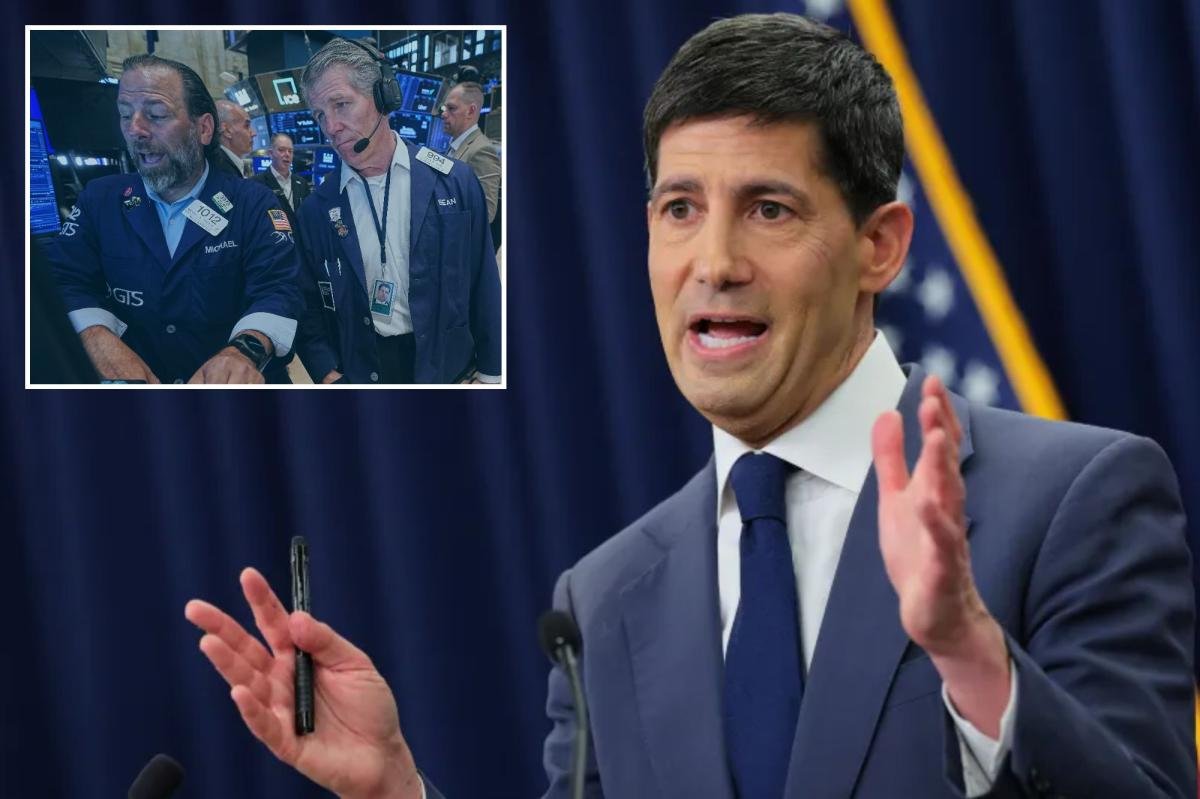
Federal Reserve Chair Kevin Warsh shocked Wall Street this week by delivering one of the most hawkish messages investors have heard in months, prompting traders to rapidly abandon expectations for interest-rate cuts and begin pricing in the possibility of rate hikes before year-end.
The dramatic shift in market sentiment came after the Federal Open Market Committee left rates unchanged but signaled that inflation remains its top concern despite signs of slowing economic growth.
The message was reinforced by former Dallas Fed President Robert Kaplan, who warned that policymakers may need to raise rates as soon as September if inflation fails to cool over the summer.
“If inflation prints don’t cool between now and we get to September, I actually think the balance of risks suggests it would be wise to take some action, either in September or in the fall,” Kaplan, now vice chairman at Goldman Sachs, said in an interview with Bloomberg Television.
Kaplan added that rate increases rarely come alone.
“If you move in September, you need to be prepared. There could be one or two more,” he said.
The hawkish turn caught many investors off guard. Earlier this year, markets largely expected the Fed’s next move to be a rate cut as economic growth moderated and inflation appeared to be moving closer to the central bank’s target.
Instead, Warsh’s debut as Fed chairman has shifted the conversation back toward inflation and the possibility that monetary policy may need to become even tighter.
“The odds of a rate hike are certainly higher than they were a month ago,” Scott Martin, partner at Kingsview Wealth Management, told The Post.
“The Fed has made it clear that inflation remains its primary concern, and if the next few inflation reports fail to show meaningful improvement, September is absolutely in play.”
Martin said the central bank appears increasingly focused on preserving its inflation-fighting credibility.
“Right now, it’s less about economic growth and more about protecting the Fed’s credibility on inflation,” he said.
Others see the Fed’s shift as even more dramatic.
Derek Reisfield, co-founder and former chairman of MarketWatch, said investors should prepare for higher borrowing costs.
“While the Fed rate remained unchanged for the moment, it is clear the positioning changed to reflect the increased likelihood of a rate hike later this year,” Reisfield said.
“I would say there is an 80 percent chance of a rate hike this Fall.”
Reisfield pointed to persistent inflation risks ranging from food prices to energy markets, warning that geopolitical uncertainty could keep inflation elevated through the end of the year.
The implications would extend far beyond Wall Street.
“Credit card, auto loan and other rates are likely to go up as well. So consumers will be paying more for credit all around,” Reisfield said.
Higher rates would also increase borrowing costs for the federal government as it finances its massive debt load.
For now, investors are left reassessing assumptions that had dominated markets for much of the year.
“I don’t think the market is overreacting,” Martin said.
“Investors spent much of the last year assuming the next move from the Fed would be a rate cut. Warsh is signaling that inflation is still a problem and that policymakers are willing to keep all options on the table.”
Food
California billionaire tax proposal qualifies for the November ballot
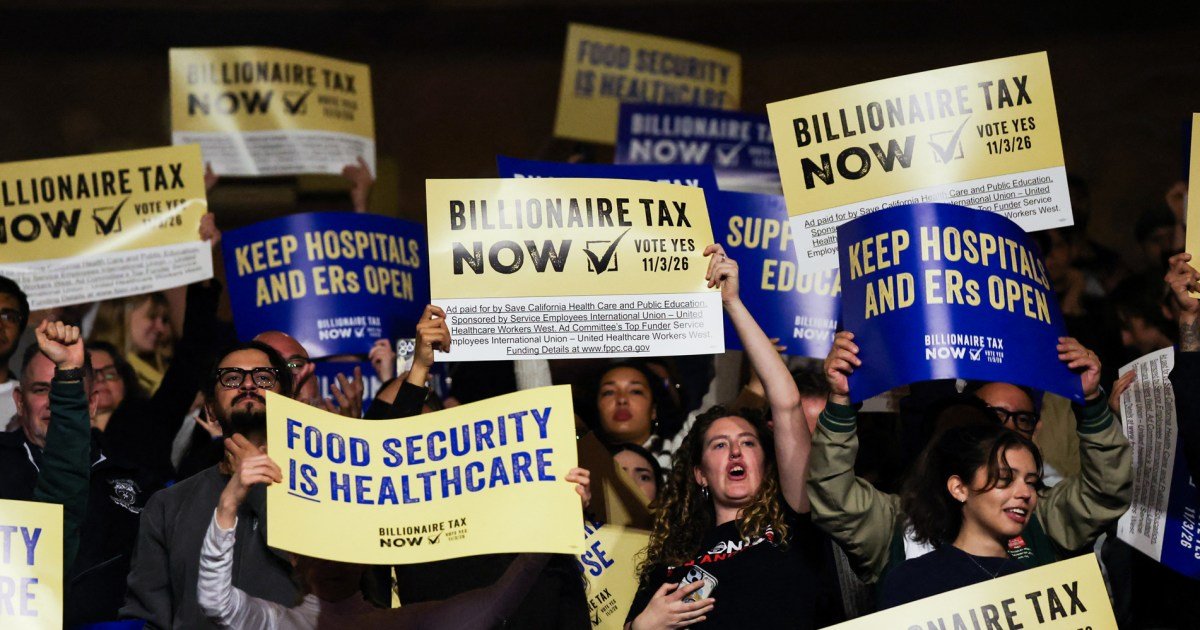
A proposal to raise taxes on the wealthiest Californians has qualified for the November ballot, state officials said Wednesday, setting up what could be an expensive and divisive fight.
The so-called billionaire tax — which has divided Democrats in the state — would implement a one-time tax on rich Californians if approved by voters.
California Secretary of State Shirley Weber said in a statement late Wednesday that the measure was eligible for the ballot this fall after her department verified the required number of signatures submitted by organizers.
There is still a chance, however, that the initiative will not appear on California’s ballot. The proposal’s supporters — led by Service Employees International Union-United Healthcare Workers West, a large California healthcare workers union — have until June 25 to decide whether they want to move forward with their push.
Several groups and lawmakers have for months engaged in negotiations over ways to reach a deal that would appease the unions supporting the tax while also preventing it from appearing on the ballot.
The measure has split prominent Democrats across the state.
Opponents have argued the initiative would drive wealthy investors and tech leaders from the state. California Gov. Gavin Newsom, widely seen as a presidential hopeful, has lined up in opposition to the billionaire tax.
Former Health Secretary Xavier Becerra, the leading candidate to succeed Newsom as governor, also opposes the tax.
On the other side, Rep. Ro Khanna, who also has his eye on a future White House bid, and Tom Steyer, a billionaire activist who ran unsuccessfully for governor, have backed the effort, arguing that it would help close income inequality gaps. Proponents have also made the case that it will help make up for state budget shortfalls as a result of Medicaid cuts in the “big, beautiful bill” that President Donald Trump signed into law last year.
The initiative would implement a one-time 5% tax on the assets of Californians whose net worth exceeds $1.1 billion. It would require the state to spend 90% of the new revenue on healthcare, with the remaining 10% split between education and food assistance programs. That discrepancy angered a number of Democratic groups advocating for education and food assistance.
In addition to the one-time tax on those worth more than $1.1 billion, it would implement a smaller tax on individuals worth between $1 billion and $1.1 billion. The taxes would apply retroactively to anyone living in the state as of Jan. 1, 2026.




Blue material peeling off bottom of Reflecting Pool after renovation
Some blue material at the bottom of the Lincoln Memorial Reflecting Pool is peeling off, days after it was painted...


How much hiking gear do you really need?
What's too much gear to hike with? What's not enough? How much gear do you really need? In this episode...


Andy Burnham wins Makerfield by-election | BBC News
Labour's Andy Burnham has won the Makerfield by-election, paving the way for him to challenge Keir Starmer as prime minister.


Labour’s Andy Burnham wins crucial Makerfield by-election. #UK #Politics #BBCNews


Tom Hanks roasts MS NOW’s ratings while appearing live on-air with reporter
Oscar-winning actor Tom Hanks took a swing out of left field Thursday to poke fun at MS NOW while appearing...


Curry Barker’s New Movie Lands at Universal Blumhouse Atomic Monster
Hollywood can finally stop obsessing over Obsession filmmaker Curry Barker‘s next movie. Universal Film Group, along with Blumhouse Atomic Monster,...


They got married during the Knicks parade
CNN's Meena Duerson followed a couple getting married at City Hall in New York during the same time as the...


‘Dungeon Crawler Carl’ TV Series Based On Books Ordered By Peacock
Peacock has given a straight-to-series order to Dungeon Crawler Carl, a live-action series adaptation of Matt Dinniman’s popular science fantasy...

In new interview, Trump makes eye-opening Iran war claims
Trump is defiant and defensive after signing a memorandum of understanding with Iran. CNN has the first clips from Trump's...

Blue paint on bottom of Reflecting Pool appears to be peeling away
The bottom of the pool was painted at the direction of President Donald Trump and refilled with water about two...
-

 Business5 days ago
How much of Musk’s wealth comes from government help? Virtually all of it
-

 LifestyleNews2 weeks ago
120 minutes of strength training per week may help extend lifespan
-

 Politics1 week ago
What to know about the stabbing that set off fiery riots in Northern Ireland
-

 Video6 days ago
Download fans say what they love about the festival. #DownloadFestival #BBCNews
-

 Video6 days ago
Why SpaceX IPO isn't about space. #SpaceX #ElonMusk #BBCNews
-

 HealthNews7 days ago
The people of Okinawa, Japan only eat until they are about 80 percent full, then stop — and the practice has been linked in multiple peer-reviewed studies to lower rates of cardiovascular disease, slo
-

 TravelNews6 days ago
My Paternal Instinct Should’ve Warned Me About Netflix’s Maternal Instinct
-

 Food6 days ago
Pope Leo’s plane was grounded. Then the King of Spain stepped in to help