

Business
Luvme Hair Shares Expert Guide to Choosing the Right Wig Density for Natural-Looking Volume


NEW YORK, N.Y., June 18, 2026 (SEND2PRESS NEWSWIRE) — Luvme Hair, a beauty brand offering human hair wigs, glueless wigs, lace wigs, and protective styling solutions, is sharing an expert guide to help customers choose the right wig density for natural-looking volume, comfort, and styling needs.

Image caption: Luvme Hair Shares Expert Guide to Choosing the Right Wig Density for Natural-Looking Volume.
Wig density refers to the amount of hair added to a wig cap and is commonly shown as a percentage, such as 150%, 180%, 200%, or 250%. For customers comparing different levels of fullness, Luvme Hair’s wig density guide explains how density affects the overall appearance, weight, movement, and styling experience of a wig.
“Choosing wig density is one of the most important steps in selecting a natural-looking wig,” said a spokesperson for Luvme Hair. “The fullest density is not always the best choice for every customer. The right density should match the wearer’s lifestyle, preferred volume, texture, length, and comfort needs.”
WHAT WIG DENSITY MEANS
Wig density describes the fullness of a wig. A lower density can create a softer and more lightweight appearance, while a higher density can create thicker ends, fuller movement, and a more dramatic look. Luvme Hair notes that density is not a measure of hair quality. Instead, it is a styling feature that helps determine the final appearance and wearing experience.
— LUVME HAIR’S WIG DENSITY GUIDE —
150% DENSITY: NATURAL AND LIGHTWEIGHT
Luvme Hair recommends 150% density for customers who want a more natural, lightweight look. This density can be suitable for everyday wear, beginner-friendly styling, work, school, casual routines, and customers who prefer less volume. It may also work well for shorter styles, bob wigs, and simple straight looks.
Customers choosing shorter styles can also review the best density for a bob wig, since bob wigs may appear balanced and naturally full without requiring the highest density.
180% DENSITY: BALANCED AND FULLER
For customers who want more body while keeping the wig manageable, 180% density can offer a balanced option. It provides a fuller look than 150% density without feeling overly dramatic for daily wear. Luvme Hair notes that 180% density hair can be a versatile choice for body wave, loose wave, layered styles, side parts, and customers who want natural-looking fullness wig density guide extra movement.
200% DENSITY: FULL AND PHOTO-READY
A 200% density wig is designed for customers who prefer a thicker, more voluminous appearance. This level of density can be suitable for longer wigs, defined curls, glam styling, events, photos, and customers who want fuller ends. Luvme Hair recommends considering both comfort and maintenance when choosing 200% density, as fuller wigs may require more detangling and styling care.
250% DENSITY: EXTRA FULL AND DRAMATIC
For customers who want maximum volume, 250% density offers the most dramatic fullness. This option may be preferred for statement looks, bold curls, high-volume styling, and customers who enjoy a more glamorous finish. Luvme Hair notes that 250% density may not be necessary for every daily routine but can be a strong choice for those who want standout volume.
HOW TEXTURE AND LENGTH AFFECT DENSITY
Luvme Hair recommends choosing the right wig density by considering lifestyle, texture, length, comfort, and the desired level of fullness.
Texture can change how density appears. Curly, deep wave, water wave, and body wave textures often look fuller because the curl pattern adds shape and volume. Straight wigs may show density more directly through the thickness of the hair and ends. Customers comparing natural-looking density for water wave wigs may prefer a softer density for daily wear and a higher density for dramatic volume.
Length is also important. Longer wigs may benefit from higher density to maintain fullness from crown to ends, while shorter wigs can often appear full and polished with moderate density.
ABOUT LUVME HAIR
Luvme Hair offers human hair wigs, glueless wigs, lace wigs, and protective styling solutions designed for natural-looking, confidence-boosting wear. With a focus on comfort, quality, and beginner-friendly design, Luvme Hair provides wig options for everyday styling, special occasions, travel, and personal beauty routines. https://shop.luvmehair.com/
Learn more at: https://shop.luvmehair.com/blogs/wigs-101/what-does-density-mean-in-wigs
News Source: Luvme Hair
To view the original post, visit: https://www.send2press.com/wire/luvme-hair-shares-expert-guide-to-choosing-the-right-wig-density-for-natural-looking-volume/.
This press release was issued by Send2Press® Newswire on behalf of the news source, who is solely responsible for its accuracy. www.send2press.com.
Business
The US says ASML’s top chip tool may be in China. ASML says it isn’t

According to Bloomberg, U.S. Commerce Secretary Howard Lutnick has, in a series of recent meetings, told senior ASML executives he’s concerned that one of the Dutch chipmaker’s extreme ultraviolet lithography machines — the EUV systems that are the only tools on Earth capable of printing the most advanced semiconductor patterns — may have ended up in China. That would be a major breach of export controls that have barred ASML from selling EUV to China since the first Trump administration.
It’s a serious claim. Senior administration officials told Bloomberg they have evidence that ASML shipped EUV-related components and transport equipment to China, though they’ve declined, repeatedly, to show it — to Bloomberg or, apparently, to ASML itself. The company says no such machine exists in China and has never existed there. The Commerce Department didn’t respond to Bloomberg’s questions about whether it has evidence of an actual EUV system on Chinese soil.
You might think this isn’t worth paying attention to if you’re outside the chip industry, but it is. ASML is a Dutch company most people have never heard of, but it is, by a wide margin, the most important company in the global AI buildout that isn’t named Nvidia or one of the hyperscalers. It makes the only machines on the planet capable of EUV lithography — the process of printing the microscopic circuit patterns that define the most advanced chips.
Every cutting-edge processor made by TSMC, the foundry behind Nvidia’s and Apple’s chips, depends on ASML tools that took the company roughly two decades and untold billions to develop. There is, at present, no second supplier. That monopoly has made ASML Europe’s most valuable public company, with a market capitalization that has been trading in the neighborhood of $700 billion as of this week, up sharply over the past year on the back of insatiable AI-driven chip demand.
That scale is exactly why the China question matters so much. If even one EUV machine made it into Chinese hands, it would represent one of the most consequential breaches of the export-control regime the U.S. has built over the past several years to keep advanced AI capability out of Beijing’s military and industrial base.
I sat down with ASML CEO Christophe Fouquet six weeks ago, well before this story broke, and asked him directly about the China question.
Fouquet told me ASML tracks every machine it has ever shipped — they’re either in active use with monitored customers or have been dismantled and returned to the company. He said the firm built an internal firewall years ago: employees who can access EUV technology, documentation, and training are walled off from those who can’t, and ASML’s China-based staff sit on the wrong side of that wall by design. He argued the only reason ASML could build an EUV machine at all was that 80% of it already existed from decades of prior knowledge, and that solving the one genuinely new problem — generating EUV light itself — took 20 years on its own. His broader point seemed to be that you can’t reverse-engineer a machine you’ve never had, and nobody in China has had one.
There’s also a simpler commercial logic that cuts against the idea that ASML would risk its export license to quietly arm a Chinese customer. ASML does sell older-generation deep ultraviolet tools to China — gear it first shipped a decade ago — but Fouquet framed that explicitly as a protective calculation, not a loophole. The idea, he suggested, is that it keeps enough of a generational gap that customers can still do business — but without manufacturing its own future competitor. ASML expects roughly 20% of its 2026 revenue to come from already-permitted sales to China. Risking the EUV ban entirely would put that revenue, and the company’s standing as the most valuable monopoly in European industry, on the line over a single illegal sale.
None of this proves the allegations are false. The government hasn’t yet made its evidence public, and it’s worth withholding judgment until it does.
The Commerce Department, under Lutnick’s leadership, agreed late last year to put up to $150 million of taxpayer money into xLight, a startup developing a next-generation light-source technology that’s been written about as a long-term challenge to the core of ASML’s EUV monopoly. xLight’s own CEO told me last year that the company sees itself as a future partner to ASML, not a rival, building hardware meant to plug into ASML’s machines rather than replace them. When I put that framing to Fouquet in May, he was polite about it but unconvinced; ASML, he made clear, doesn’t see itself as needing xLight’s technology to keep its lead.
Does that have anything to do with why Lutnick is suddenly pressing ASML on EUV? Nothing public connects the two. It could be entirely unrelated. But a federal official scrutinizing a monopoly while his own agency has money riding on a startup angling to improve that monopoly’s core technology is worth examining.
xLight isn’t the only outside bet on the future of lithography. Peter Thiel — who has his own long-running ties to Trump’s political orbit — has backed Substrate, a separate startup explicitly pursuing its own EUV-rival technology, with ambitions to compete with ASML more directly than xLight says it intends to.
As Bloomberg notes, a bipartisan bill moving through Congress would go much further than EUV — it calls for an effective ban on all of ASML’s deep ultraviolet (DUV) shipments to China, the less advanced lithography tools that account for roughly a fifth of the company’s expected 2026 revenue. The bill cleared a key committee in April, and the Trump administration hasn’t taken a formal position on it.
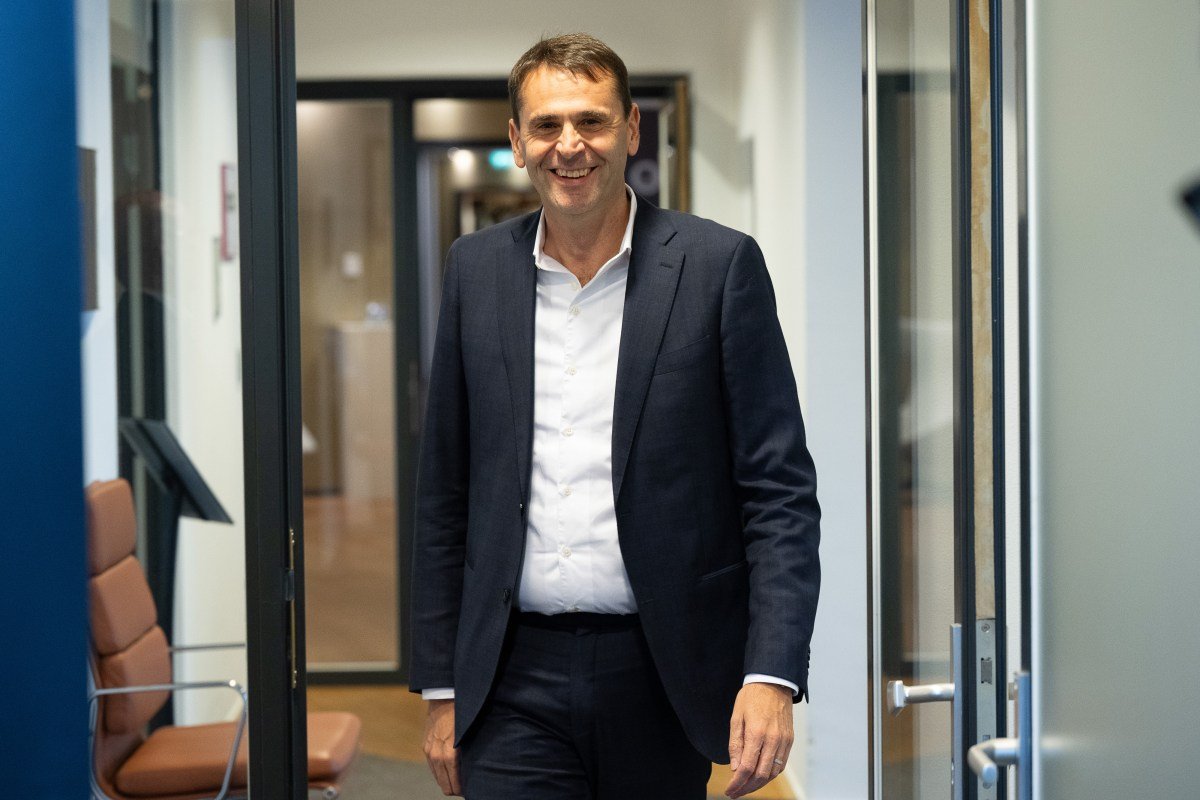
Pictured above: ASML CEO Christophe Fouquet
Business
Apple to work with Intel on US chip design and production, Trump says

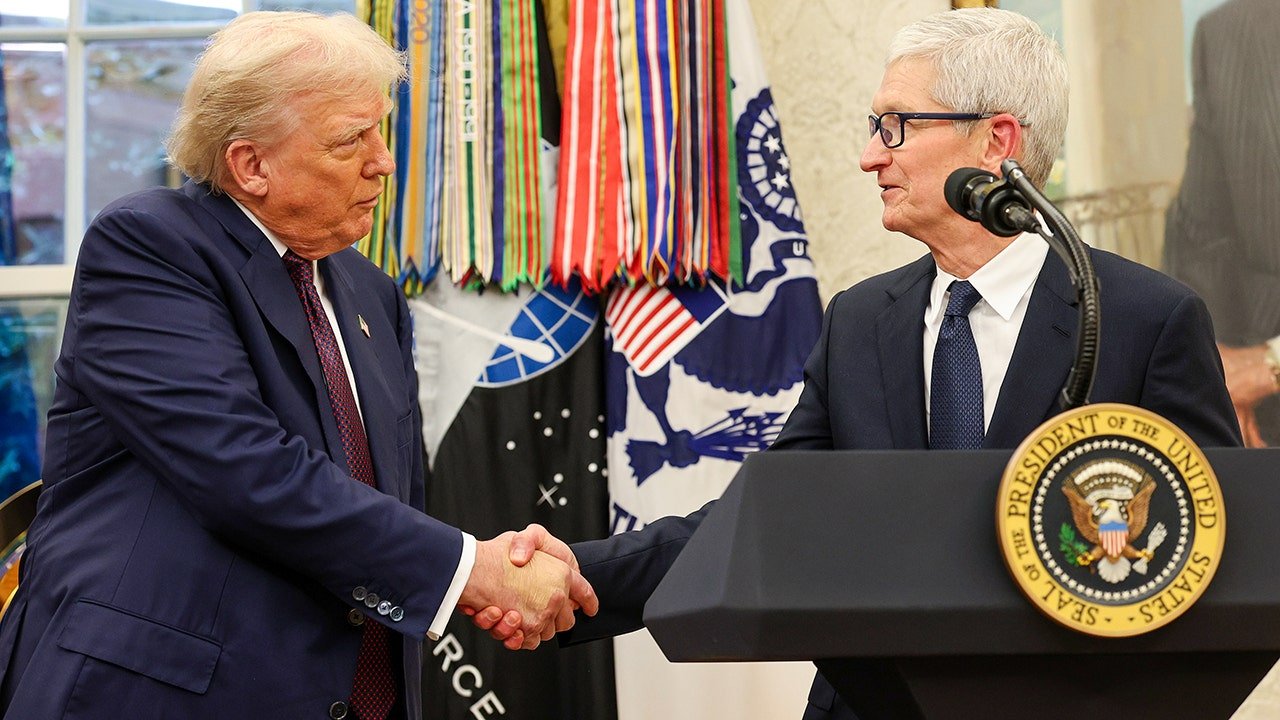
President Donald Trump said Thursday that Apple has agreed to work with Intel on designing and producing chips in the U.S.
“When I won my Second Term, it was clear America needed its Semiconductor Industry to come back to the U.S.A. We design everything, but we need to BUILD it here, NOW! So I decided to help Intel because we need to design and build our Chips right here in America,” Trump wrote on Truth Social.
The partnership could help Apple diversify its manufacturing base as it looks for additional chip capacity. The tech giant relies heavily on the Taiwan Semiconductor Manufacturing Company, which has advanced production lines in high demand from AI chipmakers such as Nvidia and Advanced Micro Devices.
APPLE CEO SAYS PRICE HIKES ARE ‘UNAVOIDABLE’ AS RISING CHIP COSTS SQUEEZE TECH GIANT: REPORT
Intel shares rose in premarket trading following the announcement from the president.
“The Technology the World relies on was invented in America. We all remember ‘Intel Inside.’ Stupid Presidents took our Economy for granted, and let Taiwan and others steal our Semiconductor Factories,” Trump said.
Intel reportedly reached a preliminary agreement to make some chips for Apple after more than a year of talks. Apple and Intel have not publicly detailed which chips or products would be involved.
HOW YOU CAN GET A SLICE OF APPLE’S $250M IPHONE SETTLEMENT
An Apple contract would give Intel steady demand from a top consumer electronics company after its reputation and manufacturing business fell behind TSMC in recent years.
Earlier this week, Intel announced that a new generation of its manufacturing technology, 18A-P, had entered initial production, as the chipmaker works to meet demand for advanced processors.
Last year, the Trump administration took a roughly 10% stake in Intel and announced plans to invest billions of dollars in the chipmaker to build or expand factories in the U.S.
GET FOX BUSINESS ON THE GO BY CLICKING HERE
The Trump administration took a roughly 10% stake in Intel last year and announced plans to invest billions of dollars in the chipmaker to build or expand factories in the U.S.
Trump previously said he “should have asked for more” of a stake in Intel after the value of the federal government’s Intel position rose sharply.
“When was the last time a President made America money??” Trump wrote on Thursday.
The administration has been boosting efforts to secure U.S. supply chains for critical minerals and semiconductors, including by taking equity stakes in companies as part of an effort to cut reliance on China.
Business
US Tells ASML It’s Concerned China May Have Top Chip Tool
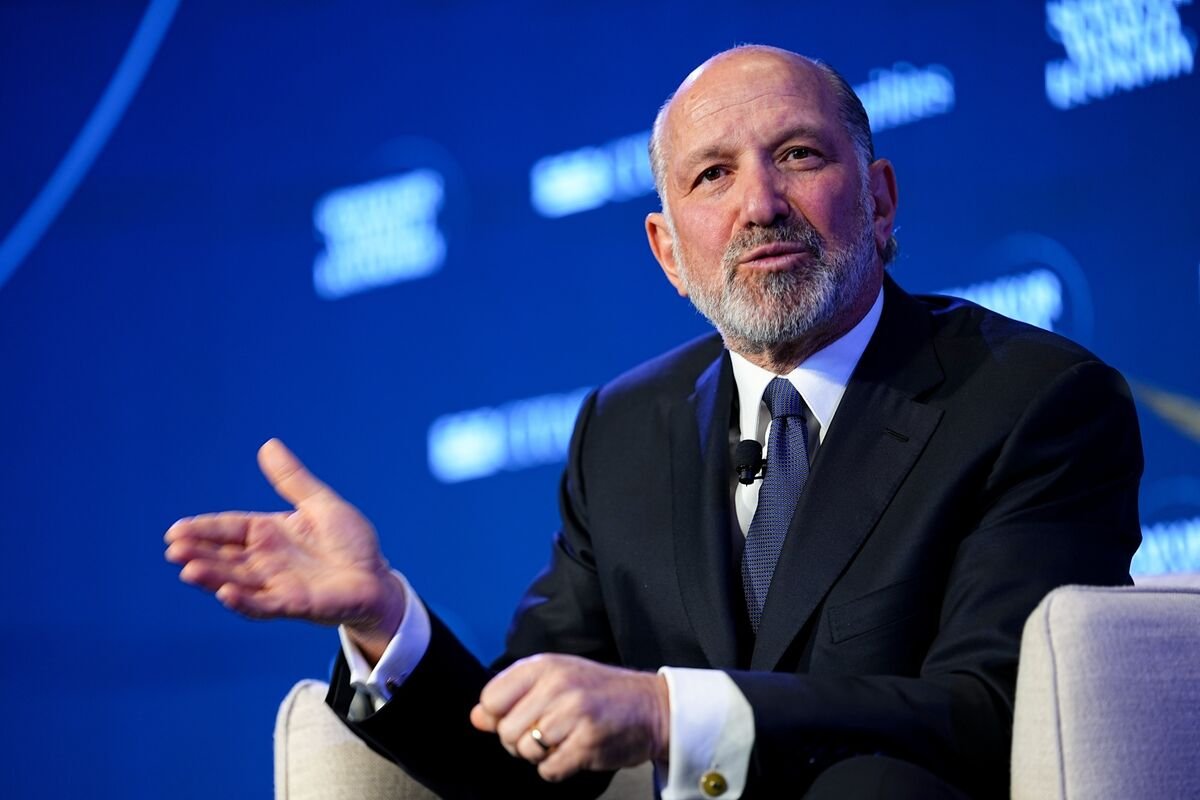
Dutch chip-equipment giant ASML Holding NV is contending with its biggest challenge yet under the Trump administration: In a series of recent meetings, Commerce Secretary Howard Lutnick outlined concerns to ASML’s senior leaders that one of its top-of-the-line machines may have made its way into China, in violation of US-led export restrictions.
In the meetings, Lutnick expressed concern to ASML executives over the company’s extreme ultraviolet lithography, or EUV, machines, according to people familiar with the talks. EUV systems are used by firms such as Taiwan Semiconductor Manufacturing Co. to manufacture processors for the likes of Nvidia Corp. and Apple Inc., and ASML has never been allowed to ship them to China because of curbs imposed during the first Trump administration.
Business
The discount for student loan payers who enroll in autopay just went up


The discount will increase to 1 percentage point, from the standard 0.25, and could result in savings of hundreds or thousands of dollars over the lifetime of a loan.
June 18, 2026 at 2:11 p.m. EDTYesterday at 2:11 p.m. EDT
The Trump administration is promising student loan borrowers a greater incentive to sign up for autopay: a hefty discount on their debt.
On Thursday, the Education Department said people who opt to have their student loan payments automatically withdrawn from their bank accounts will qualify for a discount of 1 percentage point on the interest rate, up from the standard 0.25 percentage point.
Business
FDA committee recommends a new mRNA flu vaccine : NPR

The Food and Drug Administration’s top vaccine advisory committee voted unanimously today to recommend Moderna’s mRNA influenza vaccine, mFlusiva, for adults 50 and over. This was its first time reviewing a new vaccine application since 2023.
The vote by the Vaccines and Related Biological Products Advisory Committee, or VRBPAC, is a step towards what may be the first vaccine filed and approved under the second Trump administration despite sustained criticism of vaccines from President Trump and Health and Human Services Secretary Robert F. Kennedy Jr. Indeed, last year, Kennedy pulled back almost $500 million in contracts to develop mRNA vaccines.
“It’s such a breath of fresh air, considering what we’ve gone through with Robert F. Kennedy Jr.” says Dr. Paul Offit, director of the Vaccine Education Center at the Children’s Hospital of Philadelphia and former committee member of the FDA panel that voted Thursday.
The rocky road to the review
In February, the FDA declined to review Moderna’s application for the mRNA flu vaccine but then reversed its decision two weeks later after criticism.
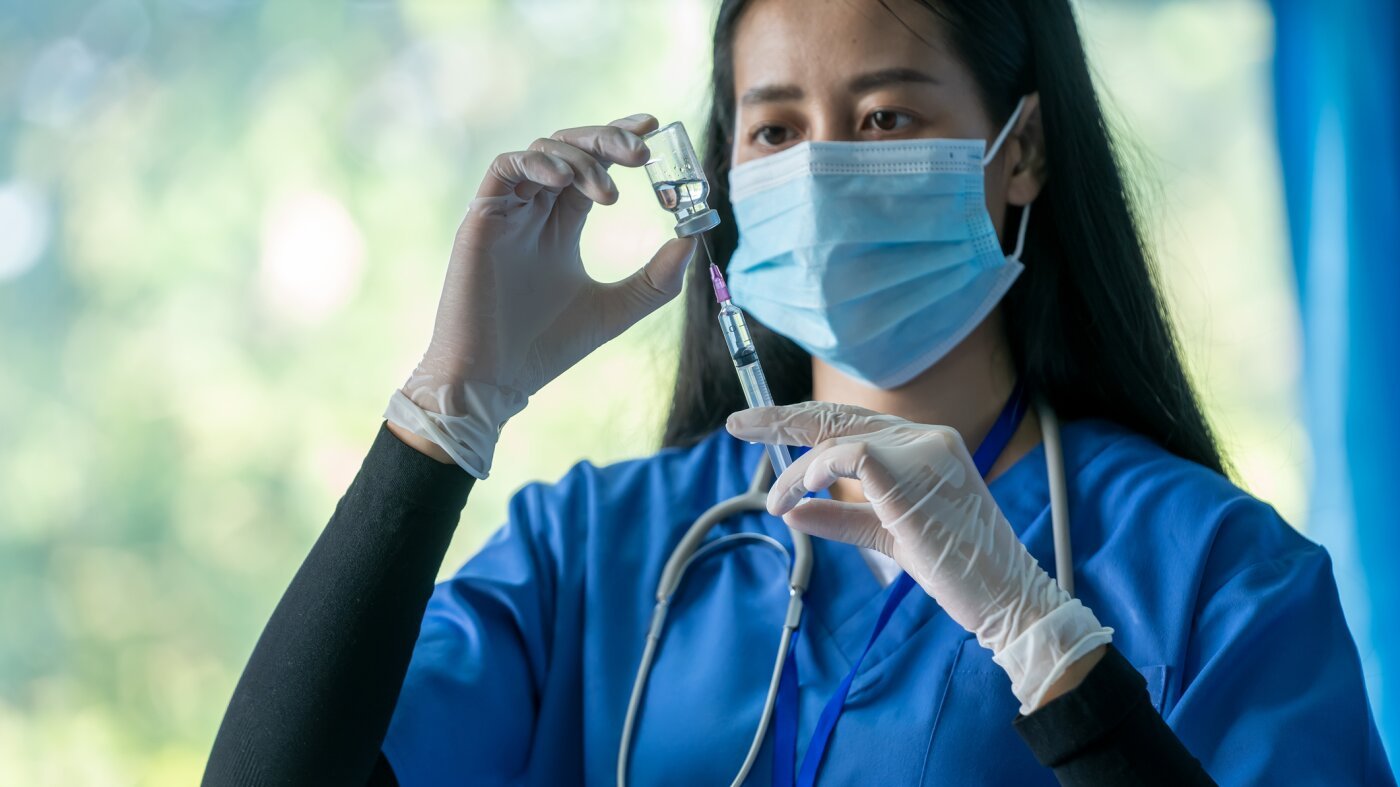
Messenger-RNA, or mRNA, provides instructions for the body to produce flu antigens to develop immunity. Moderna’s mRNA flu vaccine includes microscopic doses of mRNA for three to four strains of the flu — totaling about the same weight that a fingerprint leaves on a mirror.
Want the latest stories on the science of healthy living? Subscribe to NPR’s Health newsletter.
Researchers used the technology to develop the COVID-19 vaccine – another reason why Kennedy has been critical of its use during the pandemic with vaccine mandates.
In addition to the flu vaccine providing potentially stronger protection, many public health and infectious disease experts are excited about the shot because mRNA vaccines can be produced much more reliably and quickly — and potentially faster than traditional flu vaccines. That could make the mRNA vaccine far more effective when a new flu strain suddenly emerges.
While some public concerns have persisted, Moderna and the FDA did not find credible safety risks in Thursday’s review. Moderna wrote in its brief that the vaccine “does not enter the cellular nucleus, does not interact with the genome … and does not persist in the body.”
The research
Results from Moderna’s phase 3 trial were also published in the New England Journal of Medicine and Nature Immunology. Hanover Matz, postdoctoral researcher at Washington University in St. Louis, and colleagues examined the vaccine response from 75 patients in the trial in detail — looking at not only how many antibodies patients produced, but how good the antibodies were and why that might be the case.
“It’s not something that is typically evaluated when anybody looks at vaccine research, whether it’s a company or in academic research,” Matz says. They found that the mRNA vaccine produced a longer-lasting response and antibodies that recognized more flu strains — which Matz says could explain why the mRNA vaccine may be better than today’s flu vaccines.
“There were no shortcuts taken. There was a full efficacy evaluation done per standard FDA guidance … phase 3 efficacy studies conducted in tens of thousands of individuals,” Dr. Anna Durbin, director of the Center for Immunization Research at Johns Hopkins University and VRBPAC member, said to NPR.
Dr. Jesse Goodman, former director of FDA’s Center for Biologics Evaluation and Research, acknowledges that the mRNA vaccines became politicized and that there has been a tremendous amount of false information about them — like that they cause cancer or that they get into your cells’ DNA. He says “these things are not possible [and] disproven.”
Durbin points to the figure that over 6 billion doses of mRNA vaccines have been administered since 2020 and says they have an “incredibly safe safety profile” and “there is not a risk of DNA integration.”
“The mRNA platform has really been a game changer for vaccines, and it’s an incredibly important advancement in medical science,” Durbin says. “We have to do a much, much better job in educating the public around that, but I have the highest confidence in the vaccine.”
Goodman agrees. “It’s not going to change overnight. And I’m sure there are people who are going to remain concerned about [m]RNA-based vaccines, and there will be people who spread erroneous information about it,” he notes. “However, people will also look at the evidence.”
The review
In the meeting, Dr. Lisa Grohskopf from the CDC presented that there have been at least 32 million flu cases, 390,000 hospitalizations and 24,000 deaths in the U.S. in the past 2025-2026 flu season. She said, “approximately 85% of those eligible for vaccination were not fully vaccinated against influenza.”
Dr. Evan Anderson, vice president of epidemiology at Moderna, acknowledged flu prevalence and highlighted the issue of strain mismatch with current vaccines. Anderson said the proposed mRNA vaccine could shorten the window of time it takes to get a vaccine that targets a specific strain of flu from about 6 months now to 2-3 months — as used for COVID-19 vaccines — potentially improving the strain-selection accuracy and vaccine efficacy.
Dr. Gauri Raval, medical officer of the FDA’s Division of Clinical and Toxicology Review, presented that “[the Moderna mRNA flu vaccine] may offer greater efficacy than the standard dose comparator in preventing more severe influenza-associated illness[es].” The FDA found no “major safety issues or deficiencies.”
After six and a half hours, the committee voted. All nine members recommended the vaccine.
Durbin commended the FDA, Moderna and the rest of the committee — calling the meeting excellent and discussions robust. She says the public should be very confident in the vote.
What this means for the future of the FDA
The FDA’s reversal on reviewing the vaccine was unusual, Offit says. “You can’t say, yes, go ahead, spend tens of millions of dollars, and then, when they present data, say, no, we’re not even going to look at this data. You can’t do that.” Dr. Vinay Prasad, who made the initial call and has since left FDA, “ultimately backed down,” Offit says.
The FDA did not provide NPR a comment by the time of publication.
Offit says he was relieved to see the VRBPAC was left mostly intact in contrast to the CDC’s gutted Advisory Committee on Immunization Practices, or ACIP. “It’s great. It’s just what you want. You want to have a lively, open discussion, a discussion that’s open to the public.”
Goodman concurs: “I’m encouraged that this is happening, and in what appears to be a balanced way that’s paying attention to the feedback of the FDA vaccine experts and also the outside experts who really wanted to see this vaccine come forward and get reviewed in the light of day.”
In the public hearing portion of the meeting, Michael Abrams, a senior researcher with non-profit organization Public Citizen, echoed those sentiments. “We urge the FDA to frequently convene this committee as well as many other expert advisory committees the agency, since January 2025, has insufficiently utilized.”
There have been 44 vaccines approved between 2000 and 2019. Of those 44, the VRBPAC convened for 21 of them — meeting about once a year to review a new vaccine application.
Yet the VRBPAC hasn’t convened for over three years for a new vaccine application. The most recent was May 18, 2023, for Pfizer’s Respiratory Syncytial Virus vaccine.
Durbin agrees the VRBPAC has had fewer meetings since January 2025. A flu meeting normally held every spring did not happen in 2025, Durbin says as an example.
Durbin is more concerned about the other vaccine committee, CDC’s ACIP, however. She explains, “ACIP has a different purpose than VRBPAC — they will determine how these vaccines are used.”
“The ACIP members who were fired were highly qualified,” Durbin says. “Right now it’s not clear how recommendations would be made for the fall.”
She notes Kennedy “could reconvene the ACIP committee that he disbanded at any time, as long as it meets the charter.”
If the agencies Kennedy oversees do approve and recommend the new vaccine, Moderna says it could be available for the next flu season.
NPR Health Correspondent Rob Stein contributed to this report.




Andy Burnham speaks to supporters after crucial by-election win. #BBCNews


Imagine showing up to work and finding out you're the bear
A government employee donned a bear costume to help police, hunters and local officials in Japan's Tochigi prefecture rehearse …


Is this the summer of the phone-free show? | Engagement Party
Amazon's wildly popular “Off Campus” is just the latest in a parade of BookTok-beloved titles to gain new fans as...


UK PM Keir Starmer says he "will stand" in any Labour leadership contest. #BBCNews
Subscribe to our channel here: https://bbc.in/bbcnews For the latest news download the BBC News app or visit BBC.com/news …


Dem-backed Senate candidate helped alert ICE to undocumented worker claims
Dan Osborn, an Independent running for Senate in Nebraska who is backed by the Democratic party, has attempted a balancing...


Andy Burnham wins Makerfield by-election – will he now challenge Keir Starmer for PM? | BBC Newscast
Labour's Andy Burnham wins the Makerfield by election – so how could we see a challenge to Keir Starmer as...


U.S.-Iran talks postponed as Vance cancels trip and Israel intensifies strikes in Lebanon
The first peace talks between the United States and Iran were postponed Friday, as Vice President JD Vance canceled his...


Labour's Andy Burnham has won the Makerfield by-election. #UK #Labour #BBCNews
Subscribe to our channel here: https://bbc.in/bbcnews For the latest news download the BBC News app or visit BBC.com/news …


What happens to your brain when you become a dad? | Chasing Life
Sanjay sits down with USC psychologist Dr. Darby Saxbe, author of "Dad Brain" to explore how becoming a father impacts...


The US says ASML’s top chip tool may be in China. ASML says it isn’t
According to Bloomberg, U.S. Commerce Secretary Howard Lutnick has, in a series of recent meetings, told senior ASML executives he’s...
-

 Business6 days ago
How much of Musk’s wealth comes from government help? Virtually all of it
-

 LifestyleNews2 weeks ago
120 minutes of strength training per week may help extend lifespan
-

 Politics1 week ago
What to know about the stabbing that set off fiery riots in Northern Ireland
-

 Video7 days ago
Download fans say what they love about the festival. #DownloadFestival #BBCNews
-

 Video7 days ago
Why SpaceX IPO isn't about space. #SpaceX #ElonMusk #BBCNews
-

 HealthNews1 week ago
The people of Okinawa, Japan only eat until they are about 80 percent full, then stop — and the practice has been linked in multiple peer-reviewed studies to lower rates of cardiovascular disease, slo
-

 TravelNews7 days ago
My Paternal Instinct Should’ve Warned Me About Netflix’s Maternal Instinct
-

 Food6 days ago
Pope Leo’s plane was grounded. Then the King of Spain stepped in to help