

HealthNews
Ebola outbreak death toll passes 200 in Congo and Uganda
DAKAR, Senegal (AP) — The Ebola outbreak in Congo and Uganda has claimed more than 200 lives in its first month and is the worst known outbreak at this stage, with up to 35,000 suspected potential contacts, Africa’s Centres for Disease Control and Prevention said on Thursday.
With 894 confirmed cases so far, the current outbreak is three times worse than a previous outbreak in Uganda in 2000, which had 281 cases at the same point, said Dr. Wessam Mankoula, a medical epidemiologist at Africa CDC.
The latest number of cases is believed to be higher because the outbreak was confirmed on May 15, weeks after it was suspected to have begun. The number of cases has increased 38% since last week and is now in 32 health zones across eastern Congo, said Mankoula.
The outbreak is caused by the rare Bundibugyo virus, which has no approved vaccines or treatments and was not tested for in the early days. The more common Zaire virus, for which there is a vaccine, was responsible for most of Congo’s past 16 outbreaks of the disease.
So far 74 patients have recovered from the disease across eastern Congo and Uganda. Experimental treatments like monoclonal antibodies are being developed for Bundibugyo.
The outbreak is concentrated in Congo’s eastern province of Ituri, which accounts for more than 90% of the cases. Cases have also been recorded in the North Kivu and South Kivu provinces and have spread across the border to Uganda, where 19 confirmed cases have been reported and two people have died.
Contact tracing remains an issue due to the area’s remoteness and ongoing insecurity in Ituri province, Dr. Mankoula said.
“For those 800 confirmed cases, we should have between 17,000 to 35,000 contacts that should be in our contact list,” said Mankoula. Currently only around 4,000 contacts have been tracked and are being evaluated, less than 15%.
“We are still far from controlling the situation of this outbreak,” said Mankoula.
Nearly a million people have been displaced by years of conflict in Ituri, according to the U.N. humanitarian office, making contact tracing difficult as people flee attacks or move frequently in the vast province with dense forests, poor roads and remote villages that can take days to reach.
Tracing is also difficult among the thousands of miners who regularly move among remote sites in the mineral-rich region.
Of the over $900 million pledged to fight the outbreak, only $90 million has been released to help fight the outbreak, further complicating the ongoing crisis, according to Mankoula.
Africa CDC estimates it needs 540 personnel to fight the outbreak and so far they only have 84.
“We’re keeping our fingers crossed those new pledges will be fast tracked, and we’ll be following up with different member states and different partners about their commitment to turn those pledges into actual money released to their affected countries or partners,” said Mankoula.
HealthNews
Joint-Pain Supplement Tied to Faster Alzheimer’s Progression


A supplement that many older Americans swallow for their knees may not be so benign for their brains. University of Florida researchers report that glucosamine use was linked to a greater shift from mild cognitive impairment to Alzheimer’s disease in a large review of patient records, reports the Conversation. Using AI to sift through UF Health data from 2012 to 2024, the team found about 8% of patients with either Alzheimer’s or mild cognitive impairment reported taking glucosamine, per a release. After adjusting for age, sex, and demographics, it was found that using glucosamine was tied to a 25% greater risk of mild cognitive impairment advancing to dementia.
Among those already diagnosed with Alzheimer’s or related dementias, glucosamine use was also tied to a 25% higher risk of death over time. The study, published in Nature Metabolism, doesn’t prove that glucosamine, which many take for joint pain and arthritis, causes the decline, but it’s backed by mouse experiments and brain-tissue analyses suggesting the supplement feeds into an overactive “sugar-tagging” process on proteins seen in Alzheimer’s. That metabolic pathway, the authors say, could be a new treatment target—but they stress that the findings need confirmation in clinical trials before changing medical guidance.
Read These Next
Mary Trump has reached a settlement with
Woman gets 18 years for
Supreme Court could
Hillary Clinton had sharper words
HealthNews
Omega-3 supplements may not improve brain function


If you’re taking an omega-3 fish oil or algae supplement to stave off Alzheimer’s disease and dementia, take note: A new clinical trial finds these supplements did nothing to improve memory, cognition or brain cell loss.
“Omega-3 supplements as a blunt instrument do not work,” said lead study author Dr. Hussein Yassine, the Volke Endowed Professor of Neurology at the University of Southern California’s Keck School of Medicine in Los Angeles.
“Even when we saw high levels of omega-3 in the brains of the treatment group, it did not improve cognition,” said Yassine, who directs Keck’s Center for Personalized Brain Health.
What does work? Optimizing your health with exercise, stress reduction, quality sleep and a plant-based diet while adding omega-3s from fatty fish, nuts and seeds, he said.
“In the Mediterranean, high omega-3 levels are very strong predictors of good cognition,” Yassine said. “But people in the Mediterranean are not popping supplements. They’re eating fatty fish, exercising, meeting with friends and living slowly with less stress.
“In that context, omega-3s are shining, helping the brain,” he added. “But if you eat a typical Western diet with fast food, don’t exercise, are stressed out all day from work, our study showed having more omega-3 in your brain doesn’t move the needle.”
After years of public messaging about how fish oil or algae supplements might protect against dementia, it’s time to refine our thinking, said Alzheimer’s prevention researcher Dr. Richard Isaacson, director of research at the Institute for Neurodegenerative Diseases of Florida.
“Omega-3s are absolutely critical to having optimal brain health, especially for people with the APOE4 gene, which increases the risk of developing Alzheimer’s,” said Isaacson, who was not involved in the new research. “However, this study shows they don’t work well in people who have not already optimized their health.”
CNN reached out to the Global Organization for EPA and DHA Omega-3s, which represents the omega-3 industry, but did not hear back before publication.
Why are omega-3 fatty acids essential?
Omega-3 polyunsaturated fatty acids are essential to any animal’s survival. In humans, they lower blood pressure, boost good cholesterol, maintain cell health and reduce the risk for cancer, dementia and Alzheimer’s disease.
Omega-3s are crucial for brain health. Up to 60% of the human brain is made up of lipids, or fats. Some 35% of those fats are omega-3s, experts say. Yet the body doesn’t produce omega-3s on its own. Instead, the fatty acids must be obtained from foods such as salmon, herring, mackerel, sardines, walnuts, chia seeds and flaxseeds.
Many people don’t eat enough fatty fish, seeds and nuts, so supplementation has become widespread. Fish oil supplements provide eicosapentaenoic acid, or EPA, and docosahexaenoic acid, or DHA. The two have different functions — EPA fights inflammation and supports heart health, while DHA is a core structural building block for the brain, eyes and central nervous system. Vegan supplements contain algal oil made from marine algae, which is also a source of EPA and DHA.
Chia, hemp and flaxseed oil capsules provide a third type of omega-3 called alpha-linolenic acid, or ALA, an antioxidant with the important job of turning food into energy. It’s also good for the heart — the risk of dying from heart disease falls by 10% for each gram of ALA eaten per day, according to the Cleveland Clinic.
Raw walnuts are an excellent source. One ounce, or about 14 walnut halves, provides 2.5 grams of ALA, nearly twice the recommended daily amount.
Walnuts also provide magnesium, manganese, copper, vitamin B6 and a host of other nutrients — a key feature of whole foods that experts say supplements can’t match.
Wild salmon, for example, contains proteins, vitamins A, D and B-12, and critical minerals such as selenium and potassium — as well as high-quality omega-3s.
“When you get omega-3s from eating fish, you’re not just getting the single nutrient; you’re getting the whole fish,” Yassine said.
“But it has to be part of a healthy lifestyle. If we take that salmon and fry it, it’s not going to count anymore. You can break the omega-3s down by frying the fish, or you can neutralize them by having french fries next to it.”
‘A drop in the ocean’
The results of the randomized, double-blind, placebo-controlled clinical trial — considered the gold standard of science — were published Thursday in The Lancet journal ebioMedicine.
The study divided 365 people without dementia between the ages of 55 and 80 into treatment and placebo groups. All had extremely low omega-3 levels and at least one risk factor for dementia, such as obesity, sedentary lifestyle, high blood pressure or cholesterol.
Nearly 50% had at least one copy of the APOE4 gene — a group that will be the mostly likely to benefit from supplementation because their brains struggle to process fats efficiently, Isaacson said.
The treatment group received a high dose omega-3 algae supplement (2,000 milligrams of DHA) each day for 24 months. The control group took a placebo for the same period. Both groups also took a vitamin B complex.
All participants underwent MRI brain scans, blood draws and cognitive testing at various points throughout the study.
Testing showed levels of omega-3s in red blood cells climbed from 4.9% to 11% in those taking the supplement. Measures of DHA levels in cerebrospinal fluid, which surrounds the brain, rose by an average of 17% after six months, confirming the omega-3 reached its intended target. The same increases were seen in people with an APOE4 gene, thought to benefit most from supplementation.
Despite evidence that levels of omega-3 had risen in the brains of people who took the supplement, there were no improvements in cognition or the size of the hippocampus, the brain’s memory center.
“In fact, there was no real difference between people taking an omega-3 supplement and those taking a placebo,” Yassine said.
The results show that omega-3 supplementation is like a “drop in the ocean” for people who don’t exercise, eat an ultraprocessed food diet and are overweight with signs of chronic disease, Isaacson said.
“What I’m telling my patients is that if a person with one or more copies of the APOE4 genetic variant has low blood levels of omega-3s and is overall healthy, they can still protect against Alzheimer’s and dementia risk by eating fatty fish twice a week and taking a high-quality omega-3 supplement,” he said. “But if they have an unhealthy lifestyle like the population in this study, an omega-3 supplement just isn’t going to work.”
HealthNews
Ticks are spreading Lyme disease across America, but we can beat them. Here’s how.

Ticks are one of humanity’s most dastardly adversaries: tiny, at times nigh-invisible arthropods that burrow into your skin, leech your blood, and sometimes transfer debilitating disease before they vanish, without you ever knowing they were there. It can be only months or weeks later, when Lyme disease’s harrowing symptoms begin to take hold, that you realize the stealth attack even occurred.
These days, it seems like there are more reasons than ever to fear ticks. Their range is spreading into cities and entirely new geographic regions in the US. Their arsenal extends beyond Lyme disease: alpha-gal syndrome, a condition caused by tick bites that creates alarming allergies to meat, has become a serious concern for public health authorities this year.
Nearly half a million people are estimated to contract Lyme disease annually — and those numbers will continue growing. This year’s tick season is off to an especially rough start: Tick bites have been sending the residents of the Northeast to the emergency room at a higher rate than they have in almost a decade. The CDC reported an unusually high number of tick-bite ER visits in late April in almost all regions of the US, and they continued to rise through May and into June.
Ticks are, of course, not a new adversary. They have been around much longer than humans. “Ticks bit dinosaurs,” Rick Ostfeld, a disease ecologist at the Cary Institute of Ecosystem Studies who studies tick-borne diseases, told me.
They have, unfortunately, been evolutionarily optimized to transmit diseases: they attach themselves to a host for days at a time, emit analgesics that mean bites might not be felt, deploy anti-inflammatories and antihistamines to escape detection, and secrete proteins that prevent the bacteria that they transfer into a host from being detected by the host’s immune system, allowing an infection to fester for a while before there is an immune response. They are also surprisingly hard to kill, capable of going into a state of suspended animation that allows them to survive in, for example, extremely cold conditions.
Something has changed recently, however. “The ticks are on the move. They are spreading,” Ostfeld said. “They’re entering more populous areas outside the regions where they were just 10 or 20 years ago, 30 years ago.”
Both the black-legged ticks (which primarily transmit Lyme disease) and lone star ticks (which are responsible for alpha-gal) are heading northward. But scientists only partially understand why. Climate change is clearly a factor: As northern climes warm, the ticks are moving in. But they are also heading south — to the Carolinas and Virginia for example — to areas where it was already warm enough for them to thrive. Researchers aren’t totally sure why: This could be the result of the deer population expanding or more land development in forested areas, leading to more encounters between ticks and humans.
The bottom line is that people who’ve never had to worry about ticks before now have to. But there’s good news. This is a fight we can still win — and everyone, from the scientists in the lab to those of us who live in ever-expanding tick country, all have a part to play.
What scientists are cooking up to win the battle against ticks
Scientists are making real progress in developing powerful new vaccines that could prevent tick-borne diseases in the first place, as well as more effective treatments for the people who do contract an infection.
In March, Pfizer reported the results of its Phase 3 clinical trials for a Lyme disease vaccine. It had a more than 70 percent success rate in reducing the likelihood of developing the disease, both one day after the final dose was administered and a month later. The company planned to submit the data to the federal government for approval, and the experts I spoke to said the shot would be a powerful new tool, especially for the communities where Lyme disease is endemic.
Sign up for the Good Medicine newsletter
Our political wellness landscape has shifted: new leaders, shady science, contradictory advice, broken trust, and overwhelming systems. How is anyone supposed to make sense of it all? Vox’s senior correspondent Dylan Scott has been on the health beat for a long time, and every week, he’ll wade into sticky debates, answer fair questions, and contextualize what’s happening in American healthcare policy. Sign up here.
“I think that it should be part of our armament, that it will work for some communities, some areas, some populations,” Ostfeld said.
Other candidates for preventing Lyme disease are also in development: The University of Massachusetts Medical School’s MassBiologics has developed a monoclonal antibody cocktail that could be given to somebody before they are exposed to potentially prevent the disease’s development. That treatment is set to enter clinical trials soon. And for alpha-gal syndrome, researchers are also probing whether existing anti-allergy drugs might be able to stave off its symptoms.
Over the long term, scientists aspire to create a universal anti-tick vaccine that targets the proteins in tick saliva and stops the transmission of any pathogens. The science is hard to crack, given the complexity of tick saliva, but it would represent a genuine breakthrough that could alter our relationship to these creepy-crawlies forever.
“If you want to develop an anti-tick vaccine, that’s the ultimate goal. That’s [stopping] any tick biting you from transmitting anything,” Maria Diuk-Wasser, professor of ecology, evolution, and environmental biology at Columbia University, who studies the ecological and environmental drivers of tick-borne diseases, told me. “The ticks have a very complex saliva, and it’s very difficult to develop that. But I think that’s the ultimate solution.”
New antibody treatments that could treat Lyme disease are also being studied, combining existing drugs to try to find a more potent therapeutic. Scientists are also working to improve our tests for Lyme disease; blood-based tests can be inaccurate, but antigen-based tests that test for proteins — similar to the rapid Covid-19 tests — could allow us to identify Lyme cases sooner and get people antibiotics that prevent the disease’s development. Diagnosis for alpha-gal also continues to improve: Dr. Scott Commins, an allergist at the University of North Carolina at Chapel Hill who has studied the syndrome for years, told me that a decade ago, it could be as long as seven years before somebody was properly diagnosed; today, the timeline is more like 18 months.
So the future looks brighter — so long as politics don’t get in the way. Ostfeld was optimistic about the prospects for the new Lyme disease vaccine. His only concern was that the current federal health department has been so anti-vaccine.
“I’m concerned that we have a HHS infrastructure that basically fosters conspiracy theories about vaccines and that the willingness of the public to consider vaccines is crumbling, with huge negative health consequences for Americans,” he said. “So I’m worried that even with vaccines that are shown to be safe and effective, that we may not adopt them because of politicians that are undermining public confidence.”
Likewise, further cuts to federal science funding could slow down progress just as researchers seem to be turning the tide against the ticks.
“There’s not a lot of funding for doing basic tick biology. There really isn’t at the federal level,” Ostfeld said. “And now we’re at risk of curtailing that even further because of the recent attempts to destroy American science by choking it off or having politicians decide what science should be done rather than scientists.”
What you can do to protect yourself from ticks
As we wait for those interventions to actually arrive at scale and as more people are being exposed every year to the risks from ticks, better precautions could still allow us to stop infections from ticks the old-fashioned way.
Here are some quick tips on how to manage the risk of tick bites as the weather warms and many of us start spending more time outdoors:
Know the tick activity in your local area: Local and state health departments often publish warnings or general guidance.
If you are camping or hiking or otherwise spending a lot of time outdoors, use an EPA-approved insect repellent.
Avoid high grass and piles of leaves as much as possible.
Check your clothes, body, and gear for ticks after you come inside.
Examine your pets closely, checking in nooks and crannies — even between their toes — when they come in.
Familiarize yourself with how to remove a tick and consider keeping a pair of tweezers or a tick removal device on you when you’re spending time outside.
You could also pre-treat your clothes with permethrin products, which can disable or kill ticks on contact, Diuk-Wasser said. “It’s a really useful product that almost nobody knows that we can use.”
And you should remember that the ticks that you are looking for change over the course of the year. In spring, it’s the full-bodied adults that you probably imagine when you think of a tick. But as we move into the summer, you should be on the lookout for nymphs, which are much smaller and harder to spot.
“Now the nymphs are out, which are the ones that are so tiny most people miss. That creates a lot of misinformation — maybe you’re like, ‘Oh, I don’t find them. There’s not as much of it,’” said Diuk-Wasser. “But really, June is the month where most people get Lyme disease.”
Her team has actually created a free phone app, The Tick App, which people can use to take a picture of a tick and send it in for identification. That lets someone know if they may need to get tested for something like Lyme disease.
And, as always, be your own advocate. If you see Lyme disease’s telltale bullseye rash or have an unusual reaction after eating meat, talk to a doctor as soon as possible. Commins said that in some parts of the country — like Long Island, where alpha-gal is already common — doctors and nurses are practiced at testing for alpha-gal. But in other parts where the syndrome is new, like the South, it might take multiple trips to the emergency room before they think to check for it. So if you are experiencing a new allergic reaction and have any reason to think you may have been bitten by a tick recently, you can ask for an alpha-gal test, he said.
With a few simple precautions, you can do a lot to mitigate the risks from ticks, despite their penchant for sneak attacks. And it’s never too late to start: Commins told me that preliminary evidence suggests that alpha-gal syndrome is not permanent. If a person can avoid further tick bites, the allergy should also dissipate over time.
“Any amount of tick prevention that you do is not wasted time,” Commins said. “The five minutes you spend spraying and taping…is really time well spent.”
And if vaccine and treatment development continues to progress, we may someday be able to defeat the ticks and the frightening pathogens they carry for good.
HealthNews
Mom Thought She Had a Boil. Then She Vomited ‘Black Tar’, Ended Up in a Coma from Flesh-Eating Disease
NEED TO KNOW
Caroline Fonjock underwent emergency surgery after a boil on her leg turned out to be necrotizing fasciitis
The rare flesh-eating disease can kill soft tissue quickly and is fatal in about 1 in 5 cases
Fonjock hopes sharing her story will help others recognize the deadly condition earlier
A mom was left vomiting “black tar” and needing emergency surgery after a boil on her leg turned out to be an aggressive case of necrotizing fasciitis — commonly called the flesh-eating disease.
Social worker Caroline Fonjock, 45, first noticed a lesion at the top of her inner thigh in April 2021, but dismissed it as a boil, nothing more, according to a report from Cambridge University Hospitals. But within 36 hours, the mom of two was vomiting “black tar,” she told BBC, as the boil turned into a “hardened tube” and spread down her leg.
Fonjock was rushed to the hospital, where she says she was told she needed emergency surgery, multiple skin grafts, and could end up spending a year in the hospital, due to the aggressive case of necrotizing fasciitis.
The mom from the English town of Haverhill said doctors told her, “If you don’t do this, you’ll be dead by morning.”
Necrotizing fasciitis is a rare bacterial infection that can be deadly in about 1 in 5 patients, according to the U.S. Centers for Disease Control. It’s dubbed the “flesh-eating disease” because it quickly kills the body’s soft tissue found around muscles, nerves, fat, and blood vessels, and it can turn lethal in a short period of time. Immediate medical attention and often surgery to remove the affected tissue is crucial for survival.
Her husband, Lionel, told the BBC that he had never heard of the disease — and now had to tell their daughters that “it’s a possibility mum might not come back home.”
During the surgery, doctors removed a large portion of Fonjock’s leg. The damage, she told the outlet, looked “like roadkill,” and she spent two weeks in a medically induced coma in the ICU.
The road to recovery wasn’t easy: She struggled with infections, organ failure, and couldn’t speak, due to a collapsed trachea. Fonjock also lost her fine motor skills, and struggled to communicate on a dry-erase board her friend brought to the hospital.
Take PEOPLE with you! Subscribe to PEOPLE magazine to get the latest details on celebrity news, exclusive royal updates, how-it-happened true crime stories and more — right to your mailbox.
“I was so desperately in distress. I couldn’t write,” she says. “It was a really terrifying moment.”
Fonjack’s case is included in a report, published in Journal of Plastic, Reconstructive & Aesthetic Surgery, on factors that influence outcomes in cases of necrotizing fasciitis, as Fonjock has a history of infections and diabetes. Still, she says she doesn’t know how she may have been infected with the bacteria.
Now, five years after her life-threatening health crisis, Fonjock has since re-learned how to walk and talk, says she feels “blessed” to have been saved “in the middle of the night” by emergency surgery.
“The scar, while not pretty, is better than losing a limb, or worse,” she says, adding that she hopes her story can help others identify the rare, but very deadly, illness. “I am certainly not one to seek the limelight about my health issues, but I am very happy to share my story alongside this research if it helps doctors – and perhaps patients – recognize this condition at an earlier stage.”
HealthNews
Shingles vaccine(s) and dementia: the only medical intervention to work faster than Tums

I am going to talk about how fast shingles vaccines reverse dementia across 4 papers. Turns out the effect is near instant. But before I do that, let us agree on some facts about the nature of the evidence used to make these claims.
Fact: Observational studies and even “natural” experiments have methodologic challenges.
People who get a vaccine and those who don’t are different.
If you see a doctor, you are more likely to get a diagnosis. Show me a healthy person, and I will show you someone who hasn’t gotten enough tests.
Diagnoses change over time. A dementia diagnosis in 2017 and 2018 may not be the same thing. Doctors may become more or less disease aware. They may be incentives to add diagnoses to the chart to make more money. They may code the same exact forgetful elderly man differently* based on a single calendar date.
Doctors may consciously or unconsciously offer more preventive care to people who appear well.
The medical record aka “chart” doesn’t truly capture how well people look.
Here are some other facts, which I don’t think can be disputed
There has been no truly successful treatment for dementia. We have a few drugs with effects so abysmally poor, we can debate if they work at all. Dementia is not a disease with a series of advances. It seems like we barely understand it biologically.
This is despite huge financial investments.
Dementia is a slow process that takes years to manifest. By the time you forget who you are, you have likely had symptoms for a long time.
With this background, lets turn to a scientific hypothesis:
What if the shingles vaccine reduces dementia?
I am willing to consider this hypothesis. Maybe less episodes of shingles— which is debilitating— and you get less dementia. Probably would take a few years or maybe a decade to see the benefit, if true. Powering a randomized trial for this would be gargantuan. Observational studies or natural experiments are probably useless due to the challenges with the data and endpoint adjudication, but that never stops a scientist up for promotion.
Now let us look at the 4 papers:
“Experts” offer a series of papers making ludicrous claims. They argue because the claim is consistently ludicrous— it must be true— rather than the same sources of bias plague the literature. The earth is flat because it looks flat when you look around in every direction.
In annals of IM this week.
Wait, if you get ADMITTED to a nursing home—in less than a year—maybe as soon as 200 days—you get less dementia because of the Shingles vaccine. Within 3 years there is a 5% ABSOLUTE reduction in dementia. This vaccine must go inside neurons and repair them. It is what Ponce De Leon was looking for. A huge effect size that is also rapid.
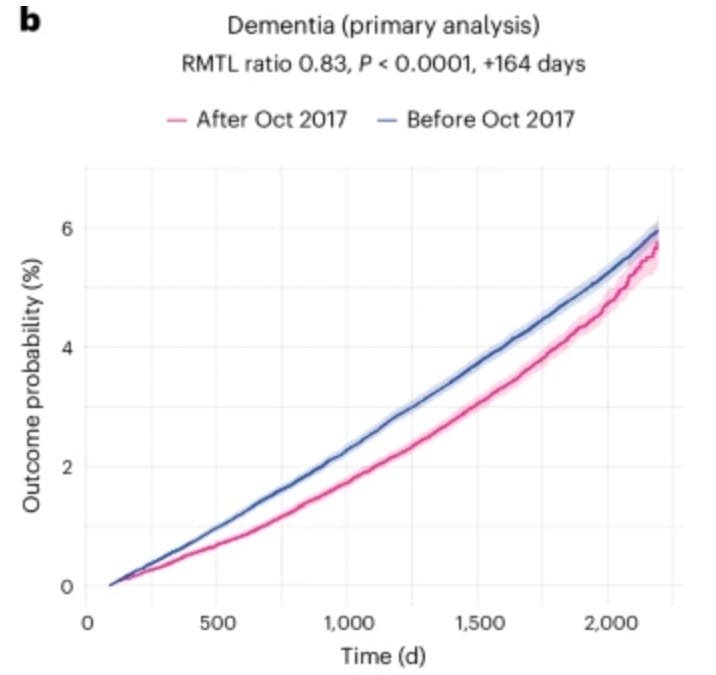
In the JAMA paper, by 100 days, the shingles shot is already halting dementia. I don’t have dementia— at least I think I don’t— if I get 3 doses, I will probably be able to build Anthropic or Space X in a week— the brain benefit is so rapid.
The Wales paper doesn’t include K-M time to event plots. Sad. Why omit data when it will be so amazing? The US data is great. Obviously it confirms that the effect is near immediate.
And it includes a hazard function— thank you!— which makes it easier to see the fast action of the shingles vaccine. It makes Tums look slow acting.
Wait, what if this is true for every vaccine given to adults. What if the effect is not just shingles vaccines, but all vaccines. Perhaps they are miraculous as a class.
Check out this meta-analysis— it is true. Every vaccine prevents dementia!
Which is more likely?
Shingles vaccines (and maybe all sorts of other vaccines) instant act to reverse dementia. Even though nearly no drug in 50 years has achieved this. Despite tremendous effort and hundreds of billions of dollars. And this discovery just so happens to occur at a contentious time when vaccine science has taken on a left-right political bent, and coincidentally all the liberal outlets know the truth, while the conservative outlets spread misinformation (Option 1)…. or
The speed of the result is preposterously fast, the pretest probability abysmally low, and the desire to deceive ourselves astronomically high. (Option 2)
Future steps
Write to the annals of internal medicine and ask the editors to make the authors provide a Kaplan-Meier (time to event plot) of all cause mortality. (falsification endpoint)
Write to the Wales/ nature editors and ask for a time to event plot for dementia.
My understanding is that the NIH is planning on commissioning a randomized trial on this question. Encourage them to do so. (Equipoise is in the population of individuals who would do it, if and only if, this claim were true).
If there is a betting market on this trial, get a shingles shot to boost brain health before you vote.
Conclusion
The media coverage of this topic is deeply concerning. As I wrote recently in Sensible medicine, the media is unable to cover health and medicine without in house expertise in clinical trial appraisal. The status quo is untenable.
Coming soon, let me discuss that whole body ultrasound 😉
PS, if you enjoy these analyses, please subscribe
*say before or after a 2024 election


Merlin The Duck is Mexico's unofficial mascot
A pet duck named Merlin has waddled his way into the hearts of soccer fans, becoming an unlikely unofficial mascot...


Burnham said his by-election win in Makerfield could be a "turning point" for Labour. #BBCNews
Subscribe to our channel here: https://bbc.in/bbcnews For the latest news download the BBC News app or visit BBC.com/news …


Andy Burnham speaks fellow candidate Count Binface at Makerfield by-election count. #BBCNews


“This is a final chance to change… there will be no second chance”, he told his party. #BBCNews
Subscribe to our channel here: https://bbc.in/bbcnews For the latest news download the BBC News app or visit BBC.com/news …


JD Vance criticises members of Israeli PM's cabinet for "attacking" US-Iran deal. #BBCNews


Pigs caught in heavy floods after tropical storm
Video from Bordelonville, Louisiana shows pigs swimming through floodwaters caused by the remnants of Tropical Storm Arthur.


The Indian dream that ended in Hauz Rani fire: How 3 generations were wiped out
On May 31, when doctors at the Max Hospital in Saket, Delhi, told chartered accountant Vivek Aggarwal that his father’s...


Comedian Carlos Mencia charged with 12 felony counts in tax investigation: LA County DA
Comedian Carlos Mencia has been charged with 12 felony tax counts, Los Angeles County District Attorney Nathan Hochman announced Thursday....


Blue material peeling off bottom of Reflecting Pool after renovation
Some blue material at the bottom of the Lincoln Memorial Reflecting Pool is peeling off, days after it was painted...


How much hiking gear do you really need?
What's too much gear to hike with? What's not enough? How much gear do you really need? In this episode...
-

 Business6 days ago
How much of Musk’s wealth comes from government help? Virtually all of it
-

 LifestyleNews2 weeks ago
120 minutes of strength training per week may help extend lifespan
-

 Politics1 week ago
What to know about the stabbing that set off fiery riots in Northern Ireland
-

 Video7 days ago
Download fans say what they love about the festival. #DownloadFestival #BBCNews
-

 Video7 days ago
Why SpaceX IPO isn't about space. #SpaceX #ElonMusk #BBCNews
-

 HealthNews7 days ago
The people of Okinawa, Japan only eat until they are about 80 percent full, then stop — and the practice has been linked in multiple peer-reviewed studies to lower rates of cardiovascular disease, slo
-

 TravelNews6 days ago
My Paternal Instinct Should’ve Warned Me About Netflix’s Maternal Instinct
-

 Food6 days ago
Pope Leo’s plane was grounded. Then the King of Spain stepped in to help