
Food
5 people rescued in South Pacific after months adrift at sea, 4 others missing

Five people, including two children, were rescued this week in the South Pacific island nation of Kiribati after three months drifting at sea in a 20-foot skiff, authorities said. Another four remained missing.
Villagers rescued the group Sunday off Fanning Island in Kiribati, the Australian Broadcasting Corp. reported, after they had drifted an estimated 3,355 miles east from the Federated States of Micronesia.
The U.S. Coast Guard in Guam on Tuesday confirmed that the skiff with nine people aboard had been reported missing after it failed to return to Ruo Island in Micronesia on July 30. The group had been making a one-hour crossing between the islands of Murilo and Ruo at the time, ABC reported.
A 10-day search covering 33,000 square miles followed without any sign of the missing boat or those aboard, it said.
“Incredible and wonderful news these five folks were found and are receiving care,” the U.S. Coast Guard told The Associated Press in an email.
“Our profound condolences to family and friends of those who did not arrive with them,” the email added.
When asked by the AP what happened to the missing four, the U.S. Coast Guard said it was continuing to gather and confirm information and would reply as soon as possible.
A lawmaker in Kiribati, Kaotitaake Rakoroa, told ABC the survivors were being cared for by a pastor on the island.
Nursing officer Paukin Tororo told the ABC on Monday that all five were severely dehydrated and malnourished. They were put on intravenous drips and were showing signs of recovery.
“They can give a smile face, they show the sign they want to eat,” she told the ABC.
The survivors had yet to speak publicly about their ordeal and had requested privacy, the Australian broadcaster reported. ABC said the group went missing after their boat was caught in a storm.
The governor of Micronesia’s Chuuk state, Alexander Narruhn, issued a statement Sunday saying he had begun talks with the Kiribati government to bring the survivors home.
“There were nine people aboard the boat that went missing. Thanks be to God for his love and mercy that five of the nine have been found,” Narruhn said through an interpreter.
“We continue to pray for their four companions,” he added. Narruhn did not immediately respond to the AP’s request for comment.
Other rescues in the Pacific
There have been previous incidents where people have become lost at sea among the tiny island chains that stud the Pacific Ocean. An Australian man survived more than two months lost at sea in 2023 with his dog Bella after rough seas damaged their boat and its electronics system. Tim Shaddock, 51, had been traveling from Mexico to French Polynesia, but found himself drifting in the Pacific Ocean for more than two months. Shaddock and his canine companion survived by drinking rain water and eating raw fish that Shaddock caught, he said. They were spotted by a helicopter and rescued in July 2023.
Two American sailors and their two dogs were rescued after five months at sea in the Pacific in 2017. Jennifer Appel and Tasha Fuiaba were discovered 900 miles southeast of Japan by a Taiwanese fishing ship, the U.S. Navy said at the time. The vessel’s engine died during bad weather, and they were unable to get to land using the ship’s sails. The women said the boat drifted off course, and no ships were near enough to hear their distress calls. Water purifiers and a year’s supply of food aboard the vessel kept them alive, the Navy said.
Food
MAHA lost bigly in the midterms-is it at death’s door?

As Democrats blew away their Republican rivals in an unprecedented midterm sweep Tuesday, the Make America Health Again movement also got bowled over, raising questions about the fate of the motley movement.
MAHA—which has centered around anti-vaccine activist and current Health Secretary Robert F. Kennedy Jr.—saw many of its favored candidates and allies lose, while vocal adversaries of Kennedy won. And the coalition was splintering under stress even before the voting started; in recent months, supporters have accused Kennedy and the Trump administration of inaction and betrayals in their two years in power.
Now hobbled in Washington, shedding supporters, and showing little to no influence in voting booths, is MAHA on its deathbed? Or will it be reborn—possibly into a new group? Could it be assimilated into a blue platform—after sloughing off the more repulsive, conspiratorial aspects of Kennedy’s ideology? These are the questions circling in the aftermath of Tuesday’s bloodbath.
In a social media poll Wednesday afternoon, Mary Talley Bowden—a dejected MAHA activist, anti-vaccine advocate, and doctor reprimanded for prescribing ivermectin to treat COVID-19—polled her followers about what should come next. She offered three options: Start a third party, join the Democrats, or overthrow the GOP. As of publication time, joining Democrats trailed at just 3 percent of the votes. The remaining votes were roughly split between overthrowing the GOP—whatever that means—and forming a third party, which had a small lead at 49 percent.
Cracking coalition
That MAHA could fade out entirely or fracture into negligible shards seems like a very real possibility. Its collection of disparate groups and varied agenda items has always made its cohesiveness seem tenuous. A Politico poll in June revealed that people who identified as MAHA had different ideas of what the movement’s priorities are (or should be), as well as different political leanings, and sometimes opposing ideologies.
Some within the movement embrace (or at least accept) Kennedy’s fringe beliefs, such as his zealous anti-vaccine views, his rejection of germ theory, and his false claim that 5G is damaging our brains and causing cancer. Some also believe, like Kennedy, in chemtrails and want all mRNA vaccines banned. There are members who support his plan to ban water fluoridation and also seem fine with his false claim that Lyme disease was created by the US military as a military weapon.
Others, meanwhile, have been attracted to MAHA by the more reasonable, non-absurd issues Kennedy touts. Those include improving the quality of Americans’ food and diets, reducing their exposure to environmental contaminants, and limiting the influence of industry and corporate interests on Americans’ health, particularly limiting the sway of pharmaceutical and chemical companies.
With various priorities, Kennedy and MAHA leaders have spent the past two years finding ways to disappoint their members. Some like Bowdon are angered that Kennedy has yet to ban mRNA vaccines. In February, Kennedy sparked particularly intense backlash among supporters for embracing Trump’s decision to increase domestic production of the pesticide glyphosate—a pesticide many in the MAHA movement wanted banned. Kennedy further fueled feelings of betrayal in September by appearing at a MAHA-branded summit that had hefty corporate sponsorships, including from behemoths such as Walmart, Anthropic, OpenAI, Grail, and UnitedHealth.
“MAHA was supposed to expose the revolving door between money, industry and government, not build its own,” Robert Malone, a fringe scientist and previous Kennedy ally, wrote in a scathing response to the summit.
Signs of dying
Going into the midterms on Tuesday, the number of disenchanted MAHA members had mounted. In October, Tiffany Cianci, a former Kennedy supporter, published a MAHA scorecard, which lists 42 promises that Kennedy and leaders made to the MAHA members and then largely broke. The scorecard reports 37 promises broken, five partially fulfilled, and zero kept. One of the “partially kept” promises was removing synthetic dyes from foods, particularly children’s foods. Kennedy announced an effort to do that—with much ballyhoo—but later admitted that the FDA did not ban or even have an agreement with food companies to remove the dyes. Instead, Kennedy said he has an “understanding” with food companies. The dyes remain in foods.
In a press release, Cianci wrote that the scorecard revealed “an abysmal string of broken commitments and betrayals.” It also contained a direct quote from her, saying: “I believed deeply in the promise that MAHA represented, particularly the possibility of confronting chronic disease and building a healthier future for America’s children. But belief was never supposed to mean blind loyalty.”
The press release included quotes from several other prominent MAHA leaders, all expressing disappointment with Kennedy and the Trump administration. Later in October, Calley Means, a top ally and senior advisor to Kennedy, resigned from his position, reportedly “disillusioned” and frustrated by delays in food policy changes sought by MAHA.
Another prominent figure to fall out with Kennedy was Vani Hari, an online influencer who goes by “food babe” and has previously identified as a “MAHA Mom.” As voting results were streaming in Tuesday night, Hari posted a comment on social media that she had given Politico months earlier, saying: “Women don’t come out to vote for glyphosate and war,” referring to the pesticide Kennedy had embraced and the Iran war.
Midterm devastation
In the wake of the blue sweep, it’s clear that more than half of the 24 MAHA-endorsed candidates lost their races Tuesday. That includes Senate candidate Ken Paxton in Texas and Zach Lahn, who ran for governor of Iowa. Lahn in particular was considered a “dream MAHA candidate,” and his campaign was seen as a test of MAHA’s political influence. Kennedy himself headlined a political rally for Lahn last week, calling it “the most important election going on in this country.” Lahn lost to his Democratic opponent, Rob Sand, who flipped the seat with an 11-point spread, turning the office blue for the first time in 20 years.
Alex Clark Voetberg, who hosts a wellness podcast called Culture Apothecary for Turning Point USA, echoed Hari, pointing to the glyphosate betrayal as a reason for the defeats. “MAHA moms stayed home and it could’ve swayed some of these races that were unbearably close. Should’ve listened to our warnings on protecting glyphosate—but you needed Bayer for the war,” Clark Voetberg wrote on social media.
Otherwise, MAHA also lost allies, such as Senator Roger Marshall (R-Kan.), who founded a MAHA caucus in the Senate. Rep. Zach Nunn (R-Iowa) lost his seat in the House despite reports that Kennedy allegedly intervened in the race to help him win. Meanwhile, critics of Kennedy notched wins, including Representative-elect Richard Pan, a physician from California; Senator-elect Annie Andrews, a pediatrician from South Carolina; and Senator-elect Abdul El-Sayed, an epidemiologist with a medical degree from Michigan.
Many congressional Democrats are already raring to hold Kennedy to account and remove him—and several of the newcomers are eager to help make it happen. In August, Andrews laid out her plans for health priorities to South Carolina Democrats, saying, “I believe we need to fully fund the CDC and the NIH, and I believe we need to impeach and remove RFK Jr.”
El-Sayed has also sharply rebuked Kennedy and said he looks forward to holding him “accountable for all of the grift.” After Kennedy made egregiously bigoted remarks against Arabs and falsely claimed they don’t contribute to science and literature, El-Sayed called out Kennedy’s lack of qualifications to be US health secretary. “He is an expert in people who have contributed nothing to science,” El-Sayed said. (Kennedy has no background in science, medicine, or public health, but he does have a loathsome record of making bigoted and racist comments.)
On Wednesday afternoon, Sen. Angela Alsobrooks (D-Md.) wrote on social media: “The time is now. RFK Jr. must resign or be fired. End of discussion.”
MAHA and Kennedy
If Kennedy is removed from office, the outlook for MAHA in its current form seems even murkier. On the one hand, Kennedy’s removal may make it easier for those in the movement to shed the divisive, abhorrent aspects of his ideology and focus on broadly popular issues—healthy foods, environmental contaminants, and industry influence. Such a move may help MAHA cement itself as a sustainable political fixture. But some of the most vocal figures in the MAHA realm are doggedly loyal to Kennedy, throwing such a transition into doubt.
Zen Honeycutt, an anti-vaccine activist and founder of Moms Across America, is one of those Kennedy loyalists. Honeycutt drew attention before the election for reaching out to Democrats on common causes. Her group endorsed several blue candidates, including Rep. Alexandria Ocasio-Cortez of New York, Sen. Cory Booker of New Jersey, and Rep. Chris Pappas in New Hampshire (all of them won their races).
“We expect Democrats and Republicans to work together,” Honeycutt told Politico earlier this month. “Health is not a political issue. You know, poison is not partisan. Cancer is not choosy.”
The sensible comment might suggest Honeycutt doesn’t care which party or politician follows through with MAHA’s goals, just as long as they’re achieved. But this is not actually Honeycutt’s position. Her intentions were made clear in exchanges on social media with Bowden, who harshly criticized Honeycutt for crossing party lines, particularly for talking with Ocasio-Cortez. “You understand she’s trying to use you?” Bowden wrote.
Honeycutt explained that she was working to smooth Kennedy’s path in Washington, not hand power to Democrats, who she said had been “fascist in mandating vaccines.” She instead turned the criticism to Bowden, saying the MAHA infighting and mudslinging was what was hurting the cause and handing Democrats wins.
On Wednesday, Honeycutt reaffirmed her allegiance to Kennedy, warning Democrats that impeaching him would be “extremely unwise.” She reposted a comment from one of her followers, writing: “I’m willing to give Dems a chance with their new power before I judge. I’m an independent. Kennedy is my red line. If they cross it I want them to get absolutely fucked in 2028.”
“Sums it up,” Honeycutt wrote.
The blue in MAHA
Still, there are some inklings that part of MAHA could be absorbed into blue platforms—whether the leaders of the movement in its current form like it or not.
Earlier this month, Brinda Adhikari, a journalist and co-host of the podcast Why Should I Trust You?, argued that MAHA wasn’t dying but remaking the Democratic Party to be more like its old self. In a Substack post titled How MAHA Is Making Democrats Democrats Again, Adhikari pointed to a health policy document from House Democrats with a section, led by Ocasio-Cortez, titled “Reclaiming MAHA and Protecting American Families.”
Adhikari wrote that some of the issues touted by MAHA are a natural fit for the Democratic Party. She stretched back to Rachel Carson’s seminal Silent Spring in 1962 and the progressive environmental activism that elevated issues of health, pesticides, toxic chemicals, and corporate influence over public health. “These were once bread-and-butter Democratic issues,” Adhikari wrote. “But somewhere along the way, Democrats lost some of their identity as the party leading these fights.”
Adhikari and Democrats credit Kennedy with redirecting attention to these issues, which have broad support among voters.
“Americans’ concerns about chronic disease and food safety, especially that which is linked to corporate influence over environmental regulation and public health, are legitimate and long overdue for a serious legislative response,” the House Democrat’s policy document reads. “The Make America Healthy Again (MAHA) movement has galvanized a significant segment of the Republican Party and attracted many previously apolitical and non-traditional voters, yet many of the concerns raised by the movement are bipartisan in nature.”
A KFF poll in May found that 75 percent of Americans want stricter regulations on food additives—a prominent MAHA priority—and 64 percent want stricter regulation of pesticides in agriculture, another key MAHA agenda item.
But Kennedy and the Trump administration have not only failed to deliver on these issues, but they have also spoiled the movement, using “the legitimate concerns of American consumers about food safety to spread misinformation about vaccines, public health, and science,” the policy document reads. “Their rhetoric has systematically led to the erosion of trust in public health, the science community, and decreased vaccination rates, leading to fatal outbreaks in some cases.”
Possible political shift
Democrats intend to reclaim the popular health and environmental issues, free of Kennedy’s corrosive anti-science rhetoric. The document outlines plans to restore regulations that protect clean water and air damaged by the Trump administration, advance policies to keep toxic substances out of food, and further Food is Medicine policies, which provide produce prescriptions to American families to improve nutrition and health.
Adhikari predicts a political shift. “I increasingly think MAHA’s most unexpected legacy may be pushing Democrats back toward their own roots: challenging corporate power, fighting dangerous chemicals in our food supply, and holding toxic polluters accountable,” she wrote.
MAHA leaders tied to Kennedy and the anti-vaccine movement, like Bowden and Honeycutt, are unlikely to get behind such a shift. This could cause MAHA’s political power—however strong it actually is—to fracture. MAHA leaders have claimed repeatedly that their followers have the ability to sway elections. If MAHA hadn’t been betrayed or at least disappointed by Kennedy and Trump in the last two years, MAHA could have prevented Tuesday’s Republican wipeout, they have said.
But the polling data doesn’t support the idea that keeping MAHA in its current form maximizes its political power. While MAHA does have significant support among voters—41 percent of US adults say they support MAHA—that support is primarily tied to the health, environmental, and food safety issues, which are popular among non-MAHA supporters, too. Further, just 4 percent of MAHA supporters cited vaccines and medical choice—Kennedy’s key issues—as their reason for supporting the movement, the KFF poll revealed.
Beyond MAHA’s primary issues, both voters overall and MAHA supporters specifically said MAHA issues weren’t top of mind this election; instead, both groups named the cost of healthcare as a bigger issue than those prioritized by MAHA (the MAHA movement is not associated with the issue of health care reform). A separate KFF poll on election day found that 50 percent of voters thought that the Democratic Party was better able to handle healthcare, while only 30 percent of voters said the same of the Republican Party.
For now, it’s unclear exactly how—or if—MAHA will influence the political landscape going forward. It could break apart, live on through revamped Democratic policies, or try to form a new political party entirely. And, apparently, there’s also the possibility it will try to overthrow the GOP.
Food
Republicans hoping to succeed Trump in 2028 dissect midterm rout
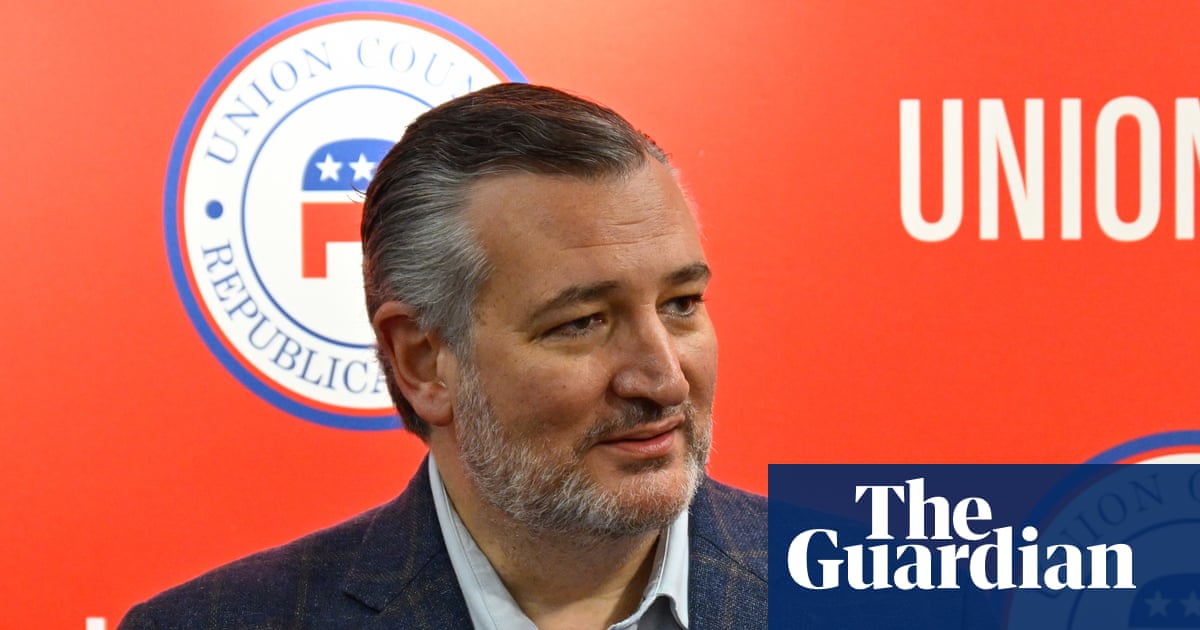
Republican hopefuls in the race to succeed Donald Trump swiftly blamed two key pillars of his agenda – the Iran war and tariffs – for summoning the Democratic blue wave that swept the US midterm elections.
JD Vance, the outgoing Florida governor, Ron DeSantis, and Senator Ted Cruz all pointed to frustration over cost of living amid the fallout from Republican defeats across the country, including in previous strongholds.
They pointed to factors including Trump’s prolonged war on Iran and aggressive trade agenda; the US-Israel relationship; and Democratic ads that painted conservative candidates poorly.
“Tariffs have made everything too expensive and the Iran war has dragged on too long,” Cruz, a former Republican presidential candidate who has not ruled out another run, said on his podcast, Verdict With Ted Cruz, on Wednesday. “It should have been brief, decisive and over. It needs to end.”
“The reason we lost is the war,” Vance wrote in a lengthy X post, suggesting his party lost because voters are angry at the Trump administration for diverting focus away from Americans.
“To the people who are just pissed at the results, you should be,” the vice-president added. “Let’s take that anger and get back to the work of saving our country.”
DeSantis, who unsuccessfully challenged Trump for the Republican nomination two years ago and has since endured a strained relationship with the president, declared this week’s elections to be “close to an extinction-level event” for their party.
Democrats made Republicans look bad with ads targeting them over the case of the convicted sex offender Jeffrey Epstein and congressional stock trading, DeSantis said on Wednesday.
“We ran as Republicans on saying, ‘We need to do that,’” DeSantis said of the Epstein files, which included a vast array of documents and correspondences tied to the disgraced financier. “And then you actually have people in the Congress voting against release [of the Epstein files] when the attorney general said she had all this horrific stuff on her desk and that people were going to be held accountable.
“It’s untenable when you have people going in, trading stock,” the Florida governor added.
In the months and weeks leading up to the US midterm elections, polling showed voters were increasingly disgruntled with Trump’s handling of his job. Americans were feeling the squeeze of the US economy with gas prices and grocery costs rising – a result of the ongoing war with Iran.
Democrats promised to make life more affordable and keep the US president’s sprawling agenda in check – and won over voters. Democrats have seized authority in both chambers of Congress and won a majority of the gubernatorial races around the country.
Even Trump admitted, on Wednesday, that his war with Iran had pushed potential Republican voters away. “It’s largely true because it drove gasoline up a little bit,” Trump told reporters at the White House.
Cruz blamed Republican politicians for ignoring the warning signs. “Too many Republican politicians seem like they didn’t understand, and they didn’t care,” he said. “Food is too high. Gas is too high. Diesel is too high. Insurance is too high. Life is too high.”
Food
PFT’s Week 9 2026 NFL picks

It all came down to Monday night.
Through Sunday, I’d somehow managed to go 13-0 in the Week 8 picks. The only thing standing in the way of unprecedented PFT perfection was Monday night — Bears at Seahawks.
And I’d picked the Seahawks.
I’ll still take 13-1. And I’ll keep trying to run the table.
For the year, I’m now 73-47-1. That’s 60.3 percent.
The goal this week? To not backslide to 1-14, with 30 teams playing and the Steelers and Titans off.
Jaguars at Ravens (Thursday night)
It’s a short-week trap for the Jaguars, who managed to not fall into the Week 8 trap against the short-staffed Colts.
Jaguars 27, Ravens 13.
Bengals vs. Falcons (in Madrid)
The Falcons are way too inconsistent to trust in any given game, especially against a Bengals team that is clicking far more often than it isn’t. Besides, the mini-Super Bowl vibe of an international game will likely push quarterback Joe Burrow to a playoff level of performance.
Bengals 27, Falcons 23.
Broncos at Panthers
It’s a Super Bowl 50 rematch, between one team that is a Super Bowl contender and one team that is not.
Broncos 24, Panthers 16.
Cowboys at Colts
It’s a Super Bowl V rematch, between one team that knows it’s not a Super Bowl contender and one team that continues to delude itself.
Cowboys 27, Colts 17.
Jets at Chiefs
The Chiefs may play with their food (again) on Sunday, but they’ll eventually eat the whole meal.
Chiefs 30, Jets 13.
Lions at Dolphins
The Dolphins should not be taken lightly. The Lions can’t afford to do that, given the quality of the division they occupy.
Lions 24, Dolphins 10.
Browns at Saints
The Saints still have a chance to get things right, and they’re desperate to avoid starting 0-4 in the Superdome.
Saints 23, Browns 14.
Giants at Eagles
It’s suddenly the Bizarro NFC East, with the Giants in first place and the Eagles in the basement.
Giants 23, Eagles 13.
Rams at Commanders
The Rams have fully emerged from their early-season slump.
Rams 27, Commanders 19.
Texans at Chargers
There are some reasons for hope in Houston. There is no reason to expect any positive change from the Chargers, who continue to behave as if they’re closer to 7-0 than 0-7.
Texans 21, Chargers 7.
Packers at Patriots
Did you hear Tom Brady is returning to Foxboro? (If you didn’t, we envy you.) The Patriots need to keep pace with the Bills, and the Packers (while good) need Micah Parson back before they’ll have a shot at being great.
Patriots 31, Packers 21.
Cardinals at Seahawks
If the Seahawks pick up a fifth loss before Veteran’s Day, they’ll almost definitely be sitting at home on Valentine’s Day.
Seahawks 28, Cardinals 17.
Raiders at 49ers
In a renewal of a rivalry so intense that they had to stop playing each other in the preseason, the Raiders will make it interesting.
49ers 24, Raiders 20.
Buccaneers at Bears (Sunday night)
The Bucs have found their formula for winning, and they’re in position to run away with the NFC South.
Bears 24, Buccaneers 21.
Bills at Vikings (Monday night)
Josh Allen is good enough to find the holes in the Minnesota defense before the rush can get to him. And the Vikings’ offense isn’t good enough to keep pace.
Food
Wendy’s rejects buyout bid from activist investor and adopts ‘poison pill’ plan

Wendy’s rejected a $1.4 billion buyout offer from an activist investor, saying Thursday that the bid was too low, and it adopted a “poison pill” plan that would make it more difficult to engineer a hostile takeover of the company.
Noted investor Nelson Peltz made an offer last week to buy the chain, which has been struggling with high beef prices and aging stores. Peltz said the fast-food landscape had become increasingly challenging, with consumers under pressure, intensifying competition and persistent inflation, and his offer was the best path forward for shareholders.
But in a conference call with investors Thursday, Wendy’s CEO Bob Wright, who joined the company in May from Potbelly, said Wendy’s has a turnaround plan in place that is already producing good results.
“We’re confident that we have the right strategy, execution and resources to restore Wendy’s to its full potential and drive meaningful shareholder value,” Wright said.
Shares rose more than 2% Thursday as the company reported a better than expected performance during the third quarter.
Wendy’s said in a statement that a committee of independent directors unanimously rejected the offer because it “substantially undervalues” the company.
Wendy’s also announced that it has adopted a shareholders’ rights plan, a so-called “poison pill,” intended to avert a hostile takeover of the company. The plan, which grants all shareholders except the hostile bidder the right to purchase discounted shares, automatically triggers if a person or group owns 15% or more of Wendy’s shares.
Peltz’s Trian Fund Management and other partners in the investor group that made the offer to Wendy’s hold 16.3% of the company’s shares. The plan would stay in place for one year, Wendy’s said. Trian didn’t immediately respond to a request for comment.
Wendy’s has been closing outdated U.S. restaurants so it can focus on its more profitable locations. The company closed 240 restaurants in 2024 and said earlier this year that it planned to shutter up to 358 locations in 2026.
Then, in September, one of the largest U.S. franchisees for Wendy’s filed for bankruptcy protection after the chain tried to terminate its franchise agreement. Michigan-based Meritage Hospitality Group operates 314 Wendy’s restaurants in 15 states.
Wendy’s, which is based in Dublin, Ohio, had 5,969 restaurants in the U.S. and 1,428 outlets in 38 countries at the end of 2025.
Founded in 1969 by Dave Thomas and named after his daughter, Wendy’s is known for its square burgers and Frosty desserts. The fast-growing chain introduced the drive-thru window in 1970 and went public in 1976. In the 1980s, as it jockeyed for sales with McDonald’s and Burger King, Wendy’s launched salad bars and ran its iconic “Where’s the beef?” ad campaign.
But as the fast-food market grew even more competitive and rival burger-focused chains like In-N-Out and Five Guys expanded, Wendy’s fell behind. Wendy’s share of U.S. burger chain sales fell from 11.5% in 2019 to 10.4% last year, according to Technomic, a market research company.
Food
Republicans begin post-election reckoning after Democrats surge to power
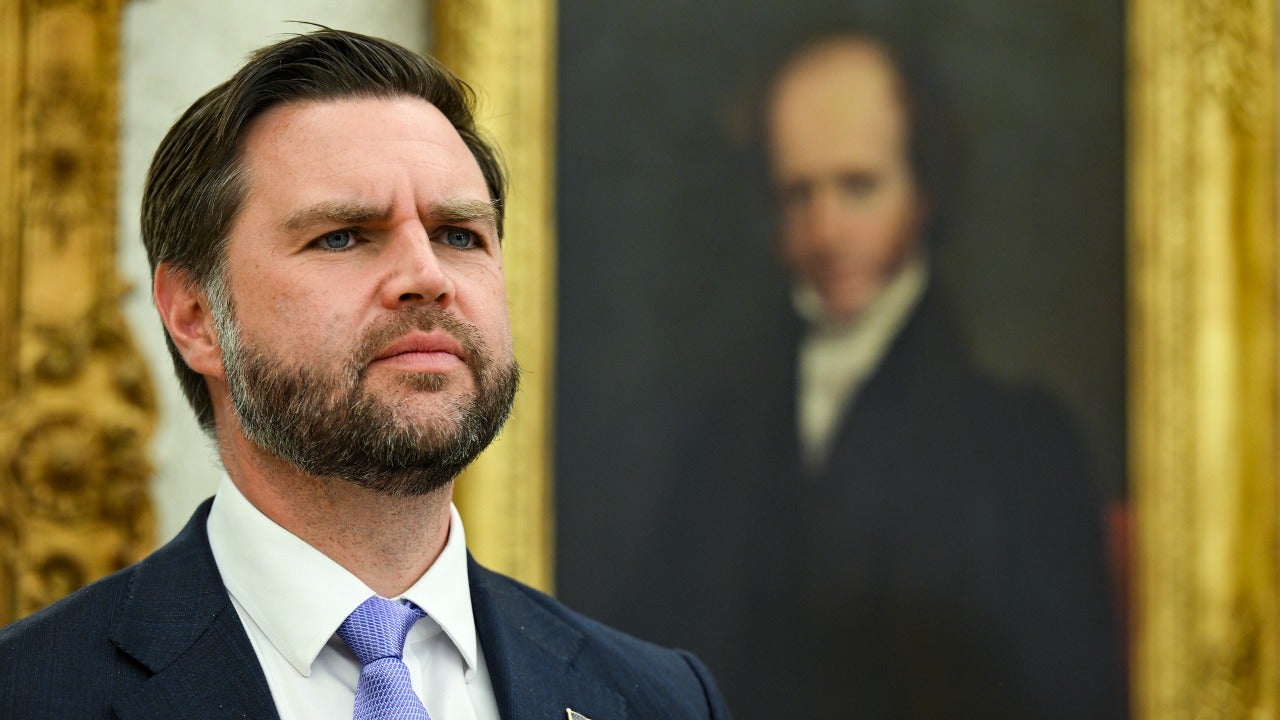
Voters in Washington and Arizona approved ballot measures further restricting biological boys who identify as transgender from playing in girls’ sports, according to The Associated Press.
Washington will now require all students looking to participate in school sports reserved for females to provided a signed statement from their doctor verifying their biological sex. It can be based on their reproductive anatomy, their genetic makeup or their testosterone levels.
Arizona is a bit more lax, now requiring a student joining a girls’ sports team to provide a birth certificate listing their sex. The state will also introduce new restrictions on locker rooms.
The ballot measures in Washington and Arizona passed with 56% and 58% support, respectively.
Rep. Jamie Raskin, D-Md., said House Democrats will seek to hold federal immigration authorities accountable when they return to the majority, invoking the deaths of Renee Good and Alex Pretti at the hands of federal agents in Minneapolis.
Raskin is in line to become chairman of the House Judiciary Committee, a powerful body with oversight authority over federal immigration enforcement, including the actions of Customs and Border Protection (CBP) and Immigration and Customs Enforcement (ICE).
In a video posted Thursday morning to the House Judiciary Democrats’ X account, Raskin said, “If there are American citizens like Alex Pretti and Renee Good who are shot down in broad daylight at point blank range by Donald Trump’s masked thugs from ICE, well, we will get on top of it, and we will see that justice is done.”
Raskin also said he wants to prevent federal agents from wearing masks to obscure their identities and ensure their body cameras are turned on during operations.
“We want to bring every part of the federal government back under the control of the Constitution. And above all, we’re going to challenge this reign of corruption. We are going to insist that the government be an instrument for the common good of all of the people through the rule of law,” Raskin concluded.
Former Pennsylvania Sen. Pat Toomey said in a social media post late Wednesday that Vice President JD Vance’s explanation for Republicans’ midterm losses was incomplete without mentioning how tariffs raised costs for Americans.
Toomey, who retired from the Senate when his term ended in 2023, said Vance was “mistaken” to only blame the Iran war for the GOP rout.
“Yes, the resulting higher fuel prices contributed to the inflation that infuriated Americans who were promised lower prices by this administration. But the war is not the only cause,” Toomey wrote. “Arbitrary and capricious tariffs directly raised costs for all American consumers. Lower income Americans can least afford them. Many voted for Democrats yesterday.”
Long before Toomey was first elected to the Senate in 2010, he was a consistent advocate for free trade.
And for decades before Donald Trump was first elected president in 2016, most Republican politicians generally favored lowering barriers to international trade. Trump broke with that modern GOP consensus and revived the party’s older, McKinley-era tradition of protectionism and high tariffs, especially in his second term.
Economic research has found that Trump’s tariffs have raised costs for Americans. A Federal Reserve Bank of New York study found about 26% of the tariff increases were passed through to consumer prices, while the nonpartisan Tax Foundation estimated the tariffs amounted to an average $1,000 tax increase per U.S. household in 2025.
Sen. Ted Cruz, R-Texas, was blunt about how his party did in the midterms this year.
In a lengthy post on X, which was a transcription of what he said on his podcast, Cruz described the outcome as a “blue tsunami.”
“It was an a– kicking,” Cruz said. “It was not simply a bad 2006 midterm election. It was a Watergate-level repudiation.”
Cruz himself was once nearly ousted in 2018, when Democrat Beto O’Rourke lost to him by just two percentage points. Eight years later, Cruz will become the lone GOP senator in Texas after James Talarico handily defeated Texas Attorney General Ken Paxton.
Cruz said he knew the GOP wipeout in Texas, which saw all statewide offices go to Democrats, was very much possible.
“I am very, very sorry that it came to pass. Texas has not had a Democrat governor since 1994. We haven’t had a Democrat senator since 1993. Now we’ll have both,” Cruz said.
Cruz, like others in his party, chalked up the devastating losses to Republican politicians not seeming to understand or care about the cost of living crisis Americans have been dealing with.
“Food is too high, gas is too high, diesel is too high, insurance is too high, life is too high,” Cruz said. “Tariffs have made everything too expensive, and the Iran war has dragged on too long. It should have been brief, decisive, and over. It needs to end.”
Cruz also referenced wealth inequality as a frustration for voters, referencing Elon Musk’s brief trillionaire status.
“There’s a very real economic disconnect. Our K-shaped economy is a yawning divide. Last year, we saw the world’s very first trillionaire, a modern-day Thomas Edison, at the very same time that millions were struggling to feed their families,” he said.
“Understandably, people were pissed off, and elected Republicans didn’t do enough to address their very real pain,” he added.


Henry Nowak killer's minimum jail term increased to 25 years. #BBCNews


Luigi Mangione’s cousin wins election in Baltimore
Republican Nino Mangione, a cousin of Luigi Mangione, defeated Democrat Shawn McIntosh to win the Baltimore County …


Democratic socialist ousts Karen Bass in LA mayoral shakeup
CNN projects progressive democratic candidate Nithya Raman will defeat incumbent Los Angeles Mayor Karen Bass in a …


Italian chef fired after refusing to put pineapple on pizza. #Brisbane #Pizza #BBCNews

Russell Brand found guilty of rape and sexual assault | BBC Newscast
Today, comedian and actor Russell Brand has been found guilty of rape and three sexual offences and remanded in custody...
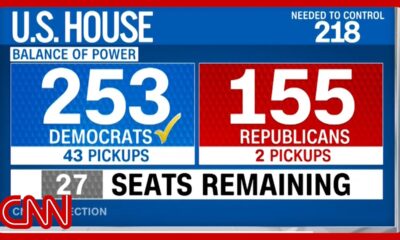

Dems flip 8 more GOP seats today, expanding House majority
The Democrats' midterm election gains continue to grow. Two days after the election, eight more House seats flipped to the...


Will President Trump fire Secretary Hegseth?
CNN's Jake Tapper breaks down growing Republican anger over Defense Secretary Pete Hegseth and his role in the war with...


Russell Brand found guilty of rape and three sexual assaults. #BBCNews


Inside a Mississippi election office in too-close-to-call vote count
With Democratic Senate candidate Scott Colom leading by a razor-thin margin on Thursday, CNN's Annie Grayer went inside an …


Democrats make ending war in Iran a priority after sweeping midterms wins | BBC News
Democrats say they want to end the war in Iran as one of their top priorities, after taking control of...
-

 HealthNews2 weeks ago
E. coli cases possibly linked to Bengtson’s Pumpkin Farm, Will County health officials say
-

 Tech2 weeks ago
Trump issues AI, data center position; Anthropic CEO defends safety record, sales to China
-

 Business2 weeks ago
United Airlines set to open its biggest airport lounge in Houston
-
UsaLocalNews2 weeks ago
Toledo toxic chemical release prompts evacuations, smell: Updates
-
Business2 weeks ago
Anthropic to publicly file for IPO as early as Friday, sources say
-
 Entertainment2 weeks ago
Sean ‘Diddy’ Combs Faces New Prison Reality After Solitary Confinement Drama
-
Sports2 weeks ago
He paid $5,000 for Clavicular’s ‘Camp Looksmax.’ Now he wants surgery
-

 HealthNews2 weeks ago
Norovirus outbreak confirmed at metro area elementary school with around 85 cases reported