

Business
The US says ASML’s top chip tool may be in China. ASML says it isn’t

According to Bloomberg, U.S. Commerce Secretary Howard Lutnick has, in a series of recent meetings, told senior ASML executives he’s concerned that one of the Dutch chipmaker’s extreme ultraviolet lithography machines — the EUV systems that are the only tools on Earth capable of printing the most advanced semiconductor patterns — may have ended up in China. That would be a major breach of export controls that have barred ASML from selling EUV to China since the first Trump administration.
It’s a serious claim. Senior administration officials told Bloomberg they have evidence that ASML shipped EUV-related components and transport equipment to China, though they’ve declined, repeatedly, to show it — to Bloomberg or, apparently, to ASML itself. The company says no such machine exists in China and has never existed there. The Commerce Department didn’t respond to Bloomberg’s questions about whether it has evidence of an actual EUV system on Chinese soil.
You might think this isn’t worth paying attention to if you’re outside the chip industry, but it is. ASML is a Dutch company most people have never heard of, but it is, by a wide margin, the most important company in the global AI buildout that isn’t named Nvidia or one of the hyperscalers. It makes the only machines on the planet capable of EUV lithography — the process of printing the microscopic circuit patterns that define the most advanced chips.
Every cutting-edge processor made by TSMC, the foundry behind Nvidia’s and Apple’s chips, depends on ASML tools that took the company roughly two decades and untold billions to develop. There is, at present, no second supplier. That monopoly has made ASML Europe’s most valuable public company, with a market capitalization that has been trading in the neighborhood of $700 billion as of this week, up sharply over the past year on the back of insatiable AI-driven chip demand.
That scale is exactly why the China question matters so much. If even one EUV machine made it into Chinese hands, it would represent one of the most consequential breaches of the export-control regime the U.S. has built over the past several years to keep advanced AI capability out of Beijing’s military and industrial base.
I sat down with ASML CEO Christophe Fouquet six weeks ago, well before this story broke, and asked him directly about the China question.
Fouquet told me ASML tracks every machine it has ever shipped — they’re either in active use with monitored customers or have been dismantled and returned to the company. He said the firm built an internal firewall years ago: employees who can access EUV technology, documentation, and training are walled off from those who can’t, and ASML’s China-based staff sit on the wrong side of that wall by design. He argued the only reason ASML could build an EUV machine at all was that 80% of it already existed from decades of prior knowledge, and that solving the one genuinely new problem — generating EUV light itself — took 20 years on its own. His broader point seemed to be that you can’t reverse-engineer a machine you’ve never had, and nobody in China has had one.
There’s also a simpler commercial logic that cuts against the idea that ASML would risk its export license to quietly arm a Chinese customer. ASML does sell older-generation deep ultraviolet tools to China — gear it first shipped a decade ago — but Fouquet framed that explicitly as a protective calculation, not a loophole. The idea, he suggested, is that it keeps enough of a generational gap that customers can still do business — but without manufacturing its own future competitor. ASML expects roughly 20% of its 2026 revenue to come from already-permitted sales to China. Risking the EUV ban entirely would put that revenue, and the company’s standing as the most valuable monopoly in European industry, on the line over a single illegal sale.
None of this proves the allegations are false. The government hasn’t yet made its evidence public, and it’s worth withholding judgment until it does.
The Commerce Department, under Lutnick’s leadership, agreed late last year to put up to $150 million of taxpayer money into xLight, a startup developing a next-generation light-source technology that’s been written about as a long-term challenge to the core of ASML’s EUV monopoly. xLight’s own CEO told me last year that the company sees itself as a future partner to ASML, not a rival, building hardware meant to plug into ASML’s machines rather than replace them. When I put that framing to Fouquet in May, he was polite about it but unconvinced; ASML, he made clear, doesn’t see itself as needing xLight’s technology to keep its lead.
Does that have anything to do with why Lutnick is suddenly pressing ASML on EUV? Nothing public connects the two. It could be entirely unrelated. But a federal official scrutinizing a monopoly while his own agency has money riding on a startup angling to improve that monopoly’s core technology is worth examining.
xLight isn’t the only outside bet on the future of lithography. Peter Thiel — who has his own long-running ties to Trump’s political orbit — has backed Substrate, a separate startup explicitly pursuing its own EUV-rival technology, with ambitions to compete with ASML more directly than xLight says it intends to.
As Bloomberg notes, a bipartisan bill moving through Congress would go much further than EUV — it calls for an effective ban on all of ASML’s deep ultraviolet (DUV) shipments to China, the less advanced lithography tools that account for roughly a fifth of the company’s expected 2026 revenue. The bill cleared a key committee in April, and the Trump administration hasn’t taken a formal position on it.
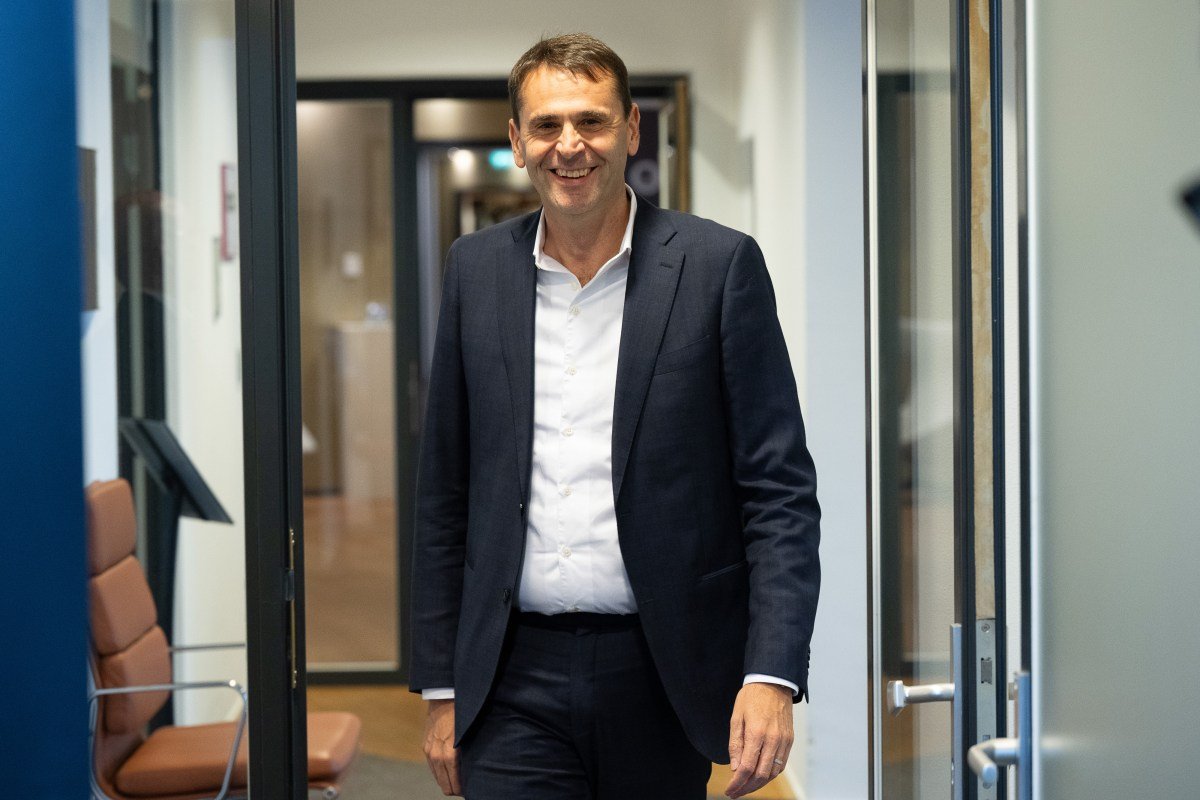
Pictured above: ASML CEO Christophe Fouquet
Business
One in three adults under 35 lives with parents amid housing shortage: report

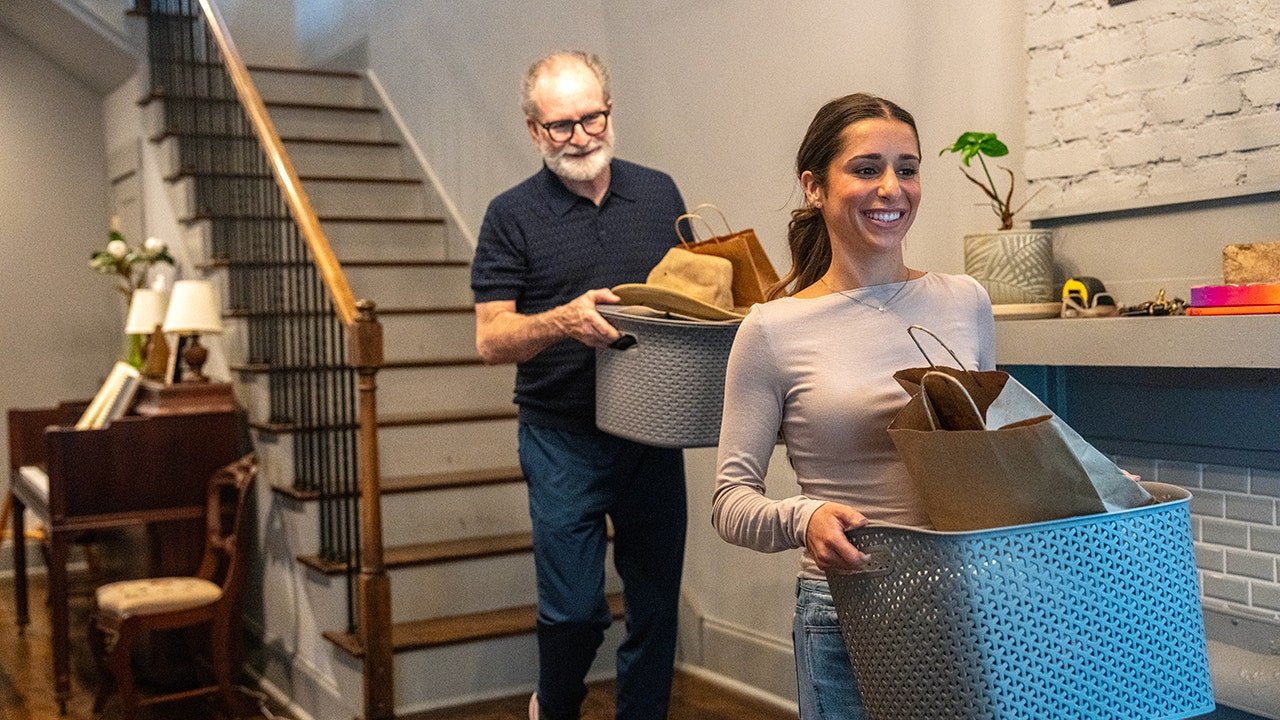
The empty nest is filling back up.
Millions of young adults are delaying life on their own as high housing costs keep them living with mom and dad. In 2025, 25.2 million adults under 35 lived with a parent, according to new data from Realtor.com. That amounts to roughly one in three people in that age group.
The numbers point to a housing market that remains difficult to break into, even for young adults with jobs and college degrees, the outlet reported.
“The adults living with their parents today are largely employed, and many hold college degrees,” Hannah Jones, senior economist at Realtor.com, said in a statement. “What’s holding them back isn’t a lack of qualifications, but rather, at least in part, a lack of housing they can actually afford. This is a supply story, not an employment story.”
GOVERNMENT REGULATIONS ADD NEARLY $132K TO COST OF NEW HOME, BUILDERS SAY
That supply problem has been years in the making. The U.S. is short roughly 4 million homes, with entry-level properties especially scarce. The gap has widened since construction slowed following the 2008 financial crisis, Realtor.com reported.
About 70% of 25- to-34-year-olds living with their parents have jobs. In 2000, about one in nine employed adults in their late 20s lived at home. By 2025, that share had climbed to nearly one in seven.
For many young Americans, moving out has become increasingly expensive.
The national median home listing price is $430,000, up 34.4% from 2019, while the median asking rent has climbed to $1,673, up 17.9% over the same period, according to Realtor.com.
MEDIAN US HOME PRICE PROJECTED TO HIT $1 MILLION BY 2050 — RIGHT AS MILLENNIALS RETIRE
The delayed move into independent living could eventually translate into a wave of future housing demand.
As affordability improves or more homes are built, millions of young adults who postponed renting or buying could enter the market, Realtor.com reported.
“Twenty-five million adults living with their parents represents a generation of latent demand the market hasn’t absorbed,” Jones said. “Every adult still in a childhood bedroom is a household not formed, a lease unsigned, a starter home unpurchased. The typical first-time buyer is now 40 — that’s not a coincidence, it’s the math of a market that hasn’t built enough.”
The delay can also have long-term financial consequences.
Each year spent living at home can delay a young adult’s ability to build housing equity, Realtor.com noted.
MIDWEST AND SOUTHERN STATES DOMINATE HOUSING REPORT CARDS: SEE HOW YOURS SCORED
GET FOX BUSINESS ON THE GO BY CLICKING HERE
The outlook is not getting easier. According to new projections from National Association of Realtors (NAR) chief economist Lawrence Yun, the national median home price is on track to hit $1 million by 2050 — just as millennials reach the traditional retirement age.
“Essentially, in about 25 years the national median home price will be a million dollars,” Yun said at a conference in Washington, D.C., on Tuesday. “It may be hard to envision that, but back in 1990, the national median price was $90,000.”
Business
Why Everybody Wants to Work at Anthropic or OpenAI
For years, a job at Google was the ultimate status symbol in tech. Now, a new pair of employers is attracting the industry’s most ambitious workers.
OpenAI and Anthropic have become the hottest career destinations in Silicon Valley, drawing a flood of applicants eager to work at the epicenter of the AI boom. The workers are chasing prestige and the chance to help shape a technological revolution — plus to potentially cash in on the most anticipated IPOs in tech history.
Across Reddit, Blind and X, job seekers are swapping interview tips and hiring rumors for both companies, hoping to break in. Several executives have ditched other employers to join the labs. Sundeep Teki, a career coach who helps place talent at AI companies, told Business Insider that nearly every candidate he speaks with has the same goal. On a form asking which companies they want to target, “nine times out of 10,” he said, applicants list OpenAI or Anthropic.
“Anthropic is the No. 1 priority,” Teki said. He added that with either name on a résumé, an employee has options: “No matter what you end up doing after you move on from Anthropic or OpenAI, you’re bound to be successful.”
The companies’ tech is reshaping the economy — and the workforce from which they hire. Codex and Claude Code have transformed the work of software engineers, helping usher in an era of AI-attributed layoffs at companies like Square and Cloudflare. Meanwhile, the two frontier AI labs have avoided job cuts, and offer lucrative compensation packages, abundant resources, and ambitious plans.
“There’s almost an exclusivity in it for those who are working there,” said Randy Ksar, a content marketer who applied to Anthropic for the same reason he once worked at Yahoo — it’s a brand he respects. “You want to be part of something big.”
Both companies are growing fast as they compete for customers, reckon with their impact, and fight for technological supremacy. Anthropic, which has more than 3,500 employees, lists around 380 open roles. OpenAI has about 720 open jobs — the company is looking to almost double its 4,500-person workforce this year, The Financial Times reported in March.
Business Insider spoke with applicants, job coaches, and Big Tech employees about the frontier labs, and why they’re drawing such rabid demand.
Workers see Anthropic as the new Google or Apple, and they want in
Jesse Ratner, a veteran tech copywriter and brand strategist, has watched firsthand as AI tools strip away some jobs from his profession. Still, he applied to Anthropic, and almost fell for a fake Anthropic recruitment scam this May. When he saw the scam message, he told his wife the “hottest company in the world” was recruiting him.
“It’s like, 10 years ago, landing a job at Google or before that, Apple,” Ratner, who is currently freelancing, told Business Insider.
Some workers are looking back further into corporate history. Marx Ojemudia, a designer, told Business Insider that he views a job at an AI lab as a route to long-term stability, likening it to his father’s 30-year career at Ford Motor Company in Michigan. He’s recently applied to both OpenAI and Anthropic, and has messaged the employees who posted the jobs, hoping to get his resume and cover letter reviewed.
Charles Broomfield, a 26-year-old ex-Amazon employee who recently started as an engineering analyst at Google, told Business Insider that his impression is that “Anthropic is winning the AI race,” and being at a top startup as the world undergoes a technological revolution offers a unique opportunity to prospective employees. While tech giants like Meta or Microsoft are past their hyper-growth phase, startups like OpenAI and Anthropic offer workers the chance to make millions off an IPO, he said.
“The exciting thing about startups is always that they have massive room for growth,” Broomfield said, adding that “everyone wants to work for a company that pays as well as Big Tech and seems like a sure bet for huge continued growth.”
Anthropic and OpenAI regularly list jobs with six-figure salaries, even before equity pay.
However, he has some concerns about those startups, given the possibilities of an AI bubble and further job automation.
“I’m hesitant to think any company is layoff-proof if they are able to do the work with AI,” said Broomfield, who was previously laid off from Amazon.
The best weapon in the tech talent wars might be Claude
Rune Kvist, who worked at Anthropic when it had fewer than 50 employees, told Business Insider he thinks that what draws the most interest to the top labs is simple — their results. Over the last two years, Anthropic and OpenAI have released one cutting-edge model after another. Anthropic’s safety-focused marketing wouldn’t really help the company sell itself, Kvist said, if it didn’t continuously impress with its tech.
“I actually think the vibes are downstream of the models, rather than the other way,” said Kvist. He called Claude a “powerful cultural force,” noting that if people are spending hours a day on the chatbot, they’re likely to put the company behind it in a positive light.
Kathleen Bartin, who estimates that she’s applied to 40 roles at Anthropic, is proof positive. She returned to the workforce after parenting full-time in 2025, and told Business Insider that her introduction to AI — first with ChatGPT, then in a Zoom presentation — had her swiftly hooked. After the presentation, she immediately bought subscriptions to Anthropic and Perplexity, a research-oriented AI tool.
Within the week, she was looking for jobs at Anthropic. She said she’d open doors, fetch coffee — she just wants to be part of it.
“I was smitten,” she said. “It was all that I talked about. My kids thought I was crazy… They were all like, ‘Mom, don’t talk to me about AI. Just don’t. You’re nuts.’ But yeah, I started applying kind of immediately upon meeting Claude and I just haven’t gone back. It’s like my dream job.”
While applying for jobs across the company, Bartin has fashioned herself into an AI consultant. She’s learned more about the tools, attends hackathons, and got a contract gig helping a fintech startup integrate AI into its work. At her part-time jewelry store job, she once whipped out a laptop and gave her visiting friend a Claude demo, she said.
Bartin was offered an interview at Anthropic but missed the email while on a trip, she said. She didn’t hear back again, and hasn’t for dozens of the other applications. Still, she brims with praise for the company, which she said she trusts more than others to shepherd the tech forward. Bartin was one of a few applicants who praised Anthropic’s spat with the Department of Defense earlier this year to Business Insider.
Karli Jaenike, a marketer who has also applied to Anthropic, said the lab’s stance against surveillance of Americans “solidified my love for them.”
“AI could go a few different ways,” she said. “So seeing a company that’s really taking responsibility to build something in a more ethical way really, really resonates with me.”
For a top-end job, workers face an uphill fight
If getting a Big Tech job is a challenge, landing a role at a frontier lab is a whole different beast.
“The competition is fiercer than anywhere,” Michelle Perchuk, founder of MTV Coaching and a career acceleration strategist, negotiation coach, and former talent acquisition worker, told Business Insider. “It’s like getting into the hot new restaurant in town.”
She said while Big Tech companies might highly value an Ivy League degree or a big-name company in the hiring process, frontier AI labs are increasingly focused on identifying exceptional talent outside of conventional standards.
“AI companies hire based on critical thinking and test thinking,” Perchuk said, adding that the latter skillset refers to people who can be patient and iterate until a desired solution is reached.
Teki, who has placed one client at Anthropic and has others in the interview process, said that both OpenAI and Anthropic have some of the most difficult technical interviews in the industry right now. He’s seen new kinds of hiring hurdles, like a take-home assignment that assesses how an applicant uses AI coding tools. For technical roles, the companies usually have one or two rounds of screening followed by multiple interviews, he said. There are usually several focused on coding, machine learning, and designing systems. There’s also usually a behavioral round, with more value-oriented questions to test for culture fit.
Both startups seem selective about candidates who align with their missions, Teki said. Anthropic tends to be very “safety-centric,” while OpenAI is more focused on AGI, or artificial general intelligence, he added.
“The demand is so high that the companies are very, very selective, and they get to pick and choose the very best of talent that’s available right now, coming either from the Big Tech or from some of the leading startups in the US and other countries,” Teki said.
Proven executives have flocked to the labs. OpenAI plucked Instacart’s and Slack’s CEOs for its leadership team, and picked up Sarah Friar, who steered Square and Nextdoor through IPOs, as its CFO. Anthropic employs execs who cut their teeth at Google, Microsoft, Instagram, and Stripe, and the lab recently hired Tesla’s former AI director, Andrej Karpathy.
Teki said some candidates land interviews when the company comes to them. People who build projects in public and showcase their work on GitHub or social media can catch the attention of recruiters, particularly when their projects closely align with the work being done by specific teams at Frontier AI Labs.
Kvist, the former Anthropic employee, said he thinks the company has kept up a high bar for its workforce since its early days. But the rapid growth is a chance for less well-known workers to get a foot in the door.
“To grow over the last year from 1,000 to 4,000 people, you have to hire a lot of people who are not top 10 in their fields,” Kvist said. “You just run out of the top 10.”
Business
Meta lobbies lawmakers for immunity from child harm lawsuits: report
Meta has lobbied U.S. lawmakers for legal immunity from lawsuits alleging child harm from its social media platforms such as Facebook and Instagram, according to a report.
This comes as Meta faces a wave of youth-safety litigation, including thousands of similar claims consolidated in California state courts and separate lawsuits brought by states and school districts. Meta and Google, which owns YouTube, were hit with a combined $6 million in damages after a Los Angeles jury found them negligent in a bellwether case alleging Instagram and YouTube were designed in ways that harmed a young user. Both companies have said they plan to appeal.
If language like Meta’s proposal is adopted by lawmakers and signed into law as part of the Kids Online Safety Act (KOSA) under consideration in the Senate, the provision could undermine pending and future complaints against Meta and other social media platforms regarding child safety.
Lawmakers have not said they would be open to adopting the language, but the lobbying effort shows the kind of legal protections Meta is seeking amid government attempts to regulate online platforms.
FEDERAL APPEALS COURT RULES OHIO CAN REQUIRE PARENTAL CONSENT CHILDREN UNDER 16 ON SOCIAL MEDIA
The proposed language would make online companies “immune from suit or liability under state law with respect to all claims for loss caused by, arising out of, relating to, or resulting from the safety or privacy of individuals under the age of eighteen online or otherwise related to the provisions” of KOSA, according to Reuters.
The proposal appears alongside language that seeks to have the federal measure overrule state laws on children’s online safety and privacy.
Meta spokesperson Stephanie Otway told Reuters that the provision “does not extinguish existing lawsuits, nor does it represent blanket immunity.”
“Instead, it establishes uniform national standards for online youth safety, ensuring these critical issues are governed by comprehensive federal legislation, not plaintiffs’ lawyers or patchwork state legislation,” she said.
But Julia Duncan of the American Association for Justice, a group that represents trial lawyers, said that if the provision were to be adopted, it would kill any lawsuits pending when the law took effect.
“The language is pretty clear-cut immunity against every parent, every school district, that is seeking to hold any AI or social media company accountable for harm” to children, Duncan said. “There is no other way to read this language.”
Meta has proposed the language in exchange for dropping its efforts to oppose KOSA, a source told Reuters.
KOSA, sponsored by Sens. Marsha Blackburn, R-Tenn., and Richard Blumenthal, D-Conn., would require social media companies to take steps to prevent certain harms to minors, including compulsive use of their platforms.
The measure is now the subject of negotiations between Blackburn and the White House to package online child safety bills with a provision that would preempt some state laws regarding AI.
META THREATENS TO PULL FACEBOOK AND INSTAGRAM FROM NEW MEXICO OVER CHILD SAFETY TRIAL REQUIREMENTS
GET FOX BUSINESS ON THE GO BY CLICKING HERE
“We have not seen that proposed language and would never consider it,” a spokesperson for the GOP senator told Reuters.
Under the bill, tech companies would need to use care in adding specific features such as infinite scrolling, activity notifications and appearance-changing photograph filters.
A woman won at trial earlier this year against Meta and Google, which owns YouTube, after her lawyers successfully argued the companies were aware these features were addictive and harmful to young people. The tech companies plan to appeal the ruling.
KOSA passed in the Senate in 2024 before failing in the House. The measure was reintroduced this year with support from both Senate Majority Leader John Thune, R-S.D., and Senate Minority Leader Chuck Schumer, D-N.Y.
Business
Apple to work with Intel on US chip design and production, Trump says
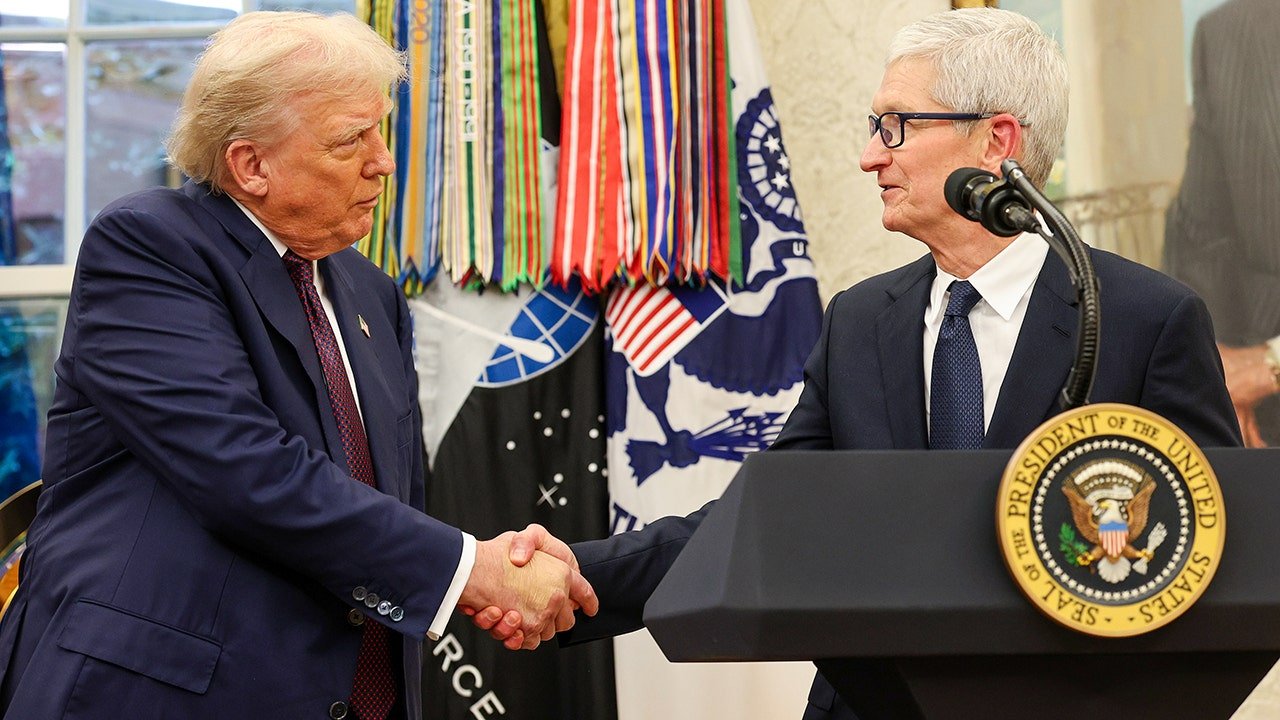
President Donald Trump said Thursday that Apple has agreed to work with Intel on designing and producing chips in the U.S.
“When I won my Second Term, it was clear America needed its Semiconductor Industry to come back to the U.S.A. We design everything, but we need to BUILD it here, NOW! So I decided to help Intel because we need to design and build our Chips right here in America,” Trump wrote on Truth Social.
The partnership could help Apple diversify its manufacturing base as it looks for additional chip capacity. The tech giant relies heavily on the Taiwan Semiconductor Manufacturing Company, which has advanced production lines in high demand from AI chipmakers such as Nvidia and Advanced Micro Devices.
APPLE CEO SAYS PRICE HIKES ARE ‘UNAVOIDABLE’ AS RISING CHIP COSTS SQUEEZE TECH GIANT: REPORT
Intel shares rose in premarket trading following the announcement from the president.
“The Technology the World relies on was invented in America. We all remember ‘Intel Inside.’ Stupid Presidents took our Economy for granted, and let Taiwan and others steal our Semiconductor Factories,” Trump said.
Intel reportedly reached a preliminary agreement to make some chips for Apple after more than a year of talks. Apple and Intel have not publicly detailed which chips or products would be involved.
HOW YOU CAN GET A SLICE OF APPLE’S $250M IPHONE SETTLEMENT
An Apple contract would give Intel steady demand from a top consumer electronics company after its reputation and manufacturing business fell behind TSMC in recent years.
Earlier this week, Intel announced that a new generation of its manufacturing technology, 18A-P, had entered initial production, as the chipmaker works to meet demand for advanced processors.
Last year, the Trump administration took a roughly 10% stake in Intel and announced plans to invest billions of dollars in the chipmaker to build or expand factories in the U.S.
GET FOX BUSINESS ON THE GO BY CLICKING HERE
The Trump administration took a roughly 10% stake in Intel last year and announced plans to invest billions of dollars in the chipmaker to build or expand factories in the U.S.
Trump previously said he “should have asked for more” of a stake in Intel after the value of the federal government’s Intel position rose sharply.
“When was the last time a President made America money??” Trump wrote on Thursday.
The administration has been boosting efforts to secure U.S. supply chains for critical minerals and semiconductors, including by taking equity stakes in companies as part of an effort to cut reliance on China.
Business
US Tells ASML It’s Concerned China May Have Top Chip Tool
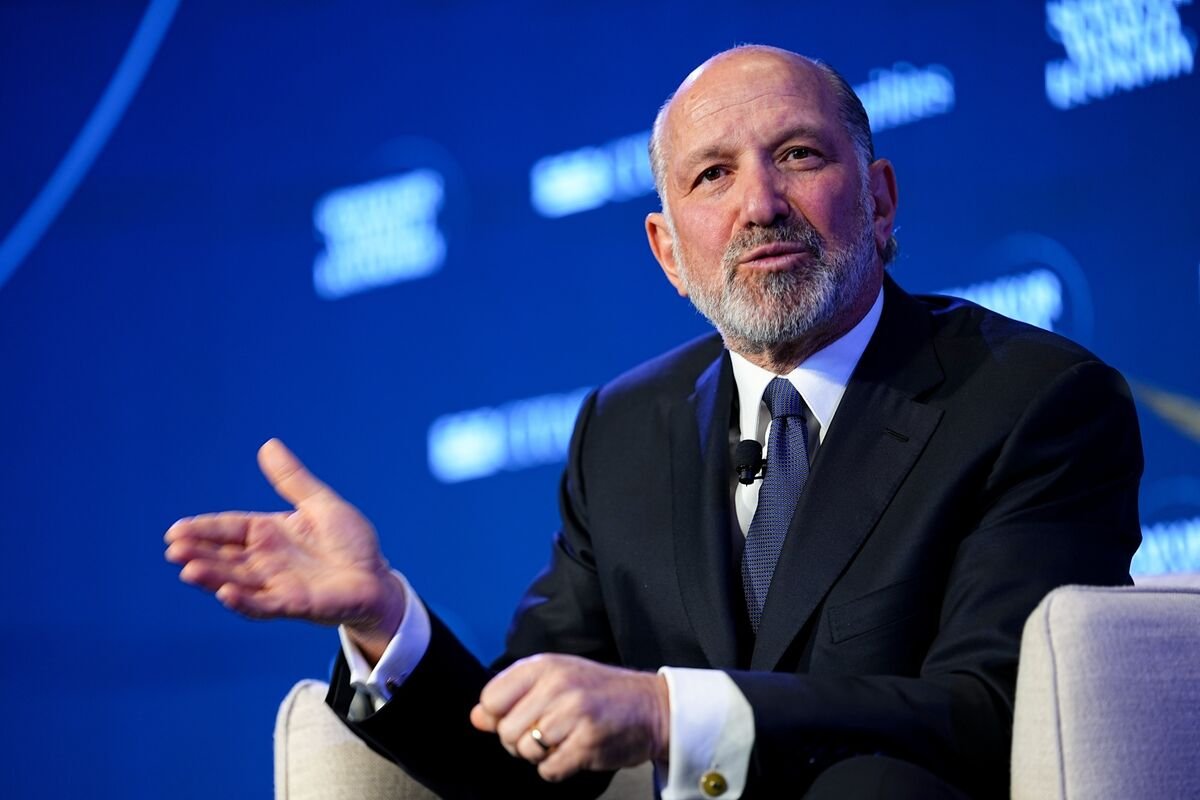
Dutch chip-equipment giant ASML Holding NV is contending with its biggest challenge yet under the Trump administration: In a series of recent meetings, Commerce Secretary Howard Lutnick outlined concerns to ASML’s senior leaders that one of its top-of-the-line machines may have made its way into China, in violation of US-led export restrictions.
In the meetings, Lutnick expressed concern to ASML executives over the company’s extreme ultraviolet lithography, or EUV, machines, according to people familiar with the talks. EUV systems are used by firms such as Taiwan Semiconductor Manufacturing Co. to manufacture processors for the likes of Nvidia Corp. and Apple Inc., and ASML has never been allowed to ship them to China because of curbs imposed during the first Trump administration.
Who is Andy Burnham, the lawmaker seeking to replace Keir Starmer
LONDON (AP) — Andy Burnham is a political insider turned outsider who aims to be Britain’s next prime minister. The...




Vance abruptly postpones Iran talks trip as Israel & Lebanon clash
Vice President JD Vance is no longer traveling to Switzerland for US-Iran negotiations today, with talks postponed. Iran has asked...


What does UK PM Keir Starmer do now? #BBCNews
Subscribe to our channel here: https://bbc.in/bbcnews For the latest news download the BBC News app or visit BBC.com/news …


One in three adults under 35 lives with parents amid housing shortage: report
The empty nest is filling back up. Millions of young adults are delaying life on their own as high housing...


Jelly Roll, Bunnie Xo divorce: Everything we know about their separation
NEWYou can now listen to Fox News articles! Jelly Roll and Bunnie Xo’s split may have shocked fans, but signs...


We Are Admittedly a Bit Startled by This Medical Case Report About Giving an Elderly Woman With Advanced Alzheimer’s a Gigantic Dose of Psychedelic Mushrooms Just to See What Would Happen
Sign up to see the future, today Can’t-miss innovations from the bleeding edge of science and tech Email address Thank...
The Medford pharmacy killings: A 15-year-old spotlight on Long Island’s opioid crisis
Rail-thin and hiding under a fake beard, a former Army intelligence analyst walked into a Medford pharmacy 15 years ago...


Oliver Tree’s mom pays tribute with throwback photo showing singer looking wildly different
Oliver Tree’s mom has paid a moving tribute days after her son was killed in a helicopter crash — while...


US Open 2026: golf updates on day two – live
Key events Gary Woodland’s story has been well documented but is worth repeating. Earlier this year he went public with...


Andy Burnham speaks to supporters after crucial by-election win. #BBCNews
-

 Business6 days ago
How much of Musk’s wealth comes from government help? Virtually all of it
-

 Politics1 week ago
What to know about the stabbing that set off fiery riots in Northern Ireland
-

 LifestyleNews2 weeks ago
120 minutes of strength training per week may help extend lifespan
-

 Video7 days ago
Download fans say what they love about the festival. #DownloadFestival #BBCNews
-

 Video7 days ago
Why SpaceX IPO isn't about space. #SpaceX #ElonMusk #BBCNews
-

 HealthNews1 week ago
The people of Okinawa, Japan only eat until they are about 80 percent full, then stop — and the practice has been linked in multiple peer-reviewed studies to lower rates of cardiovascular disease, slo
-

 TravelNews7 days ago
My Paternal Instinct Should’ve Warned Me About Netflix’s Maternal Instinct
-

 Food6 days ago
Pope Leo’s plane was grounded. Then the King of Spain stepped in to help