

HealthNews
Things people do that make me squirm

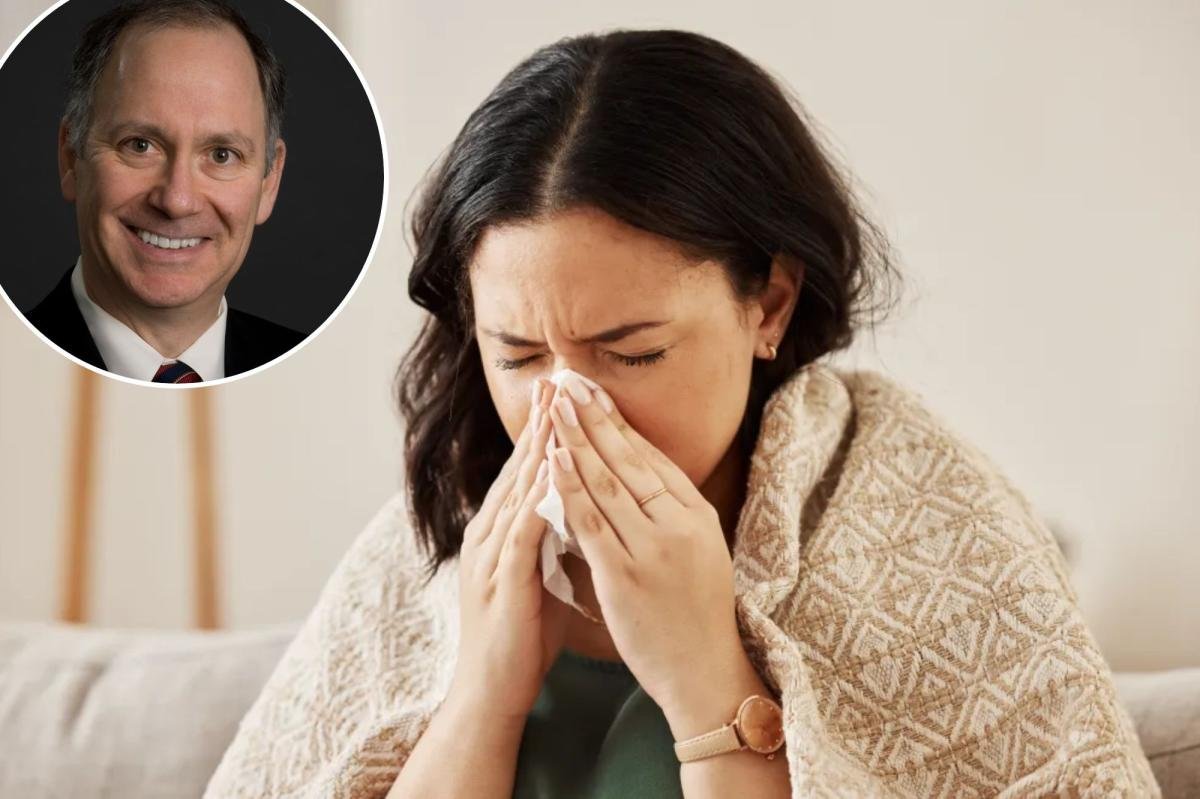
What’s worse than spreading a disease? Not even realizing when you’re doing it.
Unfortunately, it happens more often than most people think because of simple, everyday behaviors that may seem harmless.
Dr. Bruce Hirsch, MD, an attending physician of infectious diseases at Northwell Health, teveals the super common habits that make him squirm because of their likelihood to spread pathogens.
And while they’re a bad move for anyone, he warns that they’re especially risky for people who are more vulnerable to illness, like those with weakened immune systems and delicate GI tracts.
1. Not washing hands properly before handling food
Washing one’s hands might not come as a surprise, but it’s not just about getting rid of dirt.
The bigger concern is the bacteria you may be carrying without even knowing it. Hirsch explained that while many of those germs don’t make you sick, they can be harmful to someone else.
“Often, a lot of us are colonized with bacteria that we’re getting along with fine but can cause illness in other people,” he told The Post. “If a person is colonized with potentially dangerous bacteria, then that becomes a real issue. Sometimes, it’s not just the bacteria, it’s what the bacteria are doing.”
The fix is simple: Wash your hands thoroughly with soap and running water, creating friction by rubbing them together for at least 10 seconds before rinsing.
And don’t stop there. Hirsch said it’s important to dry your hands with a towel or hand dryer rather than just shaking off the water.
2. Improper sneezing technique
Everybody sneezes. The problem is where those sneezes land.
Many people instinctively sneeze into their hands, which can quickly spread germs to everything they touch afterwards. But your elbow is actually the safest target, Hirsch said.
“You’re supposed to put all the sneeze right in there so that it impacts a spot that never will touch anybody else or anything around you,” he explained.
He advises achooing right inside the bend of the elbow, pulling up your arm and turning away from anyone nearby.
“That way, you’re not putting all this stuff on your hands, which manipulates the area around you,” said Hirsch.
3. Overusing alcohol sanitizer
You can be too clean for your own good.
While hand sanitizer has its place, Hirsch says there are some people who “bathe themselves or their desks in alcohol sanitizer,” an extreme that does more harm than good.
“In medical literature, there’s this concept called the hygiene hypothesis,” Hirsch explained. “[It] states that over keeping the environment super clean has been associated with an increased frequency of allergic conditions such as peanut allergies in kids.”
His views align with a body of research suggesting that exposure to the natural world can benefit both the immune system and the gut microbiome.
“We did not evolve in the presence of alcohol hand- cleansing gel,” he said. “We became what we are in response to an environment that often contained bacteria and germs, and we persevered as a species and evolved as a species anyway.”
4. Shaking hands in a hospital
In most settings, refusing a handshake might come across as rude. But in a hospital, it could be the smarter, safer move.
Hirsch said he values connecting with patients and their loved ones, but a handshake can be especially risky. Hospitals, in particular, are filled with people battling different illnesses and taking different antibiotics, creating a unique environment for germs to run rampant.
“These patients pose a higher risk than seeing people in different types of social settings. In hospitals, it makes sense to avoid unnecessary casual contact,” explained Hirsch. “Let’s tap elbows instead.”
He expressed less concern about by the spread of “the regular poop bugs” in fecal mater than pathogens, such as MRSA, or methicillin-resistant staphylococcus aureus, a prevalent “peculiar bug” he considers one of the biggest offender.
5. People wearing a mask in their chin — not their mouth and nose
A mask can’t do its job if it’s not covering the parts of your face it’s designed to protect.
That may sound obvious, but Hirsch says he still sees plenty of people wearing masks under their noses or dangling from their chins, especially in healthcare settings where respiratory illnesses like the flu and COVID are a concern.
“It’s a very peculiar kind of performative gesture, wearing a mask on your chin or below the nose so that you’re able to breathe out in the atmosphere,” he argued.
“In this case, the mask is not doing any good. And yet, you’re wearing it on your face anyway.”
HealthNews
We Are Admittedly a Bit Startled by This Medical Case Report About Giving an Elderly Woman With Advanced Alzheimer’s a Gigantic Dose of Psychedelic Mushrooms Just to See What Would Happen


Sign up to see the future, today
Can’t-miss innovations from the bleeding edge of science and tech
Email address Thank you!
Scientists continue to investigate the potential clinical use of psilocybin, the psychoactive compound in psychedelic mushrooms, for everything from a potential anti-aging treatment to therapy for depression and anxiety.
Some have even suggested it could even be an effective treatment for Alzheimer’s disease, a devastating neurodegenerative condition that affects more than seven million Americans.
Case in point, a recent case report — published in the journal Frontiers in Neuroscience Neuropharmacology by a small team of researchers in Brazil —describes an experiment involving a woman, in her 80s and who had been suffering from Alzheimer’s disease for ten years, being given a staggeringly high dose of psilocybin.
After being given “five grams of orally administered psilocybin-containing mushrooms” — well over twice a typical recreational dose and orders of magnitude more than is conventionally prescribed in clinical settings — the team says that the woman experienced what could crudely be described as a reawakening.
In a matter of “days and weeks” — the report remains vague on the exact timeline — the patient went from “marked hypofunction and predominantly monosyllabic speech” to restored “urinary continence,” improved mobility, “increased emotional responsiveness” and “sustained social interaction.” Even her “contextual memory retrieval” allegedly improved.
The octogenarian must’ve gone through a lot, spending hours sweating profusely in a “deep sleep-like state” following the administering of the drug. The woman was even given a second, three-gram dose after a month due to “persistence of clinically meaningful improvements.” (Futurism has reached out to the authors about the woman’s ability to consent to the eyebrow-raising treatment given her state.)
To be perfectly clear, the whole thing is pretty dodgy, despite getting considerable breathless media coverage in the New York Post and the Dallas Express, which called the report a “breakthrough.” Beyond the hard-to-miss absence of scientific rigor and consent issues, the “report does not show that psychedelics reverse Alzheimer’s disease,” as University of Sheffield neuroscience PhD candidate Rahul Sidhu wrote in an essay for The Conversation,
The report wasn’t a controlled clinical trial, for starters, and its single subject’s diagnosis wasn’t “confirmed using biomarkers.” There was also no control group, no standardized testing of memory and thinking before the woman was given the shrooms, and observations were “largely based on reports from caregivers and family members,” Sidhu cautioned.
In short, the case report appears to be little more than a wild story of an elderly woman being given an enormous dose of drugs. In the words of the case report itself, it was an intervention that was “exploratory and observational in nature.”
Author and University of Sao Paulo neuroscientist Marcos Lago told Futurism in an email that he thought it was “important to frame the case carefully.”
“This was a single case report in a patient with advanced Alzheimer’s disease, and the observed improvements were transient,” he wrote. “The paper does not claim disease reversal, does not establish psilocybin as a treatment for dementia, and should not be interpreted as a protocol or recommendation for unsupervised use.”
“In my view, the scientific relevance of the case is that it raises a hypothesis worth investigating,” Lago wrote. “Whether psilocybin, under appropriate clinical, ethical, and regulatory conditions, may temporarily modulate communication, emotional responsiveness, social engagement, continence, and functional behavior in some patients with severe neurodegenerative impairment.”
Beyond the informal and inconclusive nature of the report, there are more reasons to be skeptical. The case report lists the medical department of the so-called “Associação Cruz de Ankh” in Sao Paulo, which appears to be a religious and philosophical organization.
An Instagram account for the group has been gushing about media coverage of the latest case report. The account’s previous activity doesn’t exactly inspire confidence: one previous post discusses Plato’s Cave as a “metaphor for awakening human consciousness amid the illusions of everyday life,” while another details how participants of a “group meeting” reported “introspective experiences with psilocybin use,” from “ancestral visions,” to “overcoming barriers of ego.”
That’s not to say that there isn’t a grain of something interesting in the case study. Scientists have previously found that “new connections can form and networks can change in response to experience,” as Sidhu points out in The Conversation. Previous studies have also found that psilocybin can temporarily reshuffle how these networks communicate with one another.
The drug has also been found to help with “nerve-cell growth, inflammation and brain-network activity,” but “whether these effects occur in people with Alzheimer’s disease remains unknown,” Sidhu wrote.
Add it all up, and the case study is both intriguing and a bit bizarre. As always, we’ll be watching for further investigation.
HealthNews
The Medford pharmacy killings: A 15-year-old spotlight on Long Island’s opioid crisis
Rail-thin and hiding under a fake beard, a former Army intelligence analyst walked into a Medford pharmacy 15 years ago Friday, fatally shot all four people inside, but stole neither the cash in the register nor the valuables on the dead. Instead, he stuffed his backpack with thousands of addictive painkillers and walked out.
That pharmacy, Haven Drugs, has since moved to another Medford strip mall. The killer and his getaway driver, also his wife, spend their days and nights in maximum security prisons.
A Queens painkiller clinic operator, who had illegally prescribed the killer more than 2,500 oxycodone and other pain pills, was convicted and died in state prison.
New legislation, including tighter restrictions on access to prescription opioids, stepped-up law enforcement and a heightened awareness of opioids on Long Island and across the country also followed the robbery. As for Long Island overdose deaths, they have fallen in recent years.
A senseless tragedy
For James Manzella, the violent scene he walked into on June 19, 2011, seemed so senseless. He spotted the killer, David Laffer, leaving Haven Drugs that Sunday morning, felt something was suspicious and exited his vehicle. Inside the mom-and-pop pharmacy, he found his fiancee, Jaime Taccetta, dead, along with another customer, a pharmacist and a clerk.
“I have no mercy for that guy,” Manzella, 51, of Farmingville, told Newsday, referring to Laffer.
“The guy could have robbed the store, left everybody intact and got a slap on the wrist. … Maybe he would have got caught, maybe he wouldn’t have, but at least four people would have walked away with their lives.”
New York City Special Narcotics Prosecutor Bridget Brennan, who prosecuted Dr. Stan Li, a pain management specialist, for illegally prescribing narcotics to Laffer, told Newsday the Medford killings signaled a new brazenness rarely seen among pharmacy hold-ups.
“This was by far the boldest one that I recall seeing,” Brennan said, adding it was “clearly planned.”
“He was in and out relatively quickly and just fired the shots and killed people,” Brennan said. “It caught a lot of people’s attention and so I’m sure that it helped move some of the efforts to try to get this under control forward.”
In 2011, before the pharmacy killings, Brennan’s office established a Prescription Drug Investigation Unit. Investigators learned that Li, who treated Laffer for pain, was among several physicians doling out a “significant” number of oxycodone and hydromorphone scripts compared to years prior, she said.
It was a time when patients cut off from their opioids, “went to drastic means in order to get prescriptions to not be sick,” Dr. Jarid Pachter, who practices addiction medicine through the Stony Brook Medicine-affiliated Southold Family Medicine, told Newsday.
Other addiction specialists familiar with the case said it marked a “boiling point” of the opioid crisis.
“People began to understand this was an issue for the larger society,” said Jeffrey Reynolds, president and chief executive of the Family & Children’s Association, a Garden-City based nonprofit that provides help for substance use among other services.
“When people are walking around sick and desperate, that has implications for the entire community,” Reynolds said. “This now was seen as a public health crisis that can affect anybody on an average Sunday morning.”
At point-blank range
Laffer, a 1995 Patchogue-Medford High School graduate and former Army private who worked in intelligence, had lost his clerk job two weeks before the pharmacy killings.
At point-blank range, according to a Newsday story at the time, he executed pharmacist Raymond Ferguson, 45, of Centereach; store clerk Jennifer Mejia, 17, of Medford; customer Bryon Sheffield, 71, also of Medford; and Taccetta, 33, of Farmingville.
Ferguson was covering a shift so another pharmacist could celebrate Father’s Day with his family.
Mejia was buried with the high school diploma she would have received on her graduation day. Sheffield was picking up a prescription for his wife of nearly half a century. Taccetta, a mother of two, was also picking up a prescription. She was buried in her wedding dress.
Then-Suffolk County Police Commissioner Richard Dormer described the scene as “one of the most heinous, brutal crimes we’ve ever experienced.”
A three-day search — fueled by phone tips, a fingerprint Laffer left on a piece of paper at the pharmacy and even help from Brennan’s office — culminated in a successful raid at his Medford home on Pitchpine Place.
Laffer, 48, pleaded guilty to first-degree murder and is serving a life sentence at the Elmira Correctional Facility with no chance for parole. His wife, Melinda Brady, 44, pleaded guilty to robbery and is serving 25 years at the Bedford Hills Correctional Facility. She could be released as early as 2032 following an appearance before the parole board, according to corrections department records.
Spotlight on the crisis
Laffer, and the havoc unleashed by his .45 caliber pistol, “absolutely” raised awareness that opioid addiction was a public health crisis, said Ann-Marie Foster, president and CEO of Phoenix House, which helps Long Islanders and New York City residents with addictions overcome them.
“When you’re addicted like that, your body is craving it, and you’ll do all sorts of things to get it,” Foster said. “It was a wake-up call.”
Newsday reported that Laffer and Brady had been prescribed almost 12,000 pain pills from various doctors in the four years preceding the Haven Drugs hold-up, including more than 2,500 from Li, whom Brennan later prosecuted. During that same time, robberies at pharmacies in which addictive painkillers were stolen were on the rise on the Island and across the country.
The day after the Medford homicides, Brennan said her office investigated whether any of Li’s patients ever filled prescriptions at Haven Drugs. Two did: Laffer and Brady. That information was passed along to the Suffolk District Attorney’s Office, which helped build the case against the couple, Newsday previously reported.
Li was eventually arrested, charged and convicted on two counts of manslaughter, six counts of criminal endangerment and 180 counts of illegal sales of prescriptions for controlled substances, including selling to Laffer. Li was sentenced to up to 20 years in prison in 2014. He died in 2020 at Fishkill Correctional Facility in Beacon, according to the state corrections department.
Significant legislation
Advocates for substance abuse treatment told Newsday the most significant state legislation aimed at restricting opioids since the killings was the Internet System for Tracking Over-Prescribing Act, known as I-STOP. The law requires medical providers to check a state-created system for their patients’ histories of receiving prescriptions for controlled substances.
As a result, Pachter said, “I never get patients coming in specifically for these prescriptions anymore.”
When physicians consult the prescription monitoring program and catch a patient “doctor shopping,” or getting addictive pills from various providers, Pachter said, they should “do a more thorough investigation” before deciding the best care to offer.
“If that person has opioid use disorder, then you discuss treatment for that as opposed to something that could enable the addiction or make them worse,” he said.
To further restrict the prescription opioid supply, in 2016, doctors were barred from writing scripts by hand.
“Prescription pads were being stolen,” Brennan said. “Sometimes the pads or the paper was sold rather than prescriptions or pills.”
Memories never fade
Manzella, the first to enter that scene and who testified against Laffer, said that while he never married after the death of Taccetta, he chose “to not let one man basically ruin my life.”
“Me and my friends and my family, we all have good memories of her,” he said of Taccetta. “We had good times. She was a wonderful woman, an unbelievable mom. … I got to go forward in some way, shape or form. I had no choice. But you can never get back what those people took from everybody.”
To this day, Manzella said he still feels for the other families who were forever changed on that Father’s Day.
For Lesly Gonzalez and her family, she said “even though time has passed, a part of us has frozen in time.” Gonzalez was 16 when Mejia, her older sister, was killed in a manner “that’s so sudden and so violent,” Mejia’s job at Haven Drugs helped her earn money to send to her grandmother in El Salvador and others in need there.
“People always ask me, ‘do you have any siblings?’ I always mention her,” Gonzalez, 31, of East Patchogue, said. “I’m like ‘yes I do,’ but then I have to tell them, and it’s something that becomes a part of you. You learn to live with the pain of losing someone and you don’t forget them. You don’t just move on from something like that.”
In recent years, experts said the state invested into local nonprofits; police departments continued to not only seize drugs, but introduce communities to the opioid overdose-reversal nasal spray naloxone, more commonly known as Narcan; and opioid settlement funds made treatment more widespread. But there was “a lag time” between the crackdown on the pill problem and the bolstering of treatment, substance use advocate Reynolds said.
“If the state had created that treatment availability at the very same time it restricted the supply, we might have seen a faster resolution, we might have seen fewer overdose fatalities,” Reynolds added. “There was a shortage on the street, the price of prescription pills went up, people turned to heroin, to fentanyl, to other drugs. … Now we’ve resolved some of that because treatment availability is far better than it’s ever been in Long Island’s history, but it’s probably still not enough.”
HealthNews
Doc says Michigan has a rising nitrous oxide problem


Dr. Varun Vohra, senior and academic director of the Michigan Poison and Drug Information Center, said the use of nitrous oxide in Michigan is on the rise.
Large canisters of nitrous oxide, also known as whippets, are easily available at gas stations, convenience stores and smoke shops, making them very accessible.
Vohran said the larger cannisters make it easier for people to use more nitrous oxide more frequently, leading to concerning health problems.
The senior and academic director of the Michigan Poison and Drug Information Center told the Detroit Free Press he’s seeing a disturbing trend among otherwise young, healthy people in the state: They’re calling the poison center, 911 or are turning up in hospital emergency departments with numbness and tingling in their hands and feet, and feeling faint or weak.
Some have lost coordination, and others have racing heart rates or blood-clotting problems. Still others report hallucinations, delusions, anxiety and depression.
The mysterious constellation of symptoms isn’t tied to a virus or bacterial infection. Rather, what these people have in common is that they inhaled nitrous oxide, said Dr. Varun Vohra, who also is an associate professor in the department of emergency medicine at Wayne State University School of Medicine.
Large cannisters of nitrous oxide — also known as whippets or laughing gas — are widely available and sold at Michigan gas stations, convenience stores, smoke and vape shops, ranging in size from 2 liters to 6 liters. The big cannisters allow people to inhale the gas in large quantities, taking hits repeatedly from the same cannister.
“These are being marketed to youth via various social media outlets and Reddit forums,” he said, noting that the canisters now come in colorfully decorated packaging and in various flavors aimed at increasing the appeal to recreational drug users looking for a high. “Historically, it’s been thought of as sort of a harmless substance that people just do recreationally at parties or festivals and concerts and whatnot.”
Nitrous oxide gas has approval from the U.S. Food and Drug Administration for use as a pain reliever at dental offices and medical clinics. It’s also used to create the foamy texture in whipped cream, and can boost the horsepower in certain automobiles when it’s added to the fuel intake system.
However, when it’s inhaled — especially in large volumes — it can have dangerous effects on the body, said Vohra, who also is a pharmacologist and clinical toxicologist.
That’s because nitrous oxide can effectively shut off the body’s ability to use the vitamin B12, which can result in a cascade of health problems.
Most commonly, he said, people report numbness and tingling in the extremities, loss of coordination and feeling faint or weak. Some have lost consciousness. Among the cardiovascular problems are stroke-like symptoms, pulmonary embolisms or deep-vein thrombosis.
“All are related to the inactivation of that vitamin B12,” he said, adding that there also is “growing evidence in literature that suggests recreational use of nitrous oxide in younger people can affect the developing brain and reduce cerebral perfusion. That can lead to brain atrophy, and damage to the hippocampus, which is responsible for memory.”
And then there are the neuropsychiatric and psychiatric effects.
“It’s been linked to hallucinations, delusions, mood disorders, depression, anxiety, etc.,” he said. “So, that’s, obviously, a really big cause for concern.”
Rare reports have identified heavy users who’ve so badly damaged their nervous systems, they became paralyzed.
“There are cases out there where patients literally have to relearn how to walk because their nervous system is so badly damaged because of the frequent and chronic use,” Vohra said.
Data from the Michigan Poison and Drug Information Center shows the number of people who had adverse medical effects from using nitrous oxide was nearly five times higher in 2023 than in 2019.
Hospital emergency department visits involving people who used nitrous oxide jumped 757% in that timeframe — from 10 cases in 2019 to 60 in 2023 — and response calls from emergency medical services rose 420%.
In that four-year span, EMS first responders identified 14 deaths with nitrous oxide involvement.
The numbers, he said, are an underestimation: “We’re not capturing every case.”
What complicates data collection, Vohra said, is that there isn’t a simple test to detect the use of nitrous oxide. If a person doesn’t disclose it, their doctors might not recognize the true cause of the symptoms.
“Clinicians who may not be familiar or are just not even thinking about it because it’s not on their radar … are just not picking it up,” Vohra said.
Still, he said, preliminary data from the last 2½ years — from 2024 until May 2026 — shows ongoing increases beyond 2023 levels.
Of the 112 known cases of intentional nitrous oxide use that resulted in injury reported to the state poison center in the last 2.5 years, Vohra said, 48 people were hospitalized. Of them, 10 needed treatment in a hospital intensive care unit.
“We’ve run into patients who have gotten into motor vehicle accidents because of the numbness and tingling,” Vohra said. “So, they can’t actually feel their feet on the brake pedals and the accelerator, which places them and, obviously, other motorists at risk from driving while impaired.”
New state laws were enacted in 2024 to ban the sale of devices specifically designed to help people recreationally inhale nitrous oxide — making it a misdemeanor — and imposed stiffer penalties on those who sell whippets to minors.
But based on the data, it appears as if the ban on the so-called “crackers,” which are used to puncture or pierce the nitrous oxide canisters so the gas can be more easily inhaled, don’t appear to have made much of a difference in the number of incidents involving injuries among whippet users.
The U.S. Food and Drug Administration issued an advisory in 2025, warning consumers not to inhale nitrous oxide products, whether they come from large or small canisters, tanks, or chargers, and whether they are flavored or unflavored.
Some of the brands they’re sold and marketed under include:
Baking Bad
Cloud 9ine
Cosmic Gas
Euro Gas
ExoticWhip
FastGas
Galaxy Gas
Goo Sticks
HOTWHIP
InfusionMax
MassGass
Miami Magic
Monster Gas
NITROX
Whip-it!
Vohra said the state poison center is working to find ways to improve screening and detection of nitrous oxide use when people seek care in medical settings while informing toxicologists and clinicians of the most common symptoms and helping them understand what to look for to spot signs of its use in laboratory testing.
He said he hopes state lawmakers will consider an outright ban on the sale of nitrous oxide cannisters at gas stations, convenience stores and smoke/vape shops. The easy access, he said, makes it too easy for people to buy large quantities of the drug — and use it.
“I think change starts with access and the ease of availability … and tackling what’s right in front of us first,” he said. “It’s affecting our actual local communities right in our backyards. That, to me, is high yield and can make a pretty significant impact.”
HealthNews
‘Ghost fat’ is a surprising side effect of injectable weight-loss drugs


(NewsNation) — As the use of injectable weight-loss drugs rises, so do the known side effects. While many of the reported issues are physical, there are also reports of a prominent psychological effect.
It’s called “ghost fat” or “phantom fat.” It refers to patients who have lost a considerable amount of weight but still see themselves as having a larger body. Psychology Today describes it as the same concept as phantom limb syndrome. When someone loses a limb or gets plastic surgery, the mind can’t fully comprehend the drastic physical change, and it can sometimes lead to them still feeling that it’s there.
The phenomenon isn’t just with GLP-1s, but with all dramatic weight loss that happens quickly rather than gradually. According to Medscape, patients who have undergone bariatric surgery also suffer from “ghost fat.” Some reported seeing little or no change in their body shape despite substantial weight loss for 18 to 30 months.
Plastic surgeon and obesity medicine specialist Dr. Terry Dubrow explained on “Jesse Weber Live” Thursday that the experience can occur regardless of how the weight is lost.
“When you lose weight on a regular diet and exercise program, 75% is fat, 25% is muscle. When you lose weight with a GLP-1 drug like this, it’s 50% muscle and 50% fat. So, it’s a different kind of weight loss distribution, it takes a little bit of time to re-equilibrate. So, it’s important to be patient.”
This type of disconnect can cause people struggling with “ghost fat” to instinctively do things they did when they were larger, such as grabbing larger clothing sizes, looking at a chair’s width before trying to sit, even trying to adjust their body around objects and through tight spaces when they no longer need to.
“Body image is a construct, rather than what you see in the mirror,” psychologist Dr. Sheethal Reddy told Medscape. “It’s the mental construct of our physical selves.”
Like most side effects, the symptoms of “ghost fat” will eventually disappear with time, as the brain eventually begins to comprehend the new version of your body.
HealthNews
Thousands of baby seals died on two remote sub-Antarctic islands. Scientists now think they know why


A deadly strain of bird flu sweeping through remote islands near Antarctica has devastated the native wildlife population, killing an estimated 13,000 seal pups, as well as penguins and seabirds, researchers say.
Drone surveys conducted by the Australian Antarctic Program in October and January revealed “sobering” images of seal pup carcasses littering the grayish volcanic shores of Heard and McDonald Islands, Jarrod Hodgson, a senior research scientist at the organization said.
The islands, which sit about 2,485 miles (4,000 kilometers) southwest of mainland Australia have long been an isolated sanctuary for breeding birds and marine mammals.
The southern elephant seal pup mortality was estimated to be 76% across a population of 17,000 seal pups born on the islands, the program said. One area had a concentrated death rate of 97%.
“The thing we don’t know from our surveys so far is what the impact was on the breeding adult population of southern elephant seals,” Hodgson said.
Data collected in January also revealed several hundred adult king penguins across Heard Island have died, with scientists noting mortality was above normal levels.
“These observations of H5 bird flu at Heard Island and McDonald Island are the first detection in an Australian external territory and show the continued eastward movement of the virus around the sub-Antarctic,” wildlife biologist Julie McInnes said.
“Our results show a similar pattern to other sub-Antarctic islands, such as South Georgia, where elephant seals have been hardest hit,” added McInnes, who is also lead author of the group’s study.
As of February, the Australian mainland and New Zealand didn’t have any cases of the H5N1 strain, which has spread among birds worldwide and affected some mammals.
Analysis of genetic data suggested the H5 bird flu was likely introduced to the islands through wildlife from the French sub-Antarctic Crozet Islands, 1,800 km away, likely arriving around August 2025.




What is going on with the US-Iran talks in Switzerland?
US-Iran talks expected to begin Friday in Switzerland were postponed after Vice President JD Vance cancelled his travel plans to...
Who is Andy Burnham, the lawmaker seeking to replace Keir Starmer
LONDON (AP) — Andy Burnham is a political insider turned outsider who aims to be Britain’s next prime minister. The...


Vance abruptly postpones Iran talks trip as Israel & Lebanon clash
Vice President JD Vance is no longer traveling to Switzerland for US-Iran negotiations today, with talks postponed. Iran has asked...


What does UK PM Keir Starmer do now? #BBCNews
Subscribe to our channel here: https://bbc.in/bbcnews For the latest news download the BBC News app or visit BBC.com/news …


One in three adults under 35 lives with parents amid housing shortage: report
The empty nest is filling back up. Millions of young adults are delaying life on their own as high housing...


Jelly Roll, Bunnie Xo divorce: Everything we know about their separation
NEWYou can now listen to Fox News articles! Jelly Roll and Bunnie Xo’s split may have shocked fans, but signs...


We Are Admittedly a Bit Startled by This Medical Case Report About Giving an Elderly Woman With Advanced Alzheimer’s a Gigantic Dose of Psychedelic Mushrooms Just to See What Would Happen
Sign up to see the future, today Can’t-miss innovations from the bleeding edge of science and tech Email address Thank...
The Medford pharmacy killings: A 15-year-old spotlight on Long Island’s opioid crisis
Rail-thin and hiding under a fake beard, a former Army intelligence analyst walked into a Medford pharmacy 15 years ago...


Oliver Tree’s mom pays tribute with throwback photo showing singer looking wildly different
Oliver Tree’s mom has paid a moving tribute days after her son was killed in a helicopter crash — while...


US Open 2026: golf updates on day two – live
Key events Gary Woodland’s story has been well documented but is worth repeating. Earlier this year he went public with...
-

 Business6 days ago
How much of Musk’s wealth comes from government help? Virtually all of it
-

 Politics1 week ago
What to know about the stabbing that set off fiery riots in Northern Ireland
-

 LifestyleNews2 weeks ago
120 minutes of strength training per week may help extend lifespan
-

 Video7 days ago
Download fans say what they love about the festival. #DownloadFestival #BBCNews
-

 Video7 days ago
Why SpaceX IPO isn't about space. #SpaceX #ElonMusk #BBCNews
-

 HealthNews1 week ago
The people of Okinawa, Japan only eat until they are about 80 percent full, then stop — and the practice has been linked in multiple peer-reviewed studies to lower rates of cardiovascular disease, slo
-

 TravelNews7 days ago
My Paternal Instinct Should’ve Warned Me About Netflix’s Maternal Instinct
-

 Food6 days ago
Pope Leo’s plane was grounded. Then the King of Spain stepped in to help