

Food
Hormuz relief may not ease the economic toll that’s already ‘baked in,’ analysts warn

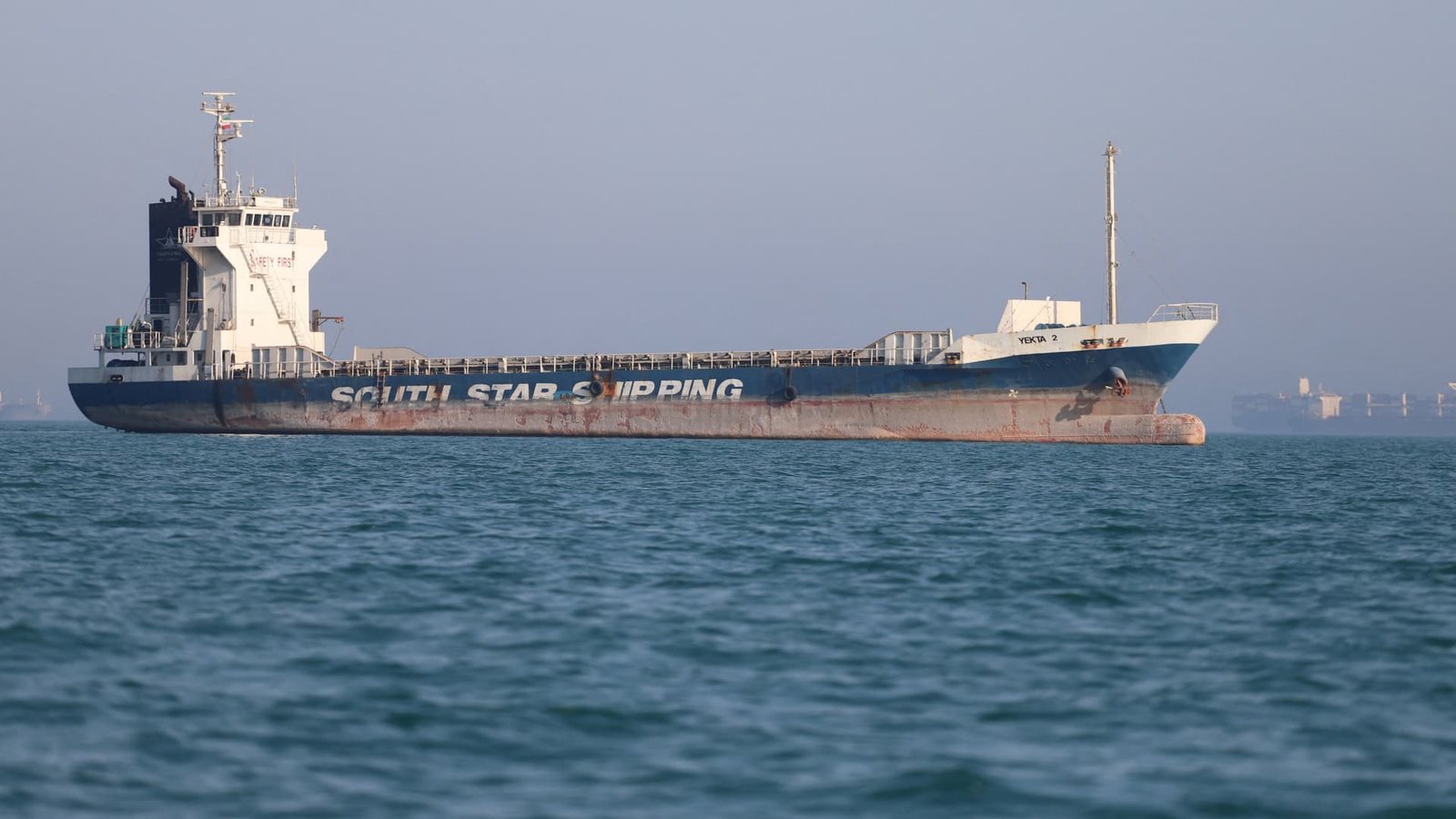
Early signs that the Strait of Hormuz is reopening have eased the most acute threat to global energy supplies, but economic damages from the nearly four months of war will take months to unwind, analysts warned.
The U.S. and Iran signed a memorandum Thursday to open the Strait of Hormuz, ending a war that has upended global energy supply chains, pushed inflation higher and dented the outlook for growth.
But even if shipping through the strait normalizes, higher inflation has already been largely “baked in” across many economies, Simon MacAdam, deputy chief global economist at Capital Economics, said in a note this week.
“It can take many months for higher energy and fertiliser prices to be passed along food supply chains to end-consumers,” MacAdam said. Prices of natural gas piped to households typically lag the upstream market by around three months, he said.
Oil prices retreated to around $80 a barrel on Friday, down from a peak of $118 in March when the war was at its height. Goldman Sachs cut its oil price forecast Tuesday, projecting Brent to average $80 in late 2026 and $75 in 2027, citing a faster-than-expected recovery in Persian Gulf crude flows.
Higher energy costs and upstream supply disruptions would take longer to feed through to the downstream food and energy sectors. A backlog of vessels waiting to transit the Strait of Hormuz could further delay a full recovery in freight flows.
The World Bank, which last week lowered its global economic growth forecast to 2.5%, the slowest pace since the pandemic, expects global inflation to climb to 4% this year, up from 3.3% in 2025, even if disruptions to oil flows ease in the coming weeks.
Fertilizer prices could jump as much as 38% this year as supply disruptions and shortages of key inputs from the Gulf ripple through agricultural markets, it said.
Europe could face particular pressure because natural gas storage levels remain historically low, MacAdam said, expecting inflation in Europe and Japan to rise by an additional 3 to 4 percentage points as U.S. liquefied natural gas export prices move higher.
The European Central Bank was the first major central bank to raise interest rates last week, its first tightening move in nearly three years.
Meanwhile, the Fed, under new Chairman Kevin Warsh, left short-term interest rates unchanged on Wednesday but raised its forecast for personal consumption expenditures inflation to 3.6% by December, from 2.7% projected in March. Nine of the 18 voting members expect at least one rate hike before the end of this year.
The trajectory underscores how the Hormuz crisis has altered the calculus for central banks trying to balance slowing growth against rising inflation.
The Bank of England also kept its policy rates unchanged but warned that “even in the event of prompt conflict resolution, there could be a logistical delay in restoring energy production and transportation.”
Food
What’s open and closed on Juneteenth 2026? Find out if banks, USPS and stores are operating.


Many Americans will have the day off on Friday, June 19, to celebrate Juneteenth, the federal holiday commemorating the end of slavery. While most stores will remain open, some services will be unavailable.
The stock market and most banks will be closed on Friday. While many stores will remain open, make sure to check local store hours as they may vary by location.
Also known as Freedom Day or Emancipation Day, Juneteenth marks the day in 1865 when Union soldiers arrived in Galveston, Texas, to inform enslaved people that the Civil War had ended and they were free.
Read on to see what’s open on Juneteenth.
Is Walmart open?
Yes, Walmart will operate during normal hours on Juneteenth, a spokesperson confirmed.
Is Costco open?
While Costco is closed for other federal holidays, it will remain open for Juneteenth.
Is Target open?
Target will be open during normal business hours, which vary depending on location, according to a spokesperson.
What grocery stores are open?
Food Lion
Kroger
Stop & Shop
Trader Joe’s
Wegmans
Whole Foods
What stores and fast-food chains are open?
Apple
CVS
Dunkin’
HomeGoods
Homesense
IHOP
Kohl’s
Lowe’s
Macy’s (some stores will have extended hours)
Marshalls
McDonald’s
Petco
Nordstrom
Sierra
Starbucks
Taco Bell
TJ Maxx
Are banks open?
Major banks such as Bank of America, Chase and Wells Fargo will be closed on Friday.
Is the stock market open?
The stock market will be closed on June 19 in observance of the Juneteenth holiday, according to the New York Stock Exchange and Nasdaq websites.
Are FedEx, UPS and USPS open on Juneteenth?
FedEx and UPS will make deliveries and keep retail locations open on June 19, according to their respective websites.
However, you may run into issues if you’re trying to mail something. All U.S. Postal Service locations will be closed, and USPS mail deliveries will be suspended for Juneteenth. Services will resume Saturday, June 20, according to USPS.
Food
Ebola patients flee treatment centres in Congo for food as hunger crisis deepens
KINSHASA – Ebola patients are fleeing treatment centres in the Democratic Republic of Congo in search of food, underscoring how hunger has become one of the biggest obstacles to containing the virus.
Outbreak responders are “coming to us, knocking on our door and saying: ‘We need food assistance if we’re going to end Ebola,’” said David Stevenson, who runs the World Food Program’s operations in Congo and has spent three decades working in humanitarian emergencies.
“I’ve never seen anything like it.”
Government reports have documented more than 150 escapes from Ebola treatment and isolation facilities since late May.
In one incident, 11 suspected patients fled a hospital in Bambu, about 40km from the outbreak’s epicentre around the gold-mining town of Mongbwalu, because of inadequate nutritional support, according to the health authorities. Other reports have linked patient departures to food shortages and poor living conditions.
Even before the outbreak, eastern Congo was grappling with widespread displacement, conflict and one of the world’s worst hunger crises.
Now those pressures are colliding with efforts to contain a virus that has already infected almost 900 people, killing more than a quarter of them.
Food insecurity impacts almost 10 million people in the country’s eastern provinces, not only complicating efforts to isolate patients but also to monitor people exposed to the virus.
The health authorities are currently tracking about 6,400 people who may have been exposed to Ebola. Families asked to remain under observation often lose access to work, markets and other sources of income.
“If you confine people, they will need to be supported with food. And if they don’t get food, they will move,” said Olivier Nkakudulu, head of field operations in Ituri, the province that accounts for more than 90 per cent of confirmed cases, for the World Food Program.
The consequences can be especially severe when the person under observation is the household’s main provider.
“Just imagine if we put a single mother into isolation, what will happen to the children?” said Godfrey Ayena, national director of Food for the Hungry in Uganda.
Similar challenges can arise in child-headed or elderly-headed households, he said.
In much of the region, families typically provide food for hospitalised relatives, meaning Ebola isolation rules can abruptly cut patients off from their usual support networks.
The United Nations’ food assistance agency is now providing hot meals at Ebola treatment centres and delivering food to patients, monitored contacts and affected families.
This week, 590 hot meals were distributed in a single day to suspected and confirmed patients, contacts under observation and caregivers.
Health workers recall encountering similar challenges in previous outbreaks.
“When people don’t have food, it causes them to be desperate,” said Kenneth Kobba, a Ugandan public health physician preparing to deploy to eastern Congo, where he will respond to his fourth Ebola crisis.
‘Terrible choices’
Kobba recalled that during Uganda’s 2022 outbreak, some people repeatedly came to treatment units claiming to have symptoms because meals were available there, potentially exposing themselves to infection.
“Someone will come and tell you I have fever and headache,” he said. By the time test results came back, the person would already have received several meals.
Years of conflict in eastern Congo have disrupted agriculture, displaced millions of people and made it difficult for humanitarian agencies to reach vulnerable communities. Recent cuts to aid budgets have compounded those challenges, forcing relief organisations to balance competing priorities.
“This requires making terrible choices between the extremely hungry who are next to starvation and those who are very hungry and do not know where they’re going to get their next meal,” Stevenson said.
Jacques, 52, who declined to give his last name for security reasons, said he has been relying on churches in Beni to help feed his 14 children after fleeing fighting around Bukavu in South Kivu province.
Two weeks
A little over a week ago, his 5-year-old daughter began vomiting and bleeding from her ears. He brought her to Beni’s main hospital, where she died a few hours later. His wife is now in isolation at the same facility with Ebola.
Since arriving at the hospital, he has received a food kit from the World Food Program.
“That’s enough for two weeks, and after that what are we going to do to eat?” he said.
WFP is seeking US$175 million ( S$226.23 million ) until November for its Congo operations, including US$32 million earmarked for Ebola-related activities, according to Stevenson. The agency’s budget in the country has fallen by about a third over the past two to three years.
“The need to address the wider population is crucial, and we’re just not going to be able to end Ebola unless we address those needs,” he said. “It simply will not work.” BLOOMBERG
Food
Tay Keith, Grammy-Nominated Producer, Dead at 29


Super producer Tay Keith, whose resume includes collaborations with Future, Travis Scott, and Beyoncé, was found dead in his Nashville apartment on Thursday afternoon. He was 29.
A statement by the Metro Nashville Police Department said that no foul play is suspected in the death of the Grammy-nominated artist, born Brytavious Chambers. “He was found dead in his Martin St apt this afternoon by officers performing a welfare check,” read the statement. “His death is unclassified pending autopsy results.”
Born Sept. 20, 1996, the Tennessee native began making beats at the age of 14 and crafted a signature sound adapted from Southern hip-hop royalty like Three 6 Mafia and 8Ball & MJG. In 2018, Keith’s work with fellow Memphis native BlocBoy JB began to garner buzz beyond the borders of Memphis and their local rap music caught Drake’s attention. At 21, Keith had his first hit with Drake and BlocBoy’s “Look Alive.”
That same year, he worked on a slew of collaborations including co-producing Travis Scott’s 2018 hit track “Sicko Mode,” which topped the Billboard Hot 100 and earned a Grammy nomination for Best Rap Song. He also co-produced Eminem’s “Not Alike” for the rapper’s 10th studio album, Kamikaze.
Keith also co-produced “Before I Let Go,” a bonus track on Beyoncé’s Homecoming: The Live Album, and executive produced Sexyy Red’s 2024 album, Sexyy We Trust, whose breakout hits “Pound Town” and “SkeeYee” he also produced.
During a Rolling Stone interview in 2022, Keith discussed the influence growing up in Memphis had on his work. “I was born into this shit and raised in this shit,” he said. “Memphis music is all I listened to and all my family listened to. My stepfather who I am still close with really influenced my taste for music.”
Trending Stories
When catching up with the publication a few years later, Keith shared that he had partnered with the National Museum of African-American Music the previous Christmas to provide young people with gifts and food, while also offering a seminar and free admission to the museum to show them “that this is where I come from too, and music was my outlet for my success. So you can always go to school and go to college, but also, you can chase your dreams too.”
When reflecting on his own hardships growing up and how he relates to the youth he’s helping, Keith said, “I’m working with the city of Memphis where I’m from, to partner up with a lot of the programs to basically help the children in our communities. I was raised in Section 8, I was raised with a single mom majority of my life. I have been put out. I’ve been in situations where we had to get government assistance. I had free lunch and food stamps my whole life. I had to overcome a lot of adversity growing up and I made it a mission to be able to show the youth that it’s possible.” The artist added, “I always motivate the kids, the young producers who reach out to me and want advice. I never hesitate to talk to them.”
Food
Scientists Link 8 Common Food Additives to Heart Disease Risk
Next time you’re in the supermarket, you might want to steer clear of foods high in certain preservatives. New research identifies a laundry list of additives potentially linked to poorer heart health.
Government scientists in France and others studied the self-reported dietary habits of more than 100,000 people in the country. They found at least eight common food additives that were associated with a higher risk of high blood pressure or cardiovascular disease, while people who consumed higher amounts of these additives had a higher risk of developing these conditions. Though more study is needed, the researchers argue it might be due time to reassess the safety of these ingredients.
“If confirmed, these new data call for the re-evaluation of regulations governing the use of these additives to improve consumer protection,” they wrote in their paper, published last month in the European Heart Journal.
Additives and human health
Preservatives have long helped keep our food safe from spoiling. In recent years, however, some studies have suggested that at least some of the most commonly used preservatives in our food supply might be riskier to our cardiovascular system than assumed.
Much of this research has been in animals, so the researchers wanted to get a better sense of the situation. They turned to data from the NutriNet-Santé study, an ongoing project proactively tracking the health and diets of French residents. As part of the project, volunteers regularly fill out questionnaires about their health, lifestyle, and dietary intake. Participants’ reported major medical events, including heart disease, are also verified through linked medical or insurance records.
For this study, the researchers looked at the diets and health of 112,395 volunteers who were followed for a median length of roughly eight years. They focused on two broad groups of preservative food additives: antioxidant additives that help prevent browning or food from becoming rancid and non-antioxidant additives that prevent spoiling from microbes like bacteria and mold.
People whose diets were the highest in antioxidant preservatives had a 22% greater risk of hypertension compared to people whose diets had the lowest levels of antioxidant additives, the researchers found. Similarly, people who ate the most non-antioxidant additives had a 29% greater risk of hypertension compared to people who ate the least, and they had a 16% greater risk of cardiovascular problems like heart attack and stroke.
The researchers also looked specifically at 17 of the most common preservatives (meaning they were regularly consumed by at least 10% of volunteers in the study). Of these, eight were associated with a higher risk of hypertension: potassium sorbate, potassium metabisulphite, sodium nitrite, ascorbic acid, sodium ascorbate, sodium erythorbate, citric acid, and rosemary extracts. Ascorbic acid was additionally associated with a higher risk of cardiovascular disease.
“This study has some limitations inherent to its observational design. However, the findings are based on highly detailed data, and we have taken account of other factors that can increase or lower the risk of cardiovascular disease,” said senior study author Mathilde Touvier, one of the project leaders of the NutriNet-Santé study and a research director at the French National Institute for Health and Medical Research (Inserm), in a statement released by the European Society of Cardiology, publishers of the journal. Inserm is the French equivalent of the National Institutes of Health in the U.S.
What comes next
There should be more studies to confirm these findings, the authors say, and to better understand the mechanisms underlying this potential harm. To that end, the team is moving ahead with research studying how these additives might affect inflammation or the gut microbiome, among other factors.
That said, the authors are already pushing for regulatory agencies in Europe and the U.S. to start re-evaluating the data on these additives. And if nothing else, this study should reinforce the notion that highly processed foods, which tend to be chock full of preservatives, ought to be eaten only in moderation.
“In the meantime, these findings support existing recommendations to favor non-processed and minimally processed foods, and avoid unnecessary additives,” said Touvier.
Food
Gas prices fall below $4 on average after Trump’s signing of Iran deal to end war
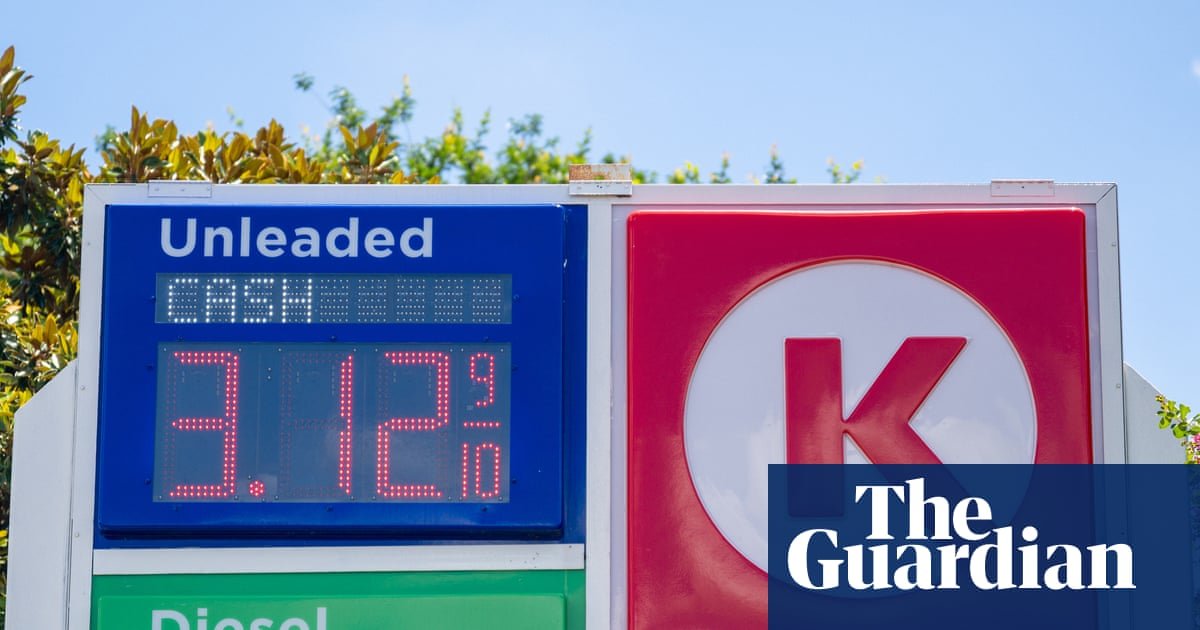
The average price of US gasoline fell to just under $4 a gallon on Thursday for the first time since March, following the announcement of a preliminary agreement between the US and Iran to end the war and reopen the strait of Hormuz.
The development has provided some relief to drivers who have seen soaring costs amid Washington’s war with Iran. But filling up still remains more expensive than it was before the conflict began.
According to the motor club AAA, the current national average price for a gallon of regular gasoline stands at $3.999, marking the first time in months that prices have been that low. The decline aligns with easing crude oil costs overall, with some optimism surrounding the initial agreement between the US and Iran.
Still, American drivers are collectively paying roughly $1 more per gallon than they were before the US joined Israel to attack Iran in February. Gas prices are also about 25% higher than they were a year ago, which has put strain on many household budgets across the country.
Gas isn’t the only thing that has become more expensive over the course of the war. Higher gasoline prices have also contributed to rising airline fares, while consumer goods such as groceries, and shoes have also gone up in cost amid global supply chain disruptions.
Even if oil and other core necessities – such as fertilizer – begin flowing from the Middle East again, experts warn that the sticker shock is likely to outlast the fighting.
“Product prices across the United States are projected to keep climbing for the rest of 2026,” Patrick Penfield, a professor of supply chain practice at Syracuse University, told the Associated Press on Thursday.
Penfield pointed to depleted inventories and ongoing supply chain consequences spanning from the war. He noted that farmers, for example, already had to pay higher costs for fertilizer and other supplies in the spring, which will “ripple through to increased food prices by autumn”. And at the gas pump, he noted that limited refinery capacity in the US “remains a significant bottleneck” towards bringing down prices.
The rising fuel costs have already pushed US inflation to its highest level in three years. And many consumers are still filling their tanks for much more than $4 a gallon.
That price is a national average, with costs varying between states due to factors such as proximity to supply and differing tax rates. In California on Thursday, regular gasoline averaged about $5.64 a gallon, according to AAA, followed by $5.57 in Hawaii. By contrast, prices in Indiana and Texas sat at about $3.40 and $3.49 a gallon.
Recent relief for fuel prices arrived with cooling costs for crude oil – the main ingredient in gasoline. Brent crude, the international standard, fell below $78 a barrel on Thursday, while US benchmark crude dropped to just over $74 a barrel. That’s still a little higher than the pre-Iran war level of roughly $70, but way below the $100-plus price seen a few weeks ago.
Major shipowners have reportedly begun moving vessels through the strait of Hormuz after Wednesday’s signing of the memorandum of understanding, according to maritime data from Lloyd’s List Intelligence – though some operators reported that only more limited side shipping routes were open.
On Thursday, US Central Command said in a statement that it has lifted its blockade on all maritime traffic entering and exiting Iranian ports and coastal areas in the strait of Hormuz.
“American forces are not impeding the transit of vessels to or from Iranian ports on the Arabian Gulf and Gulf of Oman,” it said.
Despite these developments, experts warn that it could take weeks or months for traffic to return to prewar levels.
The Associated Press contributed reporting




$350M for Secret Service redirected amid ballroom project: Source
A source told the Washington Post that millions of dollars allocated for the Secret Service was redirected for ballroom project...


Inside Elon Musk's empire | BBC Americast
The US economy backs Elon Musk's vision for sending people to Mars, the moon and beyond with SpaceX. Elon Musk's...


You may be hearing a lot more about Andy Burnham
Many Americans may not know the name Andy Burnham, but he could be the UK's next prime minister. The Greater...


What is going on with the US-Iran talks in Switzerland?
US-Iran talks expected to begin Friday in Switzerland were postponed after Vice President JD Vance cancelled his travel plans to...


John Early’s Secret Is Total Commitment
John Early has one of the most expressive faces of any actor working today. You’ve almost certainly seen it. The...
Who is Andy Burnham, the lawmaker seeking to replace Keir Starmer
LONDON (AP) — Andy Burnham is a political insider turned outsider who aims to be Britain’s next prime minister. The...


Vance abruptly postpones Iran talks trip as Israel & Lebanon clash
Vice President JD Vance is no longer traveling to Switzerland for US-Iran negotiations today, with talks postponed. Iran has asked...


Report finds US housing demand depressed as costs hit record highs
A new report on the U.S. housing sector finds that activity remains subdued through the first part of the year...


What does UK PM Keir Starmer do now? #BBCNews
Subscribe to our channel here: https://bbc.in/bbcnews For the latest news download the BBC News app or visit BBC.com/news …


One in three adults under 35 lives with parents amid housing shortage: report
The empty nest is filling back up. Millions of young adults are delaying life on their own as high housing...
-

 Business6 days ago
How much of Musk’s wealth comes from government help? Virtually all of it
-

 Politics1 week ago
What to know about the stabbing that set off fiery riots in Northern Ireland
-

 LifestyleNews2 weeks ago
120 minutes of strength training per week may help extend lifespan
-

 Video7 days ago
Download fans say what they love about the festival. #DownloadFestival #BBCNews
-

 Video7 days ago
Why SpaceX IPO isn't about space. #SpaceX #ElonMusk #BBCNews
-

 HealthNews1 week ago
The people of Okinawa, Japan only eat until they are about 80 percent full, then stop — and the practice has been linked in multiple peer-reviewed studies to lower rates of cardiovascular disease, slo
-

 TravelNews7 days ago
My Paternal Instinct Should’ve Warned Me About Netflix’s Maternal Instinct
-

 Food7 days ago
Pope Leo’s plane was grounded. Then the King of Spain stepped in to help