

Business
SpaceX stock price drops after Cursor purchase. How low could it go?

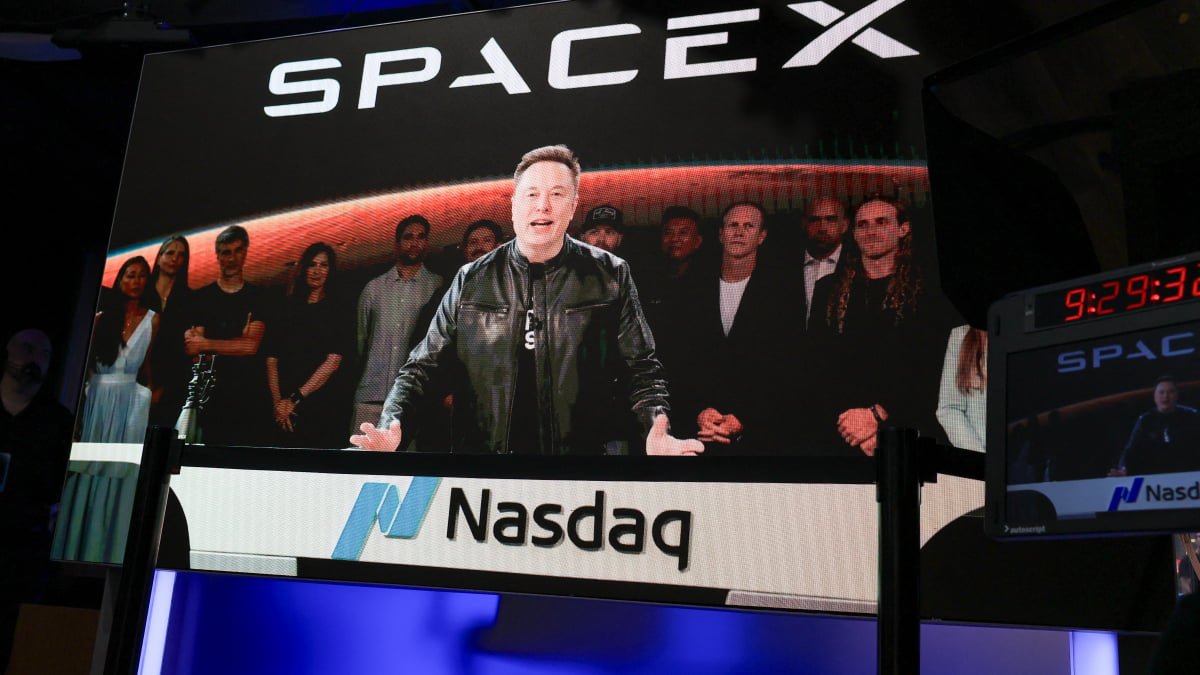
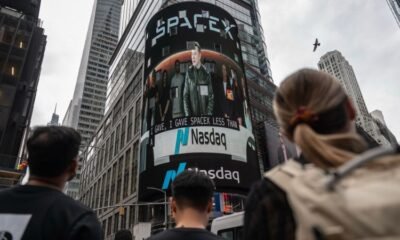
Following SpaceX’s IPO on June 12 — the biggest in history, which made Elon Musk a trillionaire — the stock price dipped just days later when the company announced the acquisition of AI coding agent Cursor.
The initial price was $135, and reached over $170 the same day, Mashable reported. By Tuesday, June 16, it hit a high above $225, according to Forbes, but some of those gains were lost by Wednesday.
The $60 billion deal between SpaceX and Anysphere, the startup behind Cursor, was announced on Tuesday. The next day, the price fell five percent, CNBC reported, and dropped another 3.75 percent on Thursday.
Mashable Light Speed
Want more out-of-this world tech, space and science stories?
Sign up for Mashable’s weekly Light Speed newsletter.
By clicking Sign Me Up, you confirm you are 16+ and agree to our Terms of Use and Privacy Policy.
Thanks for signing up!
The markets are closed today, June 19, with SpaceX’s current share price at $185 at the time of this writing. It’s dropped slightly today, but it’s still well above its IPO share price.
But how low will it go? Investor research firm Morningstar reported that SpaceX is wildly overvalued, with its fair value estimate at $62 a share, and a best-case scenario would price shares at $169. That would be lower than today’s price, but still higher than its IPO.
Not everyone believes SpaceX is overvalued, though. Investment bank Oppenheimer and Co. raised its projection for SpaceX stock from $190 to $250 following the acquisition disclosure. Analyst Timothy Horan said that SpaceX “owns every layer of the AI stack, giving it cost and quality advantages,” and that Cursor is a major component of that.
So it remains to be seen whether the stock will dip much lower — and unless it dips below $138, Musk remains a trillionaire.
Business
Mortgage rates fall to 6.47%: Freddie Mac


Mortgage rates fell this week to the lowest level in more than a month, mortgage buyer Freddie Mac said Thursday.
Freddie Mac’s latest Primary Mortgage Market Survey, released Thursday, showed the average rate on the benchmark 30-year fixed mortgage declined to 6.47% from last week’s reading of 6.52%.
The average rate on a 30-year loan was 6.81% a year ago.
INCOME NEEDED TO AFFORD A MEDIAN-PRICED HOME HAS NEARLY DOUBLED SINCE 2020, REPORT FINDS
“Incoming data continues to reflect a resilient consumer, with retail sales improving and pending home sales strengthening, suggesting purchase demand is continuing to modestly improve,” said Sam Khater, Freddie Mac’s chief economist.
The average rate on a 15-year fixed mortgage fell to 5.81% from last week’s reading of 5.84%.
Rates have been elevated of late as concerns over the Iran war weighed on markets. On June 17, President Donald Trump signed a memorandum of understanding while attending meetings in France, while Iran signed remotely. The temporary framework calls for an immediate cessation of hostilities, the reopening of the Strait of Hormuz, limits on Iran’s enriched uranium stockpile and a 60-day window to negotiate a permanent agreement addressing Tehran’s nuclear program.
MEDIAN US HOME PRICE PROJECTED TO HIT $1 MILLION BY 2050 – RIGHT AS MILLENNIALS RETIRE
The deal also includes provisions to ease economic pressure on Iran, including access to some frozen assets and the lifting of certain restrictions, while drawing criticism from some conservatives who argue the agreement offers too many concessions without requiring Iran to immediately dismantle its nuclear infrastructure.
“The previous weeks have been filled with constant back-and-forths, showing progress toward a resolution, only to be followed by heightened military action,” said Realtor.com senior economist Anthony Smith. “However, the latest rounds have proven more promising than previous periods of reprieve, as a tentative deal has now been drafted and now signed by President Trump.”
MIDWEST AND SOUTHERN STATES DOMINATE HOUSING REPORT CARDS: SEE HOW YOURS SCORED
Mortgage rates are affected by several factors, including the Federal Reserve and geopolitics. Though mortgage rates are not directly affected by the Fed’s interest rate decisions, they closely track the 10-year Treasury yield. The 10-year yield hovered around 4.45% as of Friday afternoon.
The U.S. central bank on Wednesday announced that it will hold interest rates steady due to concerns about elevated inflation amid the war in Iran, as new Federal Reserve Chairman Kevin Warsh’s tenure leading the central bank begins in earnest.
Fed policymakers voted 12-0 to leave the benchmark federal funds rate unchanged at its current range of 3.5% to 3.75%. The move follows the central bank’s decision to hold rates steady in January, March and April following three successive 25-basis-point rate cuts in September, October and December to close out last year.
The Federal Open Market Committee (FOMC), the central bank’s panel responsible for monetary policy moves, noted in its statement that inflation remains elevated above the central bank’s 2% goal, which it said was “in part reflecting supply shocks that have driven price increases in certain sectors, including energy.”
GET FOX BUSINESS ON THE GO BY CLICKING HERE
“Warsh used his first decision as chair to signal a broader regime change: the easing bias is gone, forward guidance has been shelved, and the committee’s statement was rewritten around a single, unhedged commitment to delivering price stability,” Smith said. “Markets responded with a jump in the 10-year Treasury and rising odds of a rate hike before year’s end. The logic of Warsh’s approach, earning credibility by following through rather than telegraphing, is sound and ultimately the path to lower long-term rates. But a market without clear guidance may demand a premium in the near term, which could keep mortgage rates from falling as quickly as the Iran ceasefire alone might suggest.”
Business
M&M’s set August launch for dye-free candies, with 2 colors absent
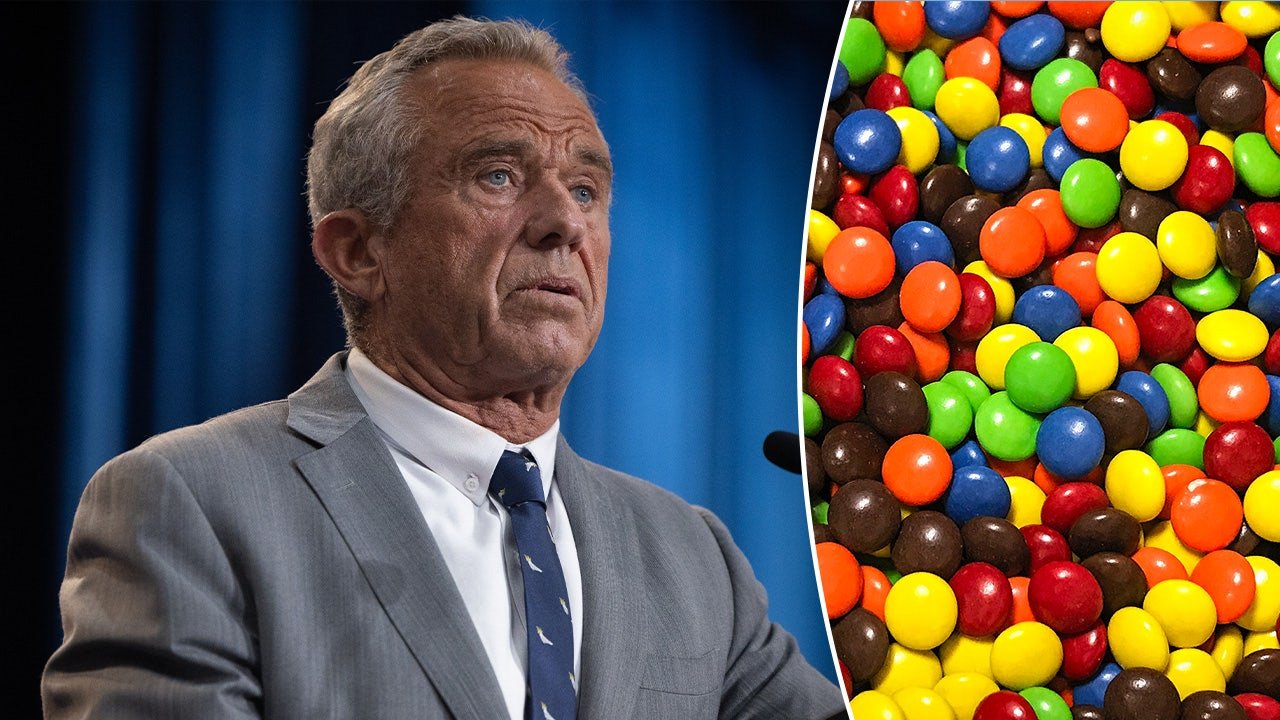
M&M’s makers Mars will debut artificial dye-free candies in August in a Make America Healthy Again (MAHA)-compliant move after facing pressure from Health and Human Services (HHS) Secretary Robert F. Kennedy Jr.
But while the classic candy-maker was able to use natural sources like beets or turmeric to replicate colors like red and yellow, shades of blue have proven considerably more difficult and expensive to recreate naturally.
Mars has been replicating blue and brown’s artificial coloring using spirulina extract, a concentrated blue-green algae powder, but the substance is prohibitively expensive.
Turmeric, for example, is available in bulk from most wholesalers for prices in the $9-$11 per lb. range. Spirulina, by contrast, can be significantly more expensive. The raw supplement can cost up to $20 per lb. at similar wholesalers, while the concentrated form most often used for food dyes is often priced at over $100 per lb.
THESE POPULAR FOODS ARE AFFECTED AS COMPANIES ALIGN WITH TRUMP ADMIN’S ‘MAHA’ INITIATIVE
Furthermore, spirulina’s viscous nature has caused clogging in M&M’s factory spray nozzles and created film build-ups in manufacturing equipment, creating a potential safety and health hazard, The Wall Street Journal reported.
The high costs associated with MAHA-ifying its products have driven Mars into a colorful dilemma, according to the Journal. Wanting to debut its altered product ahead of the company’s 85-year anniversary in August, Mars has spent millions in an effort to find alternatives.
Given the high costs of reproducing blue, Mars considered just rolling out a three-color mix of red, orange and yellow, but executives felt “the sunset vibes were too strong,” the Journal reported.
Anton Vincent, the leader of the company’s North American snacks division, told the Journal the replacement effort “was a daunting situation,” adding, “you’re messing with an 85-year-old icon.”
WALMART ELIMINATING SYNTHETIC DYES FROM ITS PRIVATE-LABEL FOOD BRANDS
Mars had originally announced a plan to offer artificial dye-free products in 2016, but reversed the decision after announcing customers didn’t seem to care.
But, thanks to a Kennedy-led push to pressure companies to ditch artificial materials, Mars again announced in 2025 they would be pivoting to natural dye options.
Kennedy Jr. has frequently criticized the use of artificial dyes in U.S. food products, calling them a key driver in numerous American health epidemics.
“When we look at these nine specific food dyes, the science shows a clear, undeniable link to behavioral disruptions in our kids and long-term cancer risks. We are systematically clearing them out,” he said in a 2025 press conference with West Virginia’s Republican Gov. Patrick Morrisey.
West Virginia became the first to sign into law a total ban on statewide sales of major artificial dyes in 2025.
Kennedy Jr.’s HHS added Mars to a list of 27 corporations that have pledged to remove artificial food dyes from certain products in his office’s effort to eliminate petroleum-based food dyes from the U.S. food supply.
Federally, his office has formally banned four petroleum-based artificial food dyes, revoking Food and Drug Administration (FDA) authorization for brominated vegetable oil (BVO), Red Dye no. 3, Citrus Red No. 2 and Orange B.
Kennedy Jr. has also pushed hard to get companies to phase out six other specific dyes — Red 40, Yellow 5, Yellow 6, Blue 1, Blue 2, and Green 3.
His office has cited animal studies that linked consumption of specific artifical dyes to cancer risks and long-term behavioral dysfunctions.
GET FOX BUSINESS ON THE GO BY CLICKING HERE
The FDA cited the Delaney Clause, a provision requiring the institution to prohibit a chemical if it’s found to cause cancer in humans or animals, after banning Red Dye No. 3 in 2025. Numerous long-term animal studies found the chemical linked to cancer development in rats.
FOX Business contacted Mars and HHS for further comment.
Business
Billionaire Ambani wants AI in every call, app, and home

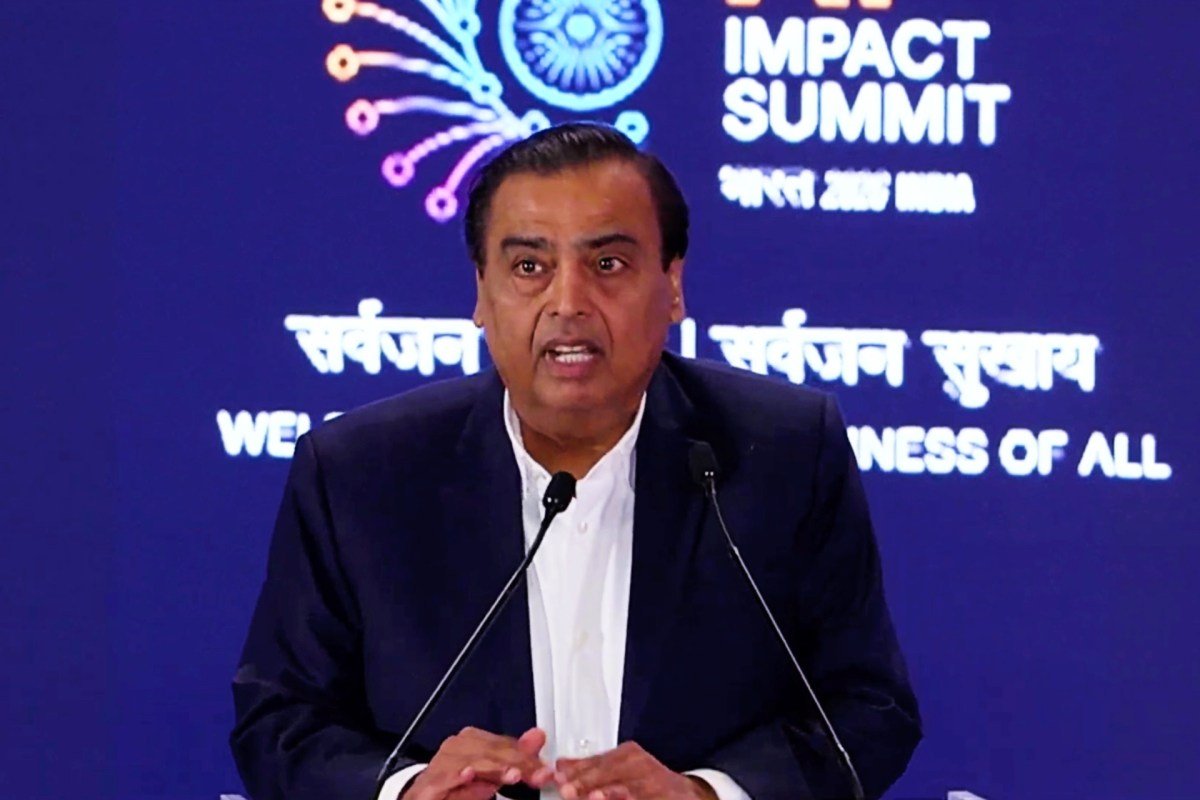
As India searches for a homegrown contender in the global artificial intelligence race, billionaire Mukesh Ambani is positioning Reliance Industries as a national champion, rolling out AI services for phone calls, mobile apps, and connected homes.
At its annual shareholder meeting on Friday, the Mumbai-based conglomerate announced Jio Call Agent, an AI assistant that can join phone calls to transcribe conversations, generate summaries, and perform tasks such as booking cabs, ordering food, and making reservations. The service, which can be activated by saying “Hey Jio,” is expected to launch later this year for Jio’s more than 500 million users.
By embedding the service directly into its telecom network rather than offering it as a standalone app, Jio is betting AI assistance can become a native feature of phone calls. The approach could reduce consumers’ reliance on third-party call-assistant apps and give Reliance a powerful distribution advantage in an increasingly crowded AI market.
Reliance also unveiled an AI-powered version of its MyJio app that can perform tasks on behalf of users, from activating eSIMs to selecting roaming plans, through natural-language requests. The company further introduced TeleFrame, a home display that uses AI agents to proactively surface information and recommendations, such as weather alerts, schedules, and household reminders. The product appears to echo a broader industry push toward ambient AI assistants for the home, an area being explored by companies including Amazon and Google.
The announcements mark the next phase of Reliance’s AI ambitions as India seeks to build domestic capabilities in a field largely dominated by U.S. and Chinese technology companies. The push follows the launch of Reliance Intelligence last year, through which the conglomerate aims to develop AI infrastructure and services for consumers, businesses, and governments, including applications that support 22 Indian languages.
“India should not be a mere consumer of AI created elsewhere. It must become a creator, adopter, and a global leader in AI,” Ambani, 69, said.
Reliance has been ramping up its AI ambitions through partnerships with Google, Meta, and Nvidia. Earlier this year, the company announced plans to invest $110 billion in AI infrastructure as it seeks to establish itself as a major player in India’s emerging AI ecosystem.
At the shareholder meeting, Reliance also unveiled a suite of AI services for healthcare, education, agriculture, and small businesses. The products, branded JioHealthIQ, JioLearnIQ, JioKrishiIQ, and AI Vyapar, are designed to operate across multiple Indian languages and cater to local needs, the company said.
The shareholder meeting also brought a major development for investors awaiting Jio’s stock market debut. Ambani said Jio Platforms’ board had approved a draft prospectus for an initial public offering that would include a fresh issue of up to 270 million shares, according to a stock exchange filing.
The announcements also raise questions about how Reliance will handle user data as it expands AI services across phone calls, mobile apps, and connected homes. While the company said the services would operate with user consent, it did not answer questions about whether data generated through the products could be used to train AI models or shared with technology partners.
Reliance’s AI ambitions come as Indian companies remain heavily reliant on foreign AI models and cloud providers. Recent restrictions on access to some of Anthropic’s latest models have underscored that dependency, showing how decisions made overseas can affect startups and businesses building AI products in India — the kind of supply-chain risk that’s pushing Indian conglomerates toward building their own stack rather than renting someone else’s.
Last week, Reliance announced a collaboration with Meta to establish an AI data center in the western state of Gujarat, building on Meta’s earlier investment in Jio Platforms and a joint venture launched last year to develop AI solutions for enterprise customers in India and overseas markets.
Reliance is not alone in pursuing AI opportunities. Tata Consultancy Services, Infosys, and rival Adani Group have also expanded their AI initiatives and partnerships with global players, including Anthropic, Google, and OpenAI, as India’s largest corporations race to secure a leading role in the country’s AI future.
Nonetheless, for Reliance, the stakes are particularly high; it’s preparing Jio for a long-awaited stock market debut and needs new growth drivers, with the conglomerate’s shares down about 17% this year.
Business
Oil Prices Wobble as U.S.-Iran Deal Faces Tests


Oil prices fluctuated on Friday as cracks started to emerge in the preliminary deal between the United States and Iran to end the war.
Talks between officials representing the countries were postponed, with Vice President JD Vance delaying a scheduled trip to Switzerland for the next phase of negotiations and Israel launching new strikes in Lebanon, highlighting the fragility of the agreement signed this week. With the status of conditions in Strait of Hormuz unclear, shipping companies weighed whether it was safe to transit the waterway, a crucial passageway for oil and gas in the Persian Gulf.
Oil prices remain on track to fall for a second straight week, though, as traders react to apparent diplomatic breakthroughs, however tenuous, in recent days.
Business
M&M’s are going MAHA, eliminating two iconic colors

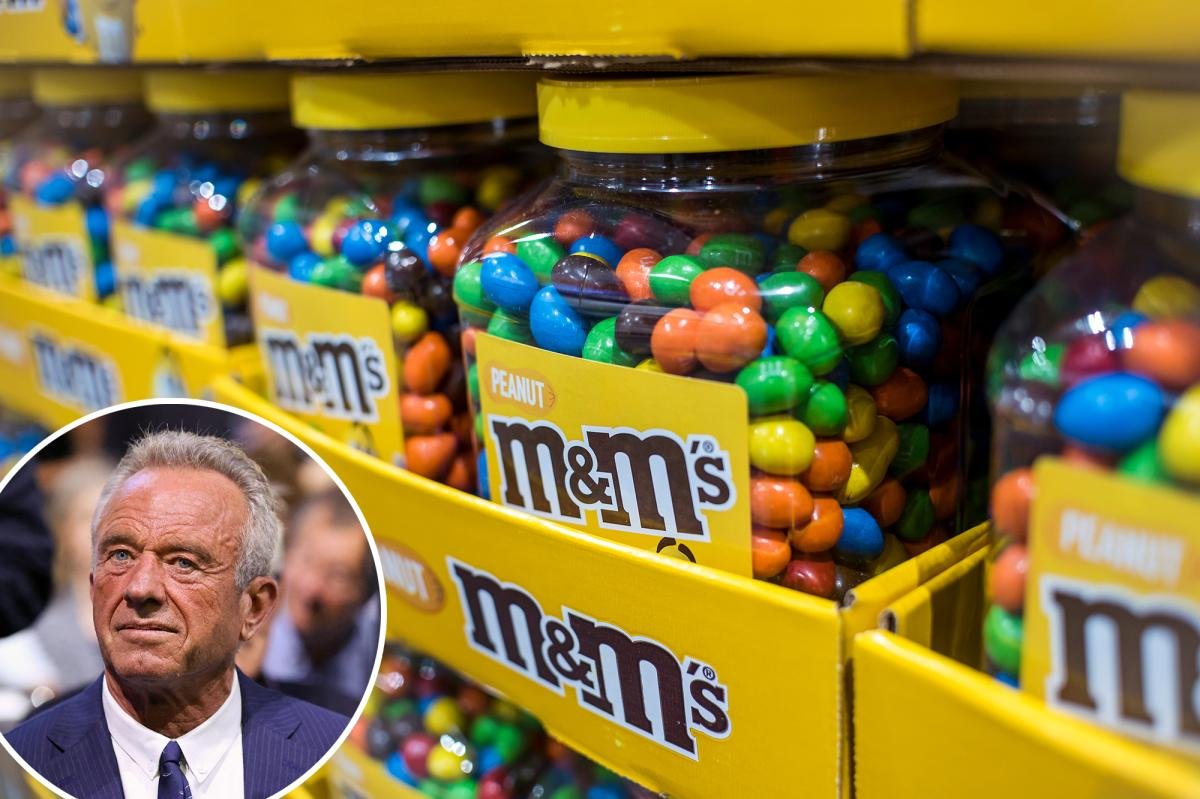
M&M’s are entering their Make America Healthy Again era.
But as a result, two historic colors may end up in the can.
As the iconic candy marks its 85th year this summer and in a broader effort to remove artificial dyes, M&M’s will debut a natural-ingredient version.
And while the brand can figure out how to make red, orange, and yellow M&M’s without artificial dyes, blue and brown are on the chopping block.
As pressure mounts from Health Secretary Robert F. Kennedy Jr.’s MAHA movement to ditch synthetic food colorings, candy giant Mars is spending millions of dollars to reinvent one of America’s most recognizable treats.
But replacing the bright blue shell that has been part of M&M’s rainbow since 1995 has turned into a surprisingly sticky problem.
The culprit is spirulina, the high-protein ingredient often touted as a superfood, which is apparently gumming up the machines at the Mars facility that produces 600 million M&M’s every day.
According to a Wall Street Journal report, Mars selected spirulina as the best natural substitute for the artificial dye Blue 1.
But the algae-based ingredient requires roughly seven times as much pigment to achieve that M&M “cerulean” hue and ends up creating a thick, foamy mixture that leaves an unwanted plaque, much like what you try to avoid after eating candy.
The coated remnants are said to cause a buildup in pipes and, eventually, mold, which poses a food-safety hazard.
“It’s the hardest thing I’ve had to do in my career,” Claire Hewitt, the Mars executive overseeing the multimillion-dollar initiative and self-described “chief color officer,” told the Journal.
The blue problem has become so complicated that Mars will debut naturally colored M&M’s in August without two of its classic shades, because brown relies heavily on blue coloring to achieve the look.
The company experimented with other options, including purple and pink candies, but executives ultimately decided neither looked right. Mars even considered releasing a three-color mix before settling on a four-color lineup.
More than 100 employees have worked on the project across Mars facilities, experimenting with just how to crack the coloring code. But the task would come with an expensive overhaul.
To combat the gunk, Mars must upgrade more than 300 machines across its M&M’s plants to handle spirulina, which would include installing new mixing tanks, paddles, and motors, Hewitt told the Journal.
And cleaning the new cleaning equipment would require hotter water, more force, and more time.
The costly makeover comes as the MAHA movement pushes food manufacturers to phase out synthetic dyes, which Kennedy has linked to various health concerns, particularly in children.
Food companies have largely defended the additives as safe and approved by regulators, but growing pressure and restrictions have caused many brands to explore natural alternatives.
While Mars actually pledged in 2016 to remove artificial colors from its food products, it then walked back those plans for candy, saying at the time, shoppers weren’t particularly concerned about the dyes in occasional treats.
Now the company appears committed to offering consumers another option. Naturally colored M&M’s will initially be sold exclusively through Amazon, while the traditional artificially colored version isn’t going anywhere for now.
The ultimate goal is to recreate all six classic M&M colors using natural ingredients by 2028.


At least 47 killed in Israeli strikes in Lebanon | BBC News
Israel and Hezbollah have agreed a ceasefire, a US official says, following intense Israeli air strikes in southern Lebanon that...


Flash flooding in Dallas made roads ‘impassable’
Flash flooding in Dallas made roads "impassable," causing multiple water rescues during the morning rush hour.


Live: Trump unveils new Air Force 1 plane
Trump unveils the new Air Force 1 plane and gives remarks. Watch 24/7 live news with CNN Headlines: …


Live: Trump unveils new Air Force One
President Trump unveils the new Air Force One aircraft at Joint Base Andrews. Watch 24/7 live news with CNN Headlines:...


Inside the new plane made for a 22-hour nonstop flight
Qantas just revealed the first 'Project Sunrise' aircraft. It's a plane designed to operate the world's longest non-stop commercial …


Israel and Hezbollah agree to ceasefire as continued strikes in Lebanon reported | BBC News
Israel and armed Lebanese group Hezbollah have agreed to a ceasefire, a senior US official confirmed to the BBC.


Scotland fans are drinking Boston dry
Boston's bars have stocked up on their beer shipments, as they prepare to host Scottish fans for a second time...


Walking through the ruins of a southern Lebanese city after Israeli strikes. #BBCNews


How to stop Iran from building a nuclear weapon | The Global Story
On Wednesday, President Trump met with Iranian leaders to sign an initial memorandum of understanding towards ending the …


Mortgage rates fall to 6.47%: Freddie Mac
Mortgage rates fell this week to the lowest level in more than a month, mortgage buyer Freddie Mac said Thursday....
-
 Business6 days ago
How much of Musk’s wealth comes from government help? Virtually all of it
-

 Politics1 week ago
What to know about the stabbing that set off fiery riots in Northern Ireland
-

 LifestyleNews2 weeks ago
120 minutes of strength training per week may help extend lifespan
-

 Video1 week ago
Why SpaceX IPO isn't about space. #SpaceX #ElonMusk #BBCNews
-

 Video1 week ago
Download fans say what they love about the festival. #DownloadFestival #BBCNews
-

 HealthNews1 week ago
The people of Okinawa, Japan only eat until they are about 80 percent full, then stop — and the practice has been linked in multiple peer-reviewed studies to lower rates of cardiovascular disease, slo
-

 TravelNews7 days ago
My Paternal Instinct Should’ve Warned Me About Netflix’s Maternal Instinct
-

 Food7 days ago
Pope Leo’s plane was grounded. Then the King of Spain stepped in to help