

PM office canada
Carney government passes law allowing authorization of banned pesticides
The federal government has brought in major changes to how pesticides are regulated in Canada, granting cabinet the power to authorize their use — even pesticides Health Canada has deemed are unsafe.
Bill C-30 passed both the House of Commons and the Senate on Thursday before Parliament rose for the summer.
While the legislation largely deals with measures the federal government announced in its spring economic update, buried within it are major changes to Canada’s Pest Control Products Act.
The new law will give Prime Minister Mark Carney’s cabinet authority to greenlight any pesticide that ministers feel is in the interest of economic or national food security. The legislation doesn’t define or clarify what those security interests would be.
Environment and health organizations, along with expert scientists from 13 universities, have denounced the legislation, saying it marks the largest overhaul of the country’s pesticide rules in a generation.
“It’s pretty outrageous … what you’ve got is cabinet overruling science,” said Dr. Trevor Hancock, a public health doctor with the Canadian Association of Physicians for the Environment.
“We already have a pesticide regulatory system in place and it’s there to protect people and protect the environment. I don’t think they’ve given any clear evidence as to why overruling that is good for Canadians.”
Cabinet can also authorize a pesticide for a “seriously detrimental infestation,” regardless of whether the health minister has already denied a request for its approval. That pesticide could then be used for up to six years.
“Why are they weakening pesticide regulation in the first place? Who’s asking for it? Not the public as far as I know,” Hancock said.
Sen. Rosa Galvez, a leading expert on pollution and human health, said the legislation represents a “fundamental shift” by giving a group of ministers the ability to disregard Health Canada’s safety decisions.
“Politicians should be very careful before substituting political judgment for scientific expertise,” Galvez said in the Senate on Thursday, pointing to the growing and extensive research linking pesticide exposure to increased risks of cancer, reproductive and neurological issues.
Galvez also noted that scientists, public health and environmental experts were not given the chance to testify in front of Parliament. Health and environment committees also did not study the legislation.
“For a reform of this magnitude, that should concern us,” she said.
The Bloc Québécois, NDP and Green Party have all condemned the measures, arguing the Liberals pushed through sweeping powers that could put Canadians’ health and the environment at risk.
“The Liberal government chose to shut down debate and fast-track the passing of their omnibus bill,” the NDP said in a statement.
“In the 51 years I’ve worked on pesticides in this country, this is the single most regressive proposal I’ve ever seen,” Green Party Leader Elizabeth May said.
Government promises transparency
House leader Steven MacKinnon told reporters Thursday that cabinet would not use the measures “if there are health hazards attached to them.”
He referred questions to the minister of health, Marjorie Michel.
Michel’s office, however, declined a request for an interview. Michel also refused to answer questions from CBC News outside of the House of Commons Thursday.
In a statement, her spokesperson Alexandre Bergeron said cabinet would be transparent with its decisions and only allow “the temporary use of certain pesticides under specific conditions.”
“With respect to situations in which economic security may be prioritized, these authorities are intended to be used only in exceptional circumstances and are not exercised lightly,” he wrote.
Bergeron noted the federal government’s recent decision to temporarily allow the use of strychnine in Alberta and Saskatchewan to deal with ground squirrel infestations.
This was done under the existing rules of the Pest Control Products Act, which allows the health minister power to grant emergency use of an unapproved pesticide for up to a year.
“This authorization is subject to additional restrictions and mitigation measures designed to reduce environmental risks to an acceptable level,” he wrote.
Bergeron pointed to the rising cost of food as the reason to amend the pest control legislation, and the importance of having “successful harvests” as the government strengthens its “commitment to food sovereignty.”
Health minister meets with pesticide lobby
The pesticide industry has previously praised Canada’s health minister for her “bold action” it says will modernize pesticide rules.
The day Bill C-30 was introduced, Michel spoke at an event hosted by CropLife Canada, the major organization representing pesticide companies. The next day, she touted in a speech that she was the first health minister to do so.
The lobby registry also shows Michel met with CropLife in December and January. Roy Karam, her political adviser, has met with CropLife four times this year.
Michel’s spokesperson defended the meetings and pointed to past comments made by the agricultural sector commending the proposed pesticide changes.
CropLife, for its part, applauds the new law, saying it allows farmers to be more productive, adapt to climate and pest pressures and remain globally competitive.
“For many years, Canada’s agriculture sector has called for a regulatory system that not only maintains its strong commitment to protecting human health and the environment, but also recognizes the critical role that crop protection tools and innovation play,” CropLife Canada’s president Pierre Petelle said in a statement to CBC News.
“CropLife Canada urges the government to move quickly towards the implementation of the updated mandate.”
PM office canada
Banking regulator lowers capital levels to spur more loans at ‘hinge moment’ for the economy

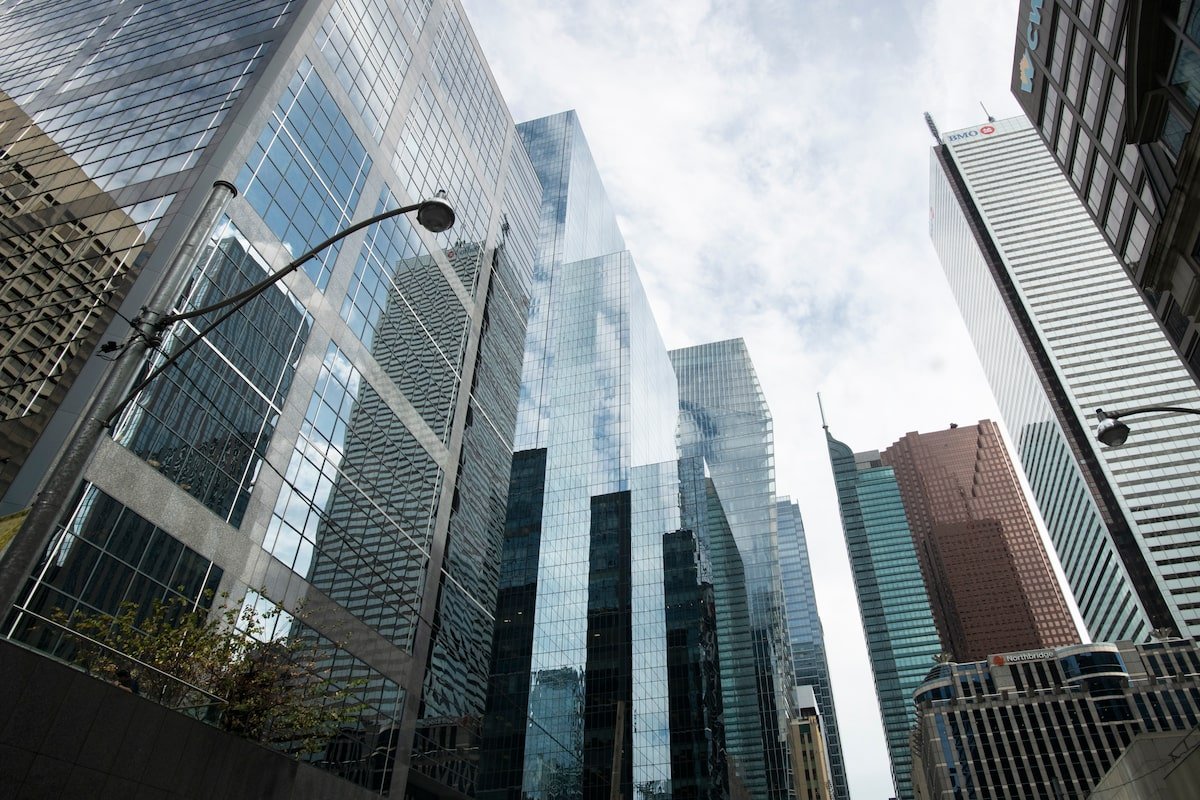
Canada’s banking regulator has reduced the capital cushion the country’s biggest banks must reserve, freeing up billions of dollars in excess cash to boost lending for businesses and consumers as Ottawa looks to attract private financing to boost defence and infrastructure.
The Office of the Superintendent of Financial Institutions, or OSFI, said Friday it lowered its required capital levels to provide banks with greater capacity for lending to help Canada’s economy as trade routes and geopolitical relationships shift. In recent years, analysts, bankers and other industry watchers have advocated for loosening capital requirements as Prime Minister Mark Carney seeks to bolster Canada’s waning productivity and economic growth.
In December, 2022, OSFI started ratcheting up capital requirements as a buffer against a potential economic downturn and to reinforce the resilience of the financial system. But the country’s biggest banks – which have posted strong earnings and withstood the threat of loan losses and high inflation – were asking for more flexibility to lend.
Canadian banks have capacity to lend more to small businesses, regulator says
The banks are now holding onto $74-billion in excess cash, about a $30-billion increase compared to the previous capital level. The lenders could add a combined total of $673-billion in risk-weighted assets to their balance sheets, according to the regulator.
“The resilience we’re releasing, the cost of that was very low, and the benefits to the economy of making that statement about the strength of our banking system and the availability of capital for deployment of new opportunities is very high,” said Peter Routledge, Canada’s top banking regulator, in an interview.
In recent months, OSFI has had conversations with the Department of Finance, the Bank of Canada and the Financial Institution Supervisory Committee on the need to unleash investment capital and take opportunities to support the critical “hinge moment” where the economy must “adjust,” Mr. Routledge said.
OSFI said the changes will give banks more room to lend for defence spending, infrastructure and artificial intelligence.
“If we mis-calibrate, if we were overly conservative in our buffers, we might weaken that adjustment, and that would be a bigger long-term threat to prudential health than releasing the buffer that we have now,” he said.
“We don’t want to be an impediment to that adjustment. We don’t want to be seen to be an impediment to that adjustment.”
Toronto-Dominion Bank analyst Mario Mendonca said the decision was a surprise, adding that OSFI’s previous announcements indicated that the buffer would be lowered if economic risks escalated, not as a capital management tool. The move seems to be an attempt to bolster the banking sector ahead of negotiations over the United States-Mexico-Canada Agreement, he added.
“We believe banks are willing and able to lend. The question then becomes how much pent-up loan demand is there. For that, we need to see nation-building projects being approved and/or measures that specifically lower commercial borrowing costs,” Mr. Mendonca said in a note to clients. “Changes in buyback activity from here will be telling of banks’ capital deployment intentions.”
OSFI said the domestic stability buffer (DSB) – capital that banks must maintain to withstand an economic downturn – will reduce to 3 per cent from 3.5 per cent of a bank’s risk-weighted assets. The regulator has held the previous level since June, 2023, after a series of increases, which required banks to hold onto billions of dollars in excess cash.
To hike the buffer, the regulator increased the potential range in 2022 to between 0 and 4 per cent, up from a maximum of 2.5 per cent. This signalled to banks that the regulator could require them to hold onto significantly higher levels of capital.
On Friday, the regulator also lowered the range of the DSB to 0 to 3 per cent from 0 to 4 per cent.
While risks to the financial system that prompted OSFI to previously raise requirements remain elevated, the regulator said conditions have remained stable. Canadian household debt remains high relative to income but below historical peaks. Even as trade uncertainty weighs on consumers and businesses, unemployment and loan losses have stabilized in recent quarters.
Mr. Routledge said the banks wanted more certainty to plan over a multiyear period without the risk of capital requirements spiking.
“This is a decision to communicate to them that they can have the confidence and certainty to make good decisions about deploying capital, and they don’t have to wonder what we may or may not do over the next few years,” Mr. Routledge said.
The industry has pushed back against high regulatory requirements, saying that they limit their ability to lend to key sectors of the economy.
OSFI plans pilot project to streamline process for institutions to join banking system
Last week, Mr. Routledge told a Senate committee that banks did have the capacity to boost lending to small- and medium-sized businesses, even with high capital levels. The committee is conducting a study on access to credit and capital markets for small- and medium-sized enterprises and the implications for growth and productivity in the Canadian economy.
“Capital rules are not an impediment to the deployment of that capital. You cannot say that after today,” Mr. Routledge said on Friday of the decision to lower requirements.
While OSFI can change the DSB at any time, it announces a decision to change or hold the level twice a year. The requirement applies to financial institutions that are considered domestic systemically important banks, including Royal Bank of Canada, Toronto-Dominion Bank, Bank of Nova Scotia, Bank of Montreal, Canadian Imperial Bank of Commerce and National Bank of Canada.
The DSB also determines the overall minimum capital levels that a bank is expected to hold. The common equity tier 1, or CET1, ratio – a measure of a lender’s ability to absorb losses – lowered to 11 per cent from 11.5 per cent.
Banks typically hold on to more cash than required to avoid falling below the regulatory minimum. If sudden issues arise, a bank’s CET1 ratio could fall. If capital levels were to drop to 10.9 per cent or lower, OSFI would require a bank to undertake a remediation plan.
OSFI said the banks are sitting on capital cushions that far exceed the requirement, at an average of 13.5 per cent.
“We are listening to the institutions we regulate. They’re saying that the DSB at 3.5, range 0 to 4, was a contributing factor in their capital deployment,” Mr. Routledge said. “I don’t think that’s the sole explanation for that very sizable buffer, but we understand and accept it’s a consideration, and so we wanted to remove that consideration.”
PM office canada
Carney and Eby step in with $3.2B home development subsidy

Prime Minister Mark Carney was in Vancouver Thursday, June 18 to announce measures to “unfreeze” the province’s real estate market with the aim of creating greater affordability for British Columbians.
Carney made the announcement with Premier David Eby and their respective housing ministers Gregor Robertson and Christine Boyle in South Vancouver’s River District, flanked by condo towers where two-bedroom units are selling for close to $1.1 million.
First, Carney announced $1.6 billion over the next 10 years, to be matched by the provincial government, to lower development cost charges (DCCs) for multi-unit housing by up to 50 per cent, or as much as $40,000 per unit in “priority communities.”
The funding will be used to “expand housing-enabling infrastructure such as water systems, wastewater systems, and local roads.”
It is not yet clear if this funding will directly compensate the Metro Vancouver Regional District, whose board slashed DCCs in April by $387 million over the next three years at the behest of development companies. Last month the board wrote a letter to senior governments asking to recover those costs.
Metro Vancouver chair and Burnaby Mayor Mike Hurley told Business in Vancouver the same day he was not made aware of the funding but the fact that it will go to water and wastewater systems indicates it will go to the utility provider.
“The devil will be in the details,” said Hurley, who did not vote for the developer subsidy in April, asserting “growth should pay for growth.”
Port Coquitlam Mayor and Metro board member Brad West did vote for the subsidy, saying it was a compromise toward other board members who wish to do away with DCCs altogether.
The new federal and provincial funds will be derived from general taxation revenue—the federal government’s new Build Communities Strong Fund.
BIV asked Carney if he had considered the shift from property taxation to income taxation.
Carney said development charges had “reached a level that they were pricing out people.”
“It’s a chance to prove this model at scale; more affordable housing, better communities,” he said. “And we will see as we move forward about extending it.”
What remains unclear is if development companies pass on the savings to home buyers.
Carney said development charges had “reached a level that they were pricing out people.”
“It’s a chance to prove this model at scale; more affordable housing, better communities,” he said. “And we will see as we move forward about extending it.”
BIV asked Carney if he would like to see housing prices fall further in Metro Vancouver.
“What we want is to establish … across Canada is to build more and make more available affordable housing—housing that works relative to what people’s incomes are,” he said. “That means more supply obviously and it means part of that housing coming in innovate ways.”
According to Statistics Canada, there is a surge in unsold condo units, which brought Carney to hint at another measure coming: the federal government buying those unsold units and converting them to so-called “affordable” housing.
“Looking out at condos that have been built, that are unoccupied, that are going to sit there potentially for another couple of years; we are going to go and use the right financing mechanisms and convert those into affordable housing so people can move in and use those,” said Carney.
Carney added “models” will be released in the fall.
“Effectively what you are doing is buying them at a price and spreading out the financing because you can do that for the underlying condo at our financing rate, but targeting at a level that is affordable,” he said. “It is a way to clear off on the books this overhang.”
Through Build Canada Homes and BC Housing, the senior governments will “convert more than 2,200 vacant condo units in priority growth areas into affordable homes,” the Prime Minister’s Office said in a statement.
West said his attendance at the event was as chair of the Mayor’s Council, which oversees TransLink, the regional transportation authority.
Carney’s office also announced: “The federal government will invest $2.5 billion over 10 years to build new transit projects—such as the Surrey-Langley SkyTrain extension project that is currently underway—and increase service access and frequency in high-traffic areas. This funding is in addition to the $852 million previously announced by the federal government to support TransLink and BC Transit.”
[email protected]
PM office canada
A little peek into the Carney

They were the kind of words a parent might say to convince a child scrunching his nose at his birthday present that it’s really what he wanted: “I thought you’d actually like that.”
In this case, the Prime Minister of Canada was speaking to the President of the United States. Mark Carney was trying to convince Donald Trump that a deal allowing up to 49,000 Chinese electric vehicles into Canada each year is not an agreement to open the doors wide to Beijing, because it contains a “hard cap” on the number.
Mr. Carney said he thought the U.S. President would like that. It’s noteworthy that Mr. Trump responded saying that he did, actually, “like that.”
The little snippet of conversation captured on a hot mic at the G7 summit in Évian-les-Bains, France, didn’t tell us everything about the Carney-Trump relationship, for sure. But it told us a few things.
G7 hot mics capture world leaders’ banter
The first is that the relationship isn’t hostile. It’s an exchange. Mr. Trump didn’t gainsay Mr. Carney.
The second is that Mr. Carney is working to clear away underbrush that might get in the way of United States-Mexico-Canada Agreement trade negotiations.
The brief exchange was just that, but at least it showed Mr. Carney could talk to Mr. Trump about something that the U.S. sees as an irritant and tamp down the irritation. Mr. Trump didn’t push back; he acquiesced.
Mr. Carney was still the supplicant, and Mr. Trump is famously mercurial, so he still might decide later that he doesn’t like the Chinese EV deal at all.
But after Mr. Trump showed pique at Mr. Carney’s news-making Davos speech, and has repeated that the U.S. doesn’t need anything from Canada, the moment suggested the leader-to-leader lines of communication are still open.
U.S. President Donald Trump on Wednesday said that the U.S. would do better without the USMCA on trade and that he would prefer not to have a new one, but added that he was open to doing it.
Reuters
Mr. Carney told reporters later that he had seven or eight “good discussions” with Mr. Trump on a wide range of topics including Iran, artificial intelligence and the President’s birthday.
Of course, that hot-mic glimpse into the leaders’ interaction didn’t show us how Mr. Trump responds if and when Mr. Carney brings up sticking points such as the U.S. refusal to open the new Gordie Howe bridge from Windsor, Ont., to Detroit, Mich.
And Mr. Carney didn’t have a formal one-on-one meeting with Mr. Trump at the summit. He noted that Canada-U.S. Trade Minister Dominic LeBlanc and chief negotiator Janice Charette met U.S. Trade Representative Jamieson Greer on the sidelines.
Still, Mr. Carney’s comments to Mr. Trump fit a recent pattern. There’s been a Canadian effort to clear away potential impediments to trade negotiations.
For people in Detroit and Windsor, Gordie Howe bridge delay fits a familiar – and frustrating – pattern
The deal Mr. Carney made on Chinese EVs in January was limited, but in Republican Washington, it has sometimes been inflated into a broad Canadian shift to open markets to China. Mr. Greer called it “problematic” and U.S. Commerce Secretary Howard Lutnick suggested it might imperil trade talks with the United States. Mr. Carney was trying to dispel that notion.
Over all, Mr. Carney’s tone on trade relations has shifted, as we saw last month when he told an audience of New York investors that a strong Canada can help make America great again. The Prime Minister is trying to clear the tracks to make a deal possible.
And on policy matters, Mr. Carney’s government has lately been trying to speak Mr. Trump’s language, too.
Two weeks ago, the government ordered the Canadian Radio-television and Telecommunications Commission to review its plan to triple the sums that foreign streaming services such as Netflix would be required to direct to Canadian content. Instead, the government itself will inject $600-million.
Miller rejects claims Ottawa ‘has sold out Canadian culture’ over Online Streaming Act
Last week, Mr. Carney’s government introduced legislation to tighten up its regime to prevent imports of goods made with forced labour. This was after Mr. Greer’s office announced it is proposing tariffs on 60 economies deemed too lax in enforcing such restrictions.
And Canada’s fentanyl czar, Kevin Brosseau – whose position was created when Mr. Trump imposed his first set of tariffs, citing a false claim that Canada was a major source of fentanyl – announced he would travel to Washington this week.
In the broad sense, there have been a lot of recent efforts to talk about Canadian trade in terms Mr. Trump will like.
That’s despite the fact that for the past eight months, there have been outward signs that Mr. Trump was ready to talk about closing a deal. Yet, that little hot-mic moment suggested that at least Mr. Carney can still talk to him about the things that might get in the way.
PM office canada
G7 backs Canada as major global energy supplier to lessen reliance on Strait of Hormuz
Canada is poised to become a key and reliable supplier of energy to the G7 after leaders meeting in France embraced this country’s potential to deliver “significant additional capacity” to global markets to reduce dependence on oil and gas coming through the Strait of Hormuz.
“We commit to accelerate the diversification of energy supply routes in order to reduce global vulnerability to the Strait of Hormuz and to increase our energy stocks,” said a joint statement by G7 leaders in Évian-les-Bains, France, on Wednesday.
“We welcome the potential for Canada to deliver significant additional capacity to global markets in the coming years.”
Prime Minister Mark Carney also announced new partnerships on critical minerals that his office said “will unlock more than $5 billion in capital investment for projects across the Canadian critical minerals value chain.”
In his closing news conference, Carney said it’s critical for the global economy to diversify its energy supply routes away from the choke point at the Strait of Hormuz.
“One of the points that I made in the room, in our discussions around Iran and geopolitics was: we have to apply the lessons of recent events,” he said.
Before the war, about 20 per cent of the world’s crude oil was shipped from states in the Persian Gulf, through the Strait of Hormuz and into the Gulf of Oman before fanning out to countries around the globe.
Iranian attacks on ships carrying energy through the Strait of Hormuz essentially closed the access point to the Persian Gulf, halting most shipments of oil and driving up global energy prices.
The road to more energy
Carney said that Canada is already “on the path” to increasing its energy production, with several major liquefied natural gas projects underway.
Combined with increasing the output of the TMX oil pipeline, and the potential of two additional pipelines being built from Western Canada — one going to the U.S. and another to the West Coast — Carney said Canada’s potential to produce energy has been noticed.
“It’s quite substantial and it’s important to our European partners. It’s important to our Asian partners,” Carney said. “It was raised with me on a number of bilaterals as well.”
The prime minister said that beyond energy from Western Canada, there are “other alternatives in the east” to help diversify the G7 energy supply away from the Persian Gulf.
Critical minerals
The G7 leaders issued joint statements on a number of other issues where they found common ground pledging to work together on: growth, the wars in Ukraine and the Middle East, drug trafficking, smuggling, online safety, the Ebola outbreak, cancer research and other areas.
One of those statements focused on how G7 countries can work together on critical mineral production in order to significantly reduce the group’s dependency “on a single supplier outside the G7” by the end of the year.
Building on the Critical Minerals Production Alliance, set up when Canada hosted the G7 in 2025, the leaders said Wednesday that they’d work together to “develop the necessary processing and industrial capacities for diversification of our critical minerals value chains.”
A separate statement from the Prime Minister’s Office (PMO) said that Canada “welcomed 13 new partnerships and initiatives with more than eight countries” at the summit.
That comes off the back of 26 critical mineral partnerships with nine countries that were announced during a G7 energy and environment meeting in Toronto in October.
These new partners, the PMO said, will work within the alliance to “reduce market concentration, and create a reliable buyers’ club that can attract investment and accelerate production for projects.”
These new deals include an agreement with RCT Solutions, a German company that will partner with Canada’s Sio Silica and others on a high-purity silica project and solar manufacturing hub in Manitoba.
Some of the other countries that struck critical mineral deals with Canada at the summit in France include: Japan, Italy, Denmark, the Netherlands, France and Portugal.
“At the G7 leaders’ summit in Évian, we secured new partnerships to build energy projects in Canada, new agreements to make it easier for our businesses to sell abroad and new deals to equip our Canadian Armed Forces with the hardware they need,” Carney said.
Canada not ready, Conservative MP says
Ellis Ross, the MP for the B.C. riding of Skeena-Bulkley Valley, which includes parts of the province’s Pacific coast that is home to a number of LNG facilities, said Canada’s permitting process for new energy projects is convoluted and will frustrate the Liberal government’s attempts to increase oil and gas production significantly.
“They can’t do it,” he said. “They can’t even figure out what their fast-tracking process is going to look like.”
Ross says there are significant questions that remain unanswered when it comes to approving new projects, including how consultation with Indigenous communities will be carried out, and who will be responsible for the issuing of permits.
“What they say on the international stage is different in terms of what they’re struggling with back home here in Canada,” Ross said.
PM office canada
After 10 years of MAID, key report on mental illness expansion nears


As the 10th anniversary of MAID’s legalization approaches, a report — led by a parliamentary committee of senators and MPs — is set to be released on Wednesday, surrounding whether the country is ready to expand medical assistance in dying, or MAID, to people whose sole underlying condition is a mental illness.
That extension is set to happen in March 2027, after it was delayed three times by the previous Liberal government, the last time being in February 2024.
A spokesperson from Liberal MP Marcus Powlowski’s office stated to Global News that the report will be tabled in the House of Commons following the scheduled vote at 3 p.m. on Wednesday.
Powlowski is one of the chairs of the joint House of Commons and Senate committee that is analyzing the upcoming change and working on the report.
Prime Minister Mark Carney has previously said that he would not take a position yet on whether people with solely a mental illness should be able to access assisted dying.
Story continues below advertisement
“I like to take informed positions and I’ll wait for the report,” he said before a meeting of the Liberal caucus on Parliament Hill on May 6.
Justice Minister Sean Fraser also echoed to reporters Tuesday afternoon that he is awaiting the findings of the report before coming to a conclusion.
“Importantly to me, I’m also going to be reviewing the witness testimony upon which those recommendations were based. If I’m satisfied that the committee has had an opportunity to reach thoughtful conclusions based on the advice of those who are most experienced and resolve the issues, then, there’s a good chance we may align with the recommendations.”
Out of 32 organizations and individuals contacted by the committee organizing the report, 25 stated they were not in support of MAID extending to mental illness as a sole condition, with some of those participants stating a delay in enactment would be best.
Story continues below advertisement
There was also only one included who had firsthand experience with MAID through a family member.
“I think the Senate has tried to capture diverse perspectives and full disclosure,” said Dr. Sanjeev Sockalingam, senior vice-president of education and chief medical officer at the Centre for Addiction and Mental Health (CAMH). He also spoke to the committee regarding the report.
“What I’m anticipating is the synthesis of the various testimonies and consideration of data and reports to come to some final conclusion.”
On June 17, 2016, the Parliament of Canada passed federal legislation that allows eligible adults in Canada to request medical assistance in dying.
As it stands, there are two safeguard tracks in place for MAID; track one being for those whose natural deaths are reasonably foreseeable and track two being for those whose deaths are not.
Story continues below advertisement
On March 17, 2021, changes to the legislation took effect that:
revised eligibility criteria for obtaining MAID and the process of assessment
changed existing safeguards for eligible people whose natural death is considered reasonably foreseeable
expanded the framework for federal data collection and reporting
The revised law also contains new safeguards for eligible people who request medical assistance in dying and whose death is not considered reasonably foreseeable.
According to the sixth annual report on MAID in Canada, which was released by Health Canada in November 2025, there have been 76,475 people who received assistance in dying in Canada since the legalization of MAID.
In 2024, more than 95 per cent of those who received MAID had a terminal illness, most often cancer.
While the total number of MAID provisions increased in 2024, the year-over-year growth rate decreased. MAID was provided to 16,499 individuals in 2024, representing an increase of 6.9 per cent from 2023.
In addition, the rate of growth has decreased from 33.3 per cent between 2022 and 2023 to 17.1 per cent between 2023 and 2024, but the report states that “it will take several more years before long-term trends can be conclusively identified.”
“I think we reflect on the fact that it’s been 10 years — this was a huge step for Canada in terms of recognizing that having dignity and death and the ability to choose your death was as important and fundamental as having choice in life,” said Helen Long, CEO of Dying With Dignity.
Story continues below advertisement
“We know that more and more people across Canada are aware of MAID and are choosing to have MAID. People who have had an experience with MAID are very positive. They talk about how it’s helped them to end their suffering. To choose the death they wanted.”
Currently, Quebec is ranked as having the highest MAID rate in the world. Medically assisted deaths made up a record 7.9 per cent of all deaths in Quebec, or 6,268 cases, in 2024-2025. Across Canada, the rate was 5.1 per cent, or 16,499.
It is not clear how the growing number of Quebecers who resort to MAID reflects a broad consensus in the province, or if it’s a result of poor access to care that forces patients to turn to that option.
“Quebec has always taken a bit of a lead on end-of-life care in general, they have a long history of consulting with their citizens and making laws around end of life that reflect what people in Quebec want,” said Long.
“They’ve been a little ahead, I think, of the rest of us, so you know, time for us to catch up and ensure that everyone is able to make the choice they want.”
On March 18, Alberta Premier Danielle Smith’s government passed legislation to restrict MAID to people whose deaths are “likely to happen within 12 months,” among other changes.
Story continues below advertisement
“I think that we’re failing in our duty to give people hope,” Smith told reporters before the bill was introduced in the House.
Those under 18 would still be prohibited regardless of condition, in line with current federal rules.
Additionally, the United Nations criticized Canada’s expansion of MAID in March 2025, calling on the country to repeal track two for those whose deaths are not reasonably foreseeable, alongside objecting to the expansion on mental illness, mature minors and advance directives.
The UN also urged Canada to establish an oversight mechanism for independent monitoring and to handle complaints.
Canada was also called on to invest in and implement comprehensive measures to address systemic factors relating to social detriments of health, including poverty relief, homelessness prevention and community-based mental health support.
Story continues below advertisement
An Angus Reid Institute poll released on June 1 found that nearly four out of five Canadians (77 per cent) “continue to support the original 2016 MAID criteria.”
However, the survey showed that 56 per cent of respondents did not know about the scheduled expansion of mental illness as a sole condition for MAID before completing the survey.
The survey also found that just 37 per cent of Canadians had been following the issue.
Story continues below advertisement
Despite this, opinions surrounding the topic remain divided. From those aware of the 2027 expansion, 46 per cent said they support it, while 44 per cent are opposed. For those who had been previously unaware of the expansion, 42 per cent said they support it and 37 per cent are opposed.
“I think we need an investment in mental health research and addictions research as well to better understand the ability to predict and prognosticate whether someone is going to respond to certain treatments and their illness course,” said Sockalingam.


'A better brand': Democratic socialism popularity 'up like a rocket'
CNN chief data analyst Harry Enten examines what polling and prediction markets reveal about the recent rise of Democratic …


Passenger on Bedford train crash said ‘she’d lost a tooth’. #Bedford #Train #BBCNews


Why BookTok blew up over 'Hot Girls Read' trademark | Top Comment Podcast
The BookTok community has erupted after creator AllieRoseCo announced she had trademarked merchandise featuring the …


The world’s first ‘museum of AI arts’ opens in LA
Dataland, which calls itself the first museum dedicated to "AI arts" is opening in Los Angeles. But at a time...


Footage shows scene on board Bedford train after fatal crash. #Bedford #Train #BBCNews


Make sex education mandatory, says Labour MP. #College #Education #BBCNews


Trump unveils new presidential plane donated by Qatar
President Donald Trump on Friday unveiled a new, upgraded presidential aircraft donated by Qatar. He went on to thank …


NeNe Leakes’ Son Locked Up Over Unpaid Child Support, Allegedly Missed Drug Tests
“The Real Housewives of Atlanta” alum NeNe Leakes’ oldest son, Bryson Bryant, is behind bars after a judge found he...


Will Andy Burnham overthrow Keir Starmer as UK prime minister? | Global News Podcast
Keir Starmer's rival, Andy Burnham, has made significant progress towards ousting him as prime minister after winning the …


Iran deal: Trump blasts GOP critics as signing delayed
President Trump lashed out at members of Congress who have criticized the Iran Memorandum of Understanding that provides a …
-

 Business6 days ago
How much of Musk’s wealth comes from government help? Virtually all of it
-

 Politics1 week ago
What to know about the stabbing that set off fiery riots in Northern Ireland
-

 LifestyleNews2 weeks ago
120 minutes of strength training per week may help extend lifespan
-

 Video1 week ago
Download fans say what they love about the festival. #DownloadFestival #BBCNews
-

 Video1 week ago
Why SpaceX IPO isn't about space. #SpaceX #ElonMusk #BBCNews
-

 HealthNews1 week ago
The people of Okinawa, Japan only eat until they are about 80 percent full, then stop — and the practice has been linked in multiple peer-reviewed studies to lower rates of cardiovascular disease, slo
-

 TravelNews1 week ago
My Paternal Instinct Should’ve Warned Me About Netflix’s Maternal Instinct
-

 Food7 days ago
Pope Leo’s plane was grounded. Then the King of Spain stepped in to help