

Business
The Trump administration says it is cutting student loan interest. Not everyone qualifies.


The Education Department on Thursday said it is temporarily cutting interest rates for some federal student loan borrowers, a move aimed at easing repayment costs as delinquencies climb to their highest level in six years.
The reduction – a temporary shave of 1 percentage point from borrowing costs — comes as 10.3% of student loans were delinquent during the first quarter, representing the highest share in six years and a twenty-fold spike since mid-2024, according to data from the Federal Reserve Bank of New York.
Education Undersecretary Nicholas Kent said the change is a way of “making student loan repayment easier than ever” and of improving “the overall health of the federal student loan portfolio.”
The federal student loan portfolio has ballooned to almost $1.7 trillion, with millions of borrowers struggling to keep up.
But the change does not apply to all borrowers, and those pursuing the reduction will need to meet eligibility criteria. At the same time, the Trump administration is overhauling student loans beginning July 1 with new limits on how much Americans can borrow and their repayment options.
Here are details of the plan and some context behind them:
Who is eligible for the interest rate reduction?
The change will only affect a subset of borrowers — those with federal Direct Loans issued after July 1, 2012, who are already enrolled in automatic payments or sign up for them.
Many borrowers won’t see any immediate benefit. To qualify, they have to first take a set of actions including signing up for auto pay and, in some cases, consolidating their loans.
Currently, just 40% of borrowers are enrolled in auto pay — a figure the department is hoping to increase with the new incentive of the interest rate reduction.
Nearly 9 million student loan borrowers are in default, meaning they’ve missed nine months of payments. For them to become eligible for the rate reduction, they must get back in good standing, typically by consolidating their loans and then applying for a new repayment plan.
What if you already have autopay set up?
For borrowers already enrolled in auto pay, the savings will be smaller.
Borrowers who currently use auto pay already receive an interest-rate discount of 0.25%, so the new reduction takes off just 0.75%.
When does the interest rate reduction end?
For all borrowers, the rate reduction will be temporary, lasting through June 30, 2028.
Business
Ex-hospital CEO accused of funneling $14M for lavish lifestyle, son’s $109K Beverly Hills baptism


A former hospital executive siphoned at least $14 million from a health system and used company money to bankroll a lavish lifestyle that included a $109,000 Beverly Hills baptism celebration for his son, according to a bombshell lawsuit.
Michael Sarian, the ousted founder and former CEO of Healthcare Systems of America, was accused of diverting millions of dollars from hospitals in Florida and other states into personal accounts, family trusts and other unauthorized uses while the facilities struggled to pay bills and maintain operations.
The lawsuit, which was first reported by the Miami Herald, alleges Sarian treated company accounts as his personal piggy bank, funneling millions out of the health system between September 2024 and January 2026.
Among the most eye-popping allegations is a claim that more than $109,000 was wired from a Healthcare Systems of America corporate account to the Four Seasons Hotel in Beverly Hills for Sarian’s son’s baptism celebration.
The filing includes a social-media post allegedly showing the event, as well as banking records identifying a baptism as the purpose of the transfer.
The suit also alleges Sarian forged — or directed someone else to forge — an employee’s signature to divert another $120,000.
Sarian has denied wrongdoing.
He and his wife, Evelina, have argued that the baptism payment was an authorized repayment of money he previously advanced to help cover hospital payroll and have characterized the allegations as part of an effort to seize control of the company.
The legal fight is the latest twist in a bitter legal battle for control of a hospital network that operates Palmetto General Hospital, Coral Gables Hospital, Hialeah Hospital, North Shore Medical Center and Florida Medical Center.
According to the complaint, Sarian’s transfers contributed to severe financial strain across the system, impairing its ability to meet payroll, pay vendors, compensate physicians and satisfy other operating obligations.
The lawsuit cited by the Herald alleges that within a day of Healthcare Systems of America receiving more than $16 million intended to support hospital operations and acquisitions, $1.28 million was transferred into Sarian’s personal accounts.
Plaintiffs claim Sarian has failed to provide a full accounting of the transfers.
Sarian disputes the allegations and has accused Faisal Gill — a former family attorney who now controls the Florida hospital system — of orchestrating a corporate takeover.
Gill has denied those accusations, saying the litigation is intended to recover money that rightfully belongs to the hospitals and ensure resources are directed toward patient care.
The dispute follows an earlier court fight in which new management accused Sarian of attempting to regain control of hospital bank accounts after he was removed as chief executive.
The hospitals at the center of the battle were acquired in 2024 out of the bankruptcy of Steward Health Care, the once-sprawling hospital chain whose collapse triggered one of the largest healthcare restructurings in recent years.
The Post has sought comment from Sarian and Gill.
Business
Ground Beef Now Costs More Per Pound Than Federal Minimum Wage

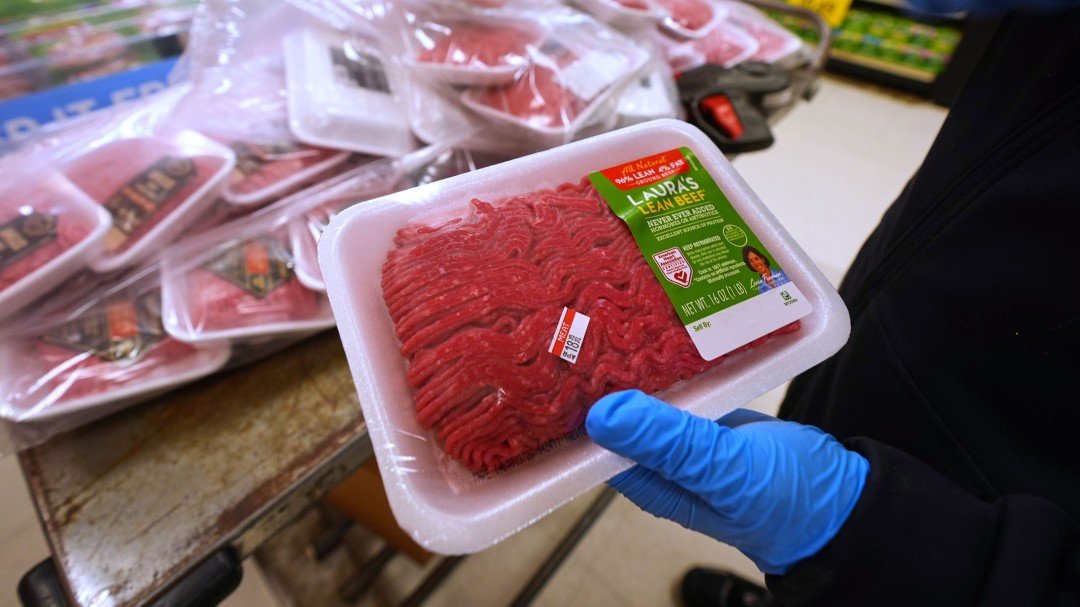
A basic burger ingredient now comes with a side of economic reality: a pound of standard ground beef increasingly costs more than an hour of work at the federal minimum wage. The average price of a pound of lean ground beef has hit $8.34, outpacing the nationwide wage floor of $7.25 that hasn’t moved since 2009, when ground beef was around $2.20 a pound, Money reports. The magazine’s review of seven major grocery chains found prices for 80/20 ground beef ranging from about $6.50 at Trader Joe’s and Aldi to nearly $9 per pound at Publix. Even the cheapest variety of ground beef now costs an average of more than $5.40 a pound, according to federal data released Friday.
Earlier this year, the USDA said the US beef cow herd is at its smallest since 1951 after drought forced producers to reduce numbers by selling cows earlier than planned. “Fewer cattle mean less beef, and when supply tightens while demand holds firm, prices rise,” University of Wisconsin-River Falls agricultural economics professor Brenda Boetel tells the Detroit News. She doesn’t see prices coming down any time soon. “If a producer keeps a heifer today, it can be two to three years before her calf enters the beef supply,” Boetel says. “There’s no way to fix a shortage like this quickly.”
The New World screwworm outbreak, which Democratic lawmakers blame on the Trump administration’s cuts to USDA, is threatening to push prices even higher, Politico reports. Money notes that ground beef overtaking the minimum wage is a “largely symbolic development,” since only a small share of workers actually earn that amount and most states have higher minimum wages, but it underscores how far that pay level stretches in an era when grocery costs are up more than 30% since 2020 and likely to keep rising.
Read These Next
Supplement that relieves arthritis tied
There’s a new problem with
Air Force does 180 on flu shot
Prominent SF arts couple die in
Business
World’s largest meat supplier JBS USA shuts two plants
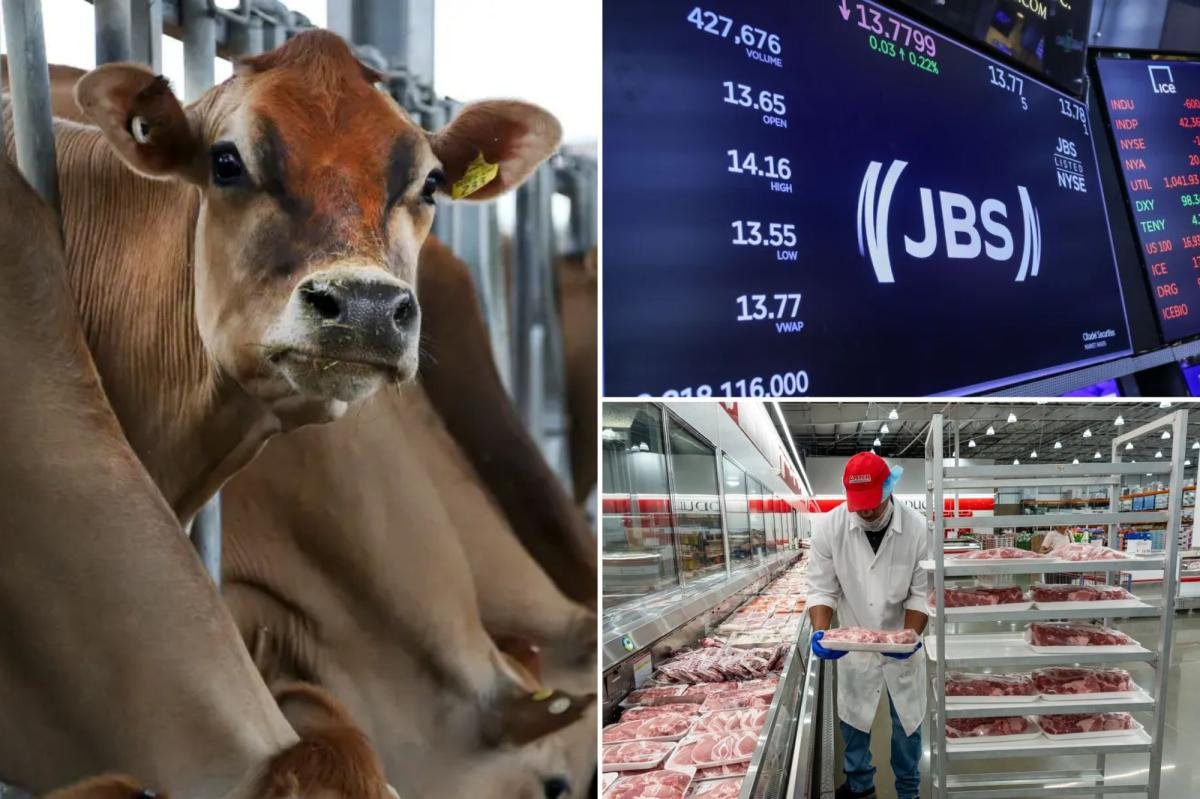
A major meat supplier is shuttering two US plant locations, and experts say it’s bad news for carnivores.
JBS USA, a meat-processing company that supplies Costco and BJ’s, as well as grocers such as Food Lion, Weis Markets, WinCo, and Stop & Shop, announced this week that it is closing its operations in Philadelphia and Memphis, eliminating a total of 2,000 jobs.
“These decisions are never easy because they directly affect our team members and the communities where we operate,” said Wesley Batista Filho, CEO of JBS USA.
“We are deeply grateful to the team members at these facilities for their efforts and contributions over many years. Our focus right now is on supporting them with transparency, respect, and access to new opportunities wherever possible.”
According to JBS, which packages, processes, and prepares meat in 15 countries, the shuttered beef plants will be absorbed into other operations.
Earlier this year, JBS announced it was consolidating its beef and case-ready businesses to improve efficiency and enhance productivity.
JBS controls about 20 percent of the slaughtering capacity for US cattle and hogs, according to industry estimates.
Along with Tyson, Cargill, and National Beef, JBS processes about 85% of the nation’s grain-fed cattle.
Although the herd has shrunk to a 75-year low amid record drought levels and higher production costs.
It remains to be seen how the JBS closures will impact the price or plentitude of beef.
The closures come as beef prices continue to rise. However, paying a premium has yet to lessen American appetites for beef.
According to US Department of Agriculture data, the average price of beef climbed from about $8.70 per pound in March 2025 to $10.08 a year later, an increase of roughly 16%.
Even so, demand has held up. In 2025, shoppers spent more than $45 billion on beef, buying more than 6.2 billion pounds, according to data from Beef Research, a contractor for the National Cattlemen’s Beef Association.
Spending jumped about 12% from a year earlier, while the amount of beef sold rose more than 4% — a sign consumers aren’t just paying more, they’re buying more.
Despite consistent consumer demand, JBS has been battling losses.
In the first quarter of 2026, the company reported a net loss of $279 million, compared with a $158 million loss in the first quarter of 2025.
Experts maintain that the closure of the two US plants will leave consumers with fewer options for beef purchases.
JBS underscored that these forthcoming closures are integral to a “broader strategy focused on growth, modernization, and long-term competitiveness in the United States.”
In the poultry game, JBS-owned Pilgrim Pride announced it would transition some of its chicken production from Chattanooga, Tennessee, to Ellijay, Georgia, where it plans to invest $75 million into an existing location.
Investment notwithstanding, 348 Pilgrim Pride employees are expected to lose their jobs.
Representatives clucked that a portion of the investment money will be directed toward the production of boneless chicken products.
“We must ensure our operations are efficient, modern, and positioned to compete,” said Filho.
“By investing where we are growing and making difficult adjustments where needed, we are building a stronger and more resilient company,” he added.
Business
DEA Judge Issues Order Laying Out Process For Marijuana Rescheduling Hearing Starting This Month


A Drug Enforcement Administration (DEA) judge has issued an initial order laying out basic rules for a hearing about the Trump administration’s cannabis rescheduling process that is set to start later this month.
Chief Administrative Law Judge (ALJ) Derek Julius signed the 12-page order on Thursday, setting initial timelines for designated parties that will be participating—which under a separate announcement from DEA this week only includes opponents of cannabis reform.
Julius noted that the government, “as the proponent of the proposed rule, has the burden of proof” in defending moving marijuana to Schedule III. Officials will need to file notices of appearances for government representatives by no later than Monday, he said.
Acting Attorney General Todd Blanche in April issued an order that immediately reclassified state-licensed medical cannabis, as well as marijuana products approved by the Food and Drug Administration (FDA) from Schedule I of the Controlled Substances Act (CSA) to Schedule III.
Under a separate order the acting attorning general signed, the upcoming hearing will consider more comprehensively moving marijuana to Schedule III.
“Importantly, the scope of this hearing is not to discuss the rescheduling of medical products approved by the Food and Drug Administration that contain marijuana and of medical marijuana products already regulated by the states, which has already occurred,” the ALJ said in the new order. “Accordingly, no evidence or testimony will be received on that matter. The narrow issue in this matter is whether the remainder of marijuana, as defined in the CSA, should be transferred from its current place on schedule I of the list of controlled substances to schedule III.”
The hearing will be held at a DEA facility in Arlington, Virginia and will begin on June 29 and last through July 15, Julius said. Representatives of designated parties must appear in person, while called witnesses can appear either in person or by video teleconference.
The proceedings will “not be televised, livestreamed, or broadcasted in any way,” the judge said, though members of the public can attend in person due to “national public interest in this issue.”
“With the exception of the function of the court reporter, permission is explicitly withheld from any attendee to use any video or audio recording device at any time while inside the courtroom or the adjoining lobby area,” Julius wrote.
The order lays out a process for how each participant will present its case and how the government and interested parties can cross-examine one another:
Each Designated Party will have an assigned day on which they will present their case-in-chief.
Each Designated Party will be allotted fifteen (15) minutes for their opening statement. Opening statements will be given at the start of a Designated Party’s case-in-chief.
Each Designated Party may present up to two (2) witnesses. Each witness may testify on direct examination for no more than two (2) hours. Should a Designated Party elect to present only one witness, that witness may testify on direct examination for up to four (4) hours.
Each Interested Party may cross-examine (each of) the Government’s witness(es) for no more than one (1) hour. The Government may cross-examine each of the Interested Parties’ witnesses for no more than one (1) hour. At the conclusion of all of cross examination of a particular witness, the party calling the witness may redirect for no more than one (1) hour. Interested Parties will not be permitted to cross examine one another’s witnesses.
Designated Parties will not be permitted to voir dire proposed expert witnesses prior to testimony. All expert determinations will be made following the hearing and objections to expert qualifications should be made in writing.
Witnesses will not be permitted to be in the courtroom before or after their testimony.
Objections to evidence or testimony will be heard during the hearing and should be made orally. When objecting, counsel will cite the rule for their objection and the reason for their objection, the proponent of the evidence or testimony may briefly respond, I will rule on the objection and the hearing will continue without further discussion. See 21 C.F.R. § 1316.60.
Rebuttal testimony, if any, will be limited. The undersigned will make determinations regarding rebuttal testimony during the hearing as they arise.
Time will not be allotted for closing arguments. Each party will be given an opportunity to file post-hearing briefs in accordance with 21 C.F.R. § 1316.64. More instructions on this will be provided at the conclusion of the hearing.
Unless otherwise noted, Designated Parties may not surrender time in one area in exchange for more time in another area (e.g., a party may not forgo redirect in exchange for more time in its direct).
Only one representative from a Designated Party may address the tribunal at a time.
“Using the information provided by the Designated Parties…no later than June 24, 2026, this tribunal will issue a detailed hearing schedule outlining the times in which each party will present its case via a subsequent order,” the ALJ said, adding that by the same day designated parties need to “file a brief prehearing statement, not to exceed twenty-five (25) pages.”
By the following day, they will need to “exchange their proposed exhibits with one another and shall file their noticed and proposed exhibits,” Julius ordered.
Under the earlier action by DEA Administrator Terrance Cole, the invited participants in the hearing are:
National Drug & Alcohol Screening Association (NDASA)
Tennessee Bureau of Investigation
Smart Approaches to Marijuana (SAM)
The States of Nebraska, Idaho, Indiana, and Louisiana
DUID Victim Voices
Kenneth Finn, MD
Phillip A. Drum, PharmD
All of the organizations, individuals and officials have expressed opposition to marijuana reform, and some have filed litigation in an attempt to block cannabis rescheduling specifically.
No reform supporters who expressed intent to participate have been invited.
According to several rejection letters Marijuana Moment has seen from cannabis reform supporters, DEA said they do not meet the definition of an “interested person” to participate because they are not “adversely affected or aggrieved by any rule or proposed rule issuable.”
In one such letter to the Drug Policy Alliance (DPA), Cole wrote that the agency “concludes that you have not demonstrated you are adversely affected or aggrieved by the promulgation of a proposed rule transferring marijuana, as listed in 21 CFR 1308.11(d)(23), marijuana extracts, as defined in 21 CFR 1308.11(d)(58), and naturally derived delta-9-tetrahydrocannabinols from schedule I t o schedule III of the CSA, as proposed in the” notice of proposed rulemaking (NPRM).
“Indeed, you state that DPA supports removing marijuana from schedule I and ‘does not oppose’ the transfer of marijuana to schedule III. Further, any conceivable harm that DPA claims it would suffer from the NPRM would exist regardless of whether marijuana is transferred to schedule III or remained in schedule I. In other words, DPA is not adversely affected or aggrieved by the promulgation of the proposed rule to transfer marijuana to schedule III. Because DPA has failed to sufficiently demonstrate that it is adversely affected or aggrieved by the proposed rule itself, DEA concludes that DPA is not an ‘interested person.’”
“Accordingly, DEA denies your request to participate in the hearing,” Cole told DPA.
In order to be considered for participation in the hearing, parties needed to file requests articulating their interest in the proceeding, the objections or issues they wish to be heard on and their position on those issues.
“The purpose of the hearing is to ‘receiv[e] factual evidence and expert opinion regarding’ whether marijuana should be transferred to schedule III of the list of controlled substances,” Blanche’s initial notice, filed in April, said.
The attorney general will also select an administrative law judge (ALJ) to oversee the proceedings.
“The ALJ’s authorities include the power to hold conferences to simplify or determine the issues in the hearing or to consider other matters that may aid in the expeditious disposition of the hearing; require parties to state their position in writing; sign and issue subpoenas to compel the production of documents and materials to the extent necessary to conduct the hearing; examine witnesses and direct witnesses to testify; receive, rule on, exclude, or limit evidence; rule on procedural items; and take any action permitted by the presiding officer under DEA’s hearing procedures and the” Administrative Procedures Act, Blanche wrote.
A prior hearing process on the marijuana rescheduling process that was initiated by the Biden administration stalled last year amid litigation over alleged improper communications and witness selection.
The current marijuana rescheduling process is being challenged with several lawsuits that have been consolidated by a federal appeals court. Those pieces of litigation against the cannabis reform have been filed by state attorneys general, marijuana legalization opponents and a cannabis-focused biopharmaceutical corporation.
Meanwhile, the already-enacted rescheduling of state-licensed medical cannabis is already having broad impacts.
The Congressional Research Service published a report on the current cannabis rescheduling move explaining that certified patients who possess medical marijuana from state-licensed dispensaries now have certain protections under Schedule III. “The order appears to authorize end users to possess marijuana for medical use without a CSA-compliant prescription,” it says.
The Bureau of Alcohol, Tobacco, Firearms and Explosives (ATF) has posted a draft update to a gun purchase form to acknowledge the federally legal status of medical marijuana under rescheduling. The revised section in question notably says that only “use or possession of marijuana for recreational purposes” is federally prohibited, leaving out the prior form’s mention of medical cannabis.
The U.S. Department of the Treasury and Internal Revenue Service (IRS) said they plan to issue new tax guidance for the marijuana industry following rescheduling. The reform will benefit state-licensed marijuana businesses by allowing them to take federal tax deductions they’re currently barred from under an IRS code known as 280E that doesn’t apply to Schedule III substances.
Even DEA, which has long opposed cannabis legalization and was accused of stalling the rescheduling process initiative by the Biden administration, has launched a registration process for state-legal marijuana businesses to take advantage of federal benefits that come with the reform.
The Department of Transportation, on the other hand, issued guidance saying that use of state-legal medical cannabis is still no excuse for a positive drug test by truck drivers, pilots and other safety-sensitive workers.
A congressional committee recently voted to block federal officials from taking further steps to carry out cannabis rescheduling.
Business
New Mercedes van combines limo luxury with lots of legroom


The newest Mercedes-Benz VLE 300 electric MPV combines 800V battery tech with limousine-level luxury, top-shelf infotainment options, room for eight, and enough rear legroom to make an S-Class feel like a mini Cooper.
Mercedes says its just-released new electric van model creates a new vehicle segment all its own, with four-wheel steering that helps the VLE handle like a sedan and ride like a luxury car and up to 300 kW (~400 hp) available from the electric motor, the big van promises to deliver an on-road performance worthy of the three-pointed-star’s performance heritage.
“The all-new electric VLE is a genuine game changer,” says Andreas Zygan, Head of Development of Mercedes-Benz Vans. “With seven-degree rear-axle steering and AIRMATIC air suspension it handles like a compact car and rides like a true premium limousine. And with more than 700 km (~435 miles) of range and up to 355 km (~220 miles) recharged in 15 minutes, the VLE redefines what everyday electric mobility can mean for a vehicle of this size.”
It’s nice in there
While the new VLE-Class Mercedes-Benz van can be configured as a last-mile delivery van, utility truck, or people-hauling MPV, it’s the higher-spec “Grand Limousine” edition and sporty the AMG Line edition (in red, below) that the company is showing off today.
Advertisement – scroll for more content
“With the all-new VLE, we are redefining electric mobility for families, businesses and leisure-active customers alike,” explains Thomas Klein, Head of Mercedes-Benz Vans. “Our Grand Limousine for up to eight people is exceptionally spacious, intelligent, efficient and delivers impressive agility and long-distance comfort. The VLE is perfectly designed around real customer needs and engineered to further exceed their expectations.”
Another neat feature of the new VLE is that its individual seats and benches can be configured in a number of different ways, so a people-hauler can become a cargo hauler in minutes. The highlight of the new seating options, however, is the electric Grand Comfort Seat at the center of the Grand Limousine that offers an additional pillow, armrests, cupholders, wireless charging, lumbar support, massage function, and even calf support.
Enough of the limousine, though – if you’ve been harboring a secret love for the Renault Espace F1 minivan built by Williams in 1995, you’ll probably be able to appreciate the sporty, 400 hp VLE 300 AMG Line version.
This people mover MOVES
With 400 hp and instant electric torque, the big van (it’s significantly bigger than the Odysseys, Pacficas, or Siennas you’re probably used to) can rocket from 0-60 mph in just 6.5 seconds. Slow compared to the quickest Tesla Model X or Lucid Gravity models, but surely quick enough to strike terror into the kids’ soccer team.
And, let’s face it, if you’re shopping for a thrill ride with this much cargo space, you’re already used to making some compromises.
Mercedes-Benz launched the VLE 300 in Germany at €82,260 (about $95,000 USD at current exchange rates), but that can easily climb into the six-figure range if you option it right (or, wrong, I guess). That’s a bananas price for a minivan, maybe – but in the realm of high-end luxury Mercedes models, it might be considered affordable. You guys will have to be the judge of that. Let us know what you think of this big Benz in the comments.
SOURCE | IMAGES: Mercedes-Benz.
If you’re considering going solar, it’s always a good idea to get quotes from a few installers. To make sure you find a trusted, reliable solar installer near you that offers competitive pricing, check out EnergySage, a free service that makes it easy for you to go solar. It has hundreds of pre-vetted solar installers competing for your business, ensuring you get high-quality solutions and save 20-30% compared to going it alone. Plus, it’s free to use, and you won’t get sales calls until you select an installer and share your phone number with them.


Hydration breaks are ‘like the Americanisation of football.’ #WorldCup #Football #BBCNews


Passenger describes people injured in Bedford train crash. #Bedford #Train #BBCNews


Meet Mexico’s new FIFA World Cup mascot Merlin the Duck! #FifaWorldCup #MerlinTheDuck #BBCNews


Trump comments spark diplomatic incident with Italy
In an interview with Italy's La7 TV, President Donald Trump claimed the country's Prime Minister Giorgia Meloni “begged” him for...


'A better brand': Democratic socialism popularity 'up like a rocket'
CNN chief data analyst Harry Enten examines what polling and prediction markets reveal about the recent rise of Democratic …


Passenger on Bedford train crash said ‘she’d lost a tooth’. #Bedford #Train #BBCNews


Why BookTok blew up over 'Hot Girls Read' trademark | Top Comment Podcast
The BookTok community has erupted after creator AllieRoseCo announced she had trademarked merchandise featuring the …


The world’s first ‘museum of AI arts’ opens in LA
Dataland, which calls itself the first museum dedicated to "AI arts" is opening in Los Angeles. But at a time...


Footage shows scene on board Bedford train after fatal crash. #Bedford #Train #BBCNews


Make sex education mandatory, says Labour MP. #College #Education #BBCNews
-

 Business6 days ago
How much of Musk’s wealth comes from government help? Virtually all of it
-

 Politics1 week ago
What to know about the stabbing that set off fiery riots in Northern Ireland
-

 LifestyleNews2 weeks ago
120 minutes of strength training per week may help extend lifespan
-

 Video1 week ago
Download fans say what they love about the festival. #DownloadFestival #BBCNews
-

 Video1 week ago
Why SpaceX IPO isn't about space. #SpaceX #ElonMusk #BBCNews
-

 HealthNews1 week ago
The people of Okinawa, Japan only eat until they are about 80 percent full, then stop — and the practice has been linked in multiple peer-reviewed studies to lower rates of cardiovascular disease, slo
-

 TravelNews1 week ago
My Paternal Instinct Should’ve Warned Me About Netflix’s Maternal Instinct
-

 Food7 days ago
Pope Leo’s plane was grounded. Then the King of Spain stepped in to help