

Food
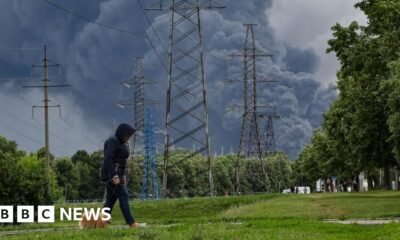
Moscow oil refinery attack brings Russia’s war with Ukraine closer to home

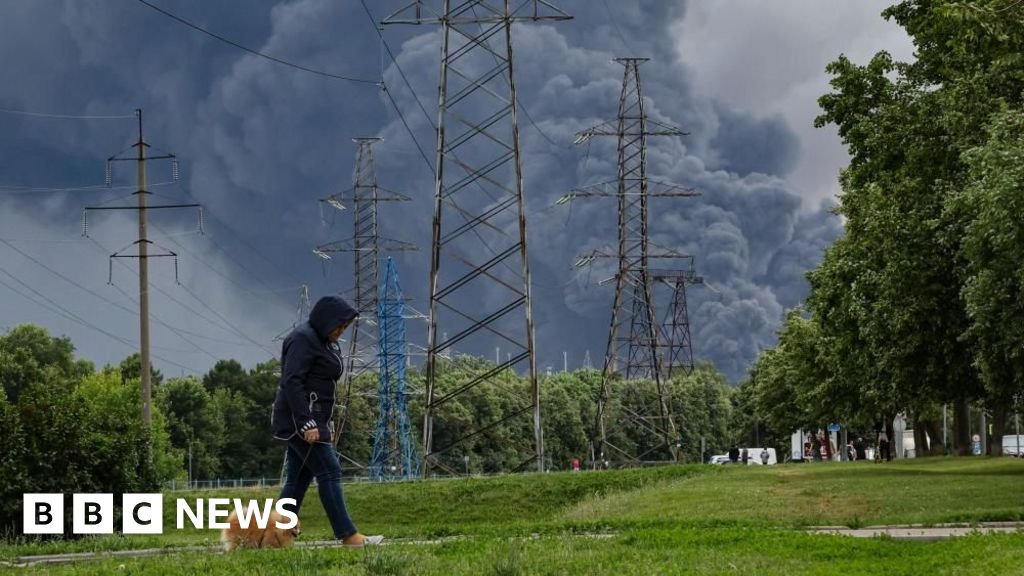
There are moments when life in Moscow feels completely normal. Thursday morning wasn’t one of them.
In the south-east of the city an oil refinery had been hit during a Ukrainian drone attack – even from a distance the sight was surreal.
Thick smoke billowing from the direction of the facility had turned the sky dark. Like a giant black shroud, it hung over the Moscow skyline.
As extraordinary and eye-catching this was, so was the reaction of people near the refinery.
Paying minimal attention to the huge clouds of smoke, an angler sat by the side of a pond, staring out across the water as he carried on fishing.
At the playground opposite, children were having fun on the swings.
Shoppers were heading to and from a supermarket, as if this was just another Thursday.
I realised then that my sense of what’s normal in Moscow and what’s not, needed updating.
For so long, the war on Ukraine felt very distant to people in the Russian capital. Many pretended it wasn’t happening at all, but that’s harder to do as the front line creeps closer to the city.
Over the past year-and-a-half, Muscovites have woken to news that army generals in Moscow have been assassinated, and drones have been targeting the capital.
In a sense, abnormal is already the new normal.
Thursday’s attack was one of the largest aerial assaults on the Moscow region since Russia’s full-scale invasion of Ukraine.
As well as damage to the oil refinery, shopping centres and residential buildings were hit, too. According to the governor of the Moscow region, an eight-year-old girl was killed in a fire caused by one of the drone strikes.
“I’m not totally surprised by what happened,” says Slava, who lives in an apartment block opposite the oil refinery. “But I didn’t expect such a big attack.”
“I heard explosions and saw lots of smoke. It’s the kind of thing you normally see in the movies. I saw it from my apartment window.”
But another local resident, Nadezhda, saw nothing normal in what’s happening.
“It took us four years to win World War Two, even though our soldiers had little food and water,” she told me.
“Today we have all the resources we need. But this war goes on. I’m shocked.”
How do the Russian authorities respond to people like Nadezhda, to Russians struggling to understand why the Kremlin’s so-called “special military operation” is taking so long, and how it can be that the war has come to their city?
Russian officials regularly accuse the West of prolonging the war in Ukraine, blaming European leaders and Nato for supporting Kyiv.
But on Thursday, President Vladimir Putin said nothing about the drone assault. The news bulletins on Russian TV channels barely mentioned it.
When Russian newspapers reported the story the following day, I detected a common thread in their coverage: a coordinated message, perhaps, for the domestic audience.
It can be summed up as this: “However bad it is for us, Ukraine’s suffering more”.
“Our attacks are doing far more damage to Ukraine than Ukraine is doing to us,” declared the ultra-pro-Kremlin Komsomolskaya Pravda.
“Our strikes to demilitarise Ukraine are far more powerful and effective than Ukrainian attacks,” wrote the tabloid Moskovsky Komsomolets.
The narrative was almost identical in the government paper Rossiyskaya Gazeta: “Our attacks on defence enterprises working for the Ukrainian army are much more powerful than those which Russians, unfortunately, are having to deal with.”
“Our strikes on Ukrainian infrastructure linked to the military-industrial complex are far more effective and produce more results,” commented business daily Kommersant.
When the Kremlin finally reacted, it had a similar message.
“You should look for more footage coming out of various cities in Ukraine,” Putin’s spokesman Dmitry Peskov told reporters.
“Footage showing the results of strikes carried out by our armed forces is impressive. These strikes will continue.”
There is no sign that Ukrainian drone attacks on Russian cities have given Putin pause for thought. From his recent speeches and statements, the Kremlin leader seems determined to continue Russia’s assault on Ukraine, confident that in this war of attrition his country will prevail.
But there are signs that long-range Ukrainian strikes – particularly on Russian oil facilities – are increasing the pressure on the Russian economy. Petrol shortages and rationing have been reported in some parts of the country, and prices have been rising at the pumps.
“It’s our government that must decide what to do. All we can do is watch.”
Food
Here’s why the Lincoln Memorial Reflecting Pool went green so fast


Just days after the Trump administration completed millions of dollars in renovations on the Lincoln Memorial Reflecting Pool to make it American flag-blue, residents and online users noted it had turned a phosphorescent green.
Here’s why:
The calm, still waters of the Reflecting Pool make it an ideal nursery for algae growth. Algae need nitrogen and phosphorus to grow, and the Reflecting Pool is primarily fed by the Potomac River, which gets heavy doses of those nutrients from nearby urban and agricultural lands.
The Potomac also absorbed one of the largest sewage spills in U.S. history earlier this year when a pipe burst five miles upstream of Washington, although that event probably happened too long ago to contribute to the algal bloom today.
Untreated sewage is high in nitrogen and phosphorus. When nutrient levels are high, feasting algae can quickly reproduce.
The Department of the Interior said when the algae first appeared that it was “residual,” from the supply lines to the pool.
Experts also speculate that the darker blue color may be helping the Reflecting Pool absorb more heat. The higher temperatures promote algae growth by allowing their metabolisms to shift into overdrive.
Summer temperatures in D.C. aren’t helping. This week, temperatures are as high as 95 degrees in the city, prompting a heat alert.
The combination probably explains the excessive growth, turning the water surface an opaque green and preventing onlookers from seeing the new blue hue of the concrete basin.
Algae are important and beneficial organisms when the ecosystem is in balance. They’re the base of the aquatic food chain, fed on by herbivores of all shapes and sizes, including shrimp and juvenile fish, which in turn feed organisms higher up the food chain. The single-celled organisms use the power of the sun to produce energy through photosynthesis, similar to houseplants on your balcony.
In an effort combat the algae in the Reflecting Pool, employees of the National Park Service were seen pouring in gallons of hydrogen peroxide, a chemical commonly used in pool maintenance.
The Department of the Interior also is employing a “high-tech nanobubble ozone technology” to destroy the cells of the algae.
Ozone — yes, the same irritant that is in smog — is a gas composed of three oxygen molecules, and the small size of the bubbles allow the most gas transfer into the water, where it can damage algal cells, similar to how it irritates our lungs.
This only treats the symptoms, however. Generally, ozone nanobubbling is effective as a temporary solution for algae blooms. Longer-term fixes would have to address what makes the Reflecting Pool so ideal for algae, such as its depth, darker color and inflow of nitrogen and phosphorus.
Food
What’s open and closed on Juneteenth 2026? Find out if banks, USPS and stores are operating.
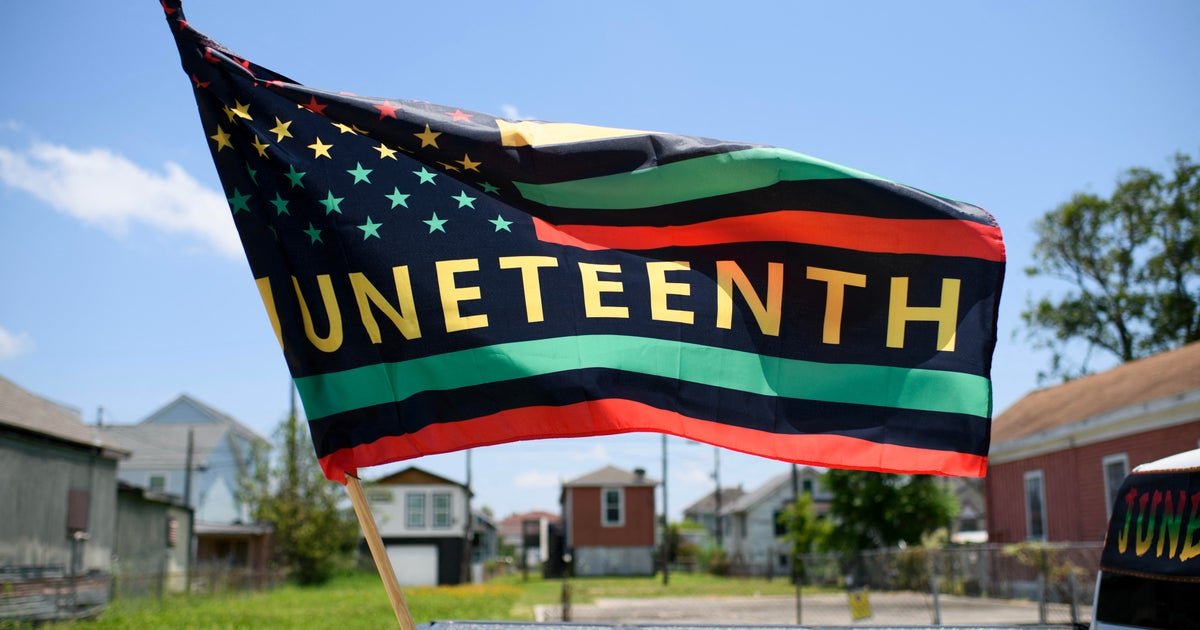
Many Americans will have the day off on Friday, June 19, to celebrate Juneteenth, the federal holiday commemorating the end of slavery. While most stores will remain open, some services will be unavailable.
The stock market and most banks will be closed on Friday. While many stores will remain open, make sure to check local store hours as they may vary by location.
Also known as Freedom Day or Emancipation Day, Juneteenth marks the day in 1865 when Union soldiers arrived in Galveston, Texas, to inform enslaved people that the Civil War had ended and they were free.
Read on to see what’s open on Juneteenth.
Is Walmart open?
Yes, Walmart will operate during normal hours on Juneteenth, a spokesperson confirmed.
Is Costco open?
While Costco is closed for other federal holidays, it will remain open for Juneteenth.
Is Target open?
Target will be open during normal business hours, which vary depending on location, according to a spokesperson.
What grocery stores are open?
Food Lion
Kroger
Stop & Shop
Trader Joe’s
Wegmans
Whole Foods
What stores and fast-food chains are open?
Apple
CVS
Dunkin’
HomeGoods
Homesense
IHOP
Kohl’s
Lowe’s
Macy’s (some stores will have extended hours)
Marshalls
McDonald’s
Petco
Nordstrom
Sierra
Starbucks
Taco Bell
TJ Maxx
Are banks open?
Major banks such as Bank of America, Chase and Wells Fargo will be closed on Friday.
Is the stock market open?
The stock market will be closed on June 19 in observance of the Juneteenth holiday, according to the New York Stock Exchange and Nasdaq websites.
Are FedEx, UPS and USPS open on Juneteenth?
FedEx and UPS will make deliveries and keep retail locations open on June 19, according to their respective websites.
However, you may run into issues if you’re trying to mail something. All U.S. Postal Service locations will be closed, and USPS mail deliveries will be suspended for Juneteenth. Services will resume Saturday, June 20, according to USPS.
Food
What’s open and closed for Juneteenth 2026?
Many Americans will have the day off on Friday, June 19, to celebrate Juneteenth, the federal holiday commemorating the end of slavery. While most stores will remain open, some services will be unavailable.
The stock market and most banks will be closed on Friday. While many stores will remain open, make sure to check local store hours as they may vary by location.
Also known as Freedom Day or Emancipation Day, Juneteenth marks the day in 1865 when Union soldiers arrived in Galveston, Texas, to inform enslaved people that the Civil War had ended and they were free.
Read on to see what’s open on Juneteenth.
Is Walmart open?
Yes, Walmart will operate during normal hours on Juneteenth, a spokesperson confirmed.
Is Costco open?
While Costco is closed for other federal holidays, it will remain open for Juneteenth.
Is Target open?
Target will be open during normal business hours, which vary depending on location, according to a spokesperson.
What grocery stores are open?Food LionKrogerStop & ShopTrader Joe’sWegmansWhole FoodsWhat stores and fast-food chains are open?AppleCVSDunkin’HomeGoodsHomesenseIHOPKohl’sLowe’sMacy’s (some stores will have extended hours)MarshallsMcDonald’sPetcoNordstromSierraStarbucks Taco BellTJ MaxxAre banks open?
Major banks such as Bank of America, Chase and Wells Fargo will be closed on Friday.
Is the stock market open?
The stock market will be closed on June 19 in observance of the Juneteenth holiday, according to the New York Stock Exchange and Nasdaq websites.
Are FedEx, UPS and USPS open on Juneteenth?
FedEx and UPS will make deliveries and keep retail locations open on June 19, according to their respective websites.
However, you may run into issues if you’re trying to mail something. All U.S. Postal Service locations will be closed, and USPS mail deliveries will be suspended for Juneteenth. Services will resume Saturday, June 20, according to USPS.
Food
Hormuz relief may not ease the economic toll that’s already ‘baked in,’ analysts warn

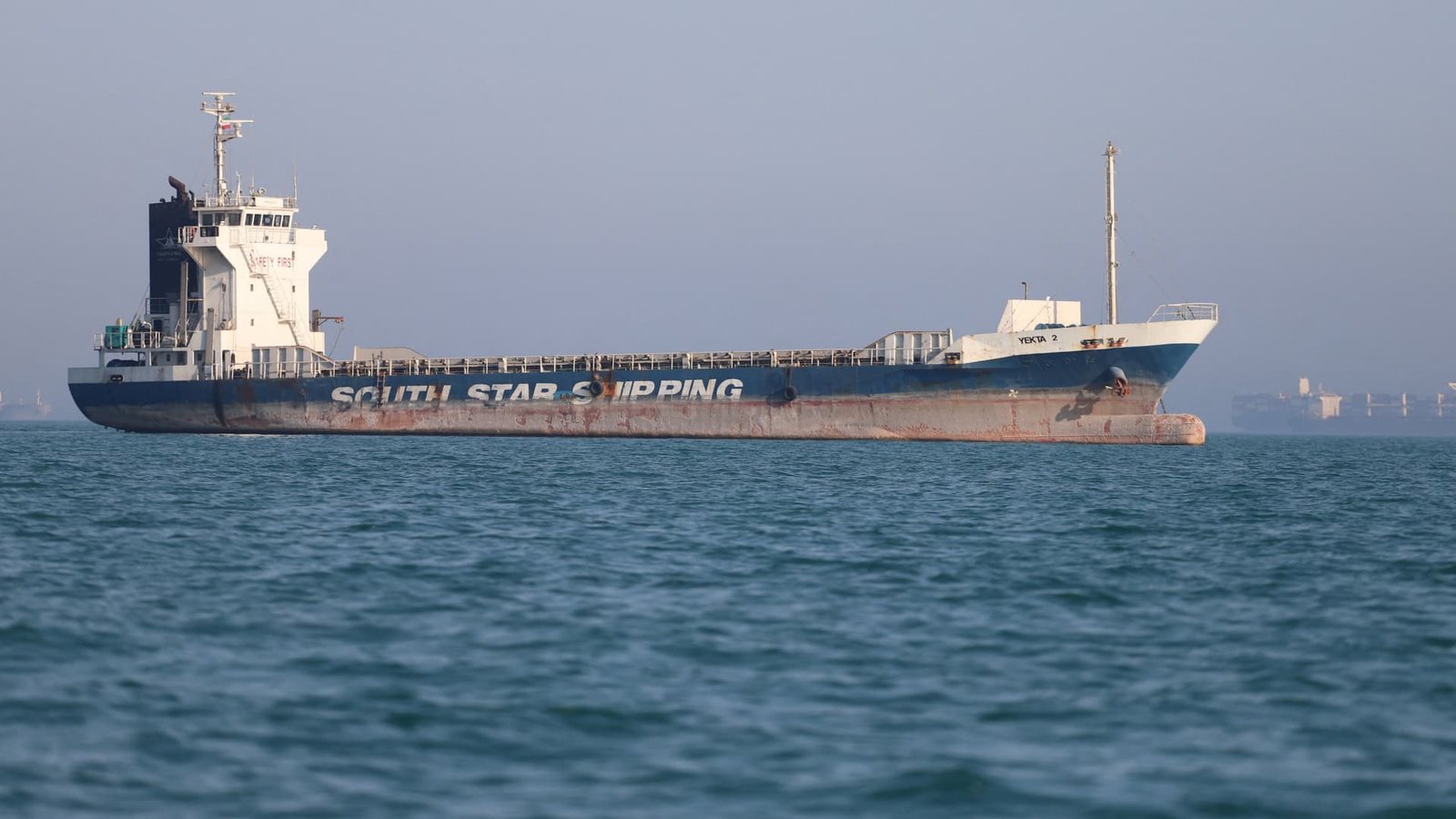
Early signs that the Strait of Hormuz is reopening have eased the most acute threat to global energy supplies, but economic damages from the nearly four months of war will take months to unwind, analysts warned.
The U.S. and Iran signed a memorandum Thursday to open the Strait of Hormuz, ending a war that has upended global energy supply chains, pushed inflation higher and dented the outlook for growth.
But even if shipping through the strait normalizes, higher inflation has already been largely “baked in” across many economies, Simon MacAdam, deputy chief global economist at Capital Economics, said in a note this week.
“It can take many months for higher energy and fertiliser prices to be passed along food supply chains to end-consumers,” MacAdam said. Prices of natural gas piped to households typically lag the upstream market by around three months, he said.
Oil prices retreated to around $80 a barrel on Friday, down from a peak of $118 in March when the war was at its height. Goldman Sachs cut its oil price forecast Tuesday, projecting Brent to average $80 in late 2026 and $75 in 2027, citing a faster-than-expected recovery in Persian Gulf crude flows.
Higher energy costs and upstream supply disruptions would take longer to feed through to the downstream food and energy sectors. A backlog of vessels waiting to transit the Strait of Hormuz could further delay a full recovery in freight flows.
The World Bank, which last week lowered its global economic growth forecast to 2.5%, the slowest pace since the pandemic, expects global inflation to climb to 4% this year, up from 3.3% in 2025, even if disruptions to oil flows ease in the coming weeks.
Fertilizer prices could jump as much as 38% this year as supply disruptions and shortages of key inputs from the Gulf ripple through agricultural markets, it said.
Europe could face particular pressure because natural gas storage levels remain historically low, MacAdam said, expecting inflation in Europe and Japan to rise by an additional 3 to 4 percentage points as U.S. liquefied natural gas export prices move higher.
The European Central Bank was the first major central bank to raise interest rates last week, its first tightening move in nearly three years.
Meanwhile, the Fed, under new Chairman Kevin Warsh, left short-term interest rates unchanged on Wednesday but raised its forecast for personal consumption expenditures inflation to 3.6% by December, from 2.7% projected in March. Nine of the 18 voting members expect at least one rate hike before the end of this year.
The trajectory underscores how the Hormuz crisis has altered the calculus for central banks trying to balance slowing growth against rising inflation.
The Bank of England also kept its policy rates unchanged but warned that “even in the event of prompt conflict resolution, there could be a logistical delay in restoring energy production and transportation.”
Food
Ebola patients flee treatment centres in Congo for food as hunger crisis deepens
KINSHASA – Ebola patients are fleeing treatment centres in the Democratic Republic of Congo in search of food, underscoring how hunger has become one of the biggest obstacles to containing the virus.
Outbreak responders are “coming to us, knocking on our door and saying: ‘We need food assistance if we’re going to end Ebola,’” said David Stevenson, who runs the World Food Program’s operations in Congo and has spent three decades working in humanitarian emergencies.
“I’ve never seen anything like it.”
Government reports have documented more than 150 escapes from Ebola treatment and isolation facilities since late May.
In one incident, 11 suspected patients fled a hospital in Bambu, about 40km from the outbreak’s epicentre around the gold-mining town of Mongbwalu, because of inadequate nutritional support, according to the health authorities. Other reports have linked patient departures to food shortages and poor living conditions.
Even before the outbreak, eastern Congo was grappling with widespread displacement, conflict and one of the world’s worst hunger crises.
Now those pressures are colliding with efforts to contain a virus that has already infected almost 900 people, killing more than a quarter of them.
Food insecurity impacts almost 10 million people in the country’s eastern provinces, not only complicating efforts to isolate patients but also to monitor people exposed to the virus.
The health authorities are currently tracking about 6,400 people who may have been exposed to Ebola. Families asked to remain under observation often lose access to work, markets and other sources of income.
“If you confine people, they will need to be supported with food. And if they don’t get food, they will move,” said Olivier Nkakudulu, head of field operations in Ituri, the province that accounts for more than 90 per cent of confirmed cases, for the World Food Program.
The consequences can be especially severe when the person under observation is the household’s main provider.
“Just imagine if we put a single mother into isolation, what will happen to the children?” said Godfrey Ayena, national director of Food for the Hungry in Uganda.
Similar challenges can arise in child-headed or elderly-headed households, he said.
In much of the region, families typically provide food for hospitalised relatives, meaning Ebola isolation rules can abruptly cut patients off from their usual support networks.
The United Nations’ food assistance agency is now providing hot meals at Ebola treatment centres and delivering food to patients, monitored contacts and affected families.
This week, 590 hot meals were distributed in a single day to suspected and confirmed patients, contacts under observation and caregivers.
Health workers recall encountering similar challenges in previous outbreaks.
“When people don’t have food, it causes them to be desperate,” said Kenneth Kobba, a Ugandan public health physician preparing to deploy to eastern Congo, where he will respond to his fourth Ebola crisis.
‘Terrible choices’
Kobba recalled that during Uganda’s 2022 outbreak, some people repeatedly came to treatment units claiming to have symptoms because meals were available there, potentially exposing themselves to infection.
“Someone will come and tell you I have fever and headache,” he said. By the time test results came back, the person would already have received several meals.
Years of conflict in eastern Congo have disrupted agriculture, displaced millions of people and made it difficult for humanitarian agencies to reach vulnerable communities. Recent cuts to aid budgets have compounded those challenges, forcing relief organisations to balance competing priorities.
“This requires making terrible choices between the extremely hungry who are next to starvation and those who are very hungry and do not know where they’re going to get their next meal,” Stevenson said.
Jacques, 52, who declined to give his last name for security reasons, said he has been relying on churches in Beni to help feed his 14 children after fleeing fighting around Bukavu in South Kivu province.
Two weeks
A little over a week ago, his 5-year-old daughter began vomiting and bleeding from her ears. He brought her to Beni’s main hospital, where she died a few hours later. His wife is now in isolation at the same facility with Ebola.
Since arriving at the hospital, he has received a food kit from the World Food Program.
“That’s enough for two weeks, and after that what are we going to do to eat?” he said.
WFP is seeking US$175 million ( S$226.23 million ) until November for its Congo operations, including US$32 million earmarked for Ebola-related activities, according to Stevenson. The agency’s budget in the country has fallen by about a third over the past two to three years.
“The need to address the wider population is crucial, and we’re just not going to be able to end Ebola unless we address those needs,” he said. “It simply will not work.” BLOOMBERG




Is Gen Z trapped by AI? | BBC News
Young people were told artificial intelligence would make them sharper, faster, more creative — and more employable. But for …


Do England men's football matches trigger a rise in domestic violence? #WorldCup #BBCVerify #BBCNews


Social media can be a 'useful tool' for young people, says Big John. #BBCNews

Extreme heat will continue to intensify in UK and Europe | BBC News
The Met Office has issued an amber extreme heat warning for parts of southern and eastern England and south Wales.

Moscow oil refinery attack brings Russia’s war with Ukraine closer to home
There are moments when life in Moscow feels completely normal. Thursday morning wasn’t one of them. In the south-east of...


Top tips for keeping kids safe in the heat. #Summer #HeatHealth #BBCNews


What we know about Bedford train crash. #Bedford #England #Trains #Railway #BBCNews


Planning to work in retirement? Don’t count on it.
Most Americans plan to keep on working after they retire. Yet, few retirees work. That finding, from a recent survey,...


The U.S.-Iran negotiations have been chaotic. But the confusion has only grown since the MOU was signed.
WASHINGTON — The effort by the U.S. and Iran to negotiate an end to the war has been defined by...


A Humble 3-Wheel Electric Vehicle Lands Toyota in Federal Court
A lawsuit filed in California last month offers a modern-day David-versus-Goliath tale that casts the world’s largest automaker, Toyota Motor,...
-

 Business7 days ago
How much of Musk’s wealth comes from government help? Virtually all of it
-

 Politics1 week ago
What to know about the stabbing that set off fiery riots in Northern Ireland
-

 Video1 week ago
Download fans say what they love about the festival. #DownloadFestival #BBCNews
-

 Video1 week ago
Why SpaceX IPO isn't about space. #SpaceX #ElonMusk #BBCNews
-

 HealthNews1 week ago
The people of Okinawa, Japan only eat until they are about 80 percent full, then stop — and the practice has been linked in multiple peer-reviewed studies to lower rates of cardiovascular disease, slo
-

 Food1 week ago
Pope Leo’s plane was grounded. Then the King of Spain stepped in to help
-

 TravelNews1 week ago
My Paternal Instinct Should’ve Warned Me About Netflix’s Maternal Instinct
-

 Video1 week ago
Claire Danes has the cutest stories about young Kirsten Dunst on 'Little Women' set