

Business
Video shows moment Starbucks employee fights off robbers – and gets fired for it


Newly released shocking video shows the moment a Starbucks employee confronted two robbers at his St. Louis store, in a move he claims got him fired from the world’s largest coffee chain.
Michael Harris said Starbucks fired him and another coworker after they confronted men who attempted to rob their store in December 2023, according to local outlet Fox 2. This week, more than two years after the attempted robbery, the outlet has obtained new footage of the incident.
Security cameras inside the store captured the chaotic scene after two men walked in and demanded money. One of them went behind the counter and shoved an employee to the ground, the footage shows. A customer who pulled up to the drive-through was also seen reversing their car after realizing what was happening inside the store.
Harris told Fox 2 that one of the robbers hit him with a gun, and he thought he was “about to get shot.” But moments later, another Starbucks employee, who was also later fired, shoved one of the men and realized the gun was fake, according to the outlet.
“My coworker announced that it was a fake gun like right as he got it off of them and that’s when we jumped and like started to fight them a little bit more,” Harris told Fox 2.
One of the men got away, but Harris and his coworkers restrained the other until police arrived, he told KSDK in 2024. They have since been convicted of robbery.
Harris sued for wrongful termination in 2024, and his case is set for a jury trial beginning next summer, his attorney, Ryan Krupp, told The Independent.
“Situations like this remind us of a fundamental truth both ethically and legally: we owe our employers our good work, not our lives. My clients did the right thing and they were wrongfully punished,” Krupp said.
When reached for comment, Starbucks spokesperson Jaci Anderson said the company was “deeply disturbed by this frightening incident and are grateful that our partners and customers were not more seriously injured at the time.”
“Our training and protocols are designed to support partner safety by emphasizing de-escalation, helping to reduce the risk of an already volatile situation intensifying. All partners are trained at hire and annually on these practices, including robbery scenarios that reinforce complying with demands and avoiding actions that could increase risk,” Anderson told The Independent.
“While we recognize how intense and unpredictable these moments can be, adherence to these protocols is essential to help protect both partners and customers,” she added.
Business
Planning to work in retirement? Don’t count on it.


Most Americans plan to keep on working after they retire. Yet, few retirees work.
That finding, from a recent survey, illustrates a perennial gap between expectations and reality for American retirees.
Roughly three-quarters of American workers plan to work for pay after they retire, according to the 2026 Retirement Confidence Survey from the Employee Benefit Research Institute. But only 31% of retirees are actually working, the survey found.
In previous EBRI surveys going back to 1999, the finding is remarkably consistent. Year after year, between 70% and 80% of workers say they expect to continue working and drawing pay after they retire. Yet, the share of retirees who work has never ranged higher than 34%.
False hopes about working in retirement speak to fundamental misunderstandings about retirement and the labor market, experts say.
Most of us don’t retire on our own terms
Many American workers imagine themselves easing into retirement at their own pace: Cutting back their hours, working part-time or remotely, or staying on as a consultant to the company that once employed them full-time.
Other workers imagine they will keep working full-time well into their retirement years, drawing a salary into their 70s, working until they drop.
In reality, though, most workers don’t get to retire on their own terms. Retirement often arrives suddenly and unexpectedly, triggered by health setbacks or corporate downsizing.
And once you’re retired, returning to the workforce is seldom easy.
“People do expect to gradually transition by reducing hours, but what ends up happening is, they end up stopping completely,” said Craig Copeland, director of wealth benefits research at EBRI, the research and education nonprofit, in an April interview with USA TODAY.
In many cases, to keep working in retirement, “you’re going to have to find a whole new job,” Copeland said. “And it’s hard to find a whole new job when you’re older.”
When work is part of your retirement plan
Working in retirement sounds like an oxymoron: In theory, you’re either working or retired, not both.
The persistent desire to work in retirement, voiced in the EBRI survey and others, seems to reflect a pervasive hope among American workers that they can fund their retirement by continuing to work.
Many American workers fear they aren’t saving enough. According to EBRI, roughly two-fifths of workers lack confidence in their financial security through retirement. Retirement confidence has been trending lower in recent years, a time of elevated inflation and myriad economic uncertainties.
The EBRI survey draws on responses from 2,544 Americans in January.
In the EBRI report, 75% of workers said they expect to leverage work as a source of income in retirement. Paid work ranks fourth among all expected income sources in retirement on the survey, after Social Security, workplace and personal retirement savings.
“That’s one of the ways that they’re planning for retirement, and that is to continue to work and bring in income,” Copeland said.
Yet, only 27% of current retirees report that they are drawing income from paid work.
Working in retirement is harder than it sounds
One barrier to working in retirement is the relative scarcity of part-time work: Easing from a full-time to part-time schedule in a professional field is not as easy as it might sound, Copeland said.
Another problem is the difficulty older Americans have in finding new jobs.
“Re-entering employment can be very difficult when you’re an older jobseeker,” said Maura Porcelli, senior director of workforce at the National Council on Aging, speaking to USA TODAY in April.
Other retirement surveys show the extent to which Americans count on paid employment to fund their retirement.
In a recent report from the Transamerica Center for Retirement Studies, 48% of pre-retirement Americans said they plan to work in retirement, while 32% said they did not, with another 19% unsure.
“Many workers are planning to work in retirement for financial and healthy aging-related reasons,” said Catherine Collinson, CEO of the Transamerica Center, in an April interview. “However, the experience of retirees shows that life happens,” including health issues, family responsibilities or job loss that pushes people abruptly out of the workforce.
Some of the conflicting data, Collinson said, may reflect disparate societal attitudes about retirement. For example: If a corporate worker takes a retirement package, lives in retirement for a year or two and then lands a full-time job in a related field, is that person still retired?
“Semantically, when people self-identify as ‘retired,’ are they supporting a societal expectation that they are no longer working?” she said.
Here’s why American retirees return to work
American retirees continue to work for a variety of reasons: to stay active and engaged, to postpone drawing Social Security or spending down retirement savings, to make ends meet.
Recent evidence suggests more retirees are working out of necessity. A February report from AARP found that 7% of American retirees had recently “unretired,” reentering the labor force. The most common reason was to make more money.
“I think right now we’re in this economic uncertainty zeitgeist,” said Carly Roszkowski, vice president of financial resilience programming at AARP, in an April interview. “People are worried about outliving their retirement savings. They’re worried about the cost of gas, the cost of groceries.”
In a perfect world, Roszkowski said, retirees would work not because they need to, but because they want to.
“A lot of people feel that they still have a lot left to give,” she said. “They want to be challenged, they want to feel purpose, they want to give back.”
Business
A Humble 3-Wheel Electric Vehicle Lands Toyota in Federal Court


A lawsuit filed in California last month offers a modern-day David-versus-Goliath tale that casts the world’s largest automaker, Toyota Motor, in the role of the giant battling against a shoestring operation in Africa — but with a twist.
The legal fight is not about some top-secret new automotive technology or significant sums of money. It is about a humble three-wheeled electric vehicle designed to help poor African farmers transport their wares to the market. The lawsuit comes after Toyota has been criticized by environmentalists for being slow to embrace electric vehicles and for lobbying U.S. lawmakers to ease emissions regulations.
In the case, filed in federal court, an organization called Mobility for Africa asserts that Toyota Mobility Foundation, a nonprofit created by Toyota and managed by its executives, stole its technology and plans for the three-wheeled vehicle and handed it to a for-profit company operating in Kenya. The Toyota foundation’s conduct, the lawsuit says, has made it difficult for Mobility for Africa to raise money and expand its vehicles beyond Zimbabwe where it operates.
Both projects in Africa are tiny by the standards of the global auto industry — Toyota last year sold more than 11 million vehicles. Mobility for Africa’s project in Zimbabwe has just 322 vehicles, and the Kenya project it claims is using its technology has just 70 vehicles, according to its website.
The fact that the dispute has reached the stage of a federal lawsuit is befuddling and frustrating to the woman who founded Mobility for Africa, Shantha Bloemen, a former UNICEF official.
“There is already a huge deficit of transport in the rural parts of the continent,” Ms. Bloemen said from Johannesburg, where she lives. “And it translates into a huge economic and social burden, especially for women.”
Thank you for your patience while we verify access. If you are in Reader mode please exit and log into your Times account, or subscribe for all of The Times.
Thank you for your patience while we verify access.
Already a subscriber? Log in.
Want all of The Times? Subscribe.
Business
How much more have you paid for gas since February? Updated daily.

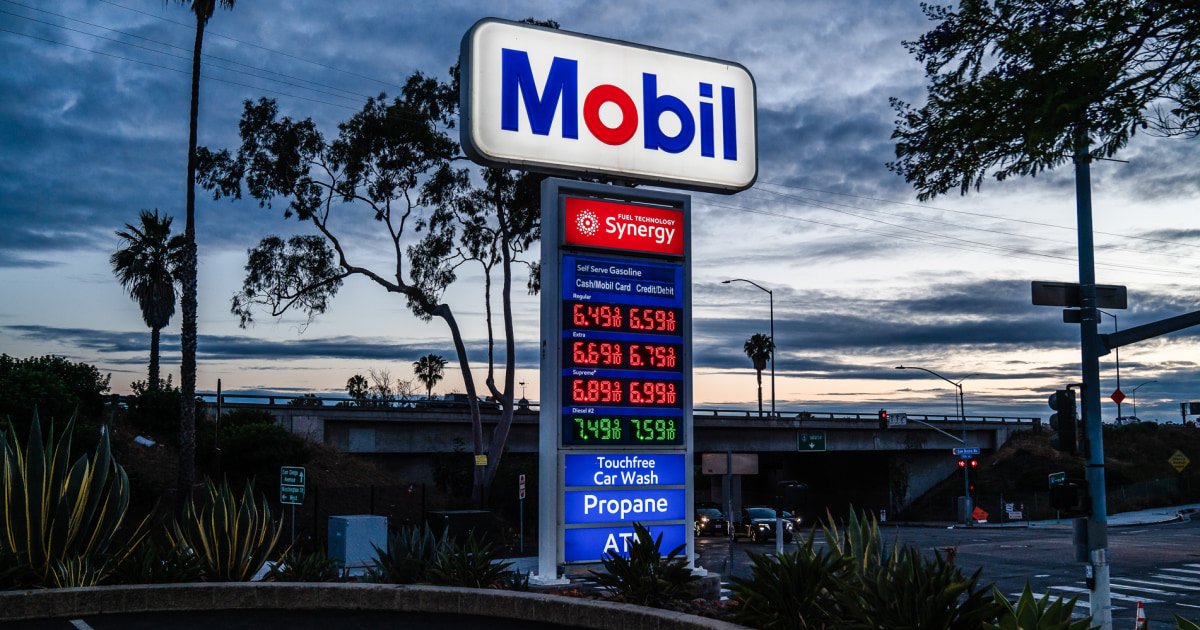
After nearly four months of war, does your wallet feel lighter?
Since the war started, Americans have spent an additional $33 billion on gasoline, according to a Brown University estimate. Increased gas prices have resulted in higher monthly expenses for individuals — anywhere from less than $20 to more than $300 for a driver who fills up twice a month, according to an NBC News analysis of AAA’s average national gas price data.
Just how much has the spike in gas prices bitten into your budget? Use our calculator to estimate your additional expenses at the pump since the start of the war in Iran. The calculator updates with the latest data daily.
The cost model used in the calculator takes a sample of the average daily gas price in the U.S. since the start of the war, simulating how gas prices vary depending on which day you fuel up. The results you get will fall in a range of average costs and change slightly as you use the tool.
Since Feb. 28, when the U.S. first struck Iran, average gas prices nationally have risen 34%. A recent peace deal announcement and subsequent memorandum of understanding have indicated the war could finally be close to the finish line.
Gas prices hit the 10th-highest weekly rate in the past 10 years the week of May 11, at an average of $4.63 per gallon nationally, according to data from the U.S. Energy Information Administration. The average gas price last topped $4 in 2022, after Russia invaded Ukraine.
Faced with higher prices, some Americans are driving less, or at least filling up less often. An analysis by the location analytics company Placer.ai found gas station visits across the U.S. were down 5% in May compared with May 2025.
Consumers’ spending habits are also changing; April data from the Federal Reserve Bank of New York found consumers expect to spend more on transportation and utilities over the next 12 months and less on vacations, homes and electronics.
At the state level, an NBC News analysis finds Wyoming residents are feeling the greatest strains since the start of the war, with gas prices up more than 50% since February, averaging $4.70 per gallon Wednesday.
Utah and Wisconsin, in addition to Wyoming, have experienced the highest rates of change, with prices up at least 50% from four months ago. Indiana’s gas prices have remained the most resilient, up only 57 cents since February.
Business
Administration Is Engaging in Backdoor Student Debt Cancellation
The Education Department announced today that they will quadruple the auto-pay incentive to reduce a student loan borrower’s interest rate by 1 percent through 2028 if they enroll in auto-pay. We estimate this will cost at least $5 billion.
The following is a statement from Maya MacGuineas, president of the Committee for a Responsible Federal Budget:
Student debt cancellation was a mistake when the last administration tried it, and it’s a mistake now.
Make no mistake: quadrupling the auto-pay incentive is debt cancellation by another name. And worse, it’s targeted at people already making repayments.
The auto-pay interest deductions don’t even reduce monthly payments or improve affordability — they just wipe out debt balances, especially for high earning professionals that are already doing quite well.
It’s not even clear this is legal, given how the courts have rolled on previous attempts to wipe out student debt. And even if it is, why do we keep adding to the federal deficit for no particular purpose?
The current quarter-point discount to auto-pay has been in effect since 1999. It is working just fine. Once we expand it, what’s to stop the next President (or this one) from implementing a 5% auto-pay discount, effectively making federal student loans interest-free for those making payments?
Congress just put in place a new Repayment Assistance Plan that includes the interest subsidy’s intent. We shouldn’t be expanding those further without offsets and by executive fiat.
If the administration really wants to make education affordable, they’d focus on working with Congress to close the $100 billion-plus Pell Grant shortfall that will leave low-income college students with significantly reduced Pell Grants.
###
Business
Stronach Convicted of Sexual Assault, Indecent Assault

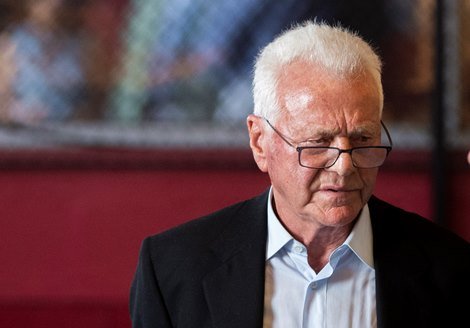
Prominent owner/breeder Frank Stronach was found guilty on charges of indecent assault and sexual assault June 19 by Ontario (Canada) Superior Court Justice Anne Molloy, according to the Toronto Sun.
The newspaper reported that Stronach was found guilty on two of five charges considered by the court. His sentencing is delayed until Sept. 17.
Stronach, 93, of Aurora, Ontario, is a four-time Eclipse Award winner as outstanding owner and the breeding operation he founded, Adena Springs, is a seven-time winner as outstanding breeder; he earned another outstanding breeder under his own name. Stronach, through companies he controlled, also once owned multiple tracks including Santa Anita Park, Gulfstream Park, and the Maryland Jockey Club.
The case goes back to June 2024 when Stronach was arrested and charged with one count of rape, one count of indecent assault on a female, one forcible confinement, and two counts of sexual assault. A release from Peel Regional Police of Ontario at the time of the arrest said the incidents dated from the 1980s-2023.
On Friday the Toronto Sun reported additional charges would grow to 12 before prosecutors decided to proceed with seven charges from four women involving incidents from 1977-1990. Another case involving two other charges continues, the paper reported.
At the time of his arrest, an attorney for Stronach said he denied the charges brought against him.
In its reporting Friday, the Toronto Sun said the indecent assault charge (involving complainant “V.T.”) dated to the fall of 1977 and occurred at Stronach’s apartment. The paper reported the sexual assault involved complainant “A.S.,” who was a cocktail waitress and occurred sometime between Jan. 4, 1983, and Dec. 31, 1984, at Stronach’s condo.
Stronach, who did not testify at the Toronto trial, pleaded not guilty to all the charges the paper reported, noting this was not a trial by jury as Stronach elected to stand trial before Molloy.




Trump's polling collapses while Obama's surges & more | Enten roundup
CNN chief data analyst Harry Enten runs the numbers, Trump's sinking approval ratings on the economy to President Obama's …


Is Gen Z trapped by AI? | BBC News
Young people were told artificial intelligence would make them sharper, faster, more creative — and more employable. But for …


The truth about how chiggers bite skin is horrifying
Summer is here, and just as we are shedding layers and welcoming the sunshine, insects are lining up to feast...


Do England men's football matches trigger a rise in domestic violence? #WorldCup #BBCVerify #BBCNews

Social media can be a 'useful tool' for young people, says Big John. #BBCNews


Extreme heat will continue to intensify in UK and Europe | BBC News
The Met Office has issued an amber extreme heat warning for parts of southern and eastern England and south Wales.


Moscow oil refinery attack brings Russia’s war with Ukraine closer to home
There are moments when life in Moscow feels completely normal. Thursday morning wasn’t one of them. In the south-east of...

Top tips for keeping kids safe in the heat. #Summer #HeatHealth #BBCNews


What we know about Bedford train crash. #Bedford #England #Trains #Railway #BBCNews


Planning to work in retirement? Don’t count on it.
Most Americans plan to keep on working after they retire. Yet, few retirees work. That finding, from a recent survey,...
-

 Business7 days ago
How much of Musk’s wealth comes from government help? Virtually all of it
-

 Politics1 week ago
What to know about the stabbing that set off fiery riots in Northern Ireland
-

 Video1 week ago
Download fans say what they love about the festival. #DownloadFestival #BBCNews
-

 Video1 week ago
Why SpaceX IPO isn't about space. #SpaceX #ElonMusk #BBCNews
-

 HealthNews1 week ago
The people of Okinawa, Japan only eat until they are about 80 percent full, then stop — and the practice has been linked in multiple peer-reviewed studies to lower rates of cardiovascular disease, slo
-

 Food1 week ago
Pope Leo’s plane was grounded. Then the King of Spain stepped in to help
-

 TravelNews1 week ago
My Paternal Instinct Should’ve Warned Me About Netflix’s Maternal Instinct
-

 Video1 week ago
Claire Danes has the cutest stories about young Kirsten Dunst on 'Little Women' set