

HealthNews
The truth about how chiggers bite skin is horrifying

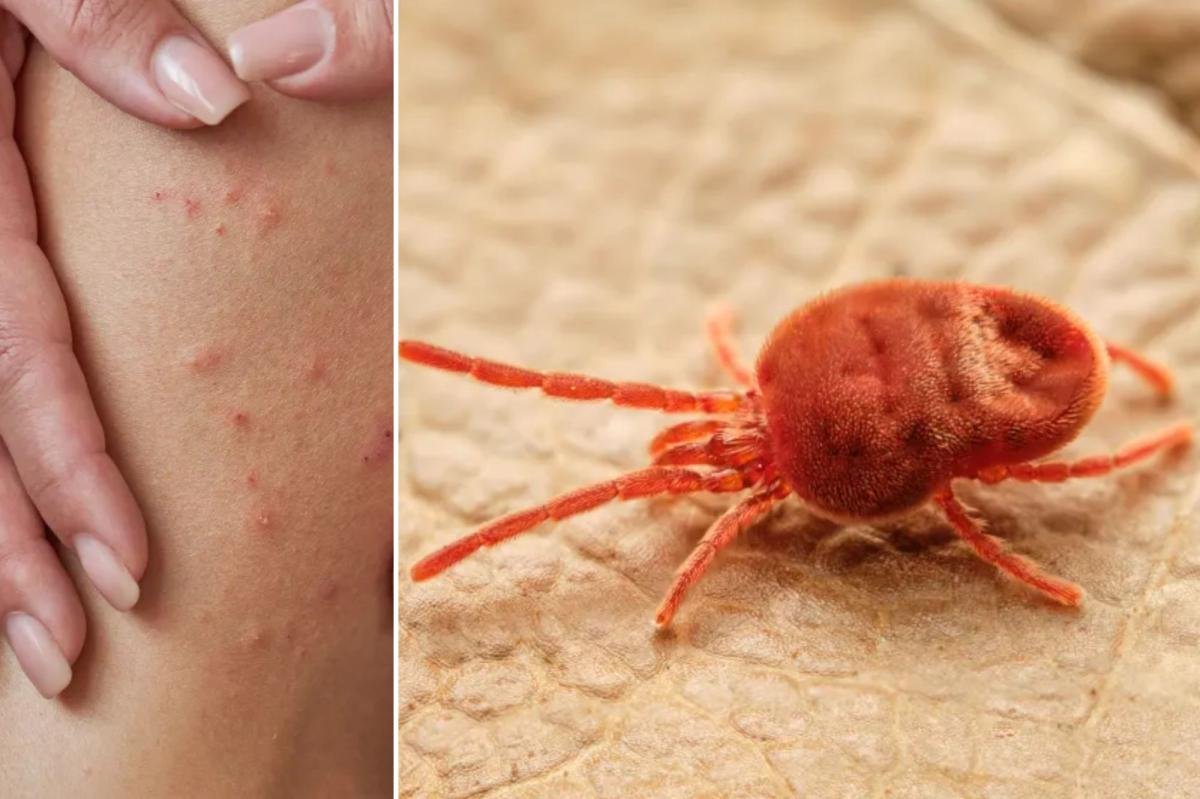
Summer is here, and just as we are shedding layers and welcoming the sunshine, insects are lining up to feast on our flesh.
While ticks and the scary diseases they carry are among the most fearsome of warm-weather insects, another tiny pest is making a meal out of mankind in a truly horrifying fashion.
Chiggers, miniature mites that live in grassy, wooded areas or near water, come alive in the summer season when warmer temperatures create ideal conditions for feeding and breeding.
Related to spiders and ticks, chiggers are petite parasites that are nearly invisible to the naked eye. Though they be but small, their effects are mighty and their approach to growth truly disturbing.
The creepy life cycle of a chigger begins when it hatches from an egg. These juvenile larval mites (band name) then feed on the skin of an animal or human host before falling off and transitioning into their adult form.
These six-legged larvae rely on the flesh of their hosts to supply the nutrients they need to grow into their eight-legged, non-parasitic best selves.
Typically, chigger larvae attach to clothing, favoring areas such as waistbands, bra lines and sock lines where skin and clothing are in close contact.
To satisfy their appalling appetites, chigger larvae move from clothing to skin, releasing a powerful digestive enzyme to make our cells slurpable.
As the enzyme liquifies skin cells, it hardens the surrounding tissue, creating a straw-like tube — known as a stylostome — that allows the chiggers to drink from our dermis like a morbid milkshake.
Because mites have mouths that can pierce but not tear or consume, this skin straw enables them to suck up liquified skin cells and, in some cases, blood for their gnarly nourishment.
Bottoms up.
The enzyme that kills skin cells also causes the intense itching that we associate with a chigger attack. The irritation peaks during the first 24-48 hours after contact, then subsides over the following two weeks.
The most common areas for chiggers to attach and attack are the ankles, lower legs, backs of the knees, waist and groin.
Chigger bites are not immediately apparent, as symptoms can take up to 3 hours after contact to appear.
Symptoms include red spots or pimples on the skin and severe itching.
Because chiggers feed on the skin rather than burrow into it, a rash usually appears only after the mites have detached, and treatment focuses on alleviating itching rather than parasite removal.
Treatment options include cleaning the affected area with soap and water, applying calamine lotion, cold compresses, and permethrin, and/or taking antihistamines.
You can prevent becoming chigger lunch by wearing protective clothing, using insect repellent, treating clothing with insect repellent, and avoiding outdoor activity in grassy, wet, or wooded areas during the summer months.
HealthNews
Utah marks a year of fighting measles
Utah has spent the past year fighting measles outbreaks — a grim milestone that could affect whether the United States can keep its measles-free designation.
More than 680 people have gotten sick since the state’s first outbreak began on June 20, 2025.
Unlike measles outbreaks in Texas, South Carolina and Arizona, the spread in Utah has been tough to contain to one region — infecting undervaccinated communities in nearly every county.
Measles popped up in healthcare settings, big-box stores and restaurants, and youth sporting events. In February, an exposure at a state high school wrestling championship sparked at least 46 cases among attendees.
Measles is one of the most contagious diseases known to medicine. It causes a tell-tale rash, high fevers, strong cough, ear infections and diarrhea.
While most recover, some — including young babies, pregnant people and those with weak immune systems — are at higher risk of developing dangerous complications like pneumonia, brain swelling, blindness or even dying. Even healthy people can develop issues years down the road, including a rare but fatal degenerative brain disease that manifests about a decade after infection.
The measles vaccine is safe and 97% protective after two doses.
Though Utah’s spread has slowed in recent weeks, state epidemiologist Leisha Nolen sees little opportunity to rest. She’s worried the start of school and arrival of colder weather in the fall will cause measles to surge again.
“It’s still here, it’s still transmitting,” she said. “We just need those few cases to hit the wrong community and it could flare up really big again.”
Utah sees the impacts of dropping vaccination rates
The worst spread has been in the southwestern part of the state, where 265 people have fallen ill with the vaccine-preventable disease since last summer. Overall, measles infections hit 22 of the state’s 29 counties.
In the state’s rural northeast, the conditions were also ripe for measles to spread. Daggett, Duchesne and Uintah counties — collectively dubbed the “tricounty” health region — has seen the second-largest decline in childhood vaccination rates in the state.
More than 16% of the region’s kindergarteners were missing their measles vaccines in the last school year, according to state data. Statewide, 12.8% were missing their vaccine, putting the state far short of the 95% vaccination rate needed to prevent measles outbreaks.
The TriCounty Health Department logged 74 cases of measles this spring, after people who got sick at the youth wrestling tournament spread the virus in school and later within their households.
The frontier region had seen a rise in vaccine hesitancy for some time, said Sydnee Lyons, the health department’s public information officer.
Despite the large number of cases, local and state health officials consider TriCounty’s measles response a success.
Health officials focused efforts on mitigating the inevitable spread. Unvaccinated students were excluded from in-person school and people who were sick were told to isolate themselves. And their appeal to care for one’s neighbors led to more people coming in to get vaccinated, officials said.
TriCounty’s infectious disease specialist Cyndie Mattinson recalled a parent who told a school nurse she didn’t want to talk to the health department because “she was worried that we would be angry with her and be judgmental because her children were unvaccinated.”
The nurse vouched for the health department staff, and told the mom to let her know if she felt judged. Mattinson ultimately had a great conversation with the mother.
“The perceptions were changed that we weren’t out there to police, we were there to be a help and a resource to the community,” Mattinson said.
Health experts will meet to decide on US measles status
Utah’s lengthy battle with measles will likely affect whether the U.S. can keep its measles-free designation. Public health officials consider measles to be eliminated from a country when it shows it stopped continuous spread within local communities for at least a year.
The national measles case count was 2,104 as of June 18, nearly surpassing last year’s record total.
Utah has fought measles for a year, but it’s not clear if the earliest clusters are connected with the major outbreak on the Utah-Arizona state line, which was detected in August, Nolen said.
But since then, most of the state’s measles cases have come from within Utah, not from other parts of the country.
International health experts will gather in November to determine if the U.S. and Mexico have lost their measles elimination status. Canada lost its status last year after ongoing outbreaks.
In Utah, doctors continue to reassure scared patients and lobby for better public health policy.
Dr. Ellie Brownstein, president-elect of the state chapter of the American Academy of Pediatrics and a pediatrician in Salt Lake City, spent the height of the outbreak opposing a bill that would have made school vaccine waivers easier to get. It failed, but she says there hasn’t been a clear cultural reckoning over measles’ resurgence.
“I don’t know that we get it to end,” Brownstein said. “I don’t know that we’re going to get this genie back in the box because there’s enough people out there to spread it.”
___
The Associated Press Health and Science Department receives support from the Howard Hughes Medical Institute’s Department of Science Education and the Robert Wood Johnson Foundation. The AP is solely responsible for all content.
HealthNews
Australia confirms first case of bird flu as virus reaches every continent


The H5N1 strain of bird flu has for the first time been found in Australia, the country’s agriculture ministry confirmed. It means the highly contagious variant has now reached every continent.
The disease was found in a migratory seabird, a brown skua, in remote Western Australia, Agriculture Minister Julie Collins said on Saturday.
The bird was found on a beach at the Cape Le Grand National Park near the town of Esperance, about 700km (434 mi) south-east of Perth, according to local media.
Australia was previously the only continent where the H5N1 bird flu strain had not been found.
Collins added that there was a second suspected case of bird flu – a southern petrel that was found exhausted on an Esperance beach, though she added that there was no “evidence of mass mortalities at this time”.
Threatened Species Commissioner Fiona Fraser said authorities would know “within a few days” if the virus was present in any other animal populations in Australia, according to a report by the national broadcaster, the ABC.
The report also quoted the country’s Chief Veterinary Officer Beth Cookson who said authorities had been “preparing for this event for a long time” and that the committee for emergency animal disease had convened on Saturday.
The H5N1 strain of bird flu was detected on the remote Australian territories of Heard and McDonald Islands in October last year – located in the southern Indian Ocean.
A study released this week estimated that around 13,000 baby seals from a group of 17,000 on Heard Island were killed by the H5N1 strain of bird flu since last August, more than 75% of the entire group. They also found higher than expected deaths in penguin populations.
Scientists believe bird flu was likely introduced to the islands last August from migrating birds from the French-owned Crozet Islands, about 1,800 km away.
Bird flu is a disease caused by a virus that infects birds and sometimes other animals, such as foxes, seals and otters.
The major strain – circulating among wild birds worldwide – is a type of the virus known as H5N1. It emerged in China in the late 1990s.
HealthNews
At least 30 dead in Congo camp as Ebola outbreak raises alarm

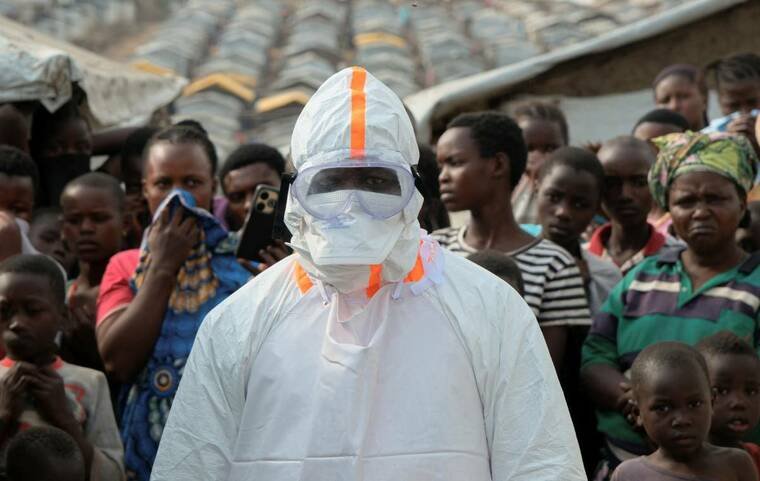
BUNIA, Democratic Republic of Congo >> At least 30 people have died since the start of May in one camp for displaced civilians in northeastern Congo, a death rate that camp officials said was unprecedented and, because of the symptoms, could indicate Ebola is spreading fast there.
It was not possible to confirm the causes of death because patients or their relatives in Kigonze camp in Bunia — the epicenter of the Ebola outbreak in Democratic Republic of Congo — had until today refused testing of the living or dead, a camp spokesperson and aid organization Caritas said.
However, all had symptoms including headaches, fever and vomiting, which are associated with Ebola, a camp spokesperson, a bereaved father, three aid sources and a civil society leader told Reuters.
“People didn’t just die like this before,” camp spokesperson Desire Grodya Bapi told Reuters.
The deaths in Kigonze, which has more than 15,000 residents, raise fears that Ebola may be circulating undetected among eastern Congo’s more than 5 million displaced people, with resistance to testing compounding the challenge posed by severely limited sanitation measures.
Camp President Dz’djo Ndrutsi Etienne said 10 people were buried this week alone. Grodya said the camp typically recorded between one and three deaths per month.
Justin Zanamuzi, director of Catholic aid organization Caritas, which helps Kigonze’s residents, said his team on Wednesday saw several bodies covered in sheets, including a pregnant woman and children.
Footage from today shared by the civil society leader and verified by Reuters showed health teams in hazmat suits disinfecting more bodies and preparing tiny coffins next to a crucifix as mourners wailed.
“Our team tried to persuade people to accept doctors to inspect the bodies. They completely refused,” Zanamuzi said.
The outbreak in the country was first declared by Congolese officials on May 15, but the officials said the deaths had begun earlier in the month.
Grodya, the camp spokesperson, said health workers had now taken samples from five victims and were awaiting the results.
Cholera also has Ebola-like symptoms and spreads quickly in poor communities, though it tends not to transmit person to person.
Camp resident Kato Lonu, 47, lost two children, including a 6-month-old.
“These are conditions that no human being should have to live in. If you look around, people are dying one after another,” he said.
Four aid workers said the spike in deaths highlighted how communities were now more exposed to diseases such as Ebola as donors, including key contributor the United States under President Donald Trump, have cut funding for water, hygiene and sanitation, which is essential in fighting a disease that spreads through bodily fluids such as human waste.
Data compiled by the U.N. showed that funding for toilets and handwashing stations in Congo more than halved between 2024 and 2025, to around $38 million, and this year’s $80 million appeal is only 21% funded.
Congo has hundreds of camps for civilians fleeing war, some home to 100,000 people. Ebola deaths have already been recorded in another camp in the same province of Ituri, which has more than 90% of nearly 900 confirmed cases.
In Kigonze, large families share the same plastic tent spaced less than a meter apart and children wander its dirt alleyways barefoot.
There are toilets marked USAID — Washington’s international aid agency dismantled by Trump — and an aid source said the agency helped fund their construction.
However, Grodya and the aid source said there were not enough toilets and they often overflowed.
“The latrines, they fill up very quickly, and people have to empty them themselves, with their bare hands,” Grodya said.
Washington has been the top supporter of WASH services in Congo and provided more than $60 million in WASH services in 2024 to reduce the spread of diseases, a summary shared by a former USAID official showed.
The Trump administration has defended the cuts, saying it wants to focus on “hyper-prioritized life-saving humanitarian assistance.” Washington has committed more than $375 million in direct Ebola funding.
There was no immediate comment from the State Department.
Reuters could not establish exactly how much, if anything, Washington now gives to Kigonze.
But four aid groups — Mercy Corps, Danish Refugee Council, CARE International and Oxfam — said their USAID-funded WASH projects for displaced people in the three Ebola-affected provinces were scaled back or dropped since last year’s cuts.
Mercy Corps built 82 taps and more than 400 public toilets serving more than 125,000 displaced people in 2024. This year, funding cuts mean that fewer than 19,000 people are being served by six taps and no public toilets, the aid group said.
HealthNews
Measles exposure reported at LAX, nearby Hilton hotel after June flight


NEWYou can now listen to Fox News articles!
A traveler infected with measles may have exposed passengers at Los Angeles International Airport and guests at a nearby hotel after arriving in Los Angeles County earlier this month, health officials said Wednesday.
The Los Angeles County Department of Public Health said it is investigating a confirmed measles case involving a traveler who arrived aboard Cathay Pacific Flight CX 884 on June 11. The traveler was infectious while passing through Los Angeles County, potentially exposing others at LAX and the Hilton Los Angeles Airport Hotel.
The case marks the sixth measles infection reported in Los Angeles County this year. Health officials said the risk of exposure could increase as summer travel ramps up and Los Angeles welcomes international visitors for FIFA World Cup events being held in the region.
MEASLES CASES CONFIRMED AT FOUR MAJOR US AIRPORTS ACROSS COUNTRY AMID PEAK HOLIDAY TRAVEL
According to health officials, anyone who was at the Tom Bradley International Terminal between 10 a.m. and noon on June 11 may have been exposed. Officials also identified a potential exposure at the Hilton Los Angeles Airport Hotel, located at 5711 W. Century Blvd., between 11:15 a.m. and 12:15 p.m. that same day.
The Centers for Disease Control and Prevention is working with local health departments to notify passengers who were seated near the infected traveler on the international flight.
People who were at either location during the listed times could develop symptoms between seven and 21 days after exposure, officials said. The last day to monitor for symptoms is July 2.
AT LEAST 46 CHILDREN DEAD AMID MEASLES OUTBREAK AS VIRUS SPREADS GLOBALLY
“As measles cases increase, it is important that residents take steps to make sure they are fully protected,” Los Angeles County Health Officer Dr. Muntu Davis said. “The MMR vaccine is the safest and most reliable way to prevent measles and protect yourself, your family, and your community.”
CLICK HERE TO DOWNLOAD THE FOX NEWS APP
Symptoms include fever, cough, runny nose, red and watery eyes, followed by a rash that typically begins on the face before spreading to the rest of the body.
Fox News Digital reached out to the Los Angeles County Department of Public Health for additional comment but did not receive a response.
HealthNews
Research shows weight-loss drugs may also reduce cancer risk


Amna Nawaz:
A growing body of research suggests popular weight loss drugs like Ozempic and Wegovy may also help treat or prevent certain cancers. It’s the latest unexpected benefit to be associated with GLP-1s, which are now taken by one in eight American adults.
William Brangham has more.
William Brangham:
The results in these cases come from what are known as observational studies, not more rigorous clinical trials, and researchers say there are still many open questions.
That said, this was the hot topic at a recent conference of America’s top cancer doctors, where a number of observations all pointed in the same direction, that GLP-1s appeared to help fight cancer above and beyond the benefits that you would expect from weight loss alone.
So, to understand these implications and the limitations of these studies, we turn to Dr. Neil Iyengar. He’s director of breast oncology and cancer survivorship at the Winship Cancer Institute at Emory University.
Dr. Iyengar, thank you for being here.
There is this growing body of observational evidence that GLP-1s do seem to help with regards to cancer. Big picture, what have those studies found?
Dr. Neil Iyengar, Emory University School of Medicine: Well, thanks for having me.
I think this is really exciting and important data. We have known for a very long time that obesity is associated with an increased risk of at least 13 different cancers, possibly 20 different cancers. And so reversing obesity has been a key area of research.
Up until now, we haven’t had powerful methods for weight loss as we do with the GLP-1 receptor agonists. These studies that you have pointed out really identify an exciting hypothesis or theory. And I say that because, as you mentioned, these are observational studies.
But the data really support the idea that weight loss through a GLP-1 receptor agonist cannot only help to prevent many of the obesity-related cancers, but may actually help to prevent a recurrence of some of these cancers even after a cancer diagnosis.
William Brangham:
I mean, it’s quite striking.
I just want to read some of the details from some of these studies. One analysis from the University of Pennsylvania found women between the ages of 45 and 80 who were taking these drugs were about 30 percent less likely to develop breast cancer than those who were not.
Another surveyed patients identified with seven types of early-stage cancer and found GLP-1s significantly reduced the risk of spread in four of them, lung, breast, colon, and liver cancers. Again, do you believe that this is principally a function of weight loss being the real actor here?
Dr. Neil Iyengar:
I do.
It’s been clear from prior studies where we have used methods like diet or exercise, which induce lower amounts of weight loss. But even at those lower-levels of weight loss, we see some reduction, not as profound as what you have just read, but we see some reduction in the risk of obesity-related cancers.
What we do know from studies that have looked at larger weight loss procedures, like bariatric surgery, for example, is that the more weight loss we can induce in people who are struggling with obesity, the lower the risk of developing cancer or cancer recurrence.
So it’s not surprising that, when we look at these large observational data sets, a GLP-1 receptor agonist, which can typically induce 15 to 20 percent or even greater weight loss, similar to what bariatric surgeries do, that these drugs can also reduce the risk of cancer.
And it does seem that it’s primarily through the weight loss function. We also know that GLP-1s have some anti-inflammatory effects as well. And we’re learning about some possible immune-related effects as well. But I think it’s really driven through the large amounts of weight loss that these drugs can induce, as opposed to prior or other diabetes drugs.
And that’s where we’re probably likely to see success with the GLP-1s and cancer risk reduction.
William Brangham:
So let’s say those studies go forward and they do show this real effect.
How much of a shift would this be in your field of cancer, in oncology?
Dr. Neil Iyengar:
I think that we are standing really at the precipice of a massive possible shift in the global health burden, not only of obesity, but obesity-related cancers.
We know that one in seven male cancer-related deaths and one in six female cancer-related deaths are related to obesity. If we can reduce the obesity problem, which we know we can do with the GLP-1s, this really stands to remarkably shift the global burden of obesity-related cancers.
But we have to do this cautiously, because there are mixed data for the effects on various types of cancers, interactions with different types of cancer therapies. This is why it is so essential that we continue studying these drugs in a prospective, rigorous way, so we can optimally and safely use them to reduce cancer burden.
William Brangham:
I mean, given what we know now — you’re a specialist in treating breast cancer.
Again, with the data that we have currently, would you suggest to your patients that they take a GLP-1 either for current cancer patients or as a preventative?
Dr. Neil Iyengar:
I think this is a tricky question right now, because this is where we have to rely on the available data, which is observational, as we’ve been discussing.
And so where I worry is, we don’t have data on how the GLP-1s may or may not interact with cancer therapies. So, for a patient who has completed their cancer therapy and is cancer-free, I think, if they are dealing with obesity, then this could be a successful approach for, A, reducing obesity, and, B, reducing the risk of cancer recurrence due to obesity.
But for patients who are currently on treatment, especially chemotherapy or immune therapy, we don’t know yet precisely how these drugs may interact. They may possibly make side effects worse. They may possibly make some treatments like immunotherapy less effective for cancer treatment.
That’s really where we don’t know enough to recommend the use of a GLP-1 in that setting. So, ultimately, I would say, for a cancer survivor who has completed their therapy and is struggling with obesity, it is worth having that discussion with your oncologist and with your doctors about whether it is safe to use a GLP.
But if you’re on active therapy, certainly, have that conversation with your oncologist. I would caution against it until we generate more data.
William Brangham:
All right, that is Dr. Neil Iyengar of Emory University.
Thank you so much for being here.
Dr. Neil Iyengar:
Thank you for having me.




Trump's polling collapses while Obama's surges & more | Enten roundup
CNN chief data analyst Harry Enten runs the numbers, Trump's sinking approval ratings on the economy to President Obama's …
Utah marks a year of fighting measles
Utah has spent the past year fighting measles outbreaks — a grim milestone that could affect whether the United States...


Is Gen Z trapped by AI? | BBC News
Young people were told artificial intelligence would make them sharper, faster, more creative — and more employable. But for …

The truth about how chiggers bite skin is horrifying
Summer is here, and just as we are shedding layers and welcoming the sunshine, insects are lining up to feast...


Do England men's football matches trigger a rise in domestic violence? #WorldCup #BBCVerify #BBCNews


Social media can be a 'useful tool' for young people, says Big John. #BBCNews


Extreme heat will continue to intensify in UK and Europe | BBC News
The Met Office has issued an amber extreme heat warning for parts of southern and eastern England and south Wales.


Moscow oil refinery attack brings Russia’s war with Ukraine closer to home
There are moments when life in Moscow feels completely normal. Thursday morning wasn’t one of them. In the south-east of...


Top tips for keeping kids safe in the heat. #Summer #HeatHealth #BBCNews


What we know about Bedford train crash. #Bedford #England #Trains #Railway #BBCNews
-

 Business7 days ago
How much of Musk’s wealth comes from government help? Virtually all of it
-

 Politics1 week ago
What to know about the stabbing that set off fiery riots in Northern Ireland
-

 Video1 week ago
Download fans say what they love about the festival. #DownloadFestival #BBCNews
-

 Video1 week ago
Why SpaceX IPO isn't about space. #SpaceX #ElonMusk #BBCNews
-

 HealthNews1 week ago
The people of Okinawa, Japan only eat until they are about 80 percent full, then stop — and the practice has been linked in multiple peer-reviewed studies to lower rates of cardiovascular disease, slo
-

 Food1 week ago
Pope Leo’s plane was grounded. Then the King of Spain stepped in to help
-

 TravelNews1 week ago
My Paternal Instinct Should’ve Warned Me About Netflix’s Maternal Instinct
-

 Video1 week ago
Claire Danes has the cutest stories about young Kirsten Dunst on 'Little Women' set