

Food
Shot by ICE and still in pain. LA detainee highlights gaps in DHS oversight


Just about every Saturday, Ulises Parias drives two hours to visit his father, Carlitos Ricardo “Richard” Parias, at the Adelanto Detention Center in California.
They talk on the phone regularly. Parias tells his father about his 16-year-old sister and about his college classes.
Occasionally, his dad’s health comes up: his left arm hurts and he gets headaches, fevers and blurry vision. It has been over eight months since Parias’ father was shot by federal agents during an immigration enforcement arrest in Los Angeles. Immigration attorneys representing Parias allege he is not receiving adequate medical care, including pain medication and physical therapy, following an encounter with federal agents that resulted in Parias being shot near his left elbow.
“The last thing he told me was, have a good day at school. Then, like five minutes later, I heard some commotion outside,” Parias, 20, said in an interview with NPR. “My heart stopped for a minute, and then I quickly went outside [to] the streets. And that’s when I found my dad’s car. The window was shattered.”
Attorneys for Parias have tried to secure his release from detention while his immigration case plays out.
So far, that request has been denied. Parias’ case, his attorneys say, is one that exemplifies the challenges facing many detainees in a judicial and detention system with limited resources and dwindling avenues for any recourse, including for people with no criminal record.
This year brought increased scrutiny on federal law enforcement’s use of force, after two federal agents shot and killed two U.S. citizens in Minneapolis, and on the conditions within immigration detention centers, including medical care amid some of the highest numbers of people in detention and of deaths of those in custody. Parias’ case showcases the nexus of the issues — and the narrow scope of oversight and resources within the judicial and agency level for someone injured by the federal agency that is also detaining them.
“There are not enough people, and there’s not enough concern. And that’s leading to permanent disability and death,” said Margaret Hellerstein, an immigration attorney representing Parias. “The legal avenues have been exhausted at this point.”
Parias entered the country illegally in 2002 from Mexico and spent the last two decades living in the Los Angeles area, including with his two U.S. citizen children.
He gained a large social media following, monetizing his TikTok account as a primary source of income as he shared community events. When the Trump administration increased enforcement in Los Angeles last year, Parias began documenting immigration arrests and federal officer presence for his more than 250,000 followers. After more than two decades of living and working in the U.S. unnoticed, his activism put him on ICE’s radar.
“I was worried. I was scared. I would keep telling him, ‘Please be careful,'” Ulises Parias recounted. “‘The only thing they care about is that you’re not a citizen. That’s all.'”
Encounter with ICE leads to shooting
In October, Parias was leaving his house when vehicles driven by federal officers blocked his path. Body camera footage released by the Los Angeles Times shows several federal agents surrounding the vehicle.
“I’m going to break the window,” one yelled, shortly after Parias came to a stop, and began to smash the passenger-side window of the car Parias was driving, while holding a gun in the other hand. Yelling in Spanish can be heard from officers saying, “I am going to shoot you” and “turn off the car.” Others yell, “Police, get out!”
Several officers drew their firearms as Parias appeared to try to move his car, which was blocked by a larger police vehicle.
Parias can be heard yelling in Spanish, “I don’t have anything” and “kill me.”
Officers yelled various instructions, including “if you move we will shoot” and “turn off the car,” and seconds later, an officer opened fire.
“All use-of-force incidents involving individuals in ICE custody are documented and subject to internal review, consistent with ICE detention standards and DHS oversight requirements,” an unnamed DHS spokesperson told NPR in a statement. The agency did not respond to questions about the outcome of any investigation into this use of force.
Following the shooting, Parias was taken to a hospital to be treated for a gunshot wound near his left elbow. The bullet also hit a U.S. marshal who was a part of the operation. The federal government brought criminal charges against Parias: assault on a federal officer.
Parias did not have any criminal history or infraction before the incident where he was shot, Hellerstein said.
NPR reviewed medical records from November to May that show Parias reported consistent pain and decreased mobility. A report from May includes details of pain radiating from his neck, down his arm, to his hand on his left side. The report also says no therapy was completed and Parias had been in a sling for six months. The records detail that there is decreased mobility in the left shoulder, and when “palpating his left forearm … presents tears in his eyes due to pain.”
For months following the shooting, he was primarily prescribed Motrin, seizure and nerve pain medication gabapentin and muscle rub cream for the pain, as well as other medications.
DHS told NPR that from November to June, Parias has been seen by a nurse who, among other things, provided him a brace and sling, educated him on exercises to improve his range of motion and prescribed various pain and anti-inflammatory medications.
In March, a nurse assessed Parias for complaints of increasing pain, and the nurse noted decreased mobility, prompting the nurse to submit a referral for an orthopedic evaluation, as well as additional medications. An orthopedic surgeon evaluated Parias and also provided a physical therapy referral, according to DHS, though by May his pain was still not relieving. He has seen a doctor as recently as this week.
Immigration detention hinges on a bill that passed with bipartisan support
After spending nearly a week in the hospital in October immediately after the shooting, Parias was placed in federal criminal custody while the charges against him played out in federal court. In November, he was released and transferred to ICE custody, which according to court records, was done pursuant to the Laken Riley Act.
That legislation was the very first bill President Trump signed into law in his second term.
The measure, passed with the help of Democrats, directs federal immigration enforcement to detain and deport those without legal status charged with minor theft or shoplifting, assault of a law enforcement officer, or crimes resulting in death or serious bodily injury of another person.
It broadly expanded the scope of who ICE would prioritize for detention.
In December, U.S. District Judge Fernando Olgin dismissed the charges against Parias, citing, among other reasons, that he had not received constitutionally adequate access to legal representation. The government is appealing that decision, disputing that Parias was deprived of access to counsel.
While Parias remained in ICE custody, immigration attorneys submitted a habeas petition in District Court also to Judge Olgin. That is a legal avenue to argue that a person should not be detained.
“No one is eligible for bond. No one is eligible for a [bond] hearing … You have to file a habeas,” Hellerstein said. “Which means, unfortunately, that for people like Richard who are languishing in detention and have serious medical concerns, you could be waiting for your decision for months and months and months.”
A federal judge then ordered an immigration judge to hold a bond hearing. In court filings to immigration court, ICE argued that the immigration judge didn’t have jurisdiction over the case because of the Laken Riley Act. The judge, according to filings reviewed by NPR, agreed and ultimately denied bond, adding that she would have done so even if the act was not in effect because Parias could be considered a flight risk due to his lack of legal status.
“I don’t think that he was given a constitutionally adequate bond hearing. And to be clear, this is not unique to him. It’s the way the law is at the moment,” Hellerstein said, adding that the Trump administration also created a mandatory detention policy in addition to the Laken Riley Act, which mandates that anyone who entered the country illegally be held in detention while they fight their case. That has resulted in high numbers of habeas petitions in federal courts.
Hellerstein is going back to Judge Olgin, who ordered the bond hearing, asking for him to let Parias out of detention. That request has been pending since February.
Limited options for recourse
Seeking additional help, the family and lawyers reached out to the office of Rep. Sydney Kamlager-Dove, D-Calif., who later visited Parias at the Adelanto Detention Center.
“I have a constituent who is being detained in a facility hours from where his family lives. Who is in pain,” Kamlager-Dove said in an interview with NPR. “What I am seeking is for him to get the treatment that he needs so that he can heal and so he can also want to live.”
Caseworkers in the congresswoman’s office have been in touch with DHS about Parias, including with the ICE officer assigned to the case. But she said that although the agency has been responsive, including in facilitating her visits, it is not providing what she is asking for.
“What I need to hear is that he is going to physical therapy, he is getting the kind of antibiotics and medical and prescription medication that he needs to help him with his vision, to help him with his headaches, to help him with his pain,” Kamlager-Dove said.
Recently, congressional Republicans approved $70 billion for immigration enforcement, including detention capacity. But internal oversight offices at the agency are unfunded, including those that specifically investigated complaints about immigration detention conditions such as allegations about insufficient access to medical care.
Without control of either chamber of Congress, Democratic lawmakers and immigration advocates have limited options to ask for help.
“We don’t have that many oversight tools. We have stretched ourselves to the limit in the hearings as a party in the minority,” Kamlager-Dove said.
In recent weeks, other Democrats have continued to go to detention centers, including in New Jersey and Texas, seeking to review detainees’ access to food and medical care, and information about detention capacity. But without legislative might, the lawmakers’ options to go further are dwindling. Like others in her party, Kamlager-Dove is eyeing the upcoming midterms as a moment for potential change.
“If we are victorious in November, then we will have a lot more tools at our disposal,” she said.
Detention policy adds pressure to families to leave
In the meantime, Ulises, Parias’ son, has been working to fix the car in which his father was shot. He has cleaned up the blood and the broken glass.
He picks his sister up from school, talks to his father nearly every day on the phone and has helped his family navigate the complicated legal landscape.
“Every time a lawyer came to the house to speak with us, I had to translate everything,” he said. “So basically I was the only person basically helping out the family just because I was the oldest.”
Hellerstein sees Parias’ detention as another example of the administration using detention as a tool to encourage detained and other undocumented immigrants to opt to leave the country.
“For most people, ICE detention is not punitive. Detention is civil detention,” Hellerstein said. “You are not in ICE detention because you’re being punished. You’re in ICE detention because they think you’re a danger or a flight risk.”
A DHS spokesperson, in the statement to NPR, also said, “ICE detention is still not punitive.”
For someone like Parias, who does not have a criminal record, the allegation of him being a danger to a community is easy to refute, she said. But a flight risk could be anyone without a clear path to legal status.
For now, Parias’ son is trying to focus on his grades as he works on earning a mechanical engineering degree and find moments of joy like watching the World Cup games. But even that is bittersweet.
“This is the first World Cup where I’m experiencing it alone. And it feels wrong. Honestly, it feels wrong knowing that I don’t have my dad to watch it with me,” Parias said. “So I’m hoping the next step is to get a call from the lawyer saying soon he will be with us again.”
Food
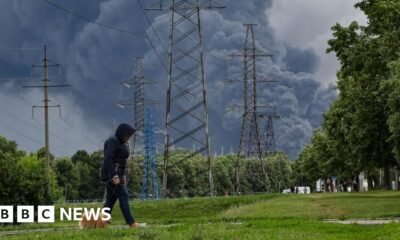
Moscow oil refinery attack brings Russia’s war with Ukraine closer to home

There are moments when life in Moscow feels completely normal. Thursday morning wasn’t one of them.
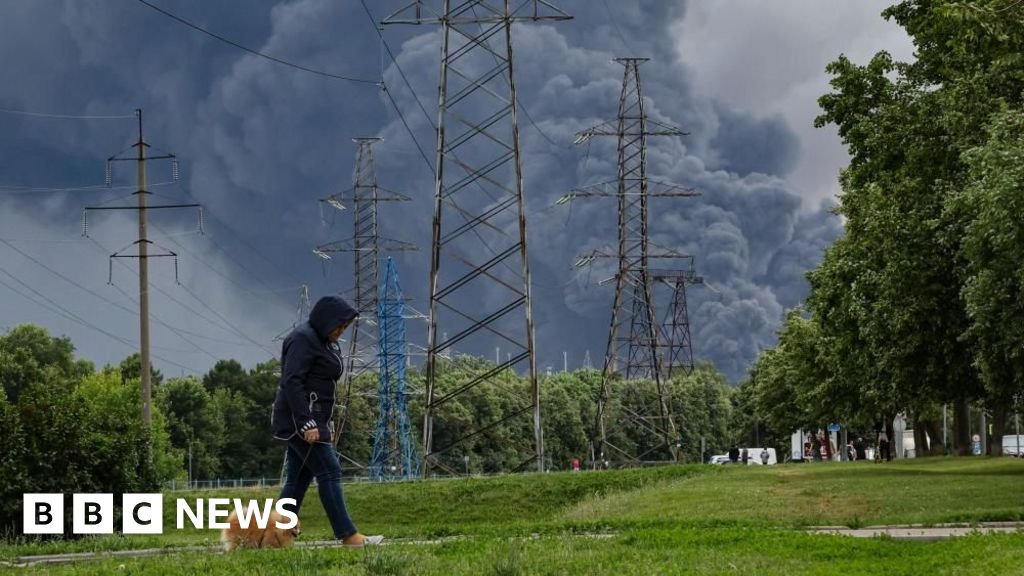
In the south-east of the city an oil refinery had been hit during a Ukrainian drone attack – even from a distance the sight was surreal.
Thick smoke billowing from the direction of the facility had turned the sky dark. Like a giant black shroud, it hung over the Moscow skyline.
As extraordinary and eye-catching this was, so was the reaction of people near the refinery.
Paying minimal attention to the huge clouds of smoke, an angler sat by the side of a pond, staring out across the water as he carried on fishing.
At the playground opposite, children were having fun on the swings.
Shoppers were heading to and from a supermarket, as if this was just another Thursday.
I realised then that my sense of what’s normal in Moscow and what’s not, needed updating.
For so long, the war on Ukraine felt very distant to people in the Russian capital. Many pretended it wasn’t happening at all, but that’s harder to do as the front line creeps closer to the city.
Over the past year-and-a-half, Muscovites have woken to news that army generals in Moscow have been assassinated, and drones have been targeting the capital.
In a sense, abnormal is already the new normal.
Thursday’s attack was one of the largest aerial assaults on the Moscow region since Russia’s full-scale invasion of Ukraine.
As well as damage to the oil refinery, shopping centres and residential buildings were hit, too. According to the governor of the Moscow region, an eight-year-old girl was killed in a fire caused by one of the drone strikes.
“I’m not totally surprised by what happened,” says Slava, who lives in an apartment block opposite the oil refinery. “But I didn’t expect such a big attack.”
“I heard explosions and saw lots of smoke. It’s the kind of thing you normally see in the movies. I saw it from my apartment window.”
But another local resident, Nadezhda, saw nothing normal in what’s happening.
“It took us four years to win World War Two, even though our soldiers had little food and water,” she told me.
“Today we have all the resources we need. But this war goes on. I’m shocked.”
How do the Russian authorities respond to people like Nadezhda, to Russians struggling to understand why the Kremlin’s so-called “special military operation” is taking so long, and how it can be that the war has come to their city?
Russian officials regularly accuse the West of prolonging the war in Ukraine, blaming European leaders and Nato for supporting Kyiv.
But on Thursday, President Vladimir Putin said nothing about the drone assault. The news bulletins on Russian TV channels barely mentioned it.
When Russian newspapers reported the story the following day, I detected a common thread in their coverage: a coordinated message, perhaps, for the domestic audience.
It can be summed up as this: “However bad it is for us, Ukraine’s suffering more”.
“Our attacks are doing far more damage to Ukraine than Ukraine is doing to us,” declared the ultra-pro-Kremlin Komsomolskaya Pravda.
“Our strikes to demilitarise Ukraine are far more powerful and effective than Ukrainian attacks,” wrote the tabloid Moskovsky Komsomolets.
The narrative was almost identical in the government paper Rossiyskaya Gazeta: “Our attacks on defence enterprises working for the Ukrainian army are much more powerful than those which Russians, unfortunately, are having to deal with.”
“Our strikes on Ukrainian infrastructure linked to the military-industrial complex are far more effective and produce more results,” commented business daily Kommersant.
When the Kremlin finally reacted, it had a similar message.
“You should look for more footage coming out of various cities in Ukraine,” Putin’s spokesman Dmitry Peskov told reporters.
“Footage showing the results of strikes carried out by our armed forces is impressive. These strikes will continue.”
There is no sign that Ukrainian drone attacks on Russian cities have given Putin pause for thought. From his recent speeches and statements, the Kremlin leader seems determined to continue Russia’s assault on Ukraine, confident that in this war of attrition his country will prevail.
But there are signs that long-range Ukrainian strikes – particularly on Russian oil facilities – are increasing the pressure on the Russian economy. Petrol shortages and rationing have been reported in some parts of the country, and prices have been rising at the pumps.
“It’s our government that must decide what to do. All we can do is watch.”
Food
Here’s why the Lincoln Memorial Reflecting Pool went green so fast


Just days after the Trump administration completed millions of dollars in renovations on the Lincoln Memorial Reflecting Pool to make it American flag-blue, residents and online users noted it had turned a phosphorescent green.
Here’s why:
The calm, still waters of the Reflecting Pool make it an ideal nursery for algae growth. Algae need nitrogen and phosphorus to grow, and the Reflecting Pool is primarily fed by the Potomac River, which gets heavy doses of those nutrients from nearby urban and agricultural lands.
The Potomac also absorbed one of the largest sewage spills in U.S. history earlier this year when a pipe burst five miles upstream of Washington, although that event probably happened too long ago to contribute to the algal bloom today.
Untreated sewage is high in nitrogen and phosphorus. When nutrient levels are high, feasting algae can quickly reproduce.
The Department of the Interior said when the algae first appeared that it was “residual,” from the supply lines to the pool.
Experts also speculate that the darker blue color may be helping the Reflecting Pool absorb more heat. The higher temperatures promote algae growth by allowing their metabolisms to shift into overdrive.
Summer temperatures in D.C. aren’t helping. This week, temperatures are as high as 95 degrees in the city, prompting a heat alert.
The combination probably explains the excessive growth, turning the water surface an opaque green and preventing onlookers from seeing the new blue hue of the concrete basin.
Algae are important and beneficial organisms when the ecosystem is in balance. They’re the base of the aquatic food chain, fed on by herbivores of all shapes and sizes, including shrimp and juvenile fish, which in turn feed organisms higher up the food chain. The single-celled organisms use the power of the sun to produce energy through photosynthesis, similar to houseplants on your balcony.
In an effort combat the algae in the Reflecting Pool, employees of the National Park Service were seen pouring in gallons of hydrogen peroxide, a chemical commonly used in pool maintenance.
The Department of the Interior also is employing a “high-tech nanobubble ozone technology” to destroy the cells of the algae.
Ozone — yes, the same irritant that is in smog — is a gas composed of three oxygen molecules, and the small size of the bubbles allow the most gas transfer into the water, where it can damage algal cells, similar to how it irritates our lungs.
This only treats the symptoms, however. Generally, ozone nanobubbling is effective as a temporary solution for algae blooms. Longer-term fixes would have to address what makes the Reflecting Pool so ideal for algae, such as its depth, darker color and inflow of nitrogen and phosphorus.
Food
What’s open and closed on Juneteenth 2026? Find out if banks, USPS and stores are operating.
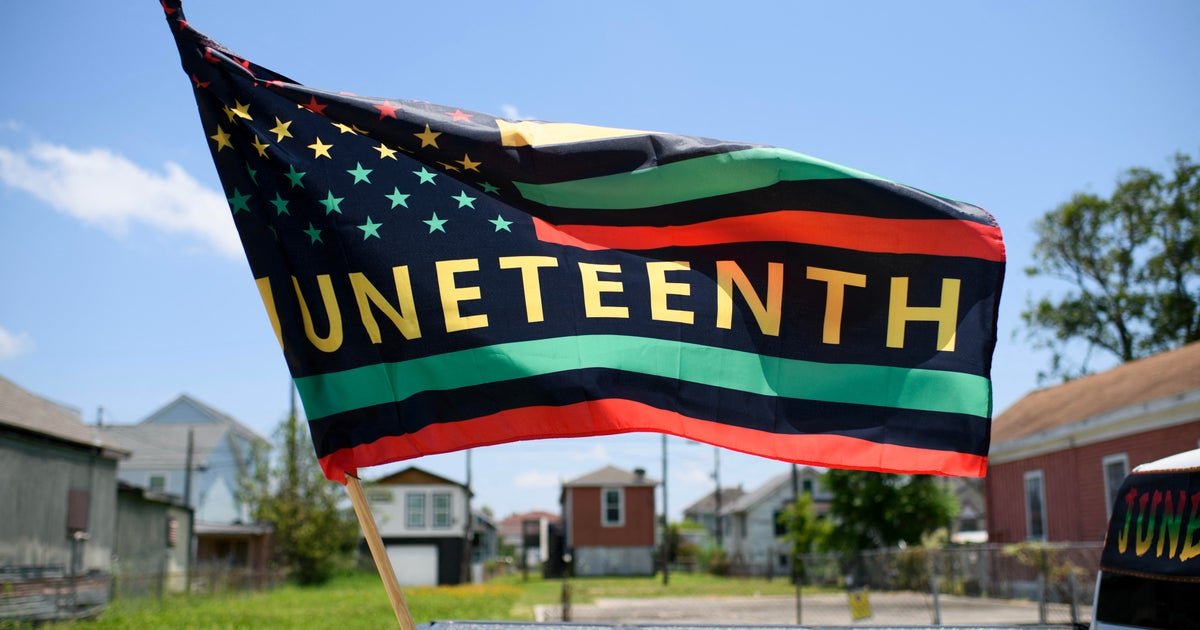
Many Americans will have the day off on Friday, June 19, to celebrate Juneteenth, the federal holiday commemorating the end of slavery. While most stores will remain open, some services will be unavailable.
The stock market and most banks will be closed on Friday. While many stores will remain open, make sure to check local store hours as they may vary by location.
Also known as Freedom Day or Emancipation Day, Juneteenth marks the day in 1865 when Union soldiers arrived in Galveston, Texas, to inform enslaved people that the Civil War had ended and they were free.
Read on to see what’s open on Juneteenth.
Is Walmart open?
Yes, Walmart will operate during normal hours on Juneteenth, a spokesperson confirmed.
Is Costco open?
While Costco is closed for other federal holidays, it will remain open for Juneteenth.
Is Target open?
Target will be open during normal business hours, which vary depending on location, according to a spokesperson.
What grocery stores are open?
Food Lion
Kroger
Stop & Shop
Trader Joe’s
Wegmans
Whole Foods
What stores and fast-food chains are open?
Apple
CVS
Dunkin’
HomeGoods
Homesense
IHOP
Kohl’s
Lowe’s
Macy’s (some stores will have extended hours)
Marshalls
McDonald’s
Petco
Nordstrom
Sierra
Starbucks
Taco Bell
TJ Maxx
Are banks open?
Major banks such as Bank of America, Chase and Wells Fargo will be closed on Friday.
Is the stock market open?
The stock market will be closed on June 19 in observance of the Juneteenth holiday, according to the New York Stock Exchange and Nasdaq websites.
Are FedEx, UPS and USPS open on Juneteenth?
FedEx and UPS will make deliveries and keep retail locations open on June 19, according to their respective websites.
However, you may run into issues if you’re trying to mail something. All U.S. Postal Service locations will be closed, and USPS mail deliveries will be suspended for Juneteenth. Services will resume Saturday, June 20, according to USPS.
Food
What’s open and closed for Juneteenth 2026?
Many Americans will have the day off on Friday, June 19, to celebrate Juneteenth, the federal holiday commemorating the end of slavery. While most stores will remain open, some services will be unavailable.
The stock market and most banks will be closed on Friday. While many stores will remain open, make sure to check local store hours as they may vary by location.
Also known as Freedom Day or Emancipation Day, Juneteenth marks the day in 1865 when Union soldiers arrived in Galveston, Texas, to inform enslaved people that the Civil War had ended and they were free.
Read on to see what’s open on Juneteenth.
Is Walmart open?
Yes, Walmart will operate during normal hours on Juneteenth, a spokesperson confirmed.
Is Costco open?
While Costco is closed for other federal holidays, it will remain open for Juneteenth.
Is Target open?
Target will be open during normal business hours, which vary depending on location, according to a spokesperson.
What grocery stores are open?Food LionKrogerStop & ShopTrader Joe’sWegmansWhole FoodsWhat stores and fast-food chains are open?AppleCVSDunkin’HomeGoodsHomesenseIHOPKohl’sLowe’sMacy’s (some stores will have extended hours)MarshallsMcDonald’sPetcoNordstromSierraStarbucks Taco BellTJ MaxxAre banks open?
Major banks such as Bank of America, Chase and Wells Fargo will be closed on Friday.
Is the stock market open?
The stock market will be closed on June 19 in observance of the Juneteenth holiday, according to the New York Stock Exchange and Nasdaq websites.
Are FedEx, UPS and USPS open on Juneteenth?
FedEx and UPS will make deliveries and keep retail locations open on June 19, according to their respective websites.
However, you may run into issues if you’re trying to mail something. All U.S. Postal Service locations will be closed, and USPS mail deliveries will be suspended for Juneteenth. Services will resume Saturday, June 20, according to USPS.
Food
Hormuz relief may not ease the economic toll that’s already ‘baked in,’ analysts warn

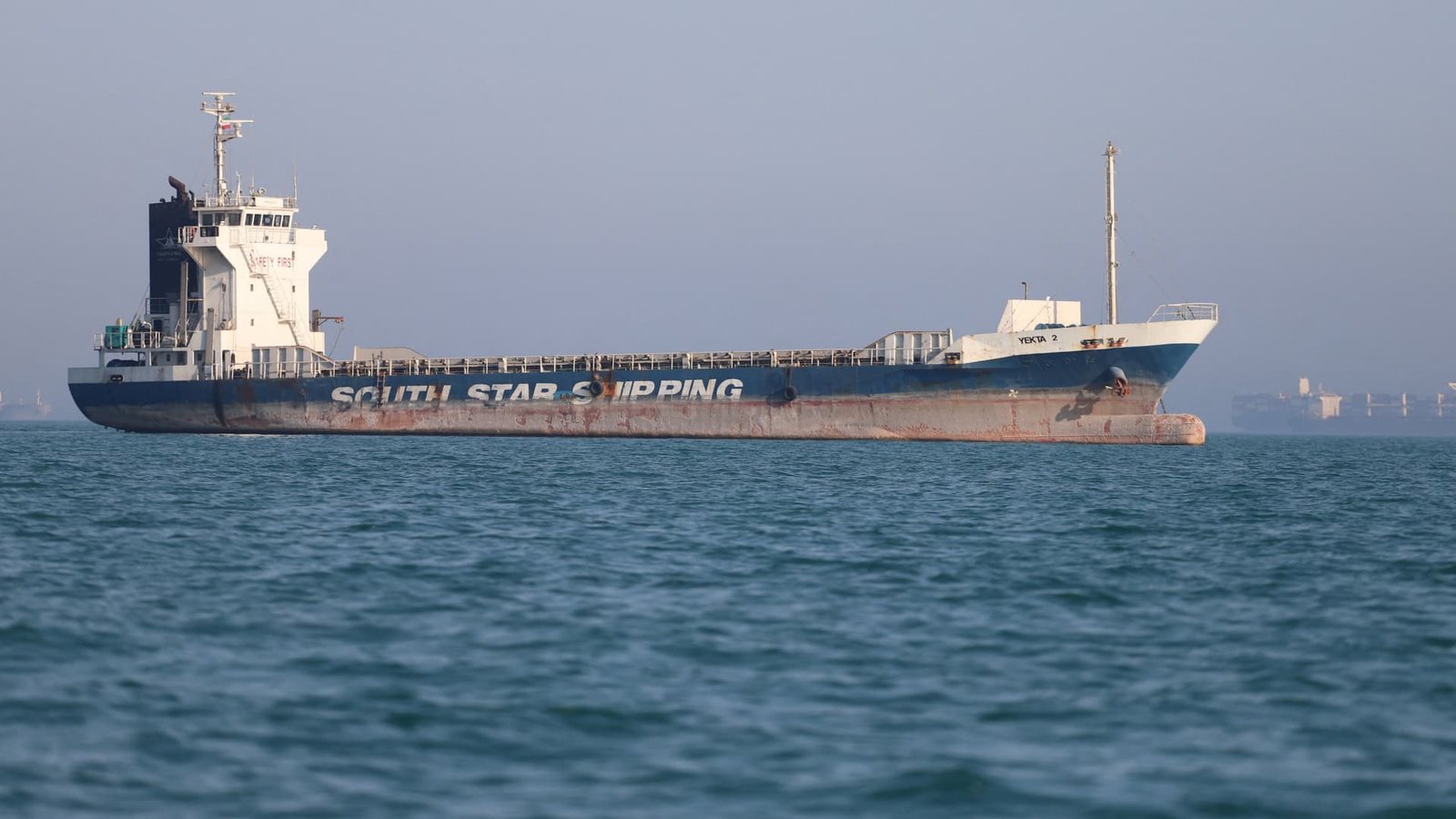
Early signs that the Strait of Hormuz is reopening have eased the most acute threat to global energy supplies, but economic damages from the nearly four months of war will take months to unwind, analysts warned.
The U.S. and Iran signed a memorandum Thursday to open the Strait of Hormuz, ending a war that has upended global energy supply chains, pushed inflation higher and dented the outlook for growth.
But even if shipping through the strait normalizes, higher inflation has already been largely “baked in” across many economies, Simon MacAdam, deputy chief global economist at Capital Economics, said in a note this week.
“It can take many months for higher energy and fertiliser prices to be passed along food supply chains to end-consumers,” MacAdam said. Prices of natural gas piped to households typically lag the upstream market by around three months, he said.
Oil prices retreated to around $80 a barrel on Friday, down from a peak of $118 in March when the war was at its height. Goldman Sachs cut its oil price forecast Tuesday, projecting Brent to average $80 in late 2026 and $75 in 2027, citing a faster-than-expected recovery in Persian Gulf crude flows.
Higher energy costs and upstream supply disruptions would take longer to feed through to the downstream food and energy sectors. A backlog of vessels waiting to transit the Strait of Hormuz could further delay a full recovery in freight flows.
The World Bank, which last week lowered its global economic growth forecast to 2.5%, the slowest pace since the pandemic, expects global inflation to climb to 4% this year, up from 3.3% in 2025, even if disruptions to oil flows ease in the coming weeks.
Fertilizer prices could jump as much as 38% this year as supply disruptions and shortages of key inputs from the Gulf ripple through agricultural markets, it said.
Europe could face particular pressure because natural gas storage levels remain historically low, MacAdam said, expecting inflation in Europe and Japan to rise by an additional 3 to 4 percentage points as U.S. liquefied natural gas export prices move higher.
The European Central Bank was the first major central bank to raise interest rates last week, its first tightening move in nearly three years.
Meanwhile, the Fed, under new Chairman Kevin Warsh, left short-term interest rates unchanged on Wednesday but raised its forecast for personal consumption expenditures inflation to 3.6% by December, from 2.7% projected in March. Nine of the 18 voting members expect at least one rate hike before the end of this year.
The trajectory underscores how the Hormuz crisis has altered the calculus for central banks trying to balance slowing growth against rising inflation.
The Bank of England also kept its policy rates unchanged but warned that “even in the event of prompt conflict resolution, there could be a logistical delay in restoring energy production and transportation.”




Trump's polling collapses while Obama's surges & more | Enten roundup
CNN chief data analyst Harry Enten runs the numbers, Trump's sinking approval ratings on the economy to President Obama's …
Utah marks a year of fighting measles
Utah has spent the past year fighting measles outbreaks — a grim milestone that could affect whether the United States...


Is Gen Z trapped by AI? | BBC News
Young people were told artificial intelligence would make them sharper, faster, more creative — and more employable. But for …


The truth about how chiggers bite skin is horrifying
Summer is here, and just as we are shedding layers and welcoming the sunshine, insects are lining up to feast...


Do England men's football matches trigger a rise in domestic violence? #WorldCup #BBCVerify #BBCNews

Social media can be a 'useful tool' for young people, says Big John. #BBCNews


Extreme heat will continue to intensify in UK and Europe | BBC News
The Met Office has issued an amber extreme heat warning for parts of southern and eastern England and south Wales.

Moscow oil refinery attack brings Russia’s war with Ukraine closer to home
There are moments when life in Moscow feels completely normal. Thursday morning wasn’t one of them. In the south-east of...


Top tips for keeping kids safe in the heat. #Summer #HeatHealth #BBCNews


What we know about Bedford train crash. #Bedford #England #Trains #Railway #BBCNews
-
 Business7 days ago
How much of Musk’s wealth comes from government help? Virtually all of it
-

 Politics1 week ago
What to know about the stabbing that set off fiery riots in Northern Ireland
-

 Video1 week ago
Download fans say what they love about the festival. #DownloadFestival #BBCNews
-

 Video1 week ago
Why SpaceX IPO isn't about space. #SpaceX #ElonMusk #BBCNews
-

 HealthNews1 week ago
The people of Okinawa, Japan only eat until they are about 80 percent full, then stop — and the practice has been linked in multiple peer-reviewed studies to lower rates of cardiovascular disease, slo
-

 Food1 week ago
Pope Leo’s plane was grounded. Then the King of Spain stepped in to help
-

 TravelNews1 week ago
My Paternal Instinct Should’ve Warned Me About Netflix’s Maternal Instinct
-

 Video1 week ago
Claire Danes has the cutest stories about young Kirsten Dunst on 'Little Women' set