

HealthNews
New Trigger for Alzheimer’s Disease May Have Been Found


A new study is raising questions about one of the most widely held ideas in Alzheimer’s research—suggesting the disease may not start with plaques in the brain after all.
Researchers at the University of California, Riverside (UCR) say the earliest changes could instead happen inside nerve cells, where two key proteins appear to interfere with each other.
For years, much of the focus has been on amyloid beta, or a-beta, because it forms clumps in the brains of people with Alzheimer’s. That link appeared well supported, especially since genetic mutations that increase a-beta levels are known to cause early-onset forms of the disease.
Read More on Health Care
But attempts to treat Alzheimer’s by removing these clumps have been largely unsuccessful, with thousands of trials failing to stop or reverse its progression.
Michael Kane, chief medical officer at Indiana Center for Recovery, told Newsweek that the findings of this study should not be seen as dismissing the amyloid theory entirely, but rather as refining it.
“I see these findings less as a rejection of the amyloid theory and more as a possible link between amyloid beta and tau,” he said.
Connection Between Amyloid Beta and Tau
Scientists have long known that another protein, tau, is also involved. Both a-beta and tau build up in the brains of people diagnosed with Alzheimer’s, yet how they are connected has remained unclear.
“In addition to having dementia, Alzheimer’s diagnosis requires both a-beta and tau buildup in the brain,” said study lead author Ryan Julian, a chemistry professor at UCR. “But many labs focus on the role of one and ignore the other.”
The new study, published in Proceedings of the National Academy of Sciences, Nexus, looks at what happens when the two proteins are present inside the same cell.
Kane said this connection is one of the most significant aspects of the research.
“Amyloid beta and tau have both been central to Alzheimer’s research for decades, but the field has struggled to explain exactly how they interact. This study gives scientists a more specific place to look,” he said.
What Happens Inside Nerve Cell
Tau normally supports structures called microtubules, which act as internal pathways, helping nerve cells move essential materials to where they are needed.
The researchers found that the part of tau that attaches to these structures is very similar to amyloid beta. That similarity led them to examine whether a-beta could attach to microtubules in the same way.
Using a fluorescent marker to track the protein, the team observed that a-beta can bind to microtubules with similar strength to tau.
“Our work shows amyloid beta and tau compete for the same binding sites on microtubules, and that a-beta can prevent tau from functioning correctly,” Julian said.
Kane said this mechanism could represent an earlier stage of disease development than previously recognised.
“The damage may start earlier, with the cell’s machinery becoming less stable,” he said.
Disruption That May Come First
The researchers suggest that this competition could be an important early step.
If a-beta builds up inside a neuron, it may push tau away from the microtubules. Without tau in place, the cell’s transport system may begin to break down.
At the same time, tau may start to change behavior—clumping together and moving into areas of the cell where it is not normally found.
This points to a different way of thinking about the disease. Instead of protein buildup being the starting cause on its own, the two processes may be part of a wider problem inside cells.
Kane cautioned that while the explanation is biologically plausible, it remains a working model. “A plausible mechanism is not the same as proof that this is what drives Alzheimer’s in patients,” he said.
Ageing May Play Role
The study also highlights a process called autophagy, which normally clears unwanted proteins from cells, including a-beta.
As this process becomes less efficient with age, amyloid beta may begin to accumulate inside neurons. This could increase the chances of it competing with tau and interfering with normal cell function.
What It Could Mean Going Forward
The findings may help explain why some earlier approaches to treatment have struggled to make a difference.
They also suggest that future research may look more closely at how these proteins interact inside cells, rather than focusing only on removing them once they have formed clumps.
Julian said the idea helps bring together different strands of research.
“This idea helps make sense of many results that previously seemed unrelated,” he said. “It gives us a clearer picture of what may be going wrong inside neurons and where new treatments might start.”
Kane said the study could point scientists toward new types of therapeutic strategies, but warned against overstating its immediacy.
“It could point researchers toward targets inside the neuron, such as protecting microtubules or preventing amyloid beta from interfering with tau—but I would not describe it as an immediate treatment breakthrough,” he said.
He added that the most important next step is confirming whether the process occurs in people.
“Researchers need to know when it happens, who it happens in, and whether it tracks with memory loss or functional decline over time,” he said.
Kane also urged caution in interpreting the findings.
HealthNews
Popular weight-loss drugs linked to unexpected male fertility benefit


NEWYou can now listen to Fox News articles!
Taking a GLP-1 medication for weight loss may improve male fertility, according to experts.
Research presented this week at ENDO 2026, the Endocrine Society’s annual meeting in Chicago, explored how obesity is strongly linked to fertility problems in men.
Excess weight can contribute to dysregulation of the hypothalamic-pituitary-gonadal (HPG) axis — the hormone system that regulates testosterone production — and functional hypogonadism, a condition in which testosterone levels are abnormally low because of disrupted hormone signaling. These changes can also impair semen quality.
WEIGHT-LOSS MEDICATIONS COULD IMPACT SEXUAL HEALTH IN UNEXPECTED WAYS
The researchers evaluated how GLP-1 weight-loss drugs impact reproductive hormones and metabolic outcomes, analyzing data of men between the ages of 18 and 65 who were taking one of the medications, according to a press release.
The systematic review of five randomized controlled trials focused on measuring testosterone, brain hormones involved in testosterone and sperm production, and a protein that carries sex hormones in the blood. Semen quality, weight and BMI, cholesterol and blood sugar were also measured.
The results suggested that GLP-1 medications do not suppress male hormones. Men with obesity and low testosterone linked to obesity may experience improved testosterone, sperm quality and metabolic health, especially during weight loss.
CLICK HERE TO DOWNLOAD THE FOX NEWS APP
In one four-week study, dulaglutide showed no significant changes in reproductive hormones or sexual function.
In a separate 16-week trial, liraglutide improved hormones in obese men with functional hypogonadism, meaning low testosterone was likely related to obesity. The review found that liraglutide was better for health outcomes than hormone replacement therapy.
CLICK HERE FOR MORE HEALTH STORIES
Another liraglutide study reported improved sperm concentration and count.
A 24-week trial of semaglutide, known commercially as Ozempic and Wegovy, saw improvement in sperm shape and bad cholesterol, while preserving total testosterone.
As only five trials were included, the small evidence base suggests more research is necessary to prove further association.
CLICK HERE TO SIGN UP FOR OUR HEALTH NEWSLETTER
In an abstract of the research, the authors summed up that GLP-1s “do not appear to acutely suppress the male HPG axis and may improve reproductive hormones and semen parameters in obese hypogonadal men, largely within the context of weight loss.”
“However, evidence remains limited and heterogeneous, underscoring the need for larger RCTs explicitly powered to assess male reproductive outcomes,” they wrote.
Dr. Anthony Puopolo, men’s health expert and lead medical provider for RexMD, reflected on these findings in an interview with Fox News Digital.
“This provides early evidence that GLP-1 medications taken by obese men with hypogonadism/low testosterone (low T) improves testosterone levels,” he said.
TEST YOURSELF WITH OUR LATEST LIFESTYLE QUIZ
While more research is necessary, Pupolo, who was not involved in the study, shared his optimism about how GLP-1s can play a role in improving male fertility.
HealthNews
Ozempic and Wegovy may strengthen bones in Type 2 diabetes patients, study finds


Type 2 diabetes patients taking Ozempic and Wegovy may be getting an unexpected perk: a little extra backbone.
A new study suggests semaglutide — the active ingredient in the blockbuster weight-loss drugs — could help strengthen bones in type 2 diabetes sufferers, even as it melts the pounds away, according to a Science Daily report.
Researchers found that type 2 diabetes patients taking semaglutide were 15% less likely to suffer bone fractures than patients using other popular weight-loss medications.
That’s a surprising twist, since many experts had worried that rapid weight loss could leave bones more fragile.
Not only did semaglutide users lose more weight than patients taking competing treatments, but they also appeared less likely to break a bone, said the researchers, led by Dr. Jairo Noreña, a former endocrinology fellow at Stanford University Medical Center in Palo Alto, Calif.
The research team dug through the medical records of more than 59,000 adults with type 2 diabetes.
Among the 26,324 semaglutide users, researchers recorded 794 fractures.
The comparison group — 33,555 patients taking other weight-loss drugs — suffered a whopping 1,045 fractures.
The findings were unveiled at ENDO 2026 — the Endocrine Society’s annual meeting in Chicago, which took place from June 13-16. The confab brought together thousands of professionals in hormone science and medicine.
The findings carry real-world implications — particularly for the millions of older adults on weight-loss medications who may already be at risk for bone loss.
“Bone fractures are painful, expensive and can seriously affect quality of life—especially as people get older,” Noreña said. “We hope this study encourages monitoring of bone health in weight-loss programs.
“This work is an important early step toward understanding the impact of semaglutide-induced weight loss on bone health in patients with type 2 diabetes.”
HealthNews
Utah marks a year of fighting measles
Utah has spent the past year fighting measles outbreaks — a grim milestone that could affect whether the United States can keep its measles-free designation.
More than 680 people have gotten sick since the state’s first outbreak began on June 20, 2025.
Unlike measles outbreaks in Texas, South Carolina and Arizona, the spread in Utah has been tough to contain to one region — infecting undervaccinated communities in nearly every county.
Measles popped up in healthcare settings, big-box stores and restaurants, and youth sporting events. In February, an exposure at a state high school wrestling championship sparked at least 46 cases among attendees.
Measles is one of the most contagious diseases known to medicine. It causes a tell-tale rash, high fevers, strong cough, ear infections and diarrhea.
While most recover, some — including young babies, pregnant people and those with weak immune systems — are at higher risk of developing dangerous complications like pneumonia, brain swelling, blindness or even dying. Even healthy people can develop issues years down the road, including a rare but fatal degenerative brain disease that manifests about a decade after infection.
The measles vaccine is safe and 97% protective after two doses.
Though Utah’s spread has slowed in recent weeks, state epidemiologist Leisha Nolen sees little opportunity to rest. She’s worried the start of school and arrival of colder weather in the fall will cause measles to surge again.
“It’s still here, it’s still transmitting,” she said. “We just need those few cases to hit the wrong community and it could flare up really big again.”
Utah sees the impacts of dropping vaccination rates
The worst spread has been in the southwestern part of the state, where 265 people have fallen ill with the vaccine-preventable disease since last summer. Overall, measles infections hit 22 of the state’s 29 counties.
In the state’s rural northeast, the conditions were also ripe for measles to spread. Daggett, Duchesne and Uintah counties — collectively dubbed the “tricounty” health region — has seen the second-largest decline in childhood vaccination rates in the state.
More than 16% of the region’s kindergarteners were missing their measles vaccines in the last school year, according to state data. Statewide, 12.8% were missing their vaccine, putting the state far short of the 95% vaccination rate needed to prevent measles outbreaks.
The TriCounty Health Department logged 74 cases of measles this spring, after people who got sick at the youth wrestling tournament spread the virus in school and later within their households.
The frontier region had seen a rise in vaccine hesitancy for some time, said Sydnee Lyons, the health department’s public information officer.
Despite the large number of cases, local and state health officials consider TriCounty’s measles response a success.
Health officials focused efforts on mitigating the inevitable spread. Unvaccinated students were excluded from in-person school and people who were sick were told to isolate themselves. And their appeal to care for one’s neighbors led to more people coming in to get vaccinated, officials said.
TriCounty’s infectious disease specialist Cyndie Mattinson recalled a parent who told a school nurse she didn’t want to talk to the health department because “she was worried that we would be angry with her and be judgmental because her children were unvaccinated.”
The nurse vouched for the health department staff, and told the mom to let her know if she felt judged. Mattinson ultimately had a great conversation with the mother.
“The perceptions were changed that we weren’t out there to police, we were there to be a help and a resource to the community,” Mattinson said.
Health experts will meet to decide on US measles status
Utah’s lengthy battle with measles will likely affect whether the U.S. can keep its measles-free designation. Public health officials consider measles to be eliminated from a country when it shows it stopped continuous spread within local communities for at least a year.
The national measles case count was 2,104 as of June 18, nearly surpassing last year’s record total.
Utah has fought measles for a year, but it’s not clear if the earliest clusters are connected with the major outbreak on the Utah-Arizona state line, which was detected in August, Nolen said.
But since then, most of the state’s measles cases have come from within Utah, not from other parts of the country.
International health experts will gather in November to determine if the U.S. and Mexico have lost their measles elimination status. Canada lost its status last year after ongoing outbreaks.
In Utah, doctors continue to reassure scared patients and lobby for better public health policy.
Dr. Ellie Brownstein, president-elect of the state chapter of the American Academy of Pediatrics and a pediatrician in Salt Lake City, spent the height of the outbreak opposing a bill that would have made school vaccine waivers easier to get. It failed, but she says there hasn’t been a clear cultural reckoning over measles’ resurgence.
“I don’t know that we get it to end,” Brownstein said. “I don’t know that we’re going to get this genie back in the box because there’s enough people out there to spread it.”
___
The Associated Press Health and Science Department receives support from the Howard Hughes Medical Institute’s Department of Science Education and the Robert Wood Johnson Foundation. The AP is solely responsible for all content.
HealthNews
The truth about how chiggers bite skin is horrifying
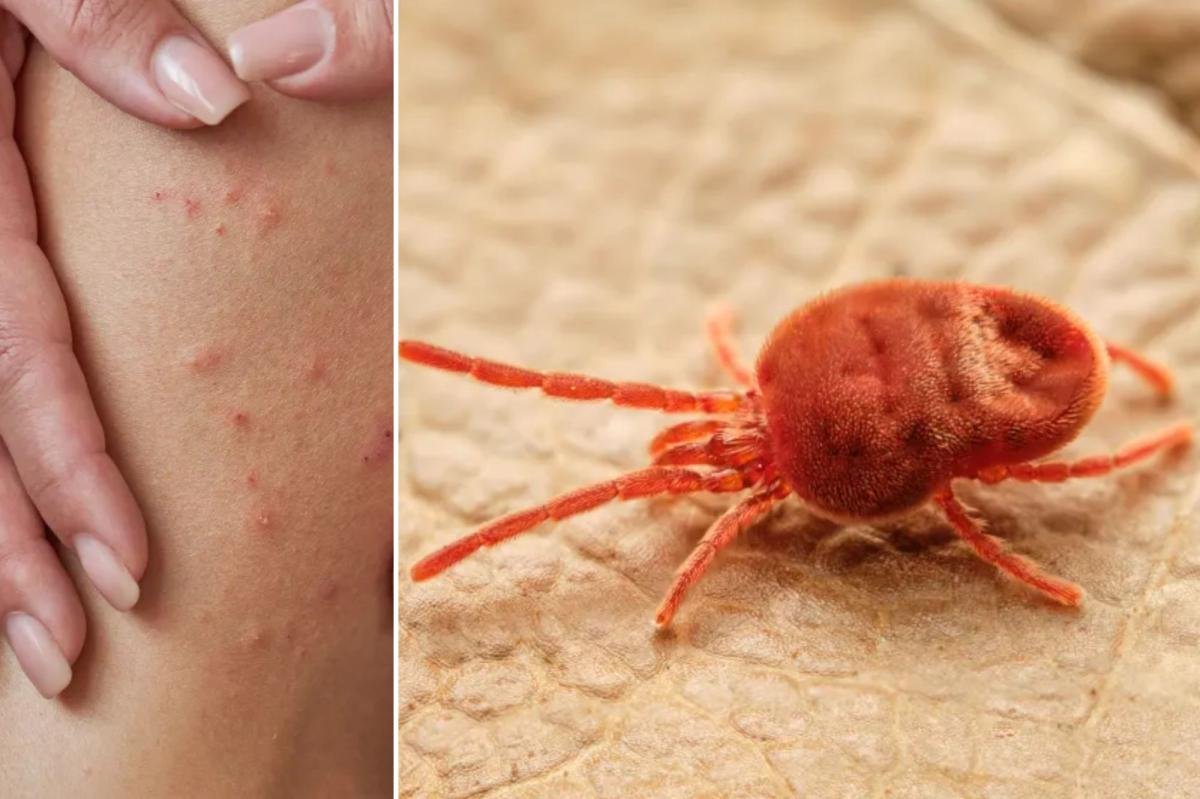
Summer is here, and just as we are shedding layers and welcoming the sunshine, insects are lining up to feast on our flesh.
While ticks and the scary diseases they carry are among the most fearsome of warm-weather insects, another tiny pest is making a meal out of mankind in a truly horrifying fashion.
Chiggers, miniature mites that live in grassy, wooded areas or near water, come alive in the summer season when warmer temperatures create ideal conditions for feeding and breeding.
Related to spiders and ticks, chiggers are petite parasites that are nearly invisible to the naked eye. Though they be but small, their effects are mighty and their approach to growth truly disturbing.
The creepy life cycle of a chigger begins when it hatches from an egg. These juvenile larval mites (band name) then feed on the skin of an animal or human host before falling off and transitioning into their adult form.
These six-legged larvae rely on the flesh of their hosts to supply the nutrients they need to grow into their eight-legged, non-parasitic best selves.
Typically, chigger larvae attach to clothing, favoring areas such as waistbands, bra lines and sock lines where skin and clothing are in close contact.
To satisfy their appalling appetites, chigger larvae move from clothing to skin, releasing a powerful digestive enzyme to make our cells slurpable.
As the enzyme liquifies skin cells, it hardens the surrounding tissue, creating a straw-like tube — known as a stylostome — that allows the chiggers to drink from our dermis like a morbid milkshake.
Because mites have mouths that can pierce but not tear or consume, this skin straw enables them to suck up liquified skin cells and, in some cases, blood for their gnarly nourishment.
Bottoms up.
The enzyme that kills skin cells also causes the intense itching that we associate with a chigger attack. The irritation peaks during the first 24-48 hours after contact, then subsides over the following two weeks.
The most common areas for chiggers to attach and attack are the ankles, lower legs, backs of the knees, waist and groin.
Chigger bites are not immediately apparent, as symptoms can take up to 3 hours after contact to appear.
Symptoms include red spots or pimples on the skin and severe itching.
Because chiggers feed on the skin rather than burrow into it, a rash usually appears only after the mites have detached, and treatment focuses on alleviating itching rather than parasite removal.
Treatment options include cleaning the affected area with soap and water, applying calamine lotion, cold compresses, and permethrin, and/or taking antihistamines.
You can prevent becoming chigger lunch by wearing protective clothing, using insect repellent, treating clothing with insect repellent, and avoiding outdoor activity in grassy, wet, or wooded areas during the summer months.
HealthNews
Woman Spends $54K on ‘Life-Changing’ Dental Implants, but Didn’t Expect the ‘Scary Looking’ Aftermath (Exclusive)
NEED TO KNOW
Years after childhood cancer treatment left Lacey Duvall’s teeth weakened, a domestic violence incident in 2022 caused further damage and led to full reconstruction
The mother of four from Arkansas then spent three years saving for treatment before finally undergoing implant surgery in May 2026
And while a viral recovery video showing the significant swelling and bruising from the procedure drew nearly 5 million views, Duvall tells PEOPLE the outcome restored her smile and confidence
When Lacey Duvall began documenting her recovery from dental implant surgery online, many viewers assumed they were watching a medical nightmare unfold. The swelling was significant, the bruising startling and the healing process appeared long and painful.
But behind the dramatic images was a story of resilience years in the making. For Duvall, 37, the procedure marked the first chance in three years to reclaim the confidence and smile she had fought so hard to rebuild.
“What many people saw online was six days of bruising. What I saw was a cancer survivor six days into a life-changing transformation. Those are two very different stories,” her surgeon, Samuel F. Jirik, Doctor of Dental Surgery (DDS), tells PEOPLE exclusively.
Long before the viral videos, Duvall had been living with the lasting effects of childhood Hodgkin lymphoma. The same treatment that helped save her life also affected her teeth, leaving them brittle and prone to breaking.
For years, she did everything she could to preserve them, but a domestic violence incident in 2022 left her “already compromised teeth” broken.
“After the domestic violence event that broke my teeth, I became a single mom and lost everything,” Duvall tells PEOPLE exclusively. “My four kids and I had to start from scratch, no house, no vehicle.”
With her family taking priority at the time, dental treatment had to wait — and although the pain remained, so did her determination to find a solution.
“My teeth were in pain for three years before I could afford to have them fixed properly,” Duvall reveals. “I worked three jobs and went to college online while saving and trying to find a dentist with financing I could get approved for.”
Never miss a story — sign up for PEOPLE’s free daily newsletter to stay up-to-date on the best of what PEOPLE has to offer, from celebrity news to compelling human interest stories.
When Duvall finally began meeting with specialists, she looked for someone who understood both the complexity of her case and her goals for the final result. After several consultations, she chose to have her surgery done with Dr. Jirik in May 2026.
The total came to about $54,000, and with insurance only covering part of it, she financed the rest and is paying it down gradually over time.
What stood out most during their early conversations was the collaborative approach Dr. Jirik brought to the process. “He listened to what I wanted and assured me he could customize my bridges to what I liked,” she recalls.
According to Dr. Jirik, Duvall’s medical history made the procedure more challenging than a typical implant case and required extensive planning before surgery could begin.
“At our practice, we routinely treat patients with advanced dental needs and complex medical histories,” he explains. “Many patients are told they are not candidates for dental implants because of previous cancer treatment, bone loss or other health concerns. Through advanced implant techniques and extensive treatment planning, we’re often able to provide options that help patients regain their function, confidence and quality of life.”
And although Duvall knew recovery would take time, the days following surgery proved more difficult than she anticipated. Significant bruising and swelling made it impossible to return to work as quickly as she had planned.
“I expected a few days off from work, but I ended up needing a week,” she reveals. “My face was too scary looking to return to work just a few days post [operation] and my body needed more time to heal and rest.”
As Duvall’s recovery gained traction online, viewers were often focused on the dramatic appearance of the bruising, but Dr. Jirik viewed the healing process through a different lens.
Providing context to Duvall’s videos, he says, “What’s important is that bruising, while dramatic in appearance, does not necessarily indicate a problem with the procedure itself. In Lacey’s case, we monitored her closely throughout recovery and saw the healing progress we anticipated.”
Today, her bruises have faded, the swelling has subsided, and the outcome she spent years working toward has finally become reality — something Dr. Jirik says is among the most rewarding aspects of his work.
“Helping patients like Lacey is my life’s passion. We see patients who struggle with pain, failing teeth, embarrassment, difficulty eating, or being told there are no good treatment options,” he says. “Lacey’s life has been challenging, especially with her cancer treatment, and she deserved the opportunity to smile, eat and live confidently again.”
Check out PEOPLE’s weekly giveaway: Win a Yoto Player package valued at $260 only on the PEOPLE app!
For Duvall, the procedure was never just about replacing damaged teeth. It was about moving forward after years of hardship and finally feeling like she could smile without hesitation.
“It is a very emotional experience because for so long I self-isolated to hide how bad my teeth were,” she tells PEOPLE. “Now I feel like the world is my oyster.”
2026 U.S. Open Saturday live updates, leaderboard: Wyndham Clark in full control entering third round at Shinnecock
It’s Moving Day at the U.S. Open, and Wyndham Clark is in full control of the tournament. Clark got to...




Democratic senators want Paramount-Warner Bros merger paused until July 1
Three Democratic senators have urged the Federal Communications Commission (FCC) to put the Paramount-Warner Bros. Discovery merger on pause over...


Popular weight-loss drugs linked to unexpected male fertility benefit
NEWYou can now listen to Fox News articles! Taking a GLP-1 medication for weight loss may improve male fertility, according...


Trump's polling collapses while Obama's surges & more | Enten roundup
CNN chief data analyst Harry Enten runs the numbers, Trump's sinking approval ratings on the economy to President Obama's …


Ozempic and Wegovy may strengthen bones in Type 2 diabetes patients, study finds
Type 2 diabetes patients taking Ozempic and Wegovy may be getting an unexpected perk: a little extra backbone. A new...


35 People Whose Lives Spiraled Out Of Control
Whoops. 1. The person who must now ghost their own wedding: 2. The person who is going to be cleaning...
Utah marks a year of fighting measles
Utah has spent the past year fighting measles outbreaks — a grim milestone that could affect whether the United States...


Ubisoft Co-Founder Killed in France Plane Crash
Claude Guillemot, one of the brothers who founded Ubisoft in 1986, has been killed in a plane crash in Western...


Is Gen Z trapped by AI? | BBC News
Young people were told artificial intelligence would make them sharper, faster, more creative — and more employable. But for …


MAHA SNAP restrictions on junk food could change spending
The growing push to restrict Americans from using federal food aid to buy certain processed or sugary products is creating...
-

 Business7 days ago
How much of Musk’s wealth comes from government help? Virtually all of it
-

 Politics1 week ago
What to know about the stabbing that set off fiery riots in Northern Ireland
-

 Video1 week ago
Download fans say what they love about the festival. #DownloadFestival #BBCNews
-

 Video1 week ago
Why SpaceX IPO isn't about space. #SpaceX #ElonMusk #BBCNews
-

 HealthNews1 week ago
The people of Okinawa, Japan only eat until they are about 80 percent full, then stop — and the practice has been linked in multiple peer-reviewed studies to lower rates of cardiovascular disease, slo
-

 Food1 week ago
Pope Leo’s plane was grounded. Then the King of Spain stepped in to help
-

 TravelNews1 week ago
My Paternal Instinct Should’ve Warned Me About Netflix’s Maternal Instinct
-

 Video1 week ago
Claire Danes has the cutest stories about young Kirsten Dunst on 'Little Women' set