

HealthNews
Woman Spends $54K on ‘Life-Changing’ Dental Implants, but Didn’t Expect the ‘Scary Looking’ Aftermath (Exclusive)
NEED TO KNOW
Years after childhood cancer treatment left Lacey Duvall’s teeth weakened, a domestic violence incident in 2022 caused further damage and led to full reconstruction
The mother of four from Arkansas then spent three years saving for treatment before finally undergoing implant surgery in May 2026
And while a viral recovery video showing the significant swelling and bruising from the procedure drew nearly 5 million views, Duvall tells PEOPLE the outcome restored her smile and confidence
When Lacey Duvall began documenting her recovery from dental implant surgery online, many viewers assumed they were watching a medical nightmare unfold. The swelling was significant, the bruising startling and the healing process appeared long and painful.
But behind the dramatic images was a story of resilience years in the making. For Duvall, 37, the procedure marked the first chance in three years to reclaim the confidence and smile she had fought so hard to rebuild.
“What many people saw online was six days of bruising. What I saw was a cancer survivor six days into a life-changing transformation. Those are two very different stories,” her surgeon, Samuel F. Jirik, Doctor of Dental Surgery (DDS), tells PEOPLE exclusively.
Long before the viral videos, Duvall had been living with the lasting effects of childhood Hodgkin lymphoma. The same treatment that helped save her life also affected her teeth, leaving them brittle and prone to breaking.
For years, she did everything she could to preserve them, but a domestic violence incident in 2022 left her “already compromised teeth” broken.
“After the domestic violence event that broke my teeth, I became a single mom and lost everything,” Duvall tells PEOPLE exclusively. “My four kids and I had to start from scratch, no house, no vehicle.”
With her family taking priority at the time, dental treatment had to wait — and although the pain remained, so did her determination to find a solution.
“My teeth were in pain for three years before I could afford to have them fixed properly,” Duvall reveals. “I worked three jobs and went to college online while saving and trying to find a dentist with financing I could get approved for.”
Never miss a story — sign up for PEOPLE’s free daily newsletter to stay up-to-date on the best of what PEOPLE has to offer, from celebrity news to compelling human interest stories.
When Duvall finally began meeting with specialists, she looked for someone who understood both the complexity of her case and her goals for the final result. After several consultations, she chose to have her surgery done with Dr. Jirik in May 2026.
The total came to about $54,000, and with insurance only covering part of it, she financed the rest and is paying it down gradually over time.
What stood out most during their early conversations was the collaborative approach Dr. Jirik brought to the process. “He listened to what I wanted and assured me he could customize my bridges to what I liked,” she recalls.
According to Dr. Jirik, Duvall’s medical history made the procedure more challenging than a typical implant case and required extensive planning before surgery could begin.
“At our practice, we routinely treat patients with advanced dental needs and complex medical histories,” he explains. “Many patients are told they are not candidates for dental implants because of previous cancer treatment, bone loss or other health concerns. Through advanced implant techniques and extensive treatment planning, we’re often able to provide options that help patients regain their function, confidence and quality of life.”
And although Duvall knew recovery would take time, the days following surgery proved more difficult than she anticipated. Significant bruising and swelling made it impossible to return to work as quickly as she had planned.
“I expected a few days off from work, but I ended up needing a week,” she reveals. “My face was too scary looking to return to work just a few days post [operation] and my body needed more time to heal and rest.”
As Duvall’s recovery gained traction online, viewers were often focused on the dramatic appearance of the bruising, but Dr. Jirik viewed the healing process through a different lens.
Providing context to Duvall’s videos, he says, “What’s important is that bruising, while dramatic in appearance, does not necessarily indicate a problem with the procedure itself. In Lacey’s case, we monitored her closely throughout recovery and saw the healing progress we anticipated.”
Today, her bruises have faded, the swelling has subsided, and the outcome she spent years working toward has finally become reality — something Dr. Jirik says is among the most rewarding aspects of his work.
“Helping patients like Lacey is my life’s passion. We see patients who struggle with pain, failing teeth, embarrassment, difficulty eating, or being told there are no good treatment options,” he says. “Lacey’s life has been challenging, especially with her cancer treatment, and she deserved the opportunity to smile, eat and live confidently again.”
Check out PEOPLE’s weekly giveaway: Win a Yoto Player package valued at $260 only on the PEOPLE app!
For Duvall, the procedure was never just about replacing damaged teeth. It was about moving forward after years of hardship and finally feeling like she could smile without hesitation.
“It is a very emotional experience because for so long I self-isolated to hide how bad my teeth were,” she tells PEOPLE. “Now I feel like the world is my oyster.”
HealthNews
What men should know about the US government’s latest move on testosterone therapy


The US Department of Health and Human Services is requesting revisions to the labels on testosterone replacement therapies for men after reviewing new data and evidence on their safety and benefits. These updates could pave the way for easier access to testosterone replacement therapy.
The requested label changes would include removing a statement that the safety and effectiveness of testosterone replacement therapy have not been established in men with age-related low testosterone, HHS announced Thursday.
The agency also calls for updating information related to prostate cancer risk and revising warnings regarding enlarged prostate.
“By updating testosterone therapy labels to reflect current evidence, we are giving patients and physicians clearer information, supporting informed medical decisions, and improving care for millions of American men,” HHS Secretary Robert F. Kennedy Jr. said in the announcement.
Experts warn that patients should still have in-depth talks with their doctors about whether testosterone therapy could be helpful for them, and doctors should complete thorough evaluations.
Although the HHS announcement reflects “science finally catching up to reality,” the government has only requested updates to testosterone therapy product labels, and no changes have been officially made yet, noted Dr. Jamin Brahmbhatt, urologist and men’s health expert at Orlando Health in Florida.
“And taking a warning off a label isn’t the same as saying every man should be on it,” Brahmbhatt said in an email.
“Testosterone is still a medical therapy, not a wellness drug. This new proposal should not make it the wild wild west for prescribers and patients – there still need to be guardrails in place, like for any medical therapy,” he said. “I’m also hopeful clearer labels help more insurers cover it for the men who truly need it.”
A new look at the safety
Some of the concerns about testosterone therapy’s potential risks included heart problems, prostate cancer and accelerated prostate growth. These concerns have shaped how the therapies have been labeled and prescribed.
Heart risks
In 2015, the US Food and Drug Administration required label changes on testosterone therapy that stated the safety and effectiveness had not been established for men who had signs and symptoms associated with idiopathic hypogonadism, a condition that involves low testosterone levels. That limitation was added to labels because “evidence of benefit was limited and concerns had been raised about possible cardiovascular risks,” according to HHS.
But additional research has since emerged, including a large clinical study involving more than 5,200 men that found no “meaningful increase” in major cardiovascular events, such as heart attack or stroke, among people receiving testosterone therapy, HHS said.
Cancer concerns
HHS also pointed to how the scientific picture has evolved around prostate cancer risks and testosterone therapy.
Current labels on testosterone therapy generally advise against its use in men who have known or suspected prostate cancer, and they caution that treatment may increase the risk of developing the disease, HHS said.
But more recent research data “have not generally shown an increased risk of prostate cancer in men receiving testosterone replacement therapy,” the agency said, and under the requested revisions, the therapy would be advised against only in men whose prostate cancer has spread.
Enlarged prostate
Similarly, current labels on therapies generally warn that testosterone therapy may worsen symptoms of benign enlarged prostate. But HHS said that a new FDA review found no evidence of that happening in men with mild to moderate versions of the condition.
However, for men with more severe symptoms, HHS said evidence remains limited, and “the labeling changes requested would recommend continued monitoring of patients with severe symptomatic disease during treatment.”
The new HHS request to change the language on labels “removes the fear” around testosterone replacement therapy, Dr. Eddie Hackler III, an Atlanta-based cardiologist and author of the book “Follow Your Heart,” said in an email.
“Testosterone therapy has proven benefits for specific symptoms; particularly improved libido, sexual function, correction of anemia, and modest improvements in mood and energy. Proper diagnosis is essential before starting therapy,” he said.
“Testosterone therapy does not appear to increase the risk of heart attacks, strokes, or prostate cancer based on the best available randomized trial data,” Hackler said. He added that potential risks and side effects may include skin reactions, acne, enlargement of male breast tissue, pulmonary embolism or blood clots, irregular heart rhythms, suppression of sperm production and minimal increase in blood pressure.
‘A long time coming’
The new move by HHS is the latest in the Trump administration’s efforts to reduce restrictions on hormone therapies.
Last year, the administration took similar steps on hormone therapy for women when the FDA removed “black box” warnings from menopausal hormone therapy products.
In December, the FDA hosted an expert panel discussion on testosterone replacement therapy for men. Since then, the agency has been looking into potential new treatment options involving testosterone therapy for men.
The new HHS request to change the warning labels on testosterone therapy have been “a long time coming,” Dr. Adam Baumgarten, associate professor in the University of Alabama at Birmingham Department of Urology, said in an email.
“The first major takeaway is that the cardiovascular safety concerns that have surrounded testosterone therapy for the past decade are no longer supported by randomized trial data,” Baumgarten said.
“Second, the FDA has meaningfully narrowed its prostate cancer warning. Rather than a broad caution against use in men with a history of prostate cancer, the focus is now more specifically on metastatic disease,” he said. “Third, this is not a signal for indiscriminate use. Testosterone therapy still requires a clear diagnosis based on both symptoms and consistently low testosterone levels, and men on therapy require ongoing monitoring with appropriate laboratory follow-up.”
What’s considered low?
Healthcare providers generally consider testosterone levels below 300 nanograms per deciliter of blood as low in adults.
“At the same time, it is widely recognized that normal testosterone levels vary with age and are not defined by a single fixed value for all men,” Baumgarten said.
What are considered normal testosterone levels in men can range widely, from around 300 to more than 800 nanograms per deciliter, but even that depends on which guidelines are followed or which lab tests were conducted, Brahmbhatt said.
When prescribing testosterone, Brahmbhatt said, he looks for “a level that’s genuinely low, confirmed on two separate morning blood draws when testosterone naturally peaks,” and he makes sure it aligns with symptoms, such as low sex drive, fatigue, trouble with erections or loss of muscle.
“For a man who is genuinely low, the benefits are real: improved energy, sex drive, mood, muscle, and bone strength,” Brahmbhatt said of testosterone therapy.
“For a man whose levels are already in a normal range and who’s just chasing an improvement in health motivated by online influencers, the risks may not outweigh the benefits,” he said. “I don’t want anyone overpromising here. Testosterone can suppress a man’s own sperm production, it can thicken the blood, and the long-term prostate picture still isn’t fully clear.”
HealthNews
Popular weight-loss drugs linked to unexpected male fertility benefit


NEWYou can now listen to Fox News articles!
Taking a GLP-1 medication for weight loss may improve male fertility, according to experts.
Research presented this week at ENDO 2026, the Endocrine Society’s annual meeting in Chicago, explored how obesity is strongly linked to fertility problems in men.
Excess weight can contribute to dysregulation of the hypothalamic-pituitary-gonadal (HPG) axis — the hormone system that regulates testosterone production — and functional hypogonadism, a condition in which testosterone levels are abnormally low because of disrupted hormone signaling. These changes can also impair semen quality.
WEIGHT-LOSS MEDICATIONS COULD IMPACT SEXUAL HEALTH IN UNEXPECTED WAYS
The researchers evaluated how GLP-1 weight-loss drugs impact reproductive hormones and metabolic outcomes, analyzing data of men between the ages of 18 and 65 who were taking one of the medications, according to a press release.
The systematic review of five randomized controlled trials focused on measuring testosterone, brain hormones involved in testosterone and sperm production, and a protein that carries sex hormones in the blood. Semen quality, weight and BMI, cholesterol and blood sugar were also measured.
The results suggested that GLP-1 medications do not suppress male hormones. Men with obesity and low testosterone linked to obesity may experience improved testosterone, sperm quality and metabolic health, especially during weight loss.
CLICK HERE TO DOWNLOAD THE FOX NEWS APP
In one four-week study, dulaglutide showed no significant changes in reproductive hormones or sexual function.
In a separate 16-week trial, liraglutide improved hormones in obese men with functional hypogonadism, meaning low testosterone was likely related to obesity. The review found that liraglutide was better for health outcomes than hormone replacement therapy.
CLICK HERE FOR MORE HEALTH STORIES
Another liraglutide study reported improved sperm concentration and count.
A 24-week trial of semaglutide, known commercially as Ozempic and Wegovy, saw improvement in sperm shape and bad cholesterol, while preserving total testosterone.
As only five trials were included, the small evidence base suggests more research is necessary to prove further association.
CLICK HERE TO SIGN UP FOR OUR HEALTH NEWSLETTER
In an abstract of the research, the authors summed up that GLP-1s “do not appear to acutely suppress the male HPG axis and may improve reproductive hormones and semen parameters in obese hypogonadal men, largely within the context of weight loss.”
“However, evidence remains limited and heterogeneous, underscoring the need for larger RCTs explicitly powered to assess male reproductive outcomes,” they wrote.
Dr. Anthony Puopolo, men’s health expert and lead medical provider for RexMD, reflected on these findings in an interview with Fox News Digital.
“This provides early evidence that GLP-1 medications taken by obese men with hypogonadism/low testosterone (low T) improves testosterone levels,” he said.
TEST YOURSELF WITH OUR LATEST LIFESTYLE QUIZ
While more research is necessary, Pupolo, who was not involved in the study, shared his optimism about how GLP-1s can play a role in improving male fertility.
HealthNews
My Dad Has Alzheimer’s. A Manic Moment Unlocked Years Of Trauma.

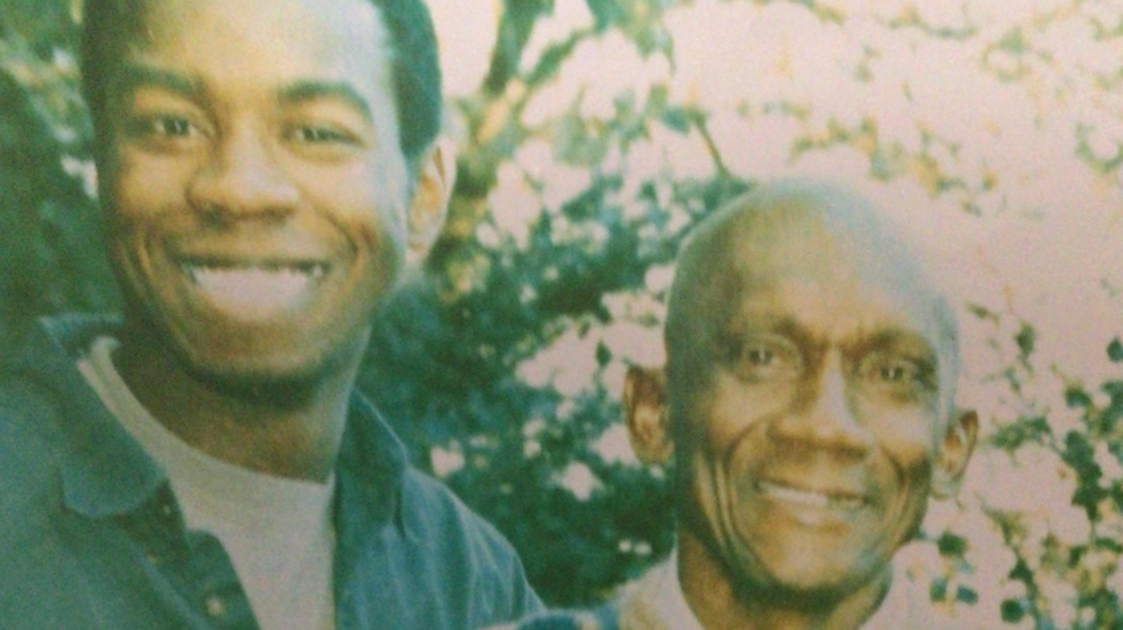
I stood in the center of my parents’ Valley Stream, Long Island, living room, heatedly yelling at my 90-year-old West Indian father — a U.S. veteran with advanced Alzheimer’s-related dementia — and wondered how we had regressed to this familiar, hostile place.
Looking back, I should have known better. I’m a 54-year-old Black, queer man who recently moved back from California to help care for Dad, who also has severe hearing loss. I’ve read up on caretaking for someone suffering the disease known as “the long goodbye,” so I know you aren’t supposed to contradict them. You most certainly are not supposed to manhandle them. Yet that was precisely what I had done.
Advertisement
My mother, the primary caregiver for my father, had left the house to run some errands. She went without my dad, which sent him into an anxiety spiral. (He has unfortunately reached a stage where he follows my mother around as if she is black clothing and he is lint.) As a result of her absence, Dad transformed into Bizarro Daddy — his alter ego, who is quiet, cantankerous and manic whenever something is amiss and I try to engage him.
It feels a lot like walking on bubble wrap whenever that version of my dad is around and I never know what my next move is going to set off. So it came as a surprise when my own temper overtook me after I learned he had escaped from the house. I raced through the open front door and found him standing undressed on the porch steps, staring out onto the lawn.
“What the hell are you doing out here, Dad? Where are your pants?” I asked.
“I don’t know.”
“OK, well, we have to go back inside.”
“No!”
“‘No!’ is not an option, Daddy!”
Then I did what the books and experts say you should never do: I ruptured his dementia bubble by wrapping my fingers around his shoulders and firmly shoving him back into the house before he could even consider resisting me. My frustration at having lost track of him left me panicked by the thought of losing him. However, that was not how Dad took it. Instead of seeing things from my perspective, he exploded into an expletive-filled rage.
Advertisement
I had never in my 54 years heard my father drop an f-bomb — not even when he was with his buddies at the racetrack. The fact that his anger was being directed at me suddenly triggered long-forgotten post-traumatic angst.
It was autumn 1984, and I had been speaking with my cousins, Camille and Brian, upstairs in Brian’s bedroom when Dad, a native of Saint Vincent and the Grenadines, appeared in the doorway. The rage in his eyes made it clear something was very wrong.
Advertisement
“Boy, didn’t you hear me calling you?” he asked.
“No, Daddy, I — ”
He struck me in the face, grabbed me by the collar, dragged me out of Brian’s bedroom, and down the 17 stairs from their second-floor East Flatbush, Brooklyn, apartment to ours. Once we were home, he continued to beat me — not with his hands but with words like “fool,” “lying” and “ridiculous” — all because I had not heard him call me.
The rest of that traumatic conversation — or even why he had initially summoned me — lay tucked far away in the recesses of my psyche, like a mango seed inside a pit. Left with no other choice, I drifted away to the safe, psychic space 13-year-olds inhabit when their parents rebuke them.
Advertisement
Just like that, the boundaries separating the years between when I was 13 and 54 shattered. Everything around me was that night and that staircase. It was the powerlessness of yesterday. It was everything I could not return to.
Beneath decades of forgiveness lay untamed rage — so I cursed back at him, and before long, we were face-to-face, and I was full-blown yelling about the way he was talking to me. However, instead of arguing his case, he responded by parroting my every word, like a child might do.
For his protection — and my own — I locked the doors and retreated to my bedroom. I bit into a tab of Klonopin from my emergency stash. Then I sat down in the middle of my childhood bedroom — I’d recently replaced the Janet Jackson posters and Marvel comic books with my own abstract paintings — and closed my eyes to recenter myself.
Advertisement
My father no longer had access to his right mind, so it was I who needed to adjust. I had not practiced meditation in years, yet there I was, leaning into the rhythm of my own adrenalized breathing and humming in an attempt to self-soothe. Before long, numbness crept in from the corners of my consciousness, saturated my center, and diluted my anger enough for me to face my father.
The night when my dad dragged me home from my cousins’ house marked one of the lowest moments in our relationship and set off an era of deep discord between us. Gone was the daddy who tucked me in with bedtime stories, took my side over Mom’s, and let me stay home from school when I faked being sick. Instead of apologizing for his brutality, he badgered me about getting into college. I couldn’t have cared less: I was being molested by a family member, and rather than turn to my father for help, I kept my shame to myself and turned inward toward artistic self-expression and the safety of solitude. Even that roiled my dad, and he constantly questioned my interests and my academic pursuits, as well as my curly ’80s perm and spandex pants.
Advertisement
Once I was in high school, we barely spoke to each other. He was frustrated with my grades, and I was busy struggling with my sexuality. After I came out in college, he would say something insensitive about my fine-art major or homoerotic self-portraiture, and I would do something provocative like register with the Republican Party. After I told my mom what the family member had done to me and she relayed it to my father, he raged to her but said little to me about it.
Exasperated with everything, I moved to San Francisco to escape. Free from the intrusive gaze of judgmental family members and father-son tension, I enjoyed the freewheeling queer liberation I hadn’t known I needed. Unfortunately, it was undercut by an untended resentment that manifested itself in my romantic relationships, which consisted of one-night stands. When I did date, I either mistreated the older men I went out with by taking my anger out on them, or they mistreated me by using me to serve their twink or Black fetishes.
About a month after I’d moved westward, I received a letter from my father. In it, Dad apologized for his role in our estrangement:
Advertisement
“To put things honestly,” Dad wrote, “I stayed on your case, because I wanted the best for you.”
For the first time in my life, Dad opened up about his stormy relationship with his own womanizing father, and revealed his deep scar tissue. Tears streamed down my face as I read his letter in Alta Vista Park, while overlooking the foggy Northern Californian city I called home.
He followed up the letter with an hourlong long-distance call, in which he apologized for not protecting me from my abusive family member — and for not being more supportive. Later, when I made my first trip home that year to attend a friend’s wedding, my father actually hugged me — both when I arrived and when he dropped me off at the airport. He even said, “I love you.”
That was 30 years ago, and our relationship over the past three decades has been as bounteous as the mango tree in my Aunt Vida’s front yard in Saint Vincent. We sat under it during a homeland pilgrimage in 1999 and ate the sweet fruit with our bare hands until our bellies distended.
Advertisement
However, as I descended the stairs to check in on my 94-year-old father, I worried those years of goodwill would mean nothing to the man I lived with now.
Dad was sleeping on the couch in pajama pants when I found him in the living room, and I was envious. I wanted a nap, too. His need for around-the-clock care had kept me up until 4 a.m., when my bartender brother came home from work and took over. (Mom covered the day shift.) Between the three of us, there was always someone to keep him from fleeing — something he had attempted several times prior. But I was going to have to figure out a way to get through his tantrums without traumatizing either — or both — of us.
Advertisement
It was then that it hit me: It was completely unfair that our parents should require more grace than we kids had been given.
“Lawrence,” he grunted groggily.
“Yes, Dad?”
“You OK?”
“Yeah. How about you?”
“I don’t know.”
And just like that, our big fight was a memory that only I had to live with. Dad didn’t remember what happened and I didn’t see the point in bringing it back up. This left us free to start anew yet again.
Dad and I share a complicated past, but what defines us most is the progress we’ve made in the years since our contentious era. Far too many of my male (heterosexual and LGBTQ) friends still suffer from unresolved paternal trauma, so I’m grateful for the hard-won healing he and I have achieved. It’s our reward for growing closer together instead of further apart over the decades.
Advertisement
Seeing my father so frail and vulnerable is truly devastating, because he is the first man I ever loved — and the first man whose love ever mattered. I cannot imagine being anywhere else but by his side at this point, when he needs me most. It feels like both the least and best I can do to grant him the end-of-life dignity he deserves. I won’t always get it right, but I will always keep showing up for him and the people I love. My father taught me that.
HealthNews
Ozempic and Wegovy may strengthen bones in Type 2 diabetes patients, study finds

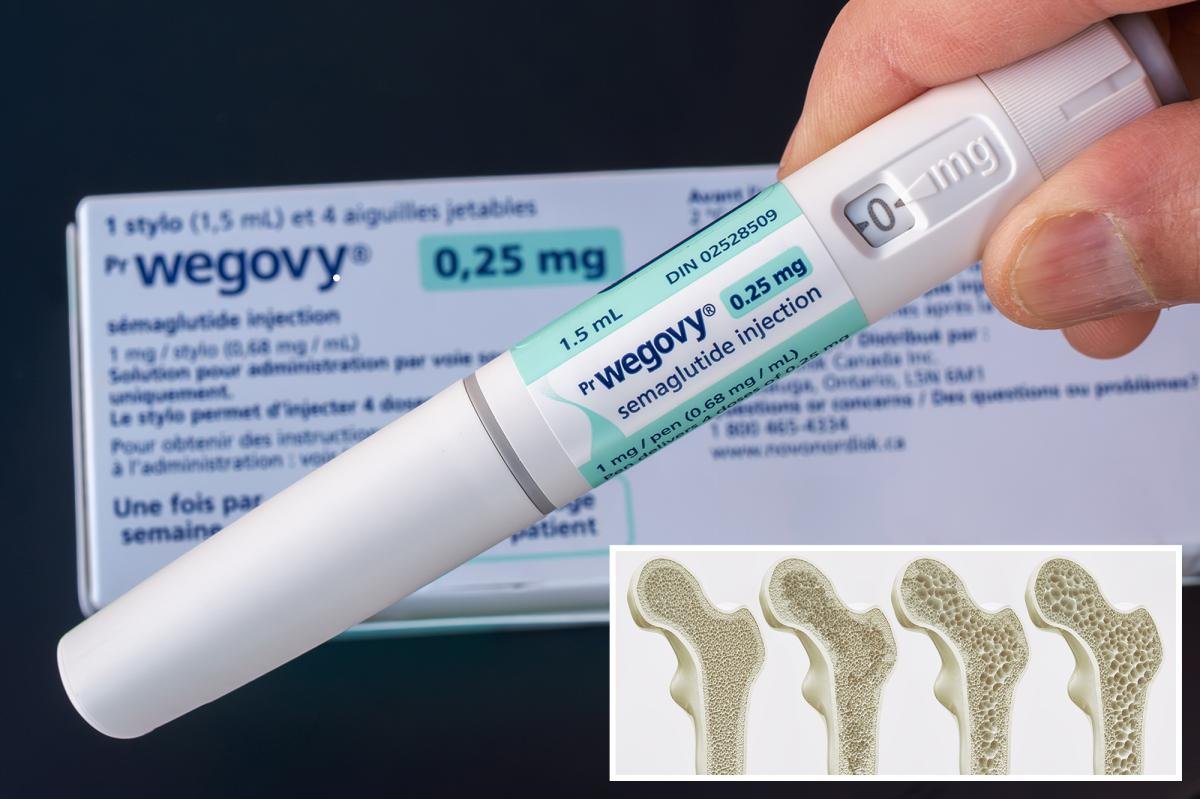
Type 2 diabetes patients taking Ozempic and Wegovy may be getting an unexpected perk: a little extra backbone.
A new study suggests semaglutide — the active ingredient in the blockbuster weight-loss drugs — could help strengthen bones in type 2 diabetes sufferers, even as it melts the pounds away, according to a Science Daily report.
Researchers found that type 2 diabetes patients taking semaglutide were 15% less likely to suffer bone fractures than patients using other popular weight-loss medications.
That’s a surprising twist, since many experts had worried that rapid weight loss could leave bones more fragile.
Not only did semaglutide users lose more weight than patients taking competing treatments, but they also appeared less likely to break a bone, said the researchers, led by Dr. Jairo Noreña, a former endocrinology fellow at Stanford University Medical Center in Palo Alto, Calif.
The research team dug through the medical records of more than 59,000 adults with type 2 diabetes.
Among the 26,324 semaglutide users, researchers recorded 794 fractures.
The comparison group — 33,555 patients taking other weight-loss drugs — suffered a whopping 1,045 fractures.
The findings were unveiled at ENDO 2026 — the Endocrine Society’s annual meeting in Chicago, which took place from June 13-16. The confab brought together thousands of professionals in hormone science and medicine.
The findings carry real-world implications — particularly for the millions of older adults on weight-loss medications who may already be at risk for bone loss.
“Bone fractures are painful, expensive and can seriously affect quality of life—especially as people get older,” Noreña said. “We hope this study encourages monitoring of bone health in weight-loss programs.
“This work is an important early step toward understanding the impact of semaglutide-induced weight loss on bone health in patients with type 2 diabetes.”
HealthNews
18 children had illnesses so rare doctors were stumped. AI gave them answers
The Independent and Yahoo will earn a commission from purchases made via links in this article. Pricing and availability are subject to change.
Love it or hate it, artificial intelligence has been integrated into humans’ everyday lives — and now, it might actually save lives.
In the latest groundbreaking use of the controversial technology, AI helped diagnose 18 children at a Boston hospital whose rare illnesses had stumped doctors.
A new study published in the New England Journal of Medicine’s NEJM AI on Thursday found that OpenAI’s o3 model can help find answers to mysteries in the medical field.
The AI model, which was released in April 2025, helped identify new diagnoses for patients at Boston Children’s Hospital, including 10 with rare neurodevelopmental diseases, four with neuromuscular disorders, two who had died suddenly and two with early psychosis.
One of the study’s lead researchers, Catherine Brownstein, from the Manton Center for Orphan Disease Research at Boston Children’s Hospital, called it “a total game changer” in an NBC News article about the study.
The Manthon Center works to understand the cause of rare diseases, which affect 30 million people in the U.S.
Brownstein explained that Boston Children’s Hospital screens the genomes of patients affected by rare diseases, which are their complete set of DNA, against newly identified genes in the hopes of a diagnosis.
Finding a rare disease diagnosis is time-consuming, and as Suyash Shringarpure, another author of the study, put it, “A researcher can only spend so much time on a single case.”
“Maybe a case remained unsolved when it came to them first, but a year later, a paper was published that clarifies the link between the gene and the disease,” Shringarpure, a researcher at OpenAI who focuses on the health sector, told NBC News.
Researchers analyzed 376 genomes from undiagnosed patients with rare diseases, and the AI model identified nearly five percent of new diagnoses.
“Considering how many times these had already been analyzed, that’s a huge number, and each one means an answer for a family,” Brownsterin said.
Kyra Benton was one of the patients who was finally diagnosed with the help of AI.
Benton started exhibiting concerning symptoms at nine years old, such as walking on her tiptoes and difficulty running with a normal gait, NBC News reported.
For years, her health declined as doctors struggled to figure out what the root issue was.
Just before she turned 20 years old last year, researchers finally diagnosed her with myofibrillar myopathy, a progressive genetic neuromuscular disorder.
“Quite frankly, I’m the type of person that’s not all that much in favor of AI,” she told the outlet. “On the other hand, I do acknowledge that it does have its advantages.”
OpenAI makes clear in its service terms that its technology should not be used for self-diagnosis.
Researchers in the study used the AI model as a tool, feeding it additional information, including doctors’ notes, patients’ symptoms and genes that might be responsible for their symptoms.
Humans then reviewed the model’s answers for a final diagnosis.


Fight or Go? Keir Starmer Considers His Next Move | BBC Newscast
Insiders have told Laura Kuenssberg that the Foreign Secretary Yvette Cooper has joined a list of people who've told Keir...


President Trump unveils Qatari luxury jet for Air Force One fleet. #Qatar #US #AirForceOne #BBCNews


Iran closes Strait of Hormuz, accusing US and Israel of violating ceasefire deal | BBC News
Iran closes Strait of Hormuz, accusing US and Israel of violating ceasefire deal | BBC News Iran has said it...


What men should know about the US government’s latest move on testosterone therapy
The US Department of Health and Human Services is requesting revisions to the labels on testosterone replacement therapies for men...


TSA etiquette, youth opinion & doctors | Confessions & Obsessions
Abby and the group have an unfiltered talk on TSA etiquette, “insecure” job titles and if culture cares too much...


Stanford graduates on the future of AI. #Tech #BBCNews


Nine people critically injured in fatal Bedford train crash
Nine people in critical condition after train crash Twenty-eight people remain in hospital – nine of them in a critical...


Ubisoft Co-Founder Claude Guillemot Dies In Plane Crash
Claude Guillemot, a co-founder of Assassin’s Creed maker Ubisoft alongside his four brothers, has died in a plane crash in...


Nine people in critical condition after driver killed in Bedford train crash. #BBCNews


Ann-Margret, 85, still rides her Harley-Davidson and credits ‘freedom’
At 85, Ann-Margret still has a need for speed. The “Bye Bye Birdie” and “Viva Las Vegas” legend is opening...
-

 Business1 week ago
How much of Musk’s wealth comes from government help? Virtually all of it
-

 Politics1 week ago
What to know about the stabbing that set off fiery riots in Northern Ireland
-

 Video1 week ago
Download fans say what they love about the festival. #DownloadFestival #BBCNews
-

 Video1 week ago
Why SpaceX IPO isn't about space. #SpaceX #ElonMusk #BBCNews
-

 HealthNews1 week ago
The people of Okinawa, Japan only eat until they are about 80 percent full, then stop — and the practice has been linked in multiple peer-reviewed studies to lower rates of cardiovascular disease, slo
-

 Food1 week ago
Pope Leo’s plane was grounded. Then the King of Spain stepped in to help
-

 TravelNews1 week ago
My Paternal Instinct Should’ve Warned Me About Netflix’s Maternal Instinct
-

 Video1 week ago
Claire Danes has the cutest stories about young Kirsten Dunst on 'Little Women' set