

Business
Big Tech is borrowing like never before and the Fed just made that a lot more expensive


Big Tech’s AI buildout is moving from cash-flow story to bond-market story, and Kevin Warsh’s first Fed meeting just made that shift harder to ignore.
Nvidia doesn’t need the money. That is what makes its $25 billion bond sale the useful starting point. The chipmaker filed to sell investment-grade debt for the first time since 2021, then upsized the deal from $20 billion after investors put in more than $85 billion of orders, the Financial Times reported. Nvidia still has a balance sheet most companies would envy, and the proceeds are officially for general corporate purposes, including refinancing. But you don’t have to squint to see the bigger message. Even the company selling the picks and shovels of the AI boom wants more dry powder.
That is the part investors should sit with. AI is no longer just a capital spending line buried inside earnings calls from Microsoft, Amazon, Meta, Alphabet and Oracle. It is becoming a financing machine of its own. Morgan Stanley projects AI-linked global debt issuance will reach nearly $570 billion in 2026, according to figures cited by CNBC, after roughly $236 billion had already been sold by the end of May. This isn’t a few weaker companies borrowing because they ran out of cash. It is some of the largest companies in the world deciding that the data center race is too expensive, and too urgent, to fund only from operating cash.
Look at the names. Meta has already tapped the bond market for $25 billion. Oracle has done the same. Alphabet sold $20 billion of debt, including a rare 100-year sterling bond. Amazon has also lined up large new financing for AI infrastructure, with MarketWatch noting a $17.5 billion loan tied to the same buildout. These companies are not equal credit risks, and treating them as one giant Big Tech basket is lazy. Alphabet can absorb more pain than Oracle. Nvidia is in a different position again. But the direction is shared: the old cash-rich technology model is taking on more leverage to keep feeding AI capacity.
Also read: You could be facing an AI chatbot at your next job interview, Lloyds Banking Group bets £100 million on AI as it recruits the executive who rewired DBS, Washington just showed Europe how quickly an AI dependency can become a crisis
Here’s the thing: shareholders who bought these businesses for fortress balance sheets now own something more sensitive to the price of money. CNBC’s analysis points to credit spreads already widening as issuance piles up. Oracle is the warning label. Moody’s rates it Baa2, only two notches above junk, and the company is expected to burn as much as $28 billion of free cash flow in 2026. Even stronger names are not immune. Alphabet and Meta can still borrow on good terms, but their free cash flow is being squeezed as capital expenditure climbs. If you own these stocks and never cared about Treasury yields, you need to start caring.
The timing is awkward because the Fed just stopped sounding friendly. Kevin Warsh, confirmed by the Senate on May 13 and now in Jerome Powell’s old chair, used his first policy meeting to keep rates at 3.5% to 3.75%, according to Kiplinger’s live account of the June meeting. That part was expected. The tone was not. Warsh stripped back forward guidance, said the Fed would deliver price stability, and left investors with less of the hand-holding they grew used to under Powell. The Financial Times called the debut hawkish after Treasury yields jumped and the S&P 500 fell 1.2%.
That matters in a very practical way. A data center financed at easy-money rates is one thing. A data center financed while the two-year Treasury yield is around 4% and the Fed is openly discussing the possibility of higher rates is another. Big Tech can still borrow. The June Nvidia deal proved there is plenty of demand for the strongest credits. But demand is not the same as cheap money, and cheap money is what made many AI spending plans look cleaner than they may really be.
There is also a circularity here that should make you uncomfortable. Cloud companies are borrowing to build data centers. Those data centers buy Nvidia chips. Nvidia is investing across the AI ecosystem and raising debt of its own. Investors then lend more because AI revenue growth looks unstoppable. That loop can work for a long time when cash flows keep arriving. It gets much less forgiving if customers delay projects, if power constraints slow construction, or if the promised productivity gains take longer to show up in actual profits.
Frankly, the market has been too willing to treat AI debt as a footnote because the borrowers have famous names. That is not analysis. A $25 billion bond sale from Nvidia is still a $25 billion bond sale. A company can be wildly profitable and still change the risk profile of its equity when it starts leaning harder on debt. The old technology trade was about growth, margins and cash. The new one adds duration, refinancing and central-bank policy to the same page.
Warsh has made that page harder to read. He has promised less forward guidance, not more, and half the Fed committee’s projections reportedly pointed to at least one rate increase this year. So the AI buildout now has two clocks running at once: the industry clock, where every company wants capacity before its rivals get it, and the bond-market clock, where every new issue depends on what investors think inflation and rates will do next. Nvidia got its deal done. The question is how many more companies can keep doing the same if the Fed refuses to make borrowing easier.
Business
One of the ‘Most Marginalized’ Groups Can’t Find Summer Jobs

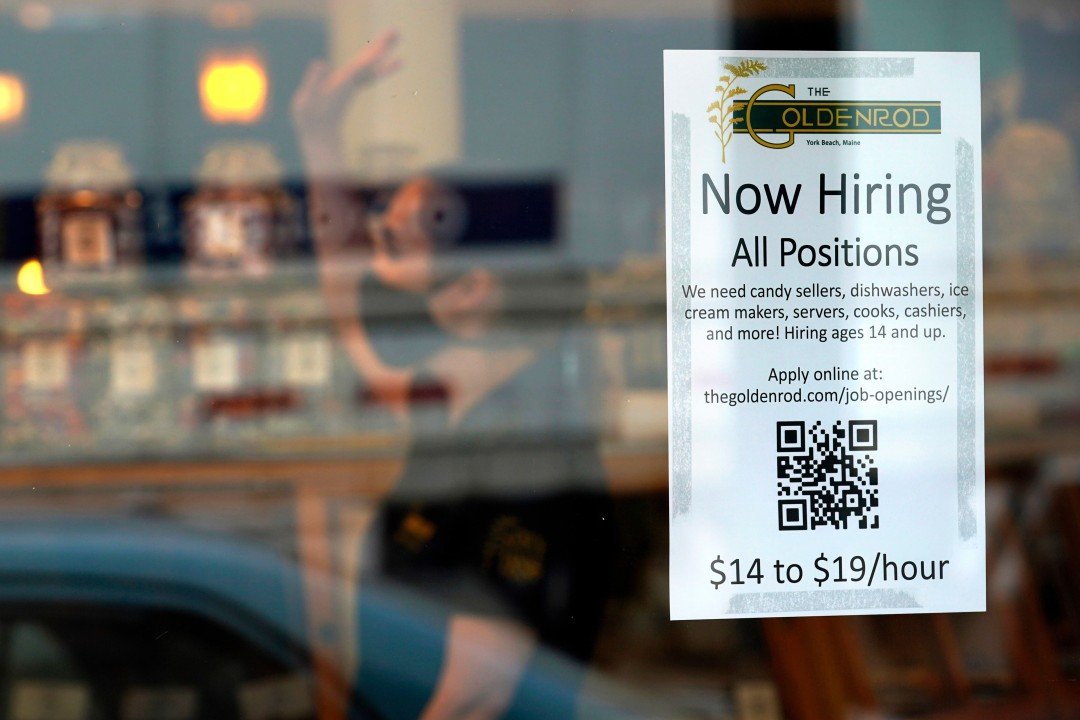
About one-third of 16- to 19-year-olds in the US were employed last summer, federal data show, down from a peak of about 60% in the late 1970s. Experts’ pessimistic forecasts are combining with reports from frustrated jobless young people around the country to form a seasonal outlook far from bathed in sunshine. “The opportunities for workers at the start of the career ladder started to dry up,” says ZipRecruiter economist Nicole Bachaud, adding that teens are among the labor market’s “most marginalized groups.”
Analyzing data from the US Bureau of Labor Statistics, outplacement firm Challenger, Gray & Christmas found the number of jobs secured by teens fell 25% last summer from the year prior. The firm says inflation, oil prices, and cautious hiring are likely to lead to even fewer jobs this year, resulting in the lowest summer hiring total for teens since the federal government began tracking it in 1948. Teens most commonly work in food preparation and serving jobs and sales, according to BLS data.
Business
Ubisoft Co-Founder Claude Guillemot Dies In Plane Crash


Claude Guillemot, a co-founder of Assassin’s Creed maker Ubisoft alongside his four brothers, has died in a plane crash in France.
French media reported that Guillemot died on Friday evening when the Cessna 421 twin engine plane he was piloting crashed close to the aerodrome of the beach resort of La Baule in Western France where he has a vacation home. His instructor is reported to have died as well.
“Ubisoft learned with deep sadness of the death of Claude Guillemot, co-founder of the group and President of Guillemot Corporation, in an accident. Our thoughts are with his family and loved ones during this ordeal,” an Ubisoft representative said in a statement.
The entrepreneur and businessman and the unnamed plane instructor had reportedly set off from the city of Rennes for La Baule on Friday afternoon for the Fly In La Baule meeting gathering light airplane enthusiasts.
Claude Guillemot, who was 69, co-created video games specialist Ubisoft with brothers Michel, Yves, Gérard and Christian in their hometown of Carentoir in Brittany in 1986.
Kicking off with early games Zombi, Iron Lord, it steadily grew into one of the most influential game makers in the world with titles Assassin’s Creed, Rayman, Driver, Rabbids, Tom Clancy’s, and Watch Dogs.
He also led on the development of their other joint company Guillemot Corporation, specialized in gaming accessories and digital audio technology, which was created prior to Ubisoft in 1984.
In 2000, the brothers also formed Gameloft, which would go on to become a major player in downloadable video games for smartphones.
Claude Guillemot handed the day-to-day running of Guillemot Corporation to his son Valentin Guillemot in July 2025, appointing him CEO, but remained attached to the company in the role Chairman of the Board of Director and continued to guide its overall direction.
Over at Ubisoft, which is headed by brother Yves Guillemot, Claude Guillemot was on the board under the title of Deputy Chief Executive Officer but was not part of the day-to-day leadership team.
Business
Democratic senators want Paramount-Warner Bros merger paused until July 1

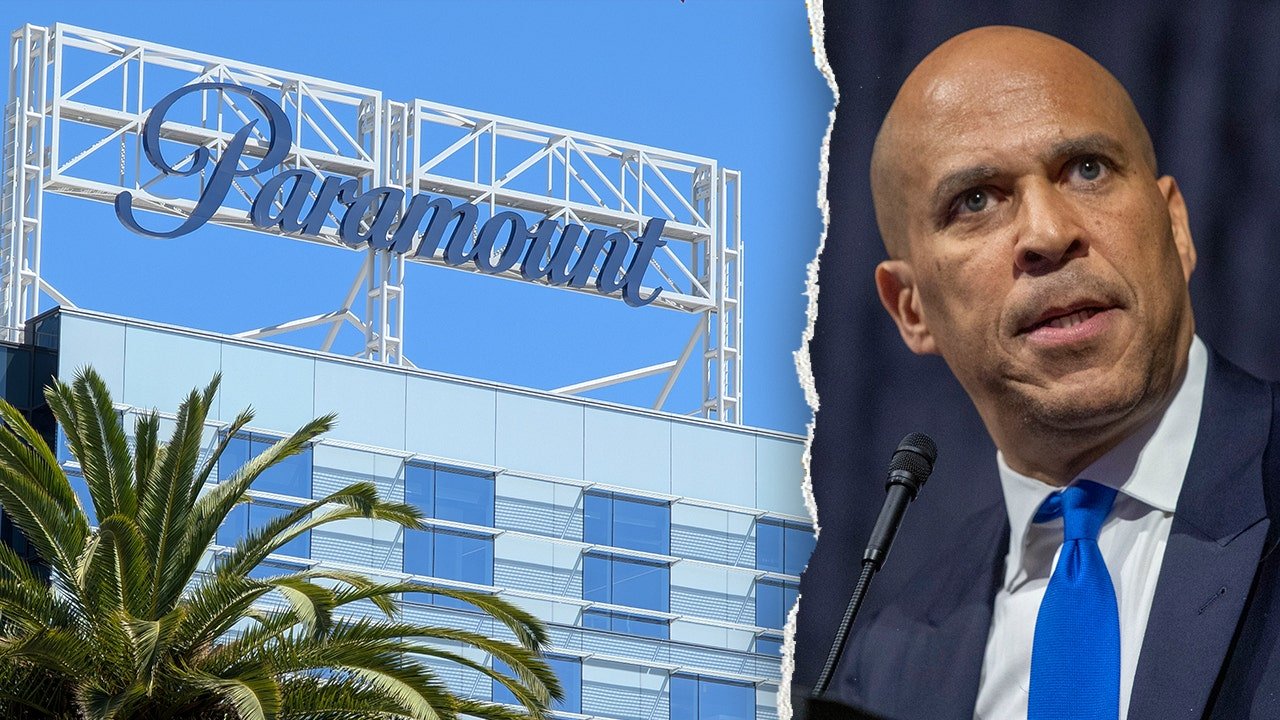
Three Democratic senators have urged the Federal Communications Commission (FCC) to put the Paramount-Warner Bros. Discovery merger on pause over concerns about foreign investors controlling what would be one of the largest media companies in the United States.
In a joint letter to FCC Chairman Brendan Carr, Sens. Cory Booker, D- N.J., Adam Schiff, D-Calif., and Elizabeth Warren, D-Mass., demanded he “must foreclose any attempt by Paramount to close this transaction” before an adequate review of the involved foreign investors is completed.
The lawmakers said the FCC must conduct this review to evaluate possible “national security threats posed by foreign government investment” in the $110 billion entity. If approved, the merger would bring CNN and CBS News under one corporate owner, further consolidating the news media landscape.
Paramount, led by CEO David Ellison, acknowledged in an April financial disclosure cited by the senators that foreign ownership in the new corporation will rise to “approximately 49.5 percent.” In that document, Paramount also said that all voting rights will be “controlled by the Ellison family through U.S. entities.”
WARNER BROS DISCOVERY SHAREHOLDERS APPROVE PARAMOUNT SKYDANCE DEAL
The document revealed that Saudi Arabia’s public investment fund and various entities based in the United Arab Emirates and Qatar would be equity holders.
Paramount told the FCC in April that this arrangement would not present “any national security, law enforcement, or foreign or trade policy concerns.”
The senators want a more rigorous check of what this level of foreign ownership would mean, telling Carr in their letter that he should not take the Ellison family’s statements “at face value.”
They argued that the FCC should reject Paramount’s petition for preemptive approval. Under Section 310 of the 1934 Communications Act, foreign individuals, companies and governments are generally prohibited from owning more than 25% of a U.S.-based firm that has an FCC-issued broadcast license.
CHRISTIANE AMANPOUR POINTS TO ‘HEMORRHAGING’ AT CBS TO WARN OF DAVID ELLISON’S POTENTIAL TAKEOVER AT CNN
Booker, Schiff and Warren gave Carr a July 1 deadline to notify Paramount that the deal cannot close until the foreign investment review is completed.
The FCC’s pending approval is the largest regulatory hurdle in the way of the merger. The Department of Justice signaled last week it would not challenge Paramount’s bid to acquire Warner Bros.
The DOJ’s antitrust division concluded after an eight-month review that “the transaction is not likely to result in harm to competition or American consumers” with regard to on-demand streaming, linear television and studio development, and the production and distribution of films.
Warren criticized this decision by the DOJ and urged state attorneys general to continue fighting the transaction. California Attorney General Rob Bonta was already leading a coalition of states in preparing a lawsuit to block Paramount from adding Warner Bros. to its growing portfolio.
GET FOX BUSINESS ON THE GO
More than 5,000 filmmakers and actors working in Hollywood signed an open letter in April furiously demanding that the merger be stopped. They argued that it would stifle competition and reduce job opportunities.
“Our industry is already under severe strain, in large part due to prior waves of consolidation. We have witnessed a steep decline in the number of films produced and released,” according to the petition. “We are deeply concerned by indications of support for this merger that prioritize the interests of a small group of powerful stakeholders over the broader public good.”
Business
35 People Whose Lives Spiraled Out Of Control


Whoops.
1. The person who must now ghost their own wedding:
2. The person who is going to be cleaning up cards until the cows come home:
3. The person who was so close, yet so far:
4. The person who is about to ask Pennywise for a quick favor:
5. The person who is absolutely hated in bird communities:
6. The person who is about to perform an incredible feat:
7. The person who might want to put that thing in rice:
8. The person who might want to also put this thing in rice:
9. The person who just came up with a delicious new recipe:
10. The person with the worst lemon luck of all time:
11. The person who now must pop that which they love most:
12. The person whose hood ornament got absolutely annihilated:
13. The person who learned a valuable life lesson:
14. The person whose AirPod is about to go on the adventure of a lifetime:
15. The person who is stuck in fast food purgatory:
16. The person who needs to just burn their house down:
17. The person will be spending some time in a federal penetentiary:
18. The person whose hardshell is hard no more:
19. The person who played games with the Sun and lost:
20. The person who might just want to go back to work:
21. The person whose water had a little extra flavor these last few months:
22. The person who has a straight-up Where’s Waldo situation going on with their wedding ring:
23. The person who didn’t just spill the beans, they exploded them:
24. The person who is now the proud owner of a baby sweatshirt:
25. The person who is now projected to go numbe one overall in the 2026 NBA draft:
26. The person who is about to be the cleanest person on the block:
27. The person who lived the American NIGHTMARE:
28. The person who is evidently at the start of an incredible journey:
29. The person whose car is about to go on some sort of Cars inspired Dante’s Inferno voyage through the underworld:
30. The person who, you know, at least wasn’t the one who fell through the attic:
31. The person who gave their stairs a wonderful coat of beautiful white paint:
32. The person who might want to work on their reflexes:
33. The person whose cake had a heartfelt message on it:
34. The person who loves their cat very much, I’m sure:
35. The person who has a bit of a Jack Torrance situation on their hands:
Business
17 Modern Home Trends People Absolutely Hate

“I Don’t Need That Nasty In My House”: People Are Revealing The Modern Home Design Trends They Absolutely Hate
“Gray floors, gray walls, gray everything. Prison gray is horrible. Stop doing it.”
We recently wrote a post where people revealed the modern home design trends they deeply hate (and are hoping will become “outdated” soon). In the comments, readers shared more popular trends they can’t stand, and it gets pretty heated. Here’s what they had to say:
1. “A farmhouse apron sink. I wish I had never put one in, and I will get rid of it ASAP. It constantly has water on top and scratches on the front from people leaning against it. And it’s so deep, I don’t really want to run a sinkful of water for cleanups. Wasteful.”
—Anonymous, 69
2. “Removing the kitchen cabinets to add shelves is the worst design concept ever. I see flippers do this all the time. No one wants their mess on display. Plus, it’s subject to grease and dust being left out in the open. No one has time to do all that cleaning. Families need storage in their kitchens! These older homes they remodel usually lack enough kitchen storage for a family to begin with.”
—Anonymous, 55, Texas
3. “Microwaves above the stove. Reaching over boiling pots is dangerous.”
—Anonymous, 76, Utah
4. “I really, really detest garage doors on the front of a house. Sure, it’s convenient, but it’s hideous and destroys the whole aesthetic of the house. No beautiful home with historical significance has a garage facing the street. Stop doing that! Stop building whole neighborhoods like that!”
—Anonymous, 55, female, Dallas
5. “Having different colored top and bottom kitchen cabinets. Blue on the bottom, white on the top. Yuck!”
—Anonymous
6. “Having master bedrooms on the main floor (unless you have a disability, of course). Why would I want to sleep right next to the door when someone breaks in? I want to be upstairs where I hear it and have defenses ready!!!”
—Anonymous
7. “Hell no on carpets. No. Nope. Nada. Never. I had only a couple of rules for my realtor: I had to be able to get my boat into the driveway, the basement couldn’t have water, and NO carpets. Period. I don’t need that nasty in my house. Hardwood or tile only on floors. Hard rule. Unbreakable.”
—trendycoach557
8. “Gray floors, gray walls, gray everything. Prison gray is horrible. Stop doing it.”
—Anonymous, 60, Canada
9. “Cabinets that wrap around corners that go out, it looks nice, but you have a cabinet that is almost unusable because it’s just a tiny corner of space of about a few inches.”
—Anonymous, Ohio
10. “These aren’t necessarily ‘modern,’ but I would like to see bigger closets. When we were looking at houses, there were huge houses (over 2,800 square feet) with tiny closets.”
—Anonymous, 56, Texas
“I hope a modern design that will be outdated is the massive master suite, tiny secondary bedrooms, and few closets. Never did I figure out over the past decades why the architects thought lower-income people had fewer clothes. They have as many or more because they buy at a discount.”
—Anonymous
11. “I detest open concept. I need a kitchen with a door. I don’t want to walk in the front door and see a cooking mess. Also, carpet sucks so bad. Bring back real wood floors and rugs.”
—Anonymous
12. “The ‘farmhouse’ white with black accents design for the outside of a house. In my opinion, it is just ugly on 99% of houses. Give me some color!!! Aesthetics aside, it has to be repainted constantly, or it looks bad; white stains and black fades quickly, especially if you live in a sunnier area.”
—Anonymous, 36, Texas
13. “When the faucet is too close to the back of the sink, and it’s impossible to wash my hands without big puddles of water behind the knobs.”
—Anonymous, 36, USA
14. “Putting pot fillers behind the stove.”
—Anonymous, 67, Florida
15. “Open pergola-type roofs at a front door entrance. Doesn’t keep you dry as you fumble for the house key.”
—Anonymous, 72, Rhode Island
16. “Dull, gray-colored fake wood floors. I grew up in the era of real hardwood floors that were beautiful and classic! ”
—Anonymous
And finally…
17. “What ‘cost-cutting moron’ decided to save the builder some money by removing bathroom doors? Even if the toilet has its own room, who wants to try and sleep while their partner is getting ready?”
—Anonymous
Note: Some responses have been edited for length and/or clarity.
What are some modern home design trends that you actually dislike or think will be “outdated” soon? Tell us in the comments, or if you prefer to remain anonymous, you can use the form below.


Vance to head to Switzerland for Iran talks
Vice President JD Vance is expected to travel to Switzerland for the US-Iran talks as fighting in Lebanon brings uncertainty...


Intense flooding hits Gulf Coast states
Videos show the aftermath of heavy flooding across the Gulf Coast and the southern United States due to Tropical Storm...


Blake Lively Steps Out Alone in New York Amid Taylor Swift’s Bachelorette Buzz
Blake Lively’s staying solo this weekend … hanging out alone while Taylor Swift’s surrounded by friends at her Rhode Island...


Fight or Go? Keir Starmer Considers His Next Move | BBC Newscast
Insiders have told Laura Kuenssberg that the Foreign Secretary Yvette Cooper has joined a list of people who've told Keir...


President Trump unveils Qatari luxury jet for Air Force One fleet. #Qatar #US #AirForceOne #BBCNews


Jimmy Kimmel taps longtime Trump nemesis Rosie O’Donnell to replace him as he steps back from late-night show
Jimmy Kimmel announced comedian Rosie O’Donnell will be temporarily taking over his late-night show as he steps back for a...


One of the ‘Most Marginalized’ Groups Can’t Find Summer Jobs
About one-third of 16- to 19-year-olds in the US were employed last summer, federal data show, down from a peak...


Iran closes Strait of Hormuz, accusing US and Israel of violating ceasefire deal | BBC News
Iran closes Strait of Hormuz, accusing US and Israel of violating ceasefire deal | BBC News Iran has said it...


Earth, Wind & Fire’s highs and lows examined in new documentary
Behind the glitter, grooves and Grammy-winning legacy of Earth, Wind & Fire sits a more complicated story, revealing a more...


What men should know about the US government’s latest move on testosterone therapy
The US Department of Health and Human Services is requesting revisions to the labels on testosterone replacement therapies for men...
-

 Business1 week ago
How much of Musk’s wealth comes from government help? Virtually all of it
-

 Politics1 week ago
What to know about the stabbing that set off fiery riots in Northern Ireland
-

 Video1 week ago
Download fans say what they love about the festival. #DownloadFestival #BBCNews
-

 Video1 week ago
Why SpaceX IPO isn't about space. #SpaceX #ElonMusk #BBCNews
-

 HealthNews1 week ago
The people of Okinawa, Japan only eat until they are about 80 percent full, then stop — and the practice has been linked in multiple peer-reviewed studies to lower rates of cardiovascular disease, slo
-

 Food1 week ago
Pope Leo’s plane was grounded. Then the King of Spain stepped in to help
-

 TravelNews1 week ago
My Paternal Instinct Should’ve Warned Me About Netflix’s Maternal Instinct
-

 Video1 week ago
Claire Danes has the cutest stories about young Kirsten Dunst on 'Little Women' set