

Business
17 Modern Home Trends People Absolutely Hate

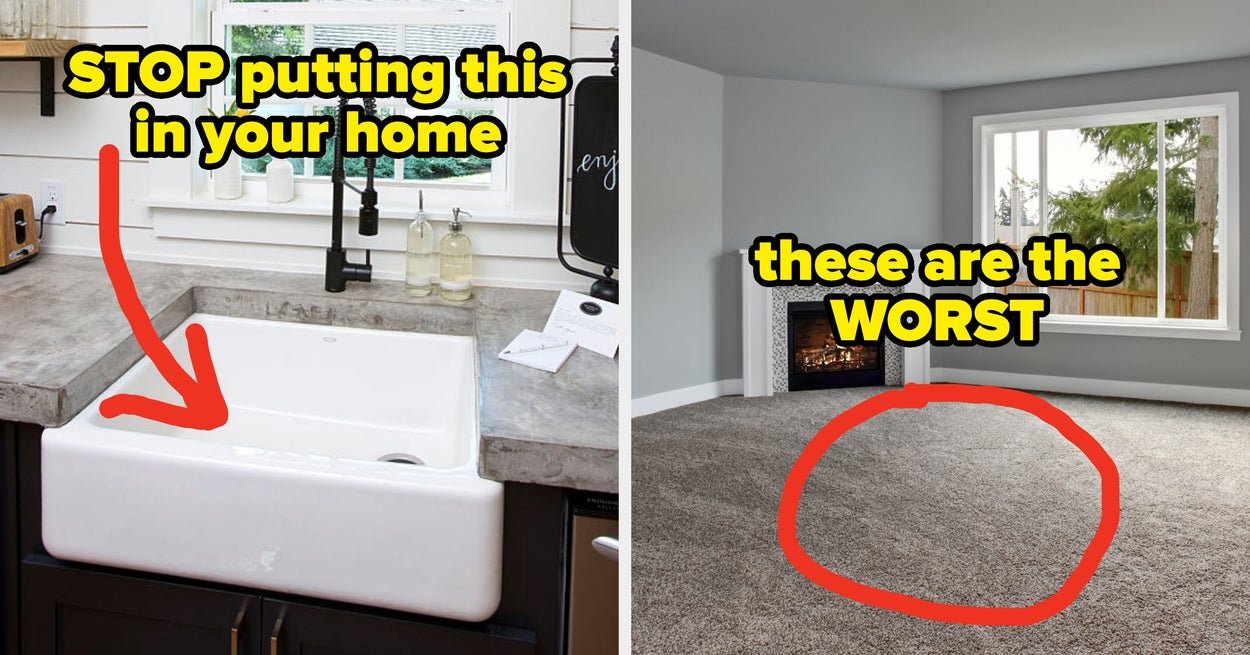
“I Don’t Need That Nasty In My House”: People Are Revealing The Modern Home Design Trends They Absolutely Hate
“Gray floors, gray walls, gray everything. Prison gray is horrible. Stop doing it.”
We recently wrote a post where people revealed the modern home design trends they deeply hate (and are hoping will become “outdated” soon). In the comments, readers shared more popular trends they can’t stand, and it gets pretty heated. Here’s what they had to say:
1. “A farmhouse apron sink. I wish I had never put one in, and I will get rid of it ASAP. It constantly has water on top and scratches on the front from people leaning against it. And it’s so deep, I don’t really want to run a sinkful of water for cleanups. Wasteful.”
—Anonymous, 69
2. “Removing the kitchen cabinets to add shelves is the worst design concept ever. I see flippers do this all the time. No one wants their mess on display. Plus, it’s subject to grease and dust being left out in the open. No one has time to do all that cleaning. Families need storage in their kitchens! These older homes they remodel usually lack enough kitchen storage for a family to begin with.”
—Anonymous, 55, Texas
3. “Microwaves above the stove. Reaching over boiling pots is dangerous.”
—Anonymous, 76, Utah
4. “I really, really detest garage doors on the front of a house. Sure, it’s convenient, but it’s hideous and destroys the whole aesthetic of the house. No beautiful home with historical significance has a garage facing the street. Stop doing that! Stop building whole neighborhoods like that!”
—Anonymous, 55, female, Dallas
5. “Having different colored top and bottom kitchen cabinets. Blue on the bottom, white on the top. Yuck!”
—Anonymous
6. “Having master bedrooms on the main floor (unless you have a disability, of course). Why would I want to sleep right next to the door when someone breaks in? I want to be upstairs where I hear it and have defenses ready!!!”
—Anonymous
7. “Hell no on carpets. No. Nope. Nada. Never. I had only a couple of rules for my realtor: I had to be able to get my boat into the driveway, the basement couldn’t have water, and NO carpets. Period. I don’t need that nasty in my house. Hardwood or tile only on floors. Hard rule. Unbreakable.”
—trendycoach557
8. “Gray floors, gray walls, gray everything. Prison gray is horrible. Stop doing it.”
—Anonymous, 60, Canada
9. “Cabinets that wrap around corners that go out, it looks nice, but you have a cabinet that is almost unusable because it’s just a tiny corner of space of about a few inches.”
—Anonymous, Ohio
10. “These aren’t necessarily ‘modern,’ but I would like to see bigger closets. When we were looking at houses, there were huge houses (over 2,800 square feet) with tiny closets.”
—Anonymous, 56, Texas
“I hope a modern design that will be outdated is the massive master suite, tiny secondary bedrooms, and few closets. Never did I figure out over the past decades why the architects thought lower-income people had fewer clothes. They have as many or more because they buy at a discount.”
—Anonymous
11. “I detest open concept. I need a kitchen with a door. I don’t want to walk in the front door and see a cooking mess. Also, carpet sucks so bad. Bring back real wood floors and rugs.”
—Anonymous
12. “The ‘farmhouse’ white with black accents design for the outside of a house. In my opinion, it is just ugly on 99% of houses. Give me some color!!! Aesthetics aside, it has to be repainted constantly, or it looks bad; white stains and black fades quickly, especially if you live in a sunnier area.”
—Anonymous, 36, Texas
13. “When the faucet is too close to the back of the sink, and it’s impossible to wash my hands without big puddles of water behind the knobs.”
—Anonymous, 36, USA
14. “Putting pot fillers behind the stove.”
—Anonymous, 67, Florida
15. “Open pergola-type roofs at a front door entrance. Doesn’t keep you dry as you fumble for the house key.”
—Anonymous, 72, Rhode Island
16. “Dull, gray-colored fake wood floors. I grew up in the era of real hardwood floors that were beautiful and classic! ”
—Anonymous
And finally…
17. “What ‘cost-cutting moron’ decided to save the builder some money by removing bathroom doors? Even if the toilet has its own room, who wants to try and sleep while their partner is getting ready?”
—Anonymous
Note: Some responses have been edited for length and/or clarity.
What are some modern home design trends that you actually dislike or think will be “outdated” soon? Tell us in the comments, or if you prefer to remain anonymous, you can use the form below.
Business
Claude Guillemot, co-founder of video game maker Ubisoft, dies in plane crash


A founder of global gaming company Ubisoft, maker of Assassin’s Creed, was killed in a plane crash in western France, authorities said Saturday.
The twin-motor Cessna 421 carrying Claude Guillemot and a flight instructor crashed Friday evening near La Baule airport on the Atlantic coast, Mayor Franck Louvrier said in a statement. Both were licensed and experienced pilots. The instructor also was killed, the mayor said. An investigation is underway.
Guillemot was 69 years old.
Ubisoft confirmed Guillemot’s death but did not comment further.
The plane crashed in a field just before landing at La Baule-Escoublac Airport, an airport official told The Associated Press. The official spoke on condition of anonymity because they were not authorized to be publicly named.
Guillemot and four brothers founded Ubisoft in 1986. In addition to the popular Assassin’s Creed franchise, Ubisoft’s games also include Just Dance, and the Rayman and Tom Clancy game franchises.
Business
A quieter Federal Reserve could mean volatile markets, higher rates

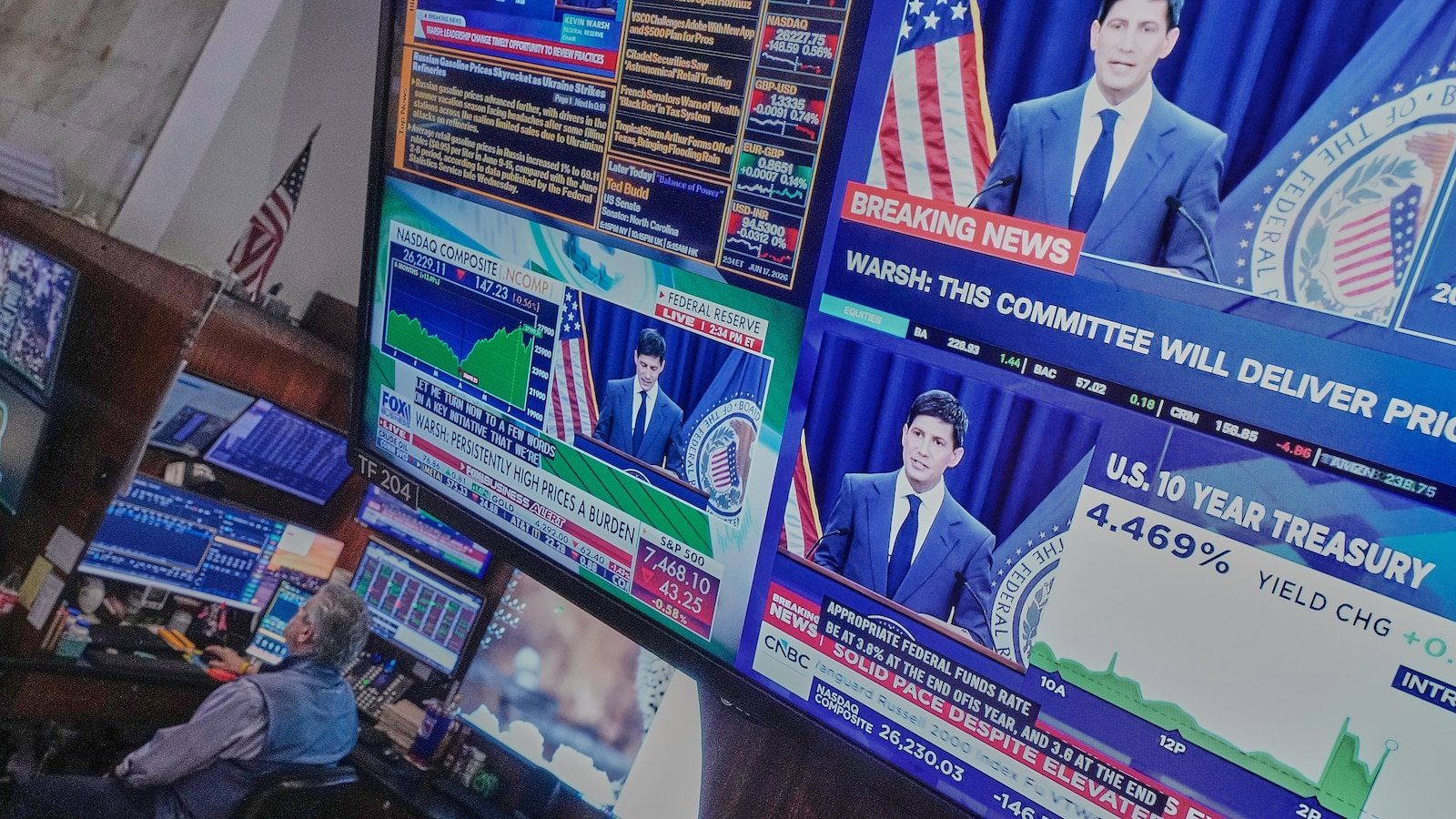
WASHINGTON — The Federal Reserve has for decades moved steadily from a remote, opaque government agency that shared little about what it did or why to a more transparent institution willing to explain how it makes decisions and what it thinks about the economy.
But in his first press conference Wednesday, new chair Kevin Warsh began to reverse some of those steps. Warsh, like many economists, thinks the financial markets have become too dependent on Fed guidance, and that such direction is more effective in financial crises or economic downturns.
Warsh quickly made changes: The Fed’s statement on its interest-rate decision was slashed to 132 words, from 341 in April. And Warsh pointedly noted that the statement excluded any hints, or “forward guidance,” about what the Fed’s next moves might be.
In short, Warsh rapidly delivered on a promise to slash the Fed’s communications, particularly the guidance it gives to financial markets about its next interest-rate moves. Yet such an approach carries the risk of more violent swings in stock and bond prices, analysts say, and ultimately could lead to higher interest rates for consumers and businesses.
“Forward guidance in general has served to suppress volatility and anchor market expectations,” said George Pearkes, global macro strategist at Bespoke Investment Group. “And that has led to lower borrowing rates, relative to alternatives.”
Still, the impact on consumers is likely to be modest, Pearkes added, with mortgage rates perhaps a quarter-point higher than they would be otherwise.
Financial markets see-sawed, then fell Wednesday after the statement and news conference. The yield on the 10-year Treasury, which strongly influences mortgage rates, jumped Wednesday to 4.49% from 4.43%, though it fell back in Thursday trading. The yield on the 2-year Treasury, which closely tracks expectations for Fed action, was 4.16% Thursday, up sharply from 4.05% before the Fed’s meeting. The broad S & P 500 stock index dropped 1.2% Wednesday.
Such swings could be a sign of things to come. Previous chairs have signaled the Fed’s next moves clearly enough that financial markets have largely anticipated the central bank’s actions. But Warsh has frequently cited as a model former chair Alan Greenspan, whose circumspect comments often kept investors guessing.
Greenspan, who served as chair from 1987 to 2005, did usher in the statement the Fed now issues after each meeting announcing its decision. The first statement was issued Feb. 4, 1994, and said the Fed would increase its key rate for the first time in five years. The move caught investors off-guard and the Dow Jones Industrial Average plunged 2.4% that day.
The paring back of Fed communications is part of a larger package of potential reforms to the central bank’s operations that Warsh signaled Wednesday. He announced that the Fed will set up five task forces to examine the Fed’s communications, its balance sheet, how it analyzes and gathers economic data, the impact of AI on productivity and jobs, and the frameworks it uses to analyze inflation.
Warsh said the communications task force would consider changes to the quarterly economic projections the Fed issues as well as look at other recent innovations, including press conferences. Former chair Ben Bernanke was the first to hold them, though he did so only after every other Fed meeting. Warsh’s predecessor, Jerome Powell, shifted to holding them after every meeting.
Such steps are a sharp contrast with the 1990s, when Greenspan never explained a Fed decision, on the record, to reporters. Warsh could ultimately dial back some of the Fed’s increased transparency.
“This is a big change in how the Fed has conducted itself since the (2008-2009) global financial crisis,” Matthew Luzzetti, chief U.S. economist at Deutsche Bank, said. “Since then there has been a one-way train to greater communication, more transparency, and more forward guidance. Warsh has now put that train in reverse.”
Previous Fed chairs, starting with Bernanke, have seen a clear benefit to more communication: It helps guide the markets in the direction the Fed wants. Fed officials control a short-term interest rate, but the rates that affect the economy — such as the yield on the 10-year Treasury — are heavily influenced by investors’ expectations for inflation and economic growth. By telegraphing their next moves, policymakers can cause those longer-term rates to change even before the Fed adjusts its own benchmark rate.
Yet Warsh’s view is that financial markets have become too dependent on Fed guidance. Instead, he wants investors to gauge where the Fed may move next by examining economic data and making their own judgments, which the Fed can then consider as part of their assessments of where the economy is headed.
“Financial market prices are probably the most important source of information to guide central bankers,” Warsh said at Wednesday’s news conference.
David Andolfatto, an economics professor at the University of Miami and former economist at the St. Louis Fed, said he agreed with Warsh that forward guidance has flaws. It can be easily upended by unexpected events, he said, such as Russia’s invasion of Ukraine or the Iran war.
But the chair should set out guidelines for how the Fed will react to unexpected events, Andolfatto said, or to challenges such as the persistent inflation it is grappling with now, yet Warsh so far hasn’t done so.
“I’m with him on dispensing with forward guidance, but you have to replace it with a contingency plan,” Andolfatto said. “It’s not enough to say, trust me, we’ll keep inflation at target.”
Ironically, Warsh’s decision to drop forward guidance may empower the other 18 members of the Fed’s rate-setting committee, Pearkes said. Those officials — six members of the Fed’s governing board, plus the presidents of the 12 regional Fed banks — frequently give public speeches, and their remarks will get even more attention as financial markets seek clues about what the Fed may do next.
A big challenge to Warsh’s approach will come if there is a sharp financial downturn or economic crisis, as occurred during the COVID pandemic. In those circumstances, economists said, forward guidance can play an important role calming markets.
“Whether it will stand the test of time and he will behave this way for five years is a very different question, but one that we’re going to have to wait for events to unfold to get an answer to,” Pearkes said.
Business
One of the ‘Most Marginalized’ Groups Can’t Find Summer Jobs

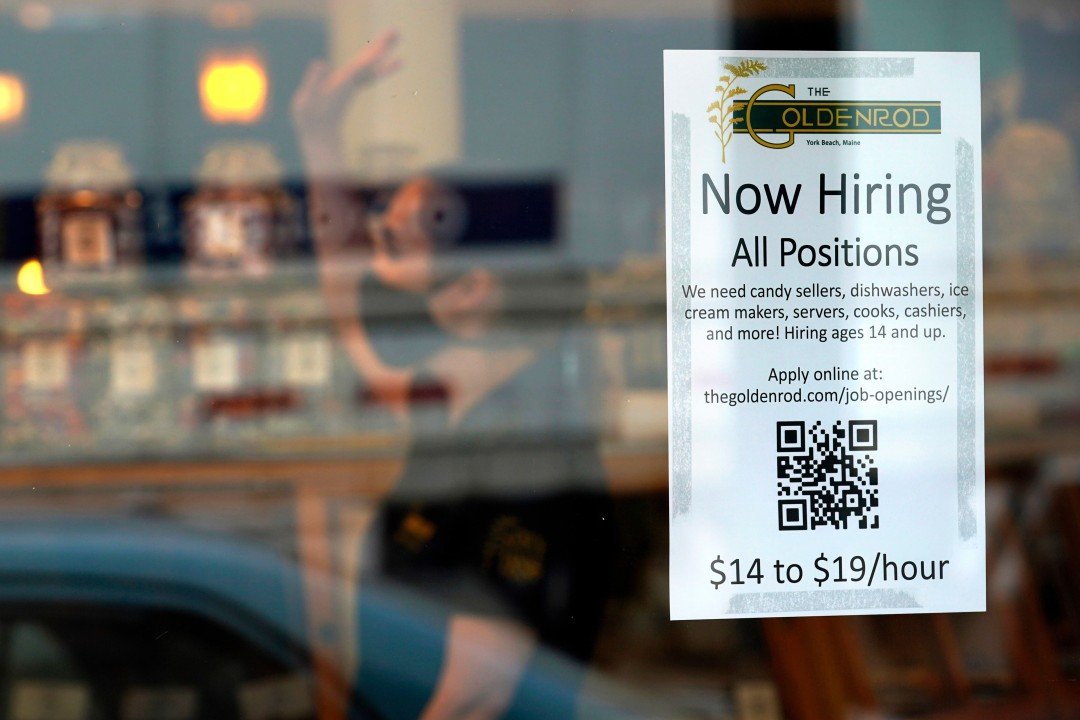
About one-third of 16- to 19-year-olds in the US were employed last summer, federal data show, down from a peak of about 60% in the late 1970s. Experts’ pessimistic forecasts are combining with reports from frustrated jobless young people around the country to form a seasonal outlook far from bathed in sunshine. “The opportunities for workers at the start of the career ladder started to dry up,” says ZipRecruiter economist Nicole Bachaud, adding that teens are among the labor market’s “most marginalized groups.”
Analyzing data from the US Bureau of Labor Statistics, outplacement firm Challenger, Gray & Christmas found the number of jobs secured by teens fell 25% last summer from the year prior. The firm says inflation, oil prices, and cautious hiring are likely to lead to even fewer jobs this year, resulting in the lowest summer hiring total for teens since the federal government began tracking it in 1948. Teens most commonly work in food preparation and serving jobs and sales, according to BLS data.
Business
Ubisoft Co-Founder Claude Guillemot Dies In Plane Crash


Claude Guillemot, a co-founder of Assassin’s Creed maker Ubisoft alongside his four brothers, has died in a plane crash in France.
French media reported that Guillemot died on Friday evening when the Cessna 421 twin engine plane he was piloting crashed close to the aerodrome of the beach resort of La Baule in Western France where he has a vacation home. His instructor is reported to have died as well.
“Ubisoft learned with deep sadness of the death of Claude Guillemot, co-founder of the group and President of Guillemot Corporation, in an accident. Our thoughts are with his family and loved ones during this ordeal,” an Ubisoft representative said in a statement.
The entrepreneur and businessman and the unnamed plane instructor had reportedly set off from the city of Rennes for La Baule on Friday afternoon for the Fly In La Baule meeting gathering light airplane enthusiasts.
Claude Guillemot, who was 69, co-created video games specialist Ubisoft with brothers Michel, Yves, Gérard and Christian in their hometown of Carentoir in Brittany in 1986.
Kicking off with early games Zombi, Iron Lord, it steadily grew into one of the most influential game makers in the world with titles Assassin’s Creed, Rayman, Driver, Rabbids, Tom Clancy’s, and Watch Dogs.
He also led on the development of their other joint company Guillemot Corporation, specialized in gaming accessories and digital audio technology, which was created prior to Ubisoft in 1984.
In 2000, the brothers also formed Gameloft, which would go on to become a major player in downloadable video games for smartphones.
Claude Guillemot handed the day-to-day running of Guillemot Corporation to his son Valentin Guillemot in July 2025, appointing him CEO, but remained attached to the company in the role Chairman of the Board of Director and continued to guide its overall direction.
Over at Ubisoft, which is headed by brother Yves Guillemot, Claude Guillemot was on the board under the title of Deputy Chief Executive Officer but was not part of the day-to-day leadership team.
Business
Democratic senators want Paramount-Warner Bros merger paused until July 1

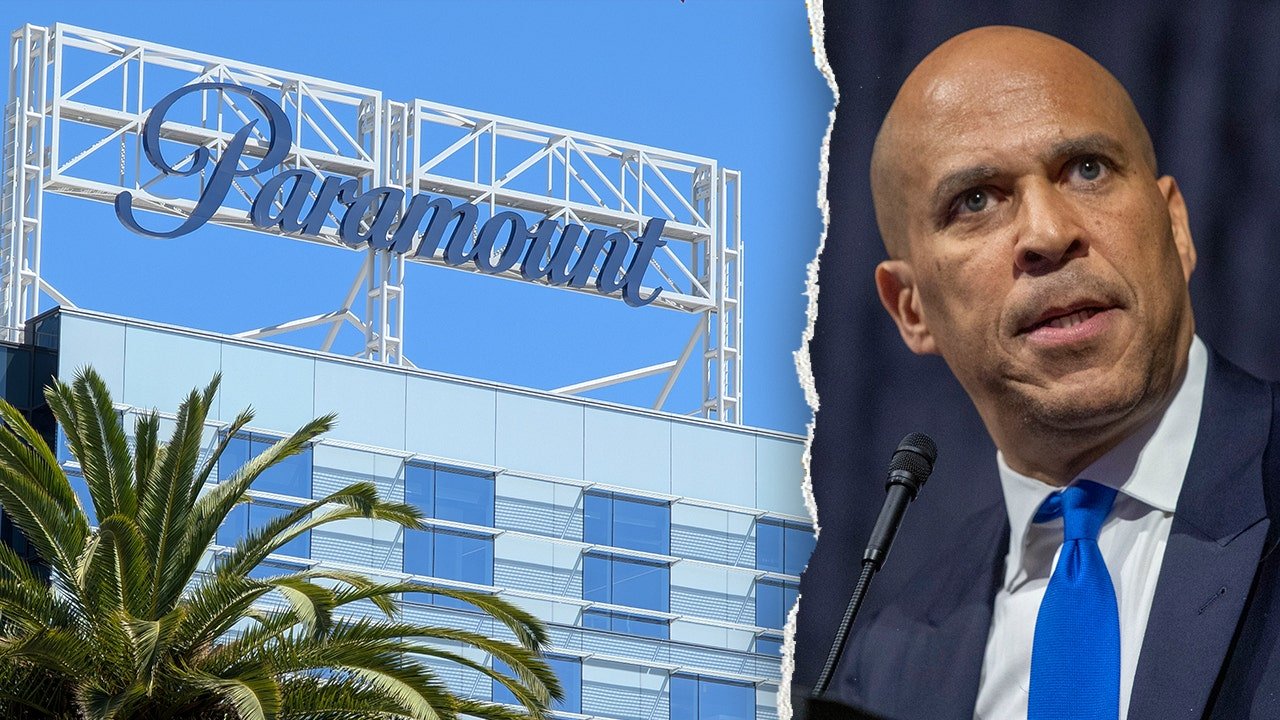
Three Democratic senators have urged the Federal Communications Commission (FCC) to put the Paramount-Warner Bros. Discovery merger on pause over concerns about foreign investors controlling what would be one of the largest media companies in the United States.
In a joint letter to FCC Chairman Brendan Carr, Sens. Cory Booker, D- N.J., Adam Schiff, D-Calif., and Elizabeth Warren, D-Mass., demanded he “must foreclose any attempt by Paramount to close this transaction” before an adequate review of the involved foreign investors is completed.
The lawmakers said the FCC must conduct this review to evaluate possible “national security threats posed by foreign government investment” in the $110 billion entity. If approved, the merger would bring CNN and CBS News under one corporate owner, further consolidating the news media landscape.
Paramount, led by CEO David Ellison, acknowledged in an April financial disclosure cited by the senators that foreign ownership in the new corporation will rise to “approximately 49.5 percent.” In that document, Paramount also said that all voting rights will be “controlled by the Ellison family through U.S. entities.”
WARNER BROS DISCOVERY SHAREHOLDERS APPROVE PARAMOUNT SKYDANCE DEAL
The document revealed that Saudi Arabia’s public investment fund and various entities based in the United Arab Emirates and Qatar would be equity holders.
Paramount told the FCC in April that this arrangement would not present “any national security, law enforcement, or foreign or trade policy concerns.”
The senators want a more rigorous check of what this level of foreign ownership would mean, telling Carr in their letter that he should not take the Ellison family’s statements “at face value.”
They argued that the FCC should reject Paramount’s petition for preemptive approval. Under Section 310 of the 1934 Communications Act, foreign individuals, companies and governments are generally prohibited from owning more than 25% of a U.S.-based firm that has an FCC-issued broadcast license.
CHRISTIANE AMANPOUR POINTS TO ‘HEMORRHAGING’ AT CBS TO WARN OF DAVID ELLISON’S POTENTIAL TAKEOVER AT CNN
Booker, Schiff and Warren gave Carr a July 1 deadline to notify Paramount that the deal cannot close until the foreign investment review is completed.
The FCC’s pending approval is the largest regulatory hurdle in the way of the merger. The Department of Justice signaled last week it would not challenge Paramount’s bid to acquire Warner Bros.
The DOJ’s antitrust division concluded after an eight-month review that “the transaction is not likely to result in harm to competition or American consumers” with regard to on-demand streaming, linear television and studio development, and the production and distribution of films.
Warren criticized this decision by the DOJ and urged state attorneys general to continue fighting the transaction. California Attorney General Rob Bonta was already leading a coalition of states in preparing a lawsuit to block Paramount from adding Warner Bros. to its growing portfolio.
GET FOX BUSINESS ON THE GO
More than 5,000 filmmakers and actors working in Hollywood signed an open letter in April furiously demanding that the merger be stopped. They argued that it would stifle competition and reduce job opportunities.
“Our industry is already under severe strain, in large part due to prior waves of consolidation. We have witnessed a steep decline in the number of films produced and released,” according to the petition. “We are deeply concerned by indications of support for this merger that prioritize the interests of a small group of powerful stakeholders over the broader public good.”


Police fatally shoot l 1-year-old outside Mississippi Walmart
Witness video shows the moments after a law enforcement officer shot at a car in a parking lot outside a...


From Jennifer Aniston to Keke Palmer: All Off the Set S2 moments | Variety & CNN Actors on Actors
From breakout stars to Hollywood legends, this supercut brings together Season 2 of Actors on Actors' Off the Set in...


Vance to head to Switzerland for Iran talks
Vice President JD Vance is expected to travel to Switzerland for the US-Iran talks as fighting in Lebanon brings uncertainty...


Intense flooding hits Gulf Coast states
Videos show the aftermath of heavy flooding across the Gulf Coast and the southern United States due to Tropical Storm...


Blake Lively Steps Out Alone in New York Amid Taylor Swift’s Bachelorette Buzz
Blake Lively’s staying solo this weekend … hanging out alone while Taylor Swift’s surrounded by friends at her Rhode Island...


Claude Guillemot, co-founder of video game maker Ubisoft, dies in plane crash
A founder of global gaming company Ubisoft, maker of Assassin’s Creed, was killed in a plane crash in western France,...


‘Toy Story 5’ Headed to $160M Biggest Opening of 2026
Disney and Pixar are unwrapping a major box office gift with Toy Story 5, which is headed toward the biggest...


Fight or Go? Keir Starmer Considers His Next Move | BBC Newscast
Insiders have told Laura Kuenssberg that the Foreign Secretary Yvette Cooper has joined a list of people who've told Keir...


President Trump unveils Qatari luxury jet for Air Force One fleet. #Qatar #US #AirForceOne #BBCNews


Jimmy Kimmel taps longtime Trump nemesis Rosie O’Donnell to replace him as he steps back from late-night show
Jimmy Kimmel announced comedian Rosie O’Donnell will be temporarily taking over his late-night show as he steps back for a...
-

 Business1 week ago
How much of Musk’s wealth comes from government help? Virtually all of it
-

 Politics1 week ago
What to know about the stabbing that set off fiery riots in Northern Ireland
-

 Video1 week ago
Download fans say what they love about the festival. #DownloadFestival #BBCNews
-

 Video1 week ago
Why SpaceX IPO isn't about space. #SpaceX #ElonMusk #BBCNews
-

 HealthNews1 week ago
The people of Okinawa, Japan only eat until they are about 80 percent full, then stop — and the practice has been linked in multiple peer-reviewed studies to lower rates of cardiovascular disease, slo
-

 Food1 week ago
Pope Leo’s plane was grounded. Then the King of Spain stepped in to help
-

 TravelNews1 week ago
My Paternal Instinct Should’ve Warned Me About Netflix’s Maternal Instinct
-
 Video1 week ago
Claire Danes has the cutest stories about young Kirsten Dunst on 'Little Women' set