

Food
What we know about the Boyle Heights warehouse fire

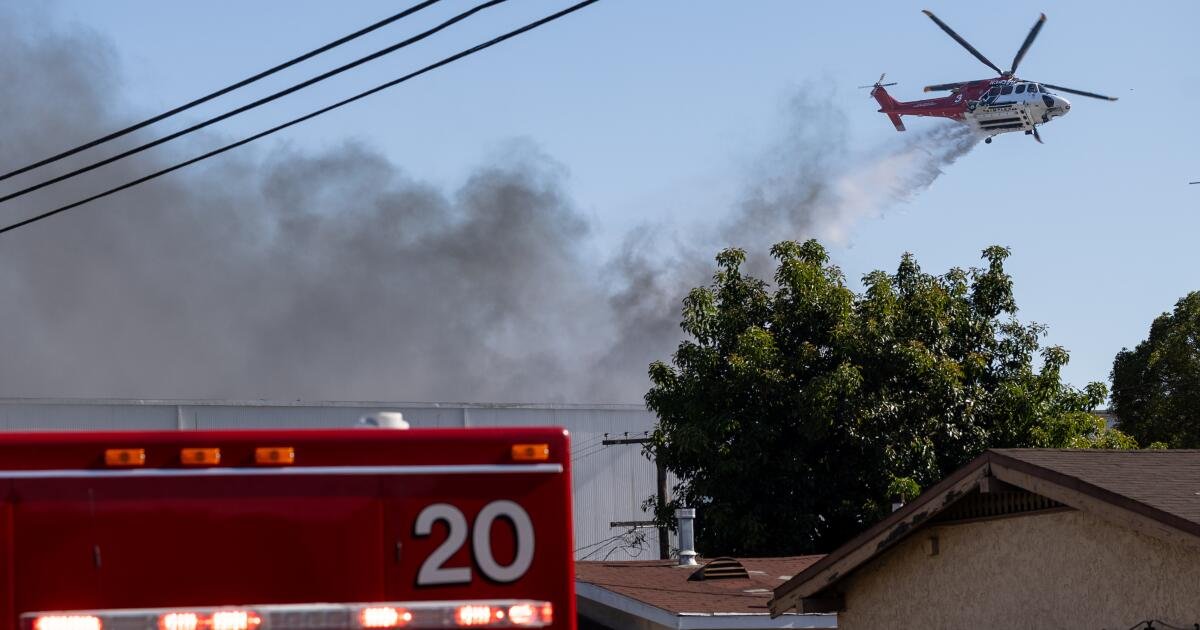
Los Angeles declared a state of emergency due to a stubborn warehouse fire in Boyle Heights that has burned for days.
Here’s a rundown of what we know:
What do we know about the cause of the fire?
Lineage Logistics, the tenant-operator of the building, said in a statement that it believes the fire began while third-party contractors were testing the solar array on the roof.
What does a state of emergency mean?
The declaration activates the city’s emergency response structure, directs departments to assess damages and costs, and requests state assistance to support firefighting, cleanup, environmental monitoring and community recovery efforts. As of Saturday afternoon, the state has not declared an emergency.
Why has it been so hard to put out?
The fire broke out Wednesday and has burned for fourdays.
The 500,000-square-foot commercial building stores 85 million pounds of frozen food “like a giant cooler,” said Los Angeles Fire Department Chief Jamie Moore. The corrugated steel walls are filled with very dense foam that is burning slowly and emitting gases despite ongoing water drops from helicopters.
LAFD Chief Deputy Jon O’Brien said Saturday that deep pockets of smoldering fire remain buried under structural debris and solar panels.
The building is so big and the flames are in such hard-to-reach areas that firefighters have needed to get creative with their approach, using water-dropping helicopters and other heavy equipment.
What are the air quality and health impacts?
Moore cautioned people with lung issues or smoke sensitivity to avoid outdoor activities, but said crews have mitigated hazardous materials at the site. However they remain concerned about biohazards potentially posed by spoiled food.
L.A. County Health Officer Muntu Davis said the main public health concern was smoke and fine particles that can cause irritation of the ear, nose, throat and lungs, as well as exacerbate heart and lung conditions.
Sensitive individuals were encouraged to wear well-fitting N95 and P100 masks, and to register for emergency notifications at alertla.org.
What about the battery risk?
Officials have spoken of the possibility of lithium-ion batteries within the building. Batteries are often used to store energy produced by solar panels, although officials could not immediately confirm whether that was the case in Boyle Heights.
However, they said the building does house about 60 forklifts that run on lithium-ion batteries, although those are “currently unburned.” The threat posed by the batteries was at least mitigated when 56 of the forklifts were moved or isolated from the flames in a dangerous operation, LAFD Battalion Chief Nicholas Ferrari said.
Food
Colombia’s brutal internal conflict is defining its presidential election

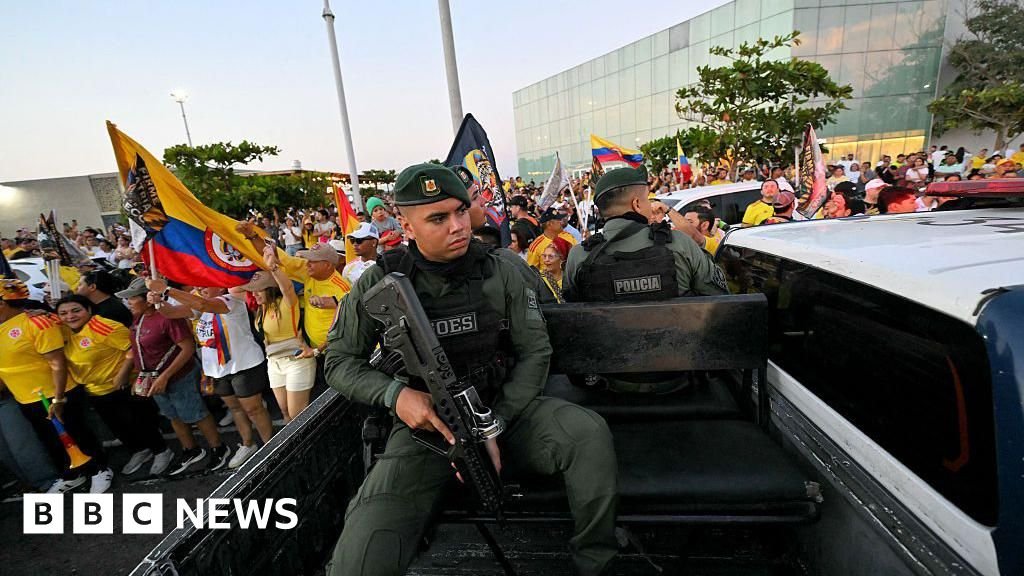
Colombia’s escalating, brutal internal conflict is defining its presidential election
“My brother was murdered for not paying an extortion payment…in front of his children,” Edilma Martinez Flores said at a support centre for displaced people in Bogotá.
She fled her home on the outskirts of Cali, in the south-west, after armed criminal groups handed out leaflets ordering residents to leave or face violence.
“We had no choice but to leave our things behind. They started placing bombs along the routes people travel.”
Edilma is far from alone, and experiences like hers are why insecurity is dominating voters’ minds in Sunday’s key presidential election.
Colombia’s six decades of conflict between armed groups, the state and cartels has killed hundreds of thousands of people.
It isn’t new, but illegal armed groups have roughly doubled their membership in the last five years.
These include Revolutionary Armed Forces of Colombia (FARC) dissident factions, the National Liberation Army (ELN) and the Clan del Golfo, who have expanded their control of rural areas key to drug trafficking and illegal mining.
A brutal offensive between the ELN and FARC dissidents near the Venezuela-Colombia border last year displaced tens of thousands of people.
The two presidential candidates have starkly different visions for tackling this violence, in a campaign marked by the assassination of a presidential candidate, homicides, kidnappings and bombings.
Left-wing senator Iván Cepeda is seen as the “architect” of the current president Gustavo Petro’s “total peace” strategy, prioritising negotiation with armed groups. Critics say it has failed and let armed groups exploit ceasefires to expand their control. Supporters argue it prevents a larger loss of life.
He also played a key role in the 2016 peace deal which disarmed thousands of FARC fighters.
He has pledged “social transformations that the country urgently cries out for” while promising to “take stock” of the peace strategy and “make the necessary changes”.
His challenger is a conservative outsider, right-wing businessman and lawyer Abelardo de la Espriella, who calls himself El Tigre (The Tiger in English). He’s been endorsed by Donald Trump, and is a US citizen. The signature outfit for him and his supporters is the Colombian football shirt, which the left has accused him of politicising.
He has promised 10 mega-prisons, a tough military crackdown, and an end to negotiations with armed groups, saying he has the “balls” to take them on.
“Any criminal who does not surrender will be taken down,” he has promised.
For many Colombians, how this issue is tackled will have a huge impact on their lives.
Isabelita Mercado Pineda, a government advisor for peace, victims and reconciliation in Bogotá, says forced displacement rose 300% between 2024 and 2025.
“We have not seen displacements like this for the last two decades,” she added.
She said it has been driven by factors including rising cocaine production, the army failing to occupy territories left by the FARC after it demobilised in 2016, leaving voids for armed groups to fill, and a “failure” of the government’s strategy that she argued provides criminal groups with “carrot but not enough stick”.
The support centre for victims in Bogotá shows the scale of this issue. Erin Gamboa from the Chocó region on the Pacific Coast said his half-brother was taken by FARC guerillas and they have not heard from him since.
“My region is heavily contested, criminal gangs fight over the territory,” he said, outlining how paramilitaries, guerillas and the FARC fight over illegal mining and cocaine trafficking sites.
Another couple, who wanted to remain anonymous, said their small food delivery business was contacted by a man claiming to be from the FARC. He began extorting their children, demanding 5 million pesos (about $1,500; £1,100).
Through tears, the woman described how crime has grown “so much” and you “can’t go out in peace anymore”.
Trump’s endorsement of de la Espriella, criticised by the left as foreign interference, comes as the US takes a more interventionist stance towards criminal groups in Latin America.
Trump said the election would determine Colombia’s relationship with the US, adding that “if Abelardo wins…[Colombia] will have the total support and strength of the United States behind him”, and called Cepeda a “radical left Marxist”.
De la Espriella grew up on Colombia’s Caribbean coast where he retains strong regional support.
Maria Luisa Sanchez, a childhood family friend and neighbour, said de la Espriella has “achieved everything he has set out in life, he is a man with very strong convictions”.
“He has that character, courage, it’s what we need for Colombia, a person … who is tough on drug-trafficking, tough on guerillas.”
Supporter Sandra Caballero, from a village outside of Barranquilla, said he “will work with the United States to fight drug trafficking and doesn’t plan to speak with criminals – which has not given results in four years”.
“He wants to change taxes to help companies generate more jobs and invest in security and health.”
Cepeda, on the other hand, has the lead among younger voters in Colombia.
“Cepeda’s proposal for security not only contemplates the coercive forces of the state to stop crime, but also takes into account the structural roots of insecurity – the lack of state presence, poverty, inequality, many young people belonging to criminal groups,” student Catalina La Grande said.
“We don’t want to repeat security models from previous governments that have left thousands of victims and not solved the problems. We believe in negotiated security: combining repression [of armed groups] with social programmes.”
With two very different candidates on the ballot, Sunday’s election will make it far more divided.
Additional reporting by Vanessa Silva and Nathalie Jimenez
Food
L.A. declares state of emergency over Boyle Heights fire
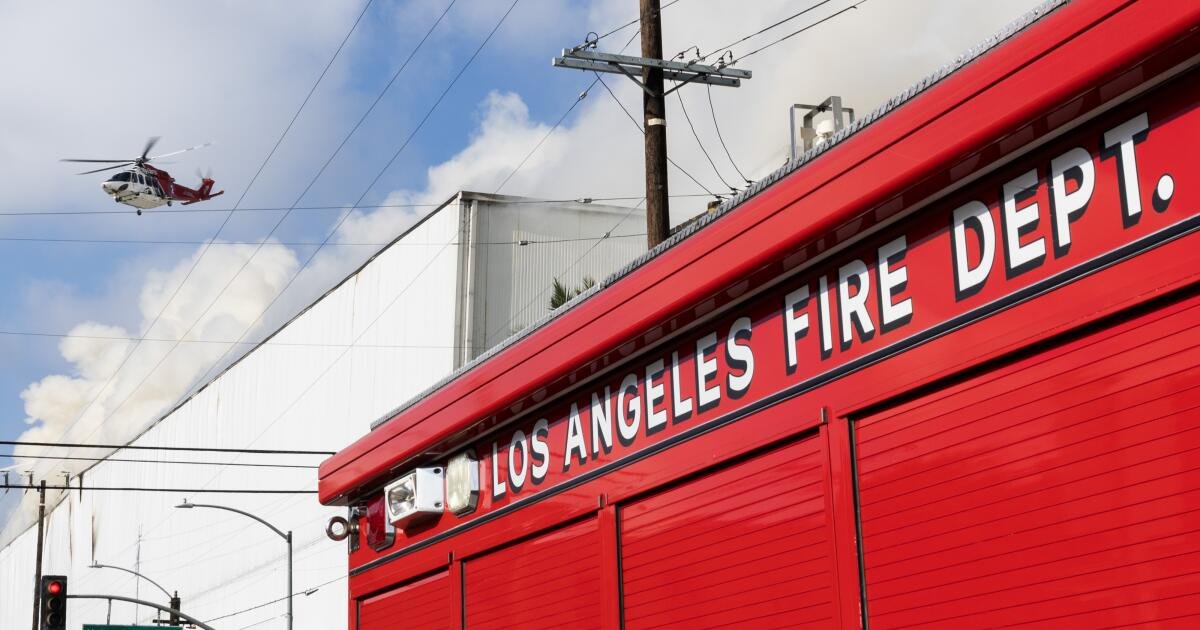
L.A. city officials on Saturday declared a local emergency as firefighters continue to battle a stubborn warehouse fire in Boyle Heights that has sent plumes of irritating smoke across the region.
“While the [Los Angeles Fire Department] continues making progress, this is a major, multi-jurisdictional incident,” Mayor Karen Bass said in a statement. “I’m issuing an emergency declaration to ensure the city has the resources it needs as this operation continues and to keep the community safe.”
The declaration activates the city’s emergency response structure, directs departments to assess damages and costs, and requests state assistance to support firefighting, cleanup, environmental monitoring and community recovery efforts.
Los Angeles Fire Department Chief Jamie Moore described the blaze that broke out Wednesday as a “very unique fire, a very unique challenge for the Los Angeles Fire Department, for the city of Los Angeles, but also for the County of Los Angeles,” at a Saturday morning press conference.
The 500,000-square-foot commercial building at 1400 S. Los Palos St. stores 85 million pounds of frozen food “like a giant cooler,” he said. The corrugated steel walls are filled with dense foam that is burning slowly and emitting gases despite ongoing water drops from helicopters.
The building is also topped with solar panels that have caught fire.
Moore cautioned people with lung issues or smoke sensitivity to avoid outdoor activities, but said crews have mitigated hazardous materials at the site, including ammonia. However, officials remain concerned about biohazards potentially posed by spoiled food, including bread, poultry, pork and beef.
“Imagine the food inside your refrigerator with no power, no refrigerant, starting to rot, and then opening up your refrigerator door, that’s about where we are now,” Moore said. “So, once we get this fire put out, the challenge that we have before us is the removal of all that product.”
A shelter-in-place order for residents was lifted on Friday, but many across the region on social media reported smoke smells, haze and poor air quality in the San Gabriel Valley, Northeast Los Angeles, Glendale, Burbank, downtown Los Angeles and many other areas.
Some said the smoke was as bad, if not worse, as during the Eaton fire that burned in Altadena in January 2025.
The city opened a smoke respite shelter at Pecan Recreation Center at 145 S. Pecan St., while the county opened one in City Terrace Park at 1126 N. Hazard Ave.
Bass, who joined Moore and other local officials at two City Terrace Park press conferences, said she has reached out to Gov. Gavin Newsom for additional support.
Lineage Logistics is the tenant-operator of the building. In a statement issued late Friday night, company officials said they believe the fire began while third-party contractors were testing the solar array on the roof.
“Lineage’s top priority is the health and safety of the community, and we are continuing to work closely with the Los Angeles Fire Department and other agencies to provide any assistance we can,” the statement said. “We are grateful to Los Angeles’ remarkable firefighters for their ongoing and brave efforts.”
The company said the facility is not used for the storage of hazardous materials, and that there have been no measurable ammonia concentrations recorded in the community since the fire started. Additionally, “Lineage has proactively taken additional steps to pump out the ammonia and transport it offsite, removing the possibility of ammonia posing a risk to the community.”
L.A. County health officer Muntu Davis said the main public health concern was smoke and fine particles that can cause irritation of the ear, nose, throat and lungs, as well as exacerbate heart and lung conditions.
Sensitive individuals were encouraged to wear well-fitting N95 and P100 masks, and to register for emergency notifications at alertla.org.
Will Barrett, assistant vice president for nationwide clean air policy with the American Lung Assn., told The Times that it can be hard to pinpoint exactly what is in the smoke while crews are still working to contain the evolving health risk, but that the most important thing is to avoid exposure.
“Much like recent industrial and wildfire incidents, the makeup of the smoke can include toxic chemicals, fine particles and other serious risks to lung health depending on fire conditions and what is burned,” he said.
On its own, particle pollution can increase the risk of asthma attacks, heart attacks and other medical emergencies, and other chemicals in the air can cause both near- and long-term harms, he said.
Another concern is the possibility that there were lithium-ion batteries within the structure. Batteries are often used to store energy produced by solar panels, although officials could not immediately confirm whether that was the case in Boyle Heights. However, they said the building does house about 60 forklifts that run on lithium-ion batteries, although those are “currently unburned.”
Low-level toxic fumes measured on Thursday included hydrogen fluoride, a byproduct produced by burning lithium-ion batteries, LAFD spokesperson Lyndsey Lantz told The Times.
“It is likely that there were some involved at some point,” she said. “We just don’t have confirmation of where they were or what part of the building they were responsible for.”
The multiday effort has been full of challenges for firefighters with fiery flare-ups.
The fire initially grew into a huge inferno, creating a pillar of thick, black smoke that could be seen for miles. It then reached an ammonia line, triggering several small explosions and a dramatic image of flames shooting through the building’s roof as crews evacuated the area to avoid the fumes.
That caused officials to announce a shelter-in-place order, which was lifted, only to be reinstated on Thursday after a different section of the building caught fire. That new shelter-in-place order was lifted Friday just before 11:30 a.m.
The smoke from the fire also triggered a special particle pollution advisory from the South Coast Air Quality Management District. It was to remain in effect until 12:30 p.m. Saturday.
AQMD officials said they have dispatched air quality inspectors to the area and have been responding to public complaints. The district has also deployed stationary monitors at Eastman Avenue Elementary and Robert Louis Stevenson Middle School to measure hourly particulate matter concentrations.
Additionally, the U.S. Environmental Protection Agency is deploying specialized monitors at various locations around the facility and in the community to measure volatile organic compounds and various other air toxins.
“Residents have lived through days of smoke, shelter-in-place orders, disruptions to daily life, and ongoing questions about what this means for their health and well-being,” Councilmember Ysabel Jurado, who represents Boyle Heights, said during the afternoon press conference. She said she will continue pushing for resources and support for the community. “Boyle Heights deserves clear information, direct support, and full accountability throughout the response, cleanup and recovery process.”
Chief Deputy Jon O’Brien with the Los Angeles County Fire Department said Saturday that deep pockets of smoldering fire remain buried under structural debris and solar panels.
“Our city firefighting brothers and sisters are executing a meticulous, deeply challenging operation to bring the fire under control,” he said.
Last month, Southland residents experienced an industrial incident involving an overheated storage tank of methyl methacrylate at the GKN Aerospace facility in Garden Grove, triggering fears of an explosion or toxic release.
The event led to the evacuation of about 50,000 people.
The near-disaster was a reminder of Southern California’s long history of industrial development, and how close many such facilities are to homes and communities throughout the region.
Assemblymember Jessica Caloza (D-Los Angeles), who represents East L.A., pointed out during the press conference that East L.A. also experienced an oil spill last month.
It occurred when a crew laying fiber-optic cable ruptured a pipeline carrying crude oil from Kern County to the Port of Los Angeles, causing a hazardous-material incident, The Times reported.
“Communities like East L.A., like Boyle Heights, immigrant Latino communities — hardworking, everyday working-class people — bear the brunt of air pollution, of environmental hazards, of all these things that for some reason keep happening in the same neighborhoods,” she said.
Food
Emergency declaration issued for Boyle Heights fire

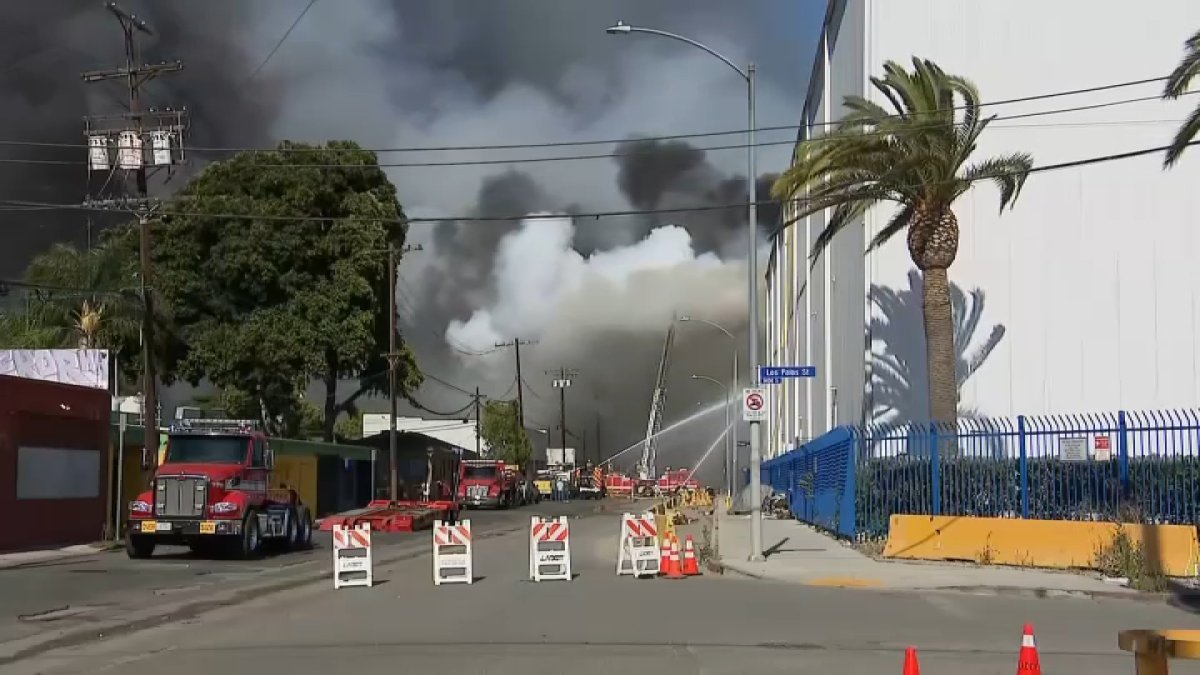
Los Angeles Mayor Karen Bass on Saturday issued an emergency declaration in connection with the ongoing commercial fire burning in Boyle Heights.
“We’re going to declare a joint state of emergency,” the mayor said in an interview with NBCLA. “We’re in contact with the governor because this has escalated to a problem where we are very concerned about the health of the community.”
With an emergency declaration in place, the city will be granted state resources that will help relieve the local resources that have been used against the commercial fire. Los Angeles Fire Department Chief Jaime Moore said LA firefighters have been tasked with not only responding to the blaze in Boyle Heights, but also other community emergencies in their respective domains.
“We clearly need resources from the state to allow us to take the steps that are needed to make sure that this area is safe,” Bass said.
Bass and Moore have expressed concern that because the fire is at a frozen food storage facility, the food is decaying and creates the possibility of a biohazard. According to Moore, Lineage, the facility where the fire is burning, houses frozen bread and meat products, and if those products decay any further, it may create biohazardous conditions.
“I wouldn’t say it’s potentially dangerous; it would be unpleasant,” the LAFD chief said. “It would be a horrible odor, but what we’re looking at is what those gases would produce or create. We’ve already mitigated the hazardous materials portion by removing the ammonia and other chemicals that were used as refrigerants … now, it’s really what’s going to happen when this food starts decomposing?”
To further give the public a better understanding of the biohazard concern, Bass likened the situation in Boyle Heights to when food rots during a power outage.
“The gas that that emits, that’s the biohazard that we’re worried about,” she said.
The stubborn blaze began burning on Wednesday and caused a shelter-in-place to be issued for neighboring residents. It was lifted that same evening as the firefight looked optimistic, but flare-ups occurred on Thursday and crews have continued to fight the fire since as smoke from the blaze impacted the region’s air quality.
Bass said she expects the emergency declaration to be issued in the afternoon after further discussions with Gov. Gavin Newsom.
As a result of the blaze, two shelter locations have been opened for those affected:
Food
Moscow oil refinery attack brings Russia’s war with Ukraine closer to home
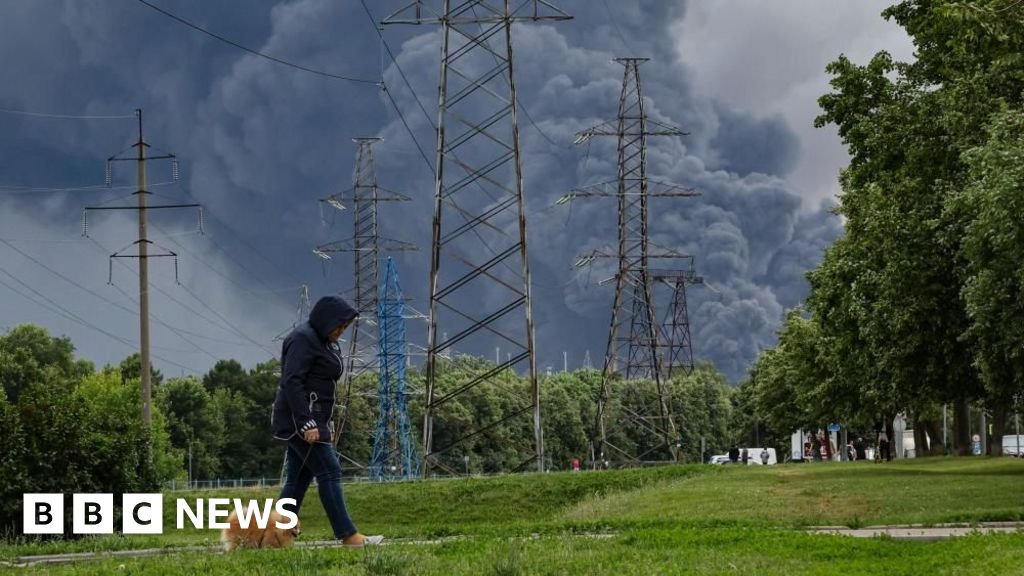
There are moments when life in Moscow feels completely normal. Thursday morning wasn’t one of them.
In the south-east of the city an oil refinery had been hit during a Ukrainian drone attack – even from a distance the sight was surreal.
Thick smoke billowing from the direction of the facility had turned the sky dark. Like a giant black shroud, it hung over the Moscow skyline.
As extraordinary and eye-catching this was, so was the reaction of people near the refinery.
Paying minimal attention to the huge clouds of smoke, an angler sat by the side of a pond, staring out across the water as he carried on fishing.
At the playground opposite, children were having fun on the swings.
Shoppers were heading to and from a supermarket, as if this was just another Thursday.
I realised then that my sense of what’s normal in Moscow and what’s not, needed updating.
For so long, the war on Ukraine felt very distant to people in the Russian capital. Many pretended it wasn’t happening at all, but that’s harder to do as the front line creeps closer to the city.
Over the past year-and-a-half, Muscovites have woken to news that army generals in Moscow have been assassinated, and drones have been targeting the capital.
In a sense, abnormal is already the new normal.
Thursday’s attack was one of the largest aerial assaults on the Moscow region since Russia’s full-scale invasion of Ukraine.
As well as damage to the oil refinery, shopping centres and residential buildings were hit, too. According to the governor of the Moscow region, an eight-year-old girl was killed in a fire caused by one of the drone strikes.
“I’m not totally surprised by what happened,” says Slava, who lives in an apartment block opposite the oil refinery. “But I didn’t expect such a big attack.”
“I heard explosions and saw lots of smoke. It’s the kind of thing you normally see in the movies. I saw it from my apartment window.”
But another local resident, Nadezhda, saw nothing normal in what’s happening.
“It took us four years to win World War Two, even though our soldiers had little food and water,” she told me.
“Today we have all the resources we need. But this war goes on. I’m shocked.”
How do the Russian authorities respond to people like Nadezhda, to Russians struggling to understand why the Kremlin’s so-called “special military operation” is taking so long, and how it can be that the war has come to their city?
Russian officials regularly accuse the West of prolonging the war in Ukraine, blaming European leaders and Nato for supporting Kyiv.
But on Thursday, President Vladimir Putin said nothing about the drone assault. The news bulletins on Russian TV channels barely mentioned it.
When Russian newspapers reported the story the following day, I detected a common thread in their coverage: a coordinated message, perhaps, for the domestic audience.
It can be summed up as this: “However bad it is for us, Ukraine’s suffering more”.
“Our attacks are doing far more damage to Ukraine than Ukraine is doing to us,” declared the ultra-pro-Kremlin Komsomolskaya Pravda.
“Our strikes to demilitarise Ukraine are far more powerful and effective than Ukrainian attacks,” wrote the tabloid Moskovsky Komsomolets.
The narrative was almost identical in the government paper Rossiyskaya Gazeta: “Our attacks on defence enterprises working for the Ukrainian army are much more powerful than those which Russians, unfortunately, are having to deal with.”
“Our strikes on Ukrainian infrastructure linked to the military-industrial complex are far more effective and produce more results,” commented business daily Kommersant.
When the Kremlin finally reacted, it had a similar message.
“You should look for more footage coming out of various cities in Ukraine,” Putin’s spokesman Dmitry Peskov told reporters.
“Footage showing the results of strikes carried out by our armed forces is impressive. These strikes will continue.”
There is no sign that Ukrainian drone attacks on Russian cities have given Putin pause for thought. From his recent speeches and statements, the Kremlin leader seems determined to continue Russia’s assault on Ukraine, confident that in this war of attrition his country will prevail.
But there are signs that long-range Ukrainian strikes – particularly on Russian oil facilities – are increasing the pressure on the Russian economy. Petrol shortages and rationing have been reported in some parts of the country, and prices have been rising at the pumps.
“It’s our government that must decide what to do. All we can do is watch.”
Food
Shot by ICE and still in pain. LA detainee highlights gaps in DHS oversight

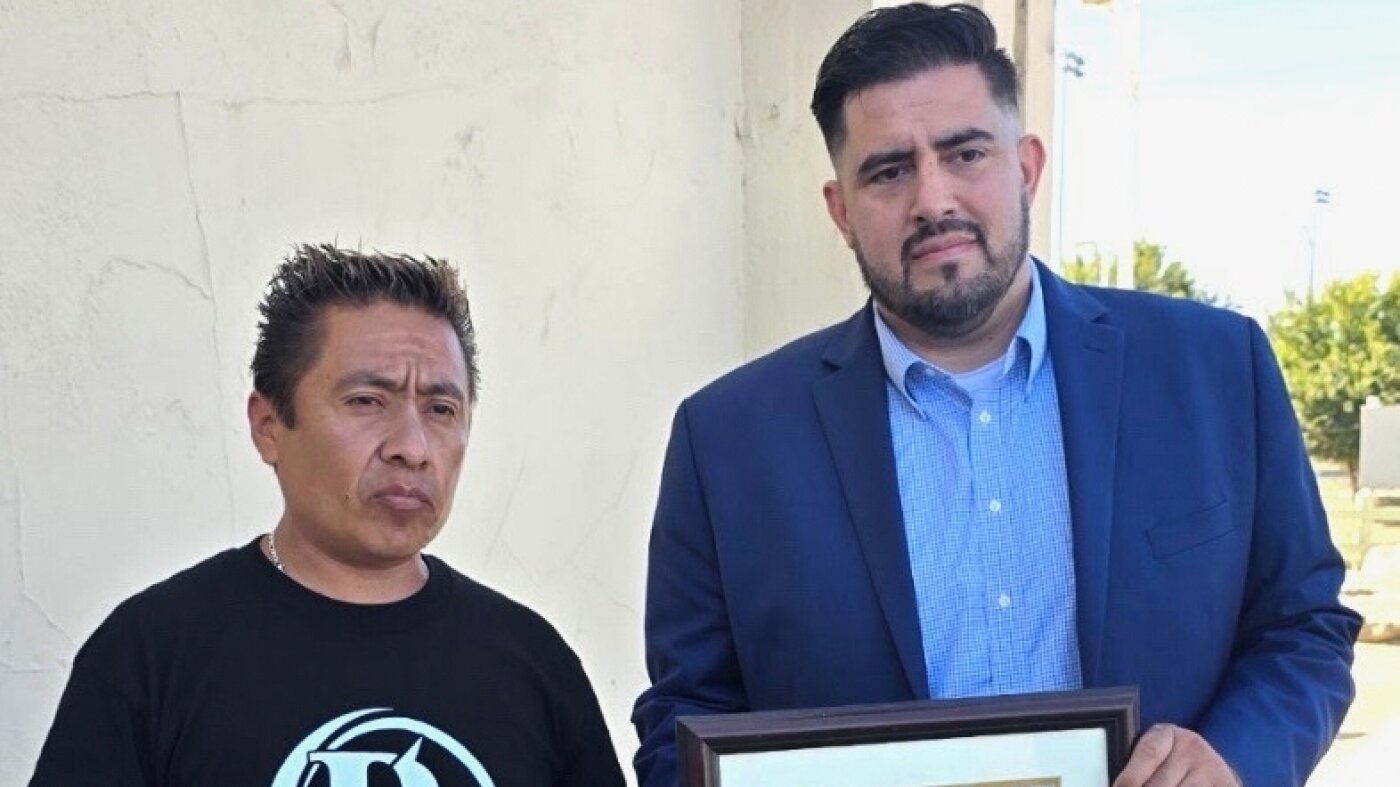
Just about every Saturday, Ulises Parias drives two hours to visit his father, Carlitos Ricardo “Richard” Parias, at the Adelanto Detention Center in California.
They talk on the phone regularly. Parias tells his father about his 16-year-old sister and about his college classes.
Occasionally, his dad’s health comes up: his left arm hurts and he gets headaches, fevers and blurry vision. It has been over eight months since Parias’ father was shot by federal agents during an immigration enforcement arrest in Los Angeles. Immigration attorneys representing Parias allege he is not receiving adequate medical care, including pain medication and physical therapy, following an encounter with federal agents that resulted in Parias being shot near his left elbow.
“The last thing he told me was, have a good day at school. Then, like five minutes later, I heard some commotion outside,” Parias, 20, said in an interview with NPR. “My heart stopped for a minute, and then I quickly went outside [to] the streets. And that’s when I found my dad’s car. The window was shattered.”
Attorneys for Parias have tried to secure his release from detention while his immigration case plays out.
So far, that request has been denied. Parias’ case, his attorneys say, is one that exemplifies the challenges facing many detainees in a judicial and detention system with limited resources and dwindling avenues for any recourse, including for people with no criminal record.
This year brought increased scrutiny on federal law enforcement’s use of force, after two federal agents shot and killed two U.S. citizens in Minneapolis, and on the conditions within immigration detention centers, including medical care amid some of the highest numbers of people in detention and of deaths of those in custody. Parias’ case showcases the nexus of the issues — and the narrow scope of oversight and resources within the judicial and agency level for someone injured by the federal agency that is also detaining them.
“There are not enough people, and there’s not enough concern. And that’s leading to permanent disability and death,” said Margaret Hellerstein, an immigration attorney representing Parias. “The legal avenues have been exhausted at this point.”
Parias entered the country illegally in 2002 from Mexico and spent the last two decades living in the Los Angeles area, including with his two U.S. citizen children.
He gained a large social media following, monetizing his TikTok account as a primary source of income as he shared community events. When the Trump administration increased enforcement in Los Angeles last year, Parias began documenting immigration arrests and federal officer presence for his more than 250,000 followers. After more than two decades of living and working in the U.S. unnoticed, his activism put him on ICE’s radar.
“I was worried. I was scared. I would keep telling him, ‘Please be careful,'” Ulises Parias recounted. “‘The only thing they care about is that you’re not a citizen. That’s all.'”
Encounter with ICE leads to shooting
In October, Parias was leaving his house when vehicles driven by federal officers blocked his path. Body camera footage released by the Los Angeles Times shows several federal agents surrounding the vehicle.
“I’m going to break the window,” one yelled, shortly after Parias came to a stop, and began to smash the passenger-side window of the car Parias was driving, while holding a gun in the other hand. Yelling in Spanish can be heard from officers saying, “I am going to shoot you” and “turn off the car.” Others yell, “Police, get out!”
Several officers drew their firearms as Parias appeared to try to move his car, which was blocked by a larger police vehicle.
Parias can be heard yelling in Spanish, “I don’t have anything” and “kill me.”
Officers yelled various instructions, including “if you move we will shoot” and “turn off the car,” and seconds later, an officer opened fire.
“All use-of-force incidents involving individuals in ICE custody are documented and subject to internal review, consistent with ICE detention standards and DHS oversight requirements,” an unnamed DHS spokesperson told NPR in a statement. The agency did not respond to questions about the outcome of any investigation into this use of force.
Following the shooting, Parias was taken to a hospital to be treated for a gunshot wound near his left elbow. The bullet also hit a U.S. marshal who was a part of the operation. The federal government brought criminal charges against Parias: assault on a federal officer.
Parias did not have any criminal history or infraction before the incident where he was shot, Hellerstein said.
NPR reviewed medical records from November to May that show Parias reported consistent pain and decreased mobility. A report from May includes details of pain radiating from his neck, down his arm, to his hand on his left side. The report also says no therapy was completed and Parias had been in a sling for six months. The records detail that there is decreased mobility in the left shoulder, and when “palpating his left forearm … presents tears in his eyes due to pain.”
For months following the shooting, he was primarily prescribed Motrin, seizure and nerve pain medication gabapentin and muscle rub cream for the pain, as well as other medications.
DHS told NPR that from November to June, Parias has been seen by a nurse who, among other things, provided him a brace and sling, educated him on exercises to improve his range of motion and prescribed various pain and anti-inflammatory medications.
In March, a nurse assessed Parias for complaints of increasing pain, and the nurse noted decreased mobility, prompting the nurse to submit a referral for an orthopedic evaluation, as well as additional medications. An orthopedic surgeon evaluated Parias and also provided a physical therapy referral, according to DHS, though by May his pain was still not relieving. He has seen a doctor as recently as this week.
Immigration detention hinges on a bill that passed with bipartisan support
After spending nearly a week in the hospital in October immediately after the shooting, Parias was placed in federal criminal custody while the charges against him played out in federal court. In November, he was released and transferred to ICE custody, which according to court records, was done pursuant to the Laken Riley Act.
That legislation was the very first bill President Trump signed into law in his second term.
The measure, passed with the help of Democrats, directs federal immigration enforcement to detain and deport those without legal status charged with minor theft or shoplifting, assault of a law enforcement officer, or crimes resulting in death or serious bodily injury of another person.
It broadly expanded the scope of who ICE would prioritize for detention.
In December, U.S. District Judge Fernando Olgin dismissed the charges against Parias, citing, among other reasons, that he had not received constitutionally adequate access to legal representation. The government is appealing that decision, disputing that Parias was deprived of access to counsel.
While Parias remained in ICE custody, immigration attorneys submitted a habeas petition in District Court also to Judge Olgin. That is a legal avenue to argue that a person should not be detained.
“No one is eligible for bond. No one is eligible for a [bond] hearing … You have to file a habeas,” Hellerstein said. “Which means, unfortunately, that for people like Richard who are languishing in detention and have serious medical concerns, you could be waiting for your decision for months and months and months.”
A federal judge then ordered an immigration judge to hold a bond hearing. In court filings to immigration court, ICE argued that the immigration judge didn’t have jurisdiction over the case because of the Laken Riley Act. The judge, according to filings reviewed by NPR, agreed and ultimately denied bond, adding that she would have done so even if the act was not in effect because Parias could be considered a flight risk due to his lack of legal status.
“I don’t think that he was given a constitutionally adequate bond hearing. And to be clear, this is not unique to him. It’s the way the law is at the moment,” Hellerstein said, adding that the Trump administration also created a mandatory detention policy in addition to the Laken Riley Act, which mandates that anyone who entered the country illegally be held in detention while they fight their case. That has resulted in high numbers of habeas petitions in federal courts.
Hellerstein is going back to Judge Olgin, who ordered the bond hearing, asking for him to let Parias out of detention. That request has been pending since February.
Limited options for recourse
Seeking additional help, the family and lawyers reached out to the office of Rep. Sydney Kamlager-Dove, D-Calif., who later visited Parias at the Adelanto Detention Center.
“I have a constituent who is being detained in a facility hours from where his family lives. Who is in pain,” Kamlager-Dove said in an interview with NPR. “What I am seeking is for him to get the treatment that he needs so that he can heal and so he can also want to live.”
Caseworkers in the congresswoman’s office have been in touch with DHS about Parias, including with the ICE officer assigned to the case. But she said that although the agency has been responsive, including in facilitating her visits, it is not providing what she is asking for.
“What I need to hear is that he is going to physical therapy, he is getting the kind of antibiotics and medical and prescription medication that he needs to help him with his vision, to help him with his headaches, to help him with his pain,” Kamlager-Dove said.
Recently, congressional Republicans approved $70 billion for immigration enforcement, including detention capacity. But internal oversight offices at the agency are unfunded, including those that specifically investigated complaints about immigration detention conditions such as allegations about insufficient access to medical care.
Without control of either chamber of Congress, Democratic lawmakers and immigration advocates have limited options to ask for help.
“We don’t have that many oversight tools. We have stretched ourselves to the limit in the hearings as a party in the minority,” Kamlager-Dove said.
In recent weeks, other Democrats have continued to go to detention centers, including in New Jersey and Texas, seeking to review detainees’ access to food and medical care, and information about detention capacity. But without legislative might, the lawmakers’ options to go further are dwindling. Like others in her party, Kamlager-Dove is eyeing the upcoming midterms as a moment for potential change.
“If we are victorious in November, then we will have a lot more tools at our disposal,” she said.
Detention policy adds pressure to families to leave
In the meantime, Ulises, Parias’ son, has been working to fix the car in which his father was shot. He has cleaned up the blood and the broken glass.
He picks his sister up from school, talks to his father nearly every day on the phone and has helped his family navigate the complicated legal landscape.
“Every time a lawyer came to the house to speak with us, I had to translate everything,” he said. “So basically I was the only person basically helping out the family just because I was the oldest.”
Hellerstein sees Parias’ detention as another example of the administration using detention as a tool to encourage detained and other undocumented immigrants to opt to leave the country.
“For most people, ICE detention is not punitive. Detention is civil detention,” Hellerstein said. “You are not in ICE detention because you’re being punished. You’re in ICE detention because they think you’re a danger or a flight risk.”
A DHS spokesperson, in the statement to NPR, also said, “ICE detention is still not punitive.”
For someone like Parias, who does not have a criminal record, the allegation of him being a danger to a community is easy to refute, she said. But a flight risk could be anyone without a clear path to legal status.
For now, Parias’ son is trying to focus on his grades as he works on earning a mechanical engineering degree and find moments of joy like watching the World Cup games. But even that is bittersweet.
“This is the first World Cup where I’m experiencing it alone. And it feels wrong. Honestly, it feels wrong knowing that I don’t have my dad to watch it with me,” Parias said. “So I’m hoping the next step is to get a call from the lawyer saying soon he will be with us again.”


Humanoids join Dragon Boat Festival traditions in China
Humanoid robots are joining the Dragon Boat Festival fun in China's Sichuan province. The holiday has been celebrated for over...


free candy, drops blue and brown pieces
(NewsNation) — M&M’s is embracing the “Make America Healthy Again” movement with a new product set to launch this summer....


TV Schedule: What To Watch The Week Of June 21, 2026
Every day, TVLine’s What to Watch column spotlights new and returning English-language shows (and select movies) premiering or airing fresh...


Tesla driver says it was on Autopilot before fatal Texas home crash
A driver told Harris County investigators that his Tesla was on Autopilot before it left a residential road in Katy,...


Shop the Top 25+ Amazon Device Prime Day Deals Now With Savings on Ring, Kindle and More
Prime Day begins on Tuesday, but Amazon is already dropping early discounts on some of its most popular devices. From...


Driver told deputies Tesla was on Autopilot during crash through Katy-area home, killing woman: HCSO
HARRIS COUNTY, Texas (KTRK) — A 76-year-old woman was killed after a Tesla crashed through a home in the Katy...


Gordon Ramsay’s Daughter Announces She’s Pregnant With His First Grandchild
Gordon Ramsay’s family kitchen will soon have a new set of hands … because his daughter’s pregnant! Holly Ramsay announced...


Mamdani won't reveal his 12th district vote
New York Mayor Zohran Mamdani cast his vote in the Democratic primary for his state's 12th Congressional District on Saturday,...


James Burrows, legendary director of ‘Cheers’ and ‘Friends,’ dies at 85
NEWYou can now listen to Fox News articles! Beloved Hollywood director, James Burrows, died on Friday at the age of...


Developing story: Crash closes Taft Bridge on Connecticut Avenue NW
A section of Connecticut Avenue NW at the William Howard Taft Bridge is closed Saturday after a vehicle crash, according...
-

 Business1 week ago
How much of Musk’s wealth comes from government help? Virtually all of it
-
 Politics1 week ago
What to know about the stabbing that set off fiery riots in Northern Ireland
-

 Video1 week ago
Download fans say what they love about the festival. #DownloadFestival #BBCNews
-

 Video1 week ago
Why SpaceX IPO isn't about space. #SpaceX #ElonMusk #BBCNews
-

 HealthNews1 week ago
The people of Okinawa, Japan only eat until they are about 80 percent full, then stop — and the practice has been linked in multiple peer-reviewed studies to lower rates of cardiovascular disease, slo
-

 Food1 week ago
Pope Leo’s plane was grounded. Then the King of Spain stepped in to help
-

 TravelNews1 week ago
My Paternal Instinct Should’ve Warned Me About Netflix’s Maternal Instinct
-
 Video1 week ago
Claire Danes has the cutest stories about young Kirsten Dunst on 'Little Women' set