

Business
Airbus Wants Near-10,000 Mile Nonstop Flights, And This Is The Plane To Do It


For now, the longest nonstop flights available commercially all take around 18 or 19 hours to complete, and they cover distances ranging approximately between 7,000 and 9,500 miles. These routes connect such far-distant places as New York City and Singapore, London to Perth, and Auckland to New York City. There’s no denying that these long-haul flights cover massive distances, but there are still a couple popular routes that most commercial planes simply can’t cover on a nonstop flight. Qantas Airways and Airbus have teamed up to try and fill this long-anticipated niche, and their newly developed Project Sunrise planes are poised to pull it off.
Project Sunrise is named after the 33-hour nonstop flights Qantas ran between Sri Lanka and Western Australia during World War II. The project began in 2017 as Qantas sought the technology necessary to complete the 10,000-nautical-mile (11,000-mile) routes between Sydney, Australia and NYC, and between London and Sydney without stopping. Either route is estimated to take about 22 hours, and Qantas hasn’t yet unveiled which route it will choose to run first, though the plan is to eventually get both NYC-to-Sydney and London-to-Sydney up and running.
Airbus and Qantas completed the first experimental flight of the new A350-1000ULR in June 2026 outside Toulouse, France, where two pilots and a flight engineer motored around in the experimental craft for nearly four hours to collect data. Tests of this first ultra-long-range version of the A350-1000 are expected to last for two months, and if all goes well, the final product should be ready for commercial flights by April 2027. Maybe by then, Republicans’ war to make gas expensive will be over, in which case this long-awaited nonstop route might actually be accessible(-ish) to the average person.
While you might expect the world’s longest-range commercial aircraft to also be one of the largest planes you can fly on, that’s not the case. The Airbus A380 still holds that record and is capable of carrying up to 853 passengers. Instead of increasing plane size to try to fit more fuel, the Project Sunrise planes use the same baseline as the A350-1000. In its standard configuration, the A350-1000 seats up to 480 passengers, but Project Sunrise’s A350-1000ULR is slated to have seats for only 238 passengers. This means increased space and comfort for passengers on such a long flight, but removing seats has the added benefit of freeing up weight that can be allocated to more fuel.
The layout will include 140 economy-class seats, 40 premium economy seats, 52 business-class seats, and six first-class suites, which you have to imagine will be among the bougiest in the skies. According to Airbus, there will also be a “Wellbeing Zone” where passengers can walk and stretch throughout the flight.
Some people say the future of aviation might be boring, but on this Airbus you’ll at least get to pace nervously for 22 hours. What allows the A350-1000ULR to reach the long-awaited 10,000-nautical-mile range is the addition of a 20,000-liter (or 5,283-gallon) fuel tank in the rear center of the fuselage. The development of the ULR variant has also increased the A350-1000’s maximum take-off weight from 319 metric tons to 322 metric tons, which will help account for a good chunk of that extra fuel weight.
Assuming all goes according to plan, Project Sunrise will offer the world’s first nonstop commercial flights at this distance, making travel to and from Australia significantly more comfortable, if not necessarily cheaper or quicker.
Business
Soaring Household Debt Is a Warning to the US Economy: SocGen
America’s swelling debt pile bodes ill for the the US economy, Société Générale said.
In a recent note to clients, the European Bank flagged a concerning trend that’s taken hold in the US in recent years: the rise in household debt and the concurrent decline in household savings.
Total liabilities among US households swelled to a record $19.9 trillion at the end of the first quarter, according to Fed data, a sign that Americans are continuing to borrow and fund their spending.
Yet, the personal savings rate is hovering near a record low, shrinking to 2.6% in April, according to the Bureau of Economic Analysis.
The trend might be the result of the so-called wealth effect, a phenomenon where Americans spend more because they feel wealthier as the price of assets like stocks and real estate rise, Albert Edwards, a SocGen strategist and famed market permabear, said.
The market has soared amid the unrelenting enthusiasm for AI, with the tech trade making a red-hot comeback after stumbling earlier this year.
The problem is that, if one assumes consumers are shelling out more due to their rising wealth on paper, economic growth is increasingly exposed to the AI trade. Consumer spending makes up around 70% of US GDP, according to one analysis from the Boston Fed last year.
Measures of household income growth, meanwhile, have started to fall. Personal income excluding transfers contracted $16.5 trillion in April, down around $200 billion from its peak in 2025.
“The US consumer currently resembles the Wile E. Coyote character, running off the cliff and suspended in thin air briefly, before collapsing,” Edwards said, referring to the potential for consumer spending to see a sharp drop if Americans were motivated to save more, such as if stock prices were to take a beating.
“It doesn’t take a Fed PhD economist to tell us that if the US saving ratio (SR) stops falling, consumer spending will grow in line with income, which is falling. And woe betide the economy if the SR actually rises back to more normal levels,” he added.
Edwards also pointed to the declining efficiency of debt to boost economic growth. The credit intensity of GDP — a measure of how much debt is needed to boost GDP growth by a set unit — rose to 3.73 last year, the most debt needed to fuel growth in at least the last 70 years, according to an analysis from Bespoke Investment.
“This makes the economy all the more vulnerable should investors doubt the pot of gold at the end of the AI rainbow. Watch this debt-laden space,” Edwards added.
Business
Yet Another Piece of AI-Pilled Speculative Fiction Has Gone Dangerously Viral
Once again, AI people are letting a work of fiction seep into their brains. This time it’s a piece of speculative fiction for Europeans called “Europe 2031.” Before that, it was Citrini Research’s ”The 2028 Global Intelligence Crisis,” a story about white collar unemployment that caused stocks to dip. Before that, it was AI 2027 in which a superintelligent AI kills humanity. The sitting Vice President of the United States says he read that one.
Europe 2031 was written by eight people referring to themselves as “a small group of AI researchers, think-tankers, and investors who have spent their careers at the intersection of frontier AI and European policy.”
The power these documents have is not good for the world. I have some authority about this topic—a very small amount—because I wrote a book of hypothetical scenarios and managed to get it published in several countries.
Speculative writing starts from some apocalyptic ending, and then the writer works backwards. This is because fiction is a cheat. You toss out reality, and only write the steps it would take to get to your destination. You can be completely upfront about what you’re doing, but readers will still think you’re predicting the future.
I told my readers not to base decisions on what I wrote, and that gaming things out is just a mental habit that helps me control my own anxiety, but people who read my hypotheticals still tell me I scared them. Worse: they ask me for advice.
My lesson is that the written word is the best medium for scaring people, and that ideas that scare people are sticky.
So with that in mind, what’s scaring people now is a piece of speculative fiction about Europe not taking AI independence seriously enough. It starts as all good cheesy sci-fi should, with the kind of show-don’t-tell intro they teach you in college writing seminars:
Caroline splashes cold water on her face and looks at herself in the bathroom mirror. Her hands are shaking. She grips the edge of the sink and waits for it to pass. Through the small high window she can see a slice of Washington sky, flat and bright.
Oh God, what’s going to happen to poor Caroline?? Answer: She fails to convince Europe to act in time, and ends up bitter, disillusioned, and financially dependent on a billionaire friend after quitting her job. Oh, and her mom dies.
Zooming out, Europe is defenseless as AI powered hackers make mincemeat of its outdated safeguards. The European economy and probably the EU itself are looking at almost certain death after the continent is shut out of the AI race. The two big bullies, the U.S. and China, hold all the cards.
“Even in 2026, the continent could still have changed course, had it shown the courage and political will to take drastic measures,” the authors write toward the end of Europe 2031.
According to the Guardian, the story has fed “a feverish discussion of the urgency for EU tech sovereignty” amid the G7 talks. Members of the European parliament have read it, and unofficial U.K.-German diplomatic talks have been informed by it. That’s frightening.
My take on speculative stories is that they are lies that can nonetheless clear away mental fog, particularly if the situation proposed is one people already talk about without much reflection on what it might take to get there. But much better writers than me have regretted parts of their speculations. For instance, Kim Stanley Robinson reportedly felt remorse after seeming to endorse crypto as part of a climate change solution in his book Ministry for the Future.
So remember, kids: stories are lies first and foremost, and should always be treated as such.
Business
free candy, drops blue and brown pieces


(NewsNation) — M&M’s is embracing the “Make America Healthy Again” movement with a new product set to launch this summer.
The iconic brand will introduce a version of its candies made without artificial dyes beginning in August, as it marks its 85th anniversary.
However, the change comes with a tradeoff: M&M’s plans to eliminate its blue and brown candies from the lineup.
Mars told The Wall Street Journal the colors could not be recreated with natural ingredients at a reasonable cost.
“It was a daunting situation,” said Anton Vincent, president of Mars Snacking, North America and Global Ice Cream. “You’re messing with an 85-year-old icon.”
Researchers were able to replicate other colors using natural ingredients, but blue — introduced in 1995 — proved more difficult, in part due to reliance on spirulina, an algae-based pigment.
The ingredient requires significantly more material to achieve the same color intensity and also contributed to challenges in producing brown candies.
“It’s the hardest thing I’ve had to do in my career,” Mars executive Claire Hewitt said.
Mars explored replacing blue and brown with purple and pink or shifting to a three-color mix, but ultimately decided against those options.
The company had pledged in 2016 to remove artificial dyes from its products but later reversed course after determining customers were not concerned.
More recently, Health and Human Services Secretary Robert F. Kennedy Jr. has urged U.S. food companies to eliminate artificial dyes.
Business
Fed Chair Kevin Warsh’s sentiments on data over party shows he is no Trump loyalist

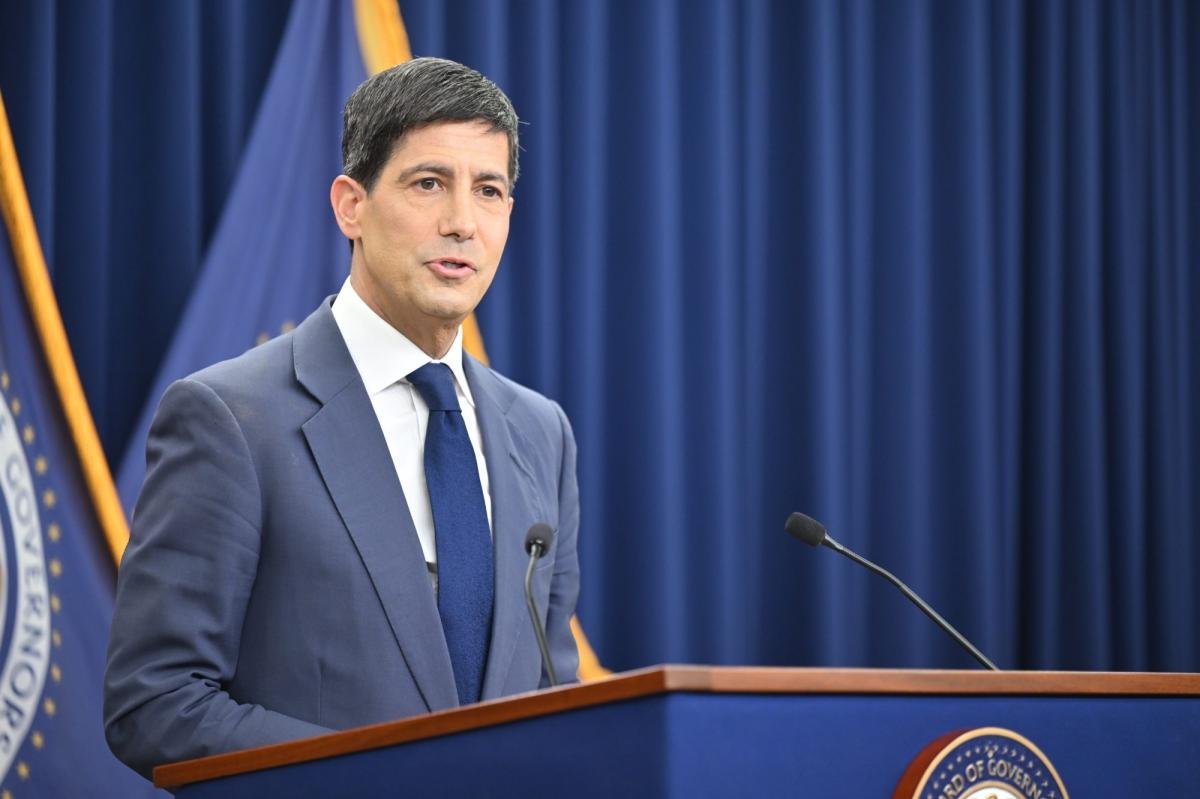
Nearly every Democrat in the Senate opposed Kevin Warsh’s nomination as Fed chair mainly because they said he would be a tool of the man who appointed him, President Trump.
This past week, Warsh made them look downright foolish.
Yes, the knock on Warsh was that he would deliver lower short-term rates to goose the economy as the midterms approach, despite persistent inflationary pressures, because he owes his loyalty to The Donald as opposed to his long-held beliefs about monetary policy.
That such BS came from lefties like Sen. Elizabeth Warren (D-Mass.) should have been a tell of their political nature, as opposed to the reality of what Warsh — a long-time inflationary hawk — brings to the table.
These are, after all, people who really didn’t care about price stability when sleepy Joe Biden was inflating the economy away with trillions of needless fiscal stimuli, goosed by the rock-bottom interest rates unleashed by Warsh’s predecessor, Jerome Powell.
But Warsh came out swinging against inflation and held rates steady amid persistent inflationary pressures.
His hawkish sentiments were delivered in comments after presiding over his first Federal Reserve Open Market Committee — during his first, very brief FOMC press conference.
Sorry Lizzy & Co., Warsh is no tool — right out of the gate, he proved he will be his own man on many levels.
That also includes alerting markets that the Fed would be letting data decide the course of interest rates, as opposed to signaling its moves based on uneven forecasting.
Data over politics
Being a Fed chair who puts data over politics was in itself a relief from the recent boring albeit market-moving monologues on interest rates and the economy regularly puked up by people who have held his position.
Since the latter years of the Greenspan Fed, you got the impression that people running a central bank thought they had an extra layer of responsibility on top of price stability in the context of economic growth.
The Fed chair should be giving lots of guidance to the markets, as if telling speculators how to behave is key to the central bank’s premise to make sure that the wages of average Americans aren’t eaten away by inflation.
Warsh will be breaking from that noxious tradition.
Rather, he will focus on whipping inflation and studying numbers — and not obsessing about the opinions offered by various Fed governors.
Hence his short press conference.
Hence his refusal to submit to the finger-in-the-wind “dot plot” analysis Fed policy makers used to submit.
Hence calls to reform various parts of the Fed’s analytical arms, including its overreliance on a Phillips Curve analysis when setting interest rates, which argues growth always begets inflation when in fact common sense and evidence show the trade-off to be a figment of poor economic modeling.
Hence his stated premise that the Fed’s goal to work to a 2% inflation target remains — despite what Trump wants — because the data shows prices remain above that threshold.
All of the above are much-needed reforms that Warsh has been touting in the years leading up to his appointment to the job over the hapless Powell, who got a free pass from the Trump-hating business media not because he was good at his job.
He wasn’t. If you don’t believe me, Google the term “transitory inflation” that he allowed to fester during the Biden presidency.
Yes, Powell — who remains as a governor — is supposed to be qualifying for sainthood because he stood up to mean old Trump.
Powell supposedly stood for Fed independence — the central bank was created by Congress in 1913 to be free of political pressure.
That’s why he is staying as a governor, as is his right.
Trump countered that Powell doesn’t have anything else to do with his time, which I have to admit was pretty funny.
What wasn’t funny was Powell’s abysmal record in the job and the notion that the very independent man who replaced him was supposedly a tool of the president.
I know what you’re saying: One strong FOMC meeting doesn’t really prove anything.
True.
But if you know Warsh like I do, you also know his background: A longtime Fed governor, academic, investor and thought leader who believes taming inflation is what the Fed should be spending its time doing, not giving forward guidance to markets.
It’s central to his belief in reducing the Fed’s massive balance sheet.
He held rates steady in his first meeting; the Iran conflict coming to a conclusion means lower energy prices are likely in the not-so-distant future.
AI-related productivity could soon be taking down prices another notch.
So he may hold them steady again in September, but all bets are off the table if inflation doesn’t recede.
It all depends on the data, he said.
It’s why he’s no tool.
Business
Tesla driver says it was on Autopilot before fatal Texas home crash


A driver told Harris County investigators that his Tesla was on Autopilot before it left a residential road in Katy, Texas, crashed through the brick wall of a home, and killed a 76-year-old woman inside.
The crash happened around 8 p.m. Friday in the 21300 block of Rose Hollow Lane, according to the Harris County Precinct 5 Constable’s Office and the Harris County Sheriff’s Office.
What investigators have confirmed
According to the Harris County Sheriff’s Office, the Tesla failed to make a right turn at an intersection and continued forward at a high rate of speed before crashing directly into the front room of the residence.
A 76-year-old woman was standing inside that room when the vehicle entered the home and struck her. She was flown by Life Flight to Memorial Hermann hospital, where she was later pronounced dead.
Advertisement – scroll for more content
The driver, identified by authorities only as a 44-year-old man, was taken to a hospital by ambulance. Investigators said he showed no signs of intoxication and has been cooperating with officers. No charges had been filed as of Saturday afternoon, and the investigation is ongoing.
The Precinct 5 Constable’s Office, led by Constable Terry Allbritton, said the driver told deputies he had the Tesla on Autopilot at the time of the crash. That detail is the driver’s account — it has not been independently confirmed by investigators.
Investigators are probing the role of Tesla’s technology
Harris County Sheriff’s Office Sgt. Alex Turman, an accident investigator and public information officer, told Covering Katy News that the cause of the crash has not been determined.
“We’re digging into that. That’s a line of investigation for sure,” Turman said when asked whether the vehicle’s automated driving features were in use.
Turman added that investigators are working with people familiar with Tesla vehicles and with the driver to determine “what role the driver’s control over the car played in this crash.”
It’s important to be precise here: neither the constable’s office nor the sheriff’s office has specified whether the system the driver referred to was Autopilot, Tesla’s basic driver-assistance package, or the more capable “Full Self-Driving” (Supervised) software. Both require an attentive driver ready to take over at all times, and neither makes a Tesla autonomous.
A system already under federal scrutiny
The crash lands as Tesla’s driver-assistance systems face mounting regulatory pressure. In October 2025, NHTSA opened an investigation into roughly 2.9 million Tesla vehicles over “Full Self-Driving” running red lights and driving the wrong way, and the agency upgraded that probe in March 2026 to an engineering analysis — the last step before a potential recall.
Tesla is also under a separate NHTSA probe for failing to properly report crashes involving Autopilot and FSD, and the company’s record on these systems has repeatedly come up in court. A Tesla engineer admitted last year that the company didn’t maintain Autopilot crash records for the first three years after launching the system.
Electrek’s Take
First, the human cost. A 76-year-old woman was killed in her own home, in what should have been the safest place in her life. Nothing about the technology debate should obscure that. Our thoughts are with her family.
Now, the part we can’t ignore. We don’t yet know whether Autopilot or FSD was actually engaged — that’s the driver’s claim, and investigators are right to verify it rather than take it at face value. But if it turns out the car was running one of Tesla’s driver-assistance systems, this looks like another tragic case of the same failure mode we keep documenting: a driver becoming too complacent with a system that is good enough to lull you, but nowhere near good enough to trust unsupervised.
I’ve written candidly about how FSD v14 is so smooth it’s making me dangerously complacent, and I’m far from alone — even a former Uber self-driving chief got conditioned into complacency and crashed. This is a known, studied problem, and Tesla isn’t doing enough to limit it. The driver-monitoring is too easy to game, the marketing oversells the capability, and the names “Autopilot” and “Full Self-Driving” do real work convincing people they can disengage.
If a 44-year-old driver genuinely believed his car would make that turn for him, that belief didn’t come from nowhere. And this time, someone who wasn’t even in the car paid for it. That’s the line Tesla still hasn’t reckoned with: the cost of overpromising isn’t just borne by the people who buy in — it’s borne by whoever happens to be standing in the front room.




The best of Neil deGrasse Tyson: Aliens, UFOs, asteroids & more
Astrophysicist Neil deGrasse Tyson speaks with CNN over the years about a wide variety of otherworldy topics including aliens, …


New discovery could reshape how we understand Stonehenge | BBC News
Archaeologists believe they have discovered an earlier, much simpler version of Stonehenge about 3 miles (5km) away from the …


Mitt Romney says he'd "give it all" for one more day with his dad
CNN's Jake Tapper sat down with former Republican Senator Mitt Romney for a conversation about lessons learned from his …

How Kevin Warsh has set out to remake the Fed
Chip Somodevilla | Getty Images Federal Reserve Chairman Kevin Warsh’s first big announced changes point toward a quiet revolution, with...

Sen. Mark Kelly recalls late father’s abuse
Democratic Sen. Mark Kelly opens up to CNN's Jake Tapper about how he broke the cycle of violence perpetuated by...


A spectacular sunrise at Stonehenge drew big crowds from all over the UK. #Solstice #UK #BBCNews


Every dad on this team has lost a child
It's a club no dad ever wants to join. Forget Me Knot FC brings bereaved fathers together twice a month...


Review: Widow’s Bay is a boldly original take on comedic horror
Widow’s Bay, the delightfully eccentric new comedic horror series from Apple TV, is easily one of the best new series...


What to know about the temporary Medicare GLP-1 Bridge program
Starting in July, some Medicare beneficiaries will be able to access GLP-1 medications by paying one flat fee per month....
Soaring Household Debt Is a Warning to the US Economy: SocGen
America’s swelling debt pile bodes ill for the the US economy, Société Générale said. In a recent note to clients,...
-

 Business1 week ago
How much of Musk’s wealth comes from government help? Virtually all of it
-

 Politics1 week ago
What to know about the stabbing that set off fiery riots in Northern Ireland
-

 Video1 week ago
Download fans say what they love about the festival. #DownloadFestival #BBCNews
-

 Video1 week ago
Why SpaceX IPO isn't about space. #SpaceX #ElonMusk #BBCNews
-

 HealthNews1 week ago
The people of Okinawa, Japan only eat until they are about 80 percent full, then stop — and the practice has been linked in multiple peer-reviewed studies to lower rates of cardiovascular disease, slo
-

 Food1 week ago
Pope Leo’s plane was grounded. Then the King of Spain stepped in to help
-

 TravelNews1 week ago
My Paternal Instinct Should’ve Warned Me About Netflix’s Maternal Instinct
-

 Video1 week ago
Claire Danes has the cutest stories about young Kirsten Dunst on 'Little Women' set