

HealthNews
Dementia May Have Turned Doctor Into a Predator


The story of an Indiana small-town doctor who went from medical missionary and Sunday school teacher to convicted predator gets a far stranger second act in the New Yorker. Adeline Goss revisits the case of Ray Howell, a beloved evangelical family physician who opened a rural clinic in Roachdale in 1983. Nearly three decades later, he pleaded guilty to felony charges tied to overprescribing opioids, often in exchange for sex—conduct linked by investigators to multiple overdose deaths. What distinguishes Howell from other “pill mill” doctors is what turned up after the collapse of his practice: a rare brain mutation associated with a form of dementia that can warp behavior long before obvious cognitive decline sets in. Roughly half of people with this mutation in the gene C9orf72 exhibit dementia symptoms by their late 50s.
Howell died in 2018 at age 64. His brain “is so abnormal that it’s stored under neon lights in a refrigerated room at the University of California, San Francisco, and neurologists who have studied it are uncertain about who was responsible for these crimes: Ray Howell, or his disease,” writes Goss. “I know, because I’m one of them.” Goss walks through the uneasy clash between medical evidence and criminal law. Prosecutors argued Howell’s misconduct long predated signs of disease, while his family sees the diagnosis as retroactive absolution. The piece digs into how much responsibility we can assign when a degenerating brain is involved—and how little neuroscience can currently say about the question. Read the full story.
Read These Next
Ground beef prices move past a
Sunken station on the WII ‘death railway’
You may want to pause sending checks
Olympian arrested after reaching
HealthNews
How fast you should be able to walk a mile at every age


Walk this way at every age.
Movement is essential for a long, healthy life, and walking has been growing in popularity as a simple way to boost heart rate, increase metabolism and lower the risk of disease.
It’s not just how far you walk, though; the pace can also reveal important information about health and longevity.
Previous research has shown that faster walkers are more likely to live longer, regardless of weight, hitting speeds of about 3 miles per hour, or 100 steps a minute.
A quick walk — literally — may mean a longer life, according to a 2024 meta-analysis that found people who walked the fastest were 43% less likely to die of any cause than those in the slowest-walking group.
And there are certain benchmarks you should be able to hit in each decade of life, according to a small 2022 study.
For healthy adults, an achievable goal while out on a walk is to hit a brisk pace that slightly elevates breathing while still allowing conversation.
20s and 30s: 13 to 19 minutes at a brisk pace of about 4.6 mph.
40s: 14 to 16 minutes at a pace of 4.3 mph.
50s: 15 to 17 minutes at 4 mph.
60s: 16 to 18 minutes at 3.3 to 3.7mph.
70s and older: 20-minute mile at 3.5mph.
Not only is a power walk good for living a longer life, but it’s also a good indicator of several health markers, according to Elizabeth Vogstrom, a physician assistant at EVOyouthful.
“A person can have normal laboratory values and still be experiencing declines in strength, endurance, mobility, balance or cardiovascular fitness,” Vogstrom told The Daily Mail.
“Walking speed often reveals those changes before they become obvious in daily life.”
It may not come as a surprise that walking faster is linked to several improved health outcomes, such as a lower risk of cardiovascular disease and type 2 diabetes.
A brisk walk has also been associated with improved brain function as we age.
Meanwhile, a slower pace, especially one that decreases with each year we get older, could be a sign of cognitive decline or dementia.
A sudden decline in walking gait could also signal underlying health issues.
“When someone’s walking pace slows unexpectedly, it may reflect deconditioning, loss of muscle mass, cardiovascular limitations, joint issues, neurological changes or other health concerns that deserve further attention,” Vogstrom said.
Walking speed has even been described by some experts, including Vogstrom, as the sixth vital sign, providing “insight into how well the body functions in everyday life.”
HealthNews
Can Sparkling Water Increase Your Risk Of Colorectal Cancer?


LOADINGERROR LOADING
It seems as though every day another product is linked to a higher risk of cancer. Growing evidence suggests deli meats, alcohol, sugar-sweetened beverages and ultra-processed snacks may contribute to colorectal cancer.
In recent months, people have become increasingly concerned that canned sparkling water could increase your risk, too. On Instagram and TikTok, influencers claim the beverages, which are often marketed as a healthy alternative to soda, contain undisclosed chemicals and high levels of forever chemicals that cause cancer.
Advertisement
HuffPost reached out to two colorectal cancer specialists and asked them for their take on the sparkling water debate. Here’s what they said:
How exactly could sparkling water be linked to colorectal cancer?
The concern about sparkling water and cancer is not about the carbonated drink itself but the containers they are typically packaged in. Many cans are coated with protective linings or are exposed to contaminants — including per- and polyfluoroalkyl substances (PFAS), or forever chemicals — during the manufacturing and packaging processes. Other packaging includes plastic bottles, which are also more heavily linked to PFAS.
“They are often referred to as ‘forever chemicals’ because they persist in the environment and accumulate in the human body,” said Dr. Maen Abdelrahim, section chief of Gastrointestinal Medical Oncology at Houston Methodist.
Advertisement
Research has linked PFAS to a higher risk of several types of cancer, including kidney and testicular cancer, along with impaired immunity, liver damage, infertility and thyroid disease.
Some studies have found PFAS in popular sparkling water brands, but the levels often fall well below the current federal advisory limits, according to Dr. Steven Lee-Kong, division chief of colorectal surgery at Hackensack Meridian Health’s Hackensack University Medical Center.
According to Abdelrahim, the amount, or dosage, of PFAS is key, and the amount leached from beverage cans specifically is far below those shown to cause cancer in experimental studies.
Advertisement
That said, even low levels do not necessarily guarantee the drinks are safe. “The science is evolving, and some health organizations argue that even very low levels of exposure could pose a risk,” Lee-Kong said.
How might PFAS exposure, in general, lead to cancer?
Abdelrahim said PFAS can “act as endocrine disruptors, promote oxidative stress, alter gene expression, or interfere with DNA repair, which in theory, could contribute to carcinogenesis over long-term exposure.”
Advertisement
In addition, evidence suggests PFAS may disrupt the intestinal barrier. Over time, these disruptions can cause gut inflammation, damage to the intestinal lining and changes to the gut microbiome ― the community of microorganisms that live within the intestines, Lee-Kong explained.
There is a well-established link between chronic inflammation and colorectal cancer. And some PFAS may alter intestinal cells in a way that may promote tumor growth.
“While research is ongoing and some findings are inconsistent, the potential for PFAS to promote gut inflammation and cellular changes is the primary mechanism of concern for colorectal cancer risk,” Lee-Kong said.
Advertisement
So, should you be concerned sparkling water could increase your risk of colorectal cancer?
The truth: It’s unclear as the science is still in its infancy. Abdelrahim noted there’s currently no direct evidence concluding that canned sparkling water or seltzer can give you colon cancer.
“Based on current evidence, canned sparkling water is not considered a significant source of PFAS exposure,” he explained.
More long-term studies are needed to better understand the relationship between canned beverages and cancer risk. Until then, it’s best to be a mindful consumer, according to Lee-Kong. His advice? Drink sparkling water in moderation, and diversify your beverage choices.
Advertisement
In general, the safest and most effective way to stay hydrated is through water that’s ideally been filtered. “When you do choose canned beverages, do so as part of a balanced and varied diet,” Lee-Kong said.
Other than that, Abdelrahim recommended focusing on the well-established modifiable colorectal cancer risk factors. This includes “maintaining a healthy weight, limiting processed and red meat, avoiding tobacco, moderating alcohol, staying physically active, and following age-appropriate screening guidelines,” he said.
Finally, know that regulatory organizations, such as the U.S. Environmental Protection Agency (EPA), should be taking this issue seriously and are continuously investigating the risk.
Advertisement
“Staying informed through reliable sources like the EPA and being mindful of your consumption habits are practical steps everyone can take for their long-term health,” Lee-Kong said.
HealthNews
What to know about the temporary Medicare GLP-1 Bridge program

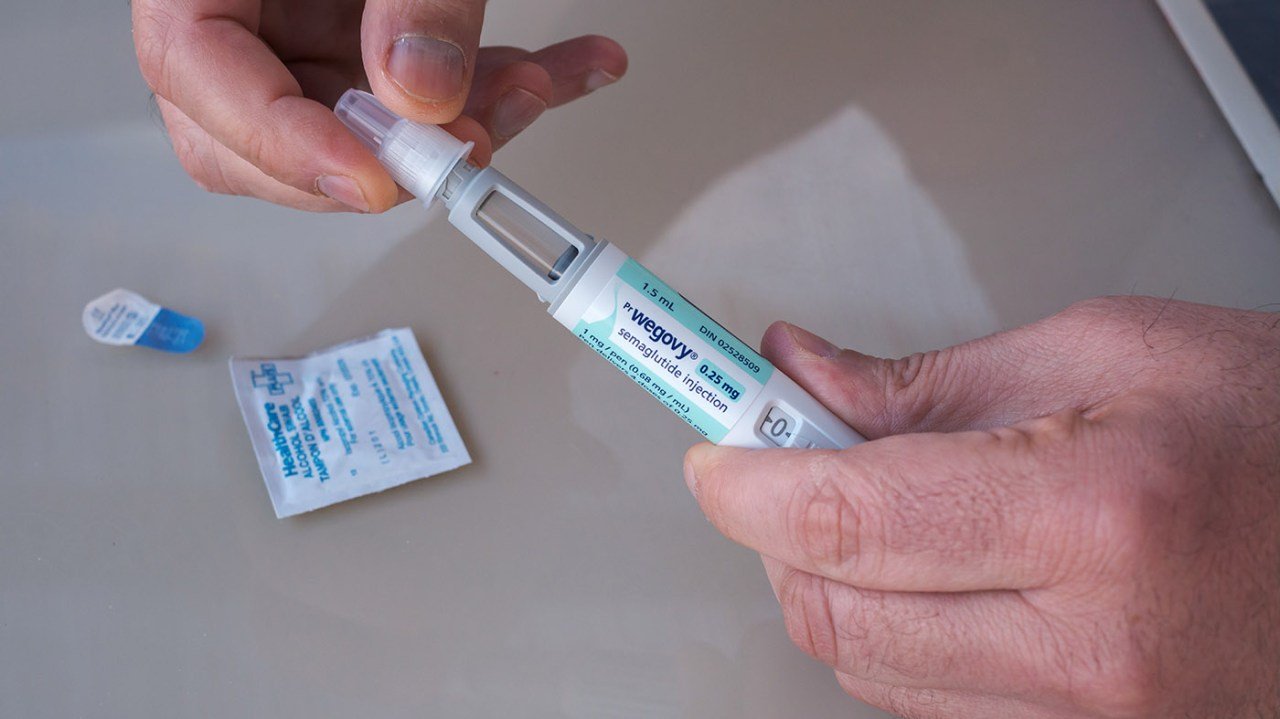
Starting in July, some Medicare beneficiaries will be able to access GLP-1 medications by paying one flat fee per month. The temporary program is set to run for a year-and-a-half through the end of 2027.
But with less than two weeks before its launch, questions remain over how it will operate.
The Medicare GLP-1 Bridge, described by the Centers for Medicare and Medicaid Services (CMS) as a “time-limited demonstration,” will officially run from July 1, 2026, to Dec. 31, 2027.
Announced in December, the program will allow eligible Medicare Part D enrollees to access GLP-1 medications for a $50 monthly copay. Despite GLP-1s being indicated for diabetes, obesity and some heart conditions, the Bridge program will almost solely be available to beneficiaries seeking weight management solutions.
The program is meant for Medicare beneficiaries who do not have a medically coverable indication for GLP-1s through Part D coverage. Federal law currently prohibits Medicare from covering weight loss medications.
Organizations like the Obesity Care Advocacy Network (OCAN) have praised the program, with OCAN Coordinator Cristy Gallagher calling it a “historic milestone in the fight against the obesity epidemic.”
There are some regulatory observers, however, who have concerns over how the program will be administered. And there are lingering questions over how much this will cost. Bob Herman of Stat News reported earlier this month that inquiries to CMS about the cost of the 18-month program have not been answered.
The Hill also reached out to the Department of Health and Human Services for information on the program’s cost.
Here’s what to know.
How it works
According to CMS, the program won’t require Medicare enrollees to fill out any additional paperwork or take any further steps past getting a prescription from their doctor.
In order for a beneficiary to join the program, a medical provider must submit a prior authorization request and a prescription for one of the eligible GLP-1 medications.
The medications that will be covered in the program include Wegovy, Zepbound and Foundayo. If a patient begins on one of these medications and switches to another in the middle of the Bridge program’s duration, they will need a new prior authorization form.
When the provider sends the prescription to a pharmacy, a pharmacist will then route that prescription to the Bridge program’s central processor, which CMS is referring to as the Bridge PCN.
Aurelia Chaudhury, co-lead of CMS’s Cell and Gene Therapy Access Model, said in a webinar hosted by obesity groups, including OCAN, that her agency will not be processing prospective prior authorizations, which are done at the time of prescribing. If the patient’s prescription issued for the Bridge program is their first GLP-1 prescription, the claim will be rejected before a prior authorization form is sent to the issuing provider.
The prior authorization form will ask physicians to attest that their patient does not have Type 2 diabetes, moderate to severe obstructive sleep apnea or MASH fatty liver disease.
Claims will not be processed before July 1.
“The Medicare GLP-1 Bridge seeks to test whether providing access to GLP one products at a uniform CMS negotiated net price will help improve beneficiary outcomes and reduce long-term Medicare spending,” Kelly Strachan, CMS health insurance specialist and Innovation Center fellow, said in the webinar.
The monthly $50 copay will not count towards a patient’s deductible or maximum out-of-pocket costs.
When asked what the plans are for the Bridge program at the end of 2027, Chaudhury said, “We understand that there’s a lot of interest from patients in understanding what’s going to happen after December 31st of 2027. We are looking forward to sharing more information as soon as we can on Medicaid.”
Who is eligible
To be eligible, beneficiaries must enroll in either a standalone prescription drug plan or Medicare Advantage coordinated care plan. CMS lists those enrolled in Special Needs Plans, employer/union group waiver plans and the Limited Income Newly Eligible Transition program as also being eligible to participate.
Beneficiaries of Tricare For Life, the Medicare-wraparound coverage for military retirees and dependents, can also access the Bridge program, but they must also be enrolled in an eligible Part D plan type. Dual enrollees in both Medicare and Medicaid can also be eligible.
Catherine Varney, an obesity medicine physician and trustee at the Obesity Medicine Association, was asked during OCAN’s webinar to describe the ideal patient to benefit from GLP-1 Bridge.
“Those at greatest risk of obesity and obesity-related diseases,” said Varney. “We know that obesity is not a benign disease … it’s associated to over 200 chronic conditions and 13 different types of cancers.”
Qualifications will vary based on the patient’s body mass index (BMI), and there is a minimum BMI to be eligible.
Beneficiaries must be at least 18 years old and have a BMI of 27 or higher, and must also be diagnosed with at least one of the following conditions: prediabetes, a previous myocardial infarction, a previous stroke or a symptomatic peripheral artery disease.
Those with a BMI of equal to or greater than 30 must also be diagnosed with heart failure with preserved ejection fraction, uncontrolled hypertension or chronic kidney disease stage 3a or above.
Patients with a BMI of 35 or greater do not require an additional diagnosis to participate in the Bridge program.
Regulatory concerns
Strictly speaking, the Bridge program is operating outside the normal scope of Medicare, which is prohibited from covering medications solely indicated for weight loss. By opening up Medicare to obesity medicine prescribers, some worry that the program could introduce potential avenues for fraud or misuse.
Christopher J. Frisina, healthcare regulatory counsel at the law firm Alston & Bird, noted that many people get telehealth visits are considered sufficient to obtain a prescription eligible for the Bridge program.
“I think maybe that this GLP-1 Bridge program might inspire new telehealth providers or existing telehealth providers that to this point haven’t taken Medicare reimbursement to move into this space,” Frisina told The Hill. “And it’s a risky place, because Medicare requires more diligence in business practices than a lot of businesses do.”
Frisina acknowledged that CMS appears to have done its due diligence in setting up the demonstration program but cautioned that fraud is always a possibility.
“It requires the provider to fill up this really detailed prior authorization form to send that in before approval can happen. So, you have a check and balance that requires the coordination between two different entities, the provider and the pharmacy, to actually get the fraud,” he said. “It’s not going to be as straightforward as some of the fraud schemes that we often see, but I don’t think it’s outside of the realm of possibility.”
When it comes to how much the demonstration will cost, CMS has not given a clear picture.
“CMS has not publicly released cost estimates or enrollment projections for the Medicare GLP-1 Bridge demonstration model,” an agency spokesperson told The Hill.
“Under the Medicare GLP-1 Bridge, eligible Medicare Part D beneficiaries will have a $50 copay per monthly supply of an eligible GLP-1 drug,” they added. “Because the demonstration operates outside of the Medicare Part D benefit’s coverage and payment flow, it does not follow the standard Part D structure for cost-sharing, deductibles, or out-of-pocket accumulation.”
HealthNews
A Family Dispute Breaks Out After A Man Becomes Ill From Food Prepared By His Sister And Refuses To Eat There Again


Isn’t it surprising how some family members can be so careless?!
This kid shares how his annoying sister never kept him first while cooking meals.
Check out how the poor kid got sick at his sister’s house.
AITAH for not eating the food my sister makes when we visit her house?
I (17M) have food sensitivities that can make me pretty sick if I ignore them. I can’t eat a lot of dairy or red meat without having stomach and bathroom issues.
I can eat smaller amounts. Like a pizza with less cheese than normal or a really small amount of yogurt and stuff like that.
He explains how he gets really sick…
I avoid red meat though because it’s way easier for me. And there are some fruits that also irritate my stomach so I try to avoid them as well.
I’ve always tried to be chill about it and I don’t make a fuss when stuff isn’t customized to me. I can not eat or eat around stuff that don’t work for me easily enough.
But my sister (27F) has made that super hard.
This is where it gets bad…
To start with we’re technically stepsiblings but my mom married her dad when I was only 18 months old so I grew up with her and consider her my sister.
Not to mention my stepdad adopted me when I was younger so we did officially become siblings. My mom was willing to adopt her too but my sister was not okay with that.
And I realize more as I get older that she’s never been okay with us and she uses food as a way to express it.
Ever since my sister got her house two years ago she hosts both her family and her husband’s family and she cooks for everyone. But she always cooks stuff that really isn’t edible for me.
UH OH…
She’ll make pasta and use a cheese sauce or she’ll melt a ton of cheese onto the whole dish. Plus she adds yogurt to a ton of her dishes too. She uses red meat for every single meal we get there.
And she uses a ton of lemon juice when lemon is one of the fruits I avoid. Sometimes I’m left with a salad but sometimes that isn’t an option either because again, lemon juice.
I have tried to just quietly eat around the stuff with dairy.
Our dad has brought up the fact she cooks food I can’t eat and she’ll play dumb some of the time or she gets really defensive about being told what to cook and saying we should appreciate her cooking for us.
He dislikes the whole arrangement!
I got really sick a couple of times after eating at her place and the last time I had to miss a week of school because it just messed with me so bad.
I even had to see a doctor and get an allergen test done to find out if my intolerances had become allergies.
My sister didn’t care and something she said made me realize it was her way of saying I’m not her brother so why would she care.
I tried to get out of eating at her place the last few times but my parents told me I had to go. The same thing happened with the food not being for me when we got there so the very last time I refused to eat.
That’s INSANE!
My sister and her husband got so offended that I was wasting all their food and I was told to eat the stuff I could eat vs leaving it all. But I said I didn’t feel safe eating any of it after the last time I got sick.
And I said there was no reason to keep serving me food they knew I couldn’t eat. My parents tried to fix my plate to be edible for me but I told them to stop and I wasn’t eating anymore because I refuse to get sick again.
It made my dad and sister fight and my parents are pretty pissed at me too.
They told me I should have eaten something to not be rude.
AITAH?
GEEZ! That sounds so unreasonable!
Why would his parents demand for him to get sick?
If you enjoyed this story, check out this post about an employee whose dietary restrictions caused the whole office to turn against her.
Let’s check out what people on Reddit think about this one.
This user understands that the parents are the problem here!
This user hates how nobody stood up for this kid!
This user suggests not visiting the sister’s house again!
This user knows what to do next time!
This user knows things can get better!
Somebody needs to take some action here!
HealthNews
I teach people over 50 to be mobile: 3 low-impact moves that build more stability than a 30-minute walk

Don’t get me wrong, I love walking. I have a little rescue pup who loves nothing more than taking me for a walk, whether it’s 6 am or 11 pm, so I spend a lot of time on my feet.
The benefits of walking are well-documented, too: stronger bones, joints, ligaments, and muscles (especially if you enjoy increasing your pace or intensity through power walking, hiking, or rucking); a higher resting metabolism, decreased sedentary time, and a little boost in mobility. It’s also a great form of aerobic exercise for building a stronger heart and lungs.
Although walking can contribute to anti-aging by working the muscles you use for balance and stability, a consistent mobility routine coupled with your daily walks is where the real magic lies.
Below, I show you how to do three of the best low-impact mobility exercises for functional strength, stability and balance. You can use a set of weights or stick to using your bodyweight. Regardless, one of the best yoga mats is useful to have.
If you experience pain at any time, stop and rest. If you’re working with an injury or health condition, or you’re currently pregnant or postnatal, I recommend seeking advice before starting these exercises.
Watch: 3 low-impact moves to try anywhere
Improving mobility isn’t about stretching; it’s about being dynamic and moving the joints through a range of movement alongside strengthening exercises that load the muscles to work through resistance. The result? Strong muscles and joints.
This is also important for your fascia, which is like a web of connective tissue responsible for holding everything in place, like your bones, muscles and organs. Tight fascia increases friction, which is why plenty of stretching, movement, foam rolling and mobility work is important for improving the overall quality of your movements.
It also responds brilliantly to low-impact and gentle movement, so a consistent mobility routine is certainly helpful.
The routine: 3-4 sets, 8-10 reps for the first and third exercises, and a 45-50-second effort for monster walks.
Stiletto squat x heel raises: Stand with your feet hip-width apart, then rise onto your tiptoes and squeeze your core muscles for balance. Bend your knees and send your hips backward to lower into a squat, keeping your back straight and chest proud. Focus on something unmoving. At the bottom of the squat, lower your heels, then press upward through both feet to stand. Reverse this by lowering into a standard squat first, then transfer the weight to your tiptoes and press upward to stand, resting your heels down.
Monster walks: Stand with your feet wider than shoulder-width, toes pointed out slightly. Sit back into a squat so that your thighs are almost parallel to the ground. Keep your back straight, chest proud and core engaged. Place your hands lightly behind your head and pull your elbows back, knitting both shoulder blades together. Take a few steps forward and outward, then backward, sitting the weight back toward your heels.
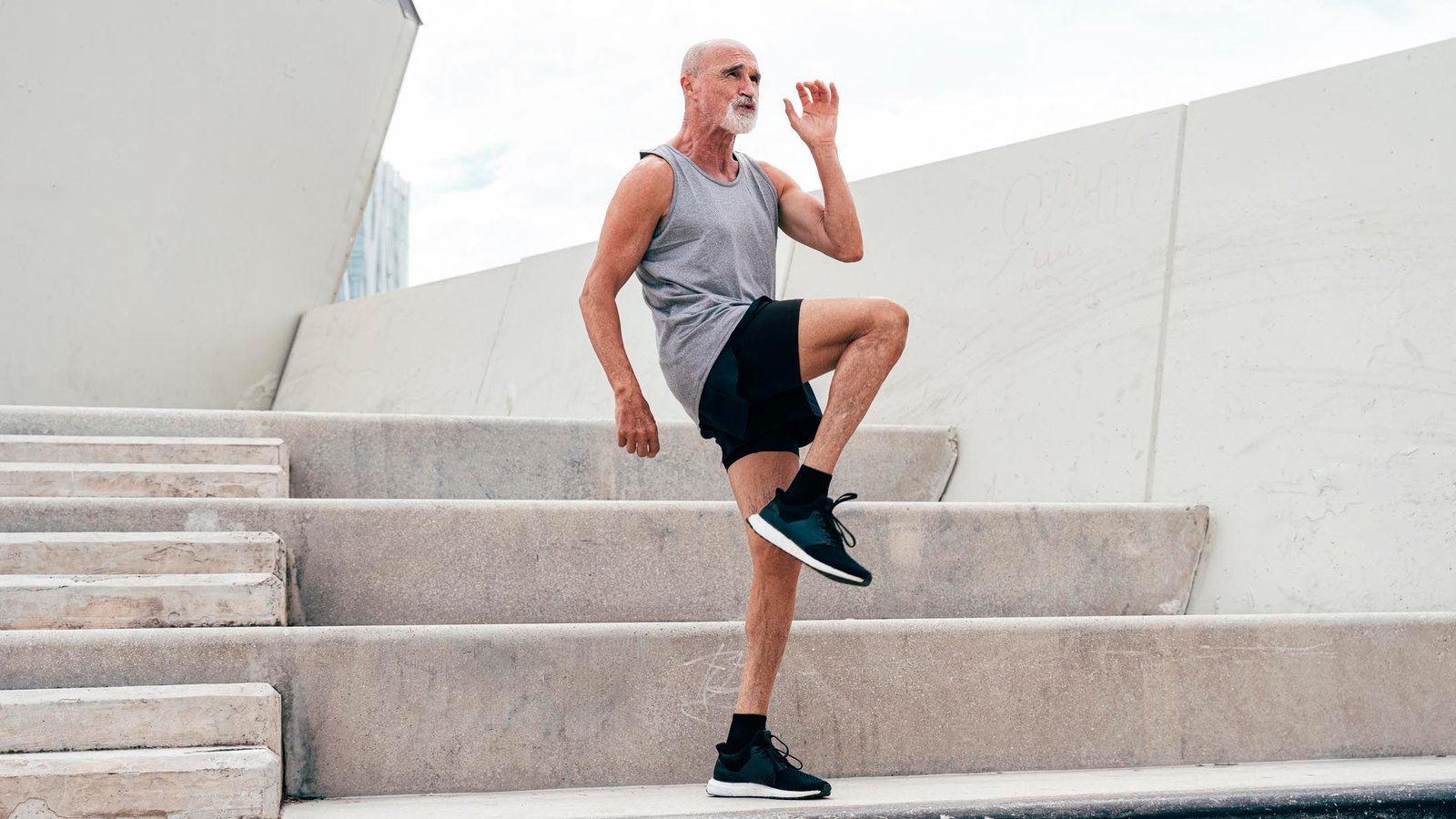
Warrior III: Stand with your feet hip-width apart. Shift your weight into your left leg and place your hands either in prayer or on your hips. Engage your core. Place a soft bend in your left knee, then hinge forward at the hips and raise your right leg behind you as you lower your chest parallel to the ground. Keep your hips square to the mat and gaze slightly forward to the top of your mat. Keep your hands where they are, or try to extend them in front of you. With control, slowly transition back to standing, then switch sides.
What are the benefits?
Each of these exercises brings something slightly different to the table.
Stiletto squat x heel raises: Your ankles and calves are crucial for climbing, walking and running, especially when moving one leg at a time and transferring balance and weight between the left and right sides of the body.
Stiletto squats are effective for increasing mobility and balance as you squat from your tiptoes, then transfer the weight to your heels and push upward from the squat. You can then reverse this to lower into a squat first, transfer the weight to the balls of your feet, then rise to stand. Notice how your ankles, calves, legs, glutes and core work to keep you balanced and drive movement. You can hold a weight in both hands to add load or hold onto something for extra support.
Monster walks: These are killer on the legs, glutes, core and thoracic spine, as you place your hands lightly behind your head and walk forward and backward from a low squat position, knees bent. You can add a band around your thighs or hold a weight plate behind your head for extra load, or place your hands on your hips for a more beginner-friendly option.
Warrior III: This is a famous yoga pose used to test lower-body strength and balance. Your core will work to stabilize your torso and prevent rotation, while your hip flexors receive a stretch, too. Embrace all the wobbles and don’t be afraid to fall out of the posture, as you’re still strengthening all the muscles around your feet, ankles, knees and hips. Essentially, you’re enhancing your ability to stand on one leg, which is a transferable skill.
Hopefully, you have enough time to really control these movements and make the most of them, rather than rushing. After all, you can’t truly rush a balancing exercise.
Adjust the reps and sets as necessary, and play around by adding weights or equipment. I usually add dumbbells and/or a band above my knees, but if this damages the quality of your reps, stick to using your bodyweight.
Focus on finding length through your spine rather than hunching, and keeping your chest proud. Any time your hands are behind your head, knit both shoulder blades together to help open your chest and activate the mid and upper back.
Give these a try, and let us know how you get on in the comments.
Follow Tom’s Guide fitness on Instagram for more workouts, routines, tips, and tricks.
Follow Tom’s Guide on Google News and add us as a preferred source to get our up-to-date news, analysis, and reviews in your feeds. Alternatively, you can read our content on the Tom’s Guide app available now for iOS and Android. Subscribe to Tom’s Guide on YouTube and follow us on TikTok. Finally, you can visit our dedicated Tom’s Guide Savings Squad hub for expert help on getting the best products for less.
More from Tom’s Guide




Conjoined twins separated with the help of AI | BBC News
Mercy and Goodness are the first pair of conjoined twins to have parts of their new skulls designed using mixed...


Jelly Roll makes surprising career move after Bunnie Xo divorce
Jelly Roll is headed back to late-night TV! The country music star is one of several stars tapped to guest-host...


How fast you should be able to walk a mile at every age
Walk this way at every age. Movement is essential for a long, healthy life, and walking has been growing in...


Why Keir Starmer’s Resignation Looks More Likely Than Ever | BBC Newscast
Today, we look at strong indications the prime minister may be on the verge of resigning. Cabinet Secretary Peter Kyle's...


Vance: US willing to ‘transform’ relations with Iran
Vice President JD Vance said the United States is willing to "fundamentally transform" its relations with Iran ahead of a...


Taylor Swift’s Future Father in Law Seemingly Hard Launches GF, Weeks Before Son’s Wedding
Looks like romance is in the air beyond just Taylor Swift and Travis Kelce, ’cause her soon-to-be father-in-law Ed Kelce,...


F.A.A. Investigates Near Miss Between Planes at Boston’s Logan Airport
The Federal Aviation Administration said that it was investigating a near miss between two planes at Boston Logan International Airport...
2026 U.S. Open final round leaderboard, live updates: Wyndham Clark leads by 6 entering Sunday at Shinnecock Hills
The U.S. Open is Wyndham Clark’s to lose. Clark is carrying a massive six-shot lead into the final round at...


Trump claims vandals damaged D.C. Reflecting Pool, and says it will be drained again
President Trump has claimed that United States Park Police have made several arrests in connection with what he described as...
Keith Urban breaks silence with surprise 4-word message to Nicole Kidman
Keith Urban has shared his first message to ex-wife Nicole Kidman following their divorce. The country music star took to...
-

 Business1 week ago
How much of Musk’s wealth comes from government help? Virtually all of it
-

 Politics1 week ago
What to know about the stabbing that set off fiery riots in Northern Ireland
-

 Video1 week ago
Download fans say what they love about the festival. #DownloadFestival #BBCNews
-

 Video1 week ago
Why SpaceX IPO isn't about space. #SpaceX #ElonMusk #BBCNews
-

 HealthNews1 week ago
The people of Okinawa, Japan only eat until they are about 80 percent full, then stop — and the practice has been linked in multiple peer-reviewed studies to lower rates of cardiovascular disease, slo
-

 Food1 week ago
Pope Leo’s plane was grounded. Then the King of Spain stepped in to help
-

 TravelNews1 week ago
My Paternal Instinct Should’ve Warned Me About Netflix’s Maternal Instinct
-

 Video1 week ago
Claire Danes has the cutest stories about young Kirsten Dunst on 'Little Women' set