

Business
Owner, founder of St. Louis business Jilly’s Cupcake Bar & Cafe dies


ST. LOUIS, Mo. (First Alert 4) – Jilly’s Cupcake Bar & Cafe shared Saturday that the business’ owner and founder, Jill Segal, has died.
Jilly’s Cupcake Bar & Cafe is a gourmet cupcake place in University City that opened in 2007 and has sold product in Schnucks and Dierbergs stores around the area. The business’ website says it has been a contestant on Food Network show Cupcake Wars three times, with two wins. It’s also been named one of the top 10 places to get a gourmet cupcake by USA TODAY.
The business also said in its announcement that there are open positions on the staff, including on the ownership team, but no information has been released regarding what’s next for the store.
Business
establish importance of Apple’s design team when he takes over as CEO: report


Bloomberg’s Mark Gurman today posted the latest edition of his Power On newsletter, recapping the last ten years of Apple’s corporate structure in which the influence of the design team waned at the executive levels in the Cook era, fuelled by Jony Ive’s exit and talent departures as finance and operations had an increasingly larger say over product direction.
However, Gurman believes that incoming CEO John Ternus may be about to reset that relationship, and reaffirm the importance of the design group for the company’s future.
After Ive left the company, oversight of the design team fell to ex-COO Jeff Williams. This was already a major shakeup from the prior regime where Ive’s industrial design group dictated the product roadmap of the company from the top-down.
This arrangement was highlighted all the way back in 2011, in Steve Jobs’ biography by Walter Isaacson. Jobs is quoted as saying that Ive has more operational power than anyone at Apple apart from himself, because ‘the way I set it up’.
Fast forward to present day and that cannot be farther from the current situation, in which many believe the company has demoted design to be less important than its operations division. Apple doesn’t even have a senior design role right now, and only recently added Molly Anderson and Steve Lemay’s profiles to the leadership page.
Incoming CEO John Ternus, who is presumably going to be more involved in product in general than Cook was, is apparently looking to restore some of the design’s team’s authority. Gurman says that Ternus has already spent a considerable amount of his time with the industrial design group, as he prepares for his succession to begin on September 1.
Ternus is quoted by Gurman as having said that the ‘the most beautifully designed thing that most customers own is an Apple product. We’re going to make sure that stays the case’.
Business
F.A.A. Investigates Near Miss Between Planes at Boston’s Logan Airport

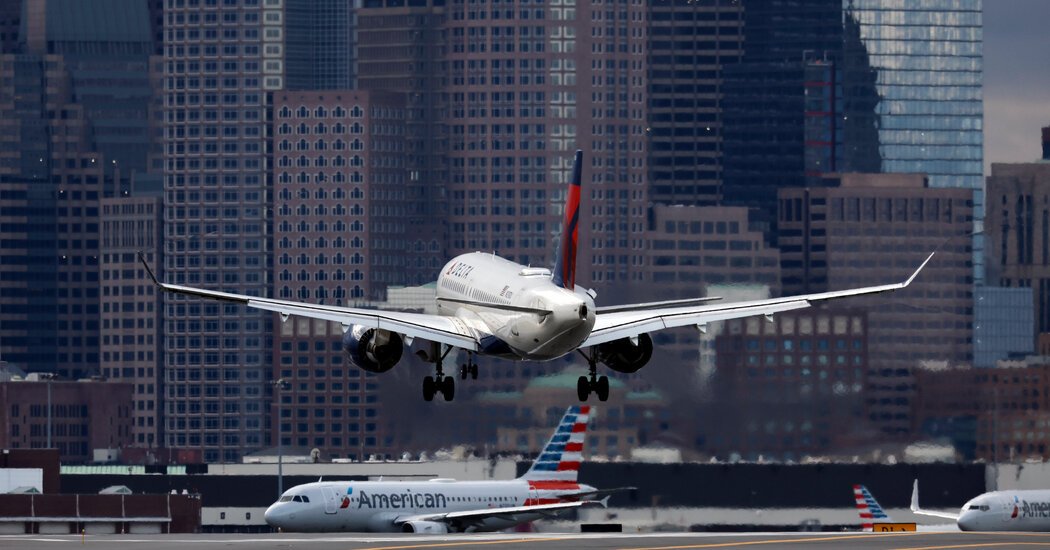
The Federal Aviation Administration said that it was investigating a near miss between two planes at Boston Logan International Airport that happened on Saturday morning.
The episode happened at about 11:30 a.m., when Delta Air Lines Flight 2351 performed a go-around to avoid another plane that was taking off from an intersecting runway, the F.A.A. said in statement. The agency did not identify the other plane involved.
A go-around is a standard maneuver in which a plane aborts a landing, repositions and tries again. The F.A.A. said information around the episode was preliminary.
Data from Flightradar24, a flight-tracking website, showed that the Delta flight, arriving from Dallas, aborted its approach for landing as American Airlines Flight 3161, bound for Charlotte, N.C., approached from an intersecting runway.
The two planes were a few hundred feet apart, the tracking data showed. The Delta plane landed around 10 minutes later, according to the tracking data.
Delta said the flight crew received an advisory from an onboard system warning of potential traffic while the plane was descending and coordinated with air traffic control to perform the go-around. The plane landed safely and the passengers deplaned normally, according to a spokesperson for the airline.
The plane, an Airbus A319, was carrying 129 passengers and six crew members, the spokesperson said.
American Airlines did not immediately respond to a request for comment.
This was the latest in a string of near misses at U.S. airports in recent months. In April, an American Airlines regional jet flew dangerously close to an Air Canada regional jet after aborting its landing at Kennedy International Airport, according to the F.A.A.
The same month, the agency also investigated a close call between two Southwest Airlines jets at Nashville International Airport, in which an air traffic controller inadvertently directed an incoming plane into the path of a departing aircraft. The planes came within about 500 vertical feet of each other as the pilots reacted to onboard collision alerts, according to Flightradar24 and the F.A.A.
Business
Gazebo collapse at Hard Rock injures 5


HOLLYWOOD, Fla. — A gazebo collapse at the Seminole Hard Rock Hotel & Casino Hollywood injured five people on Saturday evening, officials said.
Leer en español
It happened at around 7 p.m. near the pool at the DAER Dayclub.
Bystanders quickly responded and medics transported the injured to Memorial Regional Hospital with non-life-threatening injuries.
The collapse was believed to have been weather-related; strong winds and rain were moving through the area at the time.
All five victims are expected to recover.
A spokesperson for the Seminole Police Department said in part that the “safety and security of our guests and team members are our highest priorities” and that the club “was closed immediately to ensure the safety and security of all attendees.”
Editor’s note: The original version of the article misstated the time of the collapse as 7 a.m. instead of 7 p.m. It has been corrected.
Copyright 2026 by WPLG Local10.com – All rights reserved.
Business
SOS: Could Doug Parker Really Return To “Save” American Airlines?

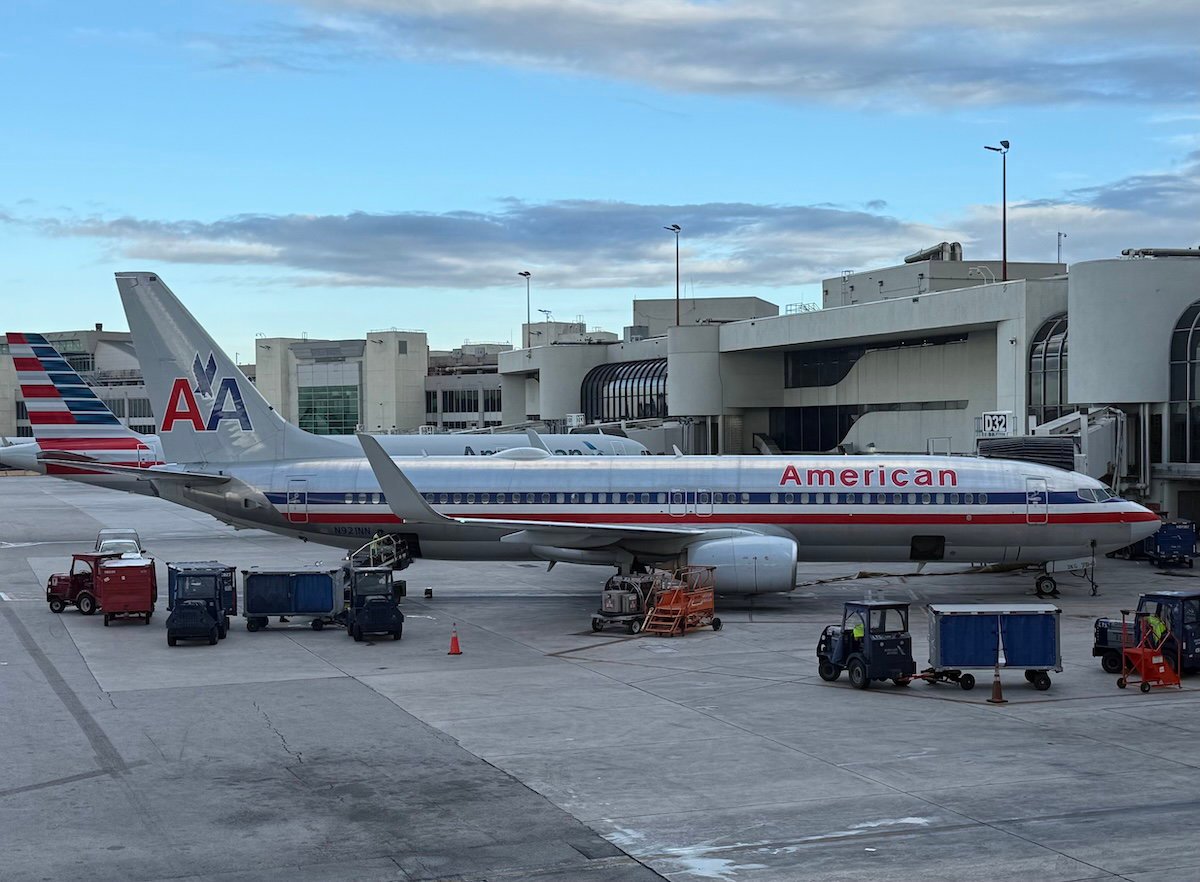
There’s a rumor swirling around that American Airlines may bring back former CEO Doug Parker to replace current CEO Robert Isom. When I first heard this, I thought “wait, there’s no way the board would do something like this, right?” However, the more I think about it, the more I think “wait, that’s exactly what American’s board would do, of course.” Let me explain…
Airline executives speculate Doug Parker may replace Robert Isom
In recent years, American has been falling further and further behind both Delta and United when it comes to financial performance. In reality, Delta is still strongest, while United has been pulling ahead at American’s expense, as it seems to be a zero sum game between the two airlines.
Simply put, the company has lacked a cohesive vision for so long. Premium… not premium… now premium again… who is to say?! It has now gotten to the point where management realizes they need to invest in customer experience, but one wonders if it’s too little too late, especially with the pace at which Delta and United are also investing in their products. It’s not easy to make up ground in these circumstances.
I’m not alone in wondering who will fix American, and when they’ll replace CEO Robert Isom. If American had a competent board, we would’ve seen a management change a long time ago. While I’m sure the board doesn’t want to admit that it has been asleep at the wheel, sooner or later, something’s gotta give.
The issue is that several board members are doubling down and don’t want to admit defeat, since they’re the same people who were behind the decision to choose Isom over Scott Kirby to lead American next (Kirby was president of American, and was then told he’d never be CEO, which is why he left to go to United, and there’s a lot of bad blood there).
So that brings us to the latest rumor that’s swirling around. Brian Sumers, who writes the Airline Observer (a paid subscription for full access) recently attended the IATA AGM in Rio de Janeiro, which is the one event each year attended by virtually every airline industry executive. While a lot of important stuff happens in official meetings, what’s equally interesting is what’s discussed off the record, and at the bars late at night. Airline executives love to gossip (who doesn’t?!).
Sumers explains that one of the most common topics of conversation among executives was whether Isom will make it through the end of 2026, and who will eventually replace him. I’ve shared my take in the past on who I think would be a good fit to replace Isom, but it seems industry executives have a different theory. The leading candidate to replace Isom, according to other executives? Well, it could be former American CEO Doug Parker (who was previously CEO of US Airways, and CEO of America West before that — he’s one of the industry’s longest serving airline CEOs).
The idea is that Parker has the industry experience and respect needed to turn the airline around… or something. Keep in mind Parker is still somewhat in the industry, as he’s on the board of Qantas. And he’s “only” 64, five years younger than Delta CEO Ed Bastian.
Parker would do nothing to fix American’s underlying problems
As a person, I respect Parker quite a bit. He seems like a kind, fair guy, he’s surprisingly pro union, and he has certainly done a lot for the airline industry over the years, being a leading voice during tough times (including going to Washington asking for bailouts).
However, if you ask me, Parker and Isom are almost identical in that regard — they’re both nice guys, but they lack a vision. Even as American started its slow descent under Parker, he had the same “oh, everything is fine” narrative that Isom now has. I actually suspect this might’ve been one of the reasons that Kirby was passed over in favor of Isom — Kirby is absolutely cutthroat, highly competitive, and wants to win, while neither Parker nor Isom have that mentality.
Replacing Isom with Parker would do absolutely nothing to fix American. The single biggest thing that American needs is a CEO who can excite employees, and who can get them to rally behind a vision. Period. End of story. Without that, there is no turnaround, because employees are just confused and indifferent, given the lack of direction they’ve been given.
Personally, I also think it needs to be an outsider, so that the board shows employees that they’re serious about change. Simply rearranging the America West deck chairs doesn’t send a message of actual change to employees. I’ve said it before, and I’ll say it again — someone like Air France-KLM CEO Ben Smith would be the person to turn the airline around.
Now, do I think the odds of that happening are actually good? No, probably not. That would be way too out-of-the-box for American’s board. And American is an airline that probably more than any other promotes from within. That’s great in theory, but it’s also why there’s such groupthink, and how we’ve gotten to this point.
American actually has some decent executives now — recently appointed Chief Commercial Officer Nat Pieper is a bright guy, and I think he has the right idea with strategy, and he’s also sort of an outsider. That being said, my impression is that he might be more of a Glen Hauenstein type than a Bastian type (Hauenstein was Delta’s former president, and he was really the guy behind most of the strategy, even though you almost never heard from him).
Meanwhile Chief Customer Officer Heather Garboden has been the person behind many of the positive changes in recent times, but again, she’s from the America West “club,” and I’m not sure a 20+ year veteran of the company is really the person employees are going to rally around, because they’ve been let down too often. For that matter, I don’t know enough about her to wager a guess as to whether she can actually be innovative — virtually all the positive changes we’ve seen from American in recent times have just been obvious areas where the company is catching up with the competition.
One thing is for sure — the board can only ignore reality for so much longer. Or I dunno, maybe they can, because little about our corporate world makes sense.
Bottom line
American CEO Robert Isom just hasn’t been doing a great job leading the airline in the right direction, at least when you look at the company’s financial performance compared to that of competitors. While the idea seems sort of wild to me, many other industry executives reportedly think that the most likely successor to Isom is a return of Parker.
Replacing a nice guy who lacks strategy with a nice guy who lacks strategy just doesn’t strike me as a wise decision. Then again, American’s board is the whole reason we’re in this situation to begin with, given that they opted for Isom over former president Kirby to take over at American.
I’d like to think that there’s no way this could happen, but who really knows…
Business
Americans Have Turned Against AI in Incredible Numbers


Sign up to see the future, today
Can’t-miss innovations from the bleeding edge of science and tech
Email address Thank you!
Not that anyone in power is going to care, but there’s even more evidence that Americans are coming to overwhelmingly loathe AI — despite, or perhaps because, they’re using chatbots more than ever.
In a sweeping new poll conducted by Pew Research, only 16 percent of respondents said they believed AI will have a positive impact on society — a number as dismal as the perception of the tech.
Meanwhile, 49 percent of adults say they use AI chatbots like ChatGPT, which remains the most popular by a considerable margin, with a quarter saying they use the tools daily. That proportion is considerably higher than the 33 percent of American adults who said they used AI chatbots in 2024.
In other words, the tech’s widespread adoption isn’t helping its perception. A full 40 percent of respondents said they anticipate AI will have a negative impact on society, and 31 percent said it will impact them personally in a negative way, too.
This varies quite a bit by age. Gen Z adults, ages 18 to 29, were the most wary of AI, with 48 percent believing it’ll be negative for society. Yet they’re also the group that reported using AI the most, at 66 percent.
Interestingly, the 30-49 year olds and the 50-and-up brackets are more closely aligned, at 39 percent and 37 percent respectively viewing it as negative. They‘re using AI less, though the dropoff between their usage is significant: 61 percent of 30-49 year olds said they used AI chatbots, while only 42 percent of 50-64 year olds did. It was less than a quarter for 65 years and older.
What’s driving this gap between perception and usage is unclear. You could argue that some feel compelled to use it, even when recognizing the tech’s shortcomings and the ethical dubiousness of the industry that’s building it. In fact, many are literally forced to use it at work, with bosses often more enthusiastic about the tech than workers are.
In any case, it’s a real problem for AI’s long-term staying power. Right now the industry is being propelled by hype and the mountains of cash that’re being pumped into it, while profits remain elusive. If no one likes AI years or decades from now, will there be enough customers to keep the industry running?


‘Great progress' at US-Iran talks says US Vice-President JD Vance | BBC News
Switzerland has hosted a first round of talks on a long-term peace deal between the United States and Iran. The...


New Spider-Man popcorn buckets raise eyebrows: ‘Someone approved that?’
Cinemark has unveiled a new Spider-Man: Brand New Day-themed popcorn bucket for moviegoers, sparking a slew of NSFW comparisons. The...


LAPD fatally shoots dog after Knicks win
The shooting happened minutes after the family celebrated the New York Knicks' NBA Finals win, according to the dog's owner...


Gisele Bündchen snubs Tom Brady as she celebrates Joaquim Valente in Father’s Day post
Gisele Bündchen snubbed her ex Tom Brady as the model celebrated her husband, Joaquim Valente, in a sweet Father’s Day...


Why do people watch the solstice at Stonehenge in the UK? #Solstice #Stonehenge #BBCNews


How the right is rising across Britain
Britain's tilt to the right is being felt on its streets and in its politics. From Reform UK's surge in...


David and Victoria Beckham Share Throwback Photo of Brooklyn in Father’s Day Post
Victoria Beckham and David Beckham both marked Father’s Day on Sunday with heartfelt social media posts — including another public...


Conjoined twins separated with the help of AI | BBC News
Mercy and Goodness are the first pair of conjoined twins to have parts of their new skulls designed using mixed...
Nasty upstate Republican primary tests power of Trump endorsement
Jim Zecca is such a supporter of Donald Trump that in 2016 he took a bus from upstate New York...


Jelly Roll makes surprising career move after Bunnie Xo divorce
Jelly Roll is headed back to late-night TV! The country music star is one of several stars tapped to guest-host...
-

 Business1 week ago
How much of Musk’s wealth comes from government help? Virtually all of it
-

 Politics1 week ago
What to know about the stabbing that set off fiery riots in Northern Ireland
-

 Video1 week ago
Download fans say what they love about the festival. #DownloadFestival #BBCNews
-

 Video1 week ago
Why SpaceX IPO isn't about space. #SpaceX #ElonMusk #BBCNews
-

 HealthNews1 week ago
The people of Okinawa, Japan only eat until they are about 80 percent full, then stop — and the practice has been linked in multiple peer-reviewed studies to lower rates of cardiovascular disease, slo
-

 Food1 week ago
Pope Leo’s plane was grounded. Then the King of Spain stepped in to help
-

 TravelNews1 week ago
My Paternal Instinct Should’ve Warned Me About Netflix’s Maternal Instinct
-

 Video1 week ago
Claire Danes has the cutest stories about young Kirsten Dunst on 'Little Women' set