

Tech
Welcome to the Age of AI Sprawl
Tokenmaxxing became the buzzy AI word du jour this spring; as summer begins the trend is already running on empty. Amazon pulled its AI leaderboard after some employees made useless AI work to game the rankings. Palantir CEO Alex Karp likened tokenmaxxing to a porn addiction, and Duolingo walked back a decision to weigh AI use in employee performance reviews. Meta and AT&T have reportedly started curbing AI use as costs skyrocket.
The pressure to use AI for the sake of using AI has created AI sprawl: Workers employ new agents or vibecode solutions with myriad AI tools that prove difficult for companies to wrap their arms around. That means burning through expensive AI budgets to create duplicate work, while often failing to pass on best tips and tricks to coworkers and wasting time “botsitting,” or, giving AI the necessary context and edits to make output usable. In a new survey of 6,000 digital workers in the US, UK, and Australia, from Glean’s Work AI Institute, researchers found that 77% of those who use AI engage with multiple programs weekly, a third use four or more tools, and 60% will shuffle the same prompts between multiple tools when they don’t find the first output sufficient. Individually, workers using AI say they save an average of 11 hours each week, but only 13% of those surveyed said these savings have “significantly improved” the company’s performance.
“The pressure to signal innovation by mere AI awareness, knowledge, appetite, is so strong, and it’s leading us astray,” says Kate Niederhoffer, head of BetterUp Labs, the behavioral research center at the coaching and workforce development company. Big shifts in the workforce require answering big questions, she says, such as, “Why are we adopting these tools? What are we trying to accomplish here? And how do we communicate that in a really clear and compelling way so that it impacts everybody in a way that they’ll use these tools to achieve those goals?” But few companies are answering “the big why” about AI.
Few companies are answering “the big why” about AI, says Kate Niederhoffer.
Unraveling the imperative to use AI means more than taking down leaderboards or adjusting reviews to focus on tangible worker impact. The rhetoric around adopting AI — that you must maximize and master it or it will replace you, or someone better at using AI will replace you — has reinforced the urgency to pursue individualism. AI has the potential to boost collaboration and decentralize some skills, like coding or editing images. But so far much of the evidence suggests that instead of thriving during a shortened work week, AI maxxers have burned out, lost faith in their coworkers, and marooned themselves, working alone on islands.
Proteinmaxxing, looksmaxxing, Ozempicmaxxing, 9-9-6maxxing — in a post-pandemic era that praises gains at any cost, workers were primed workers to engage with tokenmaxxing. But the lack of a cohesive AI user manual has also led tools to spread willy-nilly across organizations. Individual workers aren’t maxxing their way to efficiency. Companies need to tame the AI sprawl while guarding the chance for people to innovate.
Tech updates and new workflows typically come top-down: your company decides to use Zoom over Microsoft Teams, Microsoft 365 over Gmail. Employees receive logins for a suite of tools. But aside from some enterprise subscriptions to OpenAI or Anthropic, employees’ AI use often operates in the shadows. OpenAI took steps this year to unify ChatGPT and Codex. People want to use apps made specifically for their roles, like coding or marketing or human resources; two people working in sales want to use AI differently, and might repeat prompts or tasks, burning through tokens to create near-duplicate reports or decks when they once would have collaborated with a coworker to get the job done.
Lee Senderov, chief transformation officer at Travelport, a retail platform for travel agencies, tells me she’s seen AI sprawl take hold as people try to work the technology into their work. One worker burned through 160 times the amount of tokens that the next most prolific AI user did over a four-day period. When employees work in silos, pushed to use AI to do more, they might experiment with it alone, but end up duplicating the same work as a colleague. That’s not cheap. “You’ve got hard costs, you’re spending more money on tokens that you don’t need to be spending, duplicative costs there,” Senderov says. “But you also have duplicative soft costs of just, we’re wasting effort and then, who’s the expert that should be writing this?”
One worker burned through 160 times the amount of tokens that the next most prolific AI user.
When people work alone with AI, they can dilute the outcomes, flattening the rewards of collaboration in favor of a quick solution. Herbert Simon, a Nobel prize winning researcher, saw this behavior decades before AI arrived. Individuals will choose the good enough solution instead of interrogating every possible option, which Simon referred to as “satisficing.” “On an individual level we do that all the time,” says Emily DeJeu, professor in Carnegie Mellon University’s Tepper School of Business. “The purpose of organizations is to bring together all of these people who satisfice and to try and get them to coordinate and work towards shared goals in ways that are, at scale, productive.”
Layoffs of thousands of workers and pivots toward AI clash with this theory. Meta, which laid off 8,000 workers last month, plans to boost its spending on AI between 60% and 87% this year, following up on its “year of intensity,” in which it began slashing jobs to move its focus. Mark Zuckerberg has said single individuals can now do work that once required entire teams, but that threatens to erode the larger fabric of what makes an institution or company work.
Instead, AI at work is heading for the fate of past innovation: the tragedy of the commons, says Rebecca Hinds, head of Glean’s Work AI Institute. The theory goes like this: As individuals benefit from a shared resource, they use it near depletion, or, in AI’s case, use it to boost their own stature and credibility at the risk of downgrading a whole team or project. “If we can have a tool that is going to boost our individual productivity, that’s what we tend to reach for first,” Hinds says. “The problem is this coordination neglect that happens when we don’t consider the impact of our actions on the broader collective.”
Ill-intentioned AI use can degrade trust. Past research from BetterUp found that when people produced workslop — AI-generated documents and powerpoints that lacked proper oversight — their coworkers began to trust them less. An overreliance on AI can disintegrate the communal aspects of work; people rely increasingly on chatbots to answer their questions and on gen AI to spit out work that previously may have needed a coworker’s expertise.
But AI has also democratized innovation: marketers vibe code, agents can act like personal assistants, and startups do more with fewer hires. The trick becomes moving the benefits that individuals have eked out of AI and translating them into larger, team- and company-wide workflows. “How do you go from sprawl, which is unorganized and a little crazy, and how do you start to at least organize it a little bit so that we can get the most out of it?” Senderov says. She says her company is experimenting to try to centralize AI workflows. If they know two people are working on the same thing, they can encourage them to work together, and show the best use cases at the enterprise level. The larger a company is, the harder that centralization might be.
Senderov acknowledges everyone is still experimenting on the best ways to do this. But it’s becoming clear there’s no tokenmaxxing shortcut to get them there.
Amanda Hoover is a senior correspondent at Business Insider covering the tech industry. She writes about the biggest tech companies and trends.
Tech
Trump claims vandals damaged D.C. Reflecting Pool, and says it will be drained again


President Trump has claimed that United States Park Police have made several arrests in connection with what he described as deliberate sabotage of the Lincoln Memorial Reflecting Pool in Washington D.C., which underwent a multimillion-dollar renovation earlier this year.
“The United States Park Police have arrested multiple individuals for vandalizing our Nations magnificent Reflecting Pool,” Trump wrote on Truth Social late Saturday evening. “These are very serious crimes having to do with the destruction of National Monuments. Years in jail! Work will begin immediately on its repair.”
In a second post on Saturday, Trump described the alleged damage in greater detail, saying more arrests had followed. He provided no evidence for any of his claims about the nature of the damage, and neither the Park Police nor any other law enforcement agency had publicly confirmed any arrests as of the time of publication.
On Friday, Maryland resident and former Olympian David Hearn was arrested and charged with destroying government property. Hearn says he merely reached into the pool to touch one of the already dislodged blue pieces, and denies the charge.
Trump said that the pool would be drained and repaired quickly, and framed the alleged vandalism as an affront to American history. “We met with contractors today, will probably be forced to release and drain much of the water in order to do the necessary repairs,” he wrote. “What these terrible Vandals have done is a true affront to both Presidents George Washington and Abraham Lincoln, and should be dealt with accordingly”.
‘A 250-foot long gash’
Trump described what he said was physical destruction to the pool’s newly renovated lining. “They took some form of knife or blade, and put a 250 foot long gash into the beautiful facade of what took so much work, competence, and money to build and complete,” he wrote Saturday. “They also poured corrosive and destructive chemicals into the Pool.”
The president connected the alleged vandalism to the recent green color of the pool — again, without evidence. The pool turned green last week after being refilled following its renovation, in which its floor was repainted in a shade Trump calls “American flag blue.”
Aquatic ecologists and pool specialists told NPR the discoloration was caused by a natural bloom of algae from the genus Desmodesmus — a process scientists say is common in shallow, sun-exposed bodies of water, and one that may have been accelerated by the renovation disturbing the nutrient balance of the water.
A George Mason University professor who took water samples confirmed the algae was not toxic.
A renovation that grew in scope and cost
In April, Trump revealed his plans for the pool to be made “American flag blue,” in time for the 250th anniversary of the Declaration of Independence on July 4. The president also posted a fake image of himself and several of his administration officials in swimsuits, along with an unidentified woman in a bikini lounging in the water.
Trump defended the recent work in his Saturday post, writing: “The Reflecting Pool was never so beautiful as it was just one week ago, even going back to 1922 when it opened.” The pool opened in 1923.
The renovation project expanded significantly beyond the initial public cost estimate of $2 million, to more than $14 million by the time work was completed. A Virginia-based contractor received the no-bid contract. A separate Ohio-based company was paid approximately $1.7 million for nanobubble ozone technology deployed to treat the algae bloom.
The project was also the subject of a lawsuit filed in May by the Cultural Landscape Foundation, a nonprofit that argued the administration had bypassed required historic preservation reviews. A federal judge had not yet ruled on the case by the time the administration notified the court that work had been completed.
The White House has also provided no evidence that vandalism caused the pool’s discoloration, or any of the structural damage the president has described.
Tech
Micron Just Crossed $1,000 a Share. Here’s the Math on Where It Goes Next.

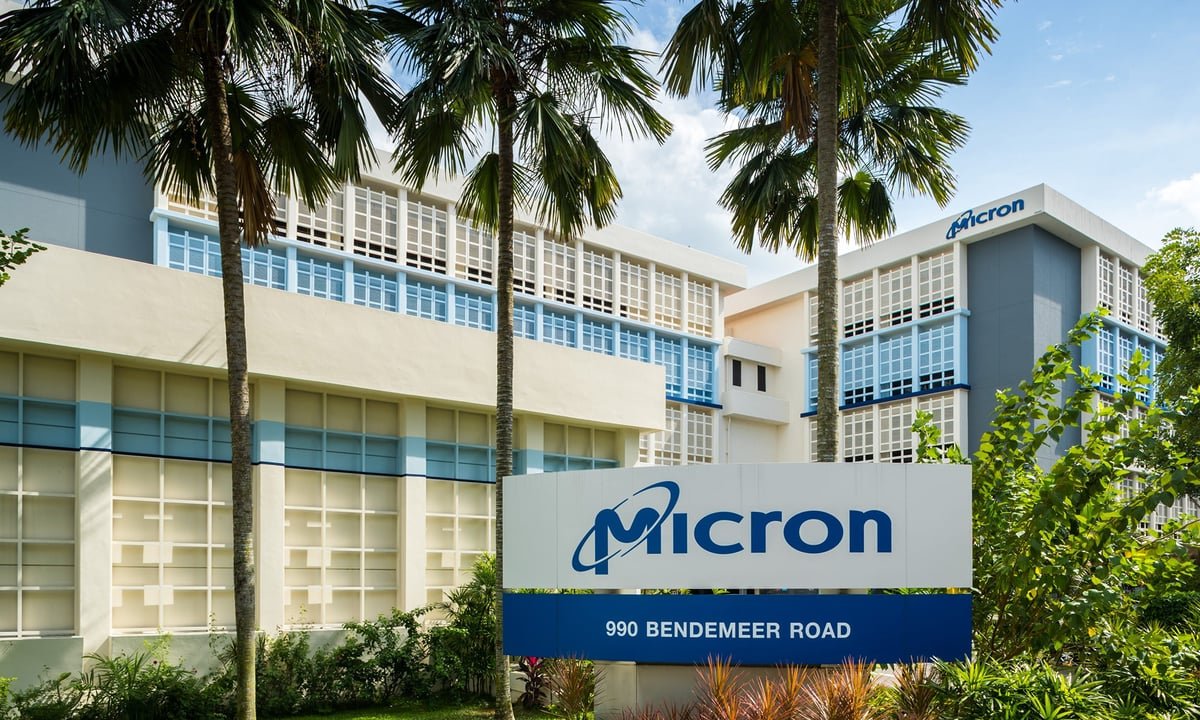
Shares of Micron Technology (MU +8.80%) have rocketed past $1,000, propelling the company into the elite trillion-dollar club. That meteoric rise reflects the seismic shift that artificial intelligence (AI) is imposing on the semiconductor landscape, where memory chips have shifted from boring commodity to mission-critical infrastructure.
While Micron’s rally is still in full swing, smart investors are wondering where the stock could be headed next. The answer will hinge on the durability of AI-driven data center demand, how Micron’s valuation stacks up against both the memory market’s volatile past and today’s AI chip leaders, and whether the market has already fully priced in the best-case scenario.
Breaking down the AI memory supercycle
The biggest catalysts for Micron’s explosive ascent are surging demand for high-bandwidth memory (HBM) and advanced DRAM solutions. AI training and inference workloads require enormous bandwidth and capacity that conventional memory solutions struggle to deliver efficiently.
HBM gets layered directly alongside GPU clusters in servers, enabling the low-latency data movement that is essential for large language models (LLMs) and other compute-intensive applications. Micron, Samsung, and SK Hynix are the largest manufacturers of HBM.
Micron’s management has repeatedly emphasized the extraordinary tightness in HBM supply relative to demand. Not only is the company’s entire 2026 production capacity sold out, but all indications point to DRAM shortages lingering past 2027 as AI capital expenditures continue to accelerate.
According to data compiled by TrendForce, the size of the global memory market is expected to reach $1.3 trillion in 2027 — up 44% from 2026. TrendForce estimates that DRAM revenue will rise 303% this year to $619 billion and expand to $903 billion in 2027.
As HBM and DRAM remain in short supply, producers like Micron should be able to sustain meaningful pricing power — supporting the case for robust gross margins that the memory market rarely sees.
NASDAQ : MU
Micron Technology
Today’s Change
( 8.80 %) $ 91.81
Current Price
$ 1135.00
Key Data Points
Market Cap
$1.3T
Day’s Range
$ 1092.99 – $ 1149.21
52wk Range
$ 103.38 – $ 1149.43
Volume
1.8M
Avg Vol
51.3M
Gross Margin
58.54 %
Dividend Yield
0.04 %
Analyzing valuation trends in the memory market
The memory market has historically been notoriously cyclical. During past supercycles, Micron’s price-to-earnings (P/E) multiple typically bottomed out between 3.5 and 8 as investors cautiously priced in the near-certainty that as the chipmakers rushed to expand their production capacity, they would inevitably overshoot as a group, leading to an eventual oversupply and subsequent margin erosion.
Micron’s current P/E of 48 looks expensive relative to its historical thresholds. The company’s profitability has surged so rapidly in recent quarters that its P/E ratio only partially reflects a dramatically higher earnings per share (EPS) base rather than simple multiple expansion on static profits.
What differentiates the current environment from past cycles is Micron’s ability to win longer-term customer commitments. The company has moved beyond spot-market negotiations and is securing multiyear supply agreements with hyperscalers that lock in both volume and pricing. These contracts should alleviate some of the boom-bust volatility that has historically plagued the memory market.
Against this backdrop, Micron’s trailing P/E multiple of 48 captures both the immediate earnings inflection and the market’s ongoing reassessment of memory’s role as a durable component of AI infrastructure build-outs rather than as a pure commodity.
Does Micron stock have room to run?
Comparing Micron to other prominent AI chip stocks can provide some useful context. Nvidia, Broadcom, and Taiwan Semiconductor Manufacturing are all leaders in their respective verticals within the chip value chain. Each stock has traded at elevated valuation multiples throughout the AI revolution — frequently carrying P/E multiples above 40.
The forward P/E multiples for each of these leaders have generally settled in the mid-20s to mid-30s range, even after meaningful stock price appreciation. These trends suggest investors remain confident in the multiyear visibility and pricing power that come with accelerating hyperscaler spending.
While Micron’s trailing P/E multiple sits within or modestly below the peer range shown, its forward P/E of 9.5 is considerably more attractive, given the scale of its expected revenue and earnings growth over the next two or three years. This gap suggests Micron stock has further room for valuation expansion as the market rerates the stock in light of the structural shift in the nature of the company’s business.
That said, investing in Micron stock is not without risk for investors. Should new foundry capacity from Micron and its competitors come online faster than investors anticipate, or if hyperscalers moderate their data center capital expenditures, its profit margins and valuation multiples will likely compress toward their historical averages.
Nevertheless, the combination of sold-out near-term HBM supply, multiyear contract visibility, and a modest valuation profile relative to other AI chip leaders suggests that Micron stock has room for meaningful upside before it reaches levels that would qualify it as fully priced for perfection.
Tech
How Kevin Warsh has set out to remake the Fed

Chip Somodevilla | Getty Images
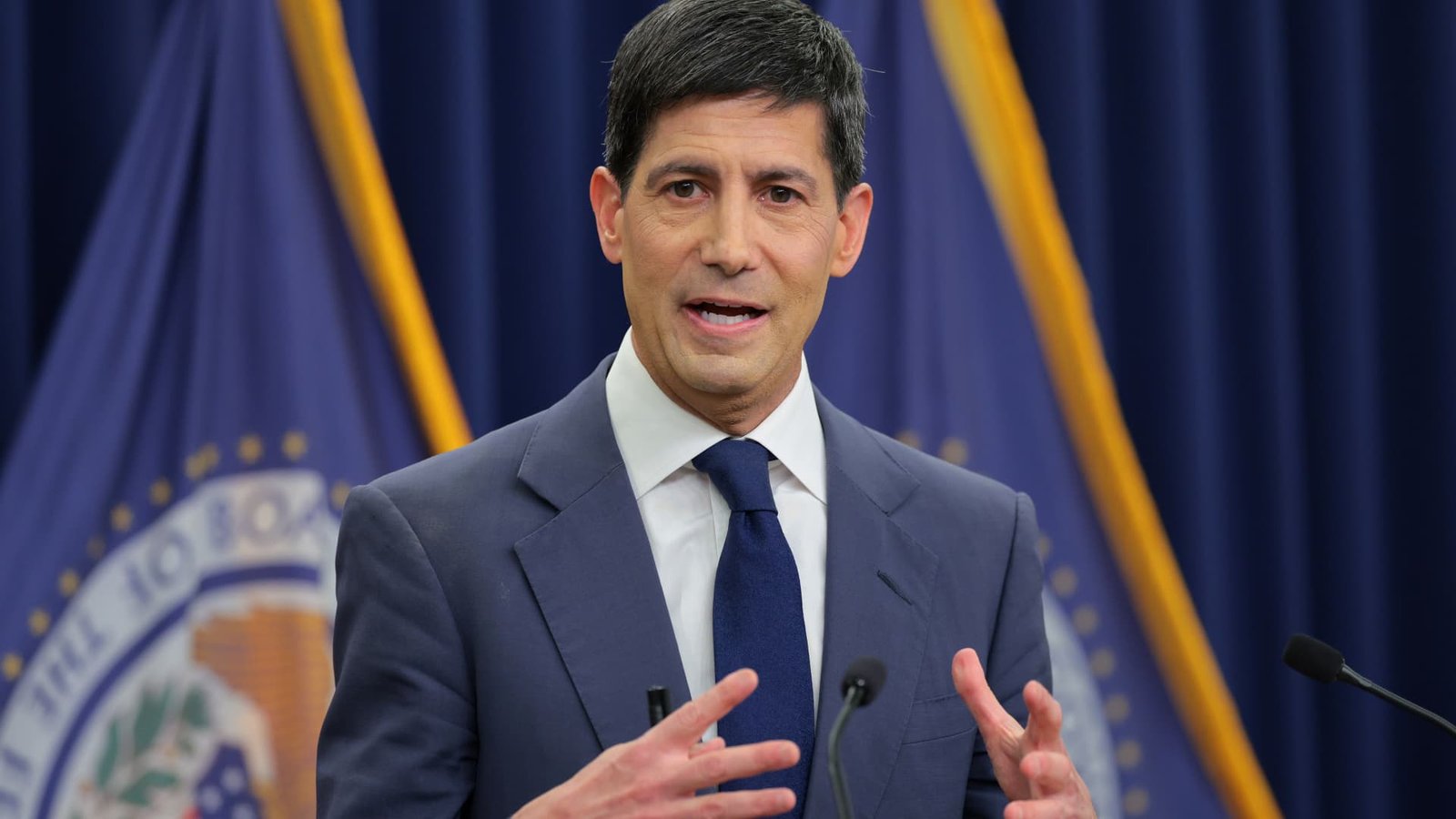
Federal Reserve Chairman Kevin Warsh’s first big announced changes point toward a quiet revolution, with task forces set up to rethink virtually everything done to set policy and the approach used to get there.
Following his first meeting at the helm Wednesday, Warsh outlined the plan — a sprawling, ambitious endeavor entailing five task forces that will utilize resources and experts within the Fed and from the outside.
The reviews amount to a comprehensive examination of all the areas that define modern monetary policy. No chair in recent history has launched a project that has matched the ambition of this one.
Their job will be to examine communications, data the Fed uses to measure the economy, the view on inflation and its causes, the impact of technology such as artificial intelligence and the size and composition of the Fed’s $6.7 trillion balance sheet and the potential path to cutting the holdings.
The task forces will “start with first principles, ask hard questions, examine current practice, consider alternatives, and ultimately propose next steps for policymaker consideration,” Warsh said.
“Each task force will serve an objective shared by everyone in the system, shared by everyone around that table that I sat with over the last couple of days: a Federal Reserve that is clear-eyed about its mission, fit for purpose, and focused on the future,” he added.
watch now
In announcing the task forces, Warsh was emphatic and deliberate.
But gone was the harsh rhetoric he has used to denounce the central bank over the past year.
Last July, Warsh, in a CNBC interview while he was campaigning for the job, called for “regime change” at the Fed and cited a “credibility deficit” caused by “incumbents” at the institution. In its place were comments about how “incredibly impressed” he was with what he’d seen in his first weeks on the job and how the meeting “exemplified the very best of the Fed’s traditions.”
What once looked like a potentially rancorous atmosphere inside the institution quickly become collegial as Warsh looks to carry through a fundamental rethink of how it does business.
“What I think we’re seeing is regime change, but in a velvet glove,” said Scott Clemons, chief investment strategist at Brown Brothers Harriman. The task forces “basically are going to review and maybe revise all the working aspects of Fed practice, from communications to data sources to the way they approach the balance sheet to the inflation framework. There’s a lot of potential regime change there.”
Warsh’s decision to take the positive view came as little surprise to Fed veterans, several of whom spoke in favor of the direction the new chairman charted.
“All those who’ve been in the Fed know that the way change operates is through just what he did, which is create task forces to build consensus,” former central bank Vice Chair Roger Ferguson told CNBC. “There are some things that one can get rid of that I think would be helpful and there are others where maybe he must be careful.”
Getting started
Former Cleveland Fed President Loretta Mester served on a communications subcommittee during her tenure that ran from 2014 to 2024, part of a nearly 40-year career at the central bank. She’s familiar with prior efforts the Fed made to enact change that perhaps weren’t quite as codified as the approach Warsh is taking.
“All the things he’s looking at are things that the Fed has looked at. But he’s organizing the work, and I think he’s putting it on a faster than typical timeframe for some of these projects that the Fed has undertaken before,” Mester said. “So, I think this is all good to be studying. Of course, we’ll have to see what then the recommendations are, and what changes he wants to make.”
One of the most visible areas Warsh has changed is communication.
The post-meeting statement eschewed much of the boilerplate language of its predecessors and instead offered a bare-bones view of what the committee decided and how it views current economic conditions. In format, the statement began with the actual rate action — unchanged, as expected — a callback to how the Fed used to formulate its statements prior to March 2009. Since the financial crisis-era period, the Fed had been starting the statements with an assessment on the economic state of affairs.
Mester said she has no problem with the Federal Open Market Committee returning to the prior format. However, the statement this week also deleted so-called forward guidance language, something she said officials may want to address with more information about the Fed’s “reaction function,” or the outline of how and why the Fed will adjust its position to economic factors.
“I like the fact that they got rid of a lot of what we would call boilerplate language that really wasn’t serving any purpose anymore,” she said. Mester added that the Fed has long had a “Hotel California problem.”
“Once a phrase or sentence got in there, it was very difficult to get it out. So this was a needed sort of purging,” she said.
Other areas likely to be explored will be the elimination of the “dot plot” rate forecasts from individual FOMC participants as well as a potential adjustment to the news conferences chairs have held for the past 15 years.
Other areas of reform
The task forces will take aim at a broad swath of Fed operations.
On the balance sheet, Warsh has long objected to the Fed’s large position in bond markets, which swelled during and after the financial crisis of 2008, as well as in the Covid pandemic in 2020.
There also will be a study of how the Fed gauges inflation after being above its goal for five years following the erroneous “transitory” call in 2021 and 2022. Artificial intelligence and its impacts also will be in focus, as will a comprehensive view of the metrics that the Fed is using to gauge the economy, with an expected look at further using data and analytics for guidance.
BlackRock fixed income chief Rick Rieder, himself a finalist for the nomination that Warsh won, called the chairman’s approach “a new era of monetary policy in the United States.”
“Building a sense of confidence in achieving monetary policy targets will only be enhanced by an impressive consideration of complex subject matter that could be very influential on the economy and Fed targets going forward,” Rieder said in a post-meeting note. “So, this time is different, we are hearing about a different philosophy, different tools, and potentially a very different policy ethos.”
One important way to make it all work is to provide clear lines about what will be moving monetary policy in the future, added Mester, the former Cleveland Fed president.
“It doesn’t have to be numerical, doesn’t have to be very prescriptive, but to get a sense of kind of what are they looking at, what kinds of things are going to persuade them one way or the other,” she said. “I think that’s something that we want our central bankers to be able to articulate to us. Otherwise it’s sort of ‘trust me,’ and ‘trust me’ is not good communication.”
Tech
President Donald Trump to visit Theodore Roosevelt Presidential Library on July 1


MEDORA, N.D. — President Donald Trump will visit the Theodore Roosevelt Presidential Library in Medora ahead of its July 4 grand opening, according to an announcement from the White House’s Freedom 250 on Saturday.
Freedom 250 is the national initiative working alongside the White House’s Task Force 250 to spearhead the celebration of America’s 250th anniversary.
Trump will be among distinguished guests set to visit the library on July 1 before heading back to Washington, Freedom 250 said. The announcement didn’t specify whether Trump would be speaking during the appearance, but Interior Secretary and former North Dakota Gov. Doug Burgum said Trump would be cutting the ceremonial ribbon at the library.
“As we celebrate our country’s 250th anniversary, it’s a tremendous honor for our 45th and 47th President to cut the ribbon at the library and National Park honoring the President who led our nation during its 125th anniversary. Americans will experience Roosevelt’s remarkable story at an extraordinary place that pairs his timeless ideals with cutting-edge technology to inspire visitors to get ‘in the arena’ and serve something larger than themselves,” Burgum said.
The announcement confirms rumors about a presidential visit raised by the U.S. Forest Service’s recent disclosure that National Forest System land within 4 miles of Medora will be closed June 22 to July 7 to ensure “security and public safety” during the period surrounding the grand opening.
The library is a roughly decade-long, $450 million project outside Medora that will tell the story of Roosevelt’s life, including his time in North Dakota and the impact that time had on him, according to Theodore Roosevelt Presidential Library Executive Director Robbie Lauf.
“We are honored that President Donald Trump chose to kick off America’s 250th celebration in the Badlands — the rugged country that shaped Theodore Roosevelt,” Lauf said.
After nearly three years of construction, the library’s grand opening is scheduled for July 4 at 10:27 a.m., in honor of Roosevelt’s birthday on Oct. 27, 1858.
Gov. Kelly Armstrong signed an executive order in April directing state agencies to prepare staff and resources to assist with celebrations of the nation’s 250th anniversary over the July 4 holiday, including the grand opening of the library.
The state will also activate 50 National Guard troops to assist with those celebrations. The North Dakota Emergency Commission approved a $283,000 request to deploy the troops during a meeting Monday.
Tech
‘Toy Story 5’ is ‘Verified Hot’ by Audiences on Rotten Tomatoes Despite Lowest Critical Score in Franchise


There is a timeless discussion around the concept of “sequel fatigue” in film, but Toy Story seems to have defied the odds with its fifth installment. The film is “verified hot” by Rotten Tomatoes audiences.
Toy Story 5‘s Positive Reception
Disney and Pixar’s Toy Story 5, which premiered in theaters yesterday, June 19, is currently rated “Fresh” by critics and “Verified Hot” by audiences on Rotten Tomatoes. As of writing, Toy Story 5 has a 94% Tomatometer score based on 201 critic reviews. Its audience score is even higher, with a 95% Popcornmeter from more than 1,000 verified ratings.
That audience rating gives the film a Rotten Tomatoes’ “Verified Hot” distinction, a newer audience-focused badge awarded to theatrical films that reach a high verified audience score and meet the site’s eligibility requirements.
While a 94% critic score is excellent by any measure and enviable for most animated releases, the Toy Story franchise has historically enjoyed consistently higher critical reception.
The original Toy Story and Toy Story 2 both hold 100% Tomatometer scores. Toy Story 3 sits just shy of that at 98%, while Toy Story 4 sits at 97%.
Therefore, that technically makes Toy Story 5 the lowest-rated mainline installment of the series among critics, despite its overwhelmingly positive reviews.
The gap also highlights just how unusual the franchise’s critical track record has been. Even with its “franchise low” score, Toy Story 5 remains firmly in positive territory and is currently performing strongly with moviegoers.
“Toy Meets Tech”
Toy Story 5 brings back Woody, Buzz Lightyear, Jessie, Forky, and the rest of Bonnie’s toys for a new story centered around technology’s impact on playtime.
The film introduces Lilypad, a tablet device voiced by Greta Lee, whose arrival challenges the toys’ place in Bonnie’s life. The sequel also features Tom Hanks as Woody, Tim Allen as Buzz Lightyear, Joan Cusack as Jessie, Tony Hale as Forky, and Conan O’Brien as Smarty Pants.
The film’s premise and the prospect of another Toy Story adventure were evidently enough to secure the film’s success with the highest-grossing preview period for a movie so far this year.
Though some reviews have questioned whether Pixar needed to return to the toy box again, the early audience response suggests many moviegoers are still happy to go along for another adventure.
Are you excited to see Toy Story 5? Let us know on social media!


Trump and Vance clash on comments about Iran
President Trump and JD Vance shared different approaches to Iran as Vance visited Bürgenstock Resort where negotiations are …


Sir Keir Starmer said to be on brink of resignation | BBC News
The British prime minster is widely expected to announce that he is standing down, perhaps as soon as Monday. Government...


Conjoined twins separated with help from AI
Twins Mercy and Goodness were born with their skulls fused together. A charity involved in their care says AI helped...


Marilyn Monroe’s Affairs with JFK and RFK May Have Lead to Murder
Marilyn Monroe’s death may not have been suicide at all … it may have been a far more sinister murder...
Poilievre slams federal-B.C. plan to buy vacant condos, calling it a ‘bailout’ for developers
Conservative Leader Pierre Poilievre is slamming a plan by the federal and B.C. governments to buy vacant condo units in...


Chevy Silverado gets V8 power boost, high-tech overhaul for 2027
Chevrolet is giving its Silverado pickup a major update with new V8 engines, a redesigned exterior and more technology inside...


Workers flock to Nevada from California amid lithium discovery
A desert state known for its casinos and scorching temperatures is seeing a jobs boom as workers and businesses increasingly...


Britney Spears says she wants to have ‘another baby’ after reconciling with sons
Hit me baby, one more time! Britney Spears said she wants another child in an Instagram post on Father’s Day...


GM replaces more than 1,000 workers with 50 robots at flagship Detroit plant
General Motors has gutted its electric-vehicle ambitions and killed more than 1,000 jobs at its flagship Detroit assembly plant —...


36 Infuriating Photos Of Boyfriends And Husbands
I Seriously Need These 39 People To Leave Their Husbands And Boyfriends As Soon As Humanly Possible Warning: these pictures...
-

 Business1 week ago
How much of Musk’s wealth comes from government help? Virtually all of it
-

 Politics1 week ago
What to know about the stabbing that set off fiery riots in Northern Ireland
-

 Video1 week ago
Download fans say what they love about the festival. #DownloadFestival #BBCNews
-

 Video1 week ago
Why SpaceX IPO isn't about space. #SpaceX #ElonMusk #BBCNews
-

 HealthNews1 week ago
The people of Okinawa, Japan only eat until they are about 80 percent full, then stop — and the practice has been linked in multiple peer-reviewed studies to lower rates of cardiovascular disease, slo
-

 Food1 week ago
Pope Leo’s plane was grounded. Then the King of Spain stepped in to help
-

 TravelNews1 week ago
My Paternal Instinct Should’ve Warned Me About Netflix’s Maternal Instinct
-

 Video1 week ago
Claire Danes has the cutest stories about young Kirsten Dunst on 'Little Women' set