

HealthNews
You Can Do Something About Your Dementia Risk


Dementia is poised to hit more Americans than ever, but the odds are quietly shifting in your favor. Vox’s Bryan Walsh reports that while a graying population means new dementia cases in the US could top 1 million a year by 2060, a person at any given age is now far less likely to develop the condition than someone that age a generation ago. Across rich countries, age-specific dementia rates have fallen roughly 13% per decade since the late 1980s, with similar drops for Alzheimer’s specifically.
What’s driving the improvement? Walsh points to better heart and blood vessel health—think blood pressure and cholesterol drugs, less smoking, and improved stroke care—as well as more years of schooling, which research has linked to lower dementia risk, though without pinpointing why. A 2024 Lancet commission estimated that tackling 14 midlife risk factors, from high LDL to hearing loss to inactivity, might prevent or delay up to 45% of cases, and Walsh flags the intriguing (but still early) evidence that the shingles vaccine may reduce dementia risk. His view? Some of us will undoubtedly develop dementia. “But that doesn’t mean we’re helpless.” Read his full piece here.
Read These Next
Sunken station on the WII ‘death railway’
Ground beef prices move past a
Olympian arrested after reaching
Summer jobs are hard to come by for latest
HealthNews
For Some People, Every Gulp or Sniff Is Torture

A Poe classic has turned out to be an accidental case study: For people with misophonia, “The Tell-Tale Heart” reads less like madness and more like a man exercising enormous restraint, until a sound finally breaks him. Writing for the New Yorker, Sloane Crosley, a self-described misophonia patient (though she says her case isn’t severe), digs into a condition defined by an intense fight-or-flight reaction to specific everyday noises—chewing, gulping, sniffing, tapping—that an estimated 4.6% of American adults may experience. It’s not about loudness, doctors say, but about how certain brains tag particular human-made sounds as threats. When those who have misophonia hear such noises, “they share a dysregulating visceral response, a cognitive and physiological—chest-tightening, heart-racing, sweating—spiral of alertness and exhaustion,” Crosley writes.
The author follows patients whose lives have been reshaped by misophonia—students eating alone in their rooms, a teacher hiding his condition at work, a family switching to plastic cutlery—and the clinicians and advocates pushing to get the disorder its own code in the World Health Organization’s disease manual. That recognition could unlock insurance coverage, as well as basic validation. Others warn it’s too soon, however, to codify something that still straddles both psychiatry and audiology. The piece also explores experimental “semantic hearing” headphones that might one day mute triggers selectively. Crosley wonders, however, “if people should be able to do this. … Should we be able to tailor our immediate environments more than we already do? So much of today’s technology is built for self-siloing.” More here on this under-recognized condition.
Read These Next
Sunken station on the WII ‘death railway’
Ground beef prices move past a
Olympian arrested after reaching
Summer jobs are hard to come by for latest
HealthNews
Health Division worried by high rates of STIs among young people in Tobago


Tobago Correspondent
The Division of Health is expressing alarm over “high rates” of sexually transmitted infections (STIs) in Tobago, particularly HIV, among the 20-29 age group.
In an exclusive interview with Guardian Media, Onika Henry, senior programme coordinator for sexual health and youth development at the Department of Wellness, Prevention and Health Promotion, said HIV infections are rising on the island. Apart from unacceptable HIV levels, Henry said gonorrhoea and syphilis are also soaring on the island and globally.
“We are monitoring those closely in Tobago because it seems to be an international trend,” she said, adding there is a new drug-resistant strain of gonorrhoea.
“HIV remains a priority because those rates seem to be increasing over a number of years. I remember coming back in 2016 after studying abroad; there was an increase happening even then.”
Henry said while the STI transmissions remain a big concern, she said the division is still analysing the data to get a clearer picture.
“We’re seeing an interesting pattern in terms of a particular age group. From 20-29, they seem to have consistently high rates when it comes to STIs. What we can’t do is draw any firm conclusions about whether that means we have STIs increasing or whether more people are coming forward to be tested.”
She said data from private institutions remains inaccessible to the division, but it is working to address this.
Henry, a clinical sexologist, said the main hindrance to combating new infections is shame. She said the Division of Health is formulating a workplace policy to remove discrimination and stigma surrounding HIV. It also intends to strengthen public trust in their information remaining confidential at public facilities.
While HIV is now considered a chronic disease owing to advances in treatment, Henry acknowledged it remains a tremendous financial burden on the division.
“It is not about us just wanting people to be well and having a healthy labour force, but there is also the challenge of budgetary allocations; the challenge of finding funding if you find your rates are increasing every year and if you have to provide free medication for a growing population of positive folks.”
She said there are complications involved in living with HIV, adding that an ageing population that is not well is problematic.
The sex educator believes early intervention and education are key, stressing the importance of incorporating sexual education into the school curriculum.
“Given the numbers, the STI reports we are hearing, it would be a grave injustice to not give young people the skills and knowledge they need to protect themselves. Sexuality is health; it is part of one’s wholeness and wellness.”
Henry said the intention is to collaborate with the Division of Education to design age-appropriate messages for children. While anticipating some resistance from religious groups, Henry is eager to get all stakeholders involved, including various parents’ and teachers ‘ associations (PTAs).
“I am hopeful that they would see, based on the figures, numbers and research, that what we have been doing is clearly not working, and if we really care about our young people’s health, that we would do something about it in ways that are evidence-based.”
She believes religious groups preaching abstinence should embrace sexual education in schools from an early age.
“Abstinence is a skill, it is not a talent we are born with. Abstinence and refusal skills are part of sex education.”
She said, like all other subjects in the curriculum, there is a way for it to be taught in the classroom, even at the primary school level.
She warned against judging young people too harshly and labelling them reckless when they are bombarded digitally with sexual content.
“If your only access to information about sex is porn, we are creating a situation where people are looking at explicit content without knowing how to evaluate it, assess it and assuming this is the norm, copying what they’re seeing and causing harm to themselves and others.”
She said sexual activity among primary school students is also being reported and investigated,
Henry argued that even children with disabilities must not be excluded from being educated on the topic.
As the island prepares for its fifth annual carnival in October, the division will be rolling out an awareness programme targeting young people.
She said influencers will be included as they meet the population at the various fetes and other activities to spread their message.
IDA head hits public-private sector disconnect
Meanwhile, Dr Denise Tsoisafatt Angus, medical doctor and political leader, Innovative Democratic Alliance (IDA), said it was a travesty that the division was unable to access data from the private sector.
“The public health sector in Tobago should be connected to the private doctors for them to report on what they are seeing. They should be able to give the public sector a report, monthly or weekly, on the cases they are seeing. So if there is an uptick in the numbers, the public health sector should start increasing their education.”
She said this disconnect could easily be bridged by a policy from the THA.
“It is just a policy decision and them going out and engaging the private persons and creating a reporting system. I am sure the doctors in the private sector would be more than happy to give a report, even though they’re not giving the names of their patients.”
She said health issues of such magnitude should not be treated in isolation.
HealthNews
Early-onset cancers are on the rise. Knowing your family history is crucial.

By Cara Anthony and Blake Farmer, Nashville Public Radio, for KFF
Listen in and play along as hosts Cara Anthony and Blake Farmer test their knowledge with a HealthQ quiz on detecting early-onset cancers.
Bryce Ramsey of Madison, Mississippi, was 33 when she was diagnosed with colorectal cancer. Upon noticing blood in her stool, she blamed the hemorrhoids she’d developed after delivering her son eight years earlier.
Ramsey didn’t initially link her symptoms to cancer.
“But I had just kind of made a deal with myself because the blood was starting to become more frequent,” she said. “I was like, ‘If this happens the next time I go to the bathroom, I’m going to make a call.’”
She saw more blood, and she reached out to a gastrointestinal clinic to get it checked out, just in case. Her doctor said she normally wouldn’t scope someone Ramsey’s age, “‘but something in my gut is just telling me I need to do so,’” Ramsey recalled. “And thank God she did because she found a 5-centimeter polyp.”
Ramsey had surgery, endured chemotherapy, and survived stage 3 colon cancer. Now 40, she volunteers for the Colorectal Cancer Alliance, a nonprofit advocacy group, to raise awareness of early-onset colorectal cancer.
Stories like hers are becoming increasingly common: In the U.S., more than a dozen kinds of cancer are on the rise in adults under 50. Among these early-onset cancers, colorectal and breast cancers have increased the most, and colorectal cancer is now the deadliest cancer for Americans ages 18 to 49.
Here’s what to know about detecting early-onset cancers.
1. Family history is one of the most important risk factors.
Researchers have not been able to find a single cause for the rise in early-onset cancers. Instead, research suggests a myriad of factors play a role, including obesity, heavy alcohol use, environmental factors such as microplastics, and disruptions to gut health.
Doctors generally follow population-level guidelines for routine screenings — such as recommending mammograms starting at age 40 to screen for breast cancer — but physicians might recommend some patients get screenings as early as in their 20s. Doctors weigh a patient’s personal risks, including their family history of cancer.
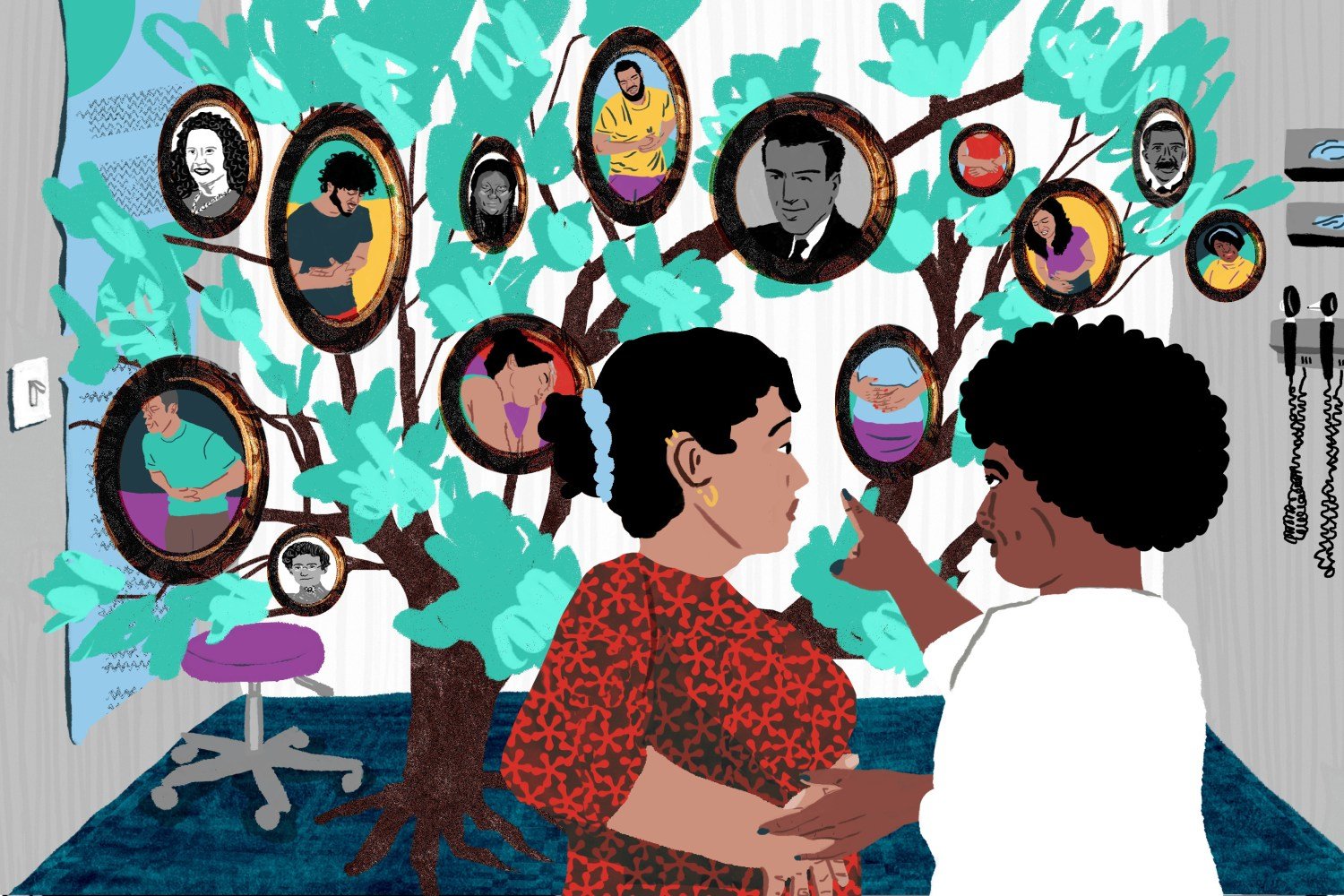
Ramsey learned only after her diagnosis that her grandfather previously had colorectal cancer. “If I would’ve known that I had a significant family history, I would’ve been scoped a lot younger,” she said. “My doctor said my tumor had probably been growing for seven to 10 years.”
After her diagnosis, she encouraged her father, aunt, and brother to get screened. All three were diagnosed with colon cancer, too, and survived after receiving treatment.
Ramsey said it can be uncomfortable to urge family members to get tested or to talk with them about private health information, but those conversations are worth having to save a life.
“Just ask the question or make a joke about it. And sometimes just little icebreakers will help,” she said.
2. Report unusual symptoms as quickly as possible.
Being vigilant about unusual body changes or symptoms — and reporting those to your physician — gives doctors the information they need to determine your personal risk for cancer.
“For example, a lump in the breast, abdominal pain, changes in bowel habits that really are not going away,” said oncologist Veda Giri, director of the Early Onset Cancer Program at Yale Cancer Center. “Certainly blood in the stools. Sometimes even symptoms such as unusual fatigue that doesn’t seem to go away.”
“It’s incredibly important to bring symptoms to your doctor,” Giri said.
3. Talk, then test, then talk again.
Ads for at-home cancer tests are everywhere, so you might be tempted to use a screening kit instead of going in for an office visit or a standard screening, like a colonoscopy.
But not all tests are created equal, Giri said. It can be hard for laypeople to understand the accuracy of at-home screening kits, so they should talk to their doctor first.
“Some of these tests could lead to a false sense of either reassurance or false anxiety and alarm,” she said.
For people who decide to move forward with an at-home test, experts say they still need to consult with a physician. If you get any sort of abnormal result, your doctor is going to want to follow up with additional testing, such as a colonoscopy. Sharing your results, regardless of outcome, will help inform your care.
People and Policy
The U.S. Preventive Services Task Force recently changed the recommended age for women to begin mammogram screenings for breast cancer from 50 to 40. But there’s a difference of opinion among national advocacy and medical groups about whether regular screenings should happen every year or every other year.
In 2021, the same task force lowered the recommended age to 45 for a first colonoscopy for colon cancer detection for people with average risk. Establishing a relationship with a trusted medical practitioner can help patients assess personal risk and sort through new information as research and public health guidance evolve.
Related | NIH grant disruptions slow down breast cancer research
If you feel uncertain about your personal risk for cancer or when you should start cancer screenings, one of the best ways to advocate for your health is to establish a relationship with a medical practitioner you trust and ask specifically about your cancer risk. You can also ask to consult with a genetic cancer risk specialist, a type of medical provider who helps patients evaluate their cancer risk, often with genetic testing.
Katherine Ruppelt and Emily Siner at Nashville Public Radio contributed to this report.
HealthNews
How fast you should be able to walk a mile at every age


Walk this way at every age.
Movement is essential for a long, healthy life, and walking has been growing in popularity as a simple way to boost heart rate, increase metabolism and lower the risk of disease.
It’s not just how far you walk, though; the pace can also reveal important information about health and longevity.
Previous research has shown that faster walkers are more likely to live longer, regardless of weight, hitting speeds of about 3 miles per hour, or 100 steps a minute.
A quick walk — literally — may mean a longer life, according to a 2024 meta-analysis that found people who walked the fastest were 43% less likely to die of any cause than those in the slowest-walking group.
And there are certain benchmarks you should be able to hit in each decade of life, according to a small 2022 study.
For healthy adults, an achievable goal while out on a walk is to hit a brisk pace that slightly elevates breathing while still allowing conversation.
20s and 30s: 13 to 19 minutes at a brisk pace of about 4.6 mph.
40s: 14 to 16 minutes at a pace of 4.3 mph.
50s: 15 to 17 minutes at 4 mph.
60s: 16 to 18 minutes at 3.3 to 3.7mph.
70s and older: 20-minute mile at 3.5mph.
Not only is a power walk good for living a longer life, but it’s also a good indicator of several health markers, according to Elizabeth Vogstrom, a physician assistant at EVOyouthful.
“A person can have normal laboratory values and still be experiencing declines in strength, endurance, mobility, balance or cardiovascular fitness,” Vogstrom told The Daily Mail.
“Walking speed often reveals those changes before they become obvious in daily life.”
It may not come as a surprise that walking faster is linked to several improved health outcomes, such as a lower risk of cardiovascular disease and type 2 diabetes.
A brisk walk has also been associated with improved brain function as we age.
Meanwhile, a slower pace, especially one that decreases with each year we get older, could be a sign of cognitive decline or dementia.
A sudden decline in walking gait could also signal underlying health issues.
“When someone’s walking pace slows unexpectedly, it may reflect deconditioning, loss of muscle mass, cardiovascular limitations, joint issues, neurological changes or other health concerns that deserve further attention,” Vogstrom said.
Walking speed has even been described by some experts, including Vogstrom, as the sixth vital sign, providing “insight into how well the body functions in everyday life.”
HealthNews
After Opening Up About Cancer, A Man Feels Hurt When His Friend Shifts The Focus To Herself


We all have people in our lives who seem to make everything, and I mean EVERYTHING, about themselves.
It’s pretty frustrating to deal with folks like this because, no matter what you tell them, it always seems to come back to them.
Ugh!
It’s so annoying!
And you’re about to hear a doozy of a story…
A man talked about how his friend made his cancer diagnosis, yes, you read that correctly, all about HER.
Take a look at what he had to say.
AITA for telling my friend my cancer diagnosis is not about her?
“I (22M) have had cancer (Melanoma) for years.
I first got diagnosed at 17, went in remission, then over the years, it has come back several times.
This is awful…
This time, it is more than one type of cancer, and in more than one part of my body.
I had the biopsy to determine whether it was cancer and what type last month. I got the call confirming it this morning.
Most people have been super supportive and kind, and most of my friends and family have been trying to help me out as much as they can ever since I got the biopsy done.
Well, once I got the call, I called my friend (23F) to tell her what was going on. Let’s call her K. As soon as I told her, she started sobbing, told me she couldn’t handle this news.
She sounds a bit clueless…
I asked her what she meant, and she said she’s been dealing with a lot lately because she didn’t have enough money to pay rent after buying herself a bunch of new clothes.
For context, she lives with her parents and the rent she pays isn’t even used for rent, it’s to pay back the money she stole from her parents last year.
Admittedly, this upset me a little bit, because I felt like she was focusing more on how she felt about the situation rather than how I felt. At first, I apologized for making her upset and asked if she wanted to talk later, when she wasn’t so upset.
Well, thats when she said “I just keep getting bad news after bad news after bad news! Haven’t I been through enough?”
And she’s also pretty rude!
That threw me off guard a little bit, and I ended up asking her if she really thought her inability to keep track of her finances and spending all of her money instead of saving it like she was supposed to was worse than my cancer diagnosis.
I know I could have handled this better, but I was, and still am, all over the place emotionally.
She got angry with me, told me I had no right to comment on her financial situation, and that I’m a terrible friend for throwing her pain and suffering in her face, and then she hung up on me.
A lot of our mutual friends have come to me saying that I was a huge asshole, and that I should have some empathy for the “less fortunate”.
AITA?
Did I overreact?
Should I have let this go?”
If you enjoyed this story, check out this post about a mom who is irate after she gave a group leader money for her daughter’s lunch, only to have him pocket the cash and ask all of the kids to pay their own way.
Check out what readers had to say about this.
This person said he’s NTA.
Another reader weighed in.
This Reddit user shared their thoughts.
Another individual spoke up.
And this person also said he’s NTA.
Wow…
This guy’s friend is really something else, huh?
That was brutal!
Let’s hope she grows up and comes to her senses soon…
Some people have to make EVERYTHING about them…


Celebrations erupt as Cape Verde score during live BBC broadcast. #WorldCup #BBCNews


Sandra Bullock shares rare photos of her kids with her late dad for Father’s Day tribute
Sandra Bullock shared a heartfelt tribute to her late dad on Father’s Day Sunday, which included rare pics of him...


Tesla crashes into home, killing woman
A Tesla, reportedly in autopilot mode, crashed into the front room of a home in Texas, killing a 76-year-old woman,...


Trump and Vance clash on comments about Iran
President Trump and JD Vance shared different approaches to Iran as Vance visited Bürgenstock Resort where negotiations are …


Costco adds new yogurt cups praised as ‘top tier’ treat
Costco has added a new frozen treat to its shelves from a brand customers have praised as “top tier.” Yasso...


Omaha police say woman injured in shooting has died
Advertisement Omaha police identify woman killed in Saturday shooting Omaha police have identified the woman shot and killed on Saturday...


Happy Joe’s Pizza launches patriotic menu, sweepstakes for America 250
Happy Joe’s Pizza & Ice Cream is turning America’s 250th birthday into a summer-long celebration. The Davenport, Iowa-based restaurant chain...


Sir Keir Starmer said to be on brink of resignation | BBC News
The British prime minster is widely expected to announce that he is standing down, perhaps as soon as Monday. Government...


Travis Kelce Attends NASCAR Race in San Diego During Pre-Wedding Boys Trip
Travis Kelce is approaching the checkered flag on his boys weekend … pulling up to a NASCAR race after a...


Purse Strings Aren’t Quite Snipped for Gen X, Millennials
The older members of Gen X may be hovering around 60, but a significant chunk are still on the family...
-

 Business1 week ago
How much of Musk’s wealth comes from government help? Virtually all of it
-

 Politics1 week ago
What to know about the stabbing that set off fiery riots in Northern Ireland
-

 Video1 week ago
Download fans say what they love about the festival. #DownloadFestival #BBCNews
-

 Video1 week ago
Why SpaceX IPO isn't about space. #SpaceX #ElonMusk #BBCNews
-

 HealthNews1 week ago
The people of Okinawa, Japan only eat until they are about 80 percent full, then stop — and the practice has been linked in multiple peer-reviewed studies to lower rates of cardiovascular disease, slo
-

 Food1 week ago
Pope Leo’s plane was grounded. Then the King of Spain stepped in to help
-

 TravelNews1 week ago
My Paternal Instinct Should’ve Warned Me About Netflix’s Maternal Instinct
-
 Video1 week ago
Claire Danes has the cutest stories about young Kirsten Dunst on 'Little Women' set