

Business
Why men drop out of the labor force: It starts when kids see how males around them struggle


According to the Labor Department’s latest data, the rate for men 20 years and older was 69.5% in May, down from 76% in May 2006. That means fewer men were employed or unemployed but actively looking for a job.
The male participation rate peaked at 86.4% in 1950, but slid to 79.7% in 1970, and 76.4% in 1990. By contrast, female participation rose steadily until the 1990s, peaked in 2000, and has dipped only slightly since then.
Numerous theories have been thrown around to try shedding light on the more recent declines among males. After the housing bubble popped and triggered the Great Recession, for example, the sudden loss of construction jobs was partly blamed for men dropping out of the work force.
The introduction of more advanced video games since the early 2000s has even been cited as a cause for men working fewer hours. Meredith Whitney, the one-time “Oracle of Wall Street” who predicted the Great Financial Crisis, previously told Fortune that young single men living at home and playing video games are behind a “crisis of the American male.”
Last year, the San Francisco Fed took a crack at it, saying men were both pulled out of the labor force because of schooling or caretaking duties and pushed out due to a mismatch in skills or a disability.
Now a new paper from University of Connecticut economists Remy Levin and Daniela Vidart has added to the debate, arguing that men’s beliefs about the benefits of work are shaped by the labor market conditions they observed over their lifetimes, particularly during childhood.
When young males grow up seeing weak wages and high unemployment among the men around them, they form pessimistic expectations about their own prospects later in life, making them less likely to participate in the labor force, the economists explained.
“Our findings suggest that experience effects can turn short-run declines in labor demand into long-run declines in labor supply,” they wrote.
The phenomenon persisted even after men moved to a different state, and the effects were stronger among men exposed to the experiences of their own racial group.
In addition, the paper said childhood exposure explained nearly all of the labor force participation dynamics and that men’s expectations for their own wages or employment were based on lifetime experiences—and not macroeconomic conditions like national unemployment or inflation.
“It is the labor market environment men grow up in, more than what they observe as adults, that shapes their later participation,” Levin and Vidart concluded. “This points to the formative years as the critical window for belief formation about returns to work, with implications for how policy interventions might most effectively cultivate lasting labor force attachment among men.”
For policymakers, a more effective response to declining male participation may entail managing expectations by cultivating credible, long-run beliefs in the value of work, they said.
Separate research has found that the COVID pandemic may have motivated people to re-evaluate their life priorities, leading them to choose to work fewer hours.
But there was a clear gender divide. Young men with at least a bachelor’s degree spent an average of 14 hours less annually on the job between 2019 and 2022. The decline was far less over the same period for similarly qualified women, who worked three fewer hours.
Yet another study from the Boston Fed in 2022 said that non-college-educated men, between the ages of 25 and 54, left the workforce in higher numbers than other groups in part because of their perceived social status relative to better-educated men of similar age.
Since 1980, men without degrees have seen their weekly earnings decline by 17%, while those of college-educated men rose by 20%, adjusting for inflation.
The Boston Fed study found that the drop in earnings for non-college-educated men over the last four decades has increased their likelihood of leaving the labor force by nearly half a percentage point. That also accounts for 44% of the increase in their exit rate.
“If the increasing wage gap between high and low earners directly or indirectly affects men’s aggregate labor supply, wage inequality might have carried wider implications to the economy than previously believed,” Pinghui Wu, the author of the study, wrote.
Business
Costco adds new yogurt cups praised as ‘top tier’ treat

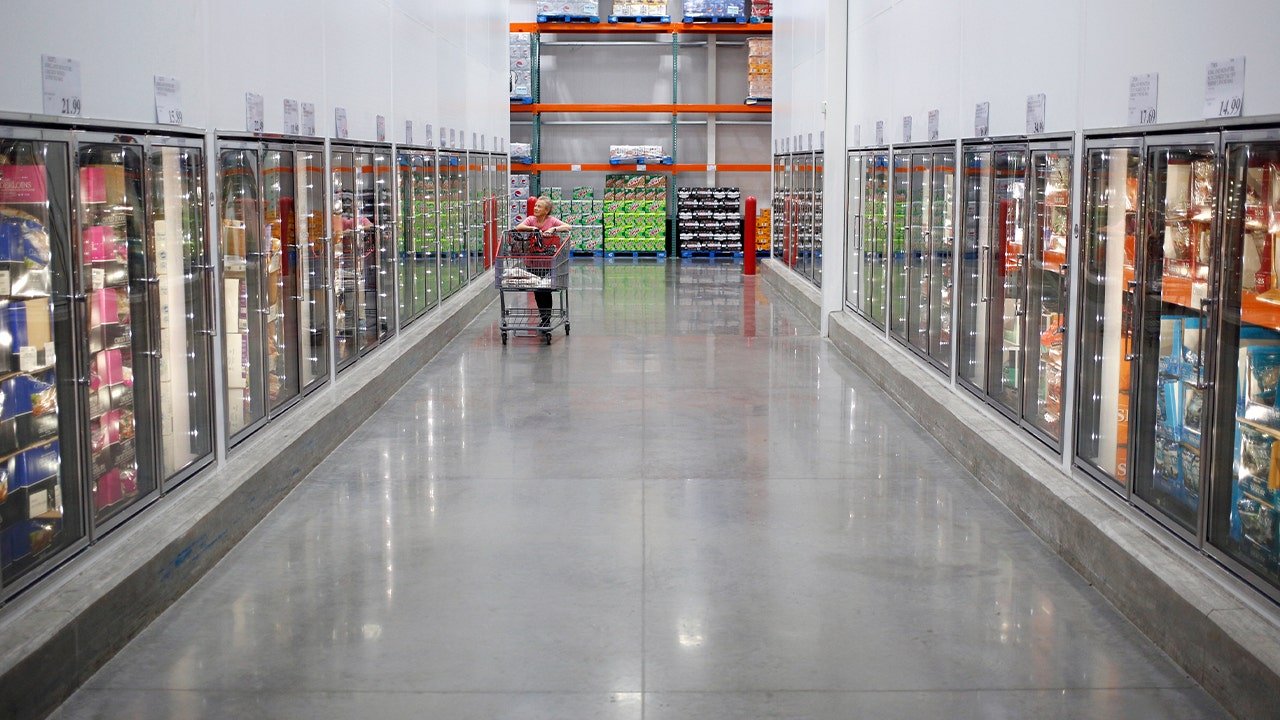
Costco has added a new frozen treat to its shelves from a brand customers have praised as “top tier.”
Yasso Frozen Greek Yogurt Cups have been offered at select warehouse locations, according to the brand.
The product was introduced late last month, the company announced, just in time as summer temperatures begin to spike.
The 12-pack includes mini cups split between two flavors: Vanilla Caramel and Fudge Chip.
GREEK YOGURT HAS ‘AMAZING BENEFITS’ FOR THE BODY AFTER WORKOUTS, NEW STUDY SAYS
Marketed as a lighter alternative to traditional ice cream, each 3-ounce cup contains less than 100 calories and 4 grams of protein.
The Vanilla Caramel flavor has 80 calories per serving, while the Fudge Chip comes in at 90 calories.
The pack reportedly retails for $11.89, equivalent to roughly $1 per cup, according to Instagram page Costcobffs.
The new release has sparked significant attention across social media.
One Reddit user praised the decision, saying Yasso items are not overly sweet and lack the artificial taste often found in other low-calorie desserts.
“Yasso products have always been top tier,” the user said.
Another Reddit user added, “These are absolutely amazing and the right portion for that sweet treat.”
CHECK OUT THESE DISCOUNTS ON MEMBERSHIPS AND REWARDS TO SAM’S, COSTCO AND BJ’S WHOLESALE CLUBS
Ticker Security Last Change Change % COST COSTCO WHOLESALE CORP. 951.45 -14.14 -1.46%
Social media page CostcoHotFinds, which said it has partnered with the brand, noted the item is available for a limited time.
“Availability depends on the region and retailer,” Yasso said. “We’d suggest checking with your local store manager about ordering it in.”
Shoppers eager to try the mini cups may also find the product at BJ’s Wholesale Club locations, the brand added.
CLICK HERE TO DOWNLOAD THE FOX NEWS APP
It is typical for Costco to roll out limited-time products as part of a testing period before wider or recurring availability.
The Yasso brand has, however, shown staying power, as Costco has previously carried its frozen Greek yogurt bars, including Cookies ‘n Cream and Mint Chocolate Chip flavors.
The 15-count packs feature similar nutrition profiles, with each serving typically ranging between 90 and 100 calories and containing about 5 grams of protein.
FOX Business reached out to Yasso for more information.
Business
Happy Joe’s Pizza launches patriotic menu, sweepstakes for America 250
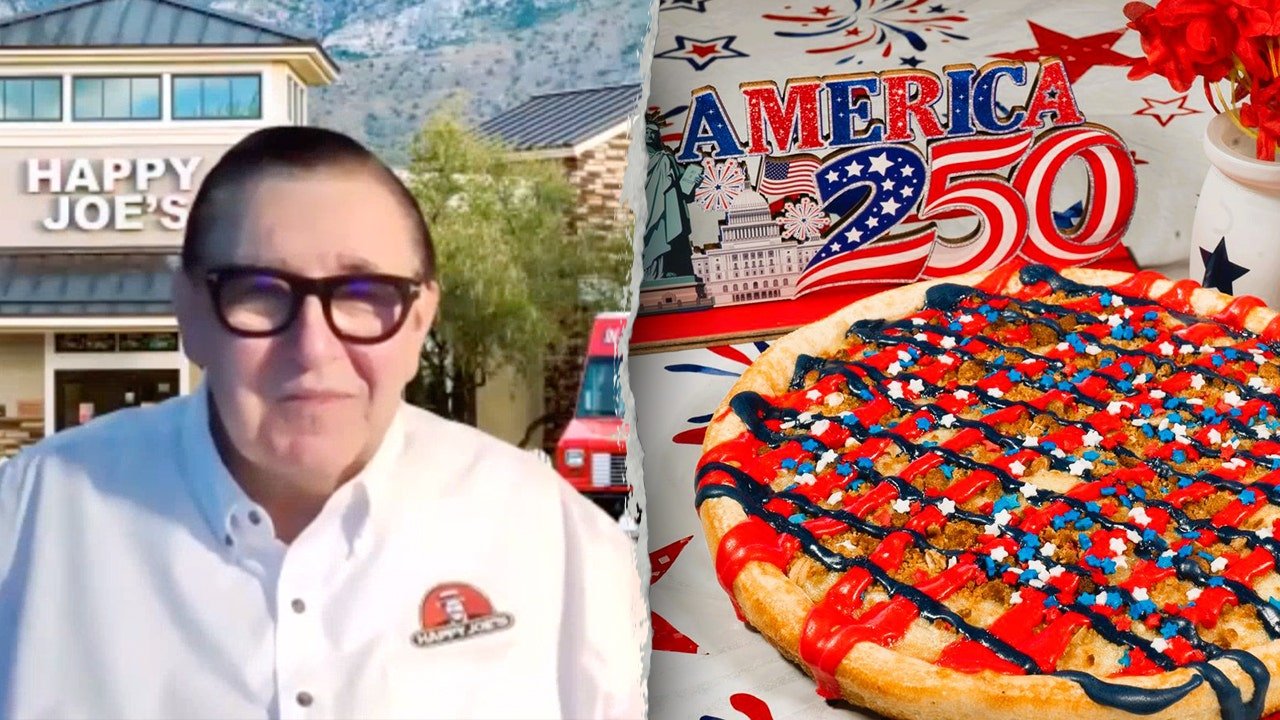
Happy Joe’s Pizza & Ice Cream is turning America’s 250th birthday into a summer-long celebration.
The Davenport, Iowa-based restaurant chain — which has three company-owned restaurants, 35 domestic franchised locations and nine international locations in Egypt — is rolling out patriotic menu items, family block parties and sweepstakes tied to the nation’s semiquincentennial.
Tom Sacco, Happy Joe’s CEO, president and “chief happiness officer,” said the campaign fits the brand’s roots.
“Who’s better in this country to throw a birthday party for just regular old American folks than Happy Joe’s?” Sacco told FOX Business. “Because that’s who we are.”
From May 15 through Aug. 15, guests who buy a specialty pizza and a Mountain Dew at participating locations can enter the “Freedom Flyaway Sweepstakes” for a chance to win one of three $3,000 trips to Washington, D.C.
BELOVED IOWA PIZZA FRANCHISE SERVES UP ‘MORE THAN PIZZA’ FOR ITS CUSTOMERS
The sweepstakes was initially solely tied to a Washington, D.C., trip, but Sacco said winners can also take the cash and use it however it best helps their families.
“If celebrating to them is giving… them freedom financially to not be burdened by some of the expensive things that have happened in the last four or five years … If that’s what makes you happy, because mom doesn’t have to stress about how to pay for daycare during the summer or something like that, then that’s a huge win,” Sacco said.
The promotion also includes weekly Mountain Dew prize packs with pickleball paddles, lawn chairs, blankets, Happy Joe’s apparel and gift cards.
Happy Joe’s is also hosting AMERICA250 Block Party events on June 29 from 4 to 8 p.m. with games, trivia, music, giveaways and free slices of its red, white and blue birthday cake pizza.
YUM BRANDS SELLS PIZZA HUT FOR $2.7B, SHARPENS FOCUS ON TACO BELL AND KFC
Sacco said some locations will have activities such as bounce houses, face painting, balloon makers and patriotic trivia tied to both U.S. history and Happy Joe’s history.
“We’re going to just do some fun stuff like that,” Sacco said. “… We can play the game and make it patriotic, but make it tied to Happy Joe’s kind of stuff.”
The limited-time menu includes a BBQ Brisket Pizza with Texas-smoked brisket, pickles, onions and barbecue sauce, a BBQ Chicken Pizza and an AMERICA250 Birthday Cake topped with red, white and blue frosting and sprinkles.
Sacco said Happy Joe’s is leaning into what it has long been known for: birthdays, families and memorable dining experiences.
MCDONALD’S BRINGING BACK FRIED APPLE PIE TO CELEBRATE AMERICA’S 250TH BIRTHDAY
CLICK HERE TO GET FOX BUSINESS ON THE GO
“We don’t compete on price. We don’t compete on discounting. We compete on experience,” Sacco said. “Pizza gets you in the door. When you leave, we’ve created a memory. And that’s how we go about the business.”
He added that the campaign gives the brand a chance to celebrate the country’s milestone birthday with families across its markets.
“The 250, for me, is like the biggest national celebration I can ever be a part in,” Sacco said. “I have the opportunity, because of Happy Joe’s, to share it with hundreds of thousands of our guests and their families around the country.”
Business
The Deadly Rise of Giant Trucks and S.U.V.s

For decades, American roads were steadily getting safer for pedestrians. But around 2009, the trend reversed. Since then, the number of pedestrians killed each year has risen by about 75 percent.
The surge in pedestrian deaths has baffled researchers. Most other wealthy countries haven’t seen similar increases, suggesting that possible culprits like smartphones don’t tell the whole story.
Other likely causes of deadly crashes, such as drunken and distracted driving, have attracted immense attention from the public and policymakers. But the trend toward ever-larger vehicles has received much less scrutiny, even after federal researchers in 2022 cautioned regulators that it was endangering pedestrians.
After analyzing federal and industry records, including never-before-examined data on vehicle dimensions, we found that the rise of large pickups and S.U.V.s is an important factor.
Our estimate is that about 200 to 400 pedestrians a year would not have died if vehicles had remained approximately the same size over the past quarter-century. That represents about 10 percent of the recent increase in pedestrian deaths.
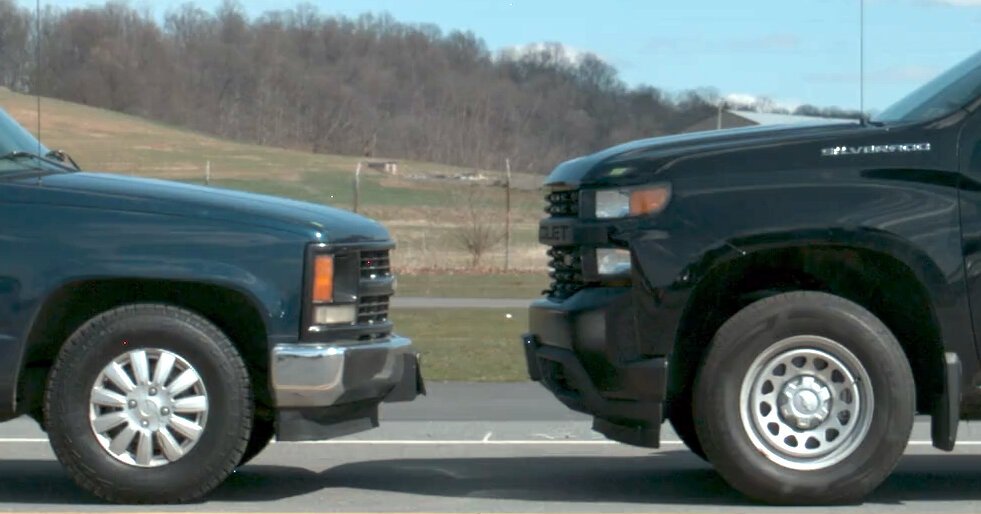
There are two reasons bigger vehicles are deadlier: They have taller hoods. And they tend to have larger blind zones.
“We see a lot of devastating collisions even at lower speeds because the pedestrian gets punted forward,” said Shawn Harrington, whose company, Forensic Rock, conducted crash tests for us. “Before the driver knows what’s happened, the pedestrian’s head is under the wheel.”
More vehicles than ever have hoods that exceed the average American’s center of gravity, which is generally around the belly button.
The hood of an average passenger vehicle today is about three feet high. Anyone shorter than 5-foot-6 — about half of American adults — would frequently be rammed to the pavement. So would most children.
Not only are the high hoods on larger vehicles more lethal, but their bulkier frames can also block drivers’ views of pedestrians.
To analyze how these blind zones have changed, we used a three-dimensional scanner to compare sightlines in four of the most common pickups today — the Chevrolet Silverado, Ford F-150, GMC Sierra and Toyota Tacoma — with their counterparts from the 1990s or early 2000s.
The Silverado’s blind zones have nearly doubled.
The Sierra’s and the Tacoma’s grew by about 60 percent.
The smallest increase was the F-150’s. Its blind zones grew by about 25 percent.
Our overall findings match what we found in court records and heard from dozens of experts who reconstruct crashes for police and lawyers.
One morning last year, Charlene McAlister, 76, set out for work at a child care center in Colorado Springs. “See you tonight,” she called to her daughter as she left their home.
As Ms. McAlister was crossing the street, a Ram 1500 TRX — a pickup marketed for its off-road capabilities and fierce-looking design — was turning left.
Ms. McAlister was not quite five feet tall. The pickup’s hood was at least four feet high. It hit her, throwing her to the pavement.
The driver later said he hadn’t seen Ms. McAlister, according to court records. They show that the truck’s large hood and side mirrors may have impeded his view.
When Ms. McAlister’s daughter, Serena, arrived at the scene, she saw her mother’s hedgehog-themed backpack and red purse in the road, spattered with blood. Emergency workers had draped a white sheet over her body.
The size of vehicles is far from the only reason that more pedestrians are dying, according to independent experts and industry officials.
“While vehicle safety is critical, blaming larger vehicles for pedestrian deaths overlooks systemic issues” including the design of roads, said Mike Levine, a spokesman for Ford.
Automakers say that new technology designed to detect and avoid pedestrians — including systems that automatically apply the brakes — would dramatically improve safety. For example, Bill Grotz, a spokesman for General Motors, pointed to a recent study that found that G.M. vehicles with so-called front pedestrian braking reduced the frequency of injuries by 35 percent.
The National Highway Traffic Safety Administration is pinning its hopes on automated collision-avoidance systems. Such technologies “are actively reducing the occurrence of these crashes and fundamentally shifting the risk landscape,” said Sean Rushton, an agency spokesman. “We view these technologies as the cornerstone of future mitigation strategies.”
But many experts say that technology is not a perfect substitute for drivers being able to view their surroundings directly. And tests by the Insurance Institute for Highway Safety, which studies ways to make driving less dangerous, have shown that many large vehicles’ automatic braking systems do not consistently prevent collisions.
The owner’s manuals for some of the most popular vehicles caution that safety technology can fail in a variety of common situations: in bad weather; at high speeds; if there are shadows on the road or its surface is uneven; or if a pedestrian is running, pushing a stroller, not standing upright or the size of a small child.
‘King of the Road’
Today’s S.U.V.s and pickups promise more: more seats, more space, more safety, more power, more domination, more prestige.
And, for automakers, more money.
They are the source of virtually all of the U.S. auto industry’s profits, said Mark Wakefield, an industry expert at the consulting firm AlixPartners. For nearly a decade, Ford and G.M. have said in their annual reports that their earnings depend on larger S.U.V.s and pickups.
The cost of making bigger vehicles is usually not much higher than it is for cars, because they are often built in automakers’ most efficient factories and the extra raw materials are relatively cheap.
Yet customers are willing to pay much more for them. The average sticker price for a full-size pickup is $70,000, double that of a sedan, according to Cox Automotive. (Some people pay more to soup up their trucks with “lift kits” that raise their suspensions.)
It is no coincidence that automakers have dramatically scaled back their production of sedans and other passenger cars in the United States. Ford, for example, went from selling more than a million in 2017 to fewer than 100,000 five years later.
What used to be utilitarian vehicles for construction workers are now marketed to the American masses, with messages tailored to specific audiences.
One common pitch centers on machismo. Automakers trumpet how some of their trucks have an “aggressive appearance” or a “piercing glare.”
Other approaches emphasize the perceived safety of being the biggest vehicle around. “You’re the king of the road,” said Frank Hanley, a director at the automotive research firm JD Power.
At Ford, Nicole Gayney’s job was to identify specific social and psychological groups to target.
One was men who hoped to be seen as the neighborhood’s hero, keeping everyone safe, said Dr. Gayney, who left Ford in 2022. Another group was women who viewed a roomy S.U.V. as a way to be the community’s caregiver, taking the soccer team out for ice cream.
“We’re kind of in this American mind-set that bigger is better,” she said.
An Unintended Consequence
In 2009, after a spate of fatal incidents in which drivers were crushed in rollovers, the National Highway Traffic Safety Administration required roofs to be strong enough to support three times the weight of a vehicle. Many automakers responded by installing thicker A-pillars.
James Forbes, who was a longtime engineering manager at Ford, said that after the company began installing the fatter A-pillars, he and his colleagues noticed that they were reducing drivers’ visibility.
The drivers were safer, but pedestrians were in greater peril. “We were very much biasing safety toward the owner of the vehicle,” Mr. Forbes said.
Those potential dangers began attracting attention, with articles in the Detroit Free Press and Consumer Reports.
By 2022, the lack of visibility in large vehicles had become a concern for researchers at the Transportation Department’s Volpe Center, whose mission is to identify and address problems in the transportation system.
That November, the researchers met with leaders at the department and N.H.T.S.A. They delivered a stark message: Large vehicles, with their big blind zones, were increasingly deadly. They were killing hundreds of pedestrians and cyclists every year and injuring thousands more, the researchers estimated, according to attendees and meeting materials we reviewed.
The researchers hoped that their warning would spur regulators to consider how to address the problem.
But a senior N.H.T.S.A. official disputed the data and argued that new pedestrian-sensing technologies were already improving safety.
“There was just zero acknowledgement of the problem,” said Angie Byrne, a former Volpe Center employee who was involved with the research and attended the meeting.
The meeting ended with no plan for action.
The Closed Casket
The U.S. government has paid scant attention to how the size of vehicles affects the safety of pedestrians.
Federal regulators don’t collect much data about the heights of vehicles’ hoods. But we found one service that does: Expert AutoStats.
Our analysis shows a radical change in the makeup of American vehicles over the past two decades.
Not only have many drivers abandoned traditional cars in favor of S.U.V.s and pickups. But millions have flocked to vehicles with hoods that are more than 50 inches tall — like the Ford F-250 and Chevrolet Silverado 2500 — whose ranks have increased more than five-fold since 2002.
To understand how a vehicle’s size affects a crash’s lethality, we built a statistical model. Our goal was to estimate how many fewer pedestrians, if any, would have died in a world in which vehicles had remained roughly the same size since 2002.
We started with a federal database that contains a nationally representative sample of crashes reported to the police from 2016 to 2024. We narrowed that down to those involving a single vehicle and a single pedestrian. And we added the data on hood heights, which wasn’t included in the federal database.
Our model then analyzed the degree to which different factors — such as hood height, weather conditions, time of day and whether alcohol was involved — affected whether pedestrians died.
Crashes are complex events, and the data we fed into our model doesn’t capture everything about each incident. And, of course, there is no way to definitively say what would have happened in an alternate reality where vehicles had not continued to grow larger.
But based on the best available data, the model reached a sobering estimate: The shift toward vehicles with higher hoods caused about 3,000 deaths from 2016 to 2024.
The estimate is conservative in many ways.
For example, it doesn’t include collisions that occur in places like parking lots, driveways or private roads, which are not part of the federal database. Hundreds of pedestrians a year are estimated to die in such crashes, a number that has been increasing.
Only in the past several years have researchers started exploring whether and how larger vehicles threaten pedestrians.
The Insurance Institute for Highway Safety, for example, found last year that vehicles with larger blind zones were substantially more likely to hit pedestrians when turning left.
One evening in October 2016, Margaret Lacey, a 57-year-old nurse, was taking her dog for a walk in Jefferson County, Colo.
She was in a crosswalk as Ernest Martinez, a 50-year-old construction manager, was turning left in his Ford Excursion. He later said he hadn’t seen Ms. Lacey until his S.U.V. was nearly upon her. His view had been blocked by the A-pillar, a crash reconstructionist found.
He slammed the brakes, but he still hit her.
The hood of his 2002 Excursion — large for its time but common by today’s standards — was nearly four feet tall. It came up to Ms. Lacey’s chest. The impact sent her flying. Her head smashed into the pavement.
Mr. Martinez leapt out of his vehicle and knelt by her side. “I prayed with her,” he said in an interview. “I just held her hand and watched her go.” Her dog also died.
When Ms. Lacey’s sister, Betty, learned of her death, she flew to the United States from Ireland. She wanted an open casket, following her family tradition. But her sister’s head was grievously misshapen. “The only part that looked like Margaret was her hands,” Betty said.
The coffin was closed. Her funeral was held at a Catholic chapel in Denver, and Mr. Martinez was among the mourners. “May God bless you all, and I pray that you all will find peace,” he wrote in the condolence book.
“I’m sorry.”
Business
Nashville becomes another pro-business hub poised to siphon jobs away from NYC, biz leader warns

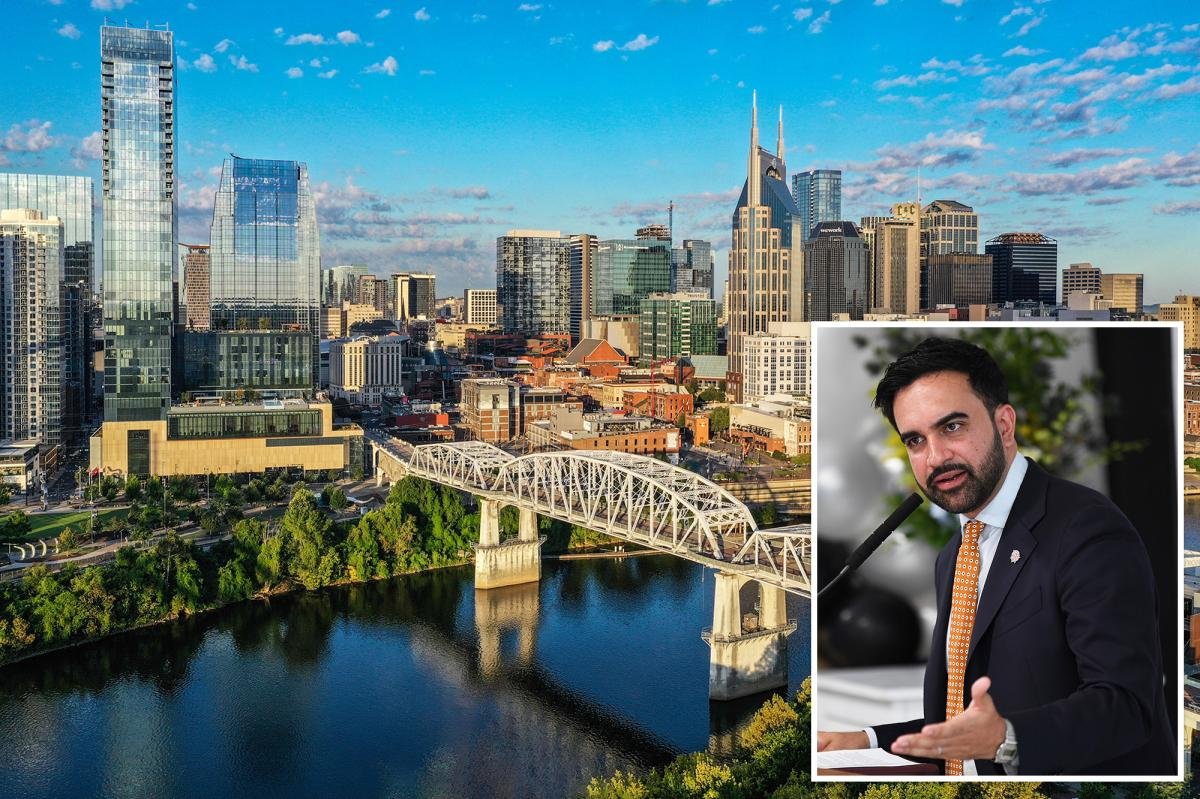
Look out Florida and Texas — Tennessee wants a slice of New York City’s pie, too.
Nashville is emerging as yet another pro-business powerhouse poised to take jobs away from the Big Apple — as socialist Mayor Zohran Mamdani pushes tax hikes and other policies critics say are driving companies to flee, the head of an influential New York business group warned Sunday.
“I think the most important thing as we get into the latter portion of this year is that the City Council starts to think about the fact, with the mayor, that New York City is on a trajectory that we’re less and less competitive every single day,” Steve Fulop, CEO of the Partnership for the City of New York, said Sunday on 77 WABC Radio’s “Cats Roundtable.”
“Dallas and Miami and Nashville are actively pushing strategies to take jobs away from [NYC],” Fulop told the show host and billionaire businessman John Catsimatidis.
The warning comes as a growing number of financial heavyweights and major corporations have already begun shifting their workforces to lower-cost states – while Mamdani, a democratic socialist who campaigned on a freebie-filled progressive agenda, continues floating a menu of tax increases.
His proposals include higher income taxes on the wealthy, increased estate taxes and steeper corporate levies.
But taxes aren’t the only factor pushing businesses across state lines, according to Fulop.
“I’m not only talking about taxes, [but] bureaucracy and layers of reporting and more difficulty to run a business,” he said.
“All of that stuff layers on top of one another and makes it pretty difficult to run a business in New York City.”
The concerns aren’t just hypothetical.
Earlier this year, Wall Street giant Apollo Global Management revealed plans to establish a second US headquarters somewhere in the Sunbelt – with Nashville landing on a shortlist, alongside locations in Texas and South Florida.
While Apollo execs have yet to announce a final decision, the new office is expected to employ 1,000 people — matching the company’s New York workforce.
The $900 billion asset management firm paid roughly $1.28 billion in total income taxes in NYC in 2025.
Music City has become increasingly attractive to other corporate giants across the US.
Seattle-based coffee giant Starbucks, for example, reportedly pledged to invest $100 million and bring 2,000 jobs to a major new corporate hub in Nashville.
Global investment management firm AllianceBernstein helped pave the way by relocating its headquarters from the Big Apple to Nashville in 2021.
Other billionaire executives have been outspoken about their frustrations with Mamdani – and plans to flee Gotham.
Citadel founder Ken Griffin, along with Apollo CEO Marc Rowan, both warned they were prepared to remove thousands of jobs out of New York as a “direct consequence” of Mamdani’s “tax the rich” crusade.
The backlash kicked off after Hizzoner posted a cringe-worthy social media video featuring Griffin’s $238 million Midtown penthouse as a backdrop.
An outraged Griffin first threatened to scrap a $6 billion Park Avenue development for his hedge fund before publicly announcing that the “creepy” video had pushed him to expand Citadel’s hub in Florida instead.
“We will add far more jobs in Miami over the next decade as an immediate and direct consequence of the mayor’s poor decision here with respect to his posting of that video,” Griffin said.
Meanwhile, Goldman Sachs is pouring $500 million into a sprawling new campus for over 5,000 employees in Dallas.
Mamdani’s rhetoric risks the loss of 2,700 jobs in the financial industry and $168 million in state and city tax revenue every year, the Partnership for New York City estimated last month.
Business
Jets were 300 feet apart in Boston close call that forced Delta flight to abort landing, expert says

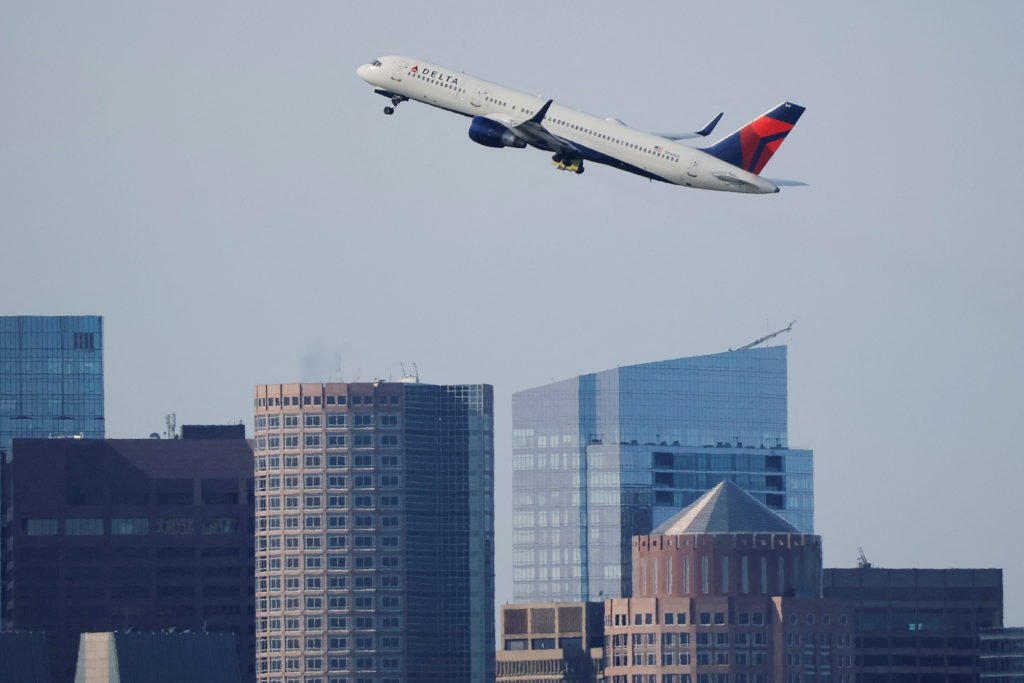
BOSTON (AP) — A Delta Air Lines jet was roughly 300 feet from an American Airlines plane during a close call at Boston’s airport that forced the Delta aircraft to abort a weekend landing attempt, an aviation expert said Sunday.
The Federal Aviation Administration said it was investigating the incident between two commercial flights that happened Saturday at Boston Logan International Airport.
READ MORE: Aviation disasters and close calls have people worried about flying
Todd Curtis, a former safety engineer at Boeing, estimated the distance between the two jetliners using Flightradar24, a website that tracks flights. Curtis now coproduces a podcast about flight safety issues.
“This is a significant incident,” Curtis said, adding that it was particularly concerning because it involved two professional airline crews.
He said federal aviation officials have been concerned about such runway incursions for a while now and will scrutinize Saturday’s close call.
Near-misses and runway incursions at U.S. airports will be the subject of a hearing on Capitol Hill on Tuesday. The Senate Commerce Subcommittee on Aviation, Space, and Innovation will seek ways to strengthen safety across the national airspace system.
WATCH: Deadly LaGuardia plane collision comes as U.S. air system faces significant stress
The Delta flight from Dallas had to execute a go-around, or aborted landing, to avoid the American plane departing from an intersecting runway, according to the FAA and flight logs.
The crew of Delta flight 2351 coordinated with air traffic control to perform the go-around, an airline spokesperson said. The plane, which had 129 passengers and six crew members on board, landed safely and deplaned normally, according to the spokesperson.
Go-arounds are safe, routine procedures performed at the discretion of the pilot or air traffic controllers, according to the FAA.
Inside Nicole Kidman’s star-studded NYC birthday celebration with daughters Sunday and Faith
Nicole Kidman made sure her 59th birthday was one to remember! The Hollywood actress spent the day in New York...


World Cup viewers gather at FIFA Fan Fest in Atlanta
World Cup fans attend the FIFA's Fan Fest, a sixteen day festival in Atlanta. CNN's Rafael Romo talks to attendees.


Couple fights for their child’s place in a vanishing community
As India's Zoroastrian community faces demographic collapse, one family is going to the Supreme Court seeking official …


Breaking Down Every ‘House of the Dragon’ Character After the Season 3 Premiere
In its return Sunday night, House of the Dragon wasted no time jumping back into the action. That’s because this...


Celebrations erupt as Cape Verde score during live BBC broadcast. #WorldCup #BBCNews
Canada solidifies agreement with Australia to buy Arctic Over-the-Horizon Radar system
Canada has taken the next step toward acquiring a highly sophisticated, long-range radar system to monitor the Arctic. Prime Minister...


Tacoma’s Grand Cinema cancels all movie showings amid ongoing threat, safety concerns
The Grand Cinema in Tacoma canceled all shows on Sunday because of what it described as an ongoing threat and...


Love Island USA Season 8 Casa Amor Cast Revealed (Updating)
Let the ultimate Love Island USA test begin. Across Sunday and Monday, Peacock is revealing the new Islanders joining season...


Struggling Rod Stewart Nearly Faints, Needs Oxygen Onstage During Show
After a string of canceled and postponed shows, 81-year-old rock legend Rod Stewart needed oxygen midset before finishing his show...


New Zealand v Egypt: World Cup 2026 – live
Key events The match started brightly but declined as the half wore on. New Zealand have a clear and effective...
-
 Business1 week ago
How much of Musk’s wealth comes from government help? Virtually all of it
-
 Politics1 week ago
What to know about the stabbing that set off fiery riots in Northern Ireland
-

 Video1 week ago
Download fans say what they love about the festival. #DownloadFestival #BBCNews
-

 Video1 week ago
Why SpaceX IPO isn't about space. #SpaceX #ElonMusk #BBCNews
-

 HealthNews1 week ago
The people of Okinawa, Japan only eat until they are about 80 percent full, then stop — and the practice has been linked in multiple peer-reviewed studies to lower rates of cardiovascular disease, slo
-
 Food1 week ago
Pope Leo’s plane was grounded. Then the King of Spain stepped in to help
-

 TravelNews1 week ago
My Paternal Instinct Should’ve Warned Me About Netflix’s Maternal Instinct
-
 Video1 week ago
Claire Danes has the cutest stories about young Kirsten Dunst on 'Little Women' set